
Where Is the Jeep Tool Kit Located?

Finding your Jeep’s factory tool kit isn’t a one-size-fits-all answer. Its location varies significantly by model, generation, and even trim level. Typically, you’ll find it secured in the rear cargo area—often under a floor panel, in a dedicated bin, or mounted to the tailgate. Always consult your owner’s manual for the definitive location for your specific vehicle.
So, you’re staring at a flat tire on your Jeep, ready to tackle the change yourself. You pop the trunk or hatch, and the big question hits: Where in the world did they put the dang tool kit? It’s a moment of frustration every Jeep owner has faced. Unlike some vehicles with a obvious, permanently-mounted jack and lug wrench, Jeeps often prioritize clean lines and cargo space, tucking their emergency gear away in clever, model-specific hidey-holes. Finding it isn’t just about convenience; it’s about being prepared and self-reliant, which is the whole Jeep ethos, right? Let’s crack the code and map out exactly where your Jeep’s factory tool kit is hiding, model by model.
First, a crucial disclaimer: your owner’s manual is the ultimate authority. It has the precise diagram for your specific year, model, and trim. Use this guide as a comprehensive starting point, but always verify with your manual. We’ll cover the most common platforms: the legendary Wrangler (JL and JK/JKU), the versatile Grand Cherokee (WK2 and earlier), the family-friendly Cherokee (KL), the workhorse Gladiator (JT), and the compact Compass and Renegade. We’ll also touch on older classics and the ever-important topic of aftermarket kits.
Key Takeaways
- Location varies by model and year: There is no single spot. A Wrangler’s kit is stored differently than a Grand Cherokee’s.
- Primary location is the cargo area: The vast majority of Jeep tool kits are stored in the rear, usually hidden under a removable panel or in a molded bin.
- The owner’s manual is your best friend: It contains the exact, model-specific diagram and location for your vehicle’s emergency kit.
- It’s often secured and out of sight: Kits are typically in a zippered bag or case, fastened to a hook or seated in a custom recess to prevent rattling.
- Aftermarket and older models differ: Jeeps without a factory kit or with aftermarket storage solutions will have their tools stored differently, often in a dedicated box or bag.
- Knowing the location is critical for emergencies: In a flat tire or roadside situation, fumbling for your tools wastes time and can be unsafe.
- Check periodically: Ensure your kit is complete, the jack still functions, and the lug wrench fits your wheels (especially if you have aftermarket wheels).
📑 Table of Contents
- Jeep Wrangler (JL, JK/JKU, TJ, YJ)
- Jeep Grand Cherokee (WK2, WK, WJ, ZJ, etc.)
- Jeep Cherokee (KL, 2014-Present)
- Jeep Gladiator (JT, 2020-Present)
- Jeep Compass & Renegade (BU/MP, 2017-Present)
- Older & Niche Models (Patriot, Liberty, Commander, etc.)
- Aftermarket Kits & What to Do If Yours is Missing
- Conclusion: Be Prepared, Know Your Jeep
Jeep Wrangler (JL, JK/JKU, TJ, YJ)
The Wrangler, being the quintessential off-roader, has a tool kit location that has evolved but remains fairly consistent in spirit: stored securely in the rear, away from the elements and cargo, but easily accessible when needed.
Jeep Wrangler JL (2018-Present)
For the modern JL Wrangler, Fiat Chrysler Automobiles (FCA) continued a smart storage solution. Your factory tool kit—typically containing a scissor jack, lug wrench, and sometimes a screwdriver—is stored in a recessed compartment on the right-hand side of the rear cargo floor, just behind the rear seats.
- How to Access: Lift the rear cargo floor mat. You’ll see a rectangular, molded plastic cover or panel on the passenger side (right side if you’re sitting in the driver’s seat). This panel is usually held down by two plastic retaining clips or a simple twist-lock. Pry it up carefully with a flathead screwdriver (ironically, from your kit!) or your fingers.
- What You’ll Find: Underneath, you’ll find a zippered nylon bag or a molded plastic tray holding the jack and tools. The jack is often a small, collapsible scissor jack designed for the Wrangler’s weight.
- Pro Tip: If you have a factory subwoofer or the premium audio system, the location is still the same, but the cargo floor panel might be slightly different. Always lift the entire floor section first.
Jeep Wrangler JK/JKU (2007-2018)
The JK and JKU (Unlimited) followed a very similar pattern to the JL, but with a slightly different panel design. The tool kit is almost exclusively located in the rear cargo area, on the right side, under a removable plastic tray.
- How to Access: Remove the rear cargo area floor mat. You’ll see a large, one-piece black plastic tray that covers the entire right rear quarter of the cargo floor. This tray is held in place by several plastic push-in fasteners (speed clips). Use a plastic trim removal tool or a flathead screwdriver wrapped in tape to gently pry up the tray’s edges. Lift it out completely.
- What You’ll Find: The jack and tools are nestled in a cut-out section of the tray itself or sitting in a dedicated bin beneath it. The JK often used a slightly more robust bottle jack on certain trims, but the scissor jack was standard.
- Note for 4-Door JKU Owners: The location is identical to the 2-door, but you have more cargo floor to lift to access it.
Important Consideration for Wrangler Owners: If you’ve installed a lift kit or significantly larger tires, your factory jack may no longer reach high enough to safely lift the vehicle. This is a critical safety point. You can find guides on compatible lift kits and their impact on factory components, like the best lift kit for Jeep Gladiator which discusses similar clearance considerations for another Jeep platform. It’s wise to invest in a high-quality aftermarket floor jack and appropriate jack stands for any serious off-roading or maintenance.
Jeep Wrangler TJ (1997-2006) & YJ (1987-1996)
These older, simpler Wranglers are more straightforward. The tool kit is almost always located directly under the rear cargo floor, centered or to one side, without a complex tray system.
- How to Access: Lift the simple rubber cargo mat. There is usually a single, large metal or heavy plastic access panel secured by a bolt or a latch. Remove it to reveal a compartment holding the classic bottle jack and a simple lug wrench/tire iron.
- What You’ll Find: A utilitarian setup. The jack is typically a sturdy bottle jack, and the lug wrench is a heavy, cross-shaped steel tool. It’s all business, no frills.
Jeep Grand Cherokee (WK2, WK, WJ, ZJ, etc.)
The Grand Cherokee, as a family-oriented SUV, has consistently stored its emergency tools in the rear cargo area, but the exact hiding spot has changed with each generation.
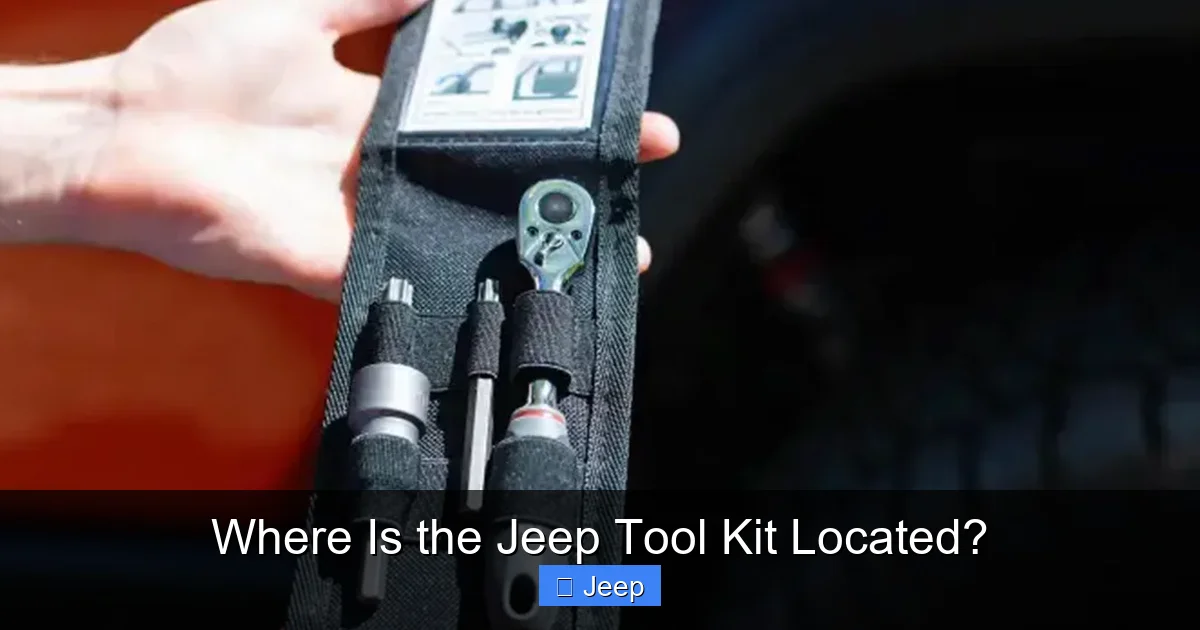
Visual guide about Where Is the Jeep Tool Kit Located?
Image source: travelguide4you.com
Current Grand Cherokee WK2 (2014-2023) & Grand Cherokee L
For the popular WK2 platform and the new Grand Cherokee L, the tool kit is stored in a very accessible location. Look for a removable plastic panel on the left-hand side (driver’s side in US models) of the rear cargo floor.
- How to Access: Lift the cargo floor mat. On the left rear quarter panel, you’ll find a rectangular plastic cover. It is often secured by a single plastic twist-lock or a couple of push clips. Release it and lift the panel.
- What You’ll Find: A zippered bag containing the scissor jack, lug wrench, and sometimes a screwdriver or flashlight. The compartment is designed to be flush with the cargo floor when closed.
- Special Note: If your Grand Cherokee is equipped with a spare tire mounted under the vehicle (common on some base models), the tools for removing it (the winch handle and rod) are often stored in a different location, typically in the same rear cargo compartment but in a separate pouch or mounted on the cargo wall. Your manual will specify this.
Grand Cherokee WK (2006-2013) & Earlier (WJ, ZJ)
Earlier Grand Cherokee models follow a similar pattern. The WJ (1999-2004) and ZJ (1993-1998) typically store the kit under the rear cargo floor panel, often on the right side. The WK (2006-2013) usually has it under a similar left-side panel as the WK2. The access method is usually a removable plastic or metal tray held by clips or bolts.
- Key Difference: Some Grand Cherokees, particularly those with the optional rear cargo privacy cover or a factory installed trailer hitch wiring harness, might have the tool kit stored in a small compartment on the side of the cargo area wall. Always check all floor panels and side storage bins.
Jeep Cherokee (KL, 2014-Present)
The modern, car-based Cherokee (KL) has one of the most consistent and easiest-to-find tool kit locations. It’s almost always in the rear cargo floor, on the driver’s side (left side), under a dedicated access panel.
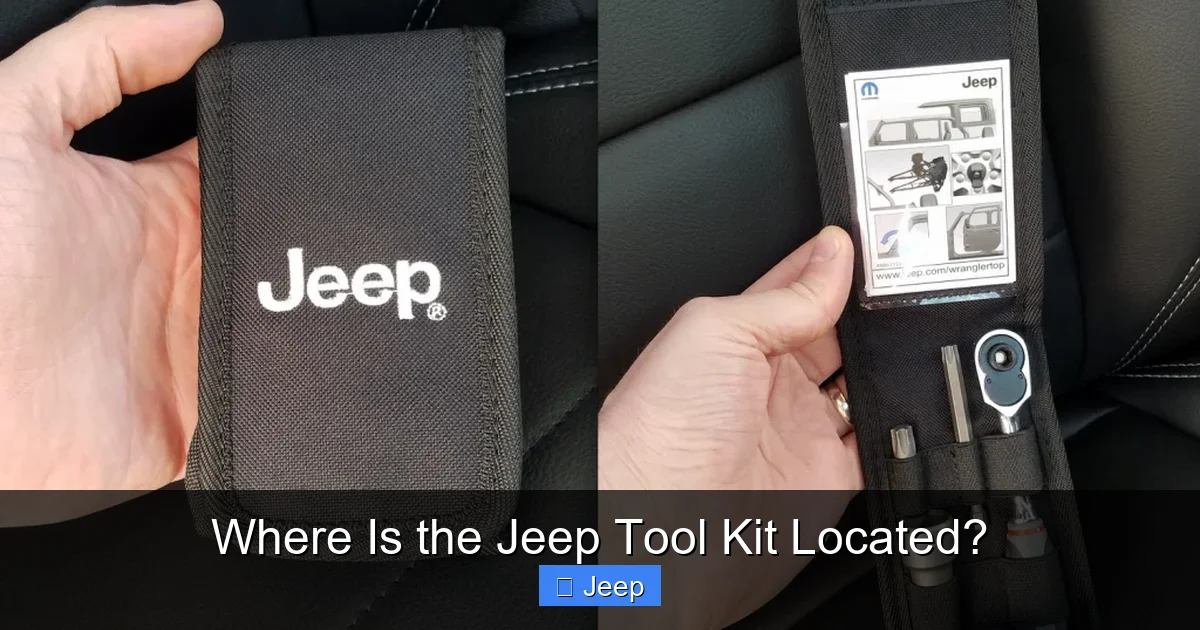
Visual guide about Where Is the Jeep Tool Kit Located?
Image source: blog.consumerguide.com
- How to Access: Lift the cargo mat. On the left side, you’ll see a square or rectangular plastic cover. It is typically secured by two plastic twist-locks. Turn them 90 degrees to release and lift the panel.
- What You’ll Find: A neat, molded plastic tray holding the scissor jack and folded lug wrench. It’s a very tidy, factory-installed setup.
- Why This Location? This placement keeps the heavy tools away from the passenger side (where the rear seats and child seat anchors are) and makes them easily reachable from the tailgate.
Jeep Gladiator (JT, 2020-Present)
The Gladiator, being a pickup, has a unique challenge: where to put tools when the bed is for cargo? The solution is brilliant and identical to the Wrangler JL it’s based on. The factory tool kit is stored in the rear cargo area of the cab (the “bed” behind the rear seats), on the right-hand side, under a removable panel.

Visual guide about Where Is the Jeep Tool Kit Located?
Image source: i.ytimg.com
- How to Access: This is exactly the same procedure as a JL Wrangler 4-door. Lift the rear cab floor mat. Find the plastic access panel on the passenger side (right side). Release its clips or locks and lift it.
- What You’ll Find: The same zippered bag or tray with scissor jack and lug wrench as the JL. This makes perfect sense, as the Gladiator’s cab is essentially a Wrangler Unlimited’s cabin.
- Critical Gladiator-Specific Warning: If you are using your Gladiator’s bed for heavy hauling, never store the tool kit loose in the bed. It will become a dangerous projectile in a sudden stop. Always keep it secured in its factory cab location or in a locked, secured toolbox in the bed. The factory location is the safest spot.
Jeep Compass & Renegade (BU/MP, 2017-Present)
These smaller, unibody crossovers have the most straightforward and predictable tool kit location. It is universally found under the rear cargo floor, in a recessed compartment centered or slightly to one side.
- How to Access: Lift the entire cargo floor panel (it’s usually one piece). You’ll see a large, molded plastic bin or a covered well in the center of the floor. The cover is often a single piece that lifts straight out or is hinged.
- What You’ll Find: A compact scissor jack and a simple, foldable lug wrench. The kit is smaller to match the vehicle’s size and weight.
- Renegade Specific: The Renegade’s kit is sometimes stored in a side panel of the cargo area if the vehicle is equipped with a spare tire carrier on the tailgate. Check the side walls if the floor is empty.
Older & Niche Models (Patriot, Liberty, Commander, etc.)
For discontinued models like the Patriot (2007-2017), Liberty (2002-2012), Commander (2006-2010), and the original Grand Cherokee (ZJ/WJ), the rule is consistent: rear cargo floor, under a removable panel or tray.
- Patriot & Compass (First Gen): Very similar to the modern Compass. Lift the cargo mat, remove the large floor panel, and find the kit in the center well.
- Liberty (KJ & KK): The KJ (2002-2007) had a panel on the right side of the cargo floor. The KK (2008-2012) moved it to a left-side panel, similar to the Cherokee KL.
- Commander (XK): Used a rear cargo floor panel, often on the right side, with the tools in a zippered bag.
The “No Factory Kit” Scenario: Many base-model Jeeps, especially fleet or rental vehicles, and some older models, did not come with a factory-installed jack and tool kit. Instead, they came with a tire sealant and inflator can (like the “Fix-A-Flat” style) stored in the glove compartment or a small bag in the cargo area. If you can’t find a jack, this is likely what you have. Check your manual to confirm what was originally supplied.
Aftermarket Kits & What to Do If Yours is Missing
If your Jeep didn’t come with a kit, or if the previous owner lost it, you have excellent aftermarket options. The key is to choose a kit and storage location that is secure, accessible, and doesn’t interfere with your cargo.
- Dedicated Storage Boxes: Companies like Smittybilt, ARB, and Warn sell lockable, heavy-duty plastic or aluminum storage boxes designed to bolt down in the rear cargo area. These are perfect for storing a full-size scissor or floor jack, a good lug wrench, tire chains, a recovery strap, and other essentials. They keep everything in one place and secure.
- Tailgate or Bed Mounts: For Wranglers and Gladiators, you can mount a small toolbox or jack holder directly to the tailgate or bed rail. This keeps it completely out of the cabin but requires drilling or using existing bolt holes.
- Underbody Mounts: Some aftermarket bumpers have built-in storage compartments or mounts for a jack and tools. This is a very clean, out-of-the-way solution but requires a specific bumper.
- What to Buy: At minimum, you need a jack rated for your vehicle’s weight (a 2-ton jack is sufficient for most Jeeps, but a 3-ton offers more margin) and a lug wrench that fits your wheel bolts/nuts. A torque wrench is also a brilliant addition for properly tightening lug nuts to spec (usually 80-100 ft-lbs for Jeeps). Don’t forget a few zip ties and a good flashlight.
When installing an aftermarket solution, think about weight distribution. A heavy jack stored high on a tailgate can affect handling. Storing it low and centered in the cargo floor is best. Also, consider how your storage choice affects your cargo space and gas mileage. A large, permanent box adds weight and wind resistance. You can research which Jeep models are most efficient when factoring in added gear, with articles like which Jeep gets the best gas mileage offering a baseline for comparison.
Conclusion: Be Prepared, Know Your Jeep
Your Jeep’s tool kit is your first line of defense against a minor roadside mishap. It represents the self-reliance that defines the brand. While the exact hiding spot dances between the right and left sides of the rear cargo floor across generations, the principle is constant: it’s back there, under a panel, waiting to be discovered.
Take 15 minutes today. Pull out your owner’s manual, find the diagram, and physically locate and inspect your kit. Check that the jack operates smoothly, the lug wrench isn’t rusted solid, and the bag isn’t torn. If it’s missing or inadequate, invest in a proper aftermarket solution and mount it securely. Knowing exactly where your tools are and that they’re in good working order transforms a potential stressful situation into a simple, confident procedure. It’s not just about changing a tire; it’s about embracing the capability and preparedness that your Jeep was built for. Now, go forth, find that kit, and hit the road with confidence.
Frequently Asked Questions
Does every Jeep come with a factory tool kit?
No, not every Jeep does. While most Wranglers, Grand Cherokees, and Cherokees include a scissor jack and lug wrench, some base-model or fleet vehicles, and certain older models, may only come with a tire sealant/inflator can or no emergency equipment at all. Always check your owner’s manual or window sticker to confirm what was originally provided.
Can I use my Jeep’s factory scissor jack for off-road recovery?
No, absolutely not. The factory scissor jack is designed for very limited use—primarily for changing a flat tire on a level, hard surface. It is not rated for lifting a vehicle to place recovery straps, traction boards, or to do serious under-chassis work. For any off-road activity, you must invest in a high-quality, rated floor jack and proper jack stands.
What’s the difference between a bottle jack and a scissor jack, and which does my Jeep have?
A bottle jack is a tall, cylindrical hydraulic jack that uses a pumping handle. It’s very strong and stable but requires more vertical space. A scissor jack is a compact, X-shaped mechanical/hydraulic jack that is smaller and easier to store but can be less stable on soft ground. Newer Jeeps (JL, WK2, KL) primarily use scissor jacks. Older models (TJ, YJ, early WJ) often used bottle jacks. Check your manual or just look at it—they are visually distinct.
My Jeep’s tool kit is missing. What’s the best aftermarket replacement?
The best replacement is a complete, high-quality floor jack kit from a reputable brand like ARB, Smittybilt, or Daytona. Look for a kit that includes a 2- or 3-ton hydraulic floor jack (much safer and more versatile than a scissor jack), a heavy-duty lug wrench or impact socket set, and a sturdy storage bag or box. Pair this with a set of jack stands rated for your vehicle’s weight—this is non-negotiable for safety.
Is the tool kit weight important for my Jeep’s performance or gas mileage?
The weight of the factory tool kit (usually 15-25 lbs) is negligible for daily driving and has a virtually undetectable impact on gas mileage. However, if you replace it with a much heavier full-size floor jack and a large toolbox full of gear, that added weight can reduce fuel efficiency by a small percentage, especially in city driving. The trade-off for safety and capability is almost always worth it.
How can I secure my aftermarket tool kit to prevent theft?
For a dedicated cargo box, choose one with a keyed lock or a padlock hasp. Bolt it down to the factory cargo tie-down points using the supplied hardware. For a bag, you can use a small cable lock to secure it to a fixed anchor point in the cargo area, like a seat bracket or the factory tie-down rail. Never leave valuable tools loose in an unlocked vehicle.
