
Where Is the Battery in a Car

Most car batteries are located under the hood, but some models hide them in the trunk, under the rear seat, or even beneath the fender. Knowing where to find your car battery is essential for jump-starting, replacing, or maintaining it safely.
Have you ever found yourself stranded with a dead car and no idea where to even begin? You pop the hood, stare into the engine bay, and suddenly realize—you don’t actually know where the battery is. Don’t worry, you’re not alone. Many drivers, especially new ones or those who’ve recently switched car models, aren’t familiar with where the battery is located in their vehicle. It’s one of those things we assume we should know, but often don’t—until we really need to.
The truth is, while most car batteries are in a predictable spot, automakers have gotten creative over the years. From sleek sedans to rugged SUVs and high-tech hybrids, battery placement varies widely. Some are right out in the open, while others are cleverly hidden to save space, improve aerodynamics, or enhance safety. Knowing where your car battery is located isn’t just about convenience—it’s about being prepared. Whether you’re jump-starting your car, replacing an old battery, or simply checking its health, finding it quickly can save you time, stress, and even money.
So, where is the battery in a car? The short answer: it depends. But the good news is that with a little knowledge and a few simple tips, you can locate it with confidence—no matter what you drive. In this guide, we’ll walk you through the most common battery locations, how to identify your battery, and what to do once you find it. Whether you’re a seasoned driver or just starting out, this information will help you stay in control when your car needs a little extra power.
Key Takeaways
- Standard location: Most car batteries are under the hood, on the driver’s or passenger’s side near the front of the engine bay.
- Alternative locations: Some vehicles, especially luxury or compact models, place the battery in the trunk, under the rear seat, or behind a wheel well.
- Check the owner’s manual: The best way to confirm your car’s battery location is by consulting the vehicle’s owner’s manual.
- Look for a rectangular box with cables: The battery is usually a black or gray plastic box with two thick cables (positive and negative) attached.
- Safety first: Always turn off the engine and wear safety glasses when handling a car battery to avoid acid burns or electrical shock.
- Modern designs may hide the battery: Hybrid and electric vehicles often tuck batteries in unconventional spots to save space or improve weight distribution.
- Maintenance matters: Regularly checking your battery’s location and condition can prevent unexpected breakdowns and extend its lifespan.
📑 Table of Contents
Why Battery Location Matters
You might be thinking, “As long as the car starts, who cares where the battery is?” But understanding your battery’s location is more important than you might realize. First and foremost, it affects your ability to respond in an emergency. If your car won’t start and you need a jump, you’ll need to connect jumper cables to the battery terminals. If you can’t find the battery—or worse, you’re looking in the wrong place—you could waste precious time or even damage your vehicle.
Beyond emergencies, knowing where your battery is located helps with routine maintenance. Batteries don’t last forever—most last between three to five years—and they require occasional checks for corrosion, loose connections, and fluid levels (in non-sealed models). If your battery is tucked away in a hard-to-reach spot, you might skip these checks, which can lead to premature failure.
Additionally, modern vehicles are packed with electronics, and the battery plays a crucial role in powering everything from your infotainment system to your engine’s computer. A weak or failing battery can cause strange electrical issues, like flickering lights or unresponsive controls. Being able to access and inspect your battery quickly can help you diagnose problems before they leave you stranded.
Finally, battery location can impact safety. In some cars, the battery is placed in a way that protects it from heat, vibration, or impact. In others, it’s positioned for easy access during servicing. Knowing where it is helps you understand your car’s design and how to care for it properly.
Common Battery Locations in Most Cars
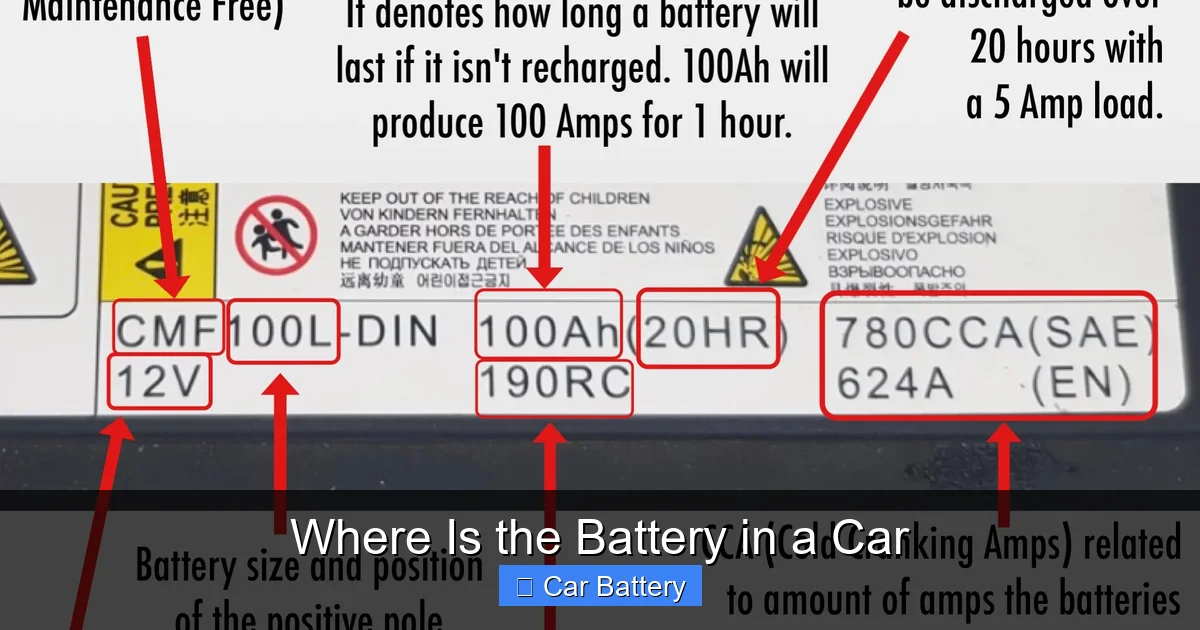
Visual guide about Where Is the Battery in a Car
Image source: askmyauto.com
The vast majority of gasoline-powered cars—especially those made in the last few decades—have their batteries under the hood. This is the most traditional and accessible location, and for good reason. It’s easy for mechanics to reach, and it keeps the battery close to the starter motor, which needs a strong, direct connection to crank the engine.
Typically, you’ll find the battery on either the driver’s side or the passenger’s side of the engine bay, near the front of the vehicle. On many American and Japanese cars, it’s on the driver’s side. European models, like BMW or Mercedes, often place it on the passenger side. But there are exceptions, so don’t assume—always look.
To spot it, look for a rectangular plastic box, usually black or gray, about the size of a large dictionary. It will have two thick cables attached: one red (positive) and one black (negative). The positive terminal often has a red cover or a “+” sign, while the negative has a “–” sign. Some batteries also have a vent cap or a built-in hydrometer (a small window that shows battery health).
For example, in a Honda Civic or Toyota Camry, the battery is almost always under the hood on the driver’s side. In a Ford F-150, it’s usually on the passenger side. If you’re unsure, a quick glance at the cables leading from the battery to the starter motor can confirm its location.
How to Identify the Battery Under the Hood
If you’re looking under the hood and see multiple boxes or components, don’t panic. The battery is usually the most prominent electrical component. Here’s how to identify it:
– It’s a sealed or vented plastic case, typically 10–12 inches long.
– It has two heavy-gauge cables connected to the top.
– The positive terminal is marked with a “+” and often has a red cap.
– The negative terminal is marked with a “–” and is usually bare metal or black.
– It may have a label with the battery brand, model number, and date code.
If you see a smaller box with lots of wires, that’s likely the fuse box or ECU (engine control unit)—not the battery. The battery is all about raw power, so it’s built to handle high current, which is why the cables are so thick.
Uncommon Battery Locations: When the Battery Isn’t Under the Hood
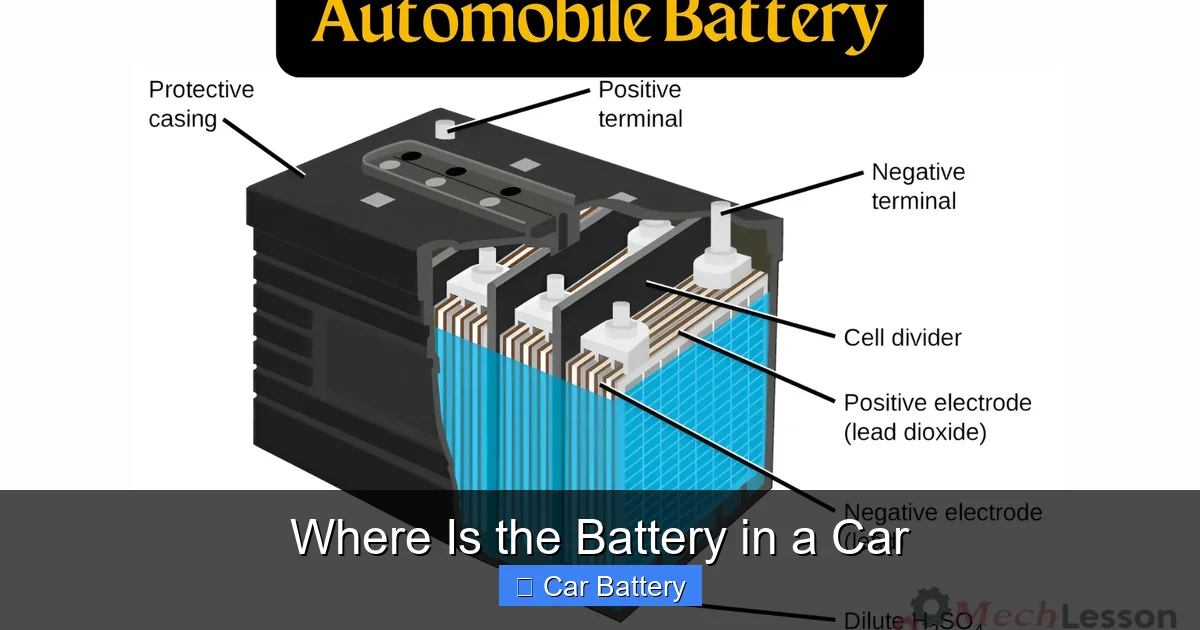
Visual guide about Where Is the Battery in a Car
Image source: mechlesson.com
While under-the-hood placement is standard, many modern vehicles—especially luxury, compact, or hybrid models—hide the battery in less obvious spots. Automakers do this to save space, reduce weight over the front wheels, or improve crash safety. But it can be confusing if you’re not expecting it.
One common alternative location is the trunk. In cars like the BMW 3 Series, Mercedes-Benz C-Class, or Audi A4, the battery is often mounted in the trunk, usually on the right side behind a panel or under the floor mat. This design helps balance the car’s weight and keeps the battery away from engine heat.
Another location is under the rear seat. Some compact cars, like the Honda Fit or certain Hyundai models, place the battery beneath the back seat cushion. You’ll need to lift the seat to access it. This is especially common in smaller vehicles where space under the hood is limited.
In some SUVs and trucks, the battery might be located behind a front wheel well or under a fender liner. For example, certain Jeep Wrangler models have the battery tucked behind the driver’s side wheel well, accessible by removing a plastic cover. This protects it from engine heat but makes it harder to reach.
Hybrid and electric vehicles often have multiple batteries—one 12-volt battery for accessories and a high-voltage battery pack for propulsion. The 12-volt battery in hybrids like the Toyota Prius is frequently in the trunk or under the rear seat, while the main battery pack is under the floor.
Why Do Some Cars Hide the Battery?
There are several reasons automakers move the battery from under the hood:
– **Weight distribution:** Placing the battery in the rear helps balance the car, improving handling and traction.
– **Space constraints:** Smaller engines and tighter engine bays leave less room for traditional battery placement.
– **Thermal management:** Keeping the battery away from engine heat can extend its life.
– **Safety:** In a frontal collision, a battery under the hood could be damaged or leak acid. Moving it reduces this risk.
– **Aerodynamics and design:** Some manufacturers prioritize a clean engine bay for aesthetics or airflow.
While these designs have benefits, they can make maintenance more challenging. That’s why it’s crucial to know your car’s specific layout.
How to Find Your Car’s Battery: A Step-by-Step Guide

Visual guide about Where Is the Battery in a Car
Image source: cdn1.vectorstock.com
Not sure where your battery is? Here’s a simple process to find it, no matter what you drive.
**Step 1: Check the owner’s manual.**
This is the most reliable source. The manual will show a diagram of the battery location and may include instructions for removal or jump-starting.
**Step 2: Look under the hood first.**
Open the hood and scan the engine bay. Look for the rectangular box with two thick cables. If you see it, great—you’re done. If not, move to the next step.
**Step 3: Check the trunk.**
Open the trunk and look along the sides or under the floor mat. Some cars have a small panel or cover labeled “Battery” or “12V.”
**Step 4: Lift the rear seat.**
If your car has a fold-down or liftable rear seat, check beneath it. You may need to unclip or unscrew a panel.
**Step 5: Inspect the wheel wells.**
On some trucks and SUVs, the battery is behind a plastic cover near the front wheels. Look for a removable panel on the inner fender.
**Step 6: Use a flashlight and mirror.**
If the battery is in a tight spot, a small flashlight and inspection mirror can help you see into dark corners.
**Step 7: Search online.**
If all else fails, search for your car’s make, model, and year plus “battery location.” Forums, YouTube videos, and repair guides often have photos and tips.
Pro Tip: Label It for Next Time
Once you find your battery, consider labeling the area or taking a photo. This way, you’ll know exactly where to look the next time you need to jump-start or replace it.
What to Do Once You Find the Battery
Now that you’ve located your battery, what’s next? Whether you’re jump-starting, cleaning, or replacing it, here’s what you need to know.
**Jump-Starting Your Car**
If your car won’t start, you’ll need to connect jumper cables to the battery terminals. Always connect the red (positive) cable first, then the black (negative). Attach the other end to a working battery or a portable jump starter. Never let the clamps touch each other while connected to a power source.
**Cleaning Corrosion**
Over time, white or greenish powder may build up on the terminals. This is corrosion, caused by acid vapor. To clean it, mix baking soda and water, apply with an old toothbrush, and scrub gently. Rinse with water and dry thoroughly. Apply a thin layer of petroleum jelly to prevent future buildup.
**Checking Battery Health**
Use a multimeter to check voltage. A healthy battery should read around 12.6 volts when the car is off and 13.7–14.7 volts when running. If it’s below 12.4 volts, it may need charging or replacement.
**Replacing the Battery**
When it’s time for a new battery, make sure to get the correct size and type. Most auto parts stores can help you find the right match. Disconnect the negative terminal first, then the positive. Remove the old battery, install the new one, and reconnect in reverse order.
Safety Tips When Handling a Car Battery
Car batteries contain sulfuric acid and produce explosive hydrogen gas, so safety is critical.
– Always wear safety glasses and gloves.
– Never smoke or use open flames near the battery.
– Disconnect the negative terminal first when removing the battery.
– Keep metal tools away from both terminals to avoid short circuits.
– If acid gets on your skin, rinse immediately with water and seek medical help.
Conclusion
Knowing where the battery is in a car might seem like a small detail, but it’s one of those essential skills that can make a big difference when you’re in a pinch. Whether it’s under the hood, in the trunk, or hidden under a seat, being able to locate your battery quickly and safely empowers you to handle emergencies, perform maintenance, and keep your vehicle running smoothly.
While most cars follow the traditional under-the-hood design, modern engineering has introduced a variety of alternative placements—each with its own advantages and challenges. The key is to know your vehicle. Consult your owner’s manual, look for visual clues, and don’t hesitate to ask for help if you’re unsure.
Remember, your car’s battery is its heart. It powers everything from the engine to the lights, and it deserves regular attention. By understanding where it’s located and how to care for it, you’ll not only extend its life but also gain peace of mind on the road. So the next time someone asks, “Where is the battery in a car?”—you’ll know exactly what to say.
Frequently Asked Questions
Where is the battery usually located in a car?
The battery is most commonly found under the hood, on either the driver’s or passenger’s side near the front of the engine bay. This location allows easy access for maintenance and a direct connection to the starter motor.
Can a car battery be in the trunk?
Yes, many luxury and European cars, such as BMW and Mercedes models, place the battery in the trunk, usually behind a side panel or under the floor mat. This helps with weight distribution and protects the battery from engine heat.
How do I find the battery if it’s not under the hood?
Check the owner’s manual first. If the battery isn’t under the hood, look in the trunk, under the rear seat, or behind a front wheel well. Some vehicles have removable panels or covers that hide the battery.
Is it safe to touch a car battery?
Yes, but you should wear gloves and safety glasses. The battery contains acid and can produce explosive gases, so avoid sparks, open flames, and metal contact between the terminals.
How often should I check my car battery?
It’s a good idea to inspect your battery every six months. Look for corrosion, loose cables, and signs of wear. Most batteries last 3–5 years, so plan for replacement around that time.
Can I jump-start a car if the battery is in the trunk?
Yes, but you’ll need to access the battery terminals in the trunk. Some cars have jump points under the hood that connect to the trunk battery, but it’s safer to connect directly to the battery terminals when possible.
