
When Did Suzuki Pioneer Motorcycles?

Suzuki began its journey into motorcycle manufacturing in 1952, just a few years after World War II. What started as a modest venture with the “Power Free” motorized bicycle quickly evolved into a legacy of innovation, performance, and reliability that defines Suzuki motorcycles today.
Key Takeaways
- Suzuki entered the motorcycle market in 1952 with the launch of the Power Free, a two-stroke, 36cc motorized bicycle that marked the brand’s first foray into two-wheeled vehicles.
- The company’s early focus on affordability and practicality helped it gain traction in post-war Japan, where reliable and economical transportation was in high demand.
- Suzuki’s engineering philosophy emphasized innovation and efficiency, leading to advancements in engine design, lightweight frames, and fuel economy that set industry standards.
- The 1960s and 1970s were transformative decades for Suzuki, as the brand expanded globally and introduced iconic models like the T20 Super Twin and the GT750 “Water Buffalo.”
- Suzuki pioneered performance motorcycles with models such as the GSX-R series, which redefined sportbike design and became benchmarks for speed and handling.
- The brand’s commitment to motorsports—especially in Grand Prix racing and endurance events—helped refine its technology and build a reputation for durability and speed.
- Today, Suzuki continues to innovate with modern classics, adventure bikes, and fuel-efficient commuters, staying true to its roots while embracing new technologies like fuel injection and ABS.
📑 Table of Contents
- When Did Suzuki Pioneer Motorcycles? A Look at the Brand’s Humble Beginnings
- The Birth of a Motorcycle Legacy: Suzuki’s Early Innovations
- Expanding Horizons: Suzuki’s Global Ambitions in the 1960s
- The Rise of the Sportbike: Suzuki’s Performance Revolution
- Motorsports and Innovation: How Racing Shaped Suzuki Motorcycles
- Suzuki Today: Honoring the Past, Embracing the Future
- Conclusion: The Enduring Legacy of Suzuki Motorcycles
When Did Suzuki Pioneer Motorcycles? A Look at the Brand’s Humble Beginnings
It’s easy to think of Suzuki as a well-established name in the world of motorcycles—after all, the brand has been around for decades and is known for everything from nimble sportbikes to rugged adventure machines. But have you ever wondered when Suzuki actually started making motorcycles? The answer might surprise you. Suzuki didn’t begin as a motorcycle manufacturer at all. In fact, the company’s roots go back to 1909, when it was founded as Suzuki Loom Works by Michio Suzuki, a textile engineer who specialized in weaving machinery. For over four decades, Suzuki focused on producing looms for the Japanese silk industry, becoming one of the country’s leading manufacturers.
It wasn’t until the aftermath of World War II that Suzuki shifted its focus. Japan was rebuilding, and the demand for affordable, reliable transportation surged. People needed ways to get to work, transport goods, and rebuild their lives. Recognizing this need, Michio Suzuki made a bold decision: to diversify the company’s product line and enter the growing market for personal mobility. In 1952, Suzuki introduced its first motorized vehicle—the Power Free. This wasn’t a full-fledged motorcycle in the modern sense, but rather a motorized bicycle equipped with a 36cc two-stroke engine. It could be pedaled like a regular bike or powered by the engine, giving users the best of both worlds. This clever design made it accessible to a wide range of people, especially those who couldn’t afford a car or a traditional motorcycle.
The Power Free was an instant success. It was simple, affordable, and incredibly practical. Within a year of its launch, Suzuki was producing over 6,000 units per month. The company’s slogan at the time—“We make things that people want”—was proving true. This early success laid the foundation for Suzuki’s future in the motorcycle industry. By 1954, the company had officially changed its name to Suzuki Motor Corporation, signaling its commitment to motorized transportation. From that point on, Suzuki began developing more advanced motorcycles, setting the stage for decades of innovation and growth.
The Birth of a Motorcycle Legacy: Suzuki’s Early Innovations
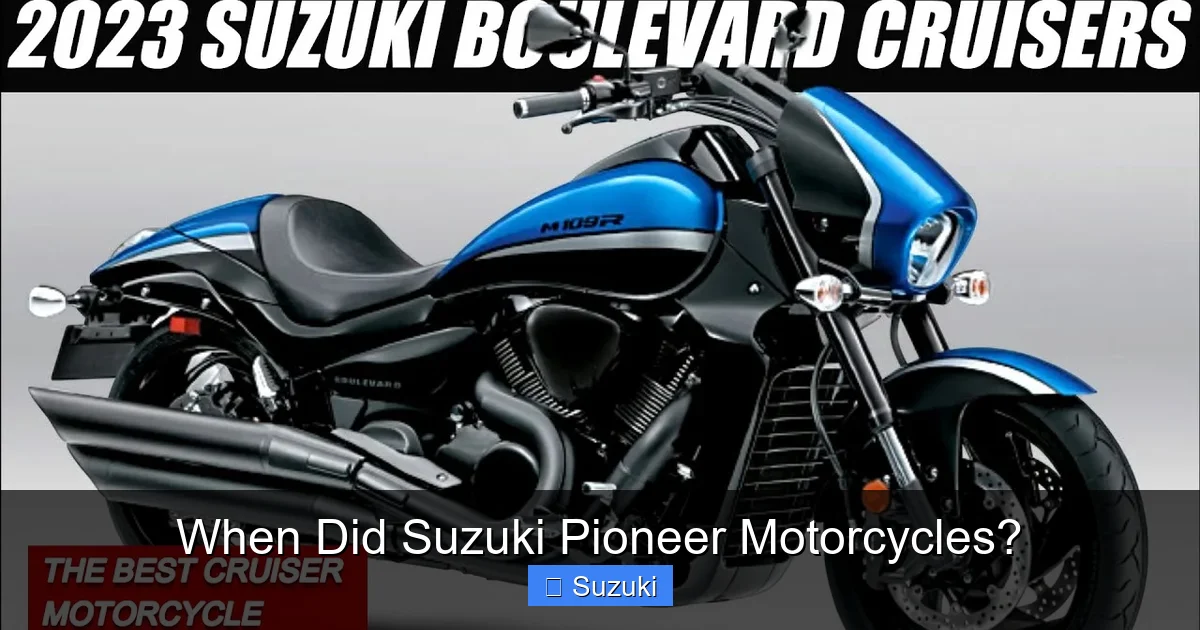
Visual guide about When Did Suzuki Pioneer Motorcycles?
Image source: i.ytimg.com
The Power Free may have been Suzuki’s first step into motorized vehicles, but it was just the beginning. The company quickly realized that to compete in the evolving transportation market, it needed to innovate. In 1953, just a year after launching the Power Free, Suzuki introduced the Diamond Free, an improved version with a more powerful 60cc engine and a three-speed transmission. This model offered better performance and greater reliability, making it a favorite among commuters and delivery riders.
One of the key reasons Suzuki succeeded in the early days was its focus on engineering excellence. Unlike some competitors who simply copied existing designs, Suzuki invested in research and development to create motorcycles that were uniquely suited to Japanese roads and lifestyles. The company’s engineers prioritized lightweight construction, fuel efficiency, and ease of maintenance—qualities that resonated with everyday riders. For example, the Diamond Free featured a pressed steel frame that was both strong and lightweight, a design choice that would become a hallmark of Suzuki motorcycles.
Another important factor was Suzuki’s commitment to affordability. In the 1950s, Japan was still recovering from the economic devastation of World War II. Most people couldn’t afford cars, and even motorcycles were considered a luxury. Suzuki addressed this by keeping production costs low and passing the savings on to consumers. This strategy not only helped Suzuki dominate the domestic market but also positioned the brand for future export opportunities.
By the late 1950s, Suzuki had established itself as a serious player in the motorcycle industry. The company introduced the Colleda series, which included models like the Colleda ST and Colleda SB. These bikes featured more advanced two-stroke engines and improved suspension systems, offering a smoother and more comfortable ride. The Colleda SB, in particular, became popular among police forces and postal services due to its reliability and durability.
Expanding Horizons: Suzuki’s Global Ambitions in the 1960s
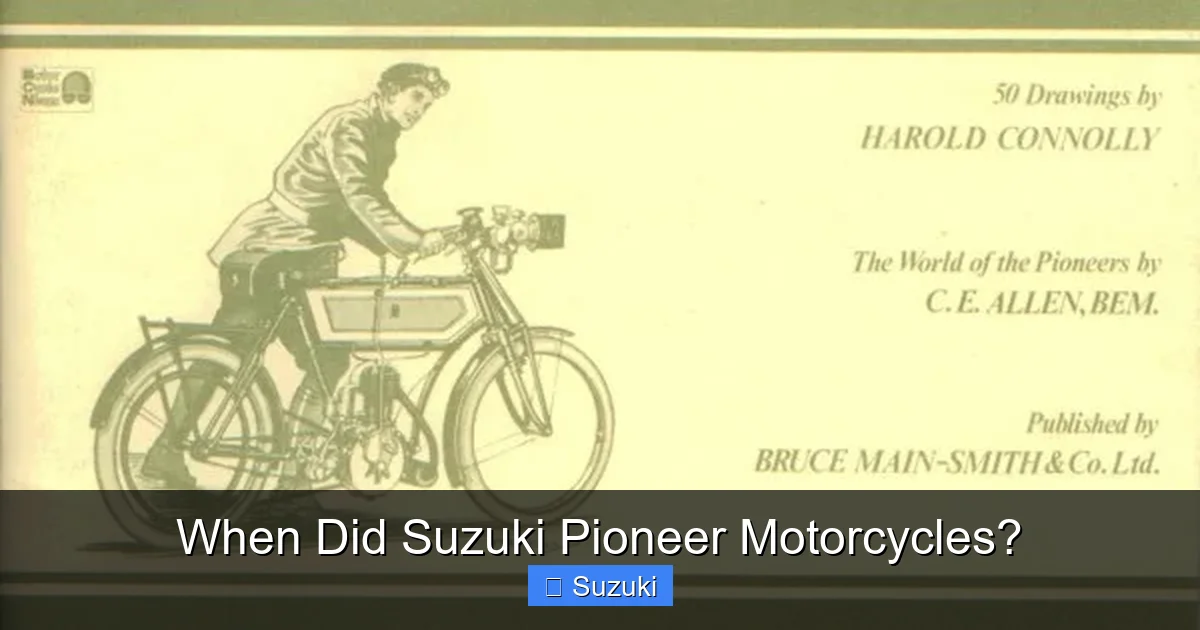
Visual guide about When Did Suzuki Pioneer Motorcycles?
Image source: vintagemotorcyclebooks.nl
The 1960s were a transformative decade for Suzuki. As Japan’s economy grew, so did the company’s ambitions. Suzuki began exporting motorcycles to international markets, starting with Southeast Asia and eventually reaching Europe and North America. This global expansion was driven by a combination of smart marketing, competitive pricing, and a growing reputation for quality.
One of the most significant milestones during this period was the launch of the T20 Super Twin in 1966. This 250cc two-stroke twin-cylinder motorcycle was a game-changer. It featured a six-speed transmission, which was rare for bikes of that size at the time, and delivered impressive performance for its class. The T20 quickly gained a loyal following among enthusiasts and was often praised for its smooth power delivery and excellent handling. It also became a favorite among racers, helping Suzuki build a strong presence in motorsports.
Suzuki’s success in racing during the 1960s further boosted its global profile. The company began competing in international events like the Isle of Man TT and the Motocross World Championships. These races were not just about winning trophies—they were testing grounds for new technologies and design concepts. Lessons learned on the track were quickly applied to production models, making Suzuki motorcycles more advanced and reliable.
Another key development in the 1960s was the introduction of the GT series. The GT750, launched in 1971, was particularly notable. Known as the “Water Buffalo” due to its liquid-cooled engine, the GT750 was one of the first Japanese motorcycles to feature water cooling, a technology that improved engine performance and longevity. It also had a distinctive three-cylinder two-stroke engine that delivered a unique sound and smooth power. The GT750 became a favorite among touring riders and helped establish Suzuki as a serious contender in the large-displacement motorcycle market.
The Rise of the Sportbike: Suzuki’s Performance Revolution

Visual guide about When Did Suzuki Pioneer Motorcycles?
Image source: cdn.aussiesportswear.com
While Suzuki had built a strong reputation for practical, reliable motorcycles, the 1980s marked a shift toward high-performance machines. The brand recognized a growing demand for sportbikes—motorcycles designed for speed, agility, and aggressive styling. In response, Suzuki launched the GSX-R series, which would go on to become one of the most iconic lines in motorcycle history.
The first GSX-R, the GSX-R750, was introduced in 1985. It was a revolutionary bike in many ways. Weighing just 403 pounds, it was one of the lightest 750cc motorcycles ever made at the time. Its aluminum frame, aerodynamic fairing, and powerful four-cylinder engine made it a dominant force on both the street and the track. The GSX-R750 wasn’t just fast—it was also incredibly nimble, thanks to its advanced suspension and braking systems.
What set the GSX-R apart from other sportbikes was its focus on real-world performance. While many competitors prioritized raw power, Suzuki emphasized balance, handling, and rider control. This philosophy resonated with riders who wanted a bike that was thrilling to ride but still manageable on public roads. The GSX-R750 quickly became a best-seller and helped Suzuki capture a significant share of the sportbike market.
Over the years, the GSX-R series continued to evolve. Suzuki introduced smaller displacement models like the GSX-R600 and GSX-R1000, each pushing the boundaries of performance and technology. The GSX-R1000, launched in 2001, featured advanced electronics, including traction control and ride-by-wire throttle, setting new standards for sportbike innovation.
Suzuki’s commitment to performance wasn’t limited to the GSX-R series. The company also developed other high-performance models, such as the Hayabusa. Introduced in 1999, the Hayabusa (GSX1300R) was designed to be the fastest production motorcycle in the world. With a top speed of over 190 mph, it quickly gained a cult following and became a symbol of Suzuki’s engineering prowess. Despite controversy over its speed, the Hayabusa remained in production for over two decades, a testament to its enduring appeal.
Motorsports and Innovation: How Racing Shaped Suzuki Motorcycles
One of the defining characteristics of Suzuki’s motorcycle legacy is its deep connection to motorsports. From the early days of Grand Prix racing to modern-day endurance events, Suzuki has used competition as a platform for innovation and brand building.
In the 1960s and 1970s, Suzuki made a name for itself in Grand Prix racing, particularly in the 50cc and 125cc classes. The company’s lightweight two-stroke engines proved highly competitive, and Suzuki riders like Hugh Anderson and Ernst Degner achieved multiple world championships. These victories not only brought prestige to the brand but also provided valuable insights into engine performance and reliability.
Suzuki’s success in road racing continued into the 1980s and 1990s, with the GSX-R series dominating events like the Suzuka 8 Hours and the World Superbike Championship. The GSX-R750, in particular, became a favorite among privateer racers due to its affordability and race-ready design. Suzuki also supported factory racing teams, developing specialized versions of its bikes for competition use.
Motocross and off-road racing were another area where Suzuki excelled. The RM series, launched in the 1970s, became a staple in the motocross world. Models like the RM250 and RM125 were known for their lightweight construction, responsive handling, and powerful two-stroke engines. Suzuki riders like Ricky Carmichael achieved legendary status, winning multiple championships and helping to popularize the brand among off-road enthusiasts.
Beyond racing, Suzuki’s involvement in motorsports influenced its production motorcycles in several ways. Technologies developed for competition—such as advanced suspension systems, lightweight materials, and high-performance engines—were often adapted for street-legal models. This cross-pollination of ideas ensured that Suzuki motorcycles remained at the cutting edge of performance and innovation.
Suzuki Today: Honoring the Past, Embracing the Future
Today, Suzuki continues to build on its rich heritage while adapting to the changing landscape of the motorcycle industry. The brand offers a diverse lineup that includes sportbikes, cruisers, adventure motorcycles, and scooters, catering to a wide range of riders and riding styles.
One of Suzuki’s strengths is its ability to balance tradition with innovation. Models like the GSX-R1000 and Hayabusa remain in production, updated with modern features like ABS, traction control, and fuel injection. At the same time, Suzuki has introduced new models that reflect current trends, such as the V-Strom series for adventure touring and the Burgman scooters for urban commuting.
Sustainability is also becoming a focus for Suzuki. The company has begun exploring electric and hybrid technologies, with prototypes and concept bikes hinting at a future where performance and environmental responsibility go hand in hand. While Suzuki has been slower to adopt electric motorcycles compared to some competitors, its engineering expertise and global reach position it well for future growth in this area.
Another key aspect of Suzuki’s modern strategy is its commitment to affordability and accessibility. Just as it did in the 1950s, Suzuki continues to offer reliable, well-built motorcycles at competitive prices. This approach has helped the brand maintain a strong presence in emerging markets, where cost-effective transportation remains a priority.
Despite changes in technology and market demands, Suzuki’s core values remain the same: innovation, reliability, and a passion for riding. Whether you’re a seasoned rider or a beginner, there’s likely a Suzuki motorcycle that fits your needs. From the humble Power Free to the high-speed Hayabusa, Suzuki’s journey is a testament to the power of vision, perseverance, and a commitment to making things people want.
Conclusion: The Enduring Legacy of Suzuki Motorcycles
So, when did Suzuki pioneer motorcycles? The answer is 1952—a year that marked the beginning of a remarkable journey. What started as a small motorized bicycle has grown into a global brand with a reputation for quality, performance, and innovation. Suzuki’s early focus on practicality and affordability laid the foundation for its success, while its later emphasis on performance and motorsports cemented its place in motorcycle history.
Today, Suzuki motorcycles are ridden by millions around the world, from bustling city streets to remote mountain trails. The brand’s ability to adapt to changing times while staying true to its roots is what makes it so enduring. Whether you’re drawn to the sleek lines of a GSX-R, the rugged charm of a V-Strom, or the classic appeal of a Hayabusa, you’re riding a piece of history.
As Suzuki looks to the future, one thing is certain: the spirit of innovation that began in 1952 will continue to drive the brand forward. With a legacy built on passion, engineering excellence, and a deep love for the ride, Suzuki is poised to remain a leader in the motorcycle world for generations to come.
Frequently Asked Questions
When did Suzuki start making motorcycles?
Suzuki began manufacturing motorcycles in 1952 with the launch of the Power Free, a 36cc motorized bicycle. This marked the company’s entry into the two-wheeled vehicle market after decades of producing textile machinery.
What was Suzuki’s first motorcycle?
Suzuki’s first motorcycle was the Power Free, introduced in 1952. It featured a two-stroke engine and could be powered by pedals or the motor, making it an affordable and practical option for post-war Japan.
How did Suzuki motorcycles become popular internationally?
Suzuki expanded globally in the 1960s by exporting motorcycles to Europe, North America, and Southeast Asia. Competitive pricing, reliable engineering, and success in motorsports helped the brand gain international recognition.
What is the most famous Suzuki motorcycle?
The Suzuki Hayabusa (GSX1300R) is one of the most famous Suzuki motorcycles, known for being the world’s fastest production bike when it launched in 1999. The GSX-R series is also iconic for revolutionizing sportbike design.
Did Suzuki motorcycles win any racing championships?
Yes, Suzuki has won multiple world championships in Grand Prix racing, motocross, and endurance events. Riders like Hugh Anderson and Ricky Carmichael helped establish Suzuki’s reputation in competitive motorsports.
Does Suzuki still make motorcycles today?
Yes, Suzuki continues to produce a wide range of motorcycles, including sportbikes, cruisers, adventure bikes, and scooters. The brand remains active in both domestic and international markets, with a focus on innovation and performance.
