What Is the Tesla Tab?

Contents
- 1 Key Takeaways
- 2 📑 Table of Contents
- 3 What Exactly *Is* the Tesla Tab? It’s More Than a Screen
- 4 A Tour of the Tesla Tab: What Can You Actually Control?
- 5 The Beautiful Revolution: Benefits of the All-Touch Tesla Tab
- 6 The Other Side of the Coin: Criticisms and Safety Debates
- 7 How the Tab Evolved: From Model S/X to Model 3/Y and Beyond
- 8 Mastering Your Tesla Tab: Practical Tips for New Owners
- 9 The Final Word: Is the Tesla Tab a Good Thing?
- 10 Frequently Asked Questions


The Tesla Tab is the official name for the large, central touchscreen display that serves as the single, all-in-one control hub for nearly every function in a Tesla vehicle. It replaces nearly all traditional physical buttons and knobs with a sleek, software-driven interface for climate, media, navigation, settings, and vehicle controls. While it offers a clean, futuristic design and over-the-air updates, it also presents a learning curve and has sparked debate about driver distraction. Understanding this digital command center is key to unlocking your Tesla’s full potential and navigating its unique driving experience.
Hey there! If you’ve ever been curious about that big, beautiful, and sometimes intimidating screen in a Tesla, you’re in the right place. You’ve probably heard people throw around the term “Tesla Tab,” but what does it really mean? Is it just a fancy name for a touchscreen? Well, sort of, but it’s so much more. Think of it less like a car radio and more like the command center of a spaceship. It’s the digital heart of the vehicle, and getting to know it is the first real step in becoming a confident Tesla owner. Let’s break it down, friend-to-friend.
Key Takeaways
- The Tesla Tab is the central touchscreen: It’s the primary, and often only, interface for controlling your Tesla’s systems, from climate and music to driving settings and charging.
- It consolidates everything into one place: Unlike traditional cars with scattered buttons, the Tab puts all controls on a single, large, responsive display that can be updated via software.
- It enables a minimalist interior and constant innovation: The lack of physical buttons creates a clean cabin, and Tesla can add new features or improve existing ones through over-the-air updates directly to the Tab.
- It has a notable learning curve and safety considerations: New users must learn to navigate menus while driving, raising valid concerns about distraction compared to tactile, muscle-memory-based physical controls.
- Its layout and capabilities evolve by model and software version: The Tab’s design and available menus differ between Model S/X and Model 3/Y, and change with each major software update from Tesla.
- Mastering it involves shortcuts and voice commands: Efficient use relies on learning keyboard shortcuts, scroll wheel actions on the steering wheel, and the built-in voice command system to minimize screen tapping.
📑 Table of Contents
- What Exactly *Is* the Tesla Tab? It’s More Than a Screen
- A Tour of the Tesla Tab: What Can You Actually Control?
- The Beautiful Revolution: Benefits of the All-Touch Tesla Tab
- The Other Side of the Coin: Criticisms and Safety Debates
- How the Tab Evolved: From Model S/X to Model 3/Y and Beyond
- Mastering Your Tesla Tab: Practical Tips for New Owners
- The Final Word: Is the Tesla Tab a Good Thing?
What Exactly *Is* the Tesla Tab? It’s More Than a Screen
First, let’s clear up the terminology. “Tesla Tab” isn’t an official Tesla marketing name you’ll find on their website brochures. It’s a colloquial term, a nickname that stuck within the Tesla community and owner forums. It refers specifically to the central, landscape-oriented touchscreen display that dominates the dashboard of every Tesla model—from the flagship Model S and Model X to the more accessible Model 3 and Model Y.
So, what makes it a “Tab” and not just a “screen”? It’s the concept. The Tab is your single, unified tab into the car’s entire digital soul. In a traditional car, you have a separate knob for the volume, buttons for the climate, a stalk for the turn signals, a physical key for ignition (or a push-button), and a small screen for navigation. In a Tesla, the Tab absorbs almost all of these functions. It’s the media player, the thermostat, the settings menu, the map, the phone connector, the diagnostics viewer, and the entertainment hub—all rolled into one sleek piece of glass.
The Philosophy: Software Over Hardware
This design choice is deliberate and philosophical. Tesla, at its core, is a technology and software company that happens to make cars. By centralizing control onto a single, large display powered by a powerful computer (the same one that runs Autopilot), Tesla achieves two major things. First, it creates an incredibly clean, minimalist interior. There’s no clutter of buttons, just a smooth surface that can be wiped clean. Second, and more importantly, it makes the car’s interface infinitely updatable. Remember when your 2015 car’s Bluetooth felt ancient? In a Tesla, Tesla can push a software update that completely redesigns the media player layout or adds a new “Dog Mode” feature directly to your Tab. The hardware (the screen) stays the same, but the software—and your experience—can constantly evolve. This is a radical shift from the traditional automotive model where a car’s infotainment system is essentially frozen in time the day it rolls off the lot.
A Tour of the Tesla Tab: What Can You Actually Control?
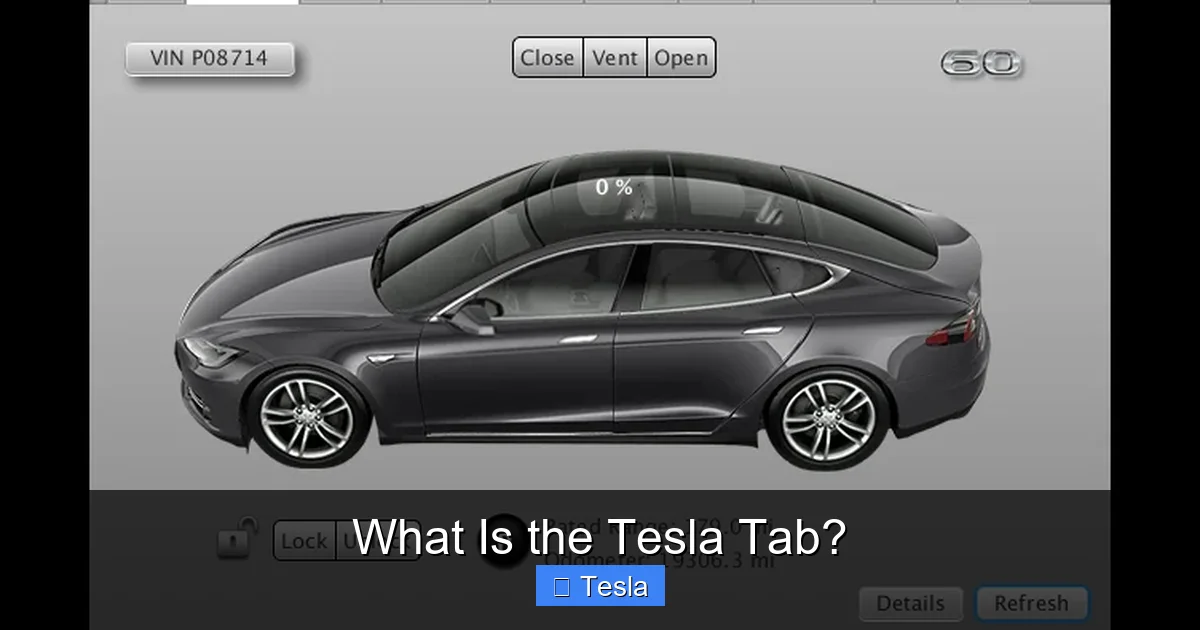
Knowing it’s the main hub is one thing; knowing what’s *in* the hub is another. Let’s take a virtual walk through the typical Tesla Tab layout. While exact positions can shift with software updates, the core areas remain consistent.

Visual guide about What Is the Tesla Tab?
Image source: teslaminingspace.com
The Bottom Bar: Your Constant Companions
At the very bottom of the screen, you’ll always find a persistent dock or “taskbar.” This is your launchpad. From left to right, you’ll usually see icons for:
- Media: Your music, podcasts, and radio. This integrates services like Spotify, TuneIn, and Bluetooth audio from your phone.
- Energy/Tire Pressure/Charge: A real-time visualization of your battery level, range, and energy usage, or tire pressure monitoring (varies slightly by model and update).
- Cameras: A live view from the car’s suite of cameras, crucial for checking your surroundings, especially when using the “Summon” feature or for security with Sentry Mode.
- Apps: A grid of all your other applications, which we’ll explore next.
The App Grid: The Brain’s Many Departments
Tapping the “Apps” icon or swiping up from the bottom reveals the main grid. Here you’ll find icons for major systems:
- Navigation (Map): The heart of the Tesla experience. It’s a Google Maps-powered system with Supercharger planning, real-time traffic, and a stunning “light show” for nearby destinations. You can search, drop pins, and see live traffic.
- Climate: Control your cabin temperature. You’ll see sliders for driver and passenger, fan speed, and seat heating/cooling controls (if equipped). There’s also a “Defrost” mode and, in newer updates, a clever “Dog Mode” or “Keep Climate On” for pets or cabin preservation.
- Settings: This is the deep control panel. Here you adjust everything: driving preferences (steering feel, acceleration mode, regen braking), vehicle & safety settings (like Autopilot, speed limit mode, PIN to drive), display & sound, and even service & diagnostics information.
- Phone: For Bluetooth pairing and managing connected devices.
- Calendar: Syncs with your phone’s calendar to show appointments on the map.
- Games & Entertainment: Tesla has turned its Tab into a gaming console. You’ll find titles like Cup Pong, Chess, and even complex games that use the steering wheel and pedals as controllers (when parked). There’s also a web browser and streaming apps like Netflix, Hulu, and YouTube (only when parked or connected to Wi-Fi).
- Security: Where you arm/disarm Sentry Mode, set a PIN for speed limits, or view the dashcam footage from the “Save Video” button.
This is just the core. Updates constantly add new “apps” or features to this grid, like a “Boombox” for external speaker sounds or a “Light Show” that syncs the headlights and music.
The Beautiful Revolution: Benefits of the All-Touch Tesla Tab
Why would Tesla, and so many owners, fall in love with this system? The advantages are significant and represent a genuinely different approach to car design.
Visual guide about What Is the Tesla Tab?
Image source: visibletesla.com
Unmatched Cleanliness and Future-Proofing
Take a look at a new BMW X3 or a Dodge Charger interior. You’ll see a mix of physical buttons, a rotary controller, and a screen. The Tesla Tab allows for a stunningly minimalist cabin. There’s no visual noise. This isn’t just aesthetics; it’s a statement that the car’s interface is digital and flexible. Because it’s software-based, your 2018 Model 3 can receive a 2023 interface update, making it feel almost new. Compare that to a traditional car where the infotainment feels obsolete in three years. For car enthusiasts who value tech, this is a game-changer. You’re not stuck with the interface you bought.
Unprecedented Customization and Information Density
The Tab can show you more information, in more ways, than a bank of physical gauges ever could. Want to see a real-time graph of your energy consumption? You got it. Prefer a minimalist speedometer with a small battery icon? You can choose that. Need to see the precise wattage your heater is using? It’s in the energy app. This level of granular data is a dream for efficiency nerds and EV curious drivers. You can truly understand how your driving style impacts range.
Seamless Integration of the “Digital Life”
The Tab isn’t an add-on; it’s the core. Your calendar appears on the map. Your phone’s contacts are in the phone app. Streaming services are built-in. The navigation plans trips with automatic Supercharger stops. This deep integration creates an ecosystem that feels cohesive and modern, unlike the sometimes clunky mirroring solutions (Apple CarPlay/Android Auto) in other cars. It’s a unified Tesla experience.
The Other Side of the Coin: Criticisms and Safety Debates
For all its brilliance, the Tesla Tab is not without its critics. The very things that make it revolutionary also create friction for some drivers.
Visual guide about What Is the Tesla Tab?
Image source: driveteslacanada.ca
The Learning Curve and “Eyes Off the Road” Risk
This is the biggest point of contention. Physical buttons are “eyes-free.” Once you’ve used a volume knob for years, you can adjust it without looking. On the Tesla Tab, you must look at the screen to tap the correct icon or slider. For critical functions like adjusting climate or changing a song, this requires taking your eyes off the road. Tesla has mitigated this with steering wheel scroll wheels (for volume and following distance) and voice commands (“Hey Tesla, turn up the heat”), but the fundamental paradigm shift is undeniable. Studies on touchscreens in cars are mixed, but the concern is valid. It demands a different, more intentional kind of driver attention. This is a stark contrast to, say, the clearly labeled, tactile buttons for the Super Track Pack button on a Dodge Charger, which is a single, physical, identifiable control for a specific performance function.
Menu Diving and Lack of Tactile Feedback
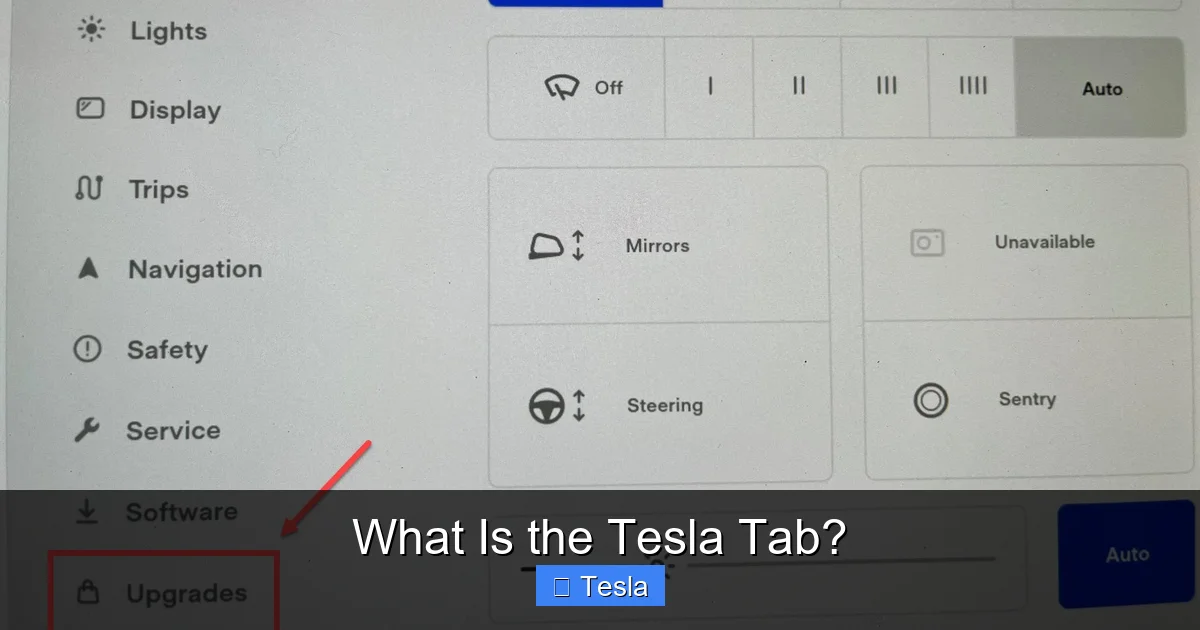
Need to quickly change your wiper speed? It’s buried in a touchscreen menu. Want to adjust the side mirror? It’s in the settings, often requiring several taps. These are functions that, in almost every other car, are handled by a physical stalk or knob—immediately accessible by feel. The Tab forces you into a hierarchical menu structure for less frequent but important adjustments. There’s also no “click” or detent. You’re swiping on glass, which can feel imprecise and requires visual confirmation every single time. This lack of haptic feedback is a common complaint from drivers who value physical control certainty.
Potential for Distraction and Glare
A large, bright screen can be a magnet for eyes, especially with games and streaming available. Tesla has lockout features (games only work when parked), but the temptation is there. Furthermore, the glass surface can create glare in certain sunlight conditions, making it harder to see. While not unique to Tesla, it’s a factor with such a dominant display.
How the Tab Evolved: From Model S/X to Model 3/Y and Beyond
The Tesla Tab isn’t a monolith; it has a history and different iterations. Understanding this helps explain owner experiences.
The Original Landscape Tab (Model S/X, pre-2021)
The first-generation Tab was a portrait-oriented (tall) screen in the Model S and Model X. It was divided into two main sections: the top half for media/energy/other apps, and the bottom half for climate and permanent shortcuts. This design was iconic but had a distinct look. It also featured a physical, embedded stalk on the steering wheel for some functions, but the core was the vertical screen.
The Horizontal Revolution (Model 3/Y, and refreshed S/X)
The launch of the Model 3 in 2017 brought the now-familiar landscape (wide) orientation. This layout is more akin to a tablet or laptop, making media and maps feel more natural. The bottom bar became the universal launchpad. This design was so successful it was later adopted by the refreshed Model S and X, which now have a secondary, smaller horizontal screen for the driver behind the steering wheel, but the main central Tab remains the landscape-style command center. The Model 3/Y’s Tab is simpler and more focused, with fewer permanent widgets, relying more on the user to navigate to the climate settings via an on-screen slider or a quick swipe.
Software is the True Evolution
The biggest changes don’t come from new hardware, but from software updates. A 2018 Model 3’s Tab looks and functions vastly differently from a 2024 model. We’ve seen complete UI redesigns, the addition of the “Light Show,” the “Boombox” feature, new visualizations for Autopilot, and deeper energy tools. The physical screen might be the same, but the Tab inside it is a living, breathing piece of software. This is Tesla’s true innovation: the car you drive today might not be the car you drove last year.
Mastering Your Tesla Tab: Practical Tips for New Owners
So, you’ve got the keys (or the phone key) and you’re staring at that big screen. Don’t panic. Here’s how to make the Tab your friend, not your foe.
Learn the Steering Wheel Scroll Wheels Immediately
These are your best friends for safe, eyes-on-the-road adjustments. The left scroll wheel controls volume and following distance (for Autopilot). The right scroll wheel controls the steering wheel’s tilt/telescope and, crucially, can also scroll to adjust the steering wheel heater and the driver’s seat heater/cooler in many models. Mastering these reduces 80% of your need to touch the screen for basic functions while moving.
Embrace the Voice Command (“Hey Tesla”)
The voice command system is incredibly powerful and underused. Press the voice button on the right scroll wheel or say “Hey Tesla” (if enabled). You can say: “Drive to the nearest coffee shop,” “Turn on the seat heater,” “Play jazz,” “Set the temperature to 72,” “Open the glovebox.” It’s fast, safe, and accurate. Use it for everything you can.
Use Keyboard Shortcuts
If you have a connected keyboard (via Bluetooth) or use the on-screen keyboard, there are shortcuts. Typing a destination in navigation? Just start typing; it’s intuitive. But knowing you can swipe down from the top of the screen to access quick settings like Wi-Fi and Bluetooth can save time.
Pre-Set Your Routines
Before you start driving, take 10 seconds at a stoplight to set your climate, your music playlist, and your navigation. Get it all configured while stationary. This “setup phase” becomes a ritual and prevents frantic screen-tapping while in motion.
Understand the “Defrost” and “Keep Climate On”
The climate icon in the bottom bar is your go-to. The big “Defrost” button is a one-tap solution for fogged windows. The “Keep Climate On” setting (under the 3-dot menu in the climate app) is a lifesaver for dogs or for keeping the cabin cool while you’re in a store. These are the most important climate functions—know them.
Think of It Like a Smartphone, Not a Car Stereo
This mindset shift is key. You wouldn’t expect to change the volume on your iPhone with a physical knob; you’d use the buttons or Control Center. The Tab is the same. Its strength is in its app-based, software-driven flexibility. You’re not learning a car’s interface; you’re learning a mobile operating system for your vehicle.
The Final Word: Is the Tesla Tab a Good Thing?
Ultimately, the Tesla Tab is a polarizing but defining feature of the modern Tesla ownership experience. It represents a bold bet on a software-first, minimalist future for the automobile. For tech-savvy drivers who value constant updates, a clean interior, and deep data, it’s a revelation. The ability for Tesla to fix bugs, add features, and even improve performance with a simple overnight download is unparalleled.
However, for those who prioritize immediate, tactile, and distraction-free control, it can be a source of frustration and even anxiety. The lack of physical redundancy for critical functions like wipers or defrost is a genuine departure from decades of automotive ergonomics. It requires a conscious effort to use safely and efficiently.
There is no universal “better” here. It’s a different philosophy. If you’re considering a Tesla, spending time with the Tab in a test drive is non-negotiable. See if the voice commands work for you. Try to adjust the mirrors without looking. See if the learning curve feels like a fun puzzle or a dangerous chore. The Tesla Tab isn’t just a screen; it’s the gateway to the car’s personality. Get to know it, respect its power, and it will reward you with an ownership experience unlike any other on the market today.
Frequently Asked Questions
Is the Tesla Tab safe to use while driving?
While the Tab has features like voice commands and steering wheel controls to minimize distraction, any interaction with the touchscreen requires taking your eyes off the road. Tesla recommends using voice commands and steering wheel scrolls for most adjustments while moving. Critical functions like wipers are automated or accessible via voice, but the responsibility for safe driving always remains with the driver.
Can I customize the Tesla Tab’s layout or apps?
To a limited extent. You can rearrange the order of apps in the grid by pressing and holding an icon. You can also choose which apps appear (some, like “Boombox” or “Light Show,” can be hidden). However, the core system layout—the bottom bar and the main app grid structure—is set by Tesla and cannot be fundamentally changed.
What’s the difference between the Tesla Tab in a Model 3 and a Model S?
The main difference is orientation and some hardware. Model 3 and Y use a landscape (wide) screen. The refreshed Model S and X also use a landscape screen, but the original pre-2021 S/X had a portrait (tall) screen. The refreshed S/X also have a secondary, smaller driver display behind the steering wheel, while Model 3/Y have no driver display—all information is on the central Tab. The software capabilities are largely the same across modern models.
How do I reset or restart the Tesla Tab if it freezes?
For a software glitch, you can perform a soft reset. Hold down both scroll wheels on the steering wheel until the screen goes black and the Tesla logo reappears (about 10-20 seconds). For a more persistent issue, you can do a hard reset by powering down the car (via the Safety & Security menu in Settings), waiting a few minutes, and then getting back in or using the app to wake it.
Does the Tesla Tab work when the car is off?
Yes, but with limitations. You can use the Tab for a short period (a few minutes) after exiting the car, as long as you don’t open a door. This lets you adjust settings, play music, or check your dashcam footage. The climate controls will not run, and the screen will dim and eventually sleep to save battery.
Can someone else use my Tesla Tab if they don’t know how?
Absolutely. The Tab is designed to be intuitive. First-time users can usually figure out basic navigation, climate, and media. For less familiar settings, the built-in “Help” section in the Settings menu provides explanations. You can also set up a driver profile for them that saves their seat and mirror positions, climate preferences, and even app layout preferences.