
Will Jeep Rims Fit a Ford?

The short answer is: sometimes, but never assume. Compatibility between Jeep and Ford wheels hinges on three critical measurements: bolt pattern, center bore, and offset. While some Jeep and Ford models share identical specifications, many do not. Using the wrong wheel is dangerous and can cause catastrophic failure. Always verify your specific vehicle’s fitment data before attempting a swap.
Key Takeaways
- Bolt Pattern is King: The number of lug nuts and the spacing between them (e.g., 5×127 or 5×114.3) must match exactly. A mismatch is the most common reason for incompatibility.
- Center Bore Must Match or Be Adapted: The hole in the wheel’s center must fit the vehicle’s hub. A smaller hole won’t fit; a larger hole requires a hubcentric ring to prevent vibration.
- Offset and Backspacing Affect Handling: These determine how the wheel sits relative to the hub. The wrong offset can cause rubbing on suspension, brakes, or fenders and alter steering response.
- Ford and Jeep 5-Lug Patterns Often Differ: Many Jeep Wranglers (JK/JL) use 5×127, while many Ford F-150s and Rangers use 5×114.3. This is a primary point of failure for swaps.
- Torque Specifications are Vehicle-Specific: Even if the wheel bolts on, you must use the correct lug nut type and torque value for your Ford, not your Jeep.
- Testing is Non-Negotiable: After physical fitment checks, a careful test drive at low speed is essential to check for vibration, rubbing, and proper brake operation.
- Safety Trumps Aesthetics: An ill-fitting wheel is a major safety hazard. When in doubt, consult a professional wheel and tire shop with fitment software.
📑 Table of Contents
- So, You’re Thinking of Putting Jeep Rims on Your Ford?
- The Holy Trinity of Wheel Fitment: Bolt Pattern, Center Bore, and Offset
- Jeep vs. Ford: The Bolt Pattern Breakdown
- Center Bore: The Silent Killer of Wheel Swaps
- Offset, Backspacing, and the Real-World Fitment Check
- Practical Steps, Testing, and Common Pitfalls
- Conclusion: Is It Worth the hassle?
So, You’re Thinking of Putting Jeep Rims on Your Ford?
It’s a common thought in the automotive world. You see a set of rugged, cool-looking Jeep wheels—maybe even a set of take-offs from a friend’s Wrangler—and you think, “Would those look amazing on my Ford F-150 or Ranger?” The idea of swapping wheels between brands is tempting. It can save money, offer a unique look, or simply let you use a set of wheels you already have. But before you try to bolt a Jeep rim onto your Ford’s hub, you need to understand the language of wheel fitment. It’s not about brand loyalty; it’s about cold, hard measurements. This guide will walk you through every single factor that determines if that Jeep wheel will safely and properly fit your Ford.
The Holy Trinity of Wheel Fitment: Bolt Pattern, Center Bore, and Offset
Forget about the Jeep or Ford logo stamped on the wheel. The only things that matter are three specific numbers. Think of them as the wheel’s ID card. If any one of these doesn’t match your truck’s requirements, the wheel will not fit correctly, and using it is unsafe.
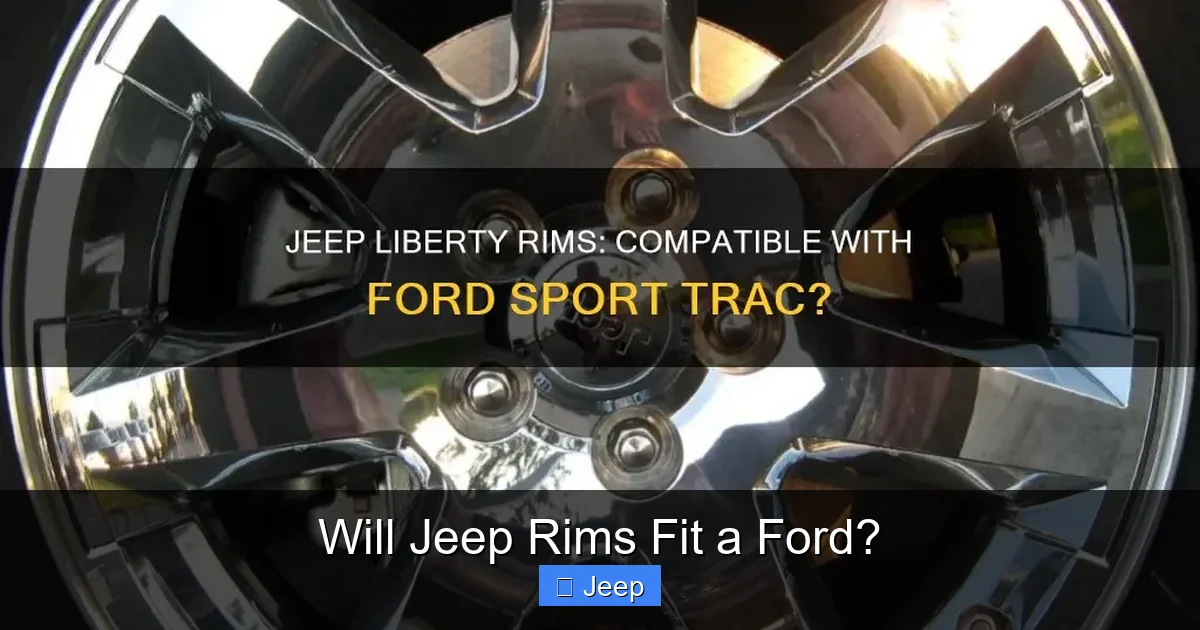
Visual guide about Will Jeep Rims Fit a Ford?
Image source: shunauto.com
What is Bolt Pattern (Pitch Circle Diameter – PCD)?
This is the most obvious and critical measurement. It’s defined by two numbers: the number of lug holes (usually 5 or 6 for these vehicles) and the diameter of the imaginary circle that runs through the center of each lug hole. It’s written as, for example, 5×127 (five lugs on a 127mm circle) or 6×139.7 (six lugs on a 139.7mm circle).
Why it’s a deal-breaker: The bolts on your Ford’s hub have a specific spacing. If the wheel’s holes don’t align perfectly, the wheel simply won’t go on. Forcing it is impossible and would destroy threads. If the number of lugs is different (e.g., a 5-lug Jeep wheel on a 6-lug Ford), it’s an absolute no-go. You cannot drill new holes in a wheel safely; the structural integrity would be compromised.
What is Center Bore (Hub Bore)?
This is the diameter of the hole in the very center of the wheel. It must fit over the circular protrusion (the hub) on your Ford’s axle. The hub’s job is to center the wheel perfectly. The wheel’s center bore is measured in millimeters.
Why it matters: If the wheel’s center bore is smaller than your Ford’s hub, it physically won’t slide on. If it’s larger, the wheel will sit on the lug nuts instead of being centered on the hub. This causes a serious vibration at speed, called “runout,” which can damage bearings, brakes, and steering components. The solution for a larger bore is a hubcentric ring—a plastic or aluminum spacer that fills the gap and re-centers the wheel. However, the ring must be high-quality and installed correctly.
What are Offset and Backspacing?
This is the trickiest concept but equally important. Offset is the distance (in millimeters) from the wheel’s centerline to its mounting surface (the part that touches the hub). It can be positive, negative, or zero. Backspacing is the simpler measurement from the back edge of the wheel to the mounting surface.
Why it’s crucial: Offset determines how far the wheel and tire “stick out” or “tuck in” relative to the fender and suspension components. A Jeep Wrangler typically has a different offset than a Ford F-150. Putting a wheel with the wrong offset on your Ford can cause:
- Tire Rub: The inner edge of the tire can scrub against the upper control arm, brake caliper, or even the fender liner during turns or over bumps.
- Poor Handling: It changes the scrub radius, affecting steering feel and stability.
- Stress on Bearings: It places extra side-load on wheel bearings.
You must ensure the new wheel’s offset is within a safe range for your specific Ford model, especially if you’re changing tire size.
Jeep vs. Ford: The Bolt Pattern Breakdown
Now, let’s get into the brand-specific meat. Are there any overlaps? Yes, but they are specific to model years and trims. You cannot say “all Jeeps” or “all Fords.” You must know your exact vehicle’s specifications.
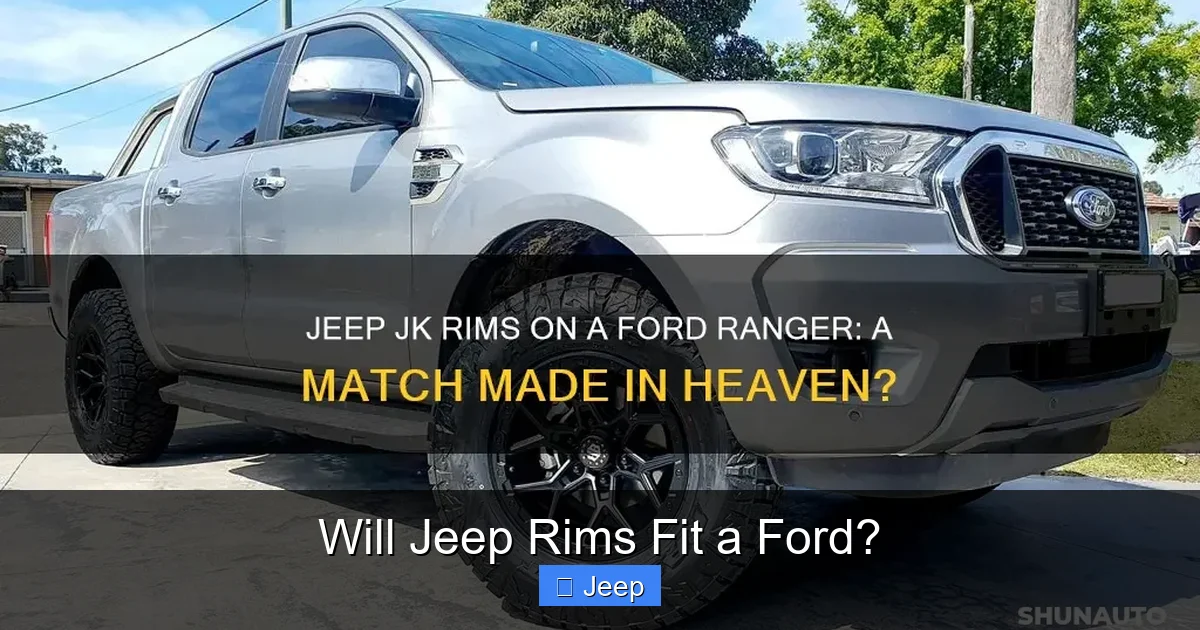
Visual guide about Will Jeep Rims Fit a Ford?
Image source: shunauto.com
The 5-Lug World: Where Confusion Happens
This is the most common area of questioning. Many Jeeps and many Fords have 5-lug wheels, but the patterns are often different.
- Jeep Wrangler (JK/JL 2007-Present): Almost universally uses 5×127 (also called 5×5″). This includes all JK (2007-2018) and JL (2018-Present) Wranglers and Gladiators.
- Jeep Grand Cherokee (WK/WK2 2005-2022): Most use 5×127. Some earlier models (1999-2004 WJ) used 5×114.3.
- Ford F-150 (2004-Present): The vast majority use 5×135 (5×5.31″). This is a different pattern from Jeep’s 5×127. They are NOT interchangeable.
- Ford Ranger (T6 2019-Present): Uses 5×114.3 (5×4.5″). This is a common pattern, also used by many cars, Toyotas, and some older Jeeps.
- Ford Expedition/Navigator: Typically use 5×135.
The Overlap: The only common overlap between typical Jeep and Ford 5-lug patterns is 5×114.3. A Jeep Grand Cherokee (WJ) or older Cherokee (XJ) with 5×114.3 might fit a Ford Ranger (5×114.3) if the center bore and offset are also compatible. But a modern Jeep Wrangler’s 5×127 will not fit a standard Ford F-150’s 5×135. To understand the specific 5-lug patterns for Dodges and Chevys, which often share patterns with Fords, you can read our detailed guide on whether Dodge 5-lug wheels fit Ford.
The 6-Lug World: More Chances for Compatibility
Both brands use 6-lug patterns on many of their trucks and SUVs, and here the numbers are more varied.
- Jeep Gladiator (JT) & Some Wrangler Rubicon (JK/JL): The heavy-duty Rubicon models and all Gladiators use 6×139.7 (6×5.5″).
- Ford F-150 (some models), F-250, F-350, Expedition: Many of these, especially the heavier-duty trucks and older models, use 6×135 or 6×139.7. It varies wildly by year, drivetrain, and axle model. A Ford F-250 could have 6×135 or 6×139.7.
The Overlap & The Danger: The pattern 6×139.7 is a major point of confusion. It’s used by Jeep Rubicon/Gladiator, many GM 6-lug trucks (like the Chevy Silverado 1500 4WD and some 2500HDs), and some Ford trucks. However, a wheel with a 6×139.7 pattern from a Jeep will physically bolt onto a Ford with a 6×135 pattern? Absolutely not. The lug spacing is different. The 6×135 and 6×139.7 are not interchangeable. For a deep dive into the common 6-lug pattern mix-ups between Dodge, Chevy, and others, check out our article on whether Dodge 6-lug rims fit on a Chevy, which explains the critical differences.
Center Bore: The Silent Killer of Wheel Swaps
Let’s say you got lucky. Your 2019 Ford Ranger (5×114.3) and your friend’s 1998 Jeep Cherokee XJ (5×114.3) share the same bolt pattern. You’re excited! Then you try to mount the Jeep wheel. It doesn’t fit over the Ford’s hub. Or it does, but it’s loose. This is the center bore issue.
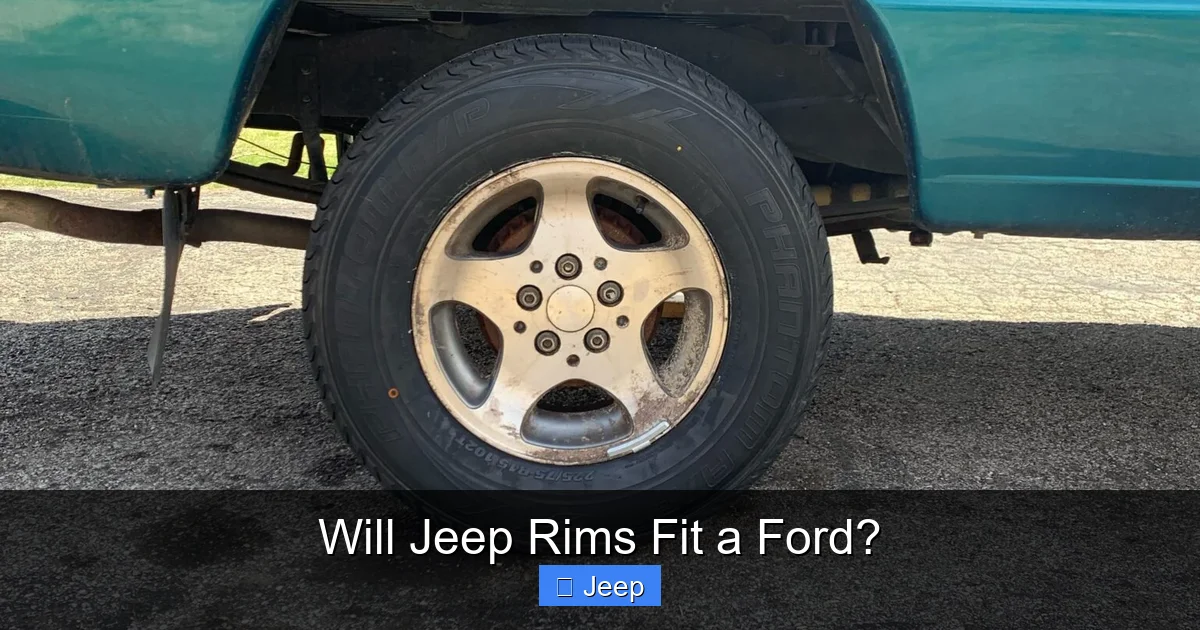
Visual guide about Will Jeep Rims Fit a Ford?
Image source: adventurejeep.com
Typical Hub Sizes
- Jeep Wrangler (JL/JK): ~71.5mm
- Jeep Grand Cherokee (WK2): ~71.5mm
- Ford Ranger (T6): ~67.1mm
- Ford F-150: ~70.6mm or ~71.6mm (varies by year/axle)
See the problem? Even with a matching bolt pattern, the Jeep’s 71.5mm bore is larger than the Ranger’s 67.1mm hub. It will not fit. Conversely, a wheel with a 67.1mm bore will not fit over a Jeep’s 71.5mm hub. The only way to make a larger-bore wheel work on a smaller hub is with a hubcentric ring. But you must use the correct, snugly fitting ring. A loose ring defeats the purpose and can cause the same vibration problems.
Offset, Backspacing, and the Real-World Fitment Check
Assume you have a match on bolt pattern and center bore (or you have the right hubcentric rings). Now comes the physical test. This is where you find out if the wheel will actually clear all the components on your Ford.
How to Measure and Compare
You need the offset/backspacing of both the original Ford wheel and the proposed Jeep wheel. You can often find this on the back of the wheel itself (stamped) or through wheel manufacturer specs. The goal is to get as close as possible to the stock offset.
Rule of Thumb for Trucks/SUVs: A more negative offset (or less positive) pushes the wheel/tire outward. A more positive offset pulls it inward. If your Ford’s stock wheel has a +25mm offset and the Jeep wheel has a -6mm offset, the Jeep wheel will sit significantly farther out. You must measure:
- From the inner edge of the tire to the upper control arm or brake caliper.
- From the outer edge of the tire to the fender lip or frame rail.
- At full lock of the steering and at maximum suspension compression (you can simulate this by turning the wheel and pushing down on the bumper).
Pro Tip: A simple test is to put the unmounted wheel on the hub (with lug nuts hand-tightened) and see how far the back of the wheel sits relative to the brake caliper. Even a few millimeters of contact is a no-go.
Practical Steps, Testing, and Common Pitfalls
So you’ve done your homework. You think you have a compatible set. Here is the definitive, step-by-step safety protocol.
1. The Paperwork First
Before you ever touch a wheel, write down your Ford’s exact requirements:
- Year, Make, Model, Trim, Drivetrain (4×2/4×4), and Axle (if known).
- Bolt Pattern (e.g., 5×135).
- Center Bore (e.g., 70.6mm).
- Stock Wheel Size & Offset (e.g., 18×8.5, +25mm).
- Wheel Nut Size & Seat Type (e.g., M12x1.75, conical/tapered seat).
Then, get the exact specs for the Jeep wheel you want.
2. The Physical Inspection
Lay the Jeep wheel next to a Ford wheel. Compare sizes visually. Check for any obvious differences in hub protrusion or lug hole depth. Then, with the vehicle safely lifted on jack stands, do a “dry fit.” Place the wheel on the hub. Do the lug holes line up perfectly? Does the wheel slide onto the hub fully, or does it hit the hub? If it hits, the center bore is too small. If it goes on easily and wobbles, the bore is too large.
3. The Clearance Check (The Most Important Step)
With the wheel on (hand-tight lug nuts), turn the steering wheel full lock left and right. Look at the clearance between the wheel/tire and:
- Brake caliper and rotor.
- Upper and lower control arms.
- Shock absorber.
- Fender liner and metal fender.
- Frame or bumper.
Push the suspension down (have a helper bounce the bumper) to simulate hitting a bump. There must be at least 3-5mm of clearance all around under full compression. No rubbing means no go.
4. Lug Nuts and Torque: Do Not Skip
This is a critical, often-overlooked point. The lug nuts that came with your Jeep wheels are designed for Jeep studs. Ford studs may have a different thread pitch (e.g., M12x1.5 vs. M12x1.75) or a different seat angle (conical vs. ball/radius seat). Using the wrong lug nut can cause the wheel to loosen or the studs to break. You must use lug nuts that are:
- The correct thread size and pitch for your Ford’s studs.
- The correct seat type (usually 60-degree conical for both, but verify).
- Long enough to engage the studs properly but not so long they bottom out.
Finally, torque all lug nuts to your Ford’s specification (found in the owner’s manual, typically 100-150 ft-lbs for trucks) in a star pattern. Use a quality torque wrench.
5. The Test Drive
Do not just drive normally. Take a slow, cautious first drive on a quiet street. Accelerate gently, brake firmly, and make turns. Listen for any rubbing sounds. Feel for any vibration in the steering wheel, seat, or floorboard. A vibration at 50+ mph usually indicates a balance issue or a hubcentric fitment problem. If you feel or hear anything abnormal, stop immediately and re-inspect.
Conclusion: Is It Worth the hassle?
The dream of swapping Jeep wheels onto your Ford is understandable. The aesthetic can be fantastic. But the process is a meticulous exercise in measurement and verification. The odds are not in your favor for a direct, bolt-on fit between a modern Jeep Wrangler and a modern Ford F-150/Ranger due to differing bolt patterns (5×127 vs. 5×135/5×114.3). Your best chance lies with older, shared patterns like 5×114.3 (Jeep Cherokee XJ/Grand Cherokee WJ) and Ford Ranger, or within the 6-lug world where both brands use multiple patterns that must be matched exactly.
Your safety and the safety of others on the road is paramount. A wheel that comes off or causes a loss of control is a life-threatening failure. If you cannot confirm all three measurements—bolt pattern, center bore, and offset—with 100% certainty, do not attempt the swap. The cost of a set of proper-fit wheels is an investment in safety and peace of mind. When in doubt, take your wheels and your vehicle’s information to a reputable wheel and tire professional. They have the databases and experience to give you a definitive answer.
Frequently Asked Questions
Will a Jeep Wrangler’s 5×127 wheels fit a Ford F-150?
No, they will not. The vast majority of Jeep Wranglers (JK/JL) use a 5×127 (5×5″) bolt pattern, while Ford F-150s use a 5×135 (5×5.31″) pattern. The lug spacing is different, and the wheels physically cannot bolt onto the hub.
Can I use hubcentric rings to make a Jeep wheel fit my Ford?
Hubcentric rings can only solve a center bore that is too large on the wheel. They cannot fix a bolt pattern mismatch or an offset that causes tire rub. They are a solution for a specific part of the fitment puzzle, not a magic fix for incompatibility.
What about the lug nuts? Can I use my Jeep’s lug nuts on my Ford?
Almost certainly not. Lug nuts must match the thread size, pitch, and seat angle of your Ford’s wheel studs. Jeep and Ford often use different specifications. Using incorrect lug nuts is extremely dangerous and can lead to wheel loss. You must purchase lug nuts specifically for your Ford’s application.
Is there any Jeep model that shares a bolt pattern with any Ford model?
Yes, but it’s specific. For example, a Jeep Cherokee (XJ) or Grand Cherokee (WJ) from the 1990s/early 2000s with a 5×114.3 pattern could potentially fit a Ford Ranger (T6) which also uses 5×114.3, provided the center bore and offset are also suitable. A Jeep Gladiator/JT Rubicon with 6×139.7 could fit certain Ford F-250/350 models that also use 6×139.7.
How do I find my Ford’s exact wheel bolt pattern and hub size?
The most reliable way is to check your vehicle’s owner’s manual. You can also look for a sticker on the driver’s side door jamb. Alternatively, you can measure it yourself using a bolt pattern gauge or by carefully measuring the distance between two opposing lug holes and using an online calculator. For the center bore, you would need to measure the hub itself or look up the specification for your specific axle model.
If the wheel physically bolts on, is it safe to drive?
No, “bolting on” is only the first and easiest check. You must still verify center bore fit (with or without rings), clearance for the tire against all suspension and body components at full steering lock and suspension compression, and use the correct lug nuts torqued to the proper specification. Missing any of these steps can lead to vibration, tire destruction, brake failure, or a wheel coming off.
