
What Are the Dimensions of a Bmw X3?

The BMW X3 is a compact luxury SUV with precise exterior dimensions that balance agility with interior space. Its overall length is approximately 185.9 inches, width is 74.1 inches (excluding mirrors), and height is 64.6 inches. Inside, it offers 40.7 inches of rear legroom and a cargo capacity of 28.7 cubic feet behind the rear seats. These dimensions make it a competitive choice in the segment, providing ample room for passengers and gear while remaining manageable for city driving and parking.
Key Takeaways
- The BMW X3’s exterior length of ~185.9 inches places it squarely in the compact luxury SUV class, making it easier to park than larger SUVs while still feeling substantial.
- Its width (excluding mirrors) is about 74.1 inches, but with mirrors, it’s significantly wider—a critical factor for garage fit and narrow road navigation.
- Passenger space is a highlight, with nearly 41 inches of rear legroom, which is excellent for a vehicle in this size category and often beats key rivals.
- Cargo space behind the rear seats is 28.7 cubic feet, expanding to over 60 cubic feet with seats folded—practical for weekly errands and weekend trips.
- The wheelbase of 112.8 inches contributes to a smooth ride and stable handling, while also maximizing interior cabin space efficiently.
- Ground clearance of approximately 8.0 inches provides mild off-road capability and confident handling in poor weather conditions.
- Dimensions can vary slightly by model year and trim (e.g., M40i may have subtle differences), so always verify specifications for your exact intended model year.
📑 Table of Contents
- Introduction: Why BMW X3 Dimensions Matter
- Exterior Dimensions: Size, Shape, and Street Smarts
- Interior Space: Where You and Your Passengers Actually Live
- Cargo Capacity: From Groceries to Getaways
- Comparing the X3 to Key Rivals: How Does It Stack Up?
- Practical Implications: How Dimensions Affect Your Real Life
- Dimensions Across Generations and Trims: What Changes?
- Conclusion: Is the BMW X3 the Right Size for You?
Introduction: Why BMW X3 Dimensions Matter
So, you’re thinking about a BMW X3. Excellent choice. It’s one of the best-balanced compact luxury SUVs on the market—sporty enough to enjoy on a winding road, luxurious enough for daily comfort, and practical enough for family duties. But before you fall in love with the kidney grilles or the driver-focused cockpit, there’s a fundamental question you need to answer: will it fit into your life? And I don’t just mean your budget. I mean physically. Will it fit in your garage? Will you be able to park it at the grocery store without a 15-point turn? Can you squeeze the kids’ sports gear in the back? The answers lie in the numbers—the precise, engineering-defined BMW X3 dimensions.
Understanding a vehicle’s length, width, height, wheelbase, and cargo volume isn’t just for trivia nights. These measurements are the unsung heroes of your car-buying journey. They dictate your daily experience, from the ease of slipping into a tight downtown parking spot to the comfort of a cross-country road trip. The X3 is designed to be the “Goldilocks” SUV—not too big, not too small. But “just right” for whom? That depends entirely on your specific needs and environment. In this complete guide, we’re going to break down every single dimension of the current-generation BMW X3 (G01 platform, 2018-present), explain what those numbers mean in the real world, compare them to key rivals, and even look at how they’ve evolved. By the end, you’ll have a crystal-clear picture of whether this Bavarian SUV is the perfect spatial fit for you.
Exterior Dimensions: Size, Shape, and Street Smarts
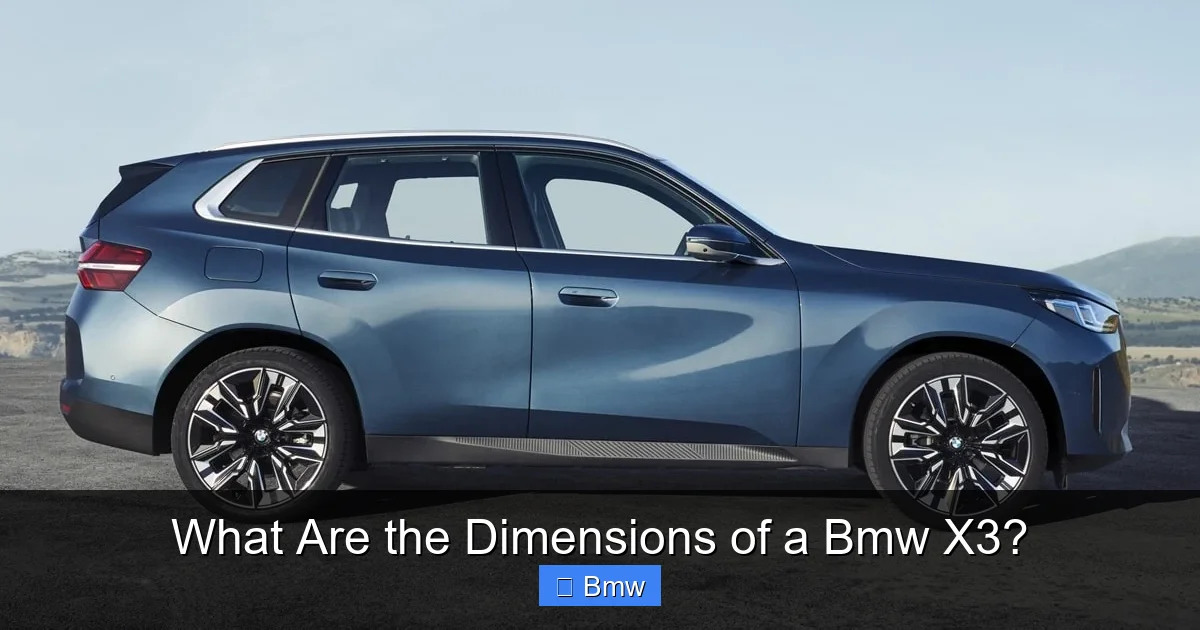
Let’s start with the outer shell. The BMW X3 presents a strong, athletic stance on the road. It doesn’t look bloated or oversized, thanks to well-proportioned sheet metal. But those looks can be deceiving. The real story is in the tape-measure numbers. We’ll break down each key exterior metric.
Visual guide about What Are the Dimensions of a Bmw X3?
Image source: carstan.info
Overall Length: The Parking Lot Gauntlet
The overall length of the current BMW X3 is 185.9 inches (or 15 feet 5 inches). To put that in perspective, that’s about 5 inches longer than a Honda Civic sedan but nearly a foot shorter than a BMW X5. This length is a strategic sweet spot. It’s long enough to provide a graceful, stable profile and a generous wheelbase (more on that soon), but short enough to navigate most urban environments without constant anxiety. For parallel parking, you’ll generally need a space that’s at least 20 feet long to do it comfortably, which is true for most vehicles in this class. If your daily commute involves tight city streets or cramped parking garages, this length is very manageable. However, if you’re used to a subcompact SUV like a BMW X1 or a MINI Countryman, you’ll definitely notice the extra length during low-speed maneuvers. It’s a trade-off: you gain a more substantial road presence and typically a smoother ride for a minor loss in ultimate agility.
Width: The Mirror Factor and Lane Confidence
Here’s where things get interesting—and where many people get tripped up. The stated width for the X3 is 74.1 inches. But this is the “body width,” measured without mirrors. Once you fold those side mirrors out, the total width balloons to about 81.8 inches. That’s nearly 6.8 feet! This “mirror width” is the critical number for your garage door, carport, or narrow storage unit. Before buying, measure your parking space’s width from wall to wall or post to post. Leave at least a few inches of clearance on each side for opening doors and for wind buffeting on the highway. That 81.8-inch figure is also key for navigating narrow lanes, construction zones, or tight alleyways. The good news? The X3’s relatively narrow body (without mirrors) helps it feel nimble and confident in its lane, reducing that “wide vehicle” nervousness some larger SUVs can give you.
Height and Ground Clearance: Stance and Capability
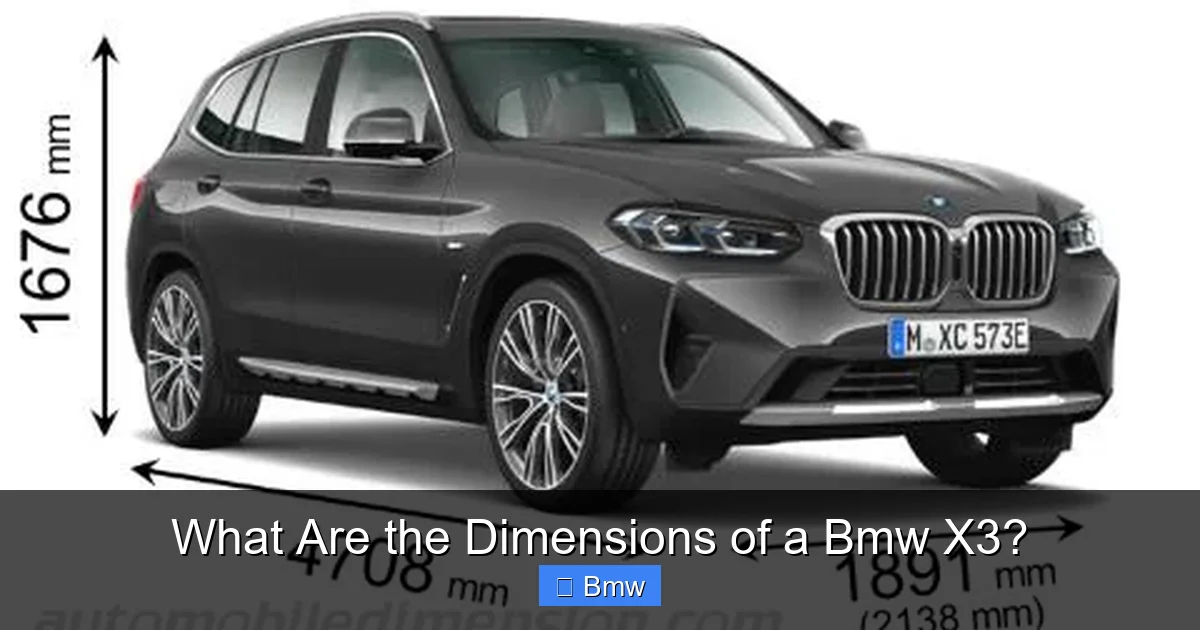
The X3 stands at a height of 64.6 inches (for the standard suspension). This is a typical SUV height—tall enough to provide a commanding view over traffic and easy entry/exit, but not so tall that it feels like you’re piloting a van. The approach, breakover, and departure angles are decent for a paved-road-focused SUV, meaning you can tackle a steep driveway or a moderately rutted dirt road without scraping. The standard ground clearance is approximately 8.0 inches. For context, that’s more than enough to handle snow-covered roads, gravel driveways, and most potholes you’ll encounter. It’s not a serious off-roader like a Land Rover Defender, but it’s confident in all weather conditions. If you opt for the X3 xDrive30e plug-in hybrid, the battery pack in the rear slightly reduces trunk space but doesn’t significantly alter the exterior height. Models with the optional Dynamic Handling Package or M Sport suspension may sit a fraction of an inch lower, altering the height by less than an inch, which is negligible for most practical purposes.
Wheelbase: The Secret to Space and Stability
The wheelbase—the distance between the center of the front and rear wheels—is 112.8 inches. This is a crucial measurement. A longer wheelbase, within reason, generally translates to a smoother, more stable ride because the wheels are farther apart, absorbing bumps better. It also allows engineers to “stretch” the cabin, pushing the wheels to the corners of the vehicle. This is a big reason the X3 feels so spacious inside, especially in the rear seat legroom department, despite its moderate overall length. The 112.8-inch wheelbase is shared with many of its direct competitors (like the Audi Q5 and Mercedes-Benz GLC) and is a key reason these compact SUVs feel so much roomier than their exterior dimensions might suggest. It’s the architectural secret to maximizing passenger space without making the vehicle unwieldy long.
Interior Space: Where You and Your Passengers Actually Live
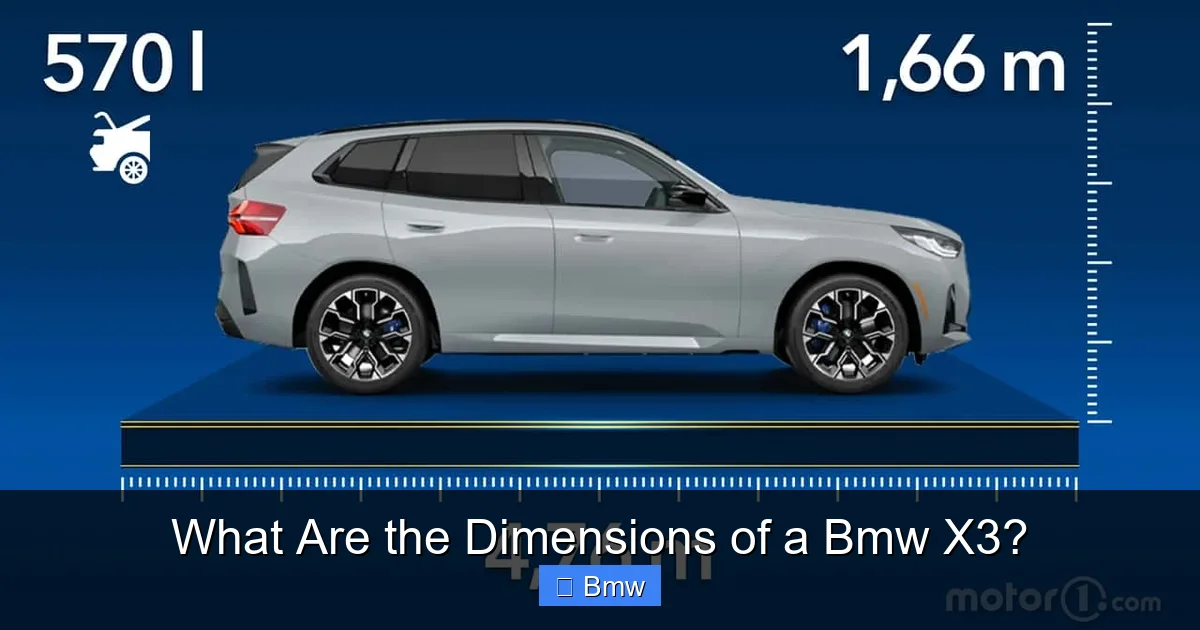
Exterior numbers tell part of the story, but the interior is where you spend your time. BMW is a master at packaging. They use that efficient wheelbase to create a cabin that feels airy and uncluttered. Let’s measure the important interior dimensions.
Visual guide about What Are the Dimensions of a Bmw X3?
Image source: cdn.motor1.com
Front and Rear Headroom/Legroom: The Comfort Equation
Up front, the X3 offers a very generous 40.7 inches of headroom (with the standard sunroof). Most adults, even those over 6 feet, will have no issues. The seating position is upright and SUV-like, providing excellent outward visibility. The legroom is plentiful at 42.0 inches, so even with the seat all the way back, you won’t feel cramped.
The rear seat is where the X3 truly shines compared to many rivals. Rear legroom is an impressive 40.7 inches. That’s essentially the same as the front! This means two adults can ride in the back for hours without feeling their knees pressed against the front seats. It’s a significant advantage over some competitors that sacrifice rear space for sportier styling or a longer front overhang. Rear headroom is also excellent at 38.3 inches. The floor is nearly flat, so a third passenger (a child or smaller adult) won’t be forced to sit with their feet on the sides. The outboard seats are very comfortable. If you frequently carry adult passengers, the X3’s rear space is a major selling point. You might want to check out our guide on the best color for a BMW X3 to match that spacious, premium interior with a hue that suits your style.
Seating Configurations and Flexibility
The BMW X3 comes standard with a 5-passenger layout (two front bucket seats, a three-person rear bench). There is no optional third-row seat—this is strictly a 5-seater. The rear 40/20/40 split-folding seats are incredibly easy to operate with one hand. Folding them down creates a near-flat load floor, which is essential for hauling larger items like furniture, bikes, or bulky sports equipment. The center section of the rear seat (the 20% part) can fold down independently, allowing you to carry long items like skis or lumber while still seating two passengers on the sides. This flexibility is a huge practical benefit. The front passenger seat also folds down (on most trims) to accommodate very long items like ladders or lumber. It’s these thoughtful touches, combined with the generous interior dimensions, that make the X3 a truly versatile family hauler.
Cargo Capacity: From Groceries to Getaways
For many SUV buyers, cargo space is the ultimate practicality test. How much can you actually fit back there? The BMW X3 delivers solid numbers in the compact luxury segment.
Visual guide about What Are the Dimensions of a Bmw X3?
Image source: automobiledimension.com
Trunk Space with Seats Up vs. Down
With the rear seats in their upright position, the X3 provides 28.7 cubic feet of cargo volume. This is enough for several suitcases, a week’s worth of groceries, or a few medium-sized duffel bags. It’s competitive with the Audi Q5 (29.1 cu ft) and slightly less than the Volvo XC60 (33.8 cu ft). The load floor is at a reasonable height, so loading heavy items isn’t a strain. The wide tailgate opening and nearly square shape make it easy to slide in boxes or strollers.
The real magic happens when you fold the rear seats. Total cargo capacity expands to a very useful 62.7 cubic feet. That’s enough for a full set of golf clubs (with bags), multiple large suitcases, or even a small sofa. This capacity is on par with or better than many rivals. For context, you could fit a standard 48-inch TV box (flat) with room to spare, or several large dog crates. This is the space that enables weekend adventures, big-box store runs, or helping a friend move a dorm room. The ease of folding the seats and the resulting flat floor are what turn a nice trunk into a genuinely useful one.
Towing Capacity: Hauling More Than Just Stuff
While not a primary truck, the BMW X3 has a respectable towing capacity. When properly equipped with the factory-installed hitch, the X3 can tow up to 3,500 pounds. This is enough for a medium-sized utility trailer, a small boat, a pair of jet skis, or a camper trailer. It’s important to note that this is for the standard gasoline models. The plug-in hybrid X3 xDrive30e has a slightly lower towing capacity, typically around 3,300 pounds. Always check your specific owner’s manual for the exact rating based on your engine and drivetrain. Towing puts extra strain on the engine, transmission, and brakes, so it’s a capability you should use judiciously. If you plan to tow regularly, you might want to compare this figure to a more dedicated SUV. For example, the Subaru Forester’s towing capacity is similar, making both vehicles comparable for light-duty trailering tasks. The X3’s stable dimensions and powerful engine make it a confident tow vehicle within its limits.
Comparing the X3 to Key Rivals: How Does It Stack Up?
Numbers in a vacuum are meaningless. The true value of understanding the BMW X3’s dimensions comes from comparing them to its direct competitors. How does it measure against the Audi Q5, Mercedes-Benz GLC, and Acura RDX? Let’s see.
BMW X3 vs. Audi Q5 vs. Mercedes-Benz GLC
These three are the perennial leaders in the compact luxury SUV segment. Their dimensions are remarkably similar, which is why they all feel so spacious inside. Here’s a quick comparison:
- Length: X3 (185.9″), Q5 (184.3″), GLC (183.9″). The X3 is the longest by a couple of inches, which can translate to a slightly larger trunk.
- Width (w/ mirrors): X3 (~81.8″), Q5 (~81.8″), GLC (~82.2″). Virtually identical, meaning garage fit will be the same for all three.
- Wheelbase: X3 (112.8″), Q5 (111.0″), GLC (113.1″). The GLC has a very slightly longer wheelbase, but the X3’s is right there. All three deliver excellent rear legroom.
- Cargo (seats up): X3 (28.7 cu ft), Q5 (29.1 cu ft), GLC (22.5 cu ft*). *Note: The GLC’s number is often cited as lower because its sleek, coupe-like roofline (on the standard model) eats into the practical box shape. The X3 and Q5 have more traditional, boxier rear ends, giving them a practical edge.
The takeaway? The X3 is right in the sweet spot with its German rivals. Its slightly longer length gives it a tiny edge in cargo space over the GLC, and its wheelbase ensures it doesn’t sacrifice rear passenger comfort. The differences are measured in inches and cubic feet, so your test drive seat feel will be more telling than the spec sheet.
BMW X3 vs. Acura RDX: The Value-Focused Challenger
The Acura RDX is a fantastic value-packed alternative. Its dimensions are also very close:
- Length: RDX (186.0″) – virtually identical to the X3.
- Width (w/ mirrors): RDX (~81.3″) – a hair narrower.
- Wheelbase: RDX (111.0″) – about 1.8 inches shorter than the X3.
- Rear Legroom: RDX (39.7″) – about 1 inch less than the X3’s 40.7″.
That inch of rear legroom difference is often noticeable. The X3 feels a touch more spacious in the back. The RDX counters with a slightly larger cargo area (30.3 cu ft vs. 28.7 cu ft) and a lower starting price. The dimensional story here is one of philosophy: the X3 prioritizes rear passenger space and a driving feel, while the RDX prioritizes cargo volume and value.
Practical Implications: How Dimensions Affect Your Real Life
Okay, we have the numbers. Now, let’s translate them into your daily reality. These are the questions you should be asking yourself as you measure your parking spot and think about your lifestyle.
Will It Fit in My Garage or Parking Space?
This is the most critical practical check. Grab a tape measure.
- Length: Measure from the wall to the end of your parking space (or garage door). You need at least the car’s length (185.9″) plus 2-3 feet of clearance in front to open the hood and walk around. A standard 20-foot deep garage is usually fine.
- Width: This is the trickier one. Measure the clear width between your garage walls or parking lines. Subtract the X3’s mirror width (81.8″). You want at least 12-18 inches of total side clearance (6-9 inches per side) to open doors without scratching walls and to account for wind. If you have a one-car garage that’s only 12 feet wide (144 inches), the X3 with mirrors will be a very tight, likely impractical fit. A two-car garage that’s 20-24 feet wide is ideal.
- Height: Measure the lowest point inside your garage (door header, beams). The X3 is 64.6″ tall. Add a few inches of clearance. Most standard 7-foot (84″) garage doors are fine.
Pro Tip: If your garage is tight, consider the X3’s optional parking assistant or surround-view cameras. They are absolute game-changers for squeezing into tight spots without scraping wheels or bumpers. You can also manually fold the mirrors in, which reduces the width by about 8 inches, but you must remember to unfold them before driving!
Family Life: Car Seats, Strollers, and Sports Gear
The X3’s dimensions make it a strong family contender. The wide rear door openings (a result of that long wheelbase and short rear overhang) make installing child seats much easier than in some coupe-like SUVs. The rear legroom means you can have a rear-facing infant seat and still have decent front passenger knee room. The flat floor is perfect for placing a folded stroller or a large diaper bag on the floor without it sliding around. With seats folded, you can easily fit a wagon, a large double stroller, or a bulk pack of sports equipment like soccer goals or baseball tees. The 28.7 cubic feet behind the rear seat is enough for a week’s worth of groceries for a family of four, plus the stroller. If you have two kids in boosters and a Labrador, the X3’s space is very workable.
City vs. Country: Maneuverability and Ride
The X3’s length and turning circle (about 39.4 feet) are designed for city agility. It can make U-turns on most standard two-lane roads and navigate parking lots with relative ease. The steering is direct and well-weighted. However, that 185.9-inch length is still a long vehicle. In extremely tight ancient city streets (think old European towns or some dense urban grids), you will be conscious of every inch. The height and weight give it a planted, stable feel on highways and country roads. The 8 inches of ground clearance means you won’t bottom out on most rural driveways or dirt roads. It’s a vehicle that feels equally at home on a curvy mountain pass as it does in a suburban Walmart parking lot, thanks to its balanced dimensions.
Dimensions Across Generations and Trims: What Changes?
We’ve focused on the current, third-generation X3 (G01, produced from 2018 to present). But it’s worth noting how dimensions have evolved and if different trims affect them.
Generational Growth: A Look Back
The first-generation X3 (E83, 2003-2010) was notably smaller. It was about 181.9 inches long—a full 4 inches shorter than the current model. The second generation (F25, 2011-2017) grew to 183.6 inches. The trend is clear: with each generation, BMW has slightly increased the exterior dimensions, primarily to boost interior space (especially rear legroom and cargo) and to meet modern safety and equipment packaging needs. The current X3 represents the pinnacle of this evolution, offering the most spacious and technologically advanced interior while still being considered a “compact” SUV. If you’re looking at a used X3, expect the older models to feel more cramped inside, especially in the rear.
Trim Level Nuances: M Sport, Plug-in Hybrid, etc.
For the most part, the core exterior dimensions (length, width, height, wheelbase) are identical across all current X3 trims, from the sDrive30i to the M40i and xDrive30e. However, there are subtle differences:
- M Sport Package: This primarily adds cosmetic elements (different bumpers, side skirts, larger wheels). It does not change the fundamental body dimensions. However, larger wheel/tire packages (like 21-inch vs. 19-inch) can affect turning radius and may be more susceptible to curb rash due to the lower profile tires sitting slightly farther out.
- Plug-in Hybrid (xDrive30e): The battery pack is located under the rear cargo floor. This raises the floor by about 1-2 inches, which slightly reduces the vertical cargo height but does not change the overall exterior height of the vehicle. The total cargo volume with seats up is reduced by about 3-4 cubic feet compared to the gasoline models.
- Ride Height: Models with the optional Dynamic Handling Package (often on M40i) have a slightly stiffer, lower suspension, reducing the ground clearance by a fraction of an inch. For all intents and purposes, the height remains 64.6 inches.
When shopping, always ask for the specific window sticker (monroney label) for the exact vehicle you’re considering, as it will list the precise specifications.
Conclusion: Is the BMW X3 the Right Size for You?
So, what are the final dimensions of a BMW X3? In summary, it’s a vehicle that measures up at approximately 185.9 inches long, 74.1 inches wide (81.8 with mirrors), 64.6 inches tall, with a 112.8-inch wheelbase. It offers 40.7 inches of rear legroom and 28.7 cubic feet of cargo space (62.7 cu ft with seats down). These numbers tell a story of thoughtful engineering—a compact luxury SUV that maximizes interior spaciousness and practicality without ballooning to an unmanageable size.
The X3 is not the smallest in its class, but it’s not the largest either. It’s the benchmark. It’s the vehicle you choose when you want a premium badge, engaging driving dynamics, and genuine everyday utility. If your life involves a mix of city commuting, family shuttling, and weekend adventures, the X3’s dimensions are likely a perfect match. Its rear seat space is a standout advantage over many rivals, and its cargo capacity is genuinely useful. The key is to do your homework on the “mirror width” and your specific parking constraints. Measure twice, buy once. And remember, while specs are crucial, the ultimate test is the test drive. Sit in the back, fold the seats, and try to parallel park it. The numbers will guide you, but your personal experience will confirm if this Bavarian SUV fits your world, dimensionally and emotionally.
Frequently Asked Questions
How does the BMW X3’s cargo space compare to the BMW X5?
The X3 has 28.7 cubic feet behind the rear seats, while the larger X5 offers 33.9 cubic feet. With seats folded, the X3 provides 62.7 cubic feet versus the X5’s 72.3 cubic feet. The X5 is a midsize SUV with significantly more space, but the X3 is surprisingly efficient for its class.
What is the turning circle of a BMW X3?
The BMW X3 has a turning circle of approximately 39.4 feet (curb-to-curb). This is quite maneuverable for its size, allowing for U-turns on most standard two-lane roads and tight parking lot navigation without excessive effort.
Does the BMW X3 have enough rear legroom for adults?
Yes, absolutely. With 40.7 inches of rear legroom, the X3 offers class-leading space. Two adult passengers can sit comfortably on long drives, with ample knee room. It’s a major strength over many competitors.
How wide is the BMW X3 with its mirrors folded?
With the side mirrors manually folded in, the BMW X3’s total width is reduced to approximately 73.8 inches (from 81.8 inches with mirrors extended). This is crucial for fitting into extremely narrow garages or tight storage spaces.
Are the dimensions of the BMW X3 different for the plug-in hybrid model?
The core exterior dimensions (length, width, height, wheelbase) are identical to the gasoline models. The primary difference is a slightly raised rear cargo floor due to the battery pack, which reduces usable cargo height and total volume by a few cubic feet, but the overall size and shape remain the same.
What is the ground clearance of a BMW X3?
The standard ground clearance for a BMW X3 is approximately 8.0 inches. This provides confident handling over snow, gravel, and moderate potholes. Models with the Dynamic Handling Package may sit slightly lower, by less than an inch.
