
North Dakota Window Tint Law Explained

North Dakota window tint law is surprisingly strict, with specific Visible Light Transmission (VLT) percentages for each window. The front windshield must allow over 70% of light, while front side windows must allow over 50%. Back side and rear windows have no darkness limits, but all tint must meet non-reflective standards. Medical exemptions are available, and violations can lead to fix-it tickets or fines. Always verify your tint’s compliance before hitting the road.
Key Takeaways
- VLT Limits Are Specific: North Dakota sets different darkness limits for front vs. rear windows, with the front windshield and front doors being the most restricted.
- Medical Exemptions Exist: Individuals with certain medical conditions can apply for an exemption to install darker tint, but proper documentation is mandatory.
- Reflection Matters Too: Tint cannot be more reflective than a standard glass window; metallic or mirror-like finishes are illegal.
- Penalties Are Enforced: First offenses typically result in a “fix-it” ticket to correct the violation, while repeated non-compliance can lead to higher fines.
- Factory Tint Is Grandfathered: If your vehicle came with factory-installed tint, it is legal as long as it was compliant when sold, even if it’s darker than aftermarket limits.
- Certification Is Required: Installers must provide a certification sticker on the window proving the tint meets state regulations; you should always get this.
- SUVs & Trucks Have Different Rules: The rear windows (back sides and rear) on multi-purpose vehicles like SUVs and trucks can be tinted to any darkness, but the front doors still follow sedan rules.
📑 Table of Contents
- Understanding North Dakota’s Approach to Window Tint
- Decoding the VLT Requirements: A Window-by-Window Breakdown
- Beyond Darkness: The Rules on Reflectivity and Color
- Medical Exemptions: How to Get a Darker Tint Legally
- Enforcement, Penalties, and What Happens If You’re Stopped
- Installation Rules, Certification, and Consumer Protection
- Special Considerations and Frequently Asked Scenarios
- Conclusion: Stay Legal, Stay Safe, Enjoy Your Ride
Understanding North Dakota’s Approach to Window Tint
Driving through the wide-open spaces of North Dakota, you might not think much about your car’s window tint. But the state’s laws are clear and enforced. The primary goal of North Dakota’s window tint law is safety—ensuring drivers have adequate visibility, especially during the state’s challenging winter conditions with snow and glare, while also allowing for some privacy and UV protection. The law isn’t arbitrary; it’s a balance between personal preference and public safety on the roads.
Many new residents or vehicle owners are surprised to learn that North Dakota is not among the states with extremely liberal tint laws. It sits in a middle-ground category, with specific, measurable standards. The key term you need to know is Visible Light Transmission (VLT). This is the percentage of visible light that passes through your window glass and tint film. A lower VLT number means darker tint. A 5% VLT is virtually black, while a 70% VLT is very light, almost clear. North Dakota law sets minimum VLT percentages—meaning your windows must let in at least that much light.
The Core Philosophy: Safety First
Lawmakers argue that overly dark front-side windows can impede a driver’s vision, making it harder to see pedestrians, cyclists, or obstacles, especially at dawn, dusk, or during North Dakota’s notorious blizzards. The restrictions on the front windshield are directly about reducing glare for the driver and ensuring law enforcement can see inside the vehicle during traffic stops for officer safety. While you might want a dark, private cabin, the state prioritizes the ability to see and be seen on public roadways.
Decoding the VLT Requirements: A Window-by-Window Breakdown
This is the heart of the North Dakota window tint law. The rules change based on which window you’re tinting and what type of vehicle you drive. It’s critical to get this right because installing the wrong tint on your front doors can instantly make your vehicle non-compliant.
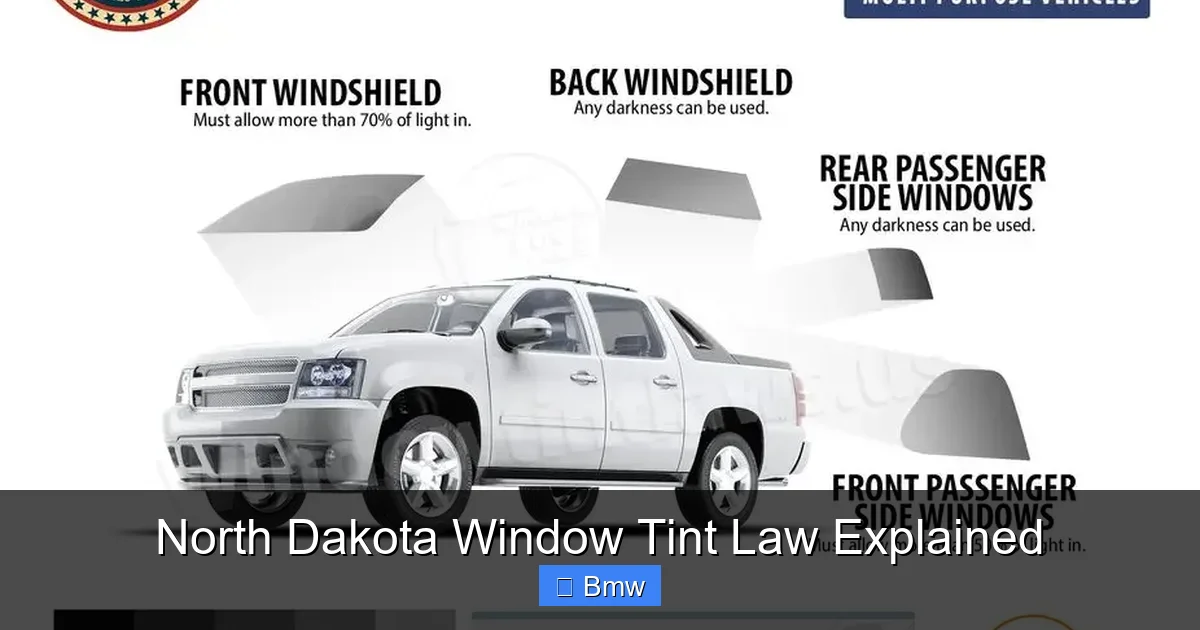
Visual guide about North Dakota Window Tint Law Explained
Image source: windowtintlaws.us
Standard Passenger Vehicles (Sedans, Coupes, Hatchbacks)
For your typical car, the laws are uniform:
- Front Windshield: Tint is allowed only on the top 5 inches (the “AS-1” line) and must allow more than 70% of light in. This is often called a “stripe” or “shade band.” Any tint below this line on the windshield is illegal.
- Front Side Windows: (Driver and passenger front doors) These must allow more than 50% of light in. This is a relatively light tint, often described as a “50%” or lighter film. It provides minimal privacy but some UV protection.
- Back Side Windows: (Rear passenger doors) There is no specific darkness limit. You can install tint as dark as you want, from 50% down to 5% (limo tint), and it is perfectly legal.
- Rear Window: Similarly, there is no specific darkness limit. You can have a very dark rear window. However, if your rear window is tinted dark, North Dakota law requires you to have side mirrors on both sides of the vehicle that provide a clear view to the rear. This is a common requirement in many states with dark rear window allowances.
Practical Example: If you drive a Toyota Camry, you could legally have a 50% tint on your front doors, a 20% tint on your back doors and rear window, and a 70% stripe on your windshield. That’s a very common and legal setup.
Multi-Purpose Vehicles (SUVs, Vans, Trucks)
The rules diverge significantly for vehicles classified as multi-purpose. This is a crucial distinction that often causes confusion.
- Front Windshield: Same rule as cars: only a top 5-inch stripe allowing >70% VLT is legal.
- Front Side Windows: Here’s the major difference. For SUVs, vans, and trucks, the front side doors must still allow more than 50% light. You cannot legally put a dark tint on the front doors of an SUV just because it’s an SUV. The safety rationale for the driver’s visibility remains the same.
- Back Side Windows & Rear Window: Because the rear of these vehicles is often used for cargo or as a separate passenger compartment, there is no darkness limit on any of the rear glass. You can go as dark as you like on all rear windows. The dual side mirror requirement also applies if the rear window is dark.
Practical Example: For a Ford Explorer, you must have >50% VLT on the front doors. However, you can legally install a 5% (limo) tint on the back side windows and the rear hatch window. This is why you often see SUVs with very dark rear glass but light front doors.
If you’re unsure about your vehicle’s classification, your owner’s manual or a quick VIN lookup can help, but the safest assumption is that if it looks like a car, it follows sedan rules; if it’s taller and boxier, it likely follows MPV rules for the rear.
Beyond Darkness: The Rules on Reflectivity and Color
It’s not just about how dark the tint is. North Dakota law also regulates how the tint *looks*.
Visual guide about North Dakota Window Tint Law Explained
Image source: windowtintlaws.us
Non-Reflective and Non-Metallic Requirements
Your window tint film cannot be “mirrored” or “metallic” in a way that creates excessive glare for other drivers. The law states that the tint must not be more reflective than the standard untinted glass. This effectively bans most metallic and chrome-style window films. The goal is to prevent your car from becoming a rolling mirror that blinds drivers in adjacent lanes. Most standard dyed or carbon-based films meet this requirement, but you should always confirm with your installer that the film is “non-reflective” or “non-metallic” as per ND statutes.
Color Restrictions
North Dakota does not explicitly ban specific tint colors like red, blue, or yellow. However, any tint color that significantly alters the natural color of the glass or is deemed to impair the driver’s vision could be considered a violation under the “obstructing the driver’s view” clause of traffic laws. In practice, neutral grey and bronze are the most common and safest choices. Avoid bright or unusual colors to stay clear of any subjective enforcement issues.
Medical Exemptions: How to Get a Darker Tint Legally
North Dakota recognizes that certain medical conditions require additional protection from sunlight. If you have a diagnosed condition like lupus, melanoma, severe photosensitivity, or other sunlight-aggravated ailments, you may qualify for a medical exemption.
Visual guide about North Dakota Window Tint Law Explained
Image source: taxihack.com
The Application Process
To obtain an exemption, you must:
- Obtain a signed statement from a licensed physician (MD or DO) on official letterhead. The statement must detail your diagnosis, explain why darker window tint is medically necessary, and specify the VLT percentage required for your treatment.
- Submit this statement, along with a completed application form (available from the North Dakota Department of Transportation – NDDOT), to the NDDOT Medical Review Division.
- If approved, you will receive an exemption certificate and a special decal to display on your vehicle’s rear window or windshield. This decal indicates to law enforcement that your vehicle’s tint is legally exempt.
Important: The exemption applies only to the windows necessary for your condition, typically all windows. It does not change the rule about the front windshield stripe. You must still comply with the >70% VLT on the windshield’s AS-1 line. The exemption is for the *side and rear windows*. Always carry your exemption certificate in the vehicle when driving.
Enforcement, Penalties, and What Happens If You’re Stopped
North Dakota law enforcement officers are trained to visually estimate window tint darkness. While they may use a handheld photometer (tint meter) for a precise VLT reading during a traffic stop, a clear visual violation is often enough for a stop. This is where understanding the law protects you.
The “Fix-It” Ticket System
North Dakota generally employs a corrective approach for first-time window tint violations. You will likely receive a “Notice to Correct Violation” or a similar fix-it ticket. This gives you a specified period (often 30 days) to:
- Remove the illegal tint, OR
- Replace it with compliant tint, AND
- Provide proof of correction (usually a receipt from a certified installer or an inspection sticker) to the court.
Once you show proof, the ticket is typically dismissed without a fine. The system is designed to get vehicles into compliance, not just generate revenue.
Fines for Non-Compliance
If you fail to correct the violation within the given timeframe, or if you are a repeat offender, monetary fines are assessed. The exact amount can vary by county and jurisdiction, but base fines often range from $50 to $150. Additional court costs may apply. Willful or repeated violations could be seen as a more serious traffic offense. It’s simply not worth the hassle and expense when compliant tint is readily available.
For a deeper look at the financial implications, you can read about how much a window tint ticket actually costs, which breaks down potential fees and long-term consequences like points on your license.
Installation Rules, Certification, and Consumer Protection
Who installs your tint matters in North Dakota. The state holds installers accountable.
Installer Certification and the Sticker
Any business or individual installing aftermarket window tint in North Dakota must be certified by the state. Upon completion of a legal installation, the certified installer must affix a permanent sticker or label to the inside of the driver’s side window (and sometimes other windows). This sticker must include:
- The installer’s certified name and business address.
- The film manufacturer’s name.
- The VLT percentage of the installed film.
This sticker is your proof of compliance. If you are pulled over, the officer will look for this sticker. Always insist on receiving this certification sticker. If an installer refuses to provide it, they are likely not operating legally, and their work may not be compliant. You should also get a written receipt that lists the exact VLT of the film installed on each window.
Factory Tint: The Grandfather Clause
If your vehicle was purchased with tint already installed from the factory (often called “privacy glass”), that tint is legal in North Dakota, even if it’s darker than the aftermarket limits. This is because it was compliant with federal safety standards (FMVSS 205) at the time of manufacture. You do not need a sticker for factory tint, but it’s wise to have your purchase paperwork or vehicle specification sheet that confirms it was factory-installed, should any question arise. You cannot, however, legally “darken” factory tint by applying aftermarket film over it, as the combined VLT would then be illegal.
Special Considerations and Frequently Asked Scenarios
Let’s clear up some common points of confusion for North Dakota drivers.
The Sunroof/Moonroof
A built-in factory sunroof or moonroof is considered part of the vehicle’s roof. There is no specific VLT law for sunroofs in North Dakota statutes. However, if you have an aftermarket tint applied to a sunroof, it must still comply with the general rule for the “front windshield” area, as it’s forward of the driver. Many installers will treat a large panoramic sunroof like a rear window for VLT purposes, but the safest legal interpretation is that any glass forward of the front seats should adhere to the front windshield/stripe rules (>70% VLT). To be safe, keep any sunroof tint very light or avoid it altogether.
How Long Does Legal Tint Last?
A major concern is durability. Quality, professionally installed window tint, when properly cared for, can last 10 to 15 years or even the life of the vehicle. Factors affecting lifespan include the quality of the film (dye-based films may fade faster than ceramic or carbon films), the skill of the installation, and exposure to the harsh North Dakota climate—especially intense summer sun and extreme temperature swings. Cheap, low-quality tint might bubble, peel, or turn purple within a few years. Investing in a reputable installer using high-grade film is key to a long-lasting, legal tint job. For more on lifespan, see our article on how long car window tint lasts.
What If I’m Moving to North Dakota?
If you’re bringing a vehicle with out-of-state tint into North Dakota, you must comply with state law immediately. There is no grace period. If your tint is darker than allowed (e.g., 20% on front doors), it is illegal the moment you establish residency and license your vehicle in the state. You will need to have it removed or replaced before you can pass the state vehicle inspection, if applicable, or you risk a ticket. Always check your tint’s VLT before moving.
Cost of Compliant Tinting in North Dakota
The cost of a legal window tint job in North Dakota varies based on vehicle size, film type, and installer reputation. For a standard sedan with basic dyed film on all windows (using the legal 50% front/any rear setup), you might pay between $200 and $400. For a full SUV with ceramic film on all windows, prices can range from $350 to $600+. Always get multiple quotes and ensure the quote specifies the VLT percentage for each window and includes the certification sticker. Never choose an installer based solely on the lowest price, as improper installation or illegal film will cost you more in the long run. You can research typical prices in our guide to how much auto window tint costs.
Conclusion: Stay Legal, Stay Safe, Enjoy Your Ride
Navigating the North Dakota window tint law doesn’t have to be complicated. The core principles are straightforward: keep your front windshield and front doors relatively light (>70% and >50% VLT respectively), ensure your tint is non-reflective, and get proper certification from a licensed installer. The rear of your car or SUV can be as dark as you prefer, offering you the privacy and heat rejection you want without breaking the law.
Remember, these laws exist for a reason—to keep North Dakota’s roads safe for everyone, especially during those long, white-out winters when visibility is already a challenge. By choosing compliant tint, you avoid the hassle of tickets, fines, and mandatory removals. You also support legitimate local businesses that follow state regulations. Before you book a tint appointment, have a direct conversation with your installer about North Dakota’s specific VLT requirements. Show them this guide if needed. A professional, law-abiding shop will know the rules and will guide you to a perfect, legal tint job you can enjoy for years to come. When in doubt, you can always reference the official North Dakota Century Code or contact the NDDOT for clarification. Drive safe, stay legal, and enjoy the ride.
Frequently Asked Questions
What is the darkest tint I can legally put on my front side windows in North Dakota?
For both cars and SUVs, the front side windows (driver and passenger doors) must allow more than 50% of visible light to pass through. This means the darkest legal front-door tint is a 50% VLT film. Anything darker, like 35% or 20%, is illegal on these windows.
Can I tint my entire front windshield in North Dakota?
No. North Dakota law only allows a non-reflective tint strip at the top of the windshield, typically the manufacturer’s AS-1 line (about 5 inches from the top). This strip must allow more than 70% of light in. Tinting the entire windshield or any area below the AS-1 line is illegal.
Do I need a medical exemption to tint my rear windows dark?
No. North Dakota has no VLT limit on the rear side windows and rear window for any vehicle. You can legally tint these windows to any darkness (e.g., 5% limo tint) without any exemption, provided you have the required side mirrors if the rear window is dark.
What are the penalties for having illegal window tint in North Dakota?
For a first offense, you will likely receive a “fix-it” ticket, giving you time (usually 30 days) to remove or replace the illegal tint and provide proof of correction. If you fail to correct it or are a repeat offender, you face monetary fines, which can range from $50 to $150 or more, plus court costs.
Does North Dakota have any rules against reflective or mirrored tint?
Yes. All window tint must be non-reflective and cannot be more reflective than the standard untinted glass. This means metallic, chrome, or mirror-like tint films are illegal on all windows. Stick to neutral grey, bronze, or other non-metallic films.
How can I prove my window tint is legal if I’m pulled over?
You should have a permanent certification sticker on the inside of your driver’s side window from the licensed installer. This sticker lists the installer’s info and the VLT percentage of the film. Keep your installation receipt as additional proof. For factory tint, your vehicle’s window sticker or purchase documentation serves as proof.
