
Nissan Sentra Won’t Start: Causes and Fixes

If your Nissan Sentra won’t start, don’t panic—there are several common causes and practical solutions. From a dead battery to faulty ignition switches, this guide walks you through step-by-step troubleshooting to identify and fix the problem quickly and safely.
Key Takeaways
- Dead or weak battery: The most common reason a Nissan Sentra won’t start; check voltage and connections.
- Faulty starter motor: Listen for clicking sounds—this often signals a failing starter.
- Ignition switch issues: If the dashboard lights don’t come on, the ignition switch may be defective.
- Fuel system problems: A clogged fuel filter or failing fuel pump can prevent engine ignition.
- Bad alternator: Even with a new battery, a faulty alternator won’t keep it charged.
- Security system glitches: The Sentra’s anti-theft system may mistakenly block startup—try the spare key.
- Corroded or loose cables: Inspect battery terminals and ground wires for corrosion or looseness.
📑 Table of Contents
- Why Won’t My Nissan Sentra Start? Understanding the Basics
- 1. Dead or Weak Battery: The #1 Culprit
- 2. Starter Motor Failure: When the Engine Won’t Crank
- 3. Ignition Switch Problems: No Power to the System
- 4. Fuel System Issues: No Gas, No Go
- 5. Alternator Failure: The Silent Battery Killer
- 6. Security System and Immobilizer Glitches
- Other Possible Causes and Quick Checks
- When to Call a Mechanic
- Prevention Tips to Avoid Future Problems
- Conclusion
Why Won’t My Nissan Sentra Start? Understanding the Basics
You’re running late for work, you hop into your Nissan Sentra, turn the key—and nothing happens. Or maybe it cranks but won’t fire up. Frustrating? Absolutely. But before you call a tow truck or panic about expensive repairs, it’s important to know that many “Nissan Sentra won’t start” issues have simple, fixable causes.
Modern cars like the Sentra are packed with electronics, sensors, and safety systems—all designed to make driving safer and more efficient. But when something goes wrong, those same systems can make diagnosing the problem feel overwhelming. The good news? Most startup failures fall into a handful of common categories: electrical issues, fuel delivery problems, ignition faults, or security system malfunctions.
In this guide, we’ll walk you through the most likely reasons your Nissan Sentra won’t start, how to identify them, and what you can do about it—whether you’re a DIY enthusiast or just want to understand what your mechanic is talking about. We’ll keep it practical, jargon-free, and focused on real-world fixes you can try at home with basic tools.
1. Dead or Weak Battery: The #1 Culprit
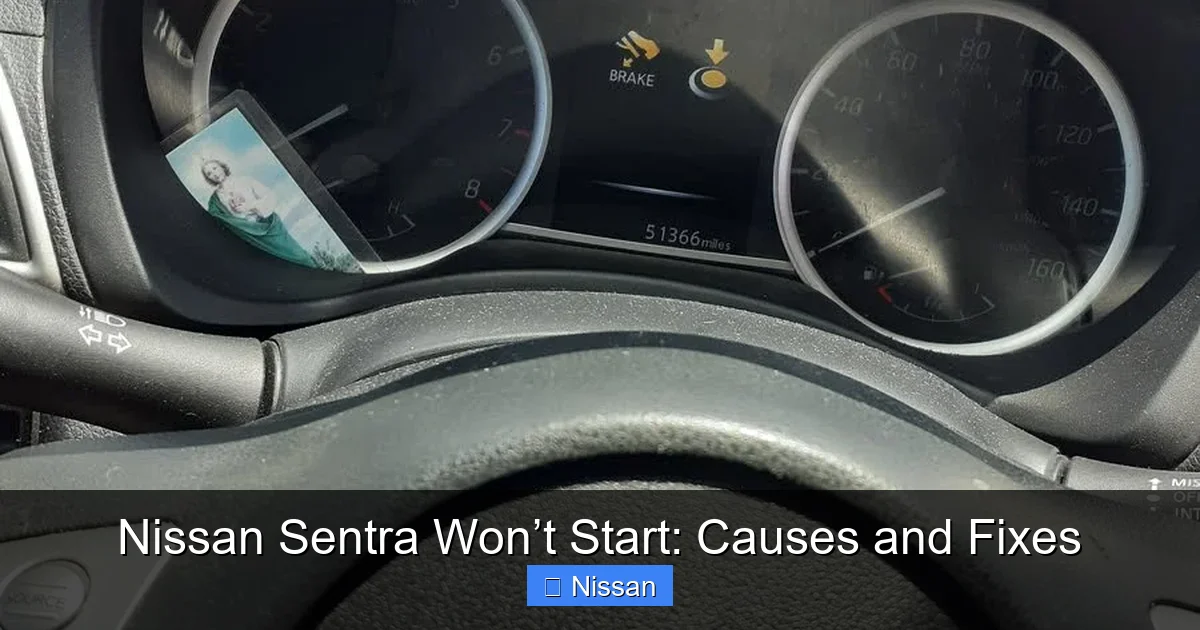
If your Nissan Sentra won’t start and you hear a rapid clicking sound when you turn the key, or the dashboard lights flicker weakly, chances are you’re dealing with a dead or undercharged battery. This is by far the most common cause of startup failure—especially in colder months or if the car has been sitting for a few days.
Car batteries typically last 3–5 years, but extreme temperatures, frequent short trips, or leaving lights on can shorten their lifespan. A healthy 12-volt car battery should read around 12.6 volts when the engine is off. If it drops below 12.2 volts, your Sentra may struggle to start.
How to Test Your Battery
You don’t need fancy equipment to check your battery. A basic multimeter from any auto parts store will do. Here’s how:
1. Turn off the engine and all electrical accessories (lights, radio, A/C).
2. Set your multimeter to DC voltage (20V range).
3. Touch the red probe to the positive terminal (+) and the black probe to the negative terminal (–).
4. Read the voltage:
– 12.6V or higher: Fully charged.
– 12.4V: 75% charged—may still start the car.
– 12.2V or lower: Weak or dead—needs charging or replacement.
If the voltage is low, try jump-starting the car using jumper cables and another vehicle. If it starts and runs fine, the battery may just need a recharge. But if it dies again shortly after, the battery is likely failing.
Signs of a Failing Battery
– Slow cranking when starting
– Dim headlights or interior lights
– Electrical components acting up (radio resetting, power windows slow)
– Battery warning light on the dashboard
Pro tip: If your Sentra starts fine after a jump but dies again within a day, the issue might not be the battery—it could be the alternator not recharging it properly (more on that later).
Visual guide about Nissan Sentra Won’t Start: Causes and Fixes
Image source: static.cargurus.com
What to Do If Your Battery Is Dead
– Jump-start the car: Use jumper cables and a donor vehicle. Connect red to positive (+), black to negative (–), start the donor car, wait 5 minutes, then try starting your Sentra.
– Recharge the battery: Use a battery charger if you have one. Slow charging overnight is best.
– Replace the battery: If it’s over 4 years old or fails a load test, replace it. Most auto parts stores will test your battery for free.
Always check the battery terminals for corrosion—a white, powdery buildup that can prevent proper connection. Clean them with a wire brush and a mixture of baking soda and water.
2. Starter Motor Failure: When the Engine Won’t Crank
If you turn the key and hear a single loud click—or nothing at all—but the dashboard lights come on normally, the problem might be the starter motor. The starter is an electric motor that physically turns the engine over when you start the car. If it fails, your Sentra won’t start, even with a fully charged battery.
How the Starter Works
When you turn the ignition key, a signal is sent to the starter solenoid, which engages the starter motor. The motor spins a small gear (the pinion) that meshes with the engine’s flywheel, turning the crankshaft and allowing the engine to begin combustion.
Over time, the starter motor’s internal brushes, solenoid, or gears can wear out. Heat, moisture, and age all contribute to failure.
Symptoms of a Bad Starter
– A single loud click when turning the key, but no engine crank
– Grinding noise during startup
– Engine cranks slowly or inconsistently
– Starter stays engaged after the engine starts (rare but dangerous)
Example: Sarah noticed her 2016 Nissan Sentra would sometimes start on the first try, but other times it would just click. After a few weeks, it stopped cranking altogether. A mechanic confirmed the starter was failing and replaced it for $320 including labor.
Visual guide about Nissan Sentra Won’t Start: Causes and Fixes
Image source: m.media-amazon.com
Can You Fix a Starter Yourself?
Replacing a starter is doable for experienced DIYers, but it’s not for beginners. It usually involves:
– Disconnecting the battery
– Removing the air intake or other components for access
– Unbolting the starter (typically 2–3 bolts)
– Disconnecting electrical connectors
– Installing the new starter and reassembling
If you’re not comfortable under the hood, it’s best to leave this to a professional. A rebuilt or new starter costs $150–$400, plus labor.
Quick Test: Tap the Starter
Sometimes, a stuck starter solenoid can be temporarily freed by tapping it gently with a hammer while someone turns the key. This isn’t a fix—it’s a diagnostic trick. If the car starts after tapping, the starter is likely failing and needs replacement.
3. Ignition Switch Problems: No Power to the System
If your Nissan Sentra won’t start and the dashboard lights don’t come on at all—no radio, no interior lights, no warning chimes—the issue might be the ignition switch. This small but critical component sends power from the battery to the starter, fuel system, and electronics when you turn the key.
How the Ignition Switch Works
The ignition switch is part of the steering column. When you insert and turn the key, it completes an electrical circuit that allows current to flow to the starter and other systems. Over time, the internal contacts can wear out, especially if the keychain is heavy or the key is turned with excessive force.
Signs of a Faulty Ignition Switch
– No dashboard lights when the key is turned
– Intermittent power loss while driving
– Car starts sometimes but not others
– Key feels loose or wobbly in the ignition
Real-life scenario: Mark’s 2014 Sentra would randomly lose power while driving—lights would go out, then come back on. One morning, it wouldn’t start at all. A diagnostic scan revealed a faulty ignition switch, which was replaced for $180.
Testing the Ignition Switch
Testing requires a multimeter and some electrical knowledge. You’ll need to check for voltage at the switch terminals when the key is turned. If there’s no power output despite a good battery, the switch is likely bad.
Because the ignition switch is integrated into the steering column, replacement can be complex and may require removing the column covers. Most mechanics charge $200–$400 for parts and labor.
DIY Tip: Try the Spare Key
Sometimes, the issue isn’t the switch itself—but a worn key. If your key is damaged or the transponder chip is failing, the car’s immobilizer system may not recognize it. Try starting the car with your spare key. If it works, you may need a new key programmed.
4. Fuel System Issues: No Gas, No Go
Your engine needs fuel to run. If your Nissan Sentra cranks but won’t start, the problem could be in the fuel system—specifically the fuel pump, fuel filter, or fuel injectors.
The Role of the Fuel Pump
The fuel pump sits inside the gas tank and sends pressurized fuel to the engine. When you turn the key to “ON” (without starting), you should hear a brief hum from the rear of the car—that’s the fuel pump priming. If you don’t hear it, the pump may be failing.
Symptoms of Fuel System Problems
– Engine cranks but won’t start
– Sputtering or stalling shortly after starting
– Poor acceleration or loss of power
– Check Engine Light with codes like P0171 (lean fuel mixture)
Common Fuel System Failures
- Failing fuel pump: Most common in high-mileage Sentras (100,000+ miles). Can be caused by running the tank low frequently, which overheats the pump.
- Clogged fuel filter: Restricts fuel flow. Should be replaced every 30,000–60,000 miles.
- Dirty fuel injectors: Can cause misfires or hard starting. Can often be cleaned with fuel additives or professional service.
Example: After driving with the gas light on for weeks, Lisa’s 2012 Sentra suddenly wouldn’t start. A mechanic found the fuel pump had burned out and replaced it for $450.
How to Diagnose Fuel Issues
1. Listen for the fuel pump: Turn the key to “ON” and listen near the gas tank. No sound? Possible pump failure.
2. Check fuel pressure: Use a fuel pressure gauge (available at auto parts stores). Normal pressure for a Sentra is 45–55 psi.
3. Scan for codes: Use an OBD2 scanner to check for fuel-related trouble codes.
Replacing a fuel pump is labor-intensive—it requires dropping or removing the gas tank. Most DIYers opt for professional installation, which costs $500–$900 depending on the model year.
5. Alternator Failure: The Silent Battery Killer
You might think a dead battery means the battery is bad—but sometimes, the real culprit is the alternator. The alternator charges the battery while the engine runs. If it fails, the battery drains quickly, and your Sentra won’t start—even if the battery is new.
How the Alternator Works
The alternator is driven by a belt connected to the engine. It converts mechanical energy into electrical energy, powering the car’s systems and recharging the battery. A healthy alternator should output 13.5–14.5 volts when the engine is running.
Signs of a Bad Alternator
– Battery dies shortly after jump-starting
– Dim or flickering headlights
– Electrical issues (radio cutting out, power windows slow)
– Battery warning light on the dashboard
– Burning smell or squealing belt noise
Testing the Alternator
Use a multimeter to check voltage at the battery terminals with the engine running:
– Below 13V: Alternator not charging properly.
– Above 15V: Overcharging—can damage the battery and electronics.
If the alternator is bad, replacement is usually needed. A new or rebuilt alternator costs $200–$400, plus $100–$200 for labor.
6. Security System and Immobilizer Glitches
Modern Nissan Sentras come with an anti-theft system called the immobilizer. It uses a transponder chip in the key to communicate with the car’s computer. If the system doesn’t recognize the key, it won’t allow the engine to start—even if everything else is working.
How the Immobilizer Works
When you insert the key, a small antenna around the ignition reads the chip’s unique code. If it matches the one stored in the car’s ECU, the engine can start. If not, the system blocks fuel and ignition.
Symptoms of Immobilizer Issues
– Car cranks but won’t start
– Security light flashing on the dashboard
– Key feels “stiff” or doesn’t turn smoothly
– Spare key works but primary key doesn’t
Common Fixes
– Try the spare key: If it works, the primary key’s chip may be damaged.
– Replace the key battery: Some key fobs have a small battery that powers the chip.
– Reprogram the key: Requires a dealership or locksmith with Nissan-specific tools.
– Reset the system: Disconnect the battery for 10 minutes, then reconnect.
In rare cases, the immobilizer control module itself may fail, requiring professional diagnosis and replacement.
Other Possible Causes and Quick Checks
While the above are the most common reasons your Nissan Sentra won’t start, a few other issues can cause problems:
Faulty Crankshaft Position Sensor
This sensor tells the engine computer when to fire the spark plugs. If it fails, the engine may crank but not start. Look for a Check Engine Light and code P0335.
Blown Main Fuse or Fusible Link
A blown fuse in the main power circuit can cut power to the entire system. Check the fuse box under the hood for any burnt or broken fuses.
Bad Ground Connection
A loose or corroded ground wire (usually from the battery to the chassis) can prevent the starter from working. Inspect and clean all ground connections.
Extreme Cold Weather
In freezing temperatures, oil thickens and batteries lose power. Use a block heater or battery warmer if you live in a cold climate.
When to Call a Mechanic
While many “Nissan Sentra won’t start” issues can be diagnosed at home, some require professional tools and expertise. Call a mechanic if:
– You’ve tried jump-starting and the battery tests good
– The starter, alternator, or fuel pump may need replacement
– You suspect an immobilizer or ECU issue
– You’re not comfortable working with electrical systems
A proper diagnostic scan can save time and money by pinpointing the exact cause.
Prevention Tips to Avoid Future Problems
– Check your battery annually: Especially before winter.
– Don’t run the gas tank low: Keeps the fuel pump cool and prevents debris from clogging the filter.
– Use a battery maintainer: If the car sits for long periods.
– Keep keys clean and undamaged: Protect the transponder chip.
– Listen for unusual sounds: Early warning signs can prevent breakdowns.
Conclusion
A Nissan Sentra that won’t start can be stressful, but in most cases, the cause is something you can identify and often fix yourself. Start with the basics: check the battery, listen for the fuel pump, and inspect connections. From there, you can narrow down whether it’s the starter, alternator, ignition switch, or security system.
Remember, modern cars are complex, but they’re also designed to give you clues. A clicking sound, a flickering light, or a flashing warning symbol is your car’s way of saying, “Hey, something’s wrong.” By paying attention and acting early, you can avoid bigger problems down the road.
With the right knowledge and a few tools, you’ll be back on the road in no time.
Frequently Asked Questions
Why won’t my Nissan Sentra start even with a new battery?
If your Sentra won’t start despite a new battery, the issue could be the alternator not charging it, a faulty starter, or an immobilizer problem. Test the alternator output and try the spare key to rule out security system issues.
What does it mean if my Sentra clicks but won’t start?
A single loud click usually points to a bad starter motor or solenoid. If the battery is fully charged and terminals are clean, the starter is likely failing and needs replacement.
Can a bad fuel pump cause a no-start condition?
Yes. If the fuel pump isn’t delivering fuel to the engine, your Sentra will crank but won’t start. Listen for a humming sound from the gas tank when you turn the key to “ON”—if you don’t hear it, the pump may be dead.
How do I know if my ignition switch is bad?
If the dashboard lights don’t come on when you turn the key, or the car loses power intermittently, the ignition switch may be faulty. Try wiggling the key while turning it—if it starts, the switch is likely worn.
Will a dead key fob battery prevent my Sentra from starting?
Possibly. If your key has a transponder chip powered by a small battery, a dead fob battery can prevent the immobilizer from recognizing the key. Try the spare key or replace the fob battery.
Can I jump-start a Nissan Sentra with a manual transmission?
Yes, but it’s safer to use the push-start (bump-start) method. Get the car rolling in second gear, release the clutch, and let the engine turn over. Jump-starting is possible but requires caution due to the lack of an automatic starter circuit.
