
How to Reset the Electronic Throttle Control on a Dodge Charger

Resetting the electronic throttle control on a Dodge Charger can resolve performance issues like rough idling, hesitation, or warning lights. This guide walks you through safe, effective methods—including battery disconnect, OBD2 scanner use, and relearning procedures—to restore optimal throttle response and engine performance.
If you’ve ever driven a Dodge Charger and noticed it hesitating when you press the gas, idling roughly, or flashing a check engine light, you might be dealing with an issue in the electronic throttle control (ETC) system. This system is the brain behind how your Charger responds to your foot on the accelerator. Unlike older cars with a physical cable connecting the gas pedal to the engine, modern Chargers use a fully electronic system that relies on sensors, actuators, and the engine control unit (ECU) to manage airflow. While this setup offers better fuel efficiency and performance, it also means that when something goes wrong, it can be tricky to diagnose and fix.
Resetting the electronic throttle control isn’t just about clearing a warning light—it’s about restoring your Charger’s responsiveness and ensuring it runs smoothly. Whether you’re a DIY enthusiast or just trying to avoid a costly trip to the dealership, knowing how to reset this system can save you time and money. In this guide, we’ll walk you through everything you need to know—from understanding how the system works to performing a reset safely and effectively. We’ll cover multiple methods, including simple battery disconnects, using an OBD2 scanner, and even manual relearn procedures. By the end, you’ll have the confidence to tackle this common issue and get your Charger back to its powerful, smooth-running self.
Key Takeaways
- Understand the electronic throttle control system: It manages airflow into the engine using sensors and an electronic actuator instead of a traditional cable.
- Common symptoms of a faulty system: Rough idle, hesitation during acceleration, check engine light, or reduced power mode.
- Battery disconnect method works for basic resets: Turning off the battery for 10–15 minutes can clear temporary glitches in the throttle system.
- Use an OBD2 scanner for advanced diagnostics: Scanners can read error codes, clear them, and perform throttle relearn procedures on newer models.
- Throttle relearn may be required after reset: Some Charger models need a specific driving cycle to recalibrate the ECU and throttle body.
- Regular maintenance prevents future issues: Clean the throttle body and inspect sensors to avoid recurring problems.
- Seek professional help if problems persist: Persistent issues may indicate deeper mechanical or electrical faults requiring expert diagnosis.
📑 Table of Contents
- Understanding the Electronic Throttle Control System
- Common Symptoms of a Faulty Electronic Throttle Control
- Method 1: Battery Disconnect Reset (Simple and Effective)
- Method 2: Using an OBD2 Scanner for Advanced Reset
- Method 3: Manual Throttle Relearn Driving Cycle
- Preventing Future ETC Issues
- When to Seek Professional Help
- Conclusion
Understanding the Electronic Throttle Control System
Before diving into the reset process, it’s important to understand what the electronic throttle control system actually does. Think of it as the middleman between your foot and the engine. When you press the gas pedal, you’re not directly opening a throttle valve like in older cars. Instead, sensors in the pedal send signals to the ECU, which then tells the throttle body how much to open. This allows for precise control over engine performance, emissions, and fuel efficiency.
The main components of the ETC system include the accelerator pedal position sensor (APPS), the throttle body with an electric motor, the throttle position sensor (TPS), and the engine control unit (ECU). These parts work together to ensure your Charger responds accurately to your inputs. For example, if you gently press the pedal, the ECU will open the throttle just enough for smooth acceleration. If you stomp on it, the system opens wider for maximum power.
One of the biggest advantages of this system is its ability to adapt. The ECU learns your driving habits and adjusts throttle response accordingly. However, this also means that if the system gets out of sync—due to a dead battery, software glitch, or sensor malfunction—it can cause noticeable performance issues. That’s where a reset comes in. It tells the ECU to forget its learned settings and start fresh, which often resolves minor glitches.
How the ETC System Communicates with the ECU
The communication between the throttle components and the ECU happens through a network of sensors and electrical signals. When you press the gas pedal, the APPS sends a voltage signal to the ECU. The ECU then compares this signal with data from the TPS and other sensors (like engine speed and load) to determine how much to open the throttle. This process happens in milliseconds, allowing for seamless acceleration.
If any of these signals are inconsistent—say, the TPS reports a different position than the APPS—the ECU may trigger a fault code and enter “limp mode.” This is a safety feature that limits engine power to prevent damage. You might notice your Charger feels sluggish or won’t go above a certain speed. Resetting the system can clear these fault codes and restore normal operation.
Why Resets Are Sometimes Necessary
There are several reasons why you might need to reset the electronic throttle control. One common cause is a weak or dead battery. When the battery voltage drops too low, the ECU can lose its learned settings or fail to communicate properly with the throttle components. Replacing the battery or jump-starting the car can trigger the need for a reset.
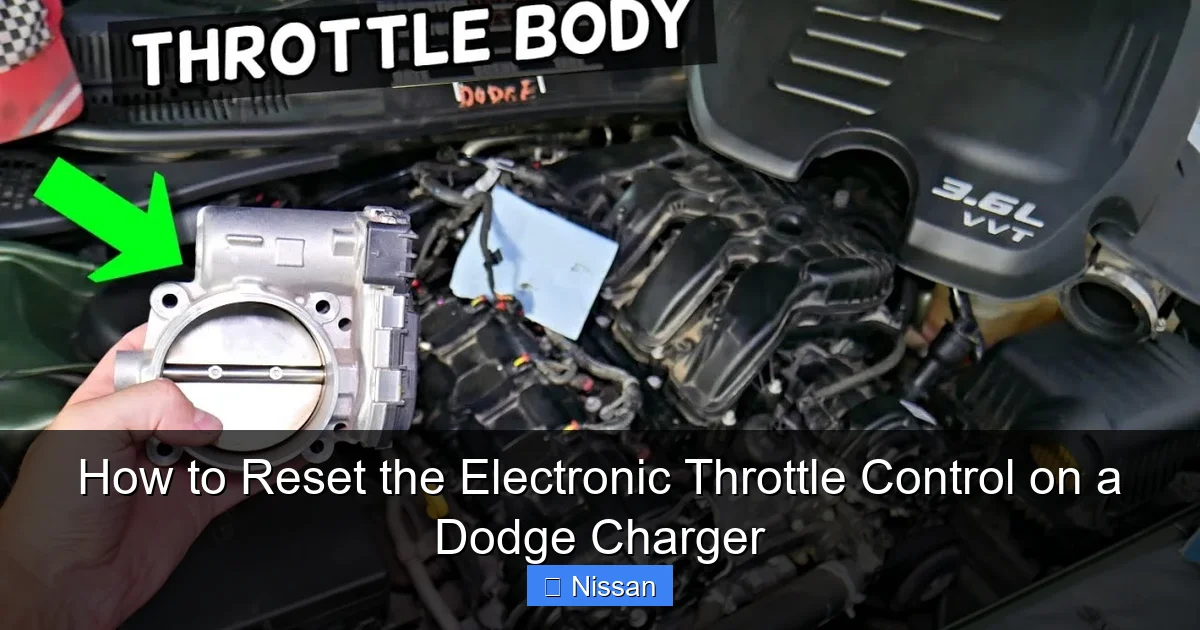
Another reason is after cleaning the throttle body. Over time, carbon buildup can restrict airflow and cause rough idling. While cleaning helps, it can also disrupt the ECU’s learned throttle positions. A reset allows the system to recalibrate and adapt to the cleaner throttle body.
Software updates or ECU reprogramming can also require a reset. If your Charger has had recent service or a software flash, the ECU may need to relearn throttle behavior. Even something as simple as disconnecting the battery for maintenance can trigger the need for a reset.
Common Symptoms of a Faulty Electronic Throttle Control
Visual guide about How to Reset the Electronic Throttle Control on a Dodge Charger
Image source: autovfix.com
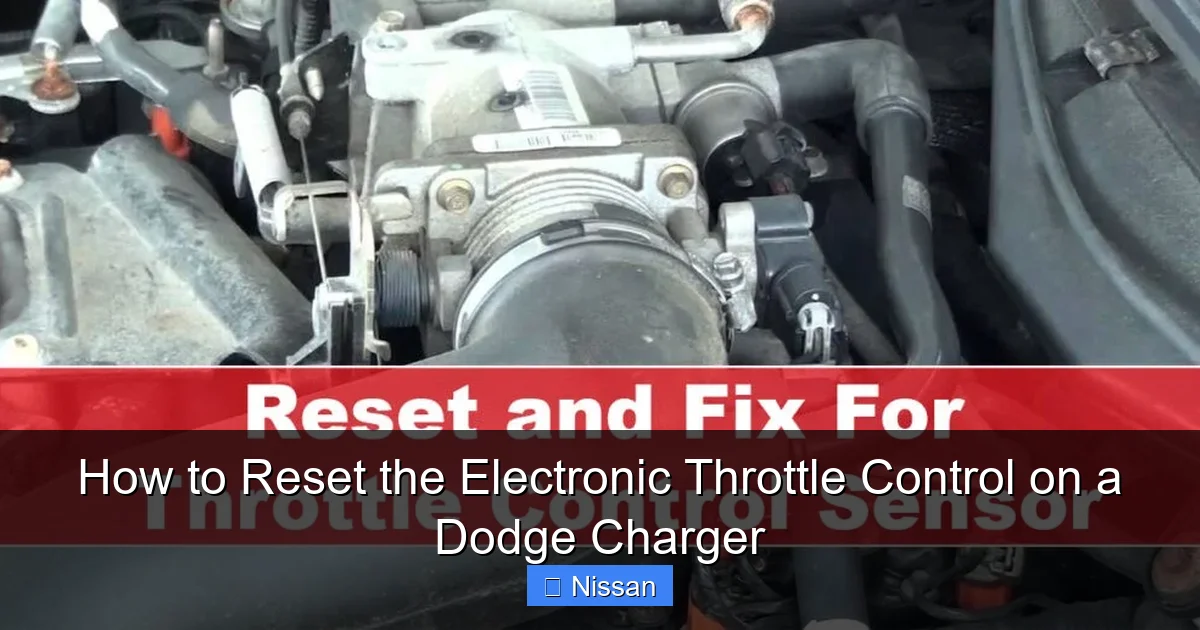
Recognizing the signs of a problematic ETC system is the first step toward fixing it. While some symptoms can be subtle, others are hard to ignore. Here are the most common indicators that your Dodge Charger’s throttle control may need attention.
One of the most obvious signs is hesitation or lag when accelerating. You press the gas, but the car doesn’t respond immediately. It might feel like there’s a delay between your input and the engine’s reaction. This is often due to the ECU limiting throttle opening because it detects an inconsistency in sensor data.
Another common symptom is rough or erratic idling. Your Charger might idle too high, too low, or fluctuate between speeds. This happens when the ECU can’t accurately control the throttle opening at low engine speeds. You might notice the engine stalling when coming to a stop or revving unexpectedly.
The check engine light is another red flag. While it can indicate many issues, codes related to the throttle system—such as P0121 (Throttle Position Sensor/Switch A Circuit Range/Performance) or P2135 (Throttle/Pedal Position Sensor/Switch D/E Voltage Correlation)—are strong indicators of an ETC problem.
In severe cases, your Charger might enter “limp mode.” This is a protective state where the ECU restricts engine power to prevent damage. You’ll notice reduced acceleration, top speed limited to around 30–40 mph, and possibly a warning message on the dashboard. Limp mode often occurs when the ECU detects a critical fault in the throttle system.
Real-World Example: Hesitation After Cold Start
Imagine you start your Charger on a cold morning. It cranks up fine, but when you pull out of your driveway, the car hesitates and feels sluggish. You press the gas harder, but it takes a few seconds to respond. This is a classic sign of a throttle system that hasn’t adapted properly after a cold start. The ECU may be using outdated learned values or detecting a minor sensor discrepancy. A simple reset can often resolve this by allowing the system to relearn optimal throttle behavior.
When to Suspect a Sensor Issue
Not all throttle problems are due to software glitches. Sometimes, a faulty sensor is the culprit. For example, a failing throttle position sensor might send incorrect voltage readings to the ECU, causing erratic throttle response. Similarly, a dirty or worn accelerator pedal sensor can cause hesitation or unintended acceleration.
If you’ve tried resetting the system and the problem persists, it’s worth inspecting the sensors. Look for signs of corrosion, loose connections, or physical damage. You can also use an OBD2 scanner to check live data from the sensors. If the readings are erratic or out of range, the sensor may need replacement.
Method 1: Battery Disconnect Reset (Simple and Effective)
Visual guide about How to Reset the Electronic Throttle Control on a Dodge Charger
Image source: i.ytimg.com
One of the easiest and most common ways to reset the electronic throttle control on a Dodge Charger is by disconnecting the battery. This method works by cutting power to the ECU, which forces it to reset its learned settings and clear temporary fault codes. It’s a great first step, especially if you’re not comfortable using diagnostic tools.
To perform this reset, start by turning off the engine and removing the key from the ignition. Open the hood and locate the battery—it’s usually on the driver’s side of the engine bay. Use a wrench to loosen the negative (black) terminal first, then the positive (red) terminal. This order helps prevent accidental short circuits.
Once both terminals are disconnected, wait at least 10 to 15 minutes. This gives the ECU enough time to fully discharge and reset. Some experts recommend waiting up to 30 minutes for a more thorough reset, especially on newer models with complex electronics.
After the wait, reconnect the terminals in reverse order: positive first, then negative. Tighten them securely to ensure a good connection. Start the engine and let it idle for a few minutes. You may notice the idle is a bit rough at first—this is normal as the ECU relearns throttle behavior.
Tips for a Successful Battery Reset
To get the best results from a battery disconnect reset, follow these tips. First, make sure all accessories are turned off—lights, radio, AC, etc.—before disconnecting the battery. This prevents power surges when reconnecting.
Second, avoid touching both terminals at the same time with your wrench. This can create a short circuit and damage the battery or electrical system.
Third, if your Charger has a security system or anti-theft feature, check your owner’s manual. Some systems may require a reactivation code after a battery disconnect.
Finally, drive the car gently for the first 10–15 minutes after the reset. Avoid hard acceleration or high speeds. This allows the ECU to relearn throttle positions gradually and avoid triggering new fault codes.
Limitations of the Battery Disconnect Method
While the battery disconnect method is simple and effective for many issues, it has its limits. It works best for clearing temporary glitches or resetting learned values. However, it won’t fix mechanical problems like a stuck throttle plate or a failed sensor.
Also, on newer Dodge Chargers (especially 2015 and later), the ECU may require a specific relearn procedure after a battery reset. Simply reconnecting the battery may not be enough to restore full throttle functionality. In these cases, you’ll need to use an OBD2 scanner or perform a manual driving cycle.
Method 2: Using an OBD2 Scanner for Advanced Reset
Visual guide about How to Reset the Electronic Throttle Control on a Dodge Charger
Image source: i.ytimg.com
For more precise control over the reset process, an OBD2 scanner is the way to go. This tool connects to your Charger’s onboard diagnostic port (usually under the dashboard near the steering wheel) and communicates directly with the ECU. It can read fault codes, clear them, and even perform throttle relearn procedures on compatible models.
To use an OBD2 scanner, start by turning off the engine and plugging the scanner into the OBD2 port. Turn the ignition to the “ON” position (without starting the engine) to power up the scanner. Follow the on-screen prompts to access the ECU and read any stored fault codes.
If you see codes related to the throttle system—like P0121, P0221, or P2135—the scanner can often clear them with a single button press. After clearing the codes, start the engine and check if the symptoms are gone.
Performing a Throttle Relearn with an OBD2 Scanner
Some advanced OBD2 scanners can initiate a throttle relearn procedure. This tells the ECU to recalibrate the throttle body and sensors. The exact steps vary by scanner model, but generally, you’ll need to:
1. Connect the scanner and access the throttle relearn function.
2. Follow the prompts—this may involve turning the ignition on and off, pressing the gas pedal, or holding it at certain positions.
3. Complete the procedure as instructed, then test drive the vehicle.
This method is especially useful after cleaning the throttle body or replacing sensors. It ensures the ECU adapts to the new conditions and restores smooth operation.
Recommended OBD2 Scanners for Dodge Chargers
Not all OBD2 scanners support throttle relearn functions. For Dodge Chargers, look for scanners with Chrysler-specific capabilities. Popular options include the BlueDriver Bluetooth Scanner, Autel MaxiCOM MK808, and Foxwell NT510 Elite. These tools offer advanced diagnostics and relearn procedures for a wide range of systems.
Method 3: Manual Throttle Relearn Driving Cycle
If you don’t have an OBD2 scanner, you can still reset the electronic throttle control using a manual driving cycle. This method works by putting the ECU through a series of driving conditions that allow it to relearn throttle behavior. It’s particularly useful for older Chargers or models that don’t support scanner-based relearn.
To perform the driving cycle, start with a cold engine. Let it idle for about 2–3 minutes without touching the gas pedal. This allows the ECU to establish a baseline idle speed.
Next, drive the car at a steady speed of 30–40 mph for about 5 minutes. Avoid sudden acceleration or braking. Then, accelerate smoothly to 55–60 mph and maintain that speed for another 5 minutes.
After that, slow down to 20 mph and drive at that speed for 3–5 minutes. Finally, come to a complete stop and let the engine idle for 2–3 minutes.
Repeat this cycle 2–3 times. The ECU should now have relearned optimal throttle positions. Test the car by accelerating from a stop—it should feel smooth and responsive.
When the Driving Cycle Doesn’t Work
If the manual driving cycle doesn’t resolve the issue, it may indicate a deeper problem. Possible causes include a dirty throttle body, faulty sensor, or wiring issue. In these cases, further inspection or professional diagnosis may be needed.
Preventing Future ETC Issues
Once you’ve reset the electronic throttle control, it’s important to take steps to prevent future problems. Regular maintenance is key. Clean the throttle body every 30,000–50,000 miles to remove carbon buildup. Use a throttle body cleaner and a soft brush—avoid harsh chemicals that can damage sensors.
Also, inspect the accelerator pedal and throttle body for signs of wear or damage. Replace any worn components promptly. Keep the battery terminals clean and tight to ensure stable voltage.
Finally, avoid aftermarket modifications that can interfere with the ETC system. Performance chips or throttle controllers may override factory settings and cause instability.
When to Seek Professional Help
While many ETC issues can be resolved with a reset, some problems require expert attention. If you’ve tried all the methods above and the symptoms persist, it’s time to visit a qualified mechanic. They can perform advanced diagnostics, test sensors, and check for wiring faults.
Persistent limp mode, recurring fault codes, or physical damage to components are signs that professional help is needed. Don’t ignore these issues—they can lead to more serious engine problems if left untreated.
Conclusion
Resetting the electronic throttle control on your Dodge Charger is a valuable skill that can save you time and money. Whether you use a simple battery disconnect, an OBD2 scanner, or a manual driving cycle, the key is to follow the steps carefully and allow the ECU time to relearn. With regular maintenance and attention to warning signs, you can keep your Charger running smoothly for years to come.
Frequently Asked Questions
Can I reset the electronic throttle control without tools?
Yes, you can perform a basic reset by disconnecting the battery for 10–15 minutes. This method clears temporary glitches and resets the ECU’s learned settings. However, it may not work for all models or persistent issues.
Will resetting the throttle control fix a check engine light?
It can, if the light is caused by a temporary ETC fault. Resetting clears the code and may resolve the issue. But if the problem persists, the light will return, indicating a deeper mechanical or sensor problem.
How often should I reset the electronic throttle control?
Only reset it when you notice performance issues or after maintenance like throttle body cleaning. Frequent resets aren’t necessary and may indicate an underlying problem.
Can a dirty throttle body cause ETC problems?
Yes, carbon buildup can restrict airflow and cause rough idling or hesitation. Cleaning the throttle body often resolves these issues, but a reset may be needed afterward.
Is it safe to drive with a faulty electronic throttle control?
Driving with a faulty ETC can be risky. It may cause sudden loss of power, unintended acceleration, or stalling. If you experience symptoms, have the system checked immediately.
Do I need a special scanner for Dodge Charger throttle reset?
While basic OBD2 scanners can clear codes, advanced models with Chrysler-specific functions are better for throttle relearn procedures. Look for scanners that support throttle body adaptation.
