Is the Tesla Mobile Charger Waterproof

Contents
- 1 Key Takeaways
- 2 📑 Table of Contents
- 3 Decoding the IP Rating: What IP54 Really Means
- 4 Tesla’s Official Stance and Warranty Implications
- 5 Real-World Performance: What Happens If It Gets Wet?
- 6 Comparison to Other Charging Solutions: What’s Weatherproof?
- 7 Practical Usage Tips for Protecting Your Mobile Connector
- 8 Conclusion: Protecting Your Investment and Ensuring Safety
- 9 Frequently Asked Questions

Dashboard Polish

Tire Repair Kit

Car Fog Light Bulb

Brake Cleaner Spray
No, the standard Tesla Mobile Connector (often called the mobile charger) is not waterproof or weatherproof. It has an IP rating of IP54, which means it can handle light splashes and dust but is not designed for rain, snow, or heavy moisture. Using it in wet conditions can damage the charger and create safety risks. Always store it dry and use a weatherproof cover or dedicated outdoor charger for exposed locations.
So, you’ve got your shiny new Tesla, and you’re setting up your charging routine at home. You unbox the Tesla Mobile Connector—that handy, portable cable that comes with your car—and a question pops into your head as you glance outside at a drizzly afternoon: “Is this thing waterproof? Can I just leave it plugged in on the driveway?” It’s a smart question. After all, your phone charger isn’t meant for the pool, and your car’s “fueling” cable should be treated with similar respect. The short, critical answer is no. The standard Tesla Mobile Connector is not waterproof. It’s built for convenience and portability, not for weathering the elements. But the full story involves understanding IP ratings, real-world performance, and what you should actually do to keep your charging setup safe and functional, rain or shine.
Let’s clear the air right away. Tesla’s official documentation and technical specifications for the Mobile Connector (the 20-foot cable with a connector for your Tesla and a plug for your NEMA 14-50, 5-15, or other outlet) list its environmental protection as IP54. For the uninitiated, that “IP” stands for Ingress Protection, an international standard that rates how well a device is sealed against dust and water. The first digit, ‘5’, means it’s “dust protected” – some dust can get in, but it won’t interfere with operation. The second digit, ‘4’, means it’s “protected against water splashes from any direction.” This is where the confusion often lies. “Splashes” are not the same as “rain,” “hosing down,” or “left out overnight in a storm.” Think of IP54 as protection for a light drizzle you might encounter while quickly plugging in, not for a device sitting in a puddle or under a leaky gutter. It’s a rating for accidental, brief exposure, not for permanent outdoor installation.
Why does this matter? Because electricity and water are a notoriously bad combination. Water can create unintended conductive paths inside the connector, leading to short circuits, corrosion of metal pins, degradation of insulation, and in the worst-case scenario, a fire or electric shock hazard. Tesla explicitly states that the Mobile Connector is intended for indoor use or use in dry, covered locations like a garage or under a carport. Using it in exposed, wet conditions not only risks damaging the $300-$500 accessory but also voids your warranty. So, while it’s tempting to think of it as a rugged, all-weather tool, it’s really a precision electrical device that needs to stay dry. In the following sections, we’ll break down exactly what IP54 means in practice, how the Mobile Connector compares to other charging solutions, and what you can and absolutely cannot do to use it safely in less-than-ideal weather.
Key Takeaways
- The Tesla Mobile Connector has an IP54 rating: This means it is protected against dust (limited ingress) and water splashes from any direction, but it is not waterproof and cannot withstand direct rain, immersion, or heavy wet conditions.
- It is designed for indoor or covered use only: Tesla’s official guidance and the product’s design intent is for use in garages, carports, or other sheltered areas. Prolonged exposure to moisture can corrode internal components and compromise safety.
- Water damage voids the warranty: If the Mobile Connector is damaged due to water exposure or used in a manner not intended (e.g., left out in the rain), Tesla will not cover it under the limited warranty.
- Protective accessories are available: For occasional outdoor use, a heavy-duty, weatherproof cover or bag can provide temporary protection, but it is not a substitute for a permanently installed, outdoor-rated charger like the Tesla Wall Connector.
- Other EV chargers vary in weatherproofing: Not all third-party or public chargers have the same limitations; many are designed for permanent outdoor installation with higher IP ratings (e.g., IP65 or IP66). Always check specifications before purchasing.
- Safety is the primary concern: Water and electricity are a dangerous mix. Using a non-weatherproof charger in wet conditions risks electric shock, short circuits, and fire hazards. Prioritize safety over convenience.
- Proper storage extends lifespan: When not in use, always store the Mobile Connector in a dry, clean place. Coil it loosely to avoid damaging the cable and ensure the connectors are clean and dry before plugging in.
📑 Table of Contents
- Decoding the IP Rating: What IP54 Really Means
- Tesla’s Official Stance and Warranty Implications
- Real-World Performance: What Happens If It Gets Wet?
- Comparison to Other Charging Solutions: What’s Weatherproof?
- Practical Usage Tips for Protecting Your Mobile Connector
- Conclusion: Protecting Your Investment and Ensuring Safety
Decoding the IP Rating: What IP54 Really Means
To understand if your Tesla Mobile Charger is waterproof, you must first understand the language of IP ratings. It’s not as simple as “waterproof” or “not waterproof.” There’s a spectrum, and IP54 sits at a very specific point on it. Let’s dissect those two digits and translate them into real-world conditions you might encounter in your driveway or garage.
The First Digit: Dust Protection (The ‘5’)
The first digit in an IP code rates protection against solid objects, like tools, fingers, and dust. Here’s the scale: 0 = no protection, 1 = protection against large objects (>50mm), 2 = protection against fingers or objects >12mm, 3 = protection against tools, thick wires, etc., 4 = protection against most wires, screws, etc., 5 = dust protected (ingress of dust is not entirely prevented, but dust must not enter in sufficient quantity to interfere with operation), and 6 = dust tight (no ingress of dust). So, the ‘5’ in IP54 means some dust can get inside the connector over time. In a typical home garage environment, this is usually not a major concern because the amount of fine dust is minimal and the connectors are designed to tolerate it. However, in extremely dusty environments like a barn or construction site, even this limited protection might allow enough particulate to cause issues over years of use. For the average Tesla owner, the dust rating is adequate for indoor/covered use but is a reminder that this is not a hermetically sealed unit.
The Second Digit: Water Protection (The ‘4’)
This is the critical number for our question. The scale for liquid ingress is: 0 = no protection, 1 = protection against dripping water (vertically falling drops), 2 = protection against dripping water when tilted up to 15°, 3 = protection against spraying water (up to 60° from vertical), 4 = protection against splashing water from any direction, 5 = protection against low-pressure water jets from any direction, 6 = protection against high-pressure water jets, 7 = protection against immersion up to 1m, and 8 = protection against continuous immersion under conditions specified by the manufacturer. The ‘4’ is the key. “Splashing water” is tested by having a device on a turntable being sprayed by water from four directions via a specific nozzle for at least 10 minutes. The test simulates someone accidentally splashing a bucket of water near it or driving through a large puddle that sprays up. It does not simulate a steady rain, a hose, or the device being placed on a wet surface where water can pool and potentially wick into cable glands or connectors over time. This is the fundamental limitation. Your Mobile Connector can survive a quick, accidental splash, but it cannot survive sustained moisture. If you leave it plugged in during a rainstorm, water will likely find its way into the connector housing, especially at the cable entry points or the joint between the plug and the cable, where seals are not designed for continuous wetting.
Putting IP54 Into Practical Terms
So, what does this mean for you, the Tesla owner? IP54 means:
- YES: You can use it on a covered porch or under a permanent carport where rain cannot directly hit it.
- YES: You can quickly plug in or unplug it during a brief, light sprinkle without immediate disaster (though you should still try to keep it as dry as possible).
- YES: It can handle the humidity and condensation you might find in an unheated garage.
- NO: You cannot leave it plugged in and exposed to rain, snow, or sleet.
- NO: You cannot leave it on the ground in a puddle or on a wet driveway.
- NO: You should not use it to wash your car (i.e., spray it down with a hose).
- NO: It is not suitable for permanent outdoor installation on a wall or post.
The IP54 rating is a “best effort” for a product designed for portability and indoor use. It provides a basic level of environmental resistance but is a far cry from the IP65 or IP66 ratings you’ll find on purpose-built outdoor EVSEs (Electric Vehicle Supply Equipment), which are dust-tight and can withstand powerful water jets. If you need a charger that will live outside year-round, the Mobile Connector is not the right tool for that job. You need a Tesla Wall Connector or a third-party outdoor-rated charger. For those curious about how different EVs handle charging compatibility, you might wonder can a Nissan Ariya use a Tesla charger? The answer involves different connectors and adapters, but the principle of weatherproofing remains the same—always check the IP rating of any charging equipment.
Tesla’s Official Stance and Warranty Implications
Beyond the technical rating sheet, what does Tesla itself say about using the Mobile Connector in wet conditions? The answer is found in the fine print of the product manual and warranty documentation, and it’s unequivocal. Understanding this official position is crucial because it directly impacts your safety and your wallet if something goes wrong.
Visual guide about Is the Tesla Mobile Charger Waterproof
Image source: teslamusthavereviews.com
What the Manual Says
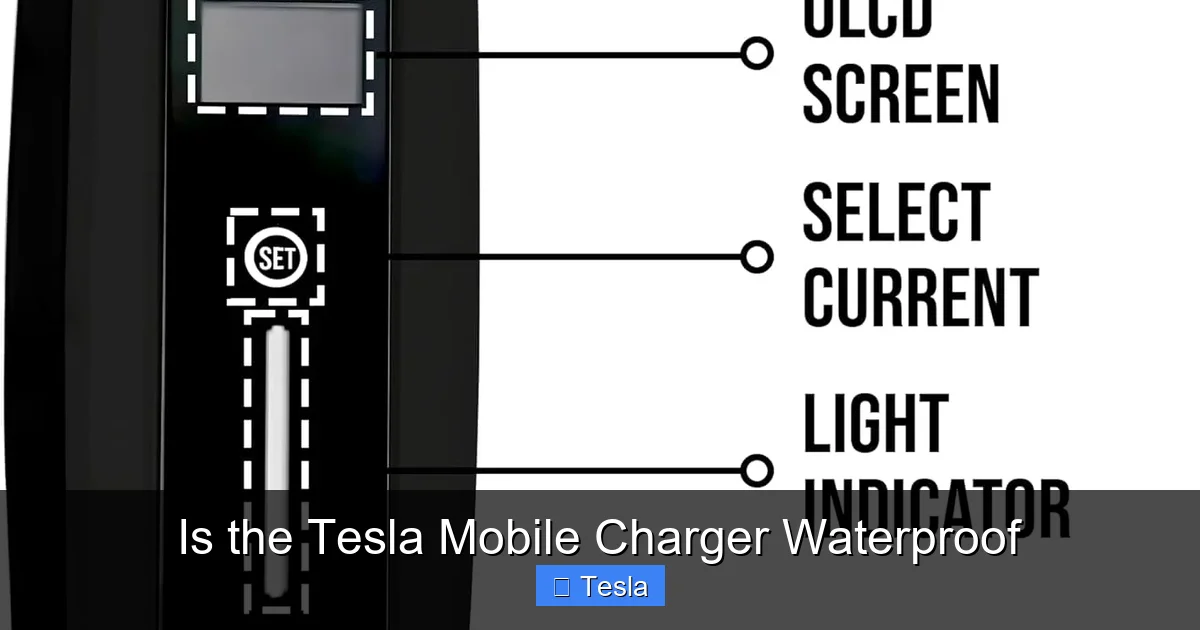
The Tesla Mobile Connector user guide contains clear warnings and usage instructions. It states that the device is “intended for indoor use only” or for use “in dry locations.” It explicitly warns against exposure to rain, snow, moisture, or excessive humidity. The manual will also instruct you to inspect the connector and cable regularly for damage, including cracks, cuts, or exposed wires—all of which can be exacerbated by water exposure. The charging cable itself is not designed to be submerged or to have water sit in the connector heads. The connectors (the Tesla side and the wall plug side) have small rubber gaskets, but these are designed for a tight fit when mated and for basic splash resistance, not for creating a permanent seal against standing water. Tesla’s design philosophy for the Mobile Connector is “take it out when you need it, put it away when you’re done.” It’s a tool, not a permanent fixture.
Warranty Coverage and Water Damage
This is the most important practical takeaway. Tesla provides a limited warranty for the Mobile Connector, typically for one year. However, the warranty, like all such warranties, excludes damage caused by “misuse, neglect, accident, modification, or abnormal use.” Using the charger in a manner contrary to its intended design—such as leaving it exposed to the elements—is considered misuse or neglect. If Tesla service personnel examine a failed Mobile Connector and find evidence of water ingress (corrosion on pins, mineral deposits inside the housing, degraded insulation), they will almost certainly deny the warranty claim. You would be responsible for the full cost of a replacement. This isn’t Tesla being difficult; it’s standard practice. Water damage is a clear, identifiable cause that falls outside normal wear and tear. Protecting your charger from moisture isn’t just about maintaining function; it’s about protecting your investment. For more general advice on protecting your automotive investments, understanding when is the best time to buy a car can help you make savvy decisions on purchasing and maintaining all your vehicle-related gear, including charging equipment.
The Safety First Principle
Beyond the financial aspect, there is the non-negotiable issue of safety. Water can conduct electricity. If water enters the connector housing, it can create a short circuit between the high-voltage (to the car) and low-voltage (control pilot signal) circuits or between live contacts and ground. This can cause:
- Charger Failure: Internal components fry, rendering the charger dead.
- Car Error: The Tesla’s charging system detects a fault and halts charging, often displaying an error message.
- Fire Risk: A sustained short can generate heat and sparks, potentially igniting nearby flammable materials.
- Electric Shock Risk: If the connector or cable becomes energized due to an internal fault and you touch it while grounded (e.g., standing on wet pavement), you could receive a dangerous shock.
Tesla’s vehicles and charging systems have multiple layers of electrical safety, including ground fault detection. However, these systems are designed to work with properly functioning, intended equipment. Relying on these safety systems to compensate for using a charger in a wet environment is a gamble with serious consequences. The rule is simple: keep the charger and its connections dry. If you wouldn’t plug in a toaster while standing in a puddle, don’t plug in your Tesla charger.
Real-World Performance: What Happens If It Gets Wet?
Theoretical ratings are one thing, but what do actual Tesla owners experience? The community is full of anecdotes, and the consensus aligns perfectly with the IP54 specification: the Mobile Connector can survive minor, transient moisture but will fail under sustained or significant wet conditions.

Visual guide about Is the Tesla Mobile Charger Waterproof
Image source: makerworld.bblmw.com
The “Quick Splash” Scenario
Many owners report that their Mobile Connector has survived being caught in a sudden, light rain for a few minutes while they were plugging in, or having a sprinkler briefly hit it. In these cases, the connector is often still functional after drying out completely. The key factor is duration and intensity. A few drops that bead and roll off the smooth plastic housing are unlikely to penetrate the seals. The connector’s mating surfaces (where the Tesla plug meets the charger body) have a rubber gasket that compresses when connected, offering decent protection against splashes that hit at an angle. However, if water pools in the cable gland (where the cable enters the connector housing) or sits on the open face of the connector when it’s *not* plugged into the car, it can slowly wick its way in. So, a quick splash during active use is low-risk, but leaving a wet connector sitting on a damp driveway is asking for trouble.
The “Left Out in the Rain” Scenario
This is the failure case. Owners who have inadvertently left their Mobile Connector plugged into an outdoor outlet (e.g., on a patio or in a driveway) during an overnight rainstorm or a steady downpour commonly report failure. The symptoms vary: the charger may simply not work, the car may refuse to charge and show a “Charging Equipment Malfunction” or “Check Charger” error, or the connector may show visible signs of moisture inside the clear plastic housing over the electronics (you might see fogging or droplets). Upon disassembly, corrosion is often found on the copper pins or the small circuit board inside. This damage is permanent and irreversible. The charger is dead. This outcome is not a defect; it’s the expected result of using a device with IP54 protection in an environment it was not designed for. It highlights why the “indoor or covered only” rule is so important. Your garage or carport is a safe zone; your open driveway is not.
Long-Term Degradation from Humidity
Even without a direct rain event, constant high humidity can take a toll over years. In climates with heavy dew or coastal salt air, the internal components of the Mobile Connector can experience slow corrosion. This is why proper storage is so important. When you bring the charger inside after use, you should also wipe down the connectors and cable with a dry cloth to remove any surface moisture, dew, or salt residue. Storing it in a sealed plastic bag or a dedicated case in a dry closet can significantly extend its life. Think of it like a nice pair of leather shoes—you wouldn’t leave them out in the rain, and you’d condition them occasionally. Your Mobile Connector needs similar care to avoid the slow creep of environmental damage. For those who live in particularly harsh climates, investing in a more robust, outdoor-rated charger from the start is the most economical long-term solution.
Comparison to Other Charging Solutions: What’s Weatherproof?
Knowing the Mobile Connector’s limitations, you might ask: what are the alternatives if I need to charge outside? The EV charging market offers several options with varying levels of weather resistance. Understanding the differences helps you choose the right tool for your specific installation.
Visual guide about Is the Tesla Mobile Charger Waterproof
Image source: electrek.co
Tesla Wall Connector
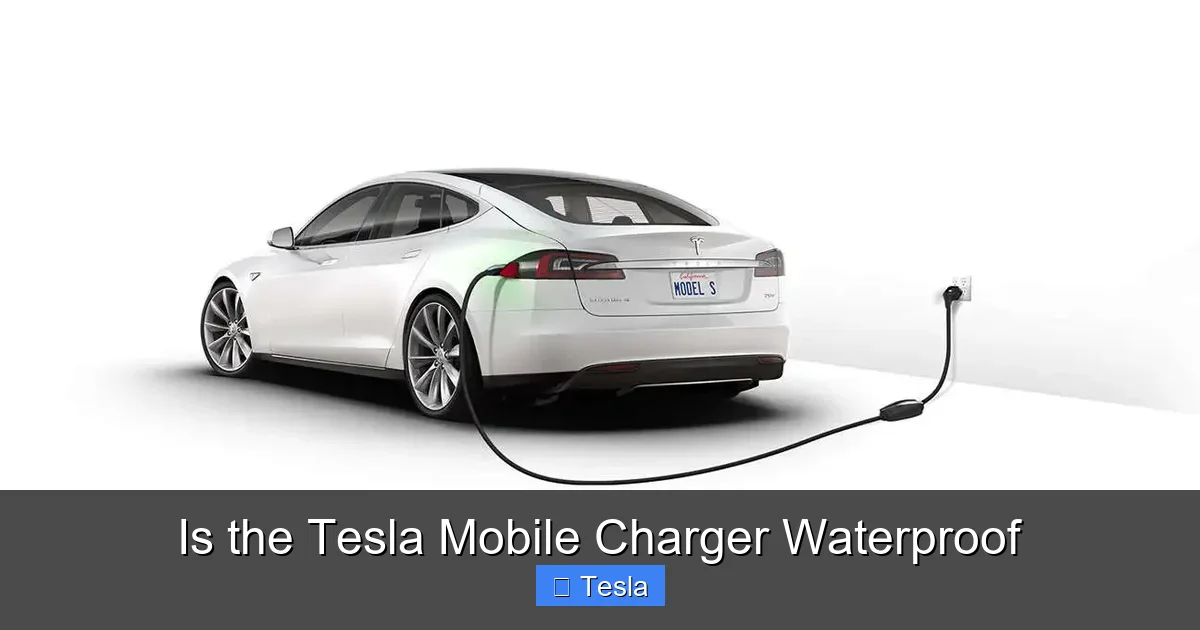
This is Tesla’s permanent, hardwired home charging station. It has an IP55 rating. The ‘5’ for dust is the same (dust protected), but the ‘5’ for water means it’s “protected against low-pressure water jets from any direction.” This is a significant step up. An IP55 device can handle a steady rain, being hosed down (from a distance), and heavy splashing. It is explicitly designed and certified for permanent outdoor installation on a wall or post. The Wall Connector’s housing is more robust, its cable entry points are better sealed, and its connectors are designed to mate and seal effectively even when exposed. It’s the direct answer to the problem: if you want to plug in outside, install a Wall Connector. It’s more expensive upfront but offers superior durability, faster charging (up to 48A vs. 32A for Mobile Connector on a 50A circuit), and a cleaner, more permanent look.
Third-Party Outdoor EVSEs (e.g., ChargePoint Home Flex, Grizzl-E)
Many reputable third-party manufacturers make EV chargers rated for outdoor use. Look for models with at least an IP65 rating (dust-tight and protected against low-pressure water jets). Some go up to IP66 (powerful water jets). These units are built with heavy-duty thermoplastic housings, integrated cable management, and superior sealing. For example, the ChargePoint Home Flex is rated for outdoor installation. The Grizzl-E, known for its simplicity and durability, is also rated for outdoor use. These can be excellent alternatives, especially if you have a non-Tesla EV or want a charger with different connectivity features. However, for a Tesla, you still need the Tesla connector, which is proprietary. Some third-party chargers come with a Tesla connector (using the same J1772-to-Tesla adapter that comes with the Mobile Connector), but you must verify the specific model’s weatherproof rating. Always check the spec sheet for the IP rating before buying any charger for outdoor use.
Public Charging Networks (Superchargers, Destination Chargers)
All Tesla Supercharger stalls are engineered for 24/7 outdoor exposure in all weather conditions. They have very high IP ratings (typically IP65 or higher) and are mounted on sturdy, weatherproof pedestals. Destination Chargers (the slower, destination-based chargers) are also designed for outdoor or semi-outdoor installation and have robust weatherproofing. The takeaway here is that the industry standard for public, permanently installed charging equipment is far superior to the portable Mobile Connector. This reinforces that the Mobile Connector’s role is temporary, mobile charging—like a laptop power brick—not a permanent outdoor power outlet.
The Adapter Question: Can I Just Buy a Cover?
You’ll find many “weatherproof covers” or “charging bags” sold online that claim to make the Mobile Connector safe for outdoor use. These are typically heavy-duty rubber or vinyl sleeves that you zip over the connector when it’s not actively charging. They can provide a degree of protection from light rain and snow *if the charger is not plugged in*. However, they are a dangerous and inadequate solution for a plugged-in charger. First, they do not create a sealed environment; water can still enter through the cable entry point or the opening where the cable exits to the car. Second, and more critically, they can create a tripping hazard, overheat if the charger generates heat during use (which it does), and are generally not UL-listed or certified for this use. They give a false sense of security. The only safe way to use a Mobile Connector in an exposed location is to plug it in, use it, and then immediately unplug it and bring it indoors. There is no safe “set it and forget it” outdoor configuration for the Mobile Connector. If you need that capability, you must install a Wall Connector or a certified outdoor EVSE. For those exploring other EV models, understanding charging compatibility is key, as seen in articles like can the Nissan Ariya use a Tesla charger, which involves different connector standards and adapter solutions.
Practical Usage Tips for Protecting Your Mobile Connector
Armed with the knowledge that your Tesla Mobile Charger is not waterproof, how do you integrate it into your life safely and reliably? The goal is to maximize convenience while minimizing risk. Here are actionable tips for every Tesla owner who uses the Mobile Connector.
The Golden Rule: Covered or Inside
Make this your non-negotiable mantra. The Mobile Connector should only be used when the charging location is dry. This means:
- Garage: The ideal location. Fully protected from elements.
- Carport: Acceptable, as long as the roof provides adequate coverage from rain and snow. Ensure the area doesn’t collect pooling water.
- Porch/Patio with Roof: Acceptable if it’s a permanent, solid roof. A retractable awning is not sufficient protection against wind-driven rain.
- Driveway/Curb: Not acceptable. Even if it’s not raining at the moment, dew, sprinklers, or a sudden shower can wet the connector. You must unplug and store the charger inside after each use.
If your only option is an exposed driveway, you need to plan to bring the charger in and out every time you charge. This is inconvenient but necessary to protect your equipment.
Proper Storage When Not in Use
Where you put the charger when it’s not plugged in is almost as important as where you use it.
- Indoor Storage: Always store it inside your home, garage, or a dedicated dry shed. Do not leave it in the trunk of your car if the car is parked outside, as the trunk can accumulate moisture and temperature extremes.
- Cable Management: Coil the cable loosely, following the natural bends. Do not kink or sharply bend it, as this can damage internal conductors over time. Use the built-in cable wrap or a separate cable hook.
- Connector Care: Before storing, inspect and wipe the Tesla connector (the part that goes into the car) and the wall plug connector with a clean, dry cloth. Pay special attention to the metal pins. Ensure they are clean and dry. Any moisture left on the pins can cause corrosion when stored.
- Avoid Extreme Temps: While the Mobile Connector can operate in a wide temperature range (typically -22°F to 122°F / -30°C to 50°C), prolonged storage in extreme heat or cold can degrade plastic components. A climate-controlled space is best.
Inspecting for Damage
Make a habit of doing a quick visual and tactile inspection of your Mobile Connector every few weeks or before a long trip.
- Check the Cable: Look for cuts, abrasions, cracks, or swelling in the insulation. Feel along the entire length for any soft spots or irregularities.
- Check the Connectors: Examine the plastic housings for cracks. Look at the metal pins—they should be clean, free of corrosion (green/white crust), and not bent. The rubber seals around the pins should be intact and supple.
- Check the Wall Plug: If using a NEMA adapter, inspect the plug’s prongs for corrosion and the plastic body for cracks.
- Listen and Feel: When plugged in and charging, the charger should be silent and not feel excessively hot (warm is normal, hot to the touch is not). Any buzzing, crackling, or overheating indicates a fault—stop using it immediately and contact Tesla Service.
Catching small issues early can prevent a total failure and potential safety hazard.
Using a Weather-Resistant Outlet Cover
If your charging location is a covered carport or garage where the outlet itself might be exposed to occasional drips (e.g., from a leaky roof or condensation), consider installing a weatherproof in-use outlet cover. These are the “bubble” covers that allow a plug to remain connected while still protecting the outlet from moisture. This protects the *wall outlet and the plug’s connection to it*, which is one potential ingress point. However, this does not make the Mobile Connector itself waterproof. It only protects the connection between the charger’s plug and your wall outlet. The rest of the charger and the cable are still vulnerable. But it’s a good practice for any permanently installed outlet that might see occasional moisture.
The Temporary Outdoor Use Protocol
What if you have no choice but to charge in an exposed location for a short period (e.g., visiting a friend’s house with only a driveway outlet)? You can do so with extreme caution:
- Check the Forecast: Only do this if there is a 0% chance of rain for the entire charging session.
- Position Carefully: Place the charger and connector on a dry, elevated surface (like a wooden block or a clean mat) to keep it off the ground. Ensure the cable won’t sit in a puddle.
- Supervise: Do not start charging and then leave for hours. Be present or nearby so you can unplug immediately if conditions change (wind picks up, unexpected drizzle starts).
- Unplug and Retrieve Immediately: As soon as charging is complete, unplug the charger from the wall first (to avoid any live contacts being exposed while you handle it), then from the car. Bring the entire unit indoors right away.
- Dry Thoroughly: Before storing, wipe down the entire unit, especially the connectors, with a dry towel.
This is a workaround, not a recommended long-term solution. If you find yourself needing to do this regularly, it’s a sign you need a permanent, weatherproof charging solution.
Conclusion: Protecting Your Investment and Ensuring Safety
So, is the Tesla Mobile Charger waterproof? The definitive, safety-critical answer is no. With its IP54 rating, it is equipped to handle incidental splashes and dust but is fundamentally a device for dry, covered, or indoor environments. Using it as an outdoor, all-weather charger is a misuse that leads to certain failure, voids your warranty, and creates genuine electrical hazards. The good news is that Tesla provides clear guidance, and the solution for outdoor charging is straightforward: install a Tesla Wall Connector or another certified outdoor-rated EVSE if you need a permanent, exposed installation. For the vast majority of home charging scenarios, the Mobile Connector is perfect—as long as it lives in a garage, carport, or inside when not in use.
Treat your Mobile Connector with the same care you would any other important electrical appliance. Keep it dry, store it properly, inspect it regularly, and never take chances with water and electricity. By understanding its limitations and respecting its design intent, you’ll enjoy years of reliable, safe charging. Remember, the convenience of electric vehicle ownership is best paired with a charging solution that matches your specific living situation. If your parking situation is exposed, plan for the right equipment from the start. It’s an investment in safety, reliability, and peace of mind. For more insights into maximizing your EV ownership experience, from charging solutions to vehicle maintenance, explore our library of expert automotive guides.
Frequently Asked Questions
Can I use the Tesla Mobile Connector in the rain?
No. The Tesla Mobile Connector has an IP54 rating, which means it is not waterproof. It can only withstand light splashes, not direct rain. Using it in the rain can cause water damage, create a safety hazard, and void your warranty.
What does IP54 mean for the Tesla Mobile Charger?
IP54 means the charger is protected against dust (limited) and water splashes from any direction. It is not sealed against pressurized water, immersion, or prolonged exposure to moisture. It is designed for indoor or covered use only.
What should I do if my Tesla Mobile Connector gets wet?
Immediately unplug it from both the wall and the car. Do not attempt to use it. Wipe it down thoroughly with a dry cloth, paying special attention to the metal connector pins. Allow it to air dry completely in a warm, dry place for at least 24-48 hours before inspecting for damage or attempting to use it again. If you see any corrosion or damage, do not use it and contact Tesla Service.
Is there a weatherproof cover for the Tesla Mobile Connector?
Third-party “weatherproof sleeves” or “charging bags” exist, but they are not a safe or approved solution for a *plugged-in* charger. They may protect an unplugged charger from light rain but cannot prevent water ingress during use and can create overheating or tripping hazards. They do not make the charger waterproof and should not be relied upon for outdoor charging.
What charger should I use for permanent outdoor installation?
For permanent outdoor charging, you need a charger with a higher IP rating, such as IP65 or IP66. The Tesla Wall Connector (IP55) is specifically designed and certified for outdoor installation. Many third-party chargers like the ChargePoint Home Flex are also rated for outdoor use. Never use the Mobile Connector for permanent outdoor installation.
Will water damage my Tesla Mobile Connector void the warranty?
Yes. Tesla’s limited warranty excludes damage caused by misuse, neglect, or abnormal use. Using the Mobile Connector in wet conditions or exposing it to the elements is considered misuse. If Tesla determines water ingress caused the failure, the warranty claim will be denied, and you will be responsible for the repair or replacement cost.