Is the Tesla Mobile Charger Waterproof?

Contents
- 1 Key Takeaways
- 2 📑 Table of Contents
- 3 Understanding IP Ratings: The “Waterproof” Decoder Ring
- 4 Tesla’s Official Stance: What Do They Say?
- 5 Real-World Scenarios: When Is It (Actually) Safe to Use?
- 6 Comparing Tesla’s Mobile Charger to Other EV Chargers
- 7 Essential Maintenance and Storage: Prolonging Life and Safety
- 8 Third-Party “Solutions” and Upgrades: Buyer Beware
- 9 The Bottom Line: Respect the Limits
- 10 Frequently Asked Questions



The Tesla Mobile Charger (Mobile Connector) is not waterproof; it is designed with a water-resistant rating (IP54) that protects against splashes and light rain but not submersion or heavy downpours. Using it in inappropriate wet conditions can damage the charger, create safety hazards, and void your warranty. Always store it dry, inspect it regularly, and follow Tesla’s guidelines for safe charging in damp weather.
So, you’ve got your Tesla, and you’re using the included Mobile Connector to charge at home or on the go. It’s a neat little piece of kit, but a common question pops up, especially when the weather turns: “Is this thing waterproof?” It’s a totally fair question. You don’t want to fry your expensive EV or create a safety hazard. The short answer is no, it’s not waterproof. But the full story is a bit more nuanced, and understanding the details is crucial for safe, reliable charging. Let’s dive in and clear up all the confusion around the Tesla Mobile Charger and water.
Key Takeaways
- IP54 Rating: The Tesla Mobile Charger has an IP54 rating, meaning it’s protected against dust and water splashes from any direction, but it is not waterproof and cannot handle immersion or heavy rain.
- Water-Resistant ≠ Waterproof: “Water-resistant” offers limited protection; submerging the connector or using it in a storm can cause internal damage, electrical shorts, and safety risks.
- Warranty Implications: Damage from improper exposure to water or liquids is not covered under Tesla’s warranty, leaving you responsible for repair or replacement costs.
- Safe Usage Practices: Charge in covered areas when possible, keep the connector pointed downward when plugged in, and never use a visibly wet or damaged charger.
- Regular Inspection is Key: Frequently check the connector and cable for cracks, corrosion, or moisture inside the connector head to prevent hazards.
- Third-Party Covers are Not a Solution: Aftermarket “waterproof” covers or bags can trap moisture and heat, increasing the risk of damage and should be avoided.
- Future-Proofing: Consider a dedicated Wall Connector with a higher IP rating (IP55) for outdoor, permanent installations where weather exposure is frequent.
📑 Table of Contents
- Understanding IP Ratings: The “Waterproof” Decoder Ring
- Tesla’s Official Stance: What Do They Say?
- Real-World Scenarios: When Is It (Actually) Safe to Use?
- Comparing Tesla’s Mobile Charger to Other EV Chargers
- Essential Maintenance and Storage: Prolonging Life and Safety
- Third-Party “Solutions” and Upgrades: Buyer Beware
- The Bottom Line: Respect the Limits
Understanding IP Ratings: The “Waterproof” Decoder Ring
Before we talk specifically about Tesla’s charger, we need to understand the language of water resistance: the IP rating. IP stands for Ingress Protection. It’s a standardized code that tells you how well a device is sealed against solids (like dust) and liquids (like water). The rating has two digits. The first digit is for solid protection (0-6). The second digit is for liquid protection (0-8).
What Does IP54 Mean for the Mobile Connector?
The current Tesla Mobile Connector (the one with the detachable cable and interchangeable plugs) is officially rated IP54. Let’s break that down:
- The “5” means it’s “dust protected.” Dust can get in, but not enough to harm the device. It’s not completely dust-tight (that would be a 6).
- The “4” means it’s “protected against water splashes from any direction.” This is the key part. It can handle a bit of rain, a splash from a puddle, or a spray from a hose. It is not protected against jets of water (that’s IP5) and absolutely not against immersion (IP7 or IP8).
Think of it like a weather-resistant jacket. It’ll keep you dry in a drizzle or if someone sprays you with a garden hose briefly. But it will not keep you dry if you jump in a pool or get caught in a thunderstorm. The same logic applies to your Mobile Connector. IP54 is a rating for incidental, temporary exposure, not for sustained or heavy wet conditions.
Tesla’s Official Stance: What Do They Say?
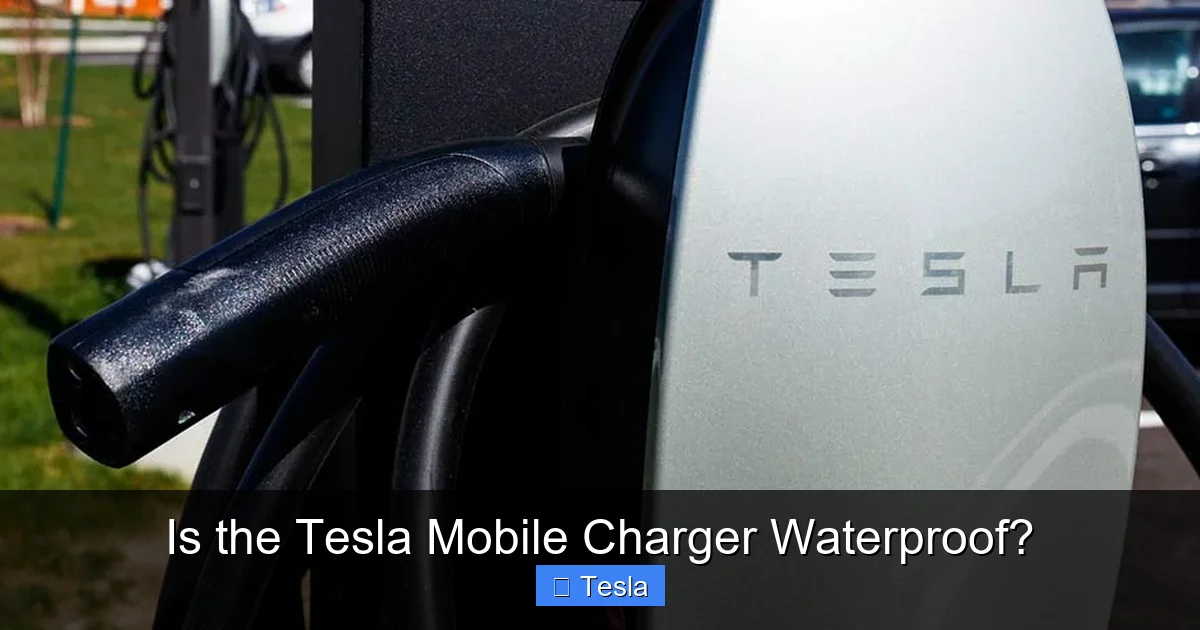
If you dig into Tesla’s documentation, they are very careful with their wording. They use terms like “water-resistant” and “suitable for use in rain,” but they explicitly avoid the word “waterproof.” In the owner’s manual for the Mobile Connector, you’ll find statements similar to: “The Mobile Connector is water-resistant and can be used in rain, but should not be submerged in water.” This is a critical distinction.
Visual guide about Is the Tesla Mobile Charger Waterproof?
Image source: teslamusthavereviews.com
Why the Caution? Safety First.
Electricity and water are a dangerous mix. Tesla engineers design the connector with seals around the internal electrical contacts to prevent water from causing a short circuit. However, these seals can degrade over time due to UV exposure, temperature extremes, and physical wear. A connector that was IP54 when new might offer less protection after a year of being plugged in, unplugged, and left in a hot garage or cold winter. Tesla’s cautious language is a legal and safety necessity. They are telling you: “We built it to handle a bit of weather, but you are responsible for using it correctly.”
This is also why you’ll see warnings about not using the connector if it’s wet, and always ensuring the connector port on the car is clean and dry before plugging in. The car’s charge port also has its own seals, and the system is designed as a pair. A compromised seal on either end is a problem.
Real-World Scenarios: When Is It (Actually) Safe to Use?
This is where theory meets practice. Let’s map some common situations to the IP54 rating.
- Light Rain or Snow: Generally Safe. If you’re quickly plugging in or unplugging during a light sprinkle, the IP54 rating should handle it. The connector is designed with the electrical pins recessed, so water is less likely to bridge them. However, try to keep the connector pointed downward when plugged into the car. Gravity will help water run off rather than pool inside the connector head.
- A Heavy Downpour: Not Safe. A sustained, heavy rain can overwhelm the seals. Water can be forced into the connector under pressure. If you know a storm is coming, charge before it hits or move the charging setup under cover.
- Puddles or Standing Water: Never Safe. Never, under any circumstances, let the connector or the cable ends sit in a puddle. The IP54 rating does not cover immersion or even prolonged contact with standing water. Capillary action can draw water into the cable or connector housing.
- Washing the Car While Charging: Not Safe. This is a big no-no. Pressure washers or even a strong hose stream are considered “jets of water” (IP5+), which the Mobile Connector is not designed for. The high-pressure water can breach the seals. Always disconnect the charger before washing your car.
- Damp or Humid Environments (e.g., a garage): Usually Safe, but Monitor. High humidity isn’t a direct threat like liquid water, but over long periods, it can contribute to internal condensation and corrosion, especially if temperature fluctuates. Ensure your garage is well-ventilated.
The golden rule: If you wouldn’t want to leave your smartphone in that condition, don’t leave your Mobile Connector in it. Your phone likely has a similar IP rating.
Comparing Tesla’s Mobile Charger to Other EV Chargers
How does Tesla’s approach stack up against the competition? It’s a mixed bag.
Visual guide about Is the Tesla Mobile Charger Waterproof?
Image source: cdn.pixabay.com
Other OEM Portable Chargers
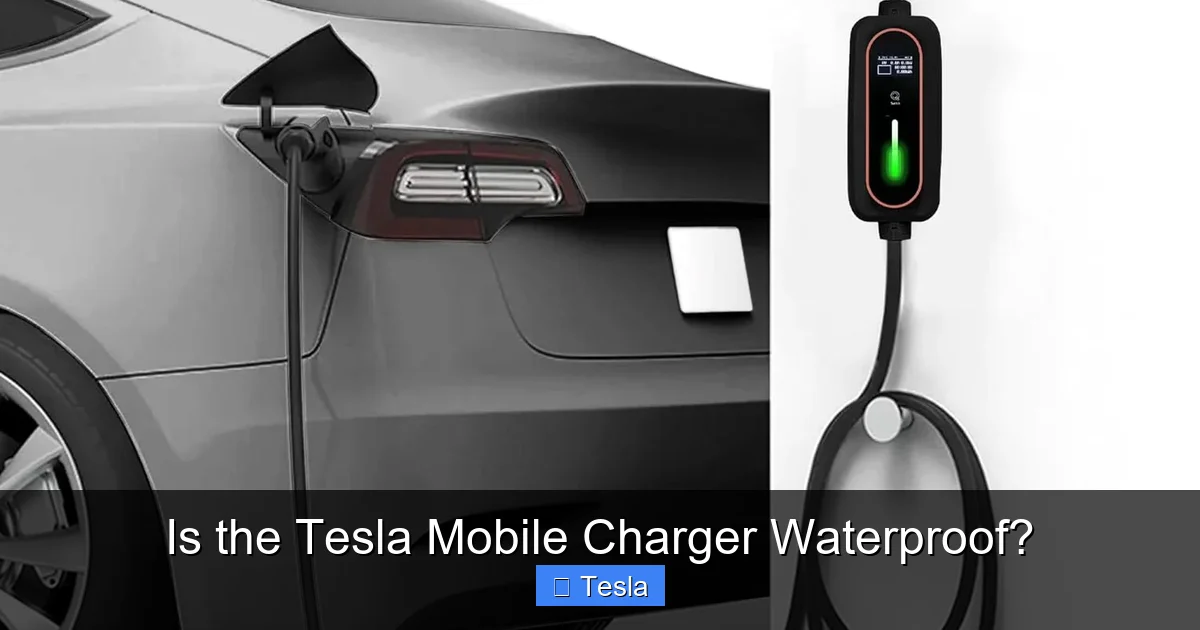
Many other electric vehicle manufacturers (like Nissan, Chevrolet, Ford) provide a similar 120V/240V portable charger with their cars. Their IP ratings are often similar or slightly lower (e.g., IP44 or no official rating). The concept is the same: a convenience item for occasional use, not a permanent outdoor fixture. They all carry the same warnings about water exposure.
Dedicated Wall Connectors
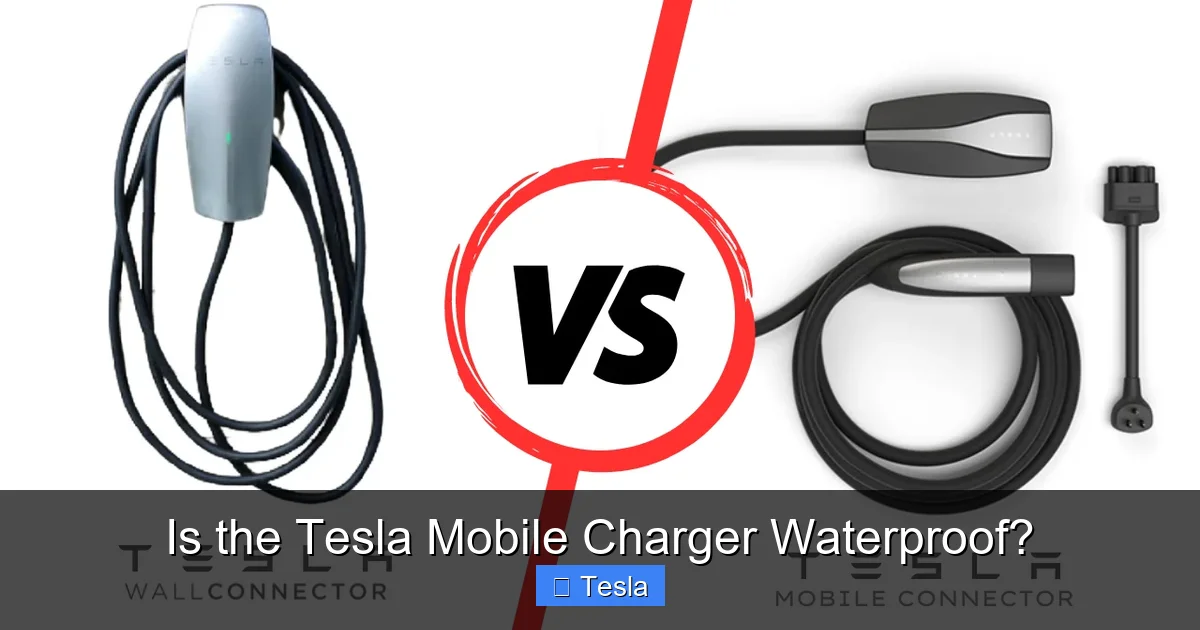
This is where things get more robust. Tesla’s own Wall Connector has an IP55 rating. The “5” for liquids means it’s protected against low-pressure water jets from any direction. This makes it suitable for permanent outdoor installation on a wall or post, where it will face rain, snow, and occasional hose sprays. Many third-party Level 2 chargers also boast IP55 or IP65 ratings, making them even more weatherproof. If you need a charger that lives outside year-round, a hardwired Wall Connector or a high-quality third-party unit is the correct tool for the job. The Mobile Connector is, by design, a portable tool you should bring inside.
For example, if you’re comparing charging solutions for a new EV like a Chevrolet SUV, you’d look at its included portable charger’s specs and likely reach the same conclusion: it’s for temporary use, not permanent outdoor duty.
Essential Maintenance and Storage: Prolonging Life and Safety
Given its limited water resistance, proper care of your Mobile Connector is non-negotiable.
Visual guide about Is the Tesla Mobile Charger Waterproof?
Image source: traditionalelectric.ca
The Daily/Weekly Routine
- Wipe It Down: After use, especially in wet conditions, wipe the connector head and cable with a dry cloth. Pay attention to the recessed pins.
- Inspect the Seals: Look at the rubber gasket around the connector head. Is it cracked, brittle, or missing? If yes, the IP rating is compromised. Contact Tesla service.
- Check the Cable: Feel along the entire cable for nicks, cuts, or abrasions in the outer sheath. Any damage to the cable insulation is a safety hazard and should lead to immediate discontinuation of use.
- Keep Connectors Clean: Ensure both the connector on the charger and the charge port on your Tesla are free of dirt, debris, and moisture before connecting. A can of compressed air can help blow out any gunk from the charge port.
Long-Term Storage: The “Bring It Inside” Rule
The single best thing you can do for your Mobile Connector is to store it indoors, in a dry, temperature-controlled environment. Do not leave it plugged into the car outside when not charging. Do not leave it coiled in the trunk if the trunk gets wet. A simple wall hook in your garage or a dedicated bag in your home is perfect. This protects it from UV degradation, extreme temperatures, and, most importantly, precipitation. Think of it like a high-quality extension cord—you bring it out when you need it and put it away when you’re done.
Third-Party “Solutions” and Upgrades: Buyer Beware
A quick online search will show you “waterproof” covers, bags, and even modified cables for the Tesla Mobile Connector. Exercise extreme caution here.
The Trap of Trapped Moisture
Many of these covers are essentially thick rubber sleeves that you zip over the connector. While they might block direct rain, they also trap any moisture that gets inside. When the charger is in use, it generates heat. That heat can cause trapped moisture to condense on the cooler internal surfaces, creating a perfect environment for corrosion and short circuits. You’ve essentially created a humid chamber around your electronics.
Are There Legitimate Upgrades?
Some third-party manufacturers produce heavier-duty cables and connectors with different IP ratings. If you choose to go this route, research meticulously. Look for products with verifiable, certified IP ratings from reputable testing labs. Read reviews specifically mentioning long-term outdoor use. However, remember that modifying your charging equipment can have warranty and insurance implications. The safest and most reliable path is to use Tesla’s equipment as intended or upgrade to a Tesla Wall Connector with its superior IP55 rating for permanent outdoor use.
If you’re in the market for a new EV and are weighing charging options, it’s a good time to consider when the best time to buy a car might be, as manufacturers often have incentives that include charging accessories.
The Bottom Line: Respect the Limits
The Tesla Mobile Charger is a well-engineered, convenient piece of technology with a respectable IP54 rating. It will survive an accidental splash or a brief shower. But it is not a submarine. Its design philosophy is for portable, temporary use, not for being a permanent fixture in the elements. Misunderstanding this boundary is the fastest route to a fried charger, a potentially dangerous situation, and an out-of-pocket repair bill since water damage is excluded from the warranty.
Your action plan is simple: use it in dry or lightly damp conditions, store it inside, inspect it regularly, and if you need a charger that lives outside 24/7, invest in a properly rated Wall Connector. By respecting its design limits, your Mobile Connector will serve you reliably for years, safely delivering miles to your Tesla whenever and wherever you need them.
Frequently Asked Questions
Can I charge my Tesla with the Mobile Connector in the rain?
You can use it during a very light rain, as the IP54 rating protects against splashes. However, you should avoid charging during a moderate or heavy downpour. Always try to plug in under an overhang or covered area, and keep the connector pointed downward to help water run off.
What should I do if my Mobile Connector gets wet?
Immediately unplug it from both the car and the wall outlet. Wipe it thoroughly dry with a clean, absorbent cloth, paying special attention to the metal pins inside the connector head. Leave it to air dry completely in a warm, dry place for at least 24 hours before using it again. Do not attempt to charge if it is still damp.
Will a third-party “waterproof” cover make it safe for outdoor use?
We strongly advise against using these. They can trap moisture and heat inside the connector, creating conditions that accelerate corrosion and increase the risk of electrical failure. They do not change the underlying IP rating of the device and provide a false sense of security.
What does the IP54 rating actually protect against?
IP54 means the charger is protected against dust (limited ingress) and water splashes from any direction. It is not protected against pressurized water jets (like a hose) and offers no protection against immersion in water. It’s a rating for incidental, not sustained, exposure.
Is water damage to the Mobile Connector covered by Tesla’s warranty?
No. Damage caused by liquid exposure, misuse, or failure to follow the care instructions in the owner’s manual is explicitly excluded from the Tesla New Vehicle Limited Warranty and the accessory warranty. You would be responsible for the cost of a replacement.
Are there waterproof alternatives to the Tesla Mobile Connector?
For permanent outdoor installations, Tesla’s own Wall Connector has an IP55 rating, making it suitable for exposed locations. Several reputable third-party Level 2 chargers also offer IP65 or higher ratings, providing excellent dust and water jet protection. These are the correct solutions for outdoor, fixed charging needs.