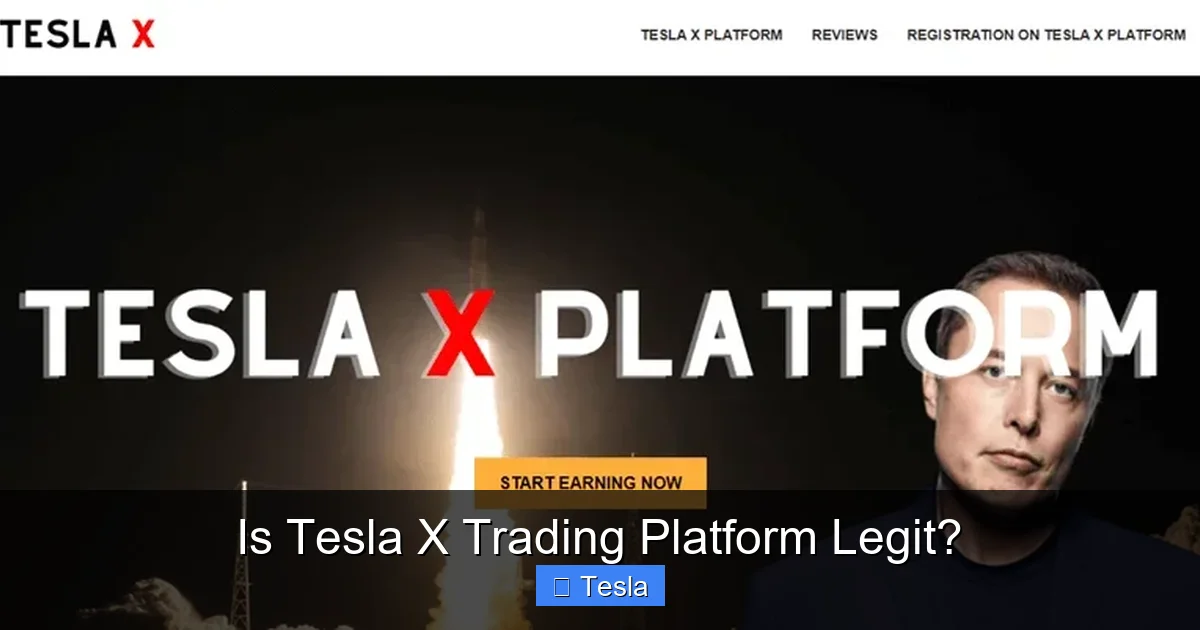
Is Tesla X Trading Platform Legit?

Contents
- 1 Key Takeaways
- 2 📑 Table of Contents
- 3 The Alluring Trap: How the “Tesla X” Scam Finds You
- 4 Unmasking the Operation: The Clear Evidence It’s a Scam
- 5 The Anatomy of the “Tesla X” Fraud: A Step-by-Step Breakdown
- 6 Who is Most Vulnerable to This Scam?
- 7 How to Verify ANY Financial Platform: Your Action Checklist
- 8 What If I’ve Already Invested? A Recovery Guide
- 9 Legitimate Paths to Investing and Trading
- 10 The Bottom Line: A Final, Firm Warning
- 11 Frequently Asked Questions

Diesel Fuel Additive

OBD2 Scanner Tool

Car Trash Can

Car Phone Holder
No, the Tesla X Trading Platform is not a legitimate trading service. It is a confirmed scam that uses the Tesla name to lure investors with promises of easy profits. The platform lacks regulatory licenses, has a fake physical address, and employs high-pressure sales tactics. Users report being unable to withdraw funds after deposits. Protect yourself by only using regulated, well-known brokers and investment platforms.
Let’s cut right to the chase. If you’re reading this, you’ve probably seen an ad, gotten a call, or stumbled upon a website for something called “Tesla X Trading Platform” or a very similar name. Your gut is telling you to be cautious, and that instinct is 100% correct. This is not a review of a good product with a few flaws. This is a warning about a financial scam designed to steal your money by illegally borrowing the prestige and innovation of the Tesla brand.
The story is always the same: an opportunity to trade stocks, cryptocurrencies, or forex with “AI-powered algorithms” that guarantee massive returns. They use Tesla’s name to imply futuristic technology and Elon Musk’s reputation for disruptive success. But here’s the truth—Tesla, Inc. does not have a trading platform called “Tesla X Trading Platform.” Any service operating under that name or a close variation is a fraudulent entity. This article will break down exactly why it’s a scam, how the scheme works, and what you should do instead to invest safely.
Key Takeaways
- Immediate Red Flag: The platform is not affiliated with Tesla, Inc. Any service using a famous brand name in finance without explicit corporate partnership is highly suspicious.
- No Regulatory License: Legitimate trading platforms are registered with financial authorities like the SEC (US), FCA (UK), or ASIC (AU). Tesla X Trading Platform provides no verifiable license information.
- Classic “Pump and Dump” or “Boiler Room” Operation: The model typically involves cold-calling victims, promising guaranteed returns, and then blocking withdrawals once money is deposited.
- Fake Testimonials and Professional Website: Scammers invest in slick websites and fabricated success stories to build false trust. Do not be fooled by aesthetics.
- Withdrawal is Impossible: The core of the scam. After you “fund” your account, you will face endless excuses, sudden “fees,” or complete silence when trying to access your money.
- Protect Yourself: Always independently verify a company’s license through the official regulator’s website. Search for “[Company Name] + scam” or “+ review” before engaging.
- Legitimate Alternatives Exist: For trading stocks, ETFs, or crypto, use established, regulated brokers like Fidelity, Charles Schwab, Coinbase, or Kraken, which have clear fee structures and investor protections.
📑 Table of Contents
- The Alluring Trap: How the “Tesla X” Scam Finds You
- Unmasking the Operation: The Clear Evidence It’s a Scam
- The Anatomy of the “Tesla X” Fraud: A Step-by-Step Breakdown
- Who is Most Vulnerable to This Scam?
- How to Verify ANY Financial Platform: Your Action Checklist
- What If I’ve Already Invested? A Recovery Guide
- Legitimate Paths to Investing and Trading
- The Bottom Line: A Final, Firm Warning
The Alluring Trap: How the “Tesla X” Scam Finds You
Scammers are experts in psychology. They don’t just randomly guess; they target people interested in technology, investing, and making money. The “Tesla X” name is a perfect bait. It combines the universally recognized “Tesla” with “X,” a letter Musk has used for his ventures (like SpaceX and now X, formerly Twitter), creating a powerful illusion of a secret, elite project.
The Marketing Channels of Deceit
You might encounter these fraudsters through several channels:
- Social Media Ads (Facebook, Instagram, TikTok, YouTube): These ads show luxury cars, mansions, and charts going parabolic. They use deepfake videos or stolen footage of Elon Musk speaking about “the future of finance.” The call-to-action is always “Register Now” or “Claim Your Spot.”
- Cold Calls and SMS Blasts: This is a classic “boiler room” tactic. Teams in call centers read from scripts, claiming you’ve been selected for a exclusive Tesla-backed trading program. They sound professional and urgent.
- Fake News Sites and Endorsements: They create websites that look like Forbes or Bloomberg, publishing fake articles about “Tesla’s new AI trading bot.” They also Photoshop fake endorsements from celebrities like Elon Musk, Jeff Bezos, or popular influencers.
- Search Engine Manipulation: By bidding on keywords like “Tesla trading,” “Tesla investment platform,” or “Tesla X app,” they get their scam sites to appear at the top of Google searches, preying on organic curiosity.
The common thread is the promise of easy, high returns with little to no risk, all wrapped in the shiny packaging of a tech giant. Remember, if it sounds too good to be true in the world of finance, it always is. For those researching other automotive-branded services, it’s wise to check legitimate reviews first, much like one would for Subaru Online Parts to verify a real retailer.
Unmasking the Operation: The Clear Evidence It’s a Scam
Let’s move from suspicion to confirmed facts. A legitimate financial business has certain non-negotiable hallmarks. Tesla X Trading Platform fails every single one.

Visual guide about Is Tesla X Trading Platform Legit?
Image source: planetofreviews.com
1. Zero Regulatory Oversight
This is the single most important check. In the US, any platform offering securities trading to the public must be registered with the Securities and Exchange Commission (SEC) and be a member of FINRA. For crypto, it may need state-level money transmitter licenses. In the UK, it’s the Financial Conduct Authority (FCA). In Australia, it’s ASIC.
What you’ll find with Tesla X Trading: They either list fake license numbers, provide licenses that belong to completely unrelated companies, or simply have no “Regulatory” or “About Us” page with any verifiable information. You can and should check any license number on the official regulator’s website. A quick search will show no match for “Tesla X.” Legitimate platforms proudly display their regulatory status because it’s a mark of trust. Scammers hide or forge it.
2. The Phantom Company and Fake Address
Try to find a real, physical corporate address for “Tesla X Trading Platform.” You won’t. They might list a prestigious-sounding address in London, New York, or Singapore. A quick Google Maps check or search will reveal it’s a virtual office, a registered agent’s address for dozens of shell companies, or completely fictitious. They have no real headquarters, no team you can verify on LinkedIn, and no corporate history. Compare this to Tesla, Inc., which has a clear, publicly traded corporate structure with offices worldwide.
3. The Withdrawal Blockade: The Moment You Know
The scam only becomes painfully clear when you try to get your money out. Here’s the typical progression:
- Initial Deposit: You deposit $250, $500, or more via credit card, wire transfer, or crypto. The “account balance” on their fake dashboard magically inflates.
- “Bonus” Trap: They may offer a “welcome bonus” that comes with a hidden clause: you must trade an impossible volume before withdrawing. This is a contract designed to keep your money.
- First Withdrawal Attempt: You request to withdraw $100. It’s “processing.” Then you’re told you need to pay a “tax fee,” a “verification fee,” or a “account clearance fee” upfront to release the funds. This is a pure scam—you pay the fee, and they invent another one.
- Silence or Abuse: Eventually, your calls and emails go unanswered. Your account may be locked. The money is gone. They’ve stolen your principal and any “profits” they fabricated on screen.
This inability to withdraw is the universal hallmark of a Ponzi scheme or boiler room scam. Your funds were never actually invested; they went straight into the scammers’ pockets.
The Anatomy of the “Tesla X” Fraud: A Step-by-Step Breakdown
Understanding the playbook helps you spot it in the wild, even if the brand name changes to “Apple Trading,” “Amazon Crypto,” or “Google AI Investments.”

Visual guide about Is Tesla X Trading Platform Legit?
Image source: semarsoft.com
Phase 1: The Hook – Building False Credibility
After initial contact, a “personal account manager” or “senior analyst” is assigned to you. They are master manipulators. They will:
- Send you screenshots of other clients’ “profits.”
- Share links to fake news articles.
- Use technical jargon to sound authoritative (“algorithmic arbitrage,” “quantitative easing strategies”).
- Pressure you to “act now” because the “window is closing” or “the AI model is retraining.”
Their goal is to build a personal relationship and make you believe they are your path to wealth.
Phase 2: The Small Win – The “Pump”
Often, to get you hooked, they might let you make a very small, realistic profit and even process a tiny withdrawal (e.g., $50 from a $500 deposit). This is the “pump.” It proves to you the platform works. You are now emotionally invested. You trust them. You tell yourself, “See? It’s real.” This small success makes you far more likely to deposit a much larger sum next time, which is when the “dump” happens.
Phase 3: The Big Trap – The “Dump”
Once you’re hooked and have deposited a significant amount (often $5,000, $10,000, or more), the narrative changes. Your “account manager” will encourage you to make risky, aggressive trades that quickly lose the fabricated “profits.” They’ll blame “market volatility” or “a glitch in the AI.” Then, when you try to withdraw your original capital, the fee demands begin. At this point, your money is gone. The entire platform was a illusion; there was no trading happening on your behalf.
Who is Most Vulnerable to This Scam?
While anyone can be a target, the scam preys on specific mindsets and situations:

Visual guide about Is Tesla X Trading Platform Legit?
Image source: hibridosyelectricos.com
- The Tech Enthusiast: People who idolize Tesla and Elon Musk are prime targets because the scam taps into their passion and hope for the future.
- The Novice Investor: Those new to investing who don’t know how to verify licenses or understand how legitimate brokers operate. They lack the basic due diligence skills to spot red flags.
- The Financially Stressed: Individuals looking for a quick way to make money, pay off debt, or improve their situation. Desperation lowers guard.
- The “FOMO” Crowd: People who see others (often fake testimonials) getting rich and fear missing out. Scammers amplify this fear.
If you fit any of these profiles, be extra vigilant. The best defense is a healthy skepticism toward any unsolicited financial offer, especially one using a famous brand name.
How to Verify ANY Financial Platform: Your Action Checklist
Before you ever type in a credit card number, complete this checklist. It takes 10 minutes and can save you your life savings.
1. The Regulatory License Hunt
This is non-negotiable. Go to the website’s footer. Look for “Regulatory,” “Licenses,” or “Disclosures.” If it’s missing or vague, run. If they list a license, do not trust what they say. Go directly to the regulator’s official website (e.g., SEC.gov, FCA.org.uk) and use their search tool to look up the license number and company name. If it doesn’t match exactly, it’s fake.
2. The Corporate Paper Trail
Search for the company name on official business registries. In the US, check state Secretary of State websites. Is the company in good standing? How long has it existed? Scam sites are often registered for less than a year. Also, search for the company on LinkedIn. Do real employees with histories work there? A lack of a corporate presence is a huge red flag.
3. The Independent Review Deep Dive
Go beyond the website’s own testimonials. Search for “[Company Name] review,” “[Company Name] scam,” and “[Company Name] complaint” on Google. Look on sites like Trustpilot, the Better Business Bureau (BBB), and Reddit (r/scams is a goldmine). Be wary of sites that have only glowing 5-star reviews with generic text—these are often fake reviews bought by the scammer.
4. The “Too Good to Be True” Calculator
Ask yourself: Is this platform promising 5-10% returns *per day* or “guaranteed” profits? Does it say you don’t need to know anything about trading? Legitimate investing involves risk and requires knowledge. There are no guarantees. If the promised returns are astronomical compared to the market average (S&P 500 averages ~10% *per year*), it’s a mathematical impossibility and therefore a scam.
5. The Pressure Test
Scammers create artificial urgency. “Offer ends tonight!” “Only 5 spots left!” “The AI model is shutting down!” A legitimate financial advisor or broker will never pressure you. They will give you time to think, consult, and do your own research. If you feel any pressure to act immediately, that is a definitive sign to walk away.
Applying this checklist to “Tesla X Trading Platform” results in a failing grade on every single point. It is the textbook definition of a fraudulent operation. For those interested in legitimate automotive industry investments or services, researching established entities is crucial, similar to understanding whether Subaru’s official online parts store is legit—where clear corporate ownership and regulatory compliance exist.
What If I’ve Already Invested? A Recovery Guide
If you’ve unfortunately sent money to Tesla X Trading Platform, time is critical. Here is your immediate action plan:
- Stop All Communication: Do not engage further. Do not deposit any more money, even if they promise to unlock your funds.
- Contact Your Bank or Credit Card Issuer IMMEDIATELY: If you paid by credit card or bank transfer, call the fraud department. Explain you were the victim of a financial scam. You may be able to initiate a chargeback or dispute the transaction. This is your best chance for recovery, especially with credit cards.
- File a Report with the Authorities: Report the crime to:
- The FBI’s Internet Crime Complaint Center (IC3) at IC3.gov
- The Federal Trade Commission (FTC) at ReportFraud.ftc.gov
- Your national financial regulator (SEC, FCA, ASIC, etc.).
- Document Everything: Gather all emails, screenshots of conversations, transaction records, and the website URL. This evidence is crucial for law enforcement.
- Warn Others: Post your experience on review sites and forums like Reddit. Your story may prevent the next person from becoming a victim.
Understand that recovery of funds from these offshore, anonymous operations is difficult. Prevention is infinitely better than cure. The harsh reality is that in most cases, the money is gone. Your focus should shift to securing your other financial accounts and preventing identity theft, as scammers may sell your personal data.
Legitimate Paths to Investing and Trading
Don’t let this scam turn you off from investing altogether. The legitimate financial world offers robust, regulated, and secure ways to grow your wealth. It just won’t promise you a private jet next month.
For Stock and ETF Trading:
Use established, well-known brokerage firms that are publicly traded themselves and heavily regulated. Examples include:
- Fidelity, Charles Schwab, Vanguard: For long-term, buy-and-hold investing with low fees.
- TD Ameritrade (now Charles Schwab), E\*TRADE: For more active trading with advanced platforms.
These companies have physical offices, decades of history, clear fee schedules, and investor protection insurance (like SIPC in the US).
For Cryptocurrency:
Stick to the largest, most compliant exchanges that work with regulators.
- Coinbase: Publicly traded in the US, known for its compliance focus.
- Kraken: A long-standing, reputable exchange with a strong security record.
- Binance.us: The US-specific arm of Binance, which operates under stricter US regulations (though the parent company has faced scrutiny).
Never, ever send crypto to an unknown platform promising “trading bots” or “doubling schemes.” That is the #1 way to lose crypto permanently.
For Robo-Advisors and AI:
If you like the idea of AI-driven investing, use the legitimate services from the companies above. Betterment, Wealthfront, and the automated portfolios from Vanguard and Schwab use algorithms to manage diversified portfolios based on your risk tolerance. They are transparent about strategy, risk, and fees. They do not promise guaranteed returns.
The Bottom Line: A Final, Firm Warning
The “Tesla X Trading Platform” is not a legitimate business. It is a sophisticated, predatory scam that exploits a beloved brand’s reputation to commit theft. The evidence is overwhelming: no regulation, no real company, a fake address, and an absolute inability for users to withdraw funds. The story is identical to thousands of other “brand-name” trading scams that have preceded it.
Your financial security is in your hands. The rule is simple: If you have to ask “Is this legit?” the answer is almost always no. Legitimate financial opportunities do not need to hide, pressure you, or use the name of an unrelated tech company. They are transparent, regulated, and boringly stable.
Protect your money. Stick to the known, regulated entities. If an offer from “Tesla X Trading Platform” or any similar entity crosses your path, delete the email, hang up the phone, and close the browser tab. Your future self will thank you.
Frequently Asked Questions
Is Tesla X Trading Platform regulated by the SEC or any financial authority?
No. Tesla X Trading Platform is not registered with the SEC, FINRA, or any other legitimate global financial regulator. The license numbers they may list are fake or belong to other companies. This lack of oversight is the primary red flag indicating it is a scam.
Can I actually make money with Tesla X Trading Platform?
No. Any initial “profits” shown on the platform are fake numbers in a simulated dashboard. The only person making money is the scammer. When you attempt to withdraw, you will be blocked or asked for more fees, and you will lose your entire deposit.
Why does Tesla allow this platform to use its name?
Tesla, Inc. does not allow it. The scammers are illegally infringing on Tesla’s trademark to appear legitimate. Tesla’s legal team actively works to shut down such websites, but new ones pop up constantly. The use of the name alone is a definitive sign of fraud.
What should I do if I already deposited money?
Immediately contact your bank or credit card company to report fraud and dispute the transaction. Then file reports with the FBI’s IC3 and the FTC. Cease all communication with the platform. Do not deposit any more money, even if they promise to release your funds after an additional “fee.”
Are there any legitimate AI trading platforms?
Yes, but they are offered by major, regulated brokerages like Charles Schwab, Fidelity, or dedicated robo-advisors like Betterment and Wealthfront. They use algorithms for portfolio management, are transparent about risks and fees, and are fully licensed. They do not promise guaranteed returns.
How can I spot a trading scam in the future?
Always verify independent regulatory licenses through the official regulator’s website. Be deeply skeptical of any platform using a famous brand name (Tesla, Amazon, Apple) without a clear, verified corporate partnership. Avoid any platform that pressures you to deposit quickly, promises unrealistic returns, or has no verifiable physical address or corporate history. When in doubt, assume it’s a scam.