Is Tesla Cabin Overheat Protection Necessary?

Contents
- 1 Key Takeaways
- 2 📑 Table of Contents
- 3 Introduction: The Hot Seat Dilemma
- 4 How Tesla’s Cabin Overheat Protection Actually Works
- 5 The Case For: Why You Might Absolutely Need It
- 6 The Case Against: The Real Costs and Limitations
- 7 Who Needs It? A Personalized Decision Matrix
- 8 Alternatives and Complements to Cabin Overheat Protection
- 9 The Verdict: Is It Necessary?
- 10 Frequently Asked Questions


Is Tesla Cabin Overheat Protection necessary? It depends on your priorities and climate. This feature automatically vents windows and runs the AC to prevent dangerously hot cabin temperatures when parked, offering significant safety and comfort benefits. However, it does consume some battery power and isn’t a substitute for common-sense precautions like shading your car. For many Tesla owners, especially those in hot climates or with children/pets, the peace of mind it provides makes it a valuable, often essential, tool.
Key Takeaways
- Cabin Overheat Protection (COP) is a safety feature first: Its primary goal is to prevent the cabin from reaching lethal temperatures (>105°F/40°C) when parked, protecting children, pets, and vulnerable adults from heatstroke.
- It works automatically but has user settings: You can set temperature thresholds (Off, 100°F, 105°F) and choose whether it runs with or without cellular connectivity. It uses the car’s high-voltage battery, not the 12V battery.
- There is a real, measurable battery cost: Running COP for extended periods in extreme heat can consume 1-3 miles of range per day, a tangible trade-off for the safety benefit.
- It is not a “set and forget” magic solution: COP is a last-resort safety net. Smart parking practices (shade, window tints, sunshades) are still the most effective and efficient ways to manage heat.
- Effectiveness varies by conditions: Ambient temperature, sun exposure, and battery charge level all impact how well and how long COP can maintain a safe temperature.
- It’s a unique Tesla feature with broader implications: COP highlights Tesla’s software-first approach to vehicle safety and comfort, similar to how they update other systems like software via over-the-air updates.
- The necessity is personal and situational: For a commuter in a mild climate, it might be overkill. For a family in Arizona or Florida, it quickly shifts from a luxury to a necessity.
📑 Table of Contents
- Introduction: The Hot Seat Dilemma
- How Tesla’s Cabin Overheat Protection Actually Works
- The Case For: Why You Might Absolutely Need It
- The Case Against: The Real Costs and Limitations
- Who Needs It? A Personalized Decision Matrix
- Alternatives and Complements to Cabin Overheat Protection
- The Verdict: Is It Necessary?
Introduction: The Hot Seat Dilemma
You’ve just pulled into the grocery store parking lot on a sweltering July afternoon. The sun is beating down, and you know the drill: the moment you step back into your Tesla after shopping, you’ll be met with a blast furnace. But then you remember: you have Cabin Overheat Protection (COP) enabled. A small victory. But is that victory truly necessary? Or is it just a fancy, battery-draining feature we’ve been convinced we need?
This question isn’t just about comfort. It’s about safety, efficiency, and understanding one of Tesla’s most talked-about software features. Tesla markets COP as a critical safety system. Critics call it a battery vampire. The truth, as is often the case, lives in the nuanced middle. To decide if it’s necessary for you, we need to peel back the layers. We’ll explore exactly how this system works, quantify its real-world costs and benefits, compare it to traditional methods, and help you make an informed decision based on your life, your climate, and your Tesla.
How Tesla’s Cabin Overheat Protection Actually Works
Before judging necessity, we must understand the mechanics. COP isn’t just the climate control system turned on. It’s a specific, automated software routine with clear parameters.
Visual guide about Is Tesla Cabin Overheat Protection Necessary?
Image source: mechanictesla.com
The Sensors and the Threshold
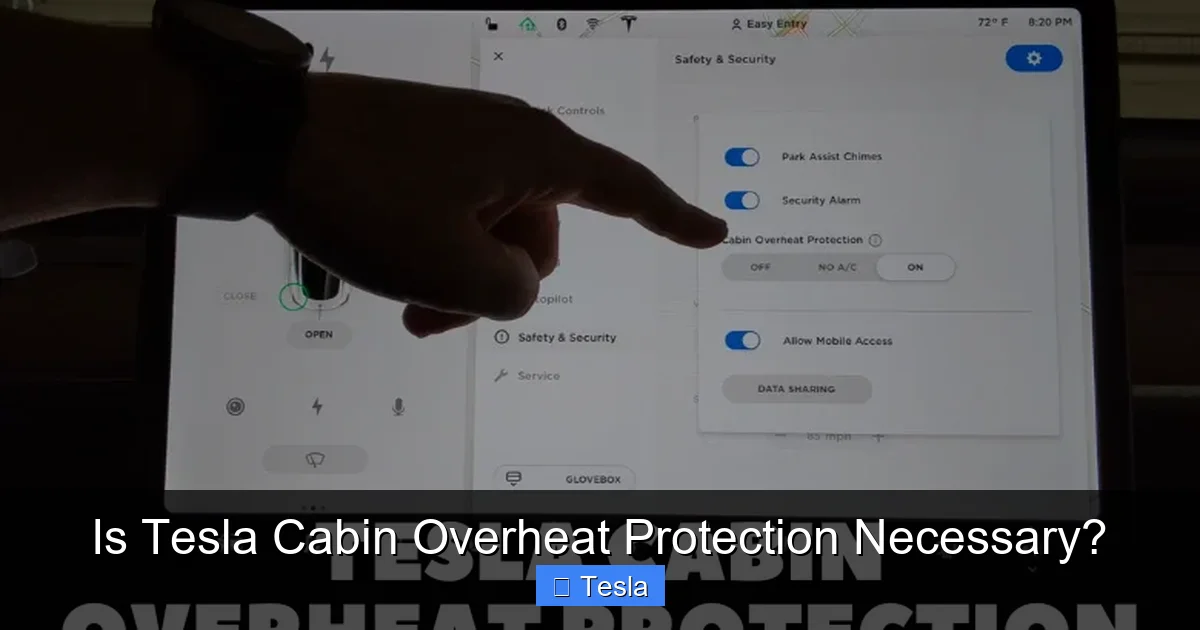
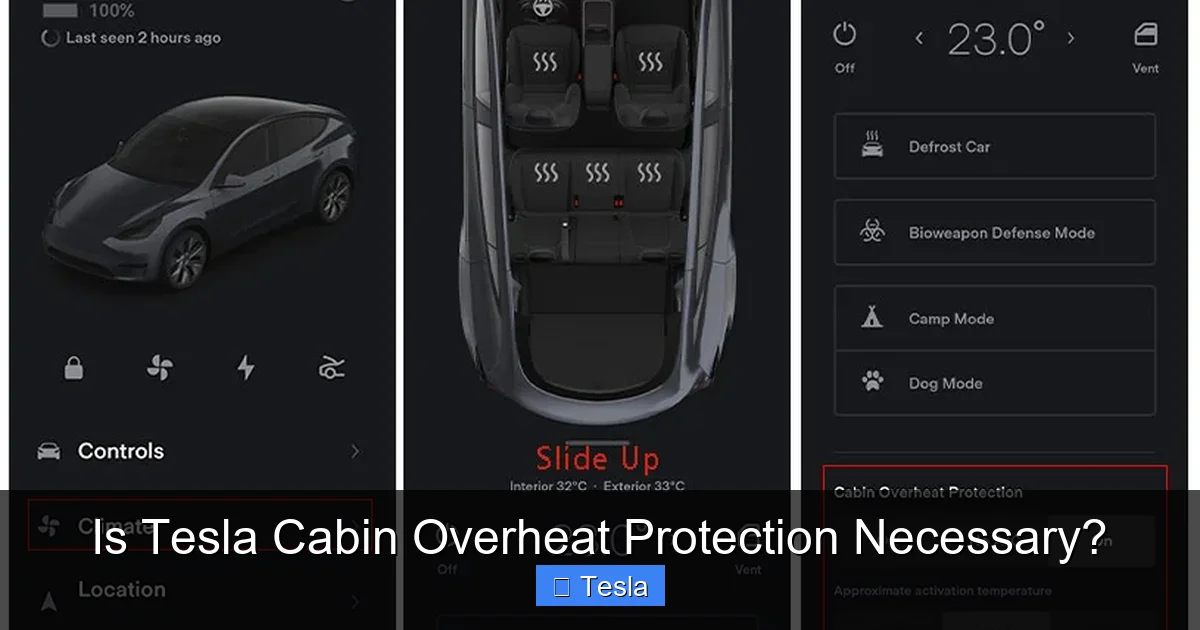
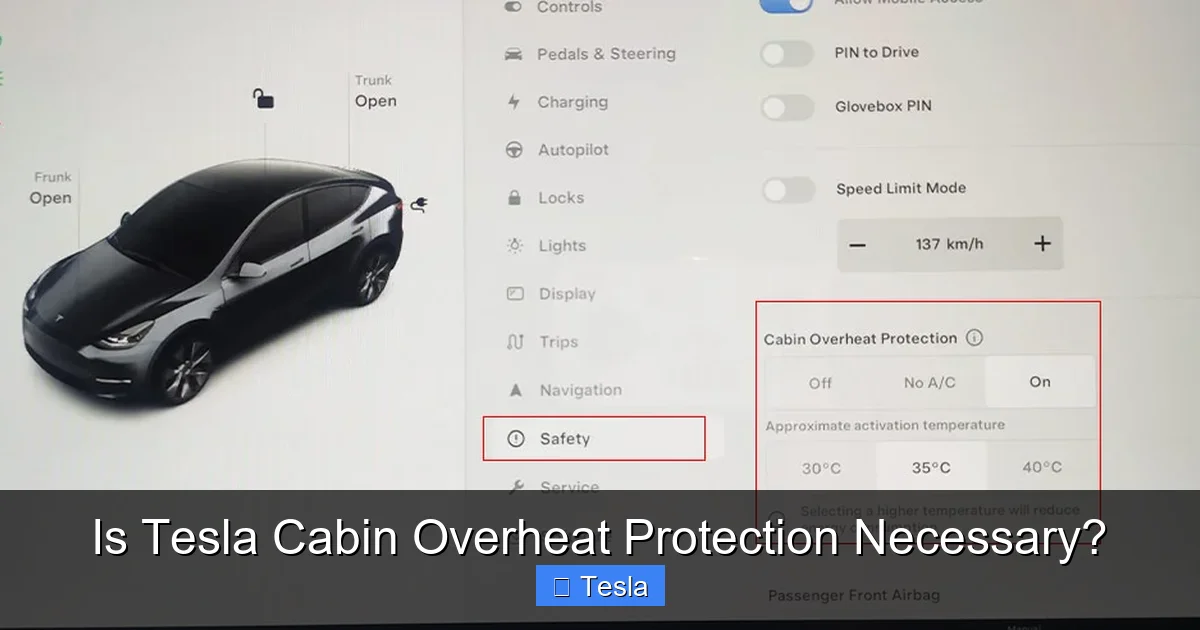
Your Tesla is equipped with multiple interior temperature sensors. When the car is parked, locked, and the battery is above a certain charge threshold (typically around 20%), the COP software monitors these sensors. You select a temperature limit in your settings: Off, 100°F (38°C), or 105°F (40°C). If the interior temperature rises to meet or exceed your chosen set point, the system activates.
The Activation Sequence: Vents First, AC Second
The system has a clever, battery-conscious sequence. First, it will automatically crack open all four windows by about an inch. This passive ventilation is the most efficient way to let hot air escape and create airflow. If the temperature continues to rise despite the open windows, the system then engages the air conditioning compressor. It runs the AC in a conservative mode aimed at stabilization, not necessarily cooling the cabin to a “cold” temperature, but preventing it from crossing the dangerous threshold.
This two-stage approach is crucial. The window venting uses negligible power. The AC compressor is the major energy draw. By maximizing passive cooling first, Tesla minimizes the time the energy-hungry compressor needs to run.
Connectivity and Smart Preconditioning
COP has two key connectivity-related settings. “When parked” allows it to function based on local temperature sensors. “When away” (using cellular data) lets the car check the forecast and preemptively activate if a very hot day is predicted, even before the cabin gets dangerously hot. This is the “smart” part, but it does require a Premium Connectivity subscription for the “when away” feature to work remotely. This is an important nuance—the core safety function works without a subscription, but the predictive, forecast-based mode does not.
The Case For: Why You Might Absolutely Need It
For a certain segment of Tesla owners, COP isn’t a “nice-to-have”; it’s a non-negotiable safety requirement. Let’s build that case.
Visual guide about Is Tesla Cabin Overheat Protection Necessary?
Image source: teslashooters.com
It’s a Lifesaving Safety Net
This is the undisputed, paramount argument. The temperature inside a parked car can reach fatal levels (over 120°F/49°C) in under an hour on an 85°F (29°C) day, even with a window cracked. Children’s bodies heat up 3-5 times faster than adults. A mere 10 minutes in a hot car can be deadly for a child or pet. COP directly combats this by actively preventing the cabin from reaching the extreme, lethal heat zone. For families with young kids, for pet owners who occasionally need to run a quick errand (though never leave pets unattended!), and for anyone who might transport elderly relatives, this automated, fail-safe intervention is worth its weight in gold. It removes the possibility of human error or forgetfulness in a scenario with catastrophic consequences.
Unmatched Convenience and Comfort
Beyond the dire safety scenario, COP offers a daily quality-of-life boost. Imagine returning to your car after a workday or a movie to a cabin that is merely warm (95°F), not uninhabitable (130°F). That difference means you can get in and drive without waiting 5-10 minutes for the AC to catch up. Your seats and steering wheel won’t be scalding. Your electronics (phone, laptop) left inside won’t be at risk of heat damage. This immediate comfort is a tangible benefit that owners quickly come to appreciate. It transforms the dread of returning to a hot car into a minor inconvenience.
It Protects Your Tesla’s Interior
Chronic extreme heat is an enemy of your car’s interior. It accelerates the drying and cracking of leather/vinyl, fades dashboard materials, and can damage touchscreens and other electronics over time. By moderating peak cabin temperatures, COP acts as a guardian for your vehicle’s resale value and aesthetic longevity. While not its primary purpose, this is a valuable secondary benefit. For those who have invested in protecting their car’s paint with paint protection film or a wrap, protecting the interior is a logical extension of that care.
The Case Against: The Real Costs and Limitations
No feature is free, and COP has clear trade-offs. Understanding them is key to deciding if it’s “necessary” for your use case.
Visual guide about Is Tesla Cabin Overheat Protection Necessary?
Image source: teslashooters.com
The Battery Drain is Real and Quantifiable
This is the most common criticism, and it’s valid. Running an automotive AC compressor is one of the most energy-intensive activities a EV can do while stationary. Tesla owners have logged data showing COP can consume anywhere from 1 to 3 miles of range per day in very hot, sunny conditions. In a 100-mile daily commute, losing 2 miles is a 2% hit. For someone meticulously managing range on a long trip, that might matter. For a daily commuter with a 300+ mile battery, it’s a drop in the bucket. The key is that it’s a predictable cost for a specific, valuable service. You’re trading a tiny, measurable amount of energy for a massive safety and comfort gain.
It’s Not a Substitute for Common Sense
COP has limits. If your battery is very low (<20%), it may not activate to preserve propulsion energy. Its effectiveness diminishes the longer and hotter the exposure. A car parked in direct, unobstructed sun all day in Phoenix will still get incredibly hot; COP will just keep it from getting to 130°F, maybe stabilizing around 108°F. It is a last-resort safety system, not a magic climate-controlled bubble. Relying on it while parking in full sun for 8 hours and expecting a cool cabin is a misunderstanding of its design. The best practice remains: park in shade, use a windshield sunshade, and consider high-quality window tinting.
The “Awareness Gap” and False Sense of Security
Some argue that COP might make drivers *more* likely to engage in risky behavior, like briefly leaving a pet or child in the car with the thought “it’s okay, the Tesla has that protection feature.” This is a dangerous fallacy. COP is designed for accidental entrapment or unexpected delays. It is not a license to intentionally leave living beings unattended. The system could fail, the battery could be too low, or the temperature threshold might be set too high. Responsible ownership must always come first. The feature should breed confidence, not complacency.
Who Needs It? A Personalized Decision Matrix
Necessity is subjective. Let’s map it out.
Climate is King
If you live in a region where ambient summer temperatures regularly exceed 90°F (32°C), COP moves from “useful” to “highly advisable.” The hotter and sunnier your climate, the greater the temperature differential COP has to fight, and the more valuable its intervention becomes. For those in temperate or consistently cool climates, the need drops significantly, as the cabin simply won’t reach dangerous levels as quickly or severely.
Lifestyle and Passenger Profile
Do you have children? Pets? Do you frequently have older passengers? If yes, your personal “necessity meter” for COP should be high. The peace of mind knowing the car won’t become an oven if you’re delayed is priceless. If you are a solo commuter who rarely has passengers and always parks in a garage or shaded spot, your need is lower. Your usage pattern defines the risk profile.
Battery Health and Range Anxiety
If you are already on the edge of your daily range and monitor every watt-hour obsessively, the 1-3 miles of daily vampire drain from COP might feel like an unacceptable hit. For these drivers, manually enabling it only on days they know they’ll be away for a long time in the sun might be a better compromise. For the vast majority with comfortable daily range margins, the cost is negligible.
Alternatives and Complements to Cabin Overheat Protection
COP is one tool in your “beat the heat” toolkit. It should be part of a layered strategy, not the sole line of defense.
The Timeless Effectiveness of a Sunshade
A simple, foldable windshield sunshade is arguably the most effective and efficient tool available. It reflects a massive percentage of solar energy before it even enters the cabin, reducing the thermal load COP has to fight. Using one means COP may never need to activate, saving you that battery drain while still providing protection. They are cheap, require no power, and work instantly. Pairing a sunshade with COP is the ultimate combo: prevention (sunshade) and cure (COP).
Window Tinting: A Passive Powerhouse
Quality ceramic window tint (legal in your state!) does wonders. It blocks a significant portion of infrared radiation (heat) while still allowing visible light. This keeps the cabin cooler overall, reduces AC workload while driving, and makes COP’s job easier. It’s a permanent, set-and-forget upgrade that pays dividends in comfort and efficiency every single day. For Tesla owners, this is often one of the first and best modifications.
Smart Parking Habits
The most powerful tool is location. Whenever possible, park in a garage, under a tree, or in a covered parking spot. The difference between full sun and shade is astronomical. If you have a home charger, a carport is a fantastic investment. COP is designed for the times when you can’t find shade. Using shade intelligently reduces reliance on any system, saving energy and wear.
The Verdict: Is It Necessary?
After weighing the evidence, the answer becomes clear: Cabin Overheat Protection is a necessary safety feature for many Tesla owners, but its necessity is not universal.
If you live in a hot climate, have children or pets, or simply value the convenience of returning to a tolerable car, then yes—enabling COP is a prudent, often essential, decision. The minor battery consumption is a fair price for the elimination of a lethal risk and a major comfort upgrade. It represents a brilliant application of software to solve a real-world problem.
However, if you live in a cool, cloudy region, always park in a garage or deep shade, and are a hyper-miler counting every mile, you might choose to keep it off and manage heat manually with a sunshade. This is a valid, rational choice for your specific context.
The feature’s genius lies in its configurability. You can set it to 105°F for maximum safety or 100°F for a balance. You can turn it off entirely. Tesla gives you the control because they understand that “necessity” is personal. The wisest approach is to understand what COP does, acknowledge its costs and limits, and make an active choice based on your life. For most, turning it on and setting it to 105°F is the simplest way to gain a powerful, automated safety net with minimal downside. It’s not a replacement for responsible behavior, but it is an excellent backup plan for the moments life doesn’t go according to plan.
Ultimately, the question isn’t just “Is it necessary?” but “What am I willing to trade for peace of mind?” For a growing number of Tesla drivers, the answer is a few miles of range for a feature that could one day save a life, and every day makes their car a little more pleasant to be in. That trade-off feels very necessary indeed.
Frequently Asked Questions
Does Cabin Overheat Protection use a lot of battery?
Yes, it uses noticeable but generally small amount of energy. In very hot, sunny conditions, it can consume 1-3 miles of range per day by running the AC compressor. This is a deliberate trade-off for the safety and comfort benefits.
Can I leave my dog in the car if Cabin Overheat Protection is on?
Absolutely not. COP is a last-resort safety net for accidental situations. It is not designed to make leaving a pet unattended safe. The system can fail, the battery may be too low, and the cabin will still become dangerously uncomfortable. Never leave a living being unattended in a parked car.
What temperature should I set Cabin Overheat Protection to?
For maximum safety, set it to 105°F (40°C). This is the threshold where the risk of heatstroke rises significantly. Setting it to 100°F (38°C) provides an even larger safety margin and more comfort but will use slightly more battery. Most experts recommend using the 105°F setting.
Does Cabin Overheat Protection work if the car is locked and I have the key with me?
Yes, that is the intended operational mode. The feature activates when the car is parked, locked, and the battery has sufficient charge. You can walk away with your key or phone, and the system will monitor and respond if needed.
Is Cabin Overheat Protection free?
The core safety function (using local sensors to activate at your set temperature) is a standard feature on all Teslas and does not require a subscription. The advanced “When Away” feature, which uses cellular data and weather forecasts to pre-cool the car proactively, requires an active Premium Connectivity subscription.
Will using Cabin Overheat Protection damage my battery?
No. The system is designed to work within the safe operating parameters of the high-voltage traction battery. It will not activate if the battery is too low (typically below 20%) to protect your driving range. The minor daily energy draw is a normal part of its function and does not harm battery health.