Is It Safe to Sit in a Tesla While Charging?

Contents
- 1 Key Takeaways
- 2 📑 Table of Contents
- 3 Understanding Tesla’s Charging Ecosystem: A Foundation for Safety
- 4 Demystifying Electromagnetic Fields (EMF) in a Charging Tesla
- 5 Thermal Management: Keeping Everything Cool Under Pressure
- 6 Cabin Air Quality and the “Fume” Question
- 7 Safety Systems and Protocols: The Car’s Own Defense
- 8 Best Practices for Charging While Occupied: Comfort and Peace of Mind
- 9 The Verdict: A Resounding Yes, With Awareness
- 10 Frequently Asked Questions



Yes, it is generally safe to sit in a Tesla while it is charging. The vehicle’s sophisticated safety systems, thermal management, and electromagnetic field (EMF) shielding are designed to protect occupants. However, understanding the specific conditions, like charging type and environment, ensures optimal safety and comfort during the process.
Key Takeaways
- Designed for Occupant Safety: Tesla’s charging systems and vehicle architecture incorporate multiple layers of protection, including thermal monitoring and high-voltage isolation, making occupancy during charging inherently safe.
- EMF Levels Are Minimal: Independent tests show that electromagnetic fields inside a Tesla during charging are well below international safety guidelines and often lower than those from common household appliances.
- Cabin Air Quality is Monitored: The HVAC system can be set to run independently, preventing the intake of any external fumes from the charging process and maintaining a comfortable, filtered environment.
- Supercharger vs. Home Charging: While both are safe, the higher power delivery of Superchargers generates more heat in the charging components, but the car’s systems actively manage this. Home charging is even lower intensity.
- Use Common Sense: Safety is maximized by ensuring the charging cable and connector are in good condition, avoiding extreme ambient temperatures, and not manually interfering with the charging port while powered.
- Emergency Protocols Exist: Teslas have clear visual and audio alerts for any charging fault. In the extremely unlikely event of an issue, the system will stop charging and alert you before any risk to occupants.
- It’s About Comfort, Not Just Safety: The primary considerations for sitting in a charging Tesla are often comfort-related—such as climate control and cabin quietness—rather than direct safety hazards.
[FEATURED_IMAGE_PLACEHOLDER]
📑 Table of Contents
- Understanding Tesla’s Charging Ecosystem: A Foundation for Safety
- Demystifying Electromagnetic Fields (EMF) in a Charging Tesla
- Thermal Management: Keeping Everything Cool Under Pressure
- Cabin Air Quality and the “Fume” Question
- Safety Systems and Protocols: The Car’s Own Defense
- Best Practices for Charging While Occupied: Comfort and Peace of Mind
- The Verdict: A Resounding Yes, With Awareness
Understanding Tesla’s Charging Ecosystem: A Foundation for Safety
When you plug in your Tesla, you’re engaging with one of the most advanced and integrated electric vehicle (EV) charging systems on the market. Unlike a simple electrical outlet, Tesla’s charging process is a tightly controlled dialogue between the car, the charger (whether it’s your home Wall Connector or a Supercharger), and the grid. This system is built with redundant safety features from the ground up. The high-voltage battery, which powers the car, is physically and electrically isolated from the 12-volt cabin systems that run the radio, lights, and climate control. This fundamental separation is your first and most important layer of protection. The charging cable itself is not “live” with dangerous voltage until it is securely connected to the vehicle and a handshake confirms all systems are go. This design philosophy means that the cabin you sit in remains a standard, safe automotive environment, even as high-power energy flows into the battery pack in the undercarriage.
The Handshake: How Charging Actually Begins
Before a single electron flows for propulsion, a complex verification protocol occurs. When you plug in, the charger and the vehicle’s onboard charging system communicate. They confirm compatibility, check for faults, and establish a safe power transfer rate. If any parameter is outside the norm—a temperature sensor reading too high, a communication error, or a physical fault in the cable—the handshake fails. The charger will not energize, and the port’s LED will indicate an error. This means the high-voltage circuit is only closed when everything is verified as perfect. You could be sitting in the car during this verification phase with zero risk, as no charging current is yet flowing to the battery.
Physical Separation: Where the Power Lives
The Tesla’s high-voltage battery pack is located in the vehicle’s floor, encased in a rugged, sealed metal shell. This is a structural part of the car’s chassis, designed to protect the pack from road debris and minor impacts. The cabin sits *above* this pack, separated by the floor structure, carpet, and sound-deadening materials. There is no direct path for high-voltage components to enter the passenger compartment. All high-voltage cables that run to the front motor(s) are heavily insulated and routed through the vehicle’s underbody, far from the seating area. This physical segregation is a cornerstone of EV safety and is rigorously tested for crash integrity.
Demystifying Electromagnetic Fields (EMF) in a Charging Tesla
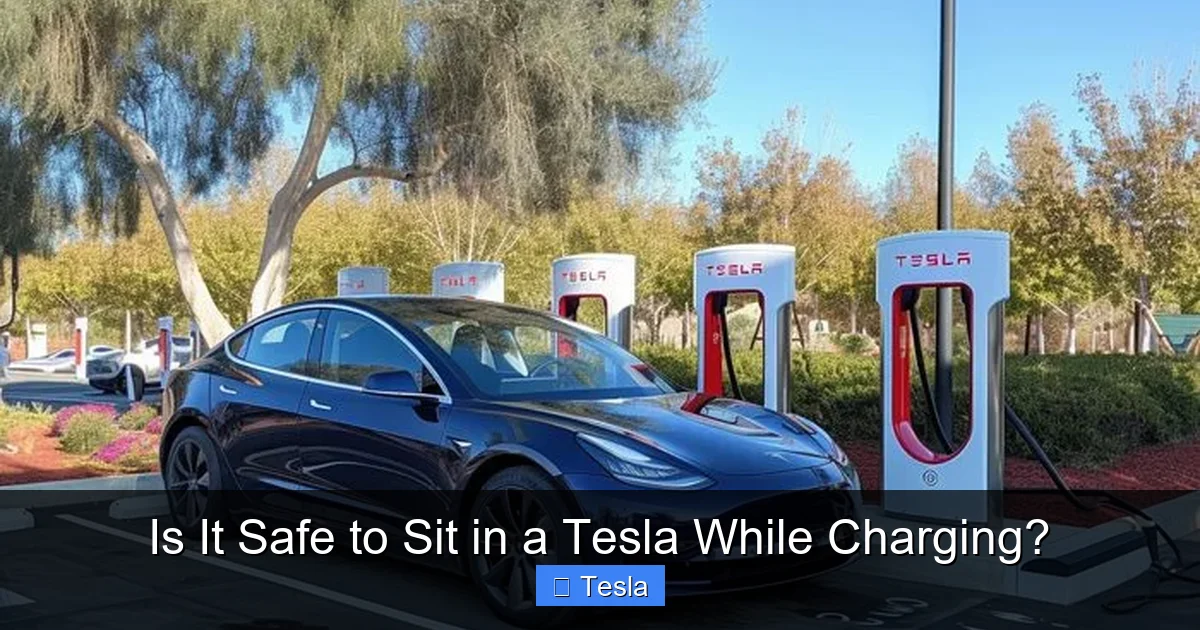
A common concern for new EV owners is the potential exposure to electromagnetic fields (EMF) from the high-current charging process. It’s a valid question, as we’re dealing with large amounts of electrical energy. However, the fear often outstrips the reality, which is backed by significant testing and engineering. EMF is a broad term encompassing both electric and magnetic fields. The magnetic fields generated by DC (direct current) charging, which is what your Tesla uses, are fundamentally different and much easier to shield than the alternating current (AC) fields from household wiring.
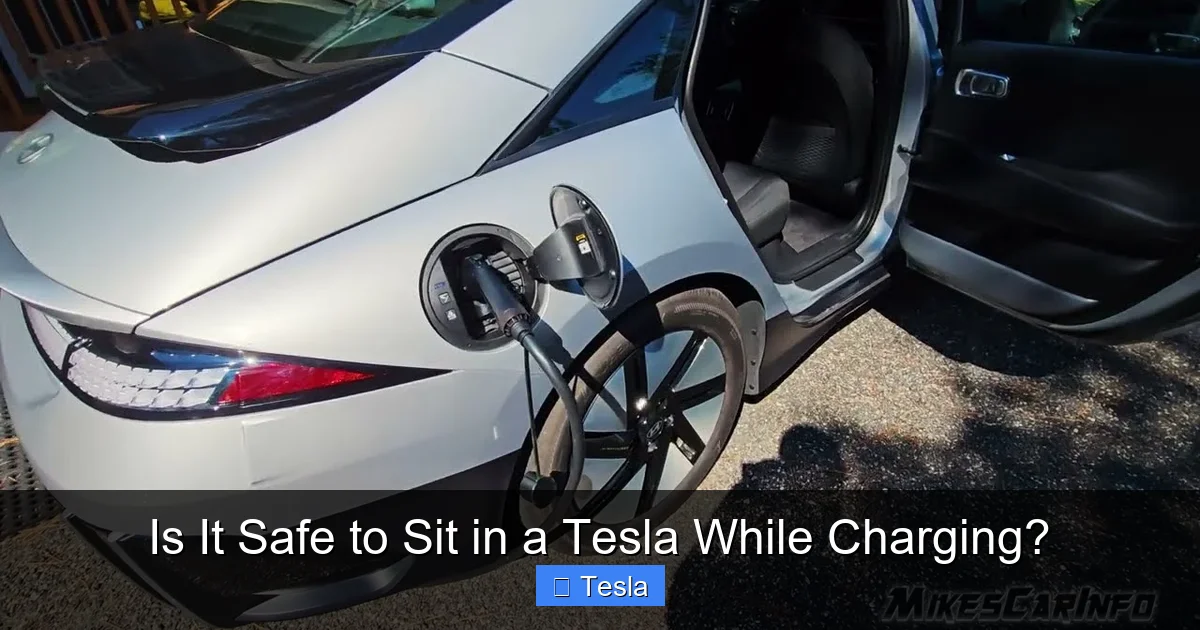
Visual guide about Is It Safe to Sit in a Tesla While Charging?
Image source: carproblemsolved.com
The Science of DC Charging Fields
When you charge with a Tesla Wall Connector or Supercharger, the power is converted to DC *before* it enters the car. The vehicle’s onboard charger (for AC sources) or the Supercharger itself (which provides DC directly) handles this conversion. DC systems produce a steady, static magnetic field. Think of it like the field from a simple magnet. These static fields do not radiate outward in the same way as the oscillating fields from AC power lines or appliances. They drop off in intensity extremely rapidly with distance. Because the high-current DC cables are located in the floor and under the car, the magnetic field strength within the cabin, where you sit, is negligible.
What Do the Tests Show?
Multiple independent studies and tests by organizations like Inside EVs and consumer safety groups have measured EMF levels inside charging Teslas. The consistent finding is that the readings are well below the exposure limits set by the International Commission on Non-Ionizing Radiation Protection (ICNIRP), the global standard. In many cases, the EMF levels inside the car during a fast charge were comparable to, or even lower than, the levels you’d experience from using a microwave oven, a hairdryer, or simply sitting near a running kitchen blender. The car’s steel body itself acts as a partial shield (a Faraday cage effect), further attenuating any fields. The conclusion from the data is clear: sitting in a Tesla while it charges does not expose you to harmful or even significant levels of EMF.
Thermal Management: Keeping Everything Cool Under Pressure
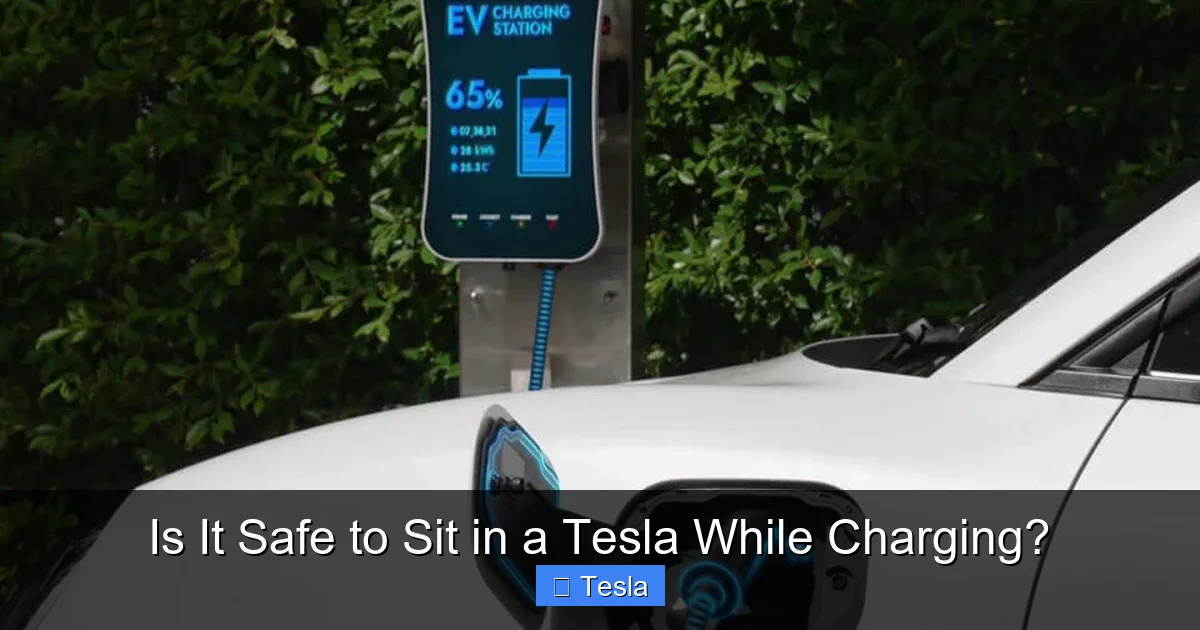
Charging, especially fast charging at a Supercharger, generates heat. Heat is the enemy of batteries and electronics. Tesla’s entire vehicle is designed around a sophisticated, liquid-cooled thermal management system that works tirelessly during charging to keep all components within their optimal temperature range. This system is not just for the battery; it also cools the charging components like the onboard charger and the high-voltage connectors. Understanding how this system works is key to knowing why you’re safe inside.
Visual guide about Is It Safe to Sit in a Tesla While Charging?
Image source: cdn.shopify.com
The Cooling Loop in Action
A dedicated coolant, a mixture of water and glycol, circulates through a sealed loop. It passes through the battery pack, absorbing heat, and then travels to a radiator (or a chiller for more aggressive cooling) where that heat is rejected to the outside air. During a fast charge, the system is running at a high duty cycle. You might hear the cooling fans whirring loudly from underneath or behind the car. This is normal and expected. It means the car is proactively fighting heat buildup. The coolant temperature is constantly monitored by the Battery Management System (BMS). If it approaches a pre-set safety threshold, the BMS will automatically reduce the charging power (a process called “throttling”) to protect the hardware. This happens long before any temperature could become a safety concern for cabin occupants.
Component-Specific Monitoring
Key points in the charging circuit have their own temperature sensors. The charging port itself, the high-voltage cable connectors, and the onboard charger modules are all watched. If a sensor detects an anomaly, the charging session will pause or terminate. The car’s touchscreen will display a message explaining the fault. This granular, real-time monitoring ensures that no single point can overheat dangerously without the system intervening. The heat generated is contained within the sealed cooling system and the metal components of the underbody, with minimal transfer to the cabin floor. You might feel the car is warm to the touch on the underside after a long Supercharger session, but the cabin remains at your set climate control temperature.
Cabin Air Quality and the “Fume” Question
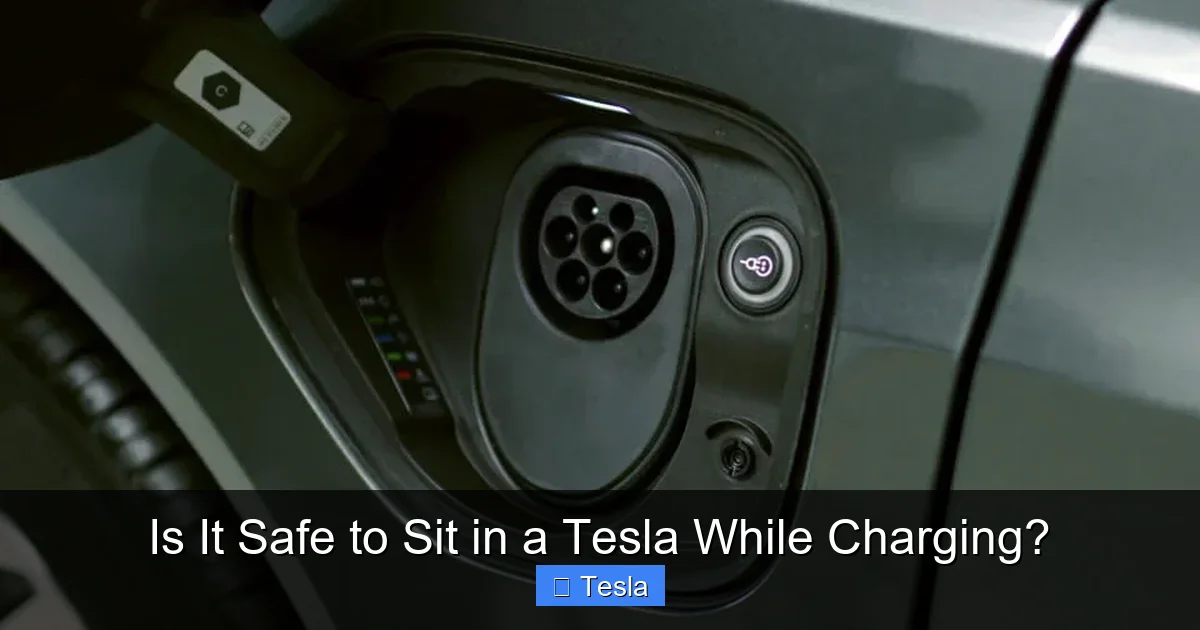
Another frequent worry is about smells or fumes. Do batteries or electronics off-gas during charging? Is there a risk of inhaling something unpleasant or harmful? The short answer is no, under normal operating conditions. Modern lithium-ion battery packs, especially those in Teslas with their advanced thermal and chemical management, are designed to be inert and sealed. They do not emit volatile organic compounds (VOCs) or other gases during standard charge and discharge cycles. The only potential source of an odor would be an external factor.
Visual guide about Is It Safe to Sit in a Tesla While Charging?
Image source: cdn.shopify.com
The Role of the HVAC System
Your Tesla’s heating, ventilation, and air conditioning (HVAC) system is a powerful ally. It has a recirculation mode that completely shuts off the intake of outside air. If you are concerned about any potential external smells (like from a nearby vehicle or the charger itself), simply set the climate system to recirculate. The cabin air filter, especially if you have the optional HEPA filter (on certain models), will scrub the interior air of particulates. Furthermore, the HVAC system’s compressor and fans are powered from the 12-volt system, which is independent and remains fully powered during charging. You have complete control over your cabin environment.
What About Rare Failure Scenarios?
In the extremely rare event of a battery thermal runaway (a uncontrolled, self-heating chain reaction), the battery pack’s design includes vents to direct gases *downward and outward* from the vehicle. The pack’s steel case is designed to contain a fire for a period, and the vehicle’s software will issue urgent, repeated warnings long before any serious event. The smell you’d detect first would likely be an acrid, chemical odor from the battery chemistry, which would be your unmistakable signal to evacuate immediately. This is not a “fume” from normal charging; it is a catastrophic failure signal. The systems in place are designed to give you ample warning and time to exit safely.
Safety Systems and Protocols: The Car’s Own Defense
Your Tesla is not a passive participant in the charging process; it is an active guardian. A network of sensors, software protocols, and hardware interlocks works 24/7 to ensure safety. Think of these as the car’s immune system during charging.
High-Voltage Interlock Loop (HVIL)
This is a critical safety circuit. The high-voltage connectors have a mechanical interlock that physically prevents the connector from being removed while the system is energized. More importantly, there’s a continuous “loop” of low-voltage signal wires running through every high-voltage connector and component. If any connector is compromised or opened, the loop breaks, and the BMS instantly commands the high-voltage contactors to open, de-energizing the entire high-voltage system. This means if you somehow managed to pry open the charging port cover while charging (you can’t—it’s electronically locked), the system would shut down instantly.
Ground Fault Protection
Both the Tesla Wall Connector and Superchargers have sensitive ground fault circuit interrupters (GFCIs). They monitor for any tiny imbalance in the current flowing on the “live” and “neutral” conductors. In a perfect system, these currents are equal. Any leakage, which would indicate a potential shock hazard to a person or a fault to the vehicle chassis, causes the charger to trip instantly, cutting off power. This protection is at the source (the charger) and is also monitored by the vehicle itself.
Charge Port Lock and State of Charge (SOC) Management
When charging begins, the charge port door locks automatically. It will not unlock until charging is complete or you stop it from the app or car screen. This prevents accidental removal of the cable under load. The Battery Management System also meticulously controls the charge curve. It never pushes the battery to its absolute limits. It carefully manages the voltage and current, especially as the battery approaches full (typically tapering off above 80% SOC to reduce heat and stress). This careful management protects battery longevity and reduces thermal stress during the entire session.
Best Practices for Charging While Occupied: Comfort and Peace of Mind
Given that the engineering makes it safe, what should you do to make the experience pleasant and prudent? These are practical tips for anyone who spends time in their Tesla while it’s plugged in, whether at a Supercharger on a road trip or at home overnight.
Climate Control is Your Friend
Use the Tesla app or the car’s screen to pre-condition the cabin while the car is still plugged in but not yet charging. This uses grid power, not the battery, to heat or cool the interior. Once charging starts, you can keep the climate system on. In summer, use the “Dog Mode” or “Camp Mode” features, which are designed specifically to maintain a set cabin temperature for pets or people while the car is parked and powered (including from the charger). This is the ultimate comfort and safety feature for occupied charging.
Location, Location, Location
If possible, choose a charging spot that is well-ventilated. While there are no harmful emissions, good airflow helps dissipate any heat from the charger and the car’s cooling system. At home, ensure your garage door is open or partially open if charging, not for toxic fume reasons, but for overall air circulation and to prevent any slight smell from the charger’s electronics from accumulating in a confined space. This is also a good practice for installing a Tesla charger in a home garage.
Inspect Before You Connect
Always do a quick visual and tactile check of the charging cable and connector before plugging in. Look for cracks, cuts, or exposed wires in the cable. Check the connector for any debris, moisture, or damage. A compromised cable is a risk regardless of occupancy. The Tesla’s system will likely refuse to charge with a faulty cable, but it’s best to not take the chance. This habit is crucial for safety, whether you’re sitting inside or not.
Know the Emergency Procedures
Familiarize yourself with how to stop a charge immediately. You can do this from the Tesla app, the car’s touchscreen (tap the charging icon), or by pressing the button on the charging handle (on some models). Know where the 12-volt battery is (usually the front trunk) and that you can access it if the high-voltage system needs to be disabled by a professional (you should not attempt this yourself). The car’s touchscreen will provide clear instructions if a serious fault occurs. The simplest action is always to unplug the cable from the car first if you need to stop immediately and it’s safe to do so.
The Verdict: A Resounding Yes, With Awareness
After examining the engineering, the science, and the real-world data, the answer is clear. The design of a Tesla, from its fundamental high-voltage isolation to its active thermal and charging management systems, makes sitting inside it while it charges a safe activity. The perceived risks from EMF or battery fumes are not supported by evidence and are mitigated by the car’s construction. The actual, manageable risks are those common to any electrical device: a faulty cable or an extreme environment.
The experience can also be quite comfortable. With Camp Mode, you can have a powered, temperature-controlled mobile room. You can watch a movie, work on your laptop, or simply relax while your car refuels itself. This is one of the unique advantages of EV ownership over a gasoline car, where you would never consider idling in a closed garage. The key takeaway is to trust the engineering, perform basic visual inspections of your equipment, use the climate control features to your advantage, and enjoy the convenience. Your Tesla is not just a car that charges; it’s a safe, livable space while it does so.
Frequently Asked Questions
Is there radiation risk from sitting in a Tesla while charging?
No. The electromagnetic field (EMF) levels inside a charging Tesla are extremely low, far below international safety limits, and are primarily static magnetic fields from DC power, which are easily shielded by the car’s body.
Can a Tesla catch fire while charging and someone is inside?
The risk is infinitesimally small. Tesla’s battery packs have multiple thermal and electrical safety layers. A fire would only be preceded by multiple clear warnings on the dashboard and in the app, giving the occupant ample time to exit safely. Statistically, EV fires are far less common than gasoline vehicle fires.
Is it safe to sleep in a Tesla while it’s charging at a Supercharger?
Yes, it is safe from an engineering standpoint. However, for comfort and security, it’s generally not recommended at public Superchargers due to noise, activity, and safety concerns about the location itself. Using Camp Mode at a rest stop or in a private, secure area is a better practice.
What happens if there’s a power surge during charging?
The charger (Wall Connector or Supercharger) and the vehicle’s onboard systems are designed to handle grid irregularities. A surge would trip the charger’s protection circuits or the car would halt the charge session. The high-voltage system is designed to disconnect safely under fault conditions.
Should I leave the car running or in “Park” while charging?
You must have the car in “Park” and powered on (or in “Sleep” mode with recent Teslas) for charging to initiate and continue. The vehicle’s systems need to be active to manage the charging process. You can be inside with the car in Park, climate on, and it will charge normally.
Can I open the doors or windows while charging?
Yes, you can. The charging process is completely independent of the cabin doors and windows. Opening them does not interrupt charging. However, for climate control efficiency and to avoid any potential (non-harmful) smell from the charger/cooling fans, you may prefer to keep them closed with climate on recirculation.