
Is a 285 Tire a 33

Many drivers wonder, “Is a 285 tire a 33?” The short answer: yes, a 285 tire is roughly equivalent to a 33-inch tire in overall diameter. This common comparison comes from different sizing systems—metric (285) and imperial (33″)—used to describe the same tire size. Understanding this helps when shopping for tires, upgrading your ride, or ensuring proper fitment.
If you’ve ever browsed tire options for your truck, SUV, or off-road vehicle, you’ve probably come across the question: *Is a 285 tire a 33?* It’s a common point of confusion, especially when comparing tire sizes listed in different formats. One seller might advertise a “285/75R16,” while another calls it a “33-inch tire.” Are they the same? Can you swap one for the other? And why are there two ways to say the same thing?
The good news is that, in most practical cases, a 285 tire *is* very close to a 33-inch tire—especially when we’re talking about popular sizes like 285/75R16. But it’s not quite that simple. The truth lies in understanding how tire sizing works, the difference between metric and imperial measurements, and why context matters. Whether you’re upgrading your tires for better off-road performance, improving fuel efficiency, or just replacing worn-out rubber, knowing the difference can save you time, money, and headaches.
In this guide, we’ll break down everything you need to know about 285 tires and 33-inch tires. We’ll explain what those numbers mean, how they relate to each other, and when you can safely treat them as interchangeable. You’ll also learn how to read a tire sidewall, calculate overall diameter, and avoid common mistakes when shopping for new tires. By the end, you’ll be able to confidently answer the question: *Is a 285 tire a 33?*—and know exactly what to look for when making your next tire purchase.
Key Takeaways
- 285 refers to tire width in millimeters: The number 285 indicates the tire’s width is 285 millimeters from sidewall to sidewall when mounted and inflated.
- 33 refers to overall tire diameter in inches: A 33-inch tire means the total height from ground to top of the tire is approximately 33 inches.
- They’re different measurement systems: 285 is metric (used in P-metric and Euro-metric tires), while 33″ is imperial (used in flotation sizing).
- A 285/75R16 tire is nearly 33 inches tall: This specific size—285 millimeters wide, 75% aspect ratio, radial construction, 16-inch rim—measures about 32.8 inches in diameter.
- Not all 285 tires are 33 inches: The overall diameter depends on the aspect ratio and rim size, so a 285/65R18, for example, is smaller than 33″.
- Always check full tire size, not just the first number: Relying only on “285” can lead to incorrect assumptions—always confirm the complete size (e.g., 285/75R16).
- Use a tire size calculator for accuracy: Online tools help compare metric and imperial sizes to ensure compatibility with your vehicle.
📑 Table of Contents
Understanding Tire Sizing Systems
Tire sizes might look like a random string of numbers and letters, but they’re actually a coded language that tells you exactly what the tire is designed for. The confusion between “285” and “33” comes from two different sizing systems: metric (P-metric or Euro-metric) and imperial (flotation sizing). Let’s break them down.
Metric Tire Sizing (P-Metric and Euro-Metric)
Most passenger cars, crossovers, and light trucks in North America use the P-metric system, which is based on millimeters. A typical metric tire size looks like this: **P285/75R16**.
– **P** stands for “Passenger” vehicle (though it can also be “LT” for Light Truck).
– **285** is the tire’s section width in millimeters—the distance from one sidewall to the other when the tire is mounted and properly inflated.
– **75** is the aspect ratio—the height of the sidewall expressed as a percentage of the width. So, 75% of 285mm is about 214mm.
– **R** means the tire has radial construction (the most common type today).
– **16** is the diameter of the wheel (rim) in inches that the tire is designed to fit.
This system is precise and widely used, but it doesn’t directly tell you the overall diameter of the tire—just the width and sidewall height relative to that width.
Imperial Tire Sizing (Flotation Sizing)
Flotation sizing, often used for trucks, SUVs, and off-road vehicles, uses inches and focuses on the overall dimensions. A flotation size might look like **33×12.50R16**.
– **33** is the overall diameter of the tire in inches.
– **12.50** is the section width in inches.
– **R** again means radial construction.
– **16** is the rim diameter in inches.
This system is more intuitive for many drivers because it gives you the total height right up front. If you’re looking for a taller tire for better ground clearance or a more aggressive look, seeing “33” tells you immediately that it’s a 33-inch tire.
Why the Confusion Between 285 and 33?
So why do people ask, “Is a 285 tire a 33?” Because in many cases, a 285/75R16 tire measures approximately 32.8 inches in diameter—close enough to 33 inches that it’s often rounded up and called a “33-inch tire.” Similarly, a 33×12.50R16 tire is about 12.5 inches wide, which converts to roughly 318 millimeters—close to 285mm, but not exact.
The key takeaway? The numbers come from different systems and measure different things. But when you do the math, certain combinations line up closely enough that they’re functionally equivalent for most drivers.
Calculating Tire Diameter: The Math Behind 285 and 33

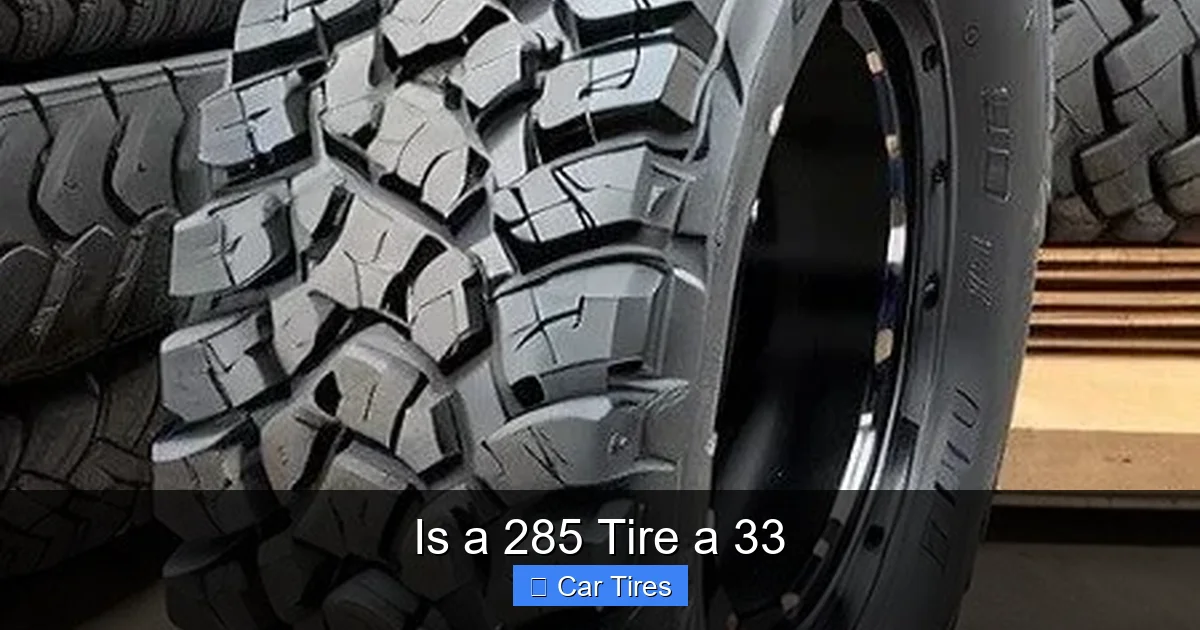
Visual guide about Is a 285 Tire a 33
Image source: tireblogger.com
To truly understand whether a 285 tire is a 33, you need to know how to calculate the overall diameter. This is where a little math comes in—but don’t worry, it’s simpler than it looks.
Step-by-Step Diameter Calculation
Let’s use the popular size **285/75R16** as an example.
1. **Convert width to inches**:
285 millimeters ÷ 25.4 = ~11.22 inches
2. **Calculate sidewall height**:
Aspect ratio is 75%, so:
11.22 inches × 0.75 = ~8.42 inches
3. **Double the sidewall height** (because there’s a sidewall on top and bottom of the rim):
8.42 × 2 = ~16.84 inches
4. **Add the rim diameter**:
16.84 + 16 = ~32.84 inches
So, a 285/75R16 tire is approximately **32.8 inches tall**—just under 33 inches. For practical purposes, most people round this up and call it a 33-inch tire.
Comparing to a True 33-Inch Tire
Now let’s look at a flotation size: **33×12.50R16**.
– Diameter: 33 inches (by definition)
– Width: 12.50 inches
– Rim: 16 inches
This tire is exactly 33 inches tall. But its width (12.50 inches) is about 318 millimeters—wider than a 285mm tire. So while both are “33-inch” tires in common parlance, they’re not identical.
Other 285 Sizes: Not All Are 33 Inches
Here’s where things get tricky. Not every tire labeled “285” is 33 inches tall. The overall diameter depends on the aspect ratio and rim size.
– **285/70R17**:
Width: 285mm → ~11.22 inches
Sidewall: 11.22 × 0.70 = ~7.85 inches
Total diameter: (7.85 × 2) + 17 = ~32.7 inches → Still close to 33″
– **285/65R18**:
Sidewall: 11.22 × 0.65 = ~7.29 inches
Total diameter: (7.29 × 2) + 18 = ~32.58 inches → A bit smaller
– **285/60R20**:
Sidewall: 11.22 × 0.60 = ~6.73 inches
Total diameter: (6.73 × 2) + 20 = ~33.46 inches → Actually *larger* than 33″
So a 285/60R20 is technically a 33.5-inch tire—taller than a 33×12.50R16. This shows why you can’t rely on the first number alone. Always check the full size.
Practical Example: Upgrading Your Truck
Imagine you own a Ford F-150 and want to upgrade from stock 275/65R18 tires (about 32.1 inches tall) to something closer to 33 inches. You find a set of 285/70R17 tires. Let’s calculate:
– 285mm → ~11.22 inches
– Sidewall: 11.22 × 0.70 = ~7.85 inches
– Total diameter: (7.85 × 2) + 17 = ~32.7 inches
That’s a solid upgrade—almost a full inch taller—and very close to 33 inches. It’ll give you better ground clearance and a more aggressive stance, without requiring major modifications.
When Can You Treat a 285 Tire as a 33?
Visual guide about Is a 285 Tire a 33
Image source: tireblogger.com
Now that we understand the math, let’s answer the big question: *When is it safe to say a 285 tire is a 33?*
Common Equivalent Sizes
Here are some widely accepted equivalents:
| Metric Size | Approx. Diameter | Flotation Equivalent |
|————-|——————|———————-|
| 285/75R16 | 32.8″ | 33×11.50R16 |
| 285/70R17 | 32.7″ | 33×11.50R17 |
| 285/65R18 | 32.6″ | 33×11.50R18 |
| 285/60R20 | 33.5″ | 33×11.50R20 (or 35″ if rounded) |
In these cases, the 285 tire is either just under or just over 33 inches—close enough that they’re often used interchangeably in real-world applications.
Vehicle Compatibility Matters
Even if the diameter is close, you must ensure the tire fits your vehicle. Consider:
– **Clearance**: Will the taller tire rub against the fender, suspension, or brake components?
– **Speedometer accuracy**: A larger tire covers more ground per revolution, which can throw off your speedometer and odometer.
– **Load and speed ratings**: Make sure the new tire meets or exceeds your vehicle’s requirements.
For example, putting 285/75R16 tires (32.8″) on a Jeep Wrangler TJ that originally came with 285/75R16 tires is a direct replacement—no issues. But putting them on a compact SUV with limited wheel well space might cause rubbing.
Off-Road and Lifted Vehicles
Off-road enthusiasts often use the “285 = 33” rule of thumb when upgrading. If your truck or SUV has a 2- or 3-inch lift, a 33-inch tire (like a 285/75R16) is a popular choice for better traction and clearance. In this context, the terms are used almost synonymously.
However, always double-check with your manufacturer or a tire professional. Some vehicles require specific tire sizes to maintain warranty coverage or proper function of electronic systems like traction control and ABS.
Pros and Cons of 285/33-Inch Tires
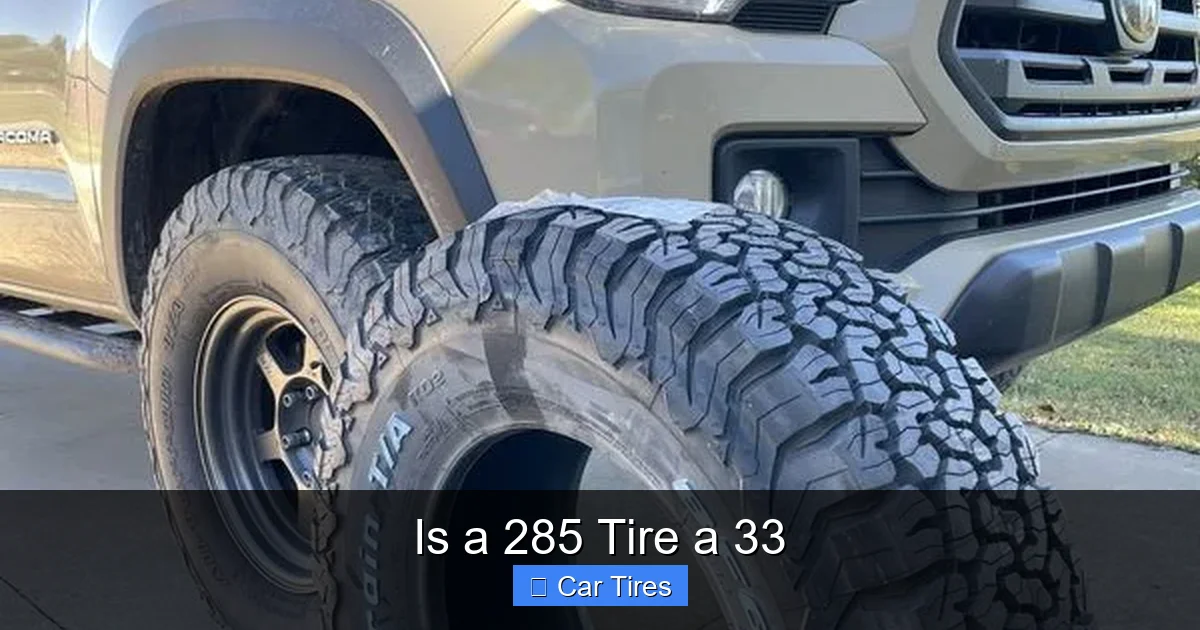
Visual guide about Is a 285 Tire a 33
Image source: thecampingadvisor.com
So, should you go with a 285 tire that’s close to 33 inches? Let’s weigh the benefits and drawbacks.
Advantages
– **Improved ground clearance**: A taller tire gives you more space between the axle and the ground, helpful for off-roading or rough terrain.
– **Better traction**: Wider tires (like 285mm) provide a larger contact patch, improving grip on dirt, mud, or snow.
– **Aggressive look**: Many drivers prefer the rugged, lifted appearance of 33-inch tires on trucks and SUVs.
– **Smoother ride**: Taller sidewalls (higher aspect ratio) absorb bumps better than low-profile tires.
Disadvantages
– **Reduced fuel efficiency**: Larger, heavier tires increase rolling resistance and weight, which can lower gas mileage.
– **Slower acceleration**: More rotational mass means the engine has to work harder to spin the tires.
– **Speedometer error**: As mentioned, a larger diameter changes the distance traveled per revolution. A 33-inch tire instead of a 32-inch one can make your speedometer read 3–5 mph slower than actual speed.
– **Potential fitment issues**: Without proper clearance, you may experience rubbing, especially during turns or over bumps.
– **Higher cost**: 33-inch tires, especially in popular sizes like 285/75R16, tend to be more expensive than stock sizes.
Real-World Example: Daily Driver vs. Off-Roader
If you use your vehicle mostly for commuting, a 33-inch tire might be overkill. The fuel economy hit and potential speedometer issues could outweigh the benefits.
But if you take your truck off-road on weekends, the extra clearance and traction of a 285/75R16 (33″) tire could be worth it. Just make sure your suspension and fenders can handle the size.
How to Choose the Right Tire: Tips and Tools
With so many variables, how do you pick the right tire? Here are some practical tips.
1. Read the Sidewall
Your current tire’s sidewall has all the info you need. Look for something like “P265/70R17” or “LT285/75R16.” Write it down before shopping.
2. Use a Tire Size Calculator
Websites like TireSize.com, Discount Tire’s calculator, or Tire Rack’s comparison tool let you input two sizes and see the differences in diameter, width, and circumference. This helps you compare a 285/75R16 to a 33×12.50R16 or your stock size.
3. Check Vehicle Manufacturer Recommendations
Your owner’s manual or door jamb sticker lists the approved tire sizes. Staying within these limits ensures safety and warranty compliance.
4. Consider Load Index and Speed Rating
A tire must support your vehicle’s weight and handle its top speed. Look for the load index (e.g., 121 = 3,297 lbs) and speed rating (e.g., R = 106 mph).
5. Consult a Professional
If you’re unsure, talk to a tire shop or mechanic. They can check clearance, recommend compatible sizes, and help with installation.
6. Test Fit Before Finalizing
Some shops let you mount one tire to test fitment. This is especially useful for lifted vehicles or custom setups.
Common Misconceptions About Tire Sizes
Let’s clear up a few myths that contribute to the “285 vs. 33” confusion.
Myth 1: “All 285 Tires Are 33 Inches”
False. As we’ve seen, a 285/60R20 is 33.5 inches tall, while a 285/75R16 is 32.8 inches. The aspect ratio and rim size drastically affect overall diameter.
Myth 2: “You Can Always Swap Metric for Imperial”
Not always. A 33×12.50R16 is wider than a 285/75R16 (12.5″ vs. ~11.2″), so it may not fit on the same rim or in the same wheel well.
Myth 3: “Bigger Is Always Better”
Larger tires aren’t automatically better. They can hurt fuel economy, handling, and braking if not properly matched to your vehicle and driving needs.
Myth 4: “The First Number Is the Diameter”
In metric sizing, the first number is width, not diameter. Only in flotation sizing does the first number represent diameter.
Conclusion: So, Is a 285 Tire a 33?
After all this, here’s the straight answer: **A 285 tire is often very close to a 33-inch tire in overall diameter—especially in sizes like 285/75R16—but it’s not a perfect match, and not all 285 tires are 33 inches tall.**
The confusion comes from mixing metric and imperial sizing systems. A 285 refers to width in millimeters, while 33 refers to total height in inches. When you calculate the diameter of a 285/75R16, you get about 32.8 inches—close enough that many people (and even tire retailers) call it a “33-inch tire.”
But context is key. Always look at the full tire size, not just the first number. Use a tire calculator to compare options, check your vehicle’s clearance, and consider your driving needs. Whether you’re upgrading for off-road performance, aesthetics, or functionality, understanding the difference between 285 and 33-inch tires helps you make a smarter, safer choice.
So next time someone asks, “Is a 285 tire a 33?” you can confidently say: *It’s close—but let me check the full size first.*
Frequently Asked Questions
Is a 285/75R16 tire exactly 33 inches tall?
No, a 285/75R16 tire is approximately 32.8 inches in diameter, which is just under 33 inches. It’s often rounded up and called a “33-inch tire” for simplicity, but it’s not exact.
Can I use a 285 tire instead of a 33-inch tire?
Yes, in many cases—especially with sizes like 285/75R16 or 285/70R17—they are functionally equivalent. Just ensure the width, load rating, and clearance work for your vehicle.
What does the “285” in a tire size mean?
The “285” refers to the tire’s section width in millimeters—the distance from one sidewall to the other when mounted and properly inflated.
What does “33” mean on a tire?
The “33” in a flotation size like 33×12.50R16 refers to the overall diameter of the tire in inches, from the ground to the top of the tire.
Will a 33-inch tire fit on my stock rims?
It depends on your vehicle and rim width. Some stock rims can accommodate 33-inch tires, but others may require wider rims or suspension modifications to prevent rubbing.
How do I calculate tire diameter from a metric size?
Convert the width to inches, multiply by the aspect ratio to get sidewall height, double it (for top and bottom), then add the rim diameter. For example: (285 ÷ 25.4) × 0.75 × 2 + 16 ≈ 32.8 inches.