
245 Vs 275 Tire Width Comparison

Choosing between 245 and 275 tire widths affects your car’s handling, comfort, and fuel efficiency. This guide breaks down the pros, cons, and real-world impacts to help you pick the right fit.
When it comes to car tires, most people focus on brand, tread pattern, or price—but one of the most overlooked yet impactful decisions is tire width. Specifically, the difference between a 245 and a 275 tire width can change how your vehicle handles, feels, and even how much you spend at the pump. Whether you’re upgrading for performance, replacing worn-out tires, or just curious about what those numbers on the sidewall mean, understanding the 245 vs 275 tire width comparison is essential.
Tire width is measured in millimeters from sidewall to sidewall. So, a 245 tire is 245 mm wide, and a 275 tire is 30 mm wider. That might not sound like much, but in the world of automotive dynamics, even small changes can have big effects. From grip and braking to fuel efficiency and ride comfort, the choice between these two widths isn’t just about looks—it’s about how your car performs in real-world conditions. Whether you drive a sporty coupe, a family SUV, or a rugged truck, the right tire width can make a noticeable difference in your driving experience.
In this guide, we’ll dive deep into the 245 vs 275 tire width comparison, covering everything from handling and safety to cost and compatibility. We’ll break down the science in simple terms, share practical examples, and help you decide which width suits your driving needs best. By the end, you’ll know exactly what to consider before making your next tire purchase.
Key Takeaways
- Tire width affects grip and stability: Wider tires (like 275) offer better traction and cornering, especially in performance or wet conditions.
- Narrower tires improve fuel economy: 245-width tires typically have lower rolling resistance, helping save on gas over time.
- Ride comfort varies by width: 245 tires often provide a smoother ride on rough roads due to a taller sidewall, while 275 tires can feel stiffer.
- Wheel compatibility matters: Not all wheels can safely support 275-width tires—check your rim width before upgrading.
- Speedometer accuracy may change: Switching tire sizes without adjusting for overall diameter can throw off your speedometer readings.
- Weather and driving style influence the best choice: Performance drivers may prefer 275s, while daily commuters might favor 245s for comfort and efficiency.
- Always consult your owner’s manual or a tire professional: Manufacturer recommendations ensure safety, warranty compliance, and optimal performance.
📑 Table of Contents
Understanding Tire Width: What Do the Numbers Mean?
Before we get into the nitty-gritty of 245 vs 275 tire widths, let’s make sure we’re on the same page about what those numbers actually mean. Tire sizes are typically displayed in a format like “245/45R17” or “275/40R18.” The first number—245 or 275—is the tire’s width in millimeters. The second number is the aspect ratio, which is the height of the sidewall as a percentage of the width. The “R” stands for radial construction, and the last number is the wheel diameter in inches.
So, a 245/45R17 tire is 245 mm wide, with a sidewall height that’s 45% of 245 mm (about 110 mm). A 275/40R18 tire is 275 mm wide, with a sidewall height of 40% of 275 mm (about 110 mm). Even though the widths differ, the sidewall heights can be similar depending on the aspect ratio. This is important because the overall diameter of the tire affects speedometer accuracy, gearing, and suspension travel.
Why does width matter? Think of it like shoes. A wider shoe gives you more surface area on the ground, which can improve balance and stability. The same principle applies to tires. A wider tire has a larger contact patch—the part of the tire that touches the road. This increased contact can improve traction, especially during acceleration, braking, and cornering. But it’s not all good news. Wider tires also create more rolling resistance, which can reduce fuel efficiency and make the ride feel harsher.
Understanding these basics helps you see why the 245 vs 275 tire width comparison isn’t just about aesthetics. It’s a balance between performance, comfort, and efficiency. And while 30 mm might seem small, it’s enough to shift that balance in noticeable ways.
Performance and Handling: How Width Affects Driving Dynamics

Visual guide about 245 Vs 275 Tire Width Comparison
Image source: tireblogger.com
One of the biggest differences between 245 and 275 tire widths is how they affect your car’s performance and handling. In general, wider tires like the 275 offer better grip and stability, especially during aggressive driving or in challenging conditions.
Cornering and Lateral Grip
When you take a turn, your tires experience lateral (sideways) forces. A wider tire has a larger contact patch, which means more rubber is in contact with the road. This increases lateral grip, allowing you to take corners at higher speeds without losing traction. For example, if you drive a sports car or enjoy weekend canyon runs, upgrading from 245 to 275 tires can make the car feel more planted and responsive.
Imagine driving through a sharp curve on a mountain road. With 245 tires, you might feel a slight body roll or understeer—where the front tires lose grip and push outward. With 275 tires, the extra width helps the tires bite into the pavement, reducing understeer and giving you more confidence to push the limits.
Braking and Acceleration
Wider tires also improve braking performance. More surface area means more friction, which translates to shorter stopping distances. This is especially important in emergency situations or wet conditions where traction is reduced. Similarly, during acceleration—particularly in rear-wheel-drive or high-performance vehicles—wider rear tires can help put power down more effectively, reducing wheel spin.
For instance, a Mustang GT with 245 rear tires might struggle with traction during hard launches. Upgrading to 275s can significantly improve launch grip, making the car feel more powerful and controllable.
Steering Response and Feel
Wider tires often provide sharper steering response. Because the contact patch is larger, the tire reacts more quickly to steering inputs. This gives drivers a more connected feel to the road. However, this can also make the steering feel heavier or more sensitive, especially at low speeds.
On the flip side, 245 tires tend to offer lighter steering and a more relaxed feel, which some drivers prefer for daily commuting. They’re less likely to transmit road imperfections through the steering wheel, making for a more comfortable drive in stop-and-go traffic.
Trade-Offs in Performance
While 275 tires offer performance benefits, they’re not always the best choice. On loose surfaces like gravel or snow, narrower tires can actually perform better. This is because they cut through snow or mud more easily, maintaining better contact with the ground. Additionally, wider tires can increase the risk of hydroplaning in heavy rain if the tread pattern isn’t designed to channel water effectively.
So, while the 275 width shines in dry, high-performance scenarios, the 245 width can be more versatile in varied conditions.
Fuel Efficiency and Rolling Resistance
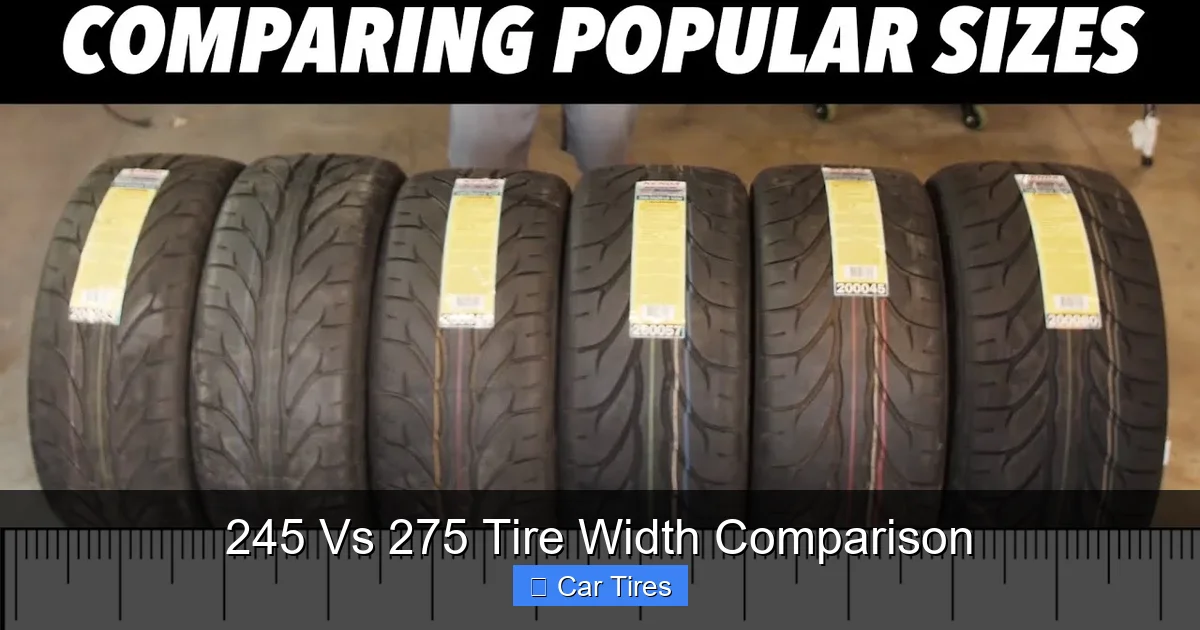
Visual guide about 245 Vs 275 Tire Width Comparison
Image source: i.ytimg.com
If you’re concerned about fuel economy, tire width plays a surprising role. In the 245 vs 275 tire width comparison, narrower tires generally win when it comes to efficiency.
Rolling Resistance Explained
Rolling resistance is the energy lost as a tire rolls over the road. Wider tires have a larger contact patch, which increases friction between the tire and the pavement. This means the engine has to work harder to keep the car moving, burning more fuel in the process.
Studies and real-world tests have shown that switching from a 245 to a 275 tire can reduce fuel economy by 1–3%, depending on driving conditions and vehicle type. For a car that gets 30 mpg, that’s a drop of 0.3 to 0.9 mpg—small per tank, but it adds up over time.
Real-World Impact
Let’s say you drive 15,000 miles per year and gas costs $3.50 per gallon. With a 30 mpg car, you’d use 500 gallons annually. A 2% drop in efficiency means you’d use 10 extra gallons, costing you $35 more per year. Over five years, that’s $175—enough to buy a new set of floor mats or a few oil changes.
Of course, this depends on your driving habits. If you do a lot of highway driving at steady speeds, the impact might be less. But if you’re frequently accelerating, braking, or driving in stop-and-go traffic, the wider tire’s rolling resistance will be more noticeable.
Aerodynamics and Weight
Wider tires are often heavier, which also affects fuel economy. More weight means more energy is needed to accelerate and maintain speed. Additionally, wider tires can increase aerodynamic drag, especially at highway speeds, further reducing efficiency.
For eco-conscious drivers or those with hybrid or electric vehicles, sticking with 245-width tires (or even narrower) can help maximize range and minimize environmental impact.
Balancing Performance and Efficiency
The key is finding a balance. Some modern tires are designed with low rolling resistance in mind, even in wider sizes. Look for tires labeled “eco” or “fuel-efficient” if you want the benefits of a 275 width without sacrificing too much mileage.
Alternatively, consider your driving needs. If you rarely push your car hard and prioritize fuel savings, 245 tires are likely the better choice. But if performance is your top priority, the slight drop in efficiency may be worth it.
Ride Comfort and Noise Levels

Visual guide about 245 Vs 275 Tire Width Comparison
Image source: tireblogger.com
Tire width doesn’t just affect performance and fuel economy—it also influences how comfortable your ride feels and how much road noise you hear inside the cabin.
Suspension and Road Feedback
Narrower tires like the 245 often provide a smoother ride, especially on rough or uneven roads. This is because they typically have a taller sidewall (depending on the aspect ratio), which acts like an extra cushion between the wheel and the road. The sidewall flexes more, absorbing bumps and potholes before they reach the chassis.
In contrast, 275-width tires are often paired with lower aspect ratios (like 40 or 35), meaning shorter sidewalls. While this improves handling and responsiveness, it also means less cushioning. You’ll feel more of the road’s imperfections, which can lead to a harsher, more jarring ride.
For example, driving over a pothole with 245/50R16 tires might feel like a soft thud. The same pothole with 275/35R19 tires could send a sharp jolt through the suspension, potentially damaging wheels or suspension components over time.
Noise and Vibration
Wider tires can also generate more road noise. The larger contact patch means more rubber interacting with the road surface, which can increase tire roar, especially on coarse asphalt or concrete highways. This noise transmits into the cabin, making long drives less relaxing.
Additionally, wider tires are more prone to tramlining—the tendency to follow grooves or seams in the road. This can make the car feel twitchy or less stable, particularly on older highways with worn pavement.
Weather and Surface Considerations
In wet or snowy conditions, the difference in comfort becomes even more apparent. Narrower tires can cut through snow more easily, maintaining better contact with the ground. Wider tires may float on top of snow, reducing traction and making the ride feel less controlled.
However, on dry pavement, the 275’s stability and grip can make the car feel more confident, even if it’s slightly noisier.
Finding the Right Balance
If comfort is your top priority—especially for long commutes or family trips—245-width tires are usually the better choice. But if you drive mostly on smooth roads and value performance, the trade-off in comfort may be acceptable.
Some drivers opt for a staggered setup: 245 tires in the front for comfort and steering feel, and 275 in the rear for grip and acceleration. This is common on performance cars and can offer the best of both worlds.
Wheel Compatibility and Fitment Issues
Before you rush out to buy 275-width tires, it’s crucial to check whether your wheels can safely support them. Not all rims are designed for wider tires, and improper fitment can lead to safety hazards, poor handling, or premature tire wear.
Rim Width Guidelines
Tires are designed to work within a specific range of rim widths. For a 245 tire, the ideal rim width is typically between 7.5 and 9 inches. For a 275 tire, it’s usually 8.5 to 10 inches. Mounting a 275 tire on a rim that’s too narrow can cause the sidewalls to bulge, reducing stability and increasing the risk of blowouts.
For example, if your car came with 17×8-inch wheels, they’re likely optimized for 245 tires. Trying to fit 275s might work, but the tire may not seat properly, leading to uneven wear or handling issues.
Clearance and Suspension Interference
Wider tires also take up more space inside the wheel well. If your car has limited clearance, 275 tires might rub against the fenders, suspension components, or brake calipers—especially when turning or going over bumps.
This is a common issue when lowering a car or installing wider wheels. Even if the tire fits when stationary, dynamic movement can cause contact. Always test-fit new tires or consult a professional before making the switch.
Speedometer and ABS Calibration
Changing tire width without adjusting for overall diameter can affect your speedometer and odometer readings. If the new tire is significantly larger or smaller in diameter, your car may think it’s going slower or faster than it actually is.
For instance, a 275/40R18 tire might have a slightly larger diameter than a 245/45R17. This could cause your speedometer to read 60 mph when you’re actually going 62 mph. Over time, this leads to inaccurate mileage tracking and potential speeding tickets.
Additionally, modern cars rely on wheel speed sensors for ABS, traction control, and stability systems. Incorrect tire size can confuse these systems, leading to warning lights or reduced safety functionality.
Professional Installation and Recommendations
To avoid these issues, always consult your vehicle’s owner’s manual or a trusted tire professional. They can recommend compatible tire sizes and ensure proper fitment. Many tire shops offer fitment guides or can check your specific make and model.
If you’re upgrading for performance, consider a complete wheel and tire package designed for your car. This ensures compatibility and often includes proper alignment and balancing.
Cost, Longevity, and Maintenance
Tire width also affects cost, tread life, and maintenance requirements. In the 245 vs 275 tire width comparison, wider tires often come with a higher price tag and different wear patterns.
Initial Cost and Availability
275-width tires are typically more expensive than 245s, both because they use more material and because they’re often used on performance or luxury vehicles. Premium brands and high-performance models can cost $50–$100 more per tire.
Additionally, 275 tires may be harder to find in certain sizes or tread patterns, especially for older or less common vehicles. This can limit your options and increase wait times.
Tread Wear and Longevity
Wider tires don’t always last longer. In fact, they can wear out faster due to increased heat buildup and stress on the tread. Performance-oriented 275 tires, in particular, are designed for grip, not longevity. They may wear down in 20,000–30,000 miles, compared to 40,000–60,000 miles for standard 245 tires.
However, this depends on driving style. Aggressive drivers will wear out any tire quickly, while conservative drivers may get more life from wider tires.
Rotation and Alignment
Wider tires can be more sensitive to alignment issues. Even slight misalignment can cause uneven wear, especially on the inner or outer edges. Regular tire rotations and alignments are essential to maximize lifespan.
Also, because 275 tires are often used in staggered setups (different widths front and rear), rotation options are limited. You may only be able to rotate tires side-to-side, not front-to-back, which can lead to uneven wear over time.
Repair and Replacement
If a 275 tire gets damaged, repairs may be more difficult or expensive. The larger size and stiffer construction can make patching or plugging less reliable. In some cases, the tire may need to be replaced entirely.
Additionally, if you only damage one tire, finding an exact match can be challenging—especially if the model is discontinued. This is less of an issue with more common 245 sizes.
Making the Right Choice for Your Vehicle
So, which is better: 245 or 275 tire width? The answer depends on your vehicle, driving habits, and priorities.
If you drive a compact sedan or SUV and value fuel efficiency, comfort, and low maintenance, 245-width tires are likely the best fit. They’re cost-effective, widely available, and well-suited for daily driving.
On the other hand, if you own a sports car, muscle car, or performance-oriented vehicle, 275-width tires can enhance handling, braking, and acceleration. They’re ideal for drivers who enjoy spirited driving or track days.
For trucks and SUVs, the choice depends on use. If you tow, haul, or drive off-road, wider tires can improve stability and load capacity. But for city driving, narrower tires may offer better efficiency and ride quality.
Ultimately, the 245 vs 275 tire width comparison isn’t about which is “better”—it’s about which is right for you. Consider your driving environment, vehicle specifications, and personal preferences. And when in doubt, consult a tire professional or refer to your owner’s manual.
Your tires are the only part of your car that touches the road. Choosing the right width ensures you get the best performance, safety, and value from every mile.
Frequently Asked Questions
Can I put 275 tires on my car if it came with 245s?
It depends on your wheel width, suspension clearance, and overall tire diameter. You may be able to fit 275 tires, but you should consult a tire professional or use a fitment guide to ensure safety and proper performance.
Will switching to 275 tires improve my car’s handling?
Yes, in most cases. Wider tires provide better grip, cornering, and braking, especially in dry conditions. However, the improvement depends on your vehicle, driving style, and tire quality.
Do 275 tires reduce fuel economy?
Generally, yes. Wider tires increase rolling resistance and weight, which can reduce fuel efficiency by 1–3%. The impact varies based on driving habits and vehicle type.
Are 245 tires better for snow and ice?
Often, yes. Narrower tires can cut through snow more effectively, maintaining better contact with the ground. However, tire tread pattern and compound are also critical factors.
Can I mix 245 and 275 tires on the same car?
It’s not recommended. Mixing tire widths can affect handling, stability, and safety systems. If you want different widths, use a staggered setup (e.g., 245 front, 275 rear) designed for your vehicle.
How do I know if my wheels can handle 275 tires?
Check your rim width and consult a tire fitment guide. Most 275 tires require 8.5–10 inch wide wheels. Also ensure there’s enough clearance in the wheel well to prevent rubbing.