
Dot Number on a Tire

The DOT number on a tire is a crucial identifier that reveals the tire’s manufacturer, plant location, size, and most importantly, its production date. Understanding this code helps you assess tire age, ensure safety, and avoid buying expired or recalled tires.
When you look at the sidewall of your car tire, you’ll notice a mix of letters, numbers, and symbols—some familiar, others confusing. Among these, one sequence stands out: the DOT number. It might look like a random jumble, but this code is far from meaningless. In fact, it’s one of the most important pieces of information on your tire, packed with details about its origin, age, and compliance with safety standards.
Whether you’re buying new tires, inspecting your current ones, or preparing for a vehicle inspection, understanding the DOT number can make a big difference. It’s not just about legality—it’s about safety. Tires are complex pieces of engineering that degrade over time, and knowing when yours were made helps you avoid potential blowouts, reduced traction, or handling issues. Think of the DOT number as your tire’s birth certificate. It tells you where it came from, when it was born, and whether it’s still fit for the road.
In this guide, we’ll break down everything you need to know about the DOT number on a tire. From decoding the sequence to understanding why tire age matters, we’ll cover it all in simple, everyday language. No technical jargon, no confusion—just clear, practical advice to help you stay safe and informed.
Key Takeaways
- Understanding dot number on a tire: Provides essential knowledge
📑 Table of Contents
What Is the DOT Number on a Tire?
The DOT number, short for Department of Transportation number, is a standardized identification code required on all tires sold in the United States. It’s a legal requirement established by the National Highway Traffic Safety Administration (NHTSA) to ensure that every tire can be traced back to its manufacturer, production plant, and date of manufacture. This traceability is essential for safety recalls, quality control, and regulatory compliance.
The DOT number typically begins with the letters “DOT,” followed by a sequence of up to 13 characters. These characters include letters and numbers that encode specific information about the tire. While the format can vary slightly depending on the manufacturer, the core structure remains consistent. The most critical part of the DOT number—the one that tells you when the tire was made—is usually found at the end of the sequence.
For example, a DOT number might look like this: DOT U2LL LMRR 2323. In this case, “2323” indicates that the tire was manufactured in the 23rd week of 2023. The earlier characters (U2LL LMRR) identify the manufacturer and the specific plant where the tire was produced. This level of detail allows regulators and consumers alike to track down tires in case of defects or recalls.
It’s important to note that not all tires have the same length of DOT number. Some older tires or those from certain manufacturers may have shorter codes, but they still follow the same basic format. The key is to locate the “DOT” prefix and look for the final four digits, which represent the production date.
Why Was the DOT Number Created?
The DOT number was introduced in response to growing concerns about tire safety in the mid-20th century. As vehicles became faster and roads more congested, the risk of tire failure increased. In the 1960s and 1970s, several high-profile tire recalls—such as the Firestone 500 recall—highlighted the need for better tracking and accountability in tire manufacturing.
The NHTSA responded by mandating that all tires sold in the U.S. must bear a DOT number. This allowed for quick identification of affected tires during recalls and helped manufacturers improve quality control. Today, the DOT number is a cornerstone of tire safety regulation, ensuring that every tire on the road meets minimum performance standards and can be traced if problems arise.
Is the DOT Number the Same Worldwide?
No, the DOT number is specific to the United States. Other countries have their own tire identification systems. For example, the European Union uses the E-mark (e.g., E4), which indicates compliance with European safety standards. However, many international manufacturers include both DOT and E-markings on tires sold globally to meet multiple regulatory requirements.
If you’re importing a vehicle or buying tires from overseas, it’s important to verify that they meet U.S. DOT standards. Tires without a valid DOT number may not be legal for use on public roads in the United States, even if they appear similar to DOT-compliant tires.
Where to Find the DOT Number on a Tire
Visual guide about Dot Number on a Tire
Image source: tirebuyer.com
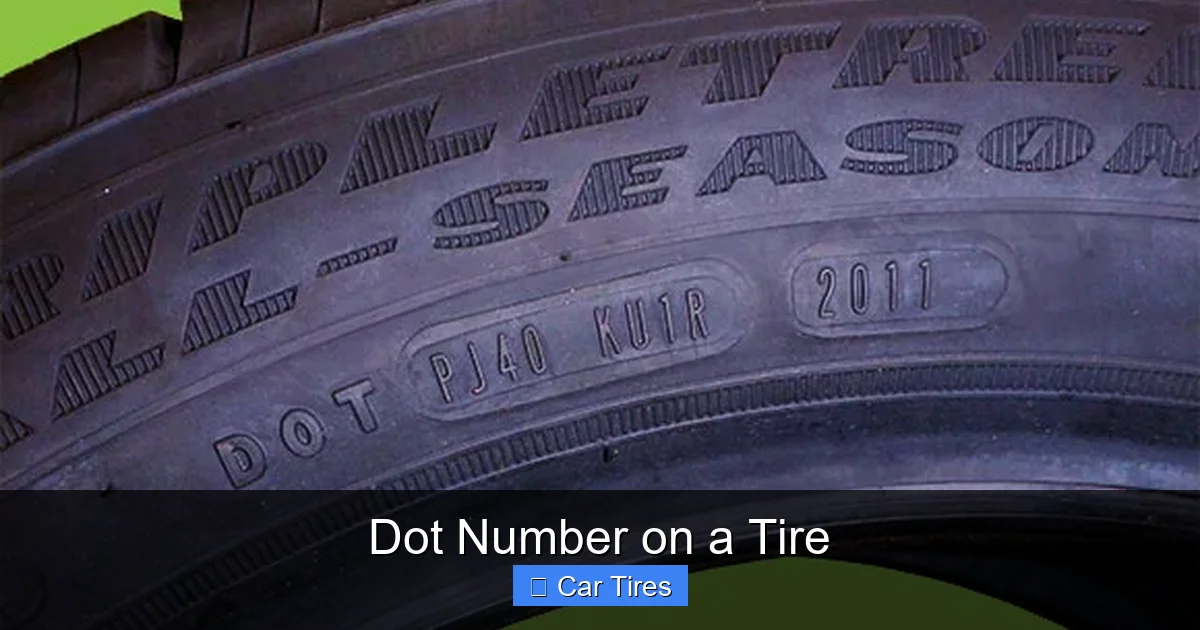
Finding the DOT number on a tire is usually straightforward, but it can be tricky if you don’t know where to look. The number is molded directly into the sidewall of the tire, often near the edge where the rubber meets the rim. It’s typically printed in raised lettering or stamped into the rubber, making it durable and long-lasting.
To locate it, start by examining the outer sidewall of the tire. Look for the letters “DOT” followed by a string of characters. The entire sequence is usually about 11 to 13 characters long, though older tires may have shorter codes. In some cases, the DOT number appears only on one side of the tire—usually the outer sidewall—so you may need to check both sides if you don’t see it right away.
For example, on a typical passenger car tire, you might find the DOT number near the bead area, close to where the tire mounts to the wheel. It’s often grouped with other markings like the tire size (e.g., P215/65R15), load index, and speed rating. Don’t confuse the DOT number with the tire identification number (TIN) used by some manufacturers for internal tracking—the DOT number is the official government-mandated code.
Tips for Locating the DOT Number
– Clean the sidewall: Dirt, grime, or tire shine can obscure the DOT number. Use a soft brush or cloth to wipe the area clean.
– Use a flashlight: In low light, the raised letters may be hard to see. A small flashlight can help illuminate the markings.
– Check both sidewalls: Some tires have the DOT number on only one side, so inspect both the inner and outer walls.
– Look near the rim: The DOT number is often positioned close to the wheel, so crouch down and look at the lower edge of the tire.
If you’re having trouble finding the DOT number, consult your vehicle’s owner’s manual or contact the tire manufacturer. Most major brands provide online guides or customer support to help you locate and decode tire markings.
How to Decode the DOT Number
Visual guide about Dot Number on a Tire
Image source: cdn.discounttire.com
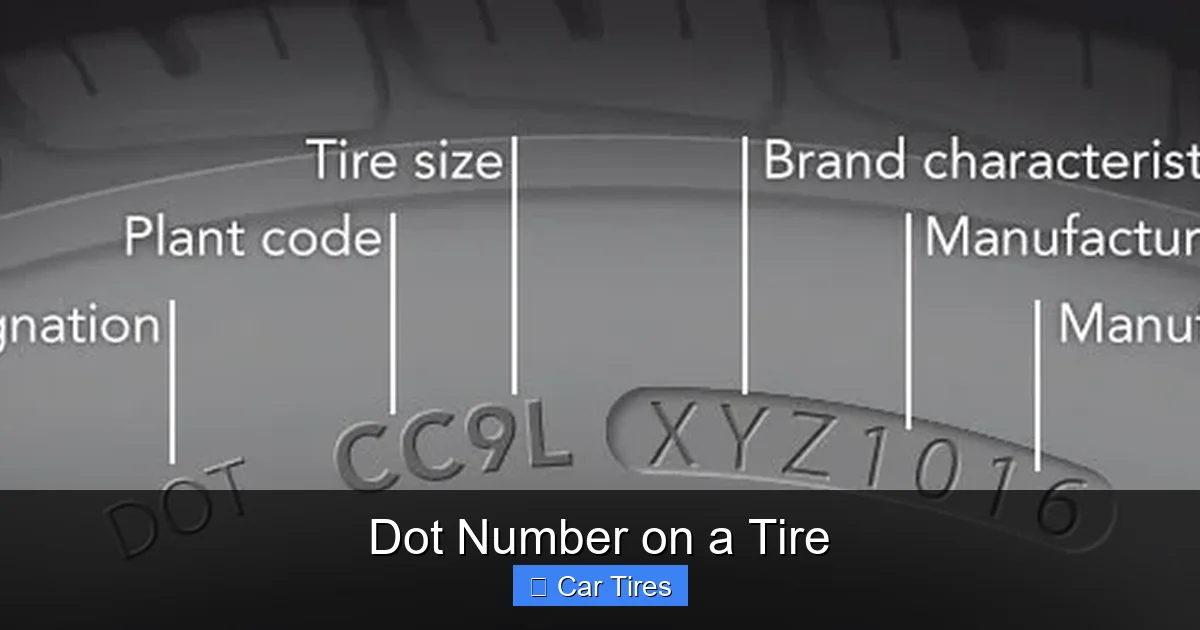
Decoding the DOT number is easier than it looks. While the full sequence contains detailed manufacturing data, the most important part for consumers is the last four digits, which indicate the tire’s production date. These four digits represent the week and year the tire was made.
For example, if the DOT number ends in “1822,” it means the tire was manufactured in the 18th week of 2022. Similarly, “0524” means the 5th week of 2024. The first two digits are the week number (ranging from 01 to 52), and the last two are the year.
Breaking Down the Full DOT Number
Let’s take a closer look at a sample DOT number: DOT U2LL LMRR 2323.
– DOT: Indicates compliance with U.S. Department of Transportation standards.
– U2LL: Manufacturer and plant code. “U2” might refer to a specific company, while “LL” could identify the factory location.
– LMRR: Tire size and type code. This part varies by manufacturer and may include details about the tire’s construction, ply rating, or intended use.
– 2323: Production date—23rd week of 2023.
While you don’t need to decode every part of the DOT number as a consumer, knowing how to read the date is essential. The rest of the code is primarily useful for manufacturers, regulators, and recall coordinators.
What If the DOT Number Has Only Three Digits?
On tires manufactured before 2000, you might see a DOT number ending in only three digits, such as “328.” This indicates the tire was made in the 32nd week of 1998. Before the year 2000, the DOT number used only the last digit of the year to save space. So “8” meant 1998, “9” meant 1999, and so on.
However, this system caused confusion as we entered the 2000s. To avoid ambiguity, the NHTSA updated the standard in 2000 to require four-digit date codes. Now, all tires made from 2000 onward use the full two-digit year format.
If you encounter a tire with a three-digit date code, it’s almost certainly over 20 years old and should be replaced immediately—regardless of tread depth.
Why Tire Age Matters More Than You Think

Visual guide about Dot Number on a Tire
Image source: thumbs.dreamstime.com
Many drivers assume that as long as a tire has good tread, it’s safe to use. But that’s a dangerous misconception. Tires degrade over time due to exposure to heat, sunlight, ozone, and flexing—even when they’re not being driven. This process, known as dry rot or aging, can cause the rubber to crack, weaken, and eventually fail.
How Tires Age
Tire aging is a chemical process. Over time, the oils and antioxidants in the rubber break down, causing the material to harden and lose elasticity. This makes the tire more prone to cracking, especially along the sidewalls and between the tread blocks. These cracks may start small but can grow into serious structural weaknesses.
Factors that accelerate aging include:
– High temperatures (parking in direct sunlight or in hot climates)
– Exposure to ozone (common in urban areas)
– Infrequent use (tires on stored vehicles age faster)
– Poor storage conditions (garages with heaters or chemicals)
Even tires with low mileage can be unsafe if they’re old. A tire that’s been sitting in a garage for 8 years may look new, but its internal structure could be compromised.
When Should You Replace Old Tires?
Most tire manufacturers and safety experts recommend replacing tires every 6 to 10 years, regardless of tread depth. The NHTSA suggests inspecting tires older than 6 years and replacing them by 10 years. Some states even require tire age checks during vehicle inspections.
To check your tire’s age:
1. Locate the DOT number.
2. Identify the last four digits.
3. Calculate how many years have passed since that date.
For example, if your tire was made in week 15 of 2018, it’s already over 5 years old in 2024. If it reaches 10 years in 2028, it should be replaced—even if the tread is still deep.
Signs of Aging Tires
Look for these warning signs:
– Cracks on the sidewall or tread
– Bulges or blisters on the tire surface
– Dry, brittle rubber that flakes when touched
– Uneven wear patterns
– Vibration or noise while driving
If you notice any of these, have your tires inspected by a professional immediately.
Legal and Safety Implications of the DOT Number
The DOT number isn’t just a technical detail—it has real legal and safety implications. In the event of a tire recall, the DOT number allows manufacturers and regulators to quickly identify affected tires and notify owners. Without this system, recalls would be far less effective, putting drivers at risk.
How Recalls Work
When a safety defect is discovered—such as a tendency to separate at high speeds—the manufacturer must issue a recall. They use the DOT number to determine which tires are affected based on production dates and plant codes. Owners are then notified by mail, and the tires are replaced or repaired free of charge.
For example, in 2021, a major tire brand recalled over 500,000 tires due to a defect that could cause sudden air loss. The recall notice included specific DOT number ranges, allowing consumers to check if their tires were included.
Legal Requirements for Tire Sales
Selling tires without a valid DOT number is illegal in the United States. Retailers must ensure that all tires they sell meet DOT standards and display the correct markings. This protects consumers from counterfeit or substandard products.
If you buy a tire without a DOT number, it may not be safe—and it could fail a vehicle inspection. Always verify the DOT number before purchasing, especially if buying online or from a private seller.
Insurance and Liability
Using tires that don’t meet DOT standards can also affect your insurance coverage. If an accident occurs due to tire failure and the tires are found to be non-compliant, your insurer may deny the claim. In legal cases, the DOT number can be used as evidence to determine whether the tire met safety standards at the time of manufacture.
Tips for Buying Tires: What to Look For
Whether you’re buying new or used tires, the DOT number should be one of your first checks. Here’s how to use it to make a smart purchase.
Check the Production Date
Always look for the last four digits of the DOT number. Avoid tires made more than 6 years ago, even if they’re new in the box. Tires sitting in a warehouse for years can still degrade.
For example, a tire made in 2017 might look new in 2024, but it’s already 7 years old—past the recommended replacement age.
Compare DOT Numbers Across a Set
When buying a full set of tires, make sure they were all made around the same time. Tires with vastly different production dates may wear unevenly and affect handling. Ideally, all four tires should be within a few weeks of each other.
Beware of Counterfeit Tires
Some counterfeit tires have fake DOT numbers that look real but don’t correspond to actual production records. Always buy from reputable dealers and verify the DOT number with the manufacturer if you’re unsure.
Ask for Documentation
Reputable sellers should be able to provide information about the tire’s origin and production date. If they can’t or won’t show you the DOT number, walk away.
Common Myths About Tire Age and the DOT Number
There are several misconceptions about tire age and the DOT number that can lead to unsafe decisions.
Myth: “If the tread is deep, the tire is safe.”
False. Tread depth doesn’t indicate structural integrity. A tire with 8/32” of tread can still be unsafe if it’s old and cracked.
Myth: “Tires last forever if stored properly.”
No. Even in ideal conditions, tires degrade over time. The rubber compounds break down after 6–10 years, regardless of use.
Myth: “The DOT number is only for recalls.”
While recalls are a key function, the DOT number also helps verify authenticity, ensure compliance, and assess tire age—critical for safety.
Myth: “Old tires are fine for spare tires.”
Spare tires age just like regular tires. A 10-year-old spare may not hold air or perform safely in an emergency.
Conclusion
The DOT number on a tire is more than just a string of characters—it’s a vital safety tool. By understanding what it means and how to decode it, you can make smarter decisions about tire purchases, maintenance, and replacements. Knowing your tire’s age helps you avoid the hidden dangers of aging rubber, ensures compliance with safety standards, and protects you in the event of a recall.
Don’t ignore the DOT number. Take a few seconds to check it the next time you’re near your tires. Look for those last four digits, calculate the age, and ask questions if something seems off. Your safety—and the safety of your passengers—depends on it.
Remember: a tire with good tread isn’t necessarily a safe tire. Age matters. And the DOT number is your best guide to knowing when it’s time to replace them. Stay informed, stay safe, and keep rolling with confidence.
Frequently Asked Questions
What does the DOT number on a tire tell me?
The DOT number identifies the tire’s manufacturer, production plant, size, and most importantly, its production date. It’s required by U.S. law for all tires sold in the country.
Where exactly is the DOT number located on a tire?
The DOT number is molded into the sidewall of the tire, usually near the edge where it meets the rim. It starts with “DOT” and is followed by up to 13 characters.
How do I read the production date from the DOT number?
The last four digits of the DOT number show the week and year of manufacture. For example, “2323” means the 23rd week of 2023.
Can I drive on tires that are over 10 years old?
It’s not recommended. Most experts advise replacing tires every 6 to 10 years, even if they have good tread, due to age-related degradation.
Are tires without a DOT number legal in the U.S.?
No. Tires sold in the United States must have a valid DOT number to meet federal safety standards. Tires without one may not be legal for road use.
What should I do if my tires are part of a recall?
Check the NHTSA website or contact your tire manufacturer with your DOT number. If your tires are recalled, you’re entitled to a free replacement or repair.
