How to Transfer a Tesla Reservation

Contents
- 1 Key Takeaways
- 2 📑 Table of Contents
- 3 Understanding Tesla Reservation Transfers: The Basics
- 4 Eligibility Criteria: Are You Even Able to Transfer?
- 5 The Step-by-Step Transfer Process: From Start to Finish
- 6 Timelines, Costs, and Financial Implications
- 7 Common Pitfalls and How to Avoid Them
- 8 What If the Transfer is Denied or Not Possible? Your Alternatives
- 9 Conclusion: Is Transferring Right for You?
- 10 Frequently Asked Questions

Waterless Car Wash Spray

Car Tool Kit Set

Car Jump Starter
Reflective Safety Triangle
Transferring a Tesla reservation allows you to pass your purchase agreement to another buyer before taking delivery. Tesla permits this process but does not guarantee approval, and there is no direct transfer fee from Tesla. Success depends on your reservation type, timing, and completing all required paperwork accurately. Always confirm current policies directly with Tesla, as rules can change.
So, you’ve put down a deposit on a shiny new Tesla, but life has thrown you a curveball. Maybe your financial situation changed, you’re moving overseas, or you simply found a different car you prefer more. The good news is that Tesla has a formal, albeit not widely advertised, process for transferring a reservation to someone else. The bad news? It’s not as simple as handing over your keys—because you don’t have any yet. This guide will walk you through every single step of how to transfer a Tesla reservation, from checking if you’re eligible to signing on the dotted line. We’ll cover the nitty-gritty details, potential costs, common reasons for denial, and what to do if the transfer doesn’t work out. By the end, you’ll know exactly how to navigate this process and protect your investment.
Key Takeaways
- Eligibility Varies: Not all reservations are transferable; typically only standard purchase agreements (not leases) for new vehicles are eligible.
- No Tesla Transfer Fee: Tesla does not charge a fee to process a reservation transfer, but state or local taxes may apply to the transaction.
- Timing is Critical: Transfers must be completed before your vehicle is assigned a VIN and enters the final delivery queue.
- Both Parties Must Agree: The new buyer must qualify for financing/leasing with Tesla and agree to the original reservation’s terms (price, configuration).
- Documentation is Mandatory: You’ll need a signed transfer agreement, ID copies, and potentially a bill of sale; Tesla provides specific forms.
- Deposit May Be Non-Refundable: Your reservation deposit typically transfers to the new buyer; if the deal falls through, you may lose it.
- Alternative Options Exist: If a transfer isn’t possible, you can often cancel (forfeiting deposit) or take delivery and sell the car privately later.
📑 Table of Contents
- Understanding Tesla Reservation Transfers: The Basics
- Eligibility Criteria: Are You Even Able to Transfer?
- The Step-by-Step Transfer Process: From Start to Finish
- Timelines, Costs, and Financial Implications
- Common Pitfalls and How to Avoid Them
- What If the Transfer is Denied or Not Possible? Your Alternatives
- Conclusion: Is Transferring Right for You?
Understanding Tesla Reservation Transfers: The Basics
First, let’s clarify terminology. When you “reserve” a Tesla, you typically pay a refundable or non-refundable deposit (often $100-$250) to secure a place in line for a specific vehicle configuration. This is not a purchase contract. Once your vehicle is ready, you’re invited to “place an order,” which involves signing a formal purchase agreement or lease contract. The transfer process applies to this purchase agreement or lease contract, not the initial reservation hold. Tesla’s official policy states that purchase agreements may be transferable prior to VIN assignment and final production, but leases are generally non-transferable. This is the first and most critical gate. You cannot transfer a lease. If you have a lease agreement, your primary options are to complete the lease and surrender the vehicle at the end, or attempt an early termination (which has financial penalties). For the rest of this article, we are focusing solely on transferring a purchase agreement.
Why Would You Want to Transfer?
People seek to transfer a Tesla reservation for various reasons. A common scenario is a change in financial circumstances—perhaps a job loss or unexpected expense makes the car unaffordable. Another is a shift in needs; maybe you reserved a Model 3 but now need an SUV and want a Model Y. Sometimes, it’s about timing. If your delivery is delayed by months and you need a car sooner, transferring your spot to someone who can wait might be a solution. For others, it’s a business decision. An entrepreneur might reserve multiple vehicles for a rental fleet but later decide to scale back. Understanding your “why” helps you communicate clearly with Tesla and the prospective buyer.
The Golden Rule: Nothing is Guaranteed
Here’s the most important thing to remember: Tesla’s transfer policy is a discretionary privilege, not a right. Even if you meet all the apparent criteria, Tesla can deny a transfer request for any reason. They are not obligated to approve it. This isn’t a used car sale where you can freely assign a contract. Tesla is selling a new vehicle directly to a consumer, and they want that consumer to be their direct customer. The transfer process exists as a customer accommodation, not a standard market mechanism. Therefore, you must proceed with caution, have backup plans, and never assume the transfer will be approved until you have written confirmation from Tesla.
Eligibility Criteria: Are You Even Able to Transfer?
Before you start looking for a buyer, you must determine if your specific reservation is eligible for transfer. Tesla evaluates this on a case-by-case basis, but several clear factors influence their decision.
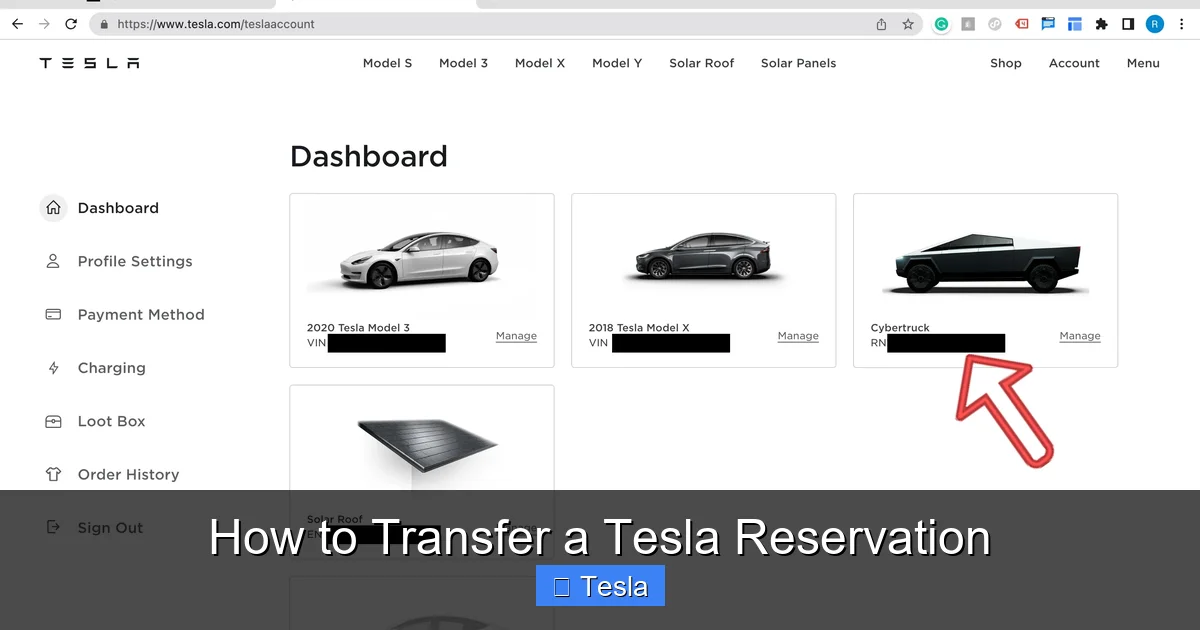
Visual guide about How to Transfer a Tesla Reservation
Image source: cdn.shopify.com
Reservation Type: Purchase vs. Lease
As stated, only purchase agreements are considered for transfer. If you signed a lease contract, your transfer request will be automatically denied. You must verify your order type. You can check this in your Tesla account under the order details. If it says “Purchase” or “Cash Purchase,” you may be eligible. If it says “Lease,” you are not. This is non-negotiable.
Vehicle Status: The VIN is the Line in the Sand
The single most important factor is the vehicle’s production status. If Tesla has assigned a Vehicle Identification Number (VIN) to your order, transfer is almost certainly impossible. A VIN assignment means the car is built, or at least scheduled for final production and allocation to your specific order. At that point, the vehicle is essentially “yours” in Tesla’s system. The transfer window closes tightly before VIN assignment. Typically, you have a brief period after your order is placed but before production begins. This window varies by model and demand. For a high-demand model like the Cybertruck, the window might be weeks or days. For a Model 3 with shorter wait times, it might be months. You must act quickly once you decide to transfer.
Geographic and Configuration Constraints
Transfers are generally only allowed within the same market and for the exact same vehicle configuration. You cannot transfer a U.S. reservation to a buyer in Europe, or a Standard Range Model 3 to a buyer who wants a Long Range. The new buyer must be purchasing the vehicle for delivery in the same country (and often the same state/province) as the original order. They must also accept the identical specs: color, wheels, interior, Autopilot/FSD package, etc. If the new buyer wants to change anything, the transfer is not possible; they would need to place their own reservation and wait in line. This limits your potential buyer pool significantly to someone who wants exactly what you ordered.
Your Account Standing
If you have a history of problematic orders—multiple cancellations, payment issues, or disputes—Tesla is less likely to approve a transfer. They are assessing the risk of the new buyer, but also your reliability as a transferor. A clean order history with on-time payments (if you financed) is beneficial.
The Step-by-Step Transfer Process: From Start to Finish
Assuming you believe you’re eligible, here is the detailed, practical process for transferring a Tesla reservation. It requires coordination between you, the buyer, and Tesla.

Visual guide about How to Transfer a Tesla Reservation
Image source: 95octane.com
Step 1: Find a Qualified Buyer
This is the hardest part. Your buyer must:
- Qualify for financing/leasing with Tesla on their own merit. You cannot “assume” your credit terms. They will need to apply for credit through Tesla’s financing portal, just as you did.
- Be willing to accept the vehicle’s exact configuration and original price. No price negotiations are allowed through the transfer; the buyer pays the agreed-upon price to you, not to Tesla. Tesla’s contract price with the new buyer remains the same as your original contract price.
- Be eligible to take delivery in the same geographic region.
- Be able to provide all standard documentation (driver’s license, insurance, etc.).
You are essentially selling your “spot in line” for a specific car. Market your transfer on Tesla enthusiast forums, Facebook groups, or local EV clubs. Be transparent about the configuration, expected delivery window (if known), and the price you want for your deposit and any additional costs you incurred (e.g., a higher deposit to secure an earlier spot).
Step 2: Obtain and Complete the Tesla Transfer Form
Contact Tesla directly to initiate the process. Do not have the buyer call. You, the original order holder, must call Tesla Customer Support or visit a Service Center/Store. Explain you wish to transfer your purchase agreement. They will either email you a specific “Assignment of Purchase Agreement” form or provide instructions to access it via your Tesla account. This form is legally binding. It will require:
- Your Tesla order number.
- Details of the new buyer (name, address, contact info, driver’s license number).
- The sale price between you and the buyer (this is separate from Tesla’s vehicle price).
- Signatures from both you and the buyer.
Critical: The buyer must also complete their own Tesla financing application and receive conditional approval during this process. Tesla will not proceed with the transfer if the new buyer cannot secure financing.
Step 3: Submit Documentation and Payment
You will need to submit:
- The completed, signed Assignment of Purchase Agreement form.
- A copy of your government-issued ID.
- A copy of the new buyer’s government-issued ID.
- Proof of the new buyer’s financing approval (if applicable).
- Any required state-specific forms (e.g., a bill of sale for the deposit transfer).
Regarding money: The financial arrangement between you and the buyer is private. Typically, the buyer pays you directly for your deposit amount plus any premium you’re charging for the transfer. This payment happens outside of Tesla’s system. Tesla will only see the new buyer as the contracting party. You must handle this exchange securely and document it (e.g., via a bill of sale) to avoid disputes. Some states may require you to collect sales tax on this private transaction; consult local regulations. For the buyer, they will pay Tesla the original vehicle price and any standard fees (destination, documentation).
Step 4: Tesla Review and Approval
Once submitted, Tesla’s finance and order management teams review the application. They verify:
- The new buyer’s creditworthiness.
- That the order is still in a transferable state (no VIN).
- That all paperwork is complete and correct.
This review can take anywhere from a few business days to over a week. Do not pester them daily, but follow up politely after 5 business days if you haven’t heard. If approved, Tesla will update the order in their system. The new buyer will receive all subsequent communications (delivery updates, financing documents). Your involvement ends here, except for ensuring you received payment from the buyer.
Step 5: Cancellation of Your Original Order
Upon approval, your original purchase agreement is formally cancelled. Your deposit, which you likely already received from the buyer, is now the buyer’s deposit with Tesla. You are completely released from the contract. Ensure you get written confirmation from Tesla that your order is cancelled and you have no further obligations.
Timelines, Costs, and Financial Implications
Understanding the “when” and “how much” is crucial for planning.

Visual guide about How to Transfer a Tesla Reservation
Image source: teslarati.com
Typical Processing Timeline
The entire process, from finding a buyer to Tesla’s approval, can take 2 to 6 weeks under ideal circumstances. The major variable is Tesla’s review time and the new buyer’s financing approval speed. If the buyer has excellent credit, financing can be instant. If there are credit complications, it can delay everything. The transfer must be completed before VIN assignment. If your car is already in production or has a VIN, the timeline collapses to zero—it’s too late. Therefore, the moment you consider transferring, you must act. Monitor your Tesla account daily for any sign of VIN assignment or a “vehicle is being prepared for delivery” message.
Direct Costs: What Tesla Charges (and Doesn’t)
Good news: Tesla does not charge an administrative or transfer fee for processing the assignment of a purchase agreement. You do not pay Tesla to transfer your order. However, there are indirect and potential costs:
- State/Local Taxes: Depending on your jurisdiction, the private sale of the “reservation/order” from you to the buyer might be considered a taxable transaction. The buyer may be responsible for paying use tax on the amount they paid you for the deposit/transfer. This is a gray area; consult a tax professional.
- Registration Fees: The new buyer will pay all standard vehicle registration fees to the state when they take delivery. You are not involved.
- Opportunity Cost: If you paid a larger deposit to get a higher position in the queue (e.g., during pre-order), that premium is what you’re selling. If you can’t find a buyer willing to pay it, you lose that advantage.
In summary, your primary financial interaction is with the buyer, not Tesla. Your goal is to recoup your deposit and possibly a transfer premium.
Financing Implications for the New Buyer
The new buyer must qualify for financing independently. Their interest rate and terms will be based on their credit score and income, not yours. If you had a pre-approval with a specific rate, that does not transfer. The buyer must go through Tesla’s credit application process from scratch. This can be a sticking point if the buyer’s credit is borderline. Suggest they check their credit score and have their financial documents ready before committing to the transfer.
Common Pitfalls and How to Avoid Them
Many transfer attempts fail due to avoidable mistakes. Here’s how to sidestep them.
Waiting Too Long: The VIN Assignment Trap
This is the #1 reason for failed transfers. People think they have weeks or months, but production can accelerate. Check your Tesla account daily. The moment you see a VIN appear, the transfer option is likely dead. If you’re on the fence about transferring, do it immediately. The moment you decide, start looking for a buyer. Delaying even a week can be fatal.
Incomplete or Incorrect Paperwork
An illegible signature, a missing ID copy, or an outdated form will cause delays or denial. Tesla’s requirements are specific. When you get the form, read it line by line. Fill it out in black ink. Ensure the buyer’s name matches their driver’s license exactly (including middle initial if used). Have both parties sign in the correct places. Double-check the order number. One typo can send the whole package back for correction, wasting precious time.
The Buyer Doesn’t Qualify for Financing
Never assume the buyer will get approved. Before you both invest significant time, have the buyer complete Tesla’s online financing application first. They can do this without a transfer form. Get a conditional approval in writing. Only then, proceed to find the transfer form and complete it. This prevents the heartbreak of having Tesla deny the transfer because the buyer’s credit wasn’t up to par.
Misunderstanding the “Price”
Clarify with the buyer: They will pay Tesla the original contract price for the car. They will pay you a separate sum for your deposit and any transfer premium. This private payment is not part of Tesla’s contract. Make this crystal clear in your own written agreement with the buyer to avoid them thinking they only owe you the deposit amount while you expected more. A simple bill of sale stating “Buyer pays Seller $X for the assignment of Tesla Order #XXXXX” protects both of you.
Ignoring State Laws on Private Vehicle Sales
Some states have specific rules about transferring a vehicle order before title exists. While the order isn’t a vehicle yet, the financial transaction might have reporting requirements. While rare for enforcement, it’s a risk. A quick search for “[Your State] private vehicle sale tax requirements” or a consult with a DMV/legal expert can clarify. It’s better to be safe than surprised with a tax bill later.
What If the Transfer is Denied or Not Possible? Your Alternatives
If you hit a wall with Tesla, or your order isn’t eligible, you still have options. They are less ideal, but they exist.
Option 1: Cancel the Order (Forfeit the Deposit)
This is the simplest but most costly path. You can cancel your Tesla purchase agreement at any time before delivery. However, you will lose your reservation deposit. If you paid $250, that’s gone. If you have a non-refundable deposit (common for some high-demand models or configurations), that’s the cost of exiting. This is a clean break with no further obligations. You simply call Tesla, request cancellation, and they refund any additional payments you may have made (like the full down payment if you paid it early), but not the deposit. This is the nuclear option.
Option 2: Take Delivery and Sell Privately
If you can afford to complete the purchase, you can take delivery of the car and then sell it on the private market. This is often the most financially viable way to get out, as you can potentially recoup the entire purchase price (or more, if the market is hot) minus depreciation from a few thousand miles. However, it comes with major hassles:
- You must register, insure, and pay sales tax on the vehicle.
- You must find a private buyer, which can take time.
- You must handle all the paperwork of a private sale (title transfer, bill of sale, etc.).
- You will likely pay a small amount of sales tax twice: once when you bought it, and the buyer pays their portion when they register it (but you don’t get that back).
This option turns you into a car dealer for a brief period. It’s more work but can minimize your net loss compared to forfeiting the deposit. Before doing this, check local laws on “flipping” a recently purchased vehicle; some states have restrictions if you sell within a very short period (e.g., 30 days).
Option 3: The “Informal” Takeover (High Risk)
Some people attempt an end-run by having the new buyer call Tesla, pretend to be them, and try to change the contact info. This is fraudulent and will fail. Tesla’s security protocols are robust. They require identity verification, and any suspicious activity will flag your account, potentially leading to cancellation and a permanent ban. Do not attempt this. The formal transfer process exists for a reason—to protect Tesla, you, and the buyer.
Post-Transfer Customization Considerations
If you succeed in transferring, the new owner inherits a brand-new Tesla. Many new owners immediately consider personalizing their vehicle. While you can’t change the core configuration (color, wheels), you can add accessories. Popular modifications include window tint, paint protection film (PPF), or a full vinyl wrap. The new buyer should be aware that these are aftermarket additions. For those interested, our guides on how much it costs to tint a Tesla Model Y or how much to wrap a Tesla Model Y provide detailed pricing and considerations. These upgrades are best done after taking delivery to avoid any factory warranty complications with the main vehicle.
Conclusion: Is Transferring Right for You?
Transferring a Tesla reservation is a viable escape hatch for many, but it’s a narrow path with strict rules. The process is designed for genuine, unforeseen life changes, not for speculative flipping. Your success hinges on three pillars: timing (before VIN), eligibility (purchase agreement only), and paperwork (flawless execution). If you meet these criteria and find a qualified buyer, you can exit your contract with minimal financial loss beyond your deposit. If you don’t, your choices are to eat the deposit or take delivery and navigate the private sale market. Always communicate openly with Tesla, get any approvals in writing, and protect yourself with a separate contract with the buyer. The electric vehicle market is dynamic, and Tesla’s policies can shift. The information here reflects current common practices, but your first and final call should always be to Tesla Customer Support to confirm the latest requirements for your specific order and region. Good luck!
Frequently Asked Questions
Can I transfer my Tesla lease?
No, Tesla does not allow the transfer of lease agreements. Lease contracts are non-transferable. Your options are to complete the lease term, pursue an early termination (which involves fees), or, in rare cases, see if the leasing company (not Tesla) offers a lease assumption program, which is uncommon.
How long does the entire transfer process take?
From finding a buyer to Tesla’s final approval, the process typically takes 2 to 6 weeks. The main variables are the new buyer’s financing approval speed and Tesla’s administrative review time. The entire process must be completed before your vehicle receives a VIN, which can happen with little notice.
Will Tesla charge me a fee to transfer my reservation?
No, Tesla does not charge an administrative or transfer fee for processing an assignment of a purchase agreement. However, you may have financial dealings with the buyer for your deposit and any premium. Additionally, your state or local government may consider the private sale of the order a taxable event, so potential sales/use tax could apply to the payment you receive from the buyer.
What happens if my car already has a VIN assigned?
If a VIN is assigned to your order, the transfer window is almost certainly closed. Tesla will almost always deny a transfer request at this stage because the vehicle is specifically allocated to you and is in the final production or delivery queue. You would then need to cancel the order (losing your deposit) or take delivery and sell the car yourself.
Is my reservation deposit refundable if the transfer is denied?
If Tesla denies the transfer request, your original purchase agreement remains in force. Your deposit is not automatically refunded; it is still held against your order. To get it back, you would need to formally cancel your order with Tesla, which typically results in forfeiture of the deposit. The deposit is only “saved” if the transfer is successfully completed and the buyer provides the funds to replace it.
Can I transfer my reservation to someone in a different state or country?
No, Tesla transfers are generally only permitted within the same sales market and delivery region. The new buyer must take delivery in the same country (and often the same state/province) as the original order. Cross-border or cross-state transfers are not allowed because of differing regulations, tax structures, and vehicle specification compliance (e.g., different charging ports or safety standards).