
How to Open the Hood on a Bmw X5

Opening the hood on your BMW X5 requires understanding its unique two-step release system. First, locate and pull the interior release lever near the driver’s footwell. Then, reach under the hood to find and slide the secondary latch to the left. Always use the prop rod securely and never force the hood. This process ensures safe access for checking oil, jump-starting, or any under-hood maintenance.
So, you need to check the oil, jump-start the battery, or just peek under the hood of your BMW X5. You pull the lever inside, hear a pop, but the hood doesn’t lift. Sound familiar? You’ve just encountered the famous (or infamous) BMW dual-latch hood system. It’s a security and aerodynamics feature that can be confusing the first time. But don’t worry. Once you know the steps, popping the hood on your X5 becomes second nature. This guide will walk you through every detail, from finding the release to securing the hood safely. We’ll cover all model years of the current generation (G05 since 2018) and previous ones (F15, E70), noting any small differences. Think of this as your friendly, detailed manual for one of the most basic yet essential tasks for any vehicle owner.
Key Takeaways
- The BMW X5 uses a dual-latch system: An interior release lever initiates the process, but a secondary manual latch under the hood must be disengaged before lifting.
- The interior release is located by the driver’s left foot: It’s a small lever on the lower dashboard/kick panel area, not a traditional pull-handle near the grille.
- Always use the factory prop rod: The hood is heavy; the metal prop rod must be securely seated in its designated clip on the radiator support to prevent it from falling.
- Never force the hood: If resistance is met after pulling the interior lever, the secondary latch is likely still engaged. Feel for it and slide it fully before lifting.
- Closing requires a two-person technique for ease: One person should hold the hood down while the other removes the prop rod and guides it down from inside the engine bay to avoid damage.
- Cold weather can stiffen the mechanism: Lubricate the latch pivot points with a silicone spray if the release feels sticky or the hood is hard to open in freezing temperatures.
- If the cable breaks, access becomes complex: Unlike some vehicles with exterior emergency releases, the X5 requires professional intervention if the primary interior cable fails.
📑 Table of Contents
- Understanding Your BMW X5’s Unique Hood Mechanism
- Step-by-Step: Opening the Hood from Inside the Cabin
- Securing the Hood Safely: The Prop Rod and Beyond
- Closing the Hood Properly: Avoiding Damage
- Troubleshooting Common Hood Issues
- Maintenance Tips for Longevity and Smooth Operation
- Conclusion: Confidence Through Knowledge
Understanding Your BMW X5’s Unique Hood Mechanism
Before we get hands-on, let’s talk about *why* it’s done this way. Most American and Japanese SUVs, like the Toyota RAV4 or Subaru Forester, often have a simple single-latch system. You pull a lever inside, and the hood pops up entirely, ready to be lifted. The BMW X5, like many European luxury vehicles, uses a two-stage system. The first stage, activated from inside the cabin, releases only the primary latch. This allows a small gap—usually less than an inch—between the hood and the grille. You must then reach through that gap and manually disengage a secondary, physical latch. This design does two things: it prevents the hood from accidentally flying open at high speeds (a huge safety plus) and creates a cleaner, more flush front-end appearance when closed. It’s engineering for safety and style. But it does mean you can’t just pull a lever and walk away. You have to complete the second step. All BMW X5 models from the E70 (2007-2013) through the current G05 (2018-present) utilize this exact principle, though the exact location of the secondary latch and the style of the prop rod may vary slightly.
The Role of the Dual-Latch System
This system is all about redundancy and safety. The primary latch is connected by a cable to your interior release lever. When you pull that lever, it pulls the cable, which rotates a lever under the hood to release the first catch. However, a secondary, mechanically locked latch remains engaged. This is your fail-safe. To open the hood fully, you must physically move this secondary latch. It’s a simple slide or push motion. On most X5s, you slide it to the left. This manual step ensures that even if the primary cable fails or is damaged, the hood won’t spontaneously open on the highway. It also means that if someone tries to tamper with your hood from the outside, they can’t just pry it open easily. They’d need to break the secondary latch, which is much harder. For you, the owner, it just means one extra 2-second step.
Comparing to Other SUVs
If you also own other vehicles, you’ll notice a difference. For instance, opening the hood on a Toyota RAV4 is typically a single-motion process: pull the lever under the dash, and the hood pops up fully. There’s no secondary latch to disengage. Similarly, the Subaru Forester’s hood release is also a straightforward single-latch design. The BMW approach is more deliberate. This is good to know because if you’re used to other cars, you might expect the X5’s hood to fly up after the first pop. It won’t. You must complete the second step. Don’t yank on the hood; you’ll strain the primary latch or bend the hood edge.
Step-by-Step: Opening the Hood from Inside the Cabin
Alright, let’s do this. Get into the driver’s seat. You’ll be performing this action from a sitting position. It’s designed this way for ergonomics and to keep the mechanism away from potential water and debris entering from the engine bay.
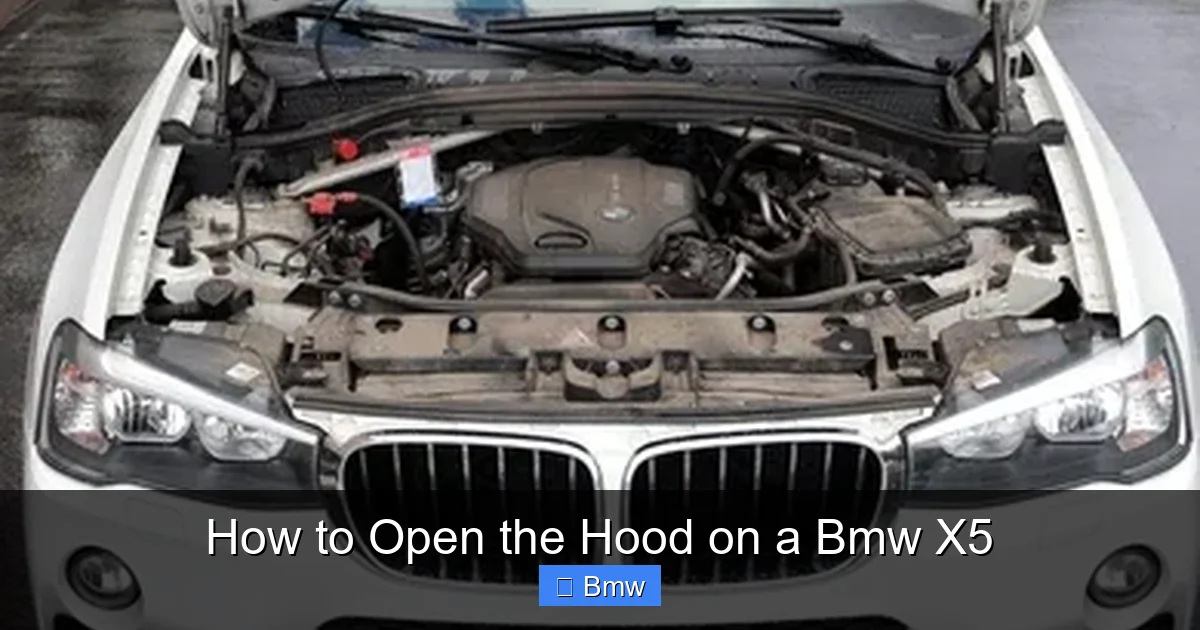
Visual guide about How to Open the Hood on a Bmw X5
Image source: shutterstock.com
Step 1: Locate the Primary Hood Release Lever
The lever is on the lower dashboard, on the left side of the steering column (for left-hand-drive models). It’s a small, rectangular plastic handle, often with a little hood icon on it. On some older E70 models, it might be a pull-ring instead of a lever. It’s not the large, obvious handle you might find on the outside of the car—BMW doesn’t put those on the X5. It’s tucked down by your left foot, near the dead pedal. If you’re having trouble, consult your owner’s manual; the diagram is usually in the “Quick Reference” section at the front. Turn your head and look down at the kick panel area. You should see it. Give it a firm, steady pull. You should hear a distinct clunk or pop sound from the front of the car. That’s the primary latch releasing.
Step 2: Move to the Front of the Vehicle
Now, get out of the car and walk to the front. Look at the gap between the hood and the BMW kidney grille. You should see a small opening, maybe ½ to 1 inch high. This is your access point to the secondary latch. If the gap is not visible, the secondary latch is still engaged. Do not try to lift the hood from here. You’ll just damage the paint or the latch.
Step 3: Disengage the Secondary Latch
This is the crucial step that trips people up. Reach your hand through the gap, sliding it along the underside of the hood panel. You’re feeling for a small metal or plastic lever. On G05/F15 models (2014+), it’s usually a flat, tab-like piece located near the center of the hood, just behind the BMW roundel badge. On the older E70, it might be a more traditional lever on the passenger’s side of the radiator support. Your goal is to slide this latch to the left. You’ll feel some resistance, then a click. On many X5s, you actually push the latch slightly inward (toward the engine) and then to the left. Others just slide left. The motion is small—maybe an inch of travel. Once you feel it disengage, you’ll often hear or feel a second, softer click. Now the hood is fully released.
Step 4: Lift the Hood and Secure It
Place your hand on the hood panel, ideally on a reinforced edge or the BMW roundel area (it’s sturdy there). Lift the hood firmly upward. It’s heavy, so use your legs, not your back. As it rises, you’ll see a prop rod clipped to the underside of the hood or attached to the radiator support. Unclip it and insert the hooked end into the slot on the radiator support. There is usually only one correct slot. Make sure the prop rod is seated deeply and the clip is secure. A improperly seated prop rod can allow the hood to fall, causing severe damage or injury. Give the hood a gentle push down to test that the prop rod is holding it. Now you have full access to the engine bay.
Securing the Hood Safely: The Prop Rod and Beyond
You’ve opened it. Great. But securing it properly is just as important as opening it. A falling hood can crack the windshield, dent the roof, or cause serious injury.

Visual guide about How to Open the Hood on a Bmw X5
Image source: i.ytimg.com
Identifying the Correct Prop Rod Slot
On all BMW X5 models, the prop rod has a specific mounting point on the radiator support (the metal frame directly behind the grille). It’s usually a round hole or a slotted bracket. There is often a plastic cap or guide to help you seat it. Do not, under any circumstances, try to hold the hood up with your hand while working under it. The weight is significant (the hood alone can weigh 40-50 pounds), and muscle fatigue happens quickly. The prop rod is your only safe bet. If your prop rod is missing or broken, you must replace it immediately. You can order a genuine BMW part or a quality aftermarket equivalent. Never use a wooden stick or a piece of pipe as a makeshift prop rod; it can slip or break.
Wind and Weather Considerations
If it’s windy, be extra cautious. The hood acts like a sail. Ensure the prop rod is in the deepest part of its slot. On some models, there is a secondary safety clip on the prop rod itself that locks it in place. Engage that if available. Also, be mindful of rain. If you open the hood in the rain, water will drip directly onto the engine and into the cabin air intake (which is often right behind the hood seal). It’s usually fine, but be aware. If a sudden downpour starts, close the hood promptly to protect sensitive electronics.
Closing the Hood Properly: Avoiding Damage
Closing the hood seems simple—just let it drop, right? Wrong. That’s the fastest way to misalign the hood, bend the latch, or crack the paint. BMW hoods are precisely aligned at the factory.

Visual guide about How to Open the Hood on a Bmw X5
Image source: shutterstock.com
The Two-Person Method (Recommended)
The best way to close the X5 hood is with two people. Here’s the process: Person A stands at the front of the car, holding the prop rod with one hand and the edge of the hood with the other. They gently lift the hood a few inches off the prop rod to relieve pressure. Person B gets inside the car and pulls the interior release lever all the way back to its starting position. This re-engages the primary latch mechanism and prepares it to catch. Person A then slowly, carefully lowers the hood. They should guide it down, letting it fall the last 6-12 inches from about knee height. The weight of the hood will cause the primary latch to snap shut with a solid THUNK. Do not slam it down. Do not push it down from the front. Let gravity do the work after guiding it into place. Once it’s closed, Person A should pull up on the front edge of the hood to confirm the primary latch is fully engaged. It should not lift more than a millimeter.
Solo Closing Technique
If you’re alone, it’s trickier but doable. First, ensure the interior release lever is fully returned to its starting position. Then, with one hand, hold the prop rod and lift the hood slightly off it. Use your other hand to grab the front edge of the hood. Slowly lower it, controlling it with both hands. As it nears the closed position, you may need to let go of the prop rod (it will dangle) and use both hands to guide the hood down the final few inches. Be careful not to let the hood fall onto the prop rod, which can bend it. Once closed, check the latch by trying to lift the front edge. If it moves at all, the primary latch didn’t catch. You’ll need to repeat the process, sometimes giving the front of the hood a gentle downward tap with the palm of your hand to help it seat.
Troubleshooting Common Hood Issues
What if you pull the lever, hear the pop, but can’t find the secondary latch? Or the hood won’t stay up? Let’s diagnose.
“The Hood Pops but Won’t Lift”
This is the most common issue. The primary latch released, but the secondary latch is still engaged. You must find it. The gap might be smaller than you expect. Use a flashlight. On G05 models, the secondary latch is often behind a small rubber flap or seal to improve aerodynamics. Gently peel that back. The latch tab is usually shiny metal. You need to slide it firmly to the left. If it’s stuck, try pushing it inward slightly first. If it’s frozen due to corrosion or lack of lubrication, a little penetrating oil (like WD-40) sprayed on the latch pivot points from above (with the hood slightly ajar) can help after a few minutes. Never force it with excessive strength; you can break the plastic lever.
“The Hood Won’t Stay Up / Prop Rod Won’t Clip”
First, confirm you’re using the correct slot. There is usually only one. If the prop rod won’t insert, the hood may not be high enough. Lift the hood a bit higher. If the slot is damaged or the prop rod clip is broken, you have a safety issue. Do not use the vehicle until fixed. The prop rod or its bracket must be replaced. This is a rare but possible failure point on high-mileage X5s.
“The Interior Release Lever is Loose or Does Nothing”
If the lever feels loose and has no tension, or pulls all the way without a pop, the primary hood release cable is likely broken or disconnected. This is a more serious issue. On the X5, this cable runs from the lever, through the firewall, and to the primary latch under the hood. Repair often requires removing parts of the cowl panel or even the grille to access the latch and cable. This is not a typical DIY job for most people. It requires diagnostic skill and sometimes special tools. At this point, you should seek a professional mechanic or a BMW specialist. Interestingly, some other vehicles, like certain Nissan Altima models, have an exterior emergency release cable under the grille. The BMW X5 does not have this feature. There is no way to open the hood from the outside if the interior cable fails. This is a key difference in design philosophy.
“The Secondary Latch is Stuck”
If you can’t move the secondary latch tab, it’s likely corroded. Try spraying a silicone-based lubricant (not WD-40 for long-term) directly onto the latch mechanism while working the tab back and forth. Let it sit. In extreme cold, the plastic components can contract and bind. Warming the area with a hair dryer (on low, safe setting) for a minute can help. Never use excessive force or tools like screwdrivers to pry it, as you’ll break the plastic housing.
Maintenance Tips for Longevity and Smooth Operation
A little preventive care keeps your hood mechanism working perfectly for years.
Regular Lubrication
Once or twice a year, especially before winter, inspect the hood latch areas. With the hood open, locate the primary latch (under the hood, attached to the radiator support) and the secondary latch. Use a silicone spray lubricant (e.g., 3M Silicone Spray) on all pivot points and sliding surfaces of both latches. Also, lubricate the cable where it enters the latch housing. This prevents rust and keeps the action smooth. Avoid petroleum-based products like regular WD-40 for long-term use, as they can attract dust and dry out.
Check the Prop Rod and Clips
Every time you open the hood, do a quick visual check of the prop rod. Ensure the rubber boot isn’t torn, the metal isn’t bent, and the clip on the end is intact. Also, check the slot on the radiator support for cracks. A failing prop rod is a silent hazard.
Inspect the Cable
If you notice increasing slack in the interior release lever or a feeling of disconnection, have the cable inspected. It runs from the lever, through the firewall (often behind the glovebox or under the dash), and to the latch. A mechanic can check for fraying or corrosion at the ends.
Clean the Latch Areas
When washing your car, don’t neglect the area around the hood seal and the latch. Dirt and grime can work their way into the mechanisms. A gentle rinse with a hose and a soft brush around the grille and hood edge is beneficial. Just avoid directing high-pressure water directly into the latch openings, as it can force dirt deeper.
Conclusion: Confidence Through Knowledge
Opening the hood on your BMW X5 isn’t as instinctive as on some other SUVs, but it’s a simple two-step dance once you know the steps. Remember: pull the interior lever, then find and slide the secondary latch under the hood. Always use the prop rod. Close it gently with a two-person method if possible. By understanding this dual-latch system, you empower yourself to perform basic checks—oil level, coolant, battery terminals—without hesitation. You also gain the knowledge to diagnose common problems like a sticky latch or a broken cable. Treat your hood mechanism with a little annual lubricant, and it will serve you reliably for the life of the vehicle. Now, go forth and check that oil with confidence. Your X5’s engine bay is waiting.
Frequently Asked Questions
What if I pull the interior lever but the hood doesn’t pop at all?
First, ensure you’re pulling the correct lever—it’s on the lower left dash, not the trunk release. If it feels loose or has no resistance, the primary release cable is likely broken or disconnected. This requires professional repair as there is no external emergency release on the X5. If the lever feels firm but there’s no pop, the cable may be adjusted incorrectly or the primary latch is seized. A technician can diagnose this.
Where exactly is the secondary latch located on a BMW X5?
It’s centrally located under the hood, just behind the BMW roundel badge on the grille. After pulling the interior lever and creating a small gap, reach through that gap and slide your hand along the underside of the hood panel toward the center. You’ll find a small metal or plastic tab. On most models (G05/F15), you push it inward slightly and then slide it to the left until it clicks.
Can I open the hood on my BMW X5 if the battery is dead?
Yes. The hood release mechanism is purely mechanical and does not rely on battery power. You can pull the interior lever and disengage the secondary latch even with a completely dead battery. This is crucial for jump-starting, as you need hood access to reach the battery or engine bay jump-start points.
My hood won’t stay up even with the prop rod. What’s wrong?
The prop rod must be fully seated in its designated slot on the radiator support. Ensure you’re using the correct slot (there’s usually only one). If the slot is cracked or the prop rod’s clip is broken, it won’t hold. Also, make sure the hood is lifted high enough for the prop rod to reach. A damaged prop rod or bracket must be replaced immediately for safety.
Is it normal for the hood release to feel stiff in cold weather?
Yes, it can be. Cold temperatures can cause lubricants to thicken and plastic components to contract, making the latch action feel gritty or resistant. This is usually temporary. If stiffness persists after the car warms up, spray a silicone lubricant on the latch pivot points. Avoid forcing a stuck latch; warm it gently with a hair dryer if needed.
What’s the difference between opening a BMW X5 and an SUV like a Toyota RAV4?
The key difference is the dual-latch system. A Toyota RAV4 typically has a single-latch system: pull the interior lever, and the hood pops up fully and stays up on its own hinges (or with a simple prop). The BMW X5 requires a second manual step to disengage a secondary latch after the initial pop. This makes the X5’s process slightly more involved but is a deliberate safety and design feature.
