
Does the Bmw X7 Have a Third Row?

Yes, the BMW X7 does offer an available third-row seat, positioning it as BMW’s flagship 3-row luxury SUV. However, this third row is best suited for children or occasional adult use due to its limited legroom and headroom compared to dedicated family haulers. The third row is not standard on all trims and often requires selecting a higher package or specific model. While it provides flexibility for carrying up to seven passengers, real-world usability involves trade-offs in cargo space and overall adult comfort. We break down everything you need to know about the X7’s third-row capability, its competitors, and who it’s truly designed for.
So, you’re eyeing the BMW X7. You love the idea of its imposing presence, its sumptuous interior, and that quintessential BMW driving feel. But you also need to haul more than just groceries and a couple of golf clubs. You need to know: does the BMW X7 have a third row? It’s the million-dollar question for families, carpoolers, and anyone who regularly hosts guests. The short answer is yes, but the full answer is a fascinating dive into what “having a third row” really means in the context of a German luxury flagship. This isn’t a boxy, space-maximizing people mover; it’s a BMW first and a 3-row SUV second. Let’s pull back the leather-and-wood trim and explore every detail.
Key Takeaways
- The BMW X7 does have an available third-row seat, but it is not standard on all models. It is typically found on the xDrive40i, xDrive50i, and Alpina XB7 trims, often as part of a package or included feature.
- The third row is compact and most suitable for children or smaller adults on short trips. Legroom and headroom are significantly less than the first two rows, making it a “plus-one” or occasional-use space rather than a primary passenger area.
- Opting for the third row reduces available cargo space dramatically when the seats are in use. With the third row up, storage behind it is minimal, suited for small bags or groceries, not for family luggage.
- Compared to dedicated 3-row rivals like the Mercedes-Benz GLS or non-luxury leaders like the Honda Pilot, the X7’s third row is less spacious. Its strength lies in luxury, tech, and driving dynamics, not maximizing passenger volume in the back.
- The third-row seats are power-folding in most configurations, offering convenience. They are also equipped with ISOFIX child seat anchors, making them practical for families with young kids.
- Choosing the third-row option impacts pricing and may bundle other features. It’s crucial to check specific model year configurations as availability and standard features can change.
- For buyers whose primary need is a spacious, comfortable third row for adults, other SUVs may be better. The X7 is ideal for those who prioritize brand prestige, driving experience, and a luxurious cabin, accepting a compromise on rear passenger space.
📑 Table of Contents
- The BMW X7’s Third-Row Seating: The Full Breakdown
- How the X7’s Third Row Stacks Up Against the Competition
- Configurations, Packages, and Pricing: Getting What You Need
- Practical Considerations: Is the Third Row Actually Usable?
- The Verdict: Who Is the X7’s Third Row For?
- Conclusion: The Final Word on the BMW X7’s Third Row
The BMW X7’s Third-Row Seating: The Full Breakdown
Let’s start with the absolute basics. The BMW X7 is BMW’s largest SUV, introduced in 2019. Its mission is to compete with the Mercedes-Benz GLS-Class and Audi Q8 while offering something distinct: a blend of massive size, cutting-edge technology, and the sporty character BMW is known for. To compete in the full-size luxury SUV segment, a third row is practically a requirement. BMW delivered, but with its own signature approach.
Availability Across Model Years and Trims
For the current generation (launched for the 2020 model year and refreshed for 2023), the third-row seating is not a universal standard. This is a critical point for shoppers. On the base xDrive40i model, the third row was initially an optional extra, bundled within a “Premium” or “Convenience” package depending on the year. For the more powerful xDrive50i and the high-performance Alpina XB7, the third row has typically been included as standard equipment. However, BMW’s packaging strategies can be complex.
For example, on some model years, selecting certain packages (like the M Sport package) might not affect third-row availability, but choosing a specific wheel and tire package could impact it due to suspension changes affecting load capacity or interior packaging. The golden rule: always check the window sticker (Monroney label) of the specific vehicle you’re looking at. Look for the “Seats” section. It will explicitly state “Third Row Seats” as either standard or optional. If you’re buying used, a call to the dealer with the VIN can confirm the exact build specifications. Don’t assume a used X7 has a third row just because it’s the largest BMW SUV—many were built as luxurious 5-seaters.
Dimensions and Legroom: The Hard Truth
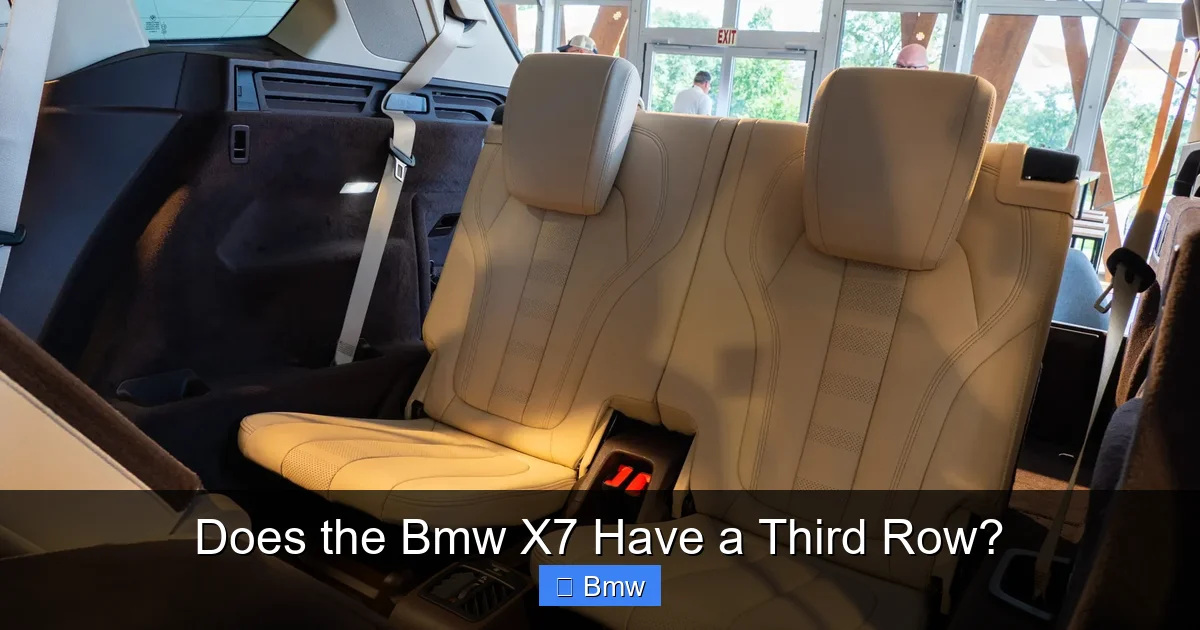
This is where the rubber meets the road, or rather, the knees meet the front seats. The BMW X7’s wheelbase is a generous 122.2 inches, which is long. But much of that length is dedicated to a massive engine bay, a plush first-row cabin, and a generous second row. The result for the third row? It’s functional, but not generous.
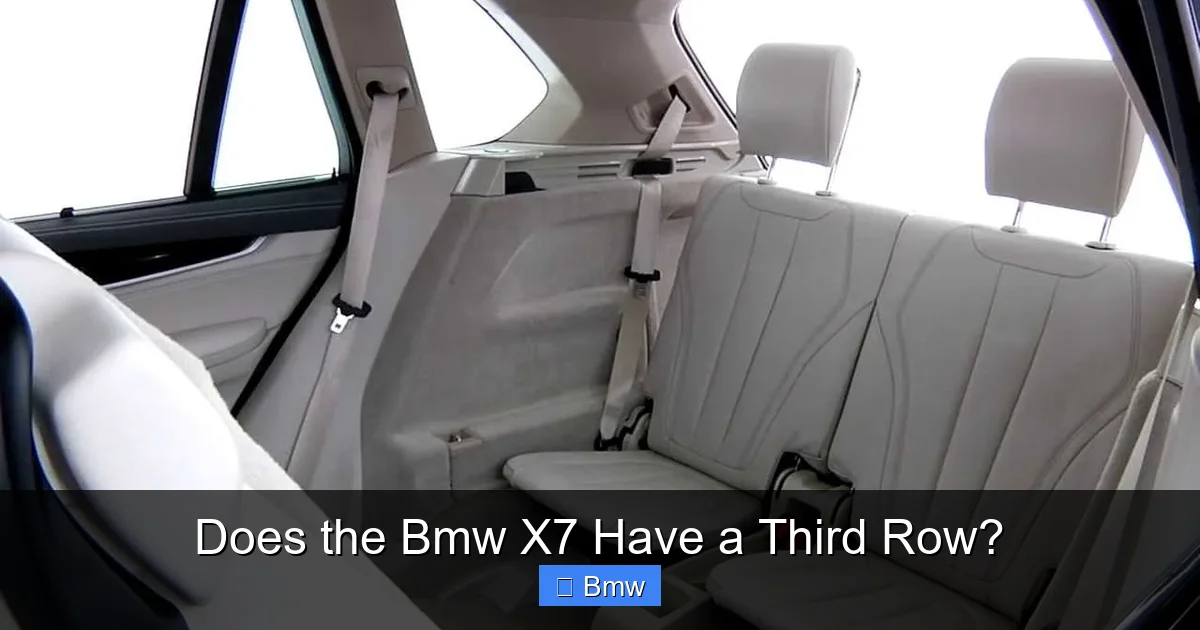
Let’s talk numbers. For the current (G07) generation, BMW quotes about 27.5 inches of legroom in the third row. That’s a usable figure for children and average-sized adults for short journeys (think school runs or quick trips to the airport). However, for adults on a longer highway cruise, that space will feel tight. The seat cushion is also positioned relatively high off the floor, which can lead to a “knees-up” seating position that isn’t ideal for long-haul comfort. Headroom is adequate for most but can become an issue if the panoramic sunroof shade is closed and the second-row seats are reclined (a common luxury feature).
When you slide the second-row seats fully forward to maximize third-row space, you sacrifice a tremendous amount of second-row legroom, which can make the middle row passengers feel cramped. This is the eternal trade-off in any 3-row SUV that isn’t designed primarily as a van substitute. The X7’s third row is a “plus” space, not a primary living space. For context, a Honda Pilot offers nearly 31 inches of third-row legroom, a significant difference that translates directly to comfort. If you regularly need to transport six or seven adults, the X7 should be on your “test drive and measure” list, not your automatic “yes” list.
Comfort and Features in the Back
BMW didn’t completely forget about the third-row occupants. The seats themselves are individually sculpted and padded, offering decent side bolsters. They are power-folding as part of the standard power tailgate system, which is a huge convenience. You can fold them flat into the floor via buttons in the cargo area, the third-row door sill, or (in most models) through the iDrive infotainment system. This creates a massive, flat load floor.
Each third-row seat has its own cupholder and a small storage bin. More importantly, they are equipped with ISOFIX child seat anchors. For families with young children in booster or convertible seats, this is a non-negotiable feature, and BMW includes it. There are also dedicated air vents for the third row, usually located on the rear of the center console or in the B-pillar, providing climate control to the back. USB charging ports are typically available as well, though their number and location (some may be in the cargo area side panels) vary by model year and package. The overall ambiance is luxurious for a third row—soft-touch materials, ambient lighting, and the same high-quality switchgear as the rest of the cabin. You’re not sitting in a penalty box; you’re in a slightly cozier, slightly less spacious version of a BMW.
How the X7’s Third Row Stacks Up Against the Competition
Understanding the X7’s third row in a vacuum is useful, but its real value is determined by how it compares to its rivals. The luxury 3-row SUV segment is crowded, and each player makes a different compromise. Let’s see where the X7 lands.
Visual guide about Does the Bmw X7 Have a Third Row?
Image source: i2.wp.com
vs. The German Rivals: Audi Q8 and Mercedes GLS
The Audi Q8 is an interesting case. It’s marketed as a “coupé SUV” with a sloping rear roofline. Does the Audi Q8 have a 3rd row? The answer is technically yes, but it’s arguably even more compromised than the X7’s. The Q8’s third row is truly an emergency-use only space, often criticized for being almost unusable for anyone over a certain height due to the aggressive roofline. The BMW X7, with its more traditional boxy SUV shape, wins on third-row headroom and overall usability against the Q8. If third-row space is a priority, the Q8 should likely be crossed off your list.
The Mercedes-Benz GLS-Class is the X7’s most direct and formidable competitor. The GLS has long been the benchmark for spacious, luxurious 3-row SUVs. Its third row is generally considered more spacious and comfortable for adults than the X7’s. The GLS offers more legroom and a more natural seating position. However, the X7 counters with sharper, more engaging driving dynamics—the GLS can feel floaty and comfortable, while the X7 feels more connected and agile for its size. So, the choice becomes: prioritize maximum third-row space and isolation (GLS) or prioritize driving engagement and a sportier cabin feel (X7)?
vs. The Luxury Crossover Leader: Lexus TX
Lexus has recently entered the fray with the all-new TX, a 3-row crossover designed specifically to challenge the GLS and X7. Does Lexus have a 3-row SUV? Absolutely, and the TX is their flagship. Early reviews suggest the Lexus TX’s third row is competitive, possibly even edging out the X7 in terms of space and ease of access. Lexus also emphasizes hybrid powertrains. The X7’s advantage remains in its driving character and interior tech (iDrive vs. Lexus’s newer system). For a buyer cross-shopping, the TX is a serious contender that forces you to test all three back rows back-to-back.
The Non-Luxury Reality Check: Nissan Pathfinder & Kia Telluride
Here’s where the X7’s compromises become starkly clear. Mainstream brands have mastered the spacious, practical 3-row SUV. The Nissan Pathfinder and Kia Telluride are standout examples. Both offer third rows that are genuinely usable for adults on long trips, with more legroom and easier access (the Pathfinder has a more traditional, easy-step-in design). Their cabins are plush and well-equipped, but they lack the ultimate prestige, the silky-smooth turbocharged/straight-six engines (in most trims), and the cutting-edge tech interfaces of the X7. If your primary mission is to carry seven people comfortably and efficiently, spending X7 money on a loaded Telluride or Pathfinder Platinum could be a smarter, more practical choice. The X7 is a luxury purchase first, a people-hauler second. You can read more about the practical space in models like the Nissan Pathfinder’s third-row seating to see the contrast.
Configurations, Packages, and Pricing: Getting What You Need
Navigating BMW’s option list is a rite of passage. To get that third row, you need to be strategic. It’s rarely a standalone, $1,000 option; it’s usually embedded in a package.
Visual guide about Does the Bmw X7 Have a Third Row?
Image source: i.ytimg.com
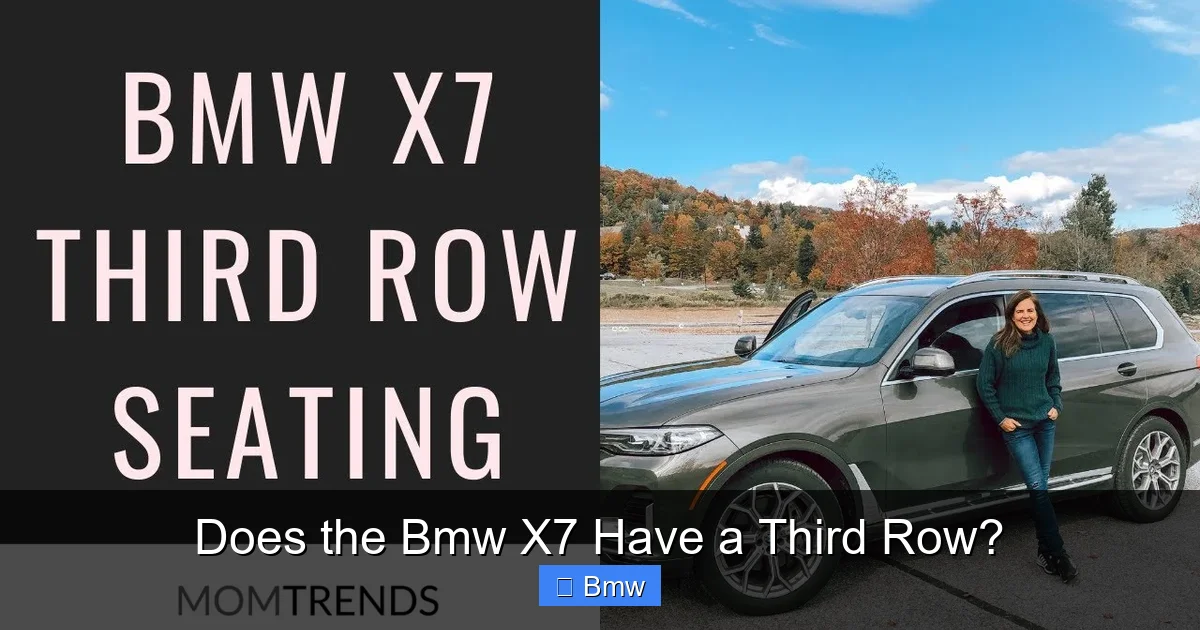
Which Trims Offer It?
As mentioned, for the latest models:
- BMW X7 xDrive40i: Third row is typically optional, bundled in the Premium Package or a similar convenience package. You must select this package to get the 7-seat layout. Without it, you get a vast 5-seat cargo area.
- BMW X7 xDrive50i: The third row is standard equipment. This model comes with the more powerful V8 engine.
- Alpina XB7: The high-performance version also includes the third row as standard.
For the previous (2019-2022) model years, the structure was similar but package names might differ (e.g., “Premium Package” vs. “Convenience Package”). Always verify.
The Cost of the Extra Row
If you’re looking at a new xDrive40i, the package that includes the third row (and a host of other features like a heated steering wheel, premium sound system, etc.) can add $5,000 – $7,000 to the MSRP. When you consider the base price of an X7 xDrive40i starts around $80,000, this is a significant 6-9% premium. For the xDrive50i buyer, you’re already paying for it, but your starting price is closer to $100,000. This pricing philosophy underscores BMW’s view: the third row is a premium convenience, not a core volume seller. They expect most X7 buyers to prioritize the immense 5-seat luxury space.
Seating Configurations: 6 or 7?
Here’s a key nuance. The X7’s third row is a 2-seat bench. Combined with the standard second-row 3-seat bench, you have a 2-3-2 configuration, totaling 7 seats. However, BMW offers a popular optional second-row captain’s chairs configuration. This replaces the 3-seat bench with two individual, Otttan-style seats with a large center console. This transforms the X7 into a 2-2-2 six-seater. This is a hugely popular option for executives or adults who value personal space and access to the third row (the aisle between the captain’s chairs makes it much easier to reach the back). The captain’s chairs are a standalone option, often costing several thousand dollars, and they preclude having a third-row middle seat. So, you must choose: maximum passenger capacity (7 seats) or maximum second-row comfort and third-row access (6 seats).
Practical Considerations: Is the Third Row Actually Usable?
Let’s move from specs to real life. How does this third row perform when you actually have to use it?
Visual guide about Does the Bmw X7 Have a Third Row?
Image source: i.ytimg.com
Cargo Space: The Great Trade-Off
This is the single biggest practical impact. With the third row upright and in place, the cargo volume behind it is tiny. We’re talking about 11 to 13 cubic feet, depending on model year and seat position. That’s enough for a few roller bags or a week’s worth of groceries in bags, but not for a family vacation’s luggage. To carry any significant cargo, you must fold the third row flat into the floor. This is a power-operated, one-touch process, but it means you’re then down to a 5-seater with a cavernous cargo hold (over 48 cubic feet). The lesson: the X7 is either a 7-seater with almost no cargo, or a 5-seater with massive cargo. It cannot do both simultaneously in a meaningful way. For families where the third row is occasionally used *and* you need to carry gear, this is a major planning headache. Compare this to a Kia Sportage or even a minivan, where you get usable space in both configurations.
Access: The Climb Aboard
Getting into the third row requires tilting and sliding the second-row seats forward. The process is motorized and controlled via a button on the side of the seat or the door pillar. It’s smooth and convenient, but the opening created is narrow, especially if you have the captain’s chairs installed (the aisle is wider). The step-up into the third row is tall due to the X7’s tall body and the high seat cushion. It’s not a graceful entry for older adults or those with mobility issues. The seat itself is positioned relatively high, which helps visibility but makes the climb a bit of a hike. Once you’re in, the view forward is good over the second-row seats.
Real-World Family Use Cases
So, who is this third row *for*?
- The School Carpool: Perfect. Two kids in the third row for a 15-minute ride to school. They can get in and out easily at the curb.
- Weekend Trips with Grandparents: Possible. Put the shorter grandparents in the third row for a 2-hour drive. They’ll be okay, but might appreciate a stop to stretch.
- Cross-Country Family Vacation with 7 Adults: Not recommended. The third-row passengers will be complaining after the first state line. The front and second-row passengers will be sacrificing comfort to accommodate them.
- Occasional Adult Guests: Fine. For a dinner out or a trip to the theater, it’s a useful “in a pinch” seat.
The X7’s third row excels at handling “plus-one” situations, not as a permanent, daily-use space for full-sized adults.
The Verdict: Who Is the X7’s Third Row For?
After all this analysis, we can draw a clear profile of the ideal buyer for a BMW X7 with a third row.
The Profile: Luxury First, Space Second
You should choose the X7 with the third row if:
- Your primary desire is a supremely luxurious, tech-laden, and dynamically excellent large SUV.
- You occasionally (not daily) need to transport 6 or 7 people.
- Those third-row passengers are predominantly children, teens, or smaller adults.
- You value the BMW badge, driving experience, and interior ambiance more than maximizing every cubic inch of passenger volume.
- You are willing to accept the cargo space compromise when the third row is in use.
- You often travel with 5 or fewer people and prioritize massive, plush 5-seat capacity.
Who Should Look Elsewhere?
You should strongly consider alternatives if:
- Transporting 6-7 adults comfortably on a regular basis is your top priority.
- You need usable cargo space and a full passenger load simultaneously.
- Easy, van-like access to the third row is essential (think Chevrolet Equinox or minivan ease).
- Your budget would be better spent on a loaded mainstream 3-row SUV like a Telluride, Palisade, or Pathfinder, which offer more space for less money.
- You are looking at the base xDrive40i and don’t want to pay for a package bundle you might not fully use.
The X7’s third row is a feature of convenience and flexibility, not a volume-selling champion. It allows BMW to check the “3-row SUV” box for its flagship model, but the engineering philosophy is clear: the driver and first-row experience is paramount. The third row is a thoughtfully designed, but space-constrained, bonus.
Conclusion: The Final Word on the BMW X7’s Third Row
To circle back to our original question: does the BMW X7 have a third row? Yes, it absolutely does. It’s available, it’s power-operated, it’s comfortable for smaller occupants, and it comes with the expected luxury features. However, it is not the most spacious third row in its class by any measure. It is a classic example of a compromise made in service of a greater priority—in this case, the X7’s sleek, road-hugging proportions, athletic driving dynamics, and an opulent first- and second-row cabin.
Your decision should hinge on honest self-assessment. If you test drive an X7 and fall in love with its feel, its tech, and its presence, and you think “I could put the kids back there sometimes,” then the third-row X7 is a fantastic, if expensive, choice. But if you test drive it, struggle to fit your adult friends in the back, and then hop into a Mercedes GLS or a Kia Telluride and feel an immediate difference in third-row space, your priorities are clear. The X7 is a masterpiece of luxury engineering that happens to have a third row. It is not a purpose-built, space-maximizing family shuttle. Know what you’re buying, measure the space with your own family, and you’ll know if this particular third row is the right fit for your life.
Frequently Asked Questions
Is the BMW X7’s third row comfortable for adults?
It is functional for adults of average height on shorter trips (under an hour or two). However, legroom and headroom are limited compared to dedicated 3-row SUVs, making it best suited for children, teens, or occasional adult use. Taller adults will find it cramped on longer journeys.
How much cargo space is left behind the X7’s third row?
With the third-row seats upright and in use, cargo volume is very limited, typically around 11-13 cubic feet. This space is suitable for a few small bags or groceries but not for family luggage. To carry any significant cargo, you must fold the third row flat, converting the vehicle into a 5-seater with a large cargo area.
Can I get the third row on the base BMW X7 xDrive40i?
Yes, but it is not standard. On the xDrive40i, third-row seating is almost always bundled within a higher-cost option package, such as the Premium or Convenience Package. You must select this package to get the 7-seat configuration. Always check the specific vehicle’s window sticker to confirm.
Does all-wheel drive affect the availability of the third row?
No. For the X7, all-wheel drive (xDrive) is standard on all models in North America. The availability of the third row is determined by the trim level (xDrive40i vs. xDrive50i) and selected option packages, not by the drivetrain. All xDrive models can be configured with or without a third row based on the package.
What is the difference between the 7-seat and 6-seat configurations?
The standard 7-seat layout uses a 3-person bench seat in the second row and a 2-person bench in the third row (2-3-2). The optional 6-seat layout replaces the second-row bench with individual captain’s chairs (2-2-2). This provides more luxurious, separated second-row seating and a wider aisle for easier access to the third row, but you lose the middle second-row seat, reducing total capacity by one.
How easy is it for passengers to access the third row?
Access is motorized and convenient via buttons. The second-row seats slide and tilt forward automatically to create an opening. The ease of entry depends on the second-row configuration; the aisle is wider with captain’s chairs. The step up into the tall X7 is considerable, which may be challenging for some, but the process itself is smooth and requires minimal physical effort from the person entering.
