
How to Lock Tesla with Key Card

Locking your Tesla with the key card is a simple, secure process that works as a reliable backup to your phone key. Just hold the card near the door handle and wait for the confirmation sounds and lights. This guide covers everything from the basic steps to advanced tips, ensuring you can always secure your vehicle confidently.
Key Takeaways
- The Tesla key card uses NFC technology: Tapping it against the driver’s door handle sends a secure, encrypted signal to lock or unlock the vehicle, similar to how some traditional key fobs operate in other brands.
- Always verify the lock engaged: Listen for the double horn chirp and watch for the flashing turn signals or handle lights to confirm the car is locked, preventing accidental unlocks.
- Key card battery life is finite: The CR2032 battery typically lasts 1-2 years; a low battery can cause intermittent failures, so replace it proactively when range decreases.
- Keep your key card separate from electronics: Strong magnets or metal objects can interfere with the NFC signal, so store it in a dedicated pocket or wallet slot.
- Use the Tesla app as your primary and backup: While the key card is essential, the smartphone app offers the most convenience and remote functionality for daily locking.
- Enable ‘Pin to Drive’ for layered security: This 4-digit PIN must be entered on the touchscreen before driving, protecting against unauthorized use even if the key card is stolen.
- Store a spare key card securely: Keep one card with you and another in a safe, known location (like a home safe) to avoid being locked out if the primary card is lost or damaged.
📑 Table of Contents
- Your Tesla Key Card: More Than Just a Plastic Card
- The Simple, Step-by-Step Process to Lock Your Tesla
- Understanding the Technology Behind the Tap
- Advanced Features and Customizations Related to Locking
- Troubleshooting: When Your Key Card Won’t Lock the Car
- Security Best Practices and Habit Formation
- Comparing Key Card Use to Other Tesla Key Methods
- Conclusion: Confidence in Every Tap
Your Tesla Key Card: More Than Just a Plastic Card
Welcome to the world of Tesla ownership, where a sleek piece of plastic replaces the bulky key fob you’re used to. If you’re wondering how to lock Tesla with key card, you’ve tapped into one of the most fundamental yet crucial skills for your electric vehicle. Unlike traditional cars that rely on a physical key or a radio-frequency key fob, Tesla uses Near Field Communication (NFC) technology. This means your key card must be very close to the vehicle—specifically, within a few inches of the door handle—to communicate. It’s a secure, low-power method that’s immune to the signal-relay attacks that can plague some key fob systems. Mastering this simple action gives you peace of mind and ensures you’re never stranded. Think of it as a direct, physical handshake between you and your car.
This guide will walk you through every detail. We’ll start with the absolute basics of the locking motion, then dive into the science of how it works, troubleshoot when things go wrong, and explore security features. By the end, you’ll not only know how to lock Tesla with key card but also understand why it’s designed this way and how to make it foolproof for your daily routine. Whether you’re a new owner or just had your phone die, this is your definitive manual.
The Simple, Step-by-Step Process to Lock Your Tesla
Let’s get right to it. The physical action is intentionally straightforward, but the details matter. Here is the precise, repeatable method to lock your Tesla using the key card.
Visual guide about How to Lock Tesla with Key Card
Image source: i.ytimg.com
Finding the Correct Spot and the Right Motion
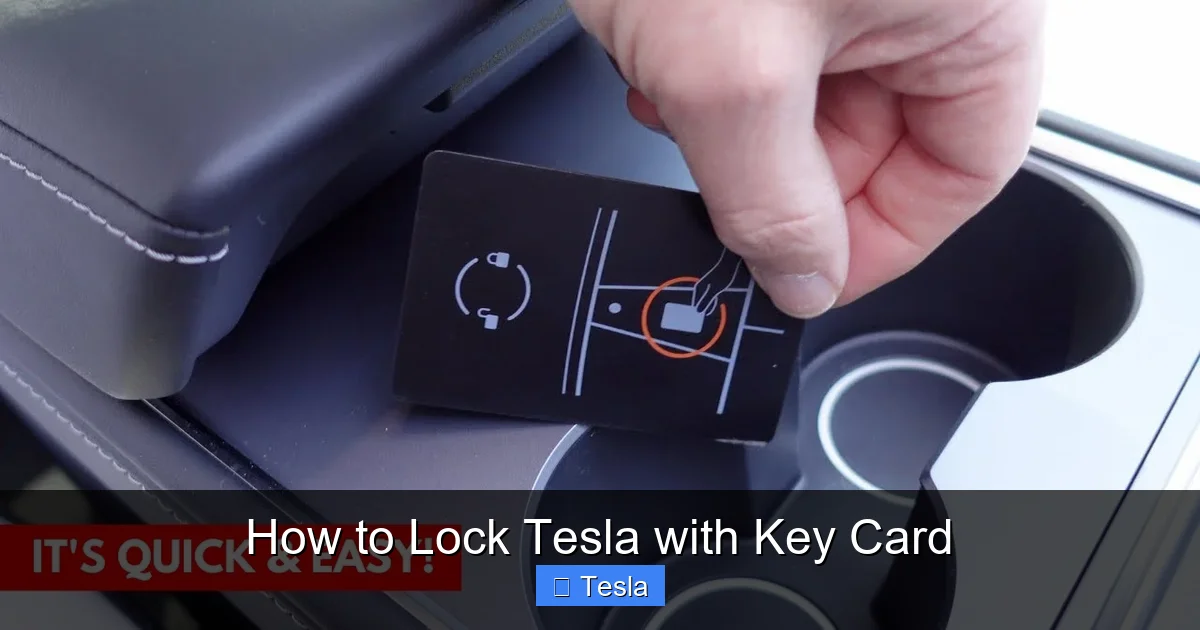
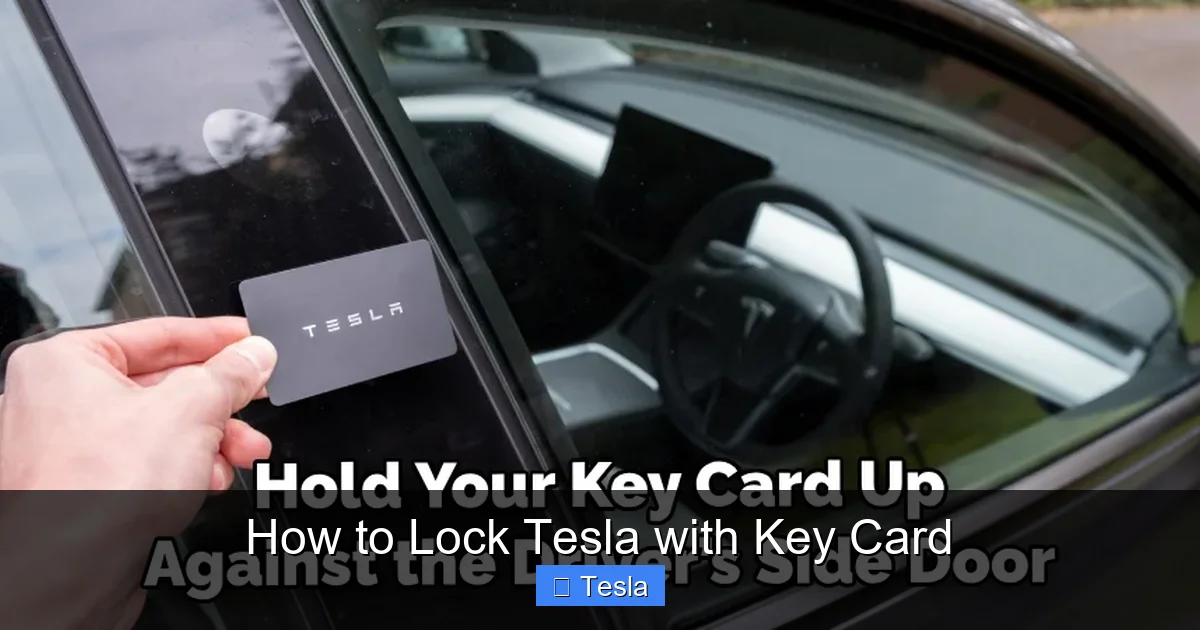
First, locate the driver’s side door handle. The NFC reader is embedded in the vertical face of the handle, just below the polished metal section and above the rubber grip. You cannot lock the car by tapping the rear or front fenders—it must be the driver’s door. With the key card in hand (or wallet), approach the closed door. Hold the card flat against the handle, with the Tesla ‘T’ logo facing you or the card’s chip side (usually the side with the contact pads) against the handle. Press it gently but firmly directly onto the handle and hold it there for about 1-2 seconds. You should feel a slight vibration from the card if it’s paired correctly, but don’t rely on that alone.
Listening and Watching for Confirmation
After holding the card in place, the car will respond. A successful lock is confirmed by two distinct short horn chirps. Simultaneously, the turn signals will flash once, and on models with ambient lighting, the door handle itself will glow a solid white or green color briefly. If you only hear one chirp or see a different light pattern (like a slow flash), the command was not accepted. This could mean the card is too far, the battery is low, or the car is already locked. Always wait for the double chirp and signal flash before walking away. It’s a good habit to physically pull the handle after hearing the chirps to ensure it’s truly locked and didn’t automatically unlock due to a detected key inside.
Understanding the Technology Behind the Tap
Knowing how to lock Tesla with key card is easier when you understand the ‘why.’ The system is built on two core technologies: NFC and encrypted pairing.
Visual guide about How to Lock Tesla with Key Card
Image source: wikihow.com
NFC vs. Traditional Key Fobs (RFID)
Most non-Tesla vehicles use a key fob that broadcasts a radio frequency (RF) signal. This allows you to lock the car from a distance, but it’s vulnerable to ‘relay attacks’ where thieves amplify the signal from a fob inside your house to unlock and start the car parked outside. Tesla’s key card uses NFC, which requires the card to be within about 4 inches of the reader. This proximity requirement eliminates remote relay threats. The communication is also end-to-end encrypted. Each key card has a unique digital certificate that the car’s security module recognizes. When you tap, a cryptographic handshake occurs in milliseconds. If the code matches, the command executes. This is why you can’t just use any NFC card—it must be one that has been specifically paired and authorized by your Tesla’s system.
Pairing and Managing Your Key Cards
You can have up to 19 key cards paired to a single Tesla. To pair a new one, you need a working key (either another card or a paired phone). With the car on and in Park, touch the ‘Controls’ icon on the touchscreen, go to ‘Locks,’ then ‘+.’ Follow the on-screen instructions, which involve tapping the new card on the center console’s NFC reader. Once added, you can rename it (e.g., “Spare Card,” “Valet Card”) for easy identification in the app and car menus. This multi-card system is perfect for families or if you want a dedicated card kept at your office. Remember, removing a card requires access to the vehicle and the touchscreen menu.
Advanced Features and Customizations Related to Locking
Locking the doors is just the start. Your key card integrates with several other security and convenience features.
Visual guide about How to Lock Tesla with Key Card
Image source: safetyfic.com
Locking the Glove Box and Trunk
The key card’s authority extends beyond the doors. To lock the glove box, you must first enable the setting. Go to ‘Controls’ > ‘Lock’ and toggle ‘Glove Box Lock.’ Once enabled, closing the glove box automatically locks it. To unlock it later, you must use a paired key (phone or card) by tapping the handle or using the app. The rear trunk and front trunk (frunk) also require authentication. You can open them by tapping the handle near the trunk button, but they will not lock automatically. You must manually close them, and the lock status is tied to the overall vehicle lock state. If the car is locked, the trunks are secured. This prevents someone from simply reaching in and popping the trunk after you’ve locked the doors.
‘Pin to Drive’ and Its Relationship to Physical Keys
Pin to Drive is a critical security feature that works in tandem with your key card. Even if someone steals your key card, they cannot drive the car without entering the 4-digit PIN you set on the touchscreen. This PIN must be entered every time the car is powered on after a driver change or after the car has been parked for a while. It’s a brilliant layer of defense. To set it up, go to ‘Controls’ > ‘Safety & Security’ > ‘Pin to Drive.’ You’ll be prompted to create and confirm a PIN. This feature is independent of the key card but is arguably more important for preventing theft. Think of the key card as the “key to the house” and Pin to Drive as the “alarm code” to start the car.
Troubleshooting: When Your Key Card Won’t Lock the Car
Even with perfect knowledge how to lock Tesla with key card, occasional glitches happen. Here’s a systematic approach to fix them.
The Most Common Culprit: A Low or Dead Battery
The key card’s CR2032 coin cell battery lasts a long time, but it will die. The first sign is a reduced locking/unlocking range—you’ll need to hold the card flush against the handle for several seconds. The car may still respond eventually, but it’s unreliable. Eventually, it will stop working entirely. The solution is simple: replace the battery. Use a small flat-head screwdriver to gently pry open the card along the seam. Replace the old battery with a fresh, high-quality CR2032, ensuring the ‘+’ side faces up as indicated. Reassemble the card. This is the most frequent issue and the easiest fix.
Signal Interference and Physical Damage
If you carry your key card in a wallet with other metal cards or near a strong magnet (like a phone case with a magnetic closure), it can shield the NFC signal. Remove the card from the wallet and try tapping directly. Also, inspect the card for cracks, water damage, or wear on the NFC chip area (the flat, usually unprinted section). Physical damage can disrupt the antenna. If the card is damaged, you need to order a replacement from Tesla. Before concluding it’s broken, try rebooting the car. Put the car in Park, press and hold both scroll wheels on the steering wheel until the screen goes black and the Tesla logo reappears. This soft reset often clears temporary communication glitches between the car and its paired keys.
Security Best Practices and Habit Formation
Using the key card correctly is a cornerstone of Tesla security. Develop these habits to protect your investment.
The Habit of Manual Verification
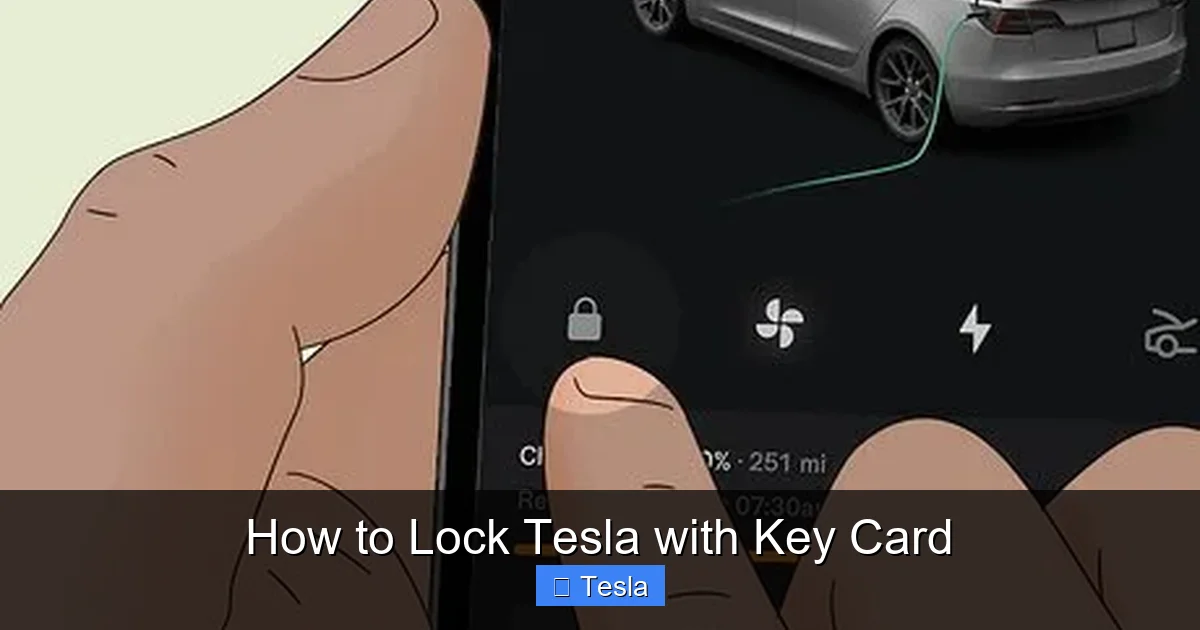
Never assume the car is locked because you tapped the card. Always perform the visual and auditory check: listen for the two chirps and watch for the light flash. Then, physically pull the door handle. If it opens, the car is not locked. This is especially important in crowded areas or if you suspect someone might have been standing nearby when you locked it. Additionally, get in the habit of looking at the touchscreen as you approach the car. It will show a small locked padlock icon when the vehicle is secure. This gives you a second confirmation point before you even reach for the key card.
Safeguarding Against Loss and Theft
Treat your key card like a spare house key. Do not leave it visible in an unattended car. If you must leave it in the car (e.g., when valet parking), be aware that a thief with the card could unlock and enter the car, but they still could not drive it without your PIN (if enabled) or a paired phone. However, they could access the interior and trunk. For maximum security, carry the card on your person. Consider using a dedicated key holder or a zippered pocket separate from your phone to prevent accidental de-syncing or interference. If you lose a key card, you must immediately remove it from your Tesla’s system using another paired key via the touchscreen menu, and then order a replacement. The lost card will no longer work once removed from the account.
Comparing Key Card Use to Other Tesla Key Methods
The key card is your hardware backup, but it’s part of a trio of keys. Understanding its role relative to the others is key (pun intended) to seamless ownership.
Phone Key vs. Key Card: The Primary vs. The Backup
The Phone Key (using Bluetooth) is the intended primary method. It’s passive—you just walk up and drive. It’s more convenient because you don’t have to dig anything out. However, it relies on your phone’s battery and Bluetooth being on. If your phone dies, gets misplaced, or has Bluetooth off, the Phone Key fails. This is where the key card becomes indispensable. It’s a low-tech, battery-powered (but long-lasting) fail-safe. You should always carry your key card with you, even if you use your phone 99% of the time. The workflow should be: try Phone Key first; if it doesn’t work, immediately use the key card. This mental model prevents panic.
The Role of the Physical Key (if equipped)
Some older Model S and Model X vehicles came with a traditional metal key. This is now rare. For those that have it, the metal key can manually unlock the driver’s door by inserting it into a hidden lock cylinder under the handle trim. Once inside, you must insert the key into a slot on the center console to start the car. This is a last-resort method for complete electronic failure. The modern key card is far more convenient and is the standard for all current models (3, Y, S, X). If your car has a metal key, store it separately as an ultimate emergency backup, but you will almost certainly use the card or phone daily.
Conclusion: Confidence in Every Tap
Knowing how to lock Tesla with key card is a foundational skill that empowers you as an owner. It’s a simple tap, but it represents a sophisticated, secure system. By understanding the NFC technology, performing the deliberate tap-and-wait motion, listening for the double chirp, and verifying the lock, you create a reliable habit. Combine this with proactive maintenance—like replacing the card battery every couple of years and enabling Pin to Drive—and you build a robust security posture for your vehicle. Remember, the key card is your tangible, always-ready backup in a world of digital keys. Keep it safe, keep it charged, and use it confidently. Your Tesla is designed to be secure, and you are the most important part of that security system.
Frequently Asked Questions
What should I do if my Tesla key card battery dies and I’m locked out?
First, try using your paired smartphone as a Phone Key. If that’s not an option, you can use the Tesla app to unlock the car remotely, provided you have cellular connectivity. If you have no phone or service, you will need to call Tesla Roadside Assistance or a locksmith who is authorized for Tesla vehicles. They can gain access, and then you can replace the key card battery inside the car.
Can I lock my Tesla with the key card if it’s already inside the car?
No. For safety, Tesla’s system is designed to prevent locking the key card inside the vehicle. If the only authenticated key (phone or card) is detected inside, the car will not lock when you tap the outside handle. You’ll hear a single chirp and see a red light, indicating the command was rejected. This prevents you from accidentally locking yourself out.
How do I add a new key card to my Tesla?
You need at least one already-paired key (phone or card) and the car must be in Park. Go to ‘Controls’ > ‘Locks’ > ‘+.’ The touchscreen will prompt you to tap the new key card on the center console’s NFC reader. Hold it there until it beeps and the screen confirms the addition. You can then name the new card for identification.
What is the effective range for locking with the key card?
The NFC range is very short, typically 1-4 inches (2-10 cm). You must physically touch or hold the card directly against the driver’s door handle. There is no remote locking capability with the key card; it is strictly a close-proximity tool. For remote locking, you must use the Tesla smartphone app.
Will a metal wallet or phone case block my key card from working?
Yes, absolutely. Thick metal, RFID-blocking materials, or strong magnets can shield the NFC signal. For reliable operation, remove the key card from your wallet or case and hold it directly against the door handle. If you keep it in a wallet, use a dedicated sleeve or pocket made of non-conductive material like leather or fabric.
My key card works to unlock but not to lock. What’s wrong?
This is unusual but points to a potential issue with the car’s lock actuator or a software glitch. First, try a full vehicle reboot (hold both steering wheel scroll buttons until screen restarts). If that fails, check the ‘Locks’ settings in the car to ensure all doors are set to lock. If the problem persists, there may be a faulty door lock mechanism, and you should schedule a service appointment through your Tesla app.
