
How to Lock a Car Cover: Easy Steps & Safety Tips

Quick Answer
To lock a car cover, fit the cover over your parked vehicle, find its reinforced side grommets, pass a vinyl-coated security cable beneath the car, and secure the cable with a padlock. This helps deter cover theft and keeps the fabric in place. A proper lock works best alongside fitted straps and basic vehicle theft prevention habits.
Five Quick Steps
- Park safely: Turn off the engine and let the vehicle cool.
- Fit the cover: Pull it evenly over the clean, dry car.
- Find the grommets: Locate the reinforced holes near the lower side edges.
- Pass the cable: Route a coated security cable beneath the car, clear of mechanical parts.
- Secure the lock: Connect the cable ends as instructed and check the fit.
A car cover can protect your paint from dust, sun, and debris. But an unsecured cover can blow away or become an easy target for theft.
The good news is that locking one is usually simple. I’ll explain the safest setup, the tools you need, and the mistakes worth avoiding.
In This Guide
How Does a Car Cover Lock Work?
A car cover lock is a security system that connects the lower sides of a fitted cover. Most designs use a coated steel cable, reinforced grommets, and a small padlock.
The cable passes beneath the vehicle and prevents someone from simply lifting off the cover. It also helps limit movement during mild wind.
What Are Car Cover Grommets?
Grommets are reinforced holes built into the fabric. They usually sit near the lower middle section of each side.
These openings support the cable and spread the pulling force across the surrounding material. Without reinforcement, a cable can tear through thin fabric.
Some covers use sewn loops or dedicated locking straps instead. Always use the attachment points approved by the cover manufacturer.
Does a Car Cover Lock Prevent Theft?
A lock makes casual theft harder, but it cannot guarantee protection. Someone with cutting tools may still remove the cable or damage the cover.
Think of the lock as a deterrent rather than a complete security system. Your car’s normal locks and anti-theft features still matter.
Manufacturers such as Chevrolet Accessories offer coated cable locking systems designed for vehicle covers. These show how a simple cable can provide another layer of protection.
Can a Lock Keep a Car Cover From Blowing Away?
Yes, a correctly installed cable can help hold the cover down. However, one center cable may not control fabric movement at the front and rear.
For windy parking areas, use the lock along with the cover’s approved wind straps. The two systems perform different jobs.
Section Takeaway: A car cover lock reduces easy removal, while a proper fit and wind straps provide broader cover security.
What Do You Need to Lock a Car Cover?
You need only a few basic items. Most ready-made cable lock kits require no power tools or vehicle modifications.
- Fitted car cover: Choose one sized for your vehicle, with reinforced locking points.
- Vinyl-coated steel cable: The outer coating helps reduce accidental contact damage.
- Weather-resistant padlock: Choose a lock compatible with the cable ends.
- Lock key or combination: Keep the unlocking method somewhere secure.
- Wind straps: Optional, but useful for exposed outdoor parking.
- Soft cloth: Use it to clean dirt from the grommets before installation.
Which Type of Car Cover Lock Is Best?
For most drivers, a purpose-made coated cable and padlock set is a practical choice. It is easy to install and remove.
| Security Method | Best Use | Main Limitation |
|---|---|---|
| Coated cable and keyed padlock | Everyday outdoor cover security | Requires a key |
| Cable and combination lock | Key-free locking | Code may be forgotten |
| Underbody wind straps | Reducing cover movement | Not a strong theft deterrent |
| Elastic hem only | Basic fit in calm conditions | Offers little theft resistance |
I would choose a coated cable over bare metal. It gives you an extra layer between the cable and any painted surface it might touch.
The lock also needs to resist outdoor moisture. A rusty lock can be frustrating when you need to remove the cover quickly.
How Long Should a Car Cover Cable Be?
The correct length depends on the width and ground clearance of your vehicle. A small sedan and a wide pickup will not need the same cable.
Measure the path between the locking points beneath your parked vehicle. Add enough length for the lock connection without leaving large loose loops.
A cable that is too short can pull hard against the grommets. One that is too long may drag or swing against the body.
Check the manufacturer’s size recommendations before buying a replacement cable. Universal fit claims do not always account for wider vehicles.
How Do You Lock a Car Cover Step by Step?
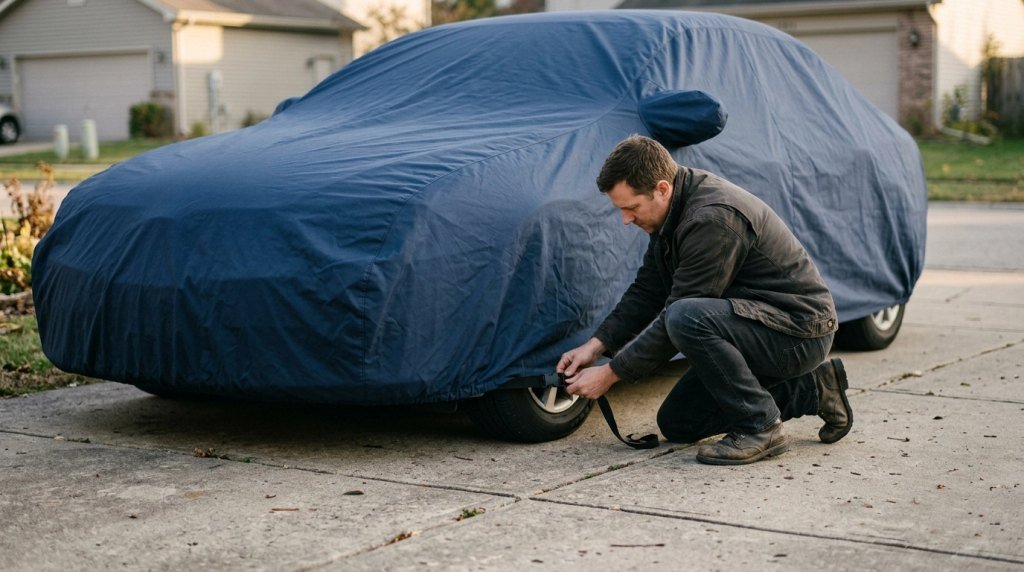
The safest method is to fit the cover first, then install the cable. Trying to lock loose fabric often leads to poor alignment and unnecessary pulling.
The following process works for many covers with two reinforced side grommets. Follow your specific kit’s routing and locking instructions where they differ.
Step 1: Park and Prepare Your Car
Park on level, stable ground. Switch off the engine, engage the parking brake, and let hot components cool.
Make sure the vehicle is clean and dry before covering it. Trapped grit can rub against paint when the fabric moves.
Keep the car stationary throughout the installation. Never attempt to lock a cover while the engine is running.
Step 2: Put the Cover on Correctly
Find the front label or orientation mark. Place the cover over the roof and spread it toward the bumpers.
Position the mirror pockets where provided. Pull the sides down evenly so the elastic edges sit beneath the appropriate body edges.
A correctly fitted cover should look smooth without excessive stretching. Fasten any built-in buckles before adding the locking cable.
Step 3: Locate the Reinforced Grommets
Look along the bottom edge near the middle of the driver and passenger sides. Many covers have one reinforced eyelet on each side.
Check both eyelets for loose metal, broken stitching, or torn fabric. Damaged locking points should be repaired by an appropriate professional or replaced.
Do not force a cable through a fabric seam. An ordinary seam is not designed to hold locking tension.
Step 4: Thread the Security Cable
Take the coated cable and pass it through the first reinforced eyelet. Then guide the free end beneath the vehicle toward the other side.
Stay beside the vehicle while guiding the cable. Do not crawl underneath, reach into mechanical parts, or lift the vehicle to complete this task.
- Keep the cable clear of the exhaust and other hot components.
- Avoid brake lines, wiring, suspension parts, and fuel lines.
- Do not wrap the cable around wheels or moving components.
- Keep it away from sharp metal edges.
- Do not leave loose loops hanging below the vehicle.
If you cannot identify a clear, safe route, stop and consult the cover manufacturer. Never attach the cable to an unknown part beneath the car.
Mechanic Alert: Do not jack up the vehicle or work underneath it to install a cover lock. If the recommended route is inaccessible, seek professional guidance.
Step 5: Connect and Lock the Cable
Bring the cable end through the opposite grommet. Then connect the ends using the locking design supplied with your kit.
Some cables use a loop at one end and a padlock at the other. Others have two prepared ends that connect directly to the lock.
Secure the padlock until it clicks or closes fully. Give the cable a gentle pull to confirm that the lock is engaged.
The cable should be snug, not stretched tight. Excessive tension can damage the eyelets or pull the cover out of shape.
Step 6: Check the Finished Installation
Walk around the car and inspect the cover. Check that the grommets remain flat and the fabric has not shifted.
Ensure the padlock does not rest against painted metal. A hanging lock can swing and leave marks if placed incorrectly.
Store your spare key away from the vehicle. For a combination lock, save the code securely rather than leaving it attached to the cover.
Section Takeaway: Fit the cover before locking, follow the approved cable route, and check that no hardware contacts the paint.
How Do You Secure a Car Cover Without Grommets?
You can hold some covers in place without grommets, but true theft resistance is harder. The safest option depends on the design of the cover.
Use Built-In Tie-Down Straps
Some car covers include adjustable straps that connect beneath the vehicle. These help reduce lifting and fabric movement.
Fasten each strap using its original buckles. Tighten until secure without pulling the fabric out of position.
Ordinary plastic buckles are not theft locks. They can usually be opened without a key or tool.
Use a Manufacturer-Approved Locking Kit
Some cover brands offer replacement straps, locking attachments, or compatible security kits. Check the exact model before ordering.
A matched accessory is usually safer than making holes in the fabric. It also avoids guessing how much stress a seam can support.
Should You Add Your Own Grommets?
Adding grommets is possible with suitable reinforced fabric, but it is not always a good DIY upgrade. Poor placement can weaken a seam or reduce water resistance.
Never punch holes without checking the cover maker’s instructions. A professional fabric repair shop may be able to add suitable reinforcement.
For an old or inexpensive cover, replacing it with a lock-ready model may be more sensible. That way, the security points are part of the original design.
Can You Lock a Cover to a Wheel?
I would avoid improvising a cable route through the wheel. The cable might touch a brake component or become trapped when the vehicle moves.
Use only mounting and locking arrangements approved by the cover manufacturer. Always remove the entire cover and security system before driving.
How Can You Improve Car Cover Security?
Locking the cover is one useful step. A few other habits can improve theft deterrence and help protect the car beneath it.
Choose a Better-Fitting Cover
A fitted cover has less loose material for wind to catch. It also gives someone fewer easy places to grab and lift.
Choose the correct dimensions for your sedan, SUV, truck, or hatchback. Pay attention to mirror pockets and bumper coverage.
Models from Toyota, Honda, Ford, Chevrolet, and other brands have different body shapes. Similar vehicle lengths do not always mean identical cover fit.
Add Wind Straps for Outdoor Parking
Wind straps support the cover at additional points. They are especially useful where open parking exposes the vehicle to regular gusts.
- Use straps designed for your cover’s attachment points.
- Check that buckles cannot strike the paint.
- Secure loose strap ends.
- Inspect all fasteners after windy weather.
- Follow storm warnings and the cover manufacturer’s wind limits.
A cable lock alone cannot make a cover stormproof. Strong wind can still tear fabric or pull on the grommets.
Choose a Safer Parking Location
A locked cover is less exposed to casual theft when the car is parked in a visible, well-lit place. A secure garage offers even better control over access.
Do not rely on a covered vehicle to hide valuables. Leave nothing valuable visible or unsecured inside the car.
Keep the Car Itself Secure
Lock the doors and windows before fitting the cover. Remove the vehicle key and confirm the alarm system is active where applicable.
The National Highway Traffic Safety Administration recommends simple precautions such as taking your keys and choosing well-lit parking.
It also explains how immobilizers, alarms, and recovery systems can help with vehicle theft prevention. These measures protect the car itself, not merely the cover.
Check the Lock From Time to Time
Outdoor hardware faces moisture, dust, and temperature changes. Inspect the cable coating and lock body during regular car washes.
Replace a cable with exposed or fraying metal strands. If the lock begins sticking, follow its manufacturer’s cleaning and lubrication guidance.
In 2026, basic cable locking systems remain a practical option for everyday cover security. Their biggest limitation is still that they deter opportunistic removal rather than prevent all theft.
Section Takeaway: Combine a fitted cover, suitable wind straps, a reliable cable lock, and secure parking habits for better everyday protection.
What Mistakes Should You Avoid When Locking a Car Cover?
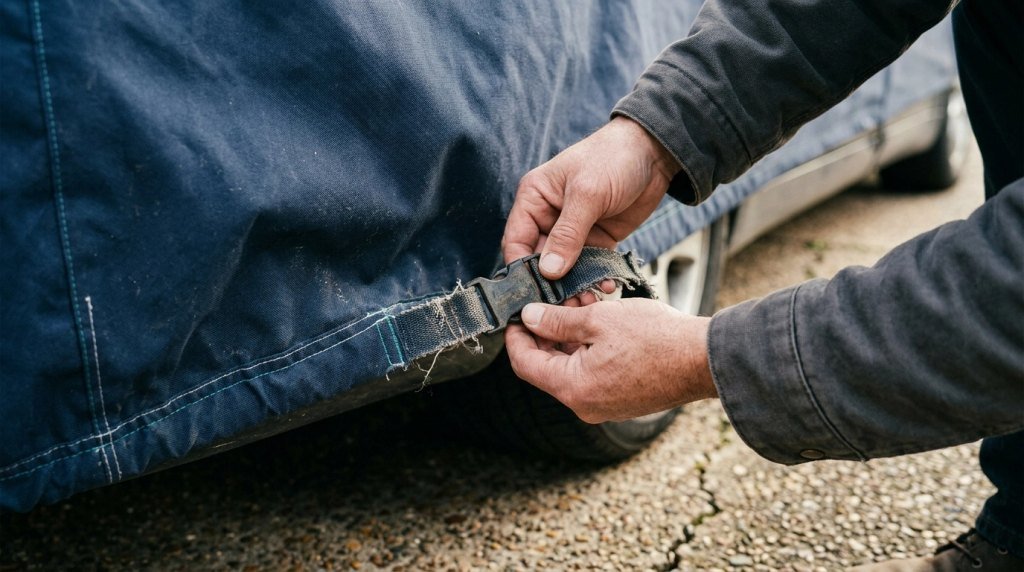
Most cover-locking problems come from poor cable routing, excessive tension, or misplaced hardware. These issues are usually avoidable.
Common Installation Mistakes
- Using bare metal cable: Exposed steel can scratch paint if it touches the body.
- Pulling too tightly: Excess tension may damage the reinforced grommets.
- Locking near hot exhaust parts: Heat can damage nearby coating or fabric.
- Ignoring the cover fit: Loose fabric can still flap despite the lock.
- Leaving the padlock against paint: Movement can cause repeated contact marks.
- Leaving the cable on before driving: This creates a serious snagging hazard.
- Using damaged hardware: Worn cable strands and cracked locks can fail unexpectedly.
What If the Cable Is Too Short?
Do not force the cable into position. Measure the intended route and buy a compatible replacement of sufficient length.
A stretched cable puts unnecessary pressure on the cover’s attachment points. This can cause damage even before the vehicle is exposed to wind.
What If the Lock Will Not Close?
First, check that the cable ends are fully seated. Make sure dirt or fabric is not blocking the locking opening.
If you have a keyed model, try the spare key without applying force. For a combination model, follow the supplied instructions to verify the code and reset procedure.
Do not strike or force a jammed lock while it is near the vehicle’s paint. Contact the lock manufacturer if it remains stuck.
What If the Car Cover Still Blows Around?
Check whether the cover is too large. A loose cover can billow even when the center cable is secure.
Inspect the front and rear straps next. These areas may need additional manufacturer-approved wind protection.
During severe weather, remove the cover when it is safe to do so if the manufacturer warns against use in those conditions.
What If You Lose the Car Cover Lock Key?
Check for the spare key that came with the lock. Some manufacturers also offer replacement keys or complete lock sets.
If no replacement is available, contact the manufacturer or a locksmith. Avoid cutting the cable close to the vehicle’s painted surfaces.
How Do You Remove and Store a Locked Cover?
- Unlock the padlock and detach the cable.
- Pull the cable out of the grommets without dragging hardware against the car.
- Disconnect all wind straps and buckles.
- Lift the cover off carefully without scraping the paint.
- Dry and clean the cover according to its care label.
- Store the lock, cable, and keys in a safe place.
Never drive away with the cable or straps still attached. Check beneath the parked vehicle before moving it.
Section Takeaway: Correct cable routing and gentle tension protect the cover, while careful removal helps prevent damage to the vehicle.
Frequently Asked Questions
Can you lock any car cover?
Not every cover supports a cable lock. The easiest models have reinforced grommets or approved locking loops. If your cover lacks them, use compatible accessories or choose a lock-ready replacement rather than cutting holes into unsupported fabric.
Can a car cover lock damage paint?
It can if bare cable or a metal padlock rubs against the vehicle. Use a coated cable, position the hardware away from painted surfaces, and avoid excessive tension. Check the installation after windy weather.
Is a car cover cable lock waterproof?
Many are built for outdoor use, but weather resistance varies by product. Look for suitable materials and follow the maker’s maintenance instructions. Even outdoor locks can corrode when exposed to moisture and dirt for long periods.
Can someone steal a locked car cover?
Yes. A determined thief may cut a cable or damage the cover to remove it. A lock mainly discourages casual theft. Good parking choices and ordinary vehicle anti-theft measures provide additional protection.
Should you lock a car cover every night?
If you regularly park outdoors, locking the cover each night is a reasonable habit. It is especially useful in shared parking areas or exposed driveways. Inspect the lock and cable occasionally to make sure they remain secure.
Do car cover locks work on SUVs and trucks?
Yes, provided the cover has suitable attachment points and the cable is long enough. SUVs and pickup trucks often need longer cables than smaller cars. Always confirm the kit’s compatibility and safe routing instructions.
Can you use a bicycle lock on a car cover?
Some flexible bicycle cables may fit compatible reinforced loops, but they are not automatically suitable. Thick cables and heavy locks can damage the cover or paint. A purpose-made car cover locking kit is generally a simpler choice.
Final Takeaway: Keep Your Car Cover Secure
Learning how to lock a car cover is straightforward. Fit the cover, use its reinforced locking points, route the coated cable safely, and secure the padlock.
For everyday outdoor parking, I prefer a correctly sized cover with a dedicated cable lock and secure wind straps. This provides a practical balance of convenience and protection.
Just remember that a locked cover is not a substitute for locking your vehicle. Check the fit, protect the paint, and remove every strap and cable before driving.
