
How to Care for an Indoor Car Cover: Cleaning, Drying, and Storage Tips

Quick Answer
To care for an indoor car cover, keep its inner surface clean, remove loose dust regularly, wash it only when needed, and let it dry completely before storage. Check the manufacturer’s instructions before using water, detergent, or a washing machine because different fabrics require different cleaning methods. For example, consult the indoor car cover washing and care instructions for fabric-specific guidance.
Essential indoor car cover care steps
- Check the car first: Remove loose dirt and make sure the paintwork is clean and dry before covering the vehicle.
- Remove surface dust: Shake the cover gently and inspect its vehicle-facing side for grit or debris.
- Clean carefully: Use a soft cloth or the approved washing method for the specific cover material.
- Skip harsh products: Avoid bleach, fabric softener, and strong cleaners unless the manufacturer explicitly approves them.
- Dry it completely: Allow the cover to dry according to its care label before folding it.
- Store it properly: Keep the dry cover in a clean, ventilated location away from chemicals and sharp objects.
One important precaution
- Never assume that every indoor cover is machine-washable or dryer-safe. Its material and manufacturer’s instructions determine the safest method.
An indoor car cover helps keep a parked vehicle free from dust, minor contact marks, and everyday garage debris. However, the cover needs regular attention to protect the paintwork without collecting abrasive particles against it.
As a car enthusiast who enjoys maintaining everyday vehicles, I consider careful handling just as important as cleaning. In this guide, I’ll explain how to care for an indoor car cover, when to wash it, how to prevent moisture problems, and which maintenance mistakes to avoid.
In This Guide
- What is an indoor car cover, and why does its care matter?
- How should you maintain an indoor car cover regularly?
- How do you clean an indoor car cover safely?
- How do you dry an indoor car cover and prevent moisture?
- How should you fold and store an indoor car cover?
- What indoor car cover care mistakes should you avoid?
- Frequently asked questions
What Is an Indoor Car Cover, and Why Does Its Care Matter?
An indoor car cover is a protective fabric layer designed for vehicles parked inside garages, storage buildings, or other sheltered spaces. Its main jobs are limiting dust accumulation, reducing exposure to incidental contact, and helping preserve the vehicle’s appearance while parked.
Keeping the cover clean matters because trapped grit can rub against automotive paint when you install or remove the fabric. A neglected cover can also collect moisture, develop unpleasant odors, or become less comfortable to handle.
How does an indoor car cover protect your vehicle?
Indoor covers vary in thickness, texture, fit, and construction. Some use lightweight woven fabrics, while others feature stretchy materials or soft inner linings designed to sit close to the vehicle’s body.
Depending on its design, a suitable cover can help protect against:
- Fine dust settling on the hood, roof, and trunk.
- Minor scuffs caused by incidental contact with objects.
- Loose debris falling from shelves or garage storage.
- Repeated cleaning that might otherwise be needed to remove ordinary garage dust.
However, an indoor cover isn’t a substitute for a clean parking space or proper vehicle maintenance. It also shouldn’t be assumed to provide rain protection, outdoor ultraviolet resistance, or impact protection unless the manufacturer specifically states those capabilities.
Why can a dirty cover damage paint?
Dust alone isn’t always the main concern. Small particles of sand, grit, or dried dirt can become abrasive when they move between the cover and the vehicle’s finish.
For example, imagine uncovering a sedan after several weeks in a garage. If grit has collected inside the cover near the rocker panels or wheel arches, dragging the fabric across those areas can create avoidable scratches.
**The key principle is simple: keep the vehicle-facing surface clean and handle the cover without dragging it across the paint.**
How Should You Maintain an Indoor Car Cover Regularly?
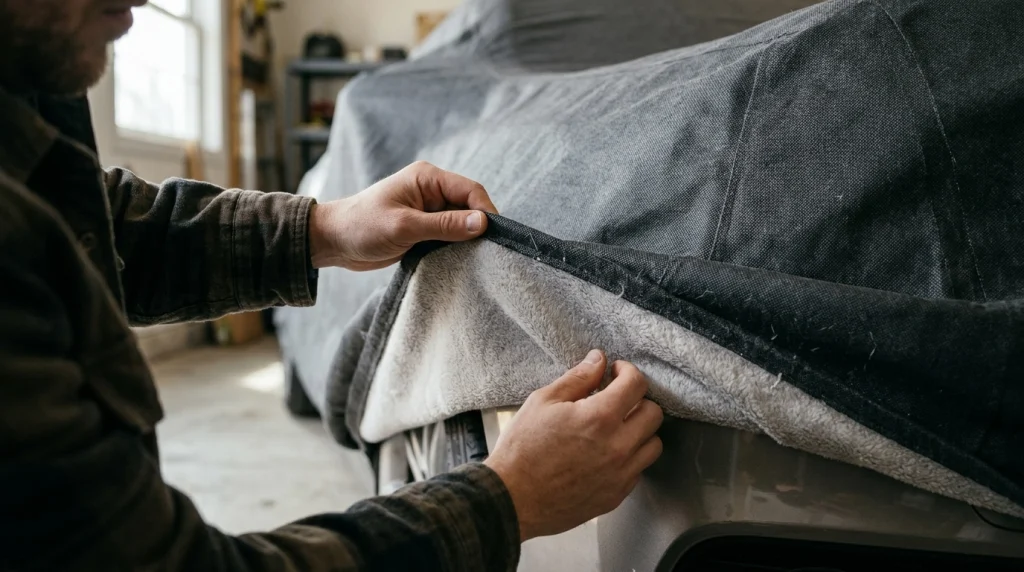
Routine maintenance should focus on preventing dirt buildup, spotting damage early, and keeping moisture under control. You usually don’t need to wash an indoor cover after every use; inspect it regularly and clean it when its condition calls for it.
Follow a simple maintenance routine
Use the following checklist whenever you remove or reinstall the cover, adjusting the frequency to your garage conditions and how often you drive.
- Before covering: Check that the car is reasonably clean and dry, and remove loose debris from the roof, hood, and trunk.
- During removal: Lift and fold the cover carefully instead of pulling it across the paintwork.
- After removal: Shake off loose dust in a suitable area and inspect the inner surface.
- During inspection: Check seams, elastic edges, mirror pockets, and any straps for wear.
- Before storage: Confirm that the cover is fully dry and free from dirt that could transfer during its next use.
How often should you clean an indoor car cover?
There is no universal cleaning interval that suits every cover. A vehicle in a clean, enclosed garage may need less frequent washing than one parked in a dusty workshop or near ongoing renovation work.
Use these practical guidelines rather than treating them as mandatory calendar deadlines:
- Every use: Check the inner surface for visible grit, leaves, and loose debris.
- Every few weeks: Inspect the fabric, seams, and storage area if you use the cover frequently.
- When visibly dirty: Remove accumulated dust and clean the fabric using its approved method.
- After damp exposure: Air the cover out and confirm that it is completely dry before storing it.
A quick inspection often prevents more work later. Pay special attention to the underside because it comes into direct contact with the vehicle’s finish.
Does the garage environment affect cover care?
Yes. A clean, dry, well-ventilated garage makes it easier to maintain both the cover and the vehicle underneath it.
Fine dust from sanding, woodworking, construction, or stored materials can settle on the cover even when the vehicle isn’t being driven. If your garage has persistent humidity or condensation, address those conditions rather than relying on the cover to solve them.
Section takeaway: Inspect the cover before each installation, remove grit promptly, and wash only when necessary. Regular checks are easier than correcting damage caused by neglected fabric.
How Do You Clean an Indoor Car Cover Safely?
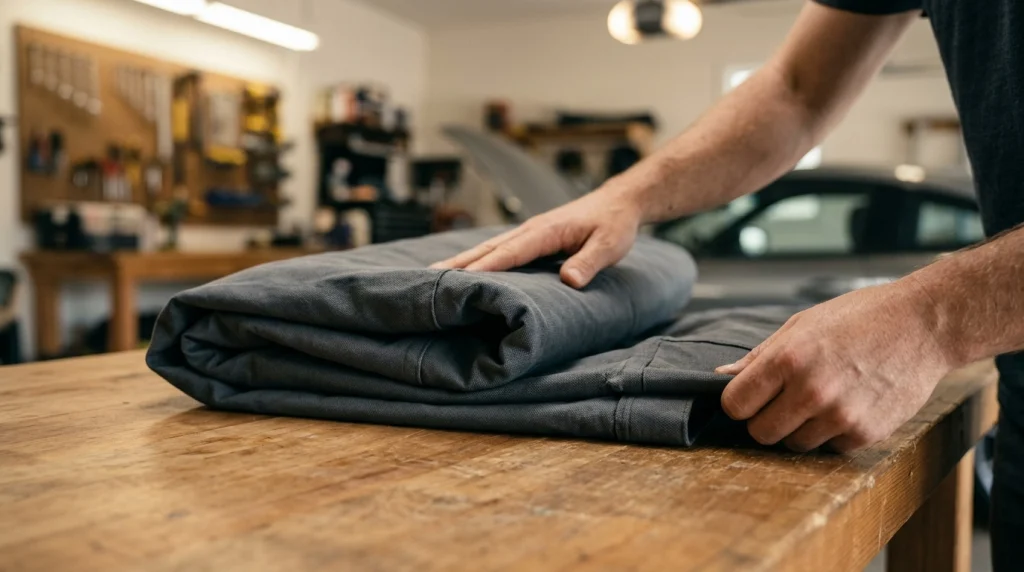
The safest way to clean an indoor car cover depends on its material and care label. Some covers allow gentle machine washing, while others require hand cleaning or wiping with a damp cloth.
Step 1: Read the manufacturer’s care instructions
Start by checking the product label, packaging, or manufacturer’s website. Look for approved cleaning products, water temperature, washing-machine requirements, and drying restrictions.
Don’t assume that two covers with similar appearances have identical cleaning requirements. A soft stretch cover, a fleece-lined cover, and a lightweight woven cover may react differently to heat, agitation, or detergent.
Step 2: Remove loose dust and grit
Shake the cover gently in a clean area before applying water. Inspect both sides and remove loose particles without aggressively brushing or stretching the fabric.
If the cover has a delicate inner lining, use a soft cloth or brush only when the manufacturer permits it. Avoid dragging the material over rough concrete or a dirty garage floor.
Step 3: Choose the appropriate cleaning method
Use the method approved for your particular cover rather than automatically placing it in a washing machine.
| Cleaning method | When it may be suitable | Main precaution |
|---|---|---|
| Dry shaking | Routine removal of loose dust and debris. | Avoid snapping or stretching the fabric aggressively. |
| Damp cloth or sponge | Light surface dirt when the care instructions permit moisture. | Test a discreet area and avoid saturating the lining. |
| Gentle hand washing | Covers whose manufacturer permits hand washing. | Use the specified cleaner and avoid twisting the fabric. |
| Machine washing | Only covers explicitly approved for machine washing. | Follow the specified cycle, temperature, and machine type. |
For a machine-washable cover, use the recommended detergent amount and washing settings. If the manufacturer calls for a large front-loading machine, don’t force the cover into a small washer or substitute a machine with an unsuitable agitator.
Step 4: Avoid products that can damage the fabric
Strong chemicals can affect delicate fibers, coatings, elastic, or specialized finishes. Use only cleaning products that the manufacturer approves.
- Bleach: Avoid it unless the care instructions explicitly permit its use.
- Fabric softener: Skip it unless the manufacturer specifically approves it.
- Strong solvents: Don’t use them to remove grease or stains without explicit material-specific guidance.
- Excessive detergent: Avoid residue by measuring the recommended amount and rinsing as directed.
For more specific examples, CarCovers.com’s cover-cleaning guidance explains why cleaning methods and drying precautions matter. Treat its recommendations as supplementary advice, not a replacement for your own cover’s instructions.
Step 5: Check the cover before using it again
After cleaning, inspect the seams, elastic edges, lining, and any fitted pockets. If you notice loose stitching, tears, or a deteriorating inner surface, determine whether the cover can be repaired safely or needs replacement.
Section takeaway: Identify the fabric first, remove loose debris, and follow the approved cleaning method. Never assume that machine washing, hot water, or ordinary laundry products are safe for every indoor cover.