
How to Secure a Car Cover in High Winds

Quick Answer
To secure a car cover in high winds, start with a snug-fitting cover, seat the elastic hems below the front and rear bumpers, fasten every built-in underbody strap, then add wind straps across the front and rear thirds of the car. Keep straps over the cover rather than against the paint, and follow the cover maker’s guidance for severe conditions, such as Covercraft’s high-wind recommendations.
Quick high-wind setup
- Start with fit: A loose cover gives gusts more space to get underneath and create lift.
- Seat the hems: Pull the elastic front and rear sections completely below the bumper edges.
- Use built-in straps: Fasten and adjust every supplied under-car buckle or tie-down.
- Add wind straps: Use separate straps across the cover when the parking spot is exposed.
- Stop the flapping: Reposition or tighten the system if the cover repeatedly snaps against the paint.
- Know when to remove it: During severe or sustained high winds, temporary removal may be safer than forcing a cover to stay installed.
One final check
- Walk around the vehicle and make sure no buckle, hook, cord, or strap is rubbing directly against painted bodywork.
A car cover that behaves perfectly on a calm driveway can become a completely different piece of equipment once strong gusts arrive. If you’re wondering how to secure a car cover in high winds, the goal isn’t simply tying it down harder.
You need to reduce the amount of wind that gets underneath, control flapping, and secure the cover without damaging your vehicle. That’s the approach I use whether I’m dealing with a sedan, SUV, pickup, or another daily driver parked outside.
In This Guide
- Why Does a Car Cover Blow Off in High Winds?
- How Do You Secure a Car Cover Step by Step?
- Which Car Cover Tie-Down Method Works Best?
- How Do You Stop a Windy Car Cover From Scratching Paint?
- Should You Leave a Car Cover On During Severe Winds?
- What Should You Check Before the Wind Arrives?
- Frequently Asked Questions
Why Does a Car Cover Blow Off in High Winds?
A car cover usually comes loose because wind gets underneath an exposed edge and starts inflating the cover. Once that happens, the fabric behaves more like a sail than a protective layer.
Definition: A wind-secured car cover is a properly fitted vehicle cover whose hems and tie-downs limit airflow underneath while controlling movement across the body.
The first weak point is normally poor fit. Extra fabric around the bumpers, rocker panels, mirrors, or wheel areas gives moving air an opening.
That opening may look minor in calm weather. Repeated gusts can quickly make it larger.
- Loose sizing: An oversized universal cover has more fabric available to balloon and flap.
- Unseated elastic hems: A hem resting on the bumper instead of below it can lift easily.
- Unused straps: Built-in buckles cannot help when they’re left hanging.
- Torn fabric: Damage around seams or grommets can spread when subjected to repeated loading.
- Exposed parking: Open lots, coastal areas, hilltops, and wide driveways may leave the vehicle directly exposed to gusts.
Why is flapping such a problem?
The cover doesn’t need to blow completely off to cause trouble. Repeated fabric movement can drag trapped dirt or grit across the finish.
I pay particular attention to lower doors, fender corners, mirrors, and bumper edges. Those areas often show movement first when the cover isn’t sitting tightly.
Cover manufacturers also emphasize proper fit and secure attachment in windy environments. Covercraft specifically recommends checking the fit regularly and warns against leaving a cover installed during severe or sustained high winds.
Section Takeaway: Reducing wind entry matters as much as adding stronger straps. A snug cover with properly seated hems is the foundation of every high-wind setup.
How Do You Secure a Car Cover Step by Step?
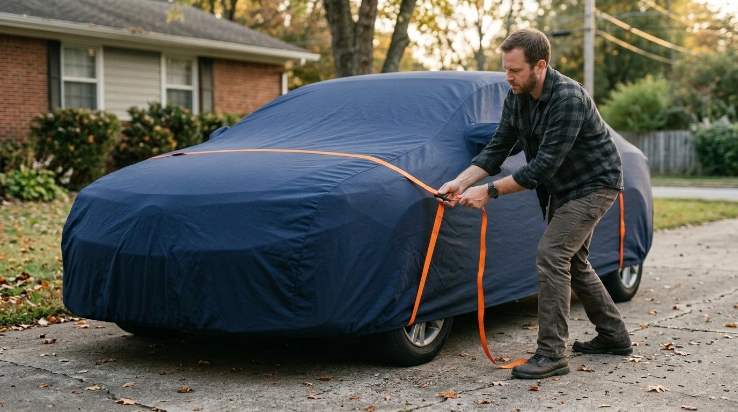
Secure the cover from the vehicle outward: clean the surfaces, position the cover correctly, seat both hems, fasten the supplied restraints, and only then add extra wind protection. This keeps the system organized and reduces unnecessary contact with the paint.
1. Start with a clean, dry vehicle
Don’t deliberately trap loose sand, grit, leaves, or other debris beneath a cover before a windy period. Movement between dirty fabric and paint increases the chance of scuffing.
Routine exterior care matters here. The broader Car and Driver auto-maintenance resources are useful when you’re building a regular vehicle-care routine beyond the cover itself.
2. Identify the front of the cover
Most fitted covers have a front label, mirror pockets, antenna provision, or obvious shape. Installing it backward can leave the intended contours out of position.
Center the material before pulling hard on either end. One side shouldn’t hang noticeably lower than the other.
3. Pull the front and rear hems down fully
Stretch the elastic portion around the front bumper first, then secure the opposite end. The elastic should sit below the bumper edge where the design allows.
- Check both front corners.
- Check both rear corners.
- Make sure mirror pockets are properly seated.
- Smooth large folds along the doors and roof.
4. Fasten every built-in underbody strap
If your cover has a buckle or strap that passes below the vehicle, use it according to its instructions. Remove obvious slack without pulling the fabric drum-tight.
Never loop a strap around exhaust components, steering parts, suspension pieces, brake lines, electrical wiring, or other vulnerable components.
Mechanic Alert: If you cannot safely route a restraint without reaching beneath a low vehicle or working near hot or moving components, don’t crawl underneath. Have someone familiar with the vehicle help you choose a safe route.
5. Add dedicated wind straps
For exposed parking, two additional over-cover straps can significantly reduce billowing. A common arrangement places one around the front third and another around the rear third of the covered vehicle.
The webbing should lie on top of the cover. Buckles should also rest against fabric instead of bare paint.
- Drape the strap across the covered vehicle.
- Pass the free end safely beneath the vehicle.
- Connect the buckle on the side.
- Pull out slack until the cover is snug.
- Repeat with the second strap farther rearward.
- Check that neither strap can contact the exhaust.
A dedicated wind-strap installation guide from CarCover.com also recommends keeping buckles on the fabric and avoiding excessive tension.
6. Perform a full walk-around
Push lightly at several edges and watch what moves. A properly secured cover can still have minor fabric movement, but large loose pockets need attention.
Recheck the system after the first windy period. Webbing and fabric sometimes settle enough to introduce fresh slack.
Section Takeaway: Use the cover’s original retention system first, then reinforce it. Extra straps work best when they’re supporting a correctly installed cover rather than compensating for a poor fit.
Which Car Cover Tie-Down Method Works Best?
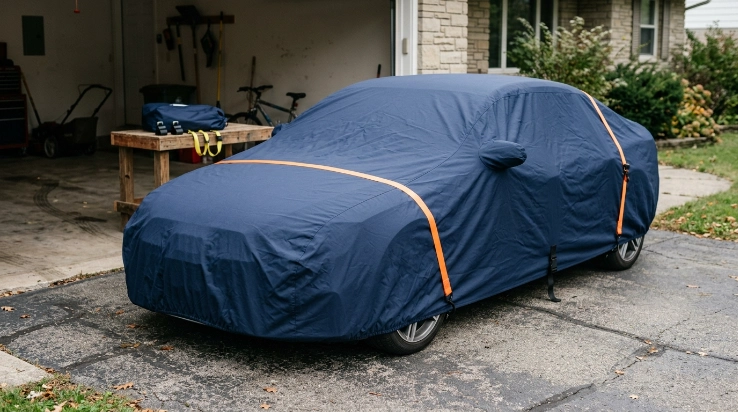
Dedicated underbody or wind straps are generally the most useful upgrade because they control the cover across a wide section of the body. A custom-fit cover with factory retention features should still remain your starting point.
| Method | Typical Placement | Best Use | Main Caution |
|---|---|---|---|
| Elastic hem | Front and rear bumper edges | Basic everyday retention | May not control the middle of a loose cover |
| Built-in center strap | Across the vehicle’s underside | Moderate wind and routine outdoor use | Must stay clear of hot and vulnerable components |
| Two wind straps | Around front and rear thirds | Exposed or frequently windy parking | Over-tightening can stress seams |
| Gust-guard clip system | Lower hem near front and rear areas | Reducing edge lift | Use only compatible clips designed for cover fabric |
| Temporary removal | Cover stored indoors | Severe or sustained high-wind events | Vehicle loses temporary cover protection |
Are bungee cords a good idea?
Bungee cords can add tension when the cover has suitable reinforced attachment points. They shouldn’t be improvised around painted panels or hooked onto random vehicle components.
Elastic cords also store energy when stretched. A slipping hook can snap back unexpectedly.
Can I tie a rope around the whole car?
A manufacturer-supplied rope routed through designated cover grommets may be appropriate when the instructions call for it. Random rope placed directly against paint is a different matter.
Thin rope concentrates pressure into a narrow line. Wind movement can then turn that line into a rubbing point.
Should I add weights to the bottom?
I avoid hanging heavy objects from car-cover fabric. A weight can pull on a grommet, tear a seam, strike the vehicle, or become a hazard if the system fails.
Purpose-built retention equipment is a better option. It spreads load more predictably.
How Do You Stop a Windy Car Cover From Scratching Paint?
Prevent scratching by keeping both the vehicle and inside surface of the cover clean, reducing loose fabric, and eliminating hard contact points. The main enemy is repeated movement with grit trapped between surfaces.
Keep buckles and hooks away from paint
A plastic buckle may feel harmless in your hand. Thousands of small impacts during a windy night are different.
- Place buckles over covered surfaces.
- Keep metal hooks away from body panels.
- Move cords away from wheel finishes.
- Don’t let hardware strike glass.
- Keep straps away from exhaust outlets.
Don’t overtighten the cover
Your goal is controlled tension, not crushing force. If seams are visibly pulling or the cover is stretched tightly between hard body edges, reduce tension.
The fabric needs to stay secure without carrying unnecessary load. This is especially important around mirrors, spoilers, antennas, roof accessories, and sharp body transitions.
Inspect the inside surface
Remove sand, dried leaves, small twigs, and similar debris before reinstalling the cover. A dirty inner surface can defeat the purpose of using protective material.
General preventive upkeep also helps catch problems before they become expensive. Consumer Reports maintains a useful vehicle maintenance checklist for broader car-care planning.
Section Takeaway: A car cover doesn’t protect paint simply because it’s soft. Fit, cleanliness, and controlled movement determine whether that fabric remains protective when the wind starts.
Should You Leave a Car Cover On During Severe Winds?
Not always. If severe or sustained winds are expected, removing and safely storing the cover may be the lower-risk choice.
This is one of the most important distinctions in the whole guide. Securing a cover for ordinary gusty weather isn’t the same as preparing for a major storm.
When should you consider removing it?
- The manufacturer advises against use in the expected conditions.
- The cover is already flapping violently despite proper restraints.
- A strap, buckle, grommet, or seam shows damage.
- The cover doesn’t fit the vehicle correctly.
- Flying debris is likely to strike or snag the cover.
- Local authorities are issuing severe-weather or evacuation guidance.
Covercraft’s current guidance specifically says it doesn’t recommend car-cover use in high-wind or storm conditions and describes temporary removal as the safest choice during extreme conditions. That makes manufacturer instructions more important than any universal wind-speed rule.
Don’t focus only on the cover
High winds create risks far beyond loose fabric. Tree limbs, signs, roofing material, and other debris may threaten the vehicle regardless of how securely the cover is attached.
If severe weather is approaching, prioritize the vehicle’s parking location and personal safety. The NHTSA severe-weather driving guidance also recommends checking weather, road conditions, closures, and emergency information before traveling.
Moving the vehicle into a garage or another suitable sheltered location may solve the cover problem entirely. Do that before conditions become dangerous.
Section Takeaway: A car cover is weather protection, not storm armor. During genuinely severe winds, removing the cover or moving the vehicle to shelter can be safer than adding more tie-down force.
What Should You Check Before the Wind Arrives?
Do one complete inspection while the weather is still manageable. It’s easier to correct a twisted strap or loose hem before the cover starts moving violently.
High-wind car cover checklist
- Correct size: Confirm the cover fits your exact vehicle shape as closely as practical.
- Clean surfaces: Remove loose debris from both the paint and cover interior.
- Front orientation: Make sure the cover isn’t installed backward.
- Mirror alignment: Seat any mirror pockets without excessive stretching.
- Front hem: Pull it below the front bumper where intended.
- Rear hem: Seat it securely around the rear bumper.
- Built-in straps: Fasten every supplied buckle or retention strap.
- Extra wind straps: Add them if your location and cover system call for extra support.
- Hardware location: Keep buckles and hooks off bare painted panels.
- Exhaust clearance: Keep all webbing and cords away from hot exhaust components.
- Fabric condition: Inspect seams, hems, grommets, and straps for damage.
- Forecast check: Follow manufacturer guidance if severe or sustained winds are expected.
What do I check after the storm?
Inspect the cover before simply pulling it off. Look for broken straps, stretched grommets, debris trapped on top, or areas where hardware shifted.
Remove accumulated debris carefully rather than dragging it across the vehicle. Once the cover is off, check the paint where you noticed the most movement.
Let a damp cover dry according to its care instructions before storage. Packing wet material into a closed bag can create odor, mildew, and unnecessary deterioration.
Section Takeaway: Preparation beats emergency tightening. A five-minute inspection before the wind arrives can expose fit, strap, and hardware problems while they’re still easy to fix.
Frequently Asked Questions
How tight should car cover wind straps be?
Wind straps should be snug enough to remove loose movement without stretching the cover drum-tight. If seams are pulling hard, body contours are being crushed, or attachment points look stressed, loosen the system and follow the strap or cover manufacturer’s instructions.
Can I use ratchet straps over a car cover?
Standard cargo ratchet straps can apply far more tension than a typical car cover needs. They can also introduce hard hardware near paint, so dedicated car-cover wind straps or the manufacturer’s approved retention system are generally a more appropriate choice.
Will a custom-fit car cover stay on in high winds without straps?
A close fit reduces loose fabric and makes it harder for wind to get underneath, but it doesn’t guarantee the cover will remain secure in strong gusts. Use the built-in retention features and follow the manufacturer’s high-wind instructions for your specific cover.
Where should wind straps go on a car cover?
A common two-strap arrangement places one across roughly the front third of the covered vehicle and another across the rear third. Exact positioning depends on the cover and vehicle, and straps should remain clear of exhaust parts and direct paint contact.
Can a car cover damage paint in windy weather?
Yes. Repeated flapping can move dust or grit between the cover and paint, while buckles or hooks can create concentrated contact points. A clean vehicle, clean cover, snug fit, and properly positioned restraints reduce that risk.
Should I remove my car cover during a windstorm?
Consider removal when severe or sustained winds exceed what the cover manufacturer recommends, particularly if the fabric is already flapping hard or the restraint system is damaged. Remove it before conditions become dangerous rather than trying to handle loose fabric during the storm.
How do I keep wind from getting underneath a car cover?
Start with a correctly sized cover and fully seat the elastic hems around the bumpers. Fasten built-in underbody straps, eliminate large loose sections, and use compatible wind straps or gust guards when extra retention is appropriate.
Final Takeaway
The best way to secure a car cover in high winds is to control airflow underneath before relying on brute-force tie-downs. Fit the cover correctly, use every supplied restraint, and add purpose-built wind straps where needed.
Keep all hardware away from paint and hot components. If severe weather is expected, follow the manufacturer’s limits and remove the cover when conditions exceed what it was designed to handle.