
Signs Your Car Cover Needs Replacing: 7 Warning Signs to Check
Quick Answer
The main signs your car cover needs replacing are persistent water leaks, brittle or thinning fabric, spreading tears, failing seams, damaged inner lining, loose straps, and a poor fit. A cover that can no longer protect your vehicle without trapping moisture or rubbing dirt against the paint should be retired. Before buying another one, check whether cleaning, approved waterproofing treatment, or a minor repair can solve the problem.
Seven warning signs to look for
- Water penetration: Rain passes through areas that previously repelled water.
- Fabric deterioration: The material feels brittle, chalky, unusually thin, or cracked.
- Repeated tears: Holes spread or new rips appear after small repairs.
- Failing stitching: Seams split, hems unravel, or straps detach.
- Damaged lining: The inner surface becomes rough, peeling, or contaminated with grit.
- Persistent mildew: Musty odors or stains remain after proper cleaning and drying.
- Poor fit: Loose elastic or failed fasteners let the cover flap against the car.
How to confirm the problem
- Inspect both sides of the clean, dry cover in good light, paying special attention to seams and high-contact areas.
- Test water resistance with a small amount of water, following the manufacturer’s care instructions.
- Replace the cover if structural damage, persistent leakage, or an abrasive inner surface makes continued use unsafe for the finish.
A car cover should protect your paint, not become another source of damage. I look beyond the outside appearance because a cover can look acceptable while its seams, lining, or weather-resistant treatment are already wearing out.
In this guide, I’ll explain the warning signs, how to distinguish repairable wear from material failure, and what to check before choosing a replacement in 2026.
In This Guide
7 Signs Your Car Cover Needs Replacing
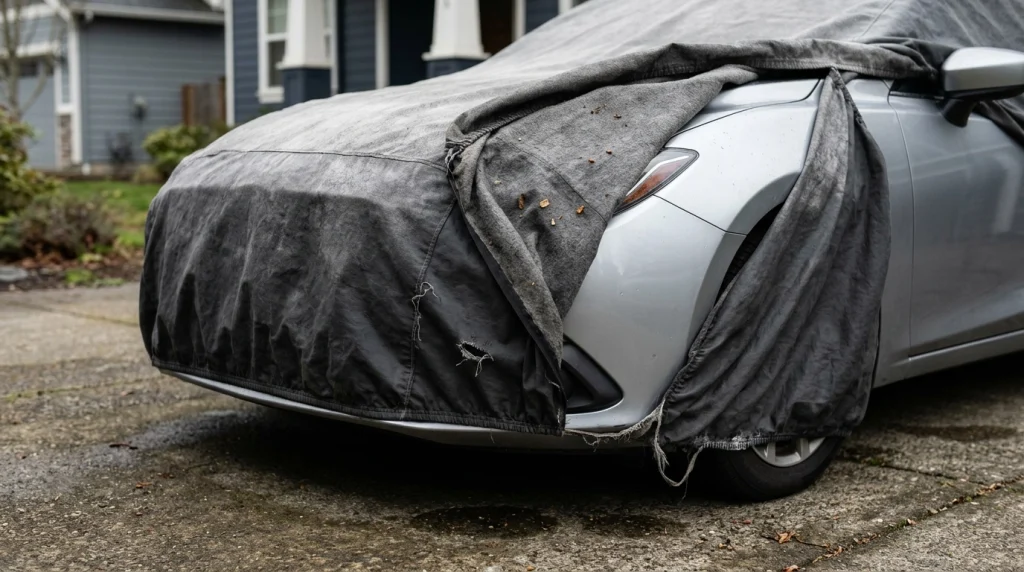
A car cover needs replacing when its material, construction, or fit no longer provides dependable protection. One serious defect can justify replacement, even if the rest of the cover still looks presentable.
1. Water leaks through the fabric
A car cover is a protective layer placed over a parked vehicle to reduce exposure to weather, dirt, and environmental debris. Depending on its design, it may be water-resistant, waterproof, breathable, or intended mainly for indoor dust protection.
If your outdoor cover suddenly allows rain to soak through, its water-repellent treatment may have weakened. Dirt buildup, improper washing, and worn coatings can all affect water behavior, so confirm the problem before discarding it.
Start by checking the manufacturer’s cleaning and reproofing instructions. Clean the cover as directed, let it dry fully, and perform a gentle water test away from the vehicle.
If water continues to penetrate and the cover is supposed to provide rain protection, replacement may be the sensible choice. Don’t assume that a waterproofing spray will restore a damaged or deteriorating fabric.
2. The fabric has become thin, brittle, or chalky
Material deterioration is one of the clearest signs that a cover is nearing the end of its useful life. Sunlight, heat, moisture, and repeated handling can gradually weaken fabric and protective coatings.
Check the roof, hood, mirror pockets, corners, and exposed upper panels of the cover. These areas often experience considerable weather exposure or repeated contact during installation.
Hold a clean, dry section toward daylight and compare it with a less-exposed section. Unusual translucency, cracking, flaking, or a powdery surface suggests wear that deserves closer attention.
Fading alone doesn’t always mean the cover has failed. However, fading combined with brittle material, weak stitching, or reduced water resistance is a stronger reason to replace it.
3. Tears and holes keep returning
A small tear doesn’t automatically make an entire cover unusable. The important distinction is whether the damage remains isolated or keeps spreading through weakened material.
Inspect around the mirrors, bumpers, antenna openings, and lower edges. These areas can catch on protruding parts or experience extra tension when the cover moves in the wind.
One small opening in otherwise flexible, strong fabric may be repairable with the manufacturer’s recommended patch. Multiple holes, expanding rips, or new tears beside old repairs suggest widespread deterioration.
Don’t rely on a patch to compensate for fabric that tears with gentle handling. Replace the cover if its surrounding material can no longer support a durable repair.
4. Seams, hems, straps, or elastic are failing
The cover’s stitching and securing hardware help it maintain its position. When these parts fail, even intact fabric may stop protecting the vehicle properly.
Check the following areas during a quick inspection:
- Seams: Look for separated stitching, unraveling thread, and openings that grow when the fabric is gently handled.
- Elastic hems: Check whether the lower edge still holds its intended shape.
- Straps and buckles: Look for fraying, cracks, missing clips, and broken fasteners.
- Reinforced openings: Inspect attachment points for pulled-out stitching or torn fabric.
A replaceable buckle or strap may be an inexpensive fix when the rest of the cover remains sound. Widespread seam failure or multiple damaged attachment points usually makes replacement more practical.
5. The inner lining is rough or deteriorating
The inside surface deserves as much attention as the weather-facing outer layer. It rests close to the vehicle’s finish, so embedded grit or damaged lining can create a risk of abrasion when the cover moves.
Run your hand gently over a clean, dry section of the lining. Look for hardened patches, peeling layers, loose fibers, rough spots, and dirt that won’t come out with approved cleaning.
Consumer Reports recommends breathable covers with soft inner materials to help reduce the risk of paint scratches. Its car protection guidance also highlights the value of choosing a cover that allows moisture to escape.
If the lining remains abrasive after cleaning, stop using the cover against the paint. A replacement is preferable to repeatedly exposing the finish to a damaged surface.
6. Mildew, stains, or musty smells won’t go away
A persistent musty smell often indicates that the cover has remained damp or been stored before drying completely. Visible mildew or staining can also signal a cleaning and storage problem.
Remove the cover and inspect both surfaces, especially the folded edges, seams, and thicker sections. Follow the manufacturer’s instructions for cleaning and drying rather than using harsh chemicals that may damage the coating.
If the odor disappears and the material remains flexible and intact, continued use may be reasonable. If the smell, staining, or material deterioration persists after proper care, replacement deserves serious consideration.
Never fold a wet cover into its storage bag and leave it there. Moisture trapped during storage can encourage mildew and make the next inspection harder.
7. The cover no longer fits securely
A suitable cover should stay in position without excessive tension or uncontrolled movement. A poor fit can leave body panels exposed and allow the material to rub repeatedly against the paint.
Check whether the hem has stretched, the straps still fasten correctly, and the cover follows the vehicle’s shape. Mirror pockets and bumper sections should align rather than pulling awkwardly across the body.
Wind-related movement is a particular concern. A loose cover can flap against the paint, while an undersized cover may stretch seams or snag on mirrors, trim, and other protruding parts.
Try adjusting the original securing points if the cover is otherwise healthy. If stretched fabric or damaged elastic prevents a stable fit, replacing it is the better option.
Section Takeaway: Persistent leaks, brittle fabric, repeated tears, failed seams, rough lining, stubborn mildew, and an unreliable fit are the seven main warning signs. One isolated, repairable defect may be manageable, but several signs together point toward replacement.
How to Test Your Car Cover’s Condition
A simple inspection can help you decide whether your cover still works as intended. You don’t need specialist equipment; clean hands, good lighting, and a little water are enough for most checks.
Inspect the cover in good lighting
Spread the cover over a clean surface or hang it where you can inspect both sides. Avoid dragging it across a dirty driveway because grit can become embedded in the lining.
Work through these checks in order:
- Examine the outer fabric: Look for holes, fading accompanied by deterioration, cracks, and thin patches.
- Check the stitching: Inspect seams, hems, straps, and reinforced attachment points.
- Feel the lining: Check for roughness, hardened areas, loose fibers, or trapped debris.
- Check the fit: Position the cover correctly and confirm that its elastic and fasteners still work.
- Assess water resistance: Follow the manufacturer’s approved testing method for the material.
Don’t stretch brittle fabric aggressively or pull on weak seams to see whether they’ll break. A gentle inspection should reveal most obvious problems without making them worse.
How can you tell if the waterproof coating has failed?
Water behavior offers a useful clue, but it isn’t a universal pass-or-fail test. Some breathable covers are designed to resist light rain rather than block all water under every condition.
If the manufacturer permits water testing, apply a small amount to a clean, dry area. Compare the result with the product’s original intended performance, not with a different type of cover.
Water soaking in doesn’t always prove that the fabric has failed. Dirt, surface contamination, or a worn water-repellent treatment may explain the change.
If approved cleaning or reproofing restores performance, you may not need a replacement. If leakage persists alongside brittle fabric, failing seams, or a damaged lining, replacing the cover is more sensible.
Check the car after removing the cover
Your vehicle can provide additional clues about the cover’s condition. Inspect the roof, hood, trunk, mirrors, and other areas where the material rests against the body.
Look for damp patches, unusual dirt deposits, fresh scuffs, and fine scratches. These signs don’t prove the cover caused the problem, but they warrant checking its fit, cleanliness, and inner surface.
If you find grit between the cover and the paint, remove it carefully before reinstalling anything. Avoid rubbing dry dirt across the finish.
Section Takeaway: Inspect the outer fabric, inner lining, attachment points, and vehicle finish together. A cover is ready for retirement when it can no longer meet its intended purpose without creating new problems.
Should You Repair, Reproof, or Replace a Car Cover?
Repair a cover when the damage is small and isolated, reproof it when an approved treatment can restore its water resistance, and replace it when the material or construction has deteriorated. The best choice depends on the underlying condition, not just the visible defect.
Use this comparison to make the decision without spending money on repairs that won’t last.
| Observed condition | First action | Replacement decision |
|---|---|---|
| One small tear | Use an approved patch or repair method. | Usually unnecessary if the surrounding material is strong. |
| Water stops beading | Clean and check the manufacturer’s reproofing guidance. | Consider replacement if water resistance remains inadequate. |
| Loose strap or buckle | Replace the hardware if it is separately serviceable. | Not necessary if the remaining cover is sound. |
| Multiple tears or split seams | Assess how widespread the material failure is. | Usually the better choice. |
| Brittle or cracked fabric | Stop relying on it for protection. | Replace it. |
| Rough or peeling lining | Clean only if the manufacturer permits it; inspect again. | Replace if the lining remains abrasive or deteriorated. |
| Persistent mildew and material damage | Clean and dry according to the care instructions. | Replace if the problem persists or the fabric has weakened. |
When is a car cover worth repairing?
Repair makes sense when the damage is limited and the rest of the cover remains flexible, clean, and secure. A compatible patch can extend its useful life without requiring an entirely new cover.
Use materials recommended for the specific fabric. Household tape or an unsuitable adhesive may leave residue, create hard edges, or fail after exposure to rain and heat.
When should you replace it instead of reproofing?
Reproofing is intended to restore water repellency on compatible materials. It cannot rebuild torn fibers, strengthen brittle fabric, repair widespread seam failure, or replace a deteriorating inner lining.
Read the treatment instructions before applying a waterproofing product. An incompatible coating may affect breathability or interfere with the cover’s original finish.
When several defects appear together, replacement is often the more practical long-term choice. Repeatedly patching weak fabric can consume time without restoring reliable protection.
Section Takeaway: Match the remedy to the failure. Repair isolated damage, reproof compatible fabric when appropriate, and replace covers with widespread structural deterioration.
What Affects a Car Cover’s Lifespan?
There is no single replacement interval that suits every car cover. Material quality, weather exposure, frequency of use, storage conditions, and maintenance all influence how long a cover remains effective.
Outdoor exposure versus indoor storage
An outdoor cover faces sunlight, rain, wind, airborne dirt, and temperature changes. An indoor cover generally encounters fewer weather-related stresses, although dust, rough surfaces, and frequent handling can still wear it down.
Sunlight can gradually weaken susceptible fabrics and coatings. Rain and humidity can create problems when moisture remains trapped, while wind can increase friction and strain seams.
Cleaning and storage habits
Incorrect cleaning can shorten a cover’s life. Harsh detergents, unsuitable waterproofing treatments, and high-heat drying may damage some materials.
Storage matters just as much. Folding a damp or dirty cover can encourage mildew or trap abrasive debris against its lining.
To help prevent premature wear, follow these basic practices:
- Remove loose dirt before folding the cover.
- Wash it using the manufacturer’s approved method.
- Allow it to dry completely before storage.
- Keep it in a clean, dry place away from unnecessary sunlight.
- Inspect high-stress areas regularly rather than waiting for a large tear.
Does the cover’s age matter?
Age provides context, but condition is a better guide to replacement. A frequently used outdoor cover may deteriorate sooner than one stored indoors and used occasionally.
Be cautious with fixed lifespan claims that promise every cover will last a particular number of years. Unless the manufacturer provides a supported estimate for your specific product and conditions, treat such figures as general guidance rather than a guarantee.
As of 2026, the practical approach remains straightforward: follow the product’s care instructions and inspect the material for actual signs of failure.
Section Takeaway: Weather exposure, poor storage, and repeated friction can accelerate wear. Inspect your cover based on its condition and use rather than relying on age alone.
How to Choose a Suitable Replacement Car Cover
Choose a replacement based on where you park, the protection you need, and how well the cover fits your vehicle. Buying another cover with the same weaknesses may simply repeat the problem.
Match the cover to your parking conditions
Before shopping, decide whether the car needs protection from indoor dust, outdoor weather, or a combination of environmental hazards.
- Indoor storage: Look for a soft inner surface that helps limit dust and reduces abrasion against clean paint.
- Outdoor parking: Choose a cover designed for your expected weather, with suitable water resistance and breathability.
- Frequent use: Prioritize manageable weight, easy handling, and secure attachment points.
- Long-term parking: Look for a suitable fit and materials designed for the intended storage environment.
No cover eliminates every risk. The vehicle should be clean before covering, and the cover should be removed periodically when needed to inspect the finish and allow trapped moisture to escape.
Check fit, material, and care requirements
A replacement should fit your vehicle’s body shape without excessive tension or loose sections that flap in the wind. Check compatibility with your model, including mirrors, spoilers, antennas, and other protruding features.
Read the product’s material specifications and care instructions before buying. Don’t assume that a thick cover is automatically waterproof, breathable, or safe for every paint finish.
If your vehicle has matte paint, a special coating, or recently repaired paintwork, check the vehicle manufacturer’s guidance before using a cover. Certain finishes require specific care, and freshly painted surfaces may need time to cure.
Consumer Reports offers additional car care and ownership guidance for drivers comparing ways to protect their vehicles. For product-specific decisions, however, the cover manufacturer’s material and fit information should remain your starting point.
What should you compare before purchasing?
| Feature | What to look for | Why it matters |
|---|---|---|
| Fit | Vehicle-specific sizing or confirmed dimensions | Helps limit movement and exposed areas. |
| Inner lining | A finish-compatible, nonabrasive surface | Helps reduce scratching when the vehicle is clean. |
| Weather protection | Protection suited to your local conditions | Avoids choosing a cover unsuited to outdoor use. |
| Breathability | Material specifications explaining moisture management | Helps manage moisture beneath the cover. |
| Construction | Reinforced seams and dependable securing points | Supports a more stable fit during use. |
| Maintenance | Clear washing, drying, and storage instructions | Makes it easier to preserve the cover’s condition. |
Section Takeaway: Choose a cover for your parking environment and vehicle, not just its advertised thickness or price. Fit, lining quality, moisture management, and maintenance requirements deserve equal attention.
How to Make Your Next Car Cover Last Longer
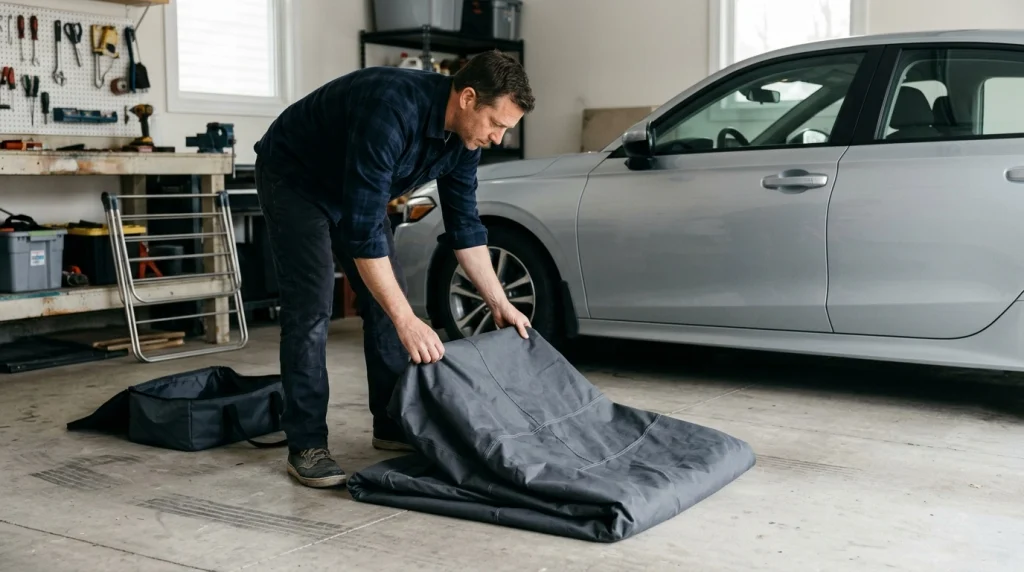
Good maintenance helps a car cover retain its useful features for longer. The key is to prevent dirt buildup, avoid prolonged damp storage, and catch damage before it spreads.
Follow a simple inspection routine
Check the cover briefly whenever you remove or install it, especially if you use it outdoors. A more thorough inspection after heavy rain, strong winds, or an extended period of storage can reveal developing problems.
Use this routine as a starting point, adjusting it to your cover’s instructions and exposure:
- During each use: Look for loose straps, trapped dirt, and fresh tears.
- After wet weather: Check whether the cover and vehicle have dried appropriately.
- During regular cleaning: Inspect seams, elastic, and the inner lining.
- Before storage: Make sure the cover is clean and completely dry.
Prevent avoidable paint damage
Always inspect the vehicle and the cover before putting them together. Sand, dust, and other particles trapped between the two surfaces can contribute to scratching when the cover moves.
Fit the cover according to its instructions and secure the intended attachment points. If strong wind repeatedly moves the cover, remove it when conditions make safe use impractical rather than allowing it to flap against the paint.
Give the vehicle and cover time to dry when necessary. A cover is not a substitute for a dry, clean storage environment, and using one continuously without inspection can conceal developing problems.
Keep repair and care instructions
Save the manufacturer’s care instructions and any guidance about approved patches or waterproofing treatments. These details can help you avoid products that damage the material or reduce breathability.
When a defect appears, address it promptly. Fixing a small problem while the surrounding fabric remains sound is generally more practical than waiting until multiple sections fail.
Section Takeaway: Clean handling, complete drying, correct fitting, and regular inspection can help extend a cover’s useful life. They cannot, however, reverse fabric that has already become brittle or structurally weak.
Frequently Asked Questions
How do I know when my car cover needs replacing?
Look for persistent leaks, brittle or thinning material, repeated tears, split seams, rough inner lining, lasting mildew, and a poor fit. If cleaning or a suitable minor repair doesn’t resolve the problem, replacement is usually the safer choice for your vehicle’s finish.
How many years should a car cover last?
There is no universal lifespan for every car cover. Indoor storage, outdoor weather, material quality, frequency of use, and maintenance all affect durability. Follow the manufacturer’s guidance and replace the cover when its condition no longer supports reliable protection.
Can I waterproof an old car cover instead of replacing it?
Sometimes. An approved water-repellent treatment may help restore performance when the fabric remains structurally sound. It won’t repair widespread tears, brittle material, failing seams, or a deteriorated lining. Confirm compatibility with the manufacturer before applying a treatment.
Can an old car cover scratch my paint?
Yes, a cover can contribute to scratches if dirt becomes trapped between the material and paint or if the cover repeatedly flaps against the vehicle. A rough or deteriorating lining increases concern. Keep both surfaces clean and replace the cover if its inner material remains abrasive.
Should I replace a car cover if water no longer beads up?
Not necessarily. Water may stop beading because of dirt or worn water-repellent treatment, depending on the material. Clean the cover according to its instructions and retest it using an approved method. Replace it if protection remains inadequate or other signs of deterioration appear.
Is a small hole enough reason to buy a new cover?
Not always. A small, isolated hole may be repairable if the surrounding material is strong and the manufacturer permits patching. Multiple holes, spreading tears, or weak fabric around a repair indicate broader deterioration and make replacement more appropriate.
Should I keep using a car cover that smells musty?
Remove it and inspect both the cover and the vehicle. Clean and dry the material according to the manufacturer’s instructions. If the odor persists alongside mildew, material weakness, or lining damage, replace the cover rather than continuing to trap moisture against the vehicle.
Final Takeaway: Replace Your Car Cover When Protection Starts Failing
The most important signs your car cover needs replacing are persistent water penetration, brittle fabric, repeated tears, failed stitching, a damaged lining, stubborn mildew, and an unreliable fit. These problems matter because a cover should protect the vehicle without creating new risks for its finish.
Start with a careful inspection before spending money on a replacement. A suitable cleaning, approved patch, or compatible reproofing treatment may solve an isolated problem.
When the material is deteriorating across several areas, replacement is the more dependable choice. Select a cover designed for your vehicle and parking conditions, then keep it clean, dry, and properly fitted.
My rule is simple: don’t replace a cover based on age alone, but don’t keep using one that no longer protects the car. A quick inspection now can help prevent avoidable damage later.
Affiliate disclosure: This article is intended to provide general car-care information. Follow your cover manufacturer’s instructions for cleaning, repair, storage, and replacement.