How to Adjust Mirrors on a Tesla Model Y

Contents
- 1 Key Takeaways
- 2 📑 Table of Contents
- 3 Introduction: Why Perfect Mirror Adjustment is Non-Negotiable
- 4 Understanding Your Tesla Model Y’s Mirror System
- 5 How to Adjust Mirrors on a Tesla Model Y: The Two Primary Methods
- 6 Saving and Recalling Your Perfect Settings with Memory
- 7 Advanced Mirror Features: Beyond Simple Tilt
- 8 Troubleshooting: When Mirror Adjustment Fails
- 9 Maintenance and Care for Long-Lasting Mirrors
- 10 Conclusion: Safety Through Simple Adjustment
- 11 Frequently Asked Questions

Jack Stands

Car Bumper Protector

Tire Pressure Monitoring System (TPMS)

Phone Mount for Bike
Properly adjusting the mirrors on your Tesla Model Y is a critical safety step that takes just minutes but significantly enhances your visibility and reduces blind spots. You can adjust them using the physical buttons on the door or via the central touchscreen, and the vehicle’s memory system can save settings for different drivers. This guide walks you through every method, explains advanced features like auto-dimming and heated mirrors, and provides troubleshooting advice for common issues.
Key Takeaways
- Two Adjustment Methods: Use the physical joystick controls on the driver’s door or navigate the touchscreen’s Controls > Mirror settings for adjustments.
- Save Personal Settings: The Tesla’s driver profile memory saves your unique mirror positions, recalling them automatically when you select your profile.
- Advanced Features: Your Model Y likely has auto-dimming (reduces glare) and heated mirrors (defrosts), which are controlled automatically or via the climate settings.
- Correct Positioning is Key: The goal is to minimize your car’s side coverage in the mirror while maximizing the view of adjacent lanes—a slight overlap of your car’s side is the standard technique.
- Troubleshooting Starts Simple: If mirrors won’t adjust, first check for software updates, restart the touchscreen, and ensure the car is in Park with 12V battery power.
- Regular Maintenance Matters: Clean mirrors with proper glass cleaners and avoid harsh chemicals. Consider a protective vinyl wrap to guard against scratches and UV damage.
- Consult the Manual: Your Tesla’s digital owner’s manual on the touchscreen has the most accurate, model-specific information for your vehicle’s configuration.
📑 Table of Contents
- Introduction: Why Perfect Mirror Adjustment is Non-Negotiable
- Understanding Your Tesla Model Y’s Mirror System
- How to Adjust Mirrors on a Tesla Model Y: The Two Primary Methods
- Saving and Recalling Your Perfect Settings with Memory
- Advanced Mirror Features: Beyond Simple Tilt
- Troubleshooting: When Mirror Adjustment Fails
- Maintenance and Care for Long-Lasting Mirrors
- Conclusion: Safety Through Simple Adjustment
Introduction: Why Perfect Mirror Adjustment is Non-Negotiable
Getting behind the wheel of your Tesla Model Y is an experience in smooth, silent, tech-forward driving. But before you even think about engaging Autopilot or pushing the accelerator, there’s one fundamental, life-saving task you must complete: adjusting your mirrors. It’s not just about following a rule; it’s about creating a composite picture of the world around you. Properly set mirrors eliminate blind spots, make lane changes confident, and give you rearward visibility that a camera alone cannot provide. In a vehicle packed with screens and software, the humble mirror remains your most immediate and reliable visual link to the traffic beside and behind you.
Many new Tesla owners, dazzled by the giant central display, might overlook the simple power mirrors. But the Model Y’s mirror system is sophisticated, offering more than just up/down and left/right tilt. Understanding how to adjust them correctly, save those settings, and utilize their advanced features is a core part of mastering your vehicle. This guide will take you from a novice to an expert, covering every adjustment method, explaining what each feature does, and helping you solve problems if they arise. Let’s get those mirrors set up perfectly for your unique driving position.
Understanding Your Tesla Model Y’s Mirror System
Before we start pushing buttons, it helps to know what you’re working with. The Tesla Model Y typically comes with a trio of mirrors: the driver’s side exterior mirror, the passenger’s side exterior mirror, and the interior rearview mirror. All three play distinct roles in your safety ecosystem.
Visual guide about How to Adjust Mirrors on a Tesla Model Y
Image source: teslashooters.com
The Three Pillars of Visibility
The interior rearview mirror provides a direct, unmediated view straight back through the rear window. It’s your first line of defense for seeing vehicles approaching rapidly from behind. The exterior side mirrors are your panoramic side-view cameras. Their primary job is to cover the high-speed lanes immediately next to your car—the infamous blind spots. A correctly adjusted side mirror should show very little of your own car’s side panel and a broad sweep of the lane next to you. The goal is to have a slight, almost imperceptible, overlap between what you see in your interior mirror and your side mirrors, creating a seamless field of vision.
Standard and Available Features
Most Tesla Model Y vehicles are equipped with power-adjustable mirrors. This means small electric motors inside the mirror housing move the glass at the press of a button or swipe on a screen. There are no manual levers inside the car. Furthermore, many models include auto-dimming mirrors (also called electrochromic mirrors). These use a special gel and sensors to darken the mirror surface automatically when bright headlights glare from vehicles behind you, reducing eye strain and distraction. A separate but common feature is heated mirrors, which use thin heating elements to clear frost, ice, and condensation from the mirror glass—a godsend in winter. Finally, your side mirrors are integrated with the Blind Spot Monitoring (BSM) system. A small amber warning light in the mirror casing will illuminate if a vehicle is detected in your blind spot, a crucial alert that works hand-in-hand with your adjusted mirror positions.
How to Adjust Mirrors on a Tesla Model Y: The Two Primary Methods
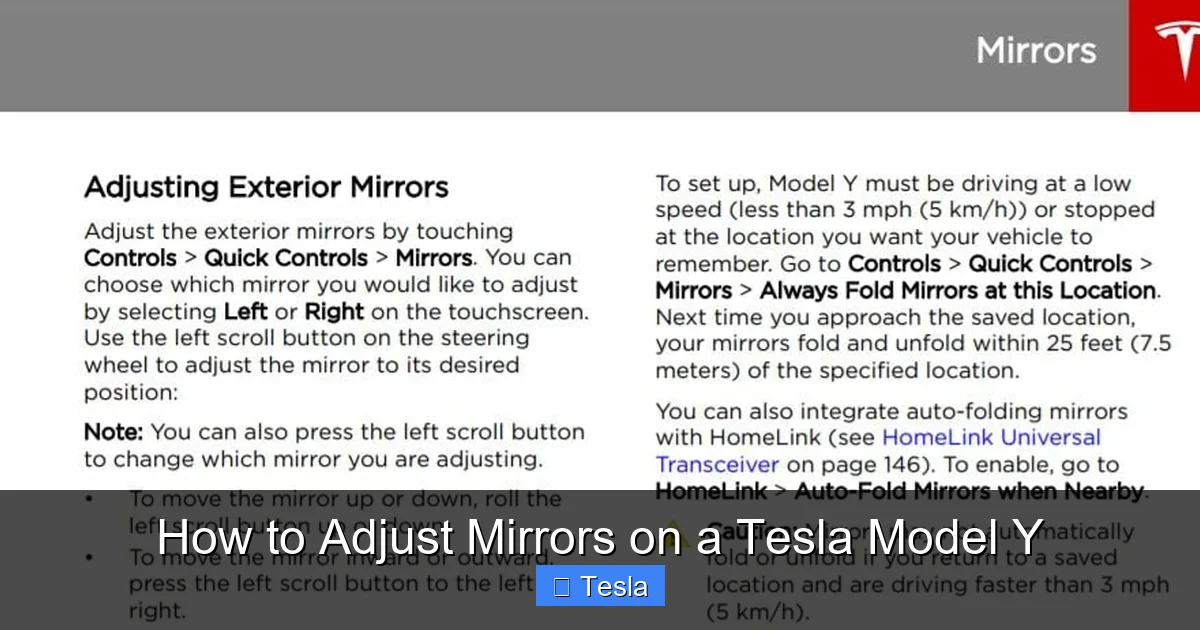
Now for the hands-on part. Tesla gives you two convenient ways to adjust your mirrors: the traditional, tactile method using physical controls on the door, and the modern, screen-based method through the touchscreen. Both achieve the same result, so use whichever feels more intuitive to you. It’s a good idea to be proficient in both.
Visual guide about How to Adjust Mirrors on a Tesla Model Y
Image source: cdn.teslanorth.com
Method 1: Using the Physical Door Controls
This is the fastest method once you know where the controls are. Located on the driver’s door panel, you’ll find a small, square control pad with a joystick-like nub or a circular dial, depending on your Model Y’s production year and region.
- Locate the control: On the door armrest panel, find the mirror adjustment selector. It’s usually a small dial or a set of buttons with an icon resembling a side mirror.
- Select the mirror: First, you need to tell the car which mirror you want to move. Twist the dial or press the “L” (left) or “R” (right) button to select the driver’s side or passenger’s side mirror. A small light on the control or an icon on the touchscreen will indicate which mirror is active.
- Adjust the position: With the correct mirror selected, gently push the joystick or dial in the direction you want the mirror to move. Pushing forward tilts the top of the mirror down; pushing back tilts it up. Pushing left moves the mirror left (as you look at it); pushing right moves it right. Make small, incremental adjustments.
- Center the selector: After adjusting one mirror, center the dial or deselect the “L”/”R” button to avoid accidentally moving the wrong mirror later.
Pro Tip: Always perform these adjustments while sitting in your normal, seated driving position with the seat fully adjusted. Your view will be different if you lean forward or reach.
Method 2: Adjusting via the Central Touchscreen
The touchscreen method offers precision and is the only way to access some nuanced settings. It’s also helpful if the physical controls feel stiff or unresponsive.
- Access the menu: While the car is in Park (a safety lockout), tap the “Controls” icon (car symbol) on the bottom dock of the touchscreen.
- Navigate to Mirrors: Scroll down the left-hand menu and select “Mirrors.” This opens a dedicated mirror adjustment screen.
- Select and adjust: You’ll see graphical representations of your driver and passenger side mirrors. Tap the icon for the mirror you wish to adjust (it will highlight). Then, use your finger to drag the on-screen mirror graphic in the desired direction—up, down, left, right. The physical mirror will move in sync.
- Fine-tuning: This method can feel very sensitive. Use slow, deliberate drags for the most precise control.
Why use the screen? This method is also where you’ll find the settings for mirror fold/unfold (if equipped), mirror auto-tilt (which lowers the passenger mirror when reversing to see the curb), and the auto-dimming toggle on some models.
Saving and Recalling Your Perfect Settings with Memory
You’ve spent five minutes getting your mirrors, seat, and steering wheel dialed in just right. The last thing you want is to lose that perfect position. The Tesla Model Y’s driver profile memory system is here to save the day—and your settings.

Visual guide about How to Adjust Mirrors on a Tesla Model Y
Image source: i.ytimg.com
How Driver Profiles Work
When you create a driver profile (via the touchscreen under your name icon), you can save dozens of positional settings, including the driver’s seat, steering wheel, and mirror positions. Once saved, selecting your profile from the top of the touchscreen (or via the mobile app/key card) will automatically move the mirrors, seat, and wheel to your predefined positions within a few seconds.
Saving Your Mirror Settings
- Adjust both side mirrors and the interior mirror to your perfect position using either method above.
- Ensure you are logged into your driver profile on the touchscreen.
- Tap your profile icon at the top of the screen, then select “Save.” The system will capture all current positional settings for that profile.
Important: The interior rearview mirror is not power-adjusted on most Model Ys, so its position is manual and not saved to memory. Only the exterior side mirrors are power-memory.
Guest Driver Mode
When someone else drives your car, have them select “Guest” from the profile menu. This prevents their adjustments from overwriting your carefully saved settings. When you return, simply select your profile to reset everything.
Advanced Mirror Features: Beyond Simple Tilt
Your Tesla’s mirrors are smart. Let’s break down the high-tech features that make them more than just reflective glass.
Auto-Dimming (Electrochromic) Mirrors
This feature is pure magic for night driving. A sensor on the mirror detects bright light from vehicles behind you. It sends a small electrical charge to a special gel between the mirror’s glass layers, causing the mirror to darken automatically and reduce glare. You don’t need to toggle it; it’s always working. However, you can usually disable it in the touchscreen under Controls > Mirrors > Auto-Dimming. Why would you disable it? Rarely, if the mirror is overly sensitive or not dimming enough in very bright conditions, turning it off and relying on the manual flip tab (if present) is an option. But for most, keeping it on is the safest, least fatiguing choice.
Heated Mirrors
Frozen or foggy mirrors are a safety hazard. Your Model Y’s heated mirrors activate automatically when you turn on the rear window defroster (the button with the rectangle and wavy lines). You can also manually activate them by going to Controls > Climate > Heated Mirrors on the touchscreen. The heating elements clear ice, frost, and condensation quickly. Note: If your mirrors aren’t clearing, ensure the rear defroster is working and that no aftermarket tint is blocking the heating elements’ effectiveness. For expert advice on window tinting that won’t interfere with these systems, check our comprehensive guide on how much to tint a Tesla Model Y.
Blind Spot Monitoring Integration
The small amber icon on your side mirror housing isn’t just for show. It’s part of Tesla’s Blind Spot Warning system, which uses ultrasonic sensors (or cameras on newer models) to detect vehicles in your adjacent lanes. When a car is in your blind spot, the corresponding mirror’s warning light will glow brightly. This system is a critical backup to your visually adjusted mirrors. Remember: the mirror should be adjusted so that a vehicle entering your blind spot is already partially visible in the mirror before the light illuminates, giving you a visual and technological warning.
Troubleshooting: When Mirror Adjustment Fails
Occasionally, you might encounter issues. Don’t panic; most have simple fixes.
Symptom: Mirrors Won’t Move at All
First checks: Ensure the vehicle is in Park (P). The system locks for safety in other gears. Is the 12V battery (the small auxiliary battery) charged? A very low 12V battery can disable many accessories, including mirrors. Try a touchscreen restart—hold down both scroll wheels on the steering wheel until the screen goes black and reboots. This often resolves temporary software glitches.
Symptom: One Mirror Moves, the Other Doesn’t
This usually indicates a problem isolated to that mirror’s motor or wiring. The mirror may be physically obstructed (ice, debris) or the motor has failed. Gently move the mirror glass by hand (when the car is off) to feel for resistance. If it’s stiff or gritty, there may be internal damage. This often requires a service visit to replace the mirror assembly.
Symptom: Auto-Dimming or Heating Not Working
First, confirm the feature is enabled in your touchscreen settings (Controls > Mirrors). For heating, ensure the rear defroster is active. If both are out on one side, it’s likely a wiring or component failure in that mirror housing. If both are out simultaneously, a fuse or central control module issue is possible. A Tesla service center can run diagnostics.
When to Seek Professional Help
If basic troubleshooting (restart, settings check) fails, it’s time to schedule service. Mirror mechanisms contain delicate electronics and motors. DIY repairs can cause further damage. For issues like cracked glass, loose housings, or complete motor failure, professional repair is essential. While waiting for service, you can learn about general side mirror repair principles from resources like our guide on how to fix side mirrors on a car, but always defer to Tesla’s specific procedures for warranty and safety.
Maintenance and Care for Long-Lasting Mirrors
Your mirrors are exposed to the elements, road debris, and daily use. Proper care keeps them functional and clear.
- Cleaning: Use a soft microfiber cloth with a standard automotive glass cleaner or a 50/50 mix of isopropyl alcohol and water. Spray onto the cloth, not directly on the mirror, to avoid liquid seeping into the housing and damaging the motor or sensors. Avoid ammonia-based cleaners (like some household window cleaners) on tinted or coated mirrors.
- Regular Inspection: Periodically check the mirror housings for cracks or loose mounting. Ensure the glass is secure and not rattling. Listen for unusual noises (clicking, grinding) during adjustment.
- Protection from Damage: Car doors are the #1 cause of mirror damage. Be mindful in tight parking spots. Consider applying a clear vinyl protective film (PPF) to the mirror glass to shield against chips and scratches. Some owners also use vinyl wraps on the mirror cap/housing for a custom look and extra UV protection. If you’re interested in a full vinyl wrap for aesthetic customization or paint protection, our detailed article on how much it costs to wrap a Tesla Model Y covers everything you need to know.
- Winter Care: If you live in an area that uses road salt, rinse your mirrors (and the whole car) regularly in winter to prevent corrosive buildup around the moving parts.
Conclusion: Safety Through Simple Adjustment
Adjusting the mirrors on your Tesla Model Y is one of the most important, yet simplest, safety rituals you perform as a driver. It bridges the gap between the car’s advanced sensor suite and your own eyes. By mastering both the physical door controls and the touchscreen interface, you can achieve the perfect field of vision in under a minute. Remember to save your settings to your driver profile, understand how auto-dimming and heated mirrors work, and incorporate regular cleaning into your car care routine. Should problems arise, a methodical troubleshooting approach—starting with a reboot and settings check—often solves the issue. Your mirrors are your constant companions on the road; give them a few moments of attention, and they will pay you back in confidence and security on every journey. Now, go forth and enjoy your perfectly clear, blind-spot-minimized drive.
Frequently Asked Questions
Can I adjust my Tesla Model Y mirrors while the car is moving?
No, for safety reasons, the mirror adjustment controls (both physical and touchscreen) are locked out when the vehicle is in Drive, Reverse, or Neutral. You must come to a complete stop and place the car in Park to make adjustments.
Why is my passenger side mirror not auto-tilting down when I shift into Reverse?
This feature, called “Mirror Auto-Tilt,” must be enabled. Go to Controls > Mirrors on the touchscreen and ensure the “Auto-Tilt” toggle is on. Also, this feature is typically only available for the passenger mirror and only when a driver profile is active.
My mirrors are adjusted correctly, but I still have a large blind spot. What’s wrong?
>If you’ve followed the standard positioning technique (seeing little of your car’s side in the mirror), your blind spot may be due to the mirror’s physical size or your seating position. Ensure your seat is adjusted properly first. You can also slightly sweep the mirror outward to cover more of the adjacent lane, but be cautious not to create a new blind spot directly behind you. The BSM warning lights are your essential backup.
How do I reset my mirror memory to factory defaults?
There isn’t a direct “reset mirrors” button. To reset your entire driver profile (including mirrors), go to your profile icon, select “Driver Settings,” then “Reset Driver Settings.” This will revert all saved settings (seat, wheel, mirrors) for that profile to factory defaults. You’ll then need to readjust and save them again.
Do I need to manually fold my mirrors when parking in tight spaces?
If your Model Y is equipped with power-folding mirrors (not all trims have this), you can fold them via the touchscreen (Controls > Mirrors > Fold) or, on some models, by pressing and holding the physical mirror adjustment control. Many owners find manually folding them by hand is quicker and prevents potential motor wear from frequent use.
Will applying a vinyl wrap to my mirror caps affect the heated mirror or sensor function?
A professionally installed, high-quality vinyl wrap applied only to the non-functional cap (the housing) should not interfere with the mirror’s heating elements, auto-dimming sensor, or Blind Spot Monitoring sensors, which are located on the back of the mirror glass assembly. However, a poor installation with wrinkles or overlap onto the glass surface could potentially cover sensors. Always discuss your wrap design with the installer to ensure these areas are avoided. For more on wrap materials and costs, see our guide.