
How Much Is a 1989 Ford F-150 Worth?

The value of a 1989 Ford F-150 can range wildly from $1,500 for a rough project truck to over $25,000 for a pristine, low-mileage example. Its worth is primarily driven by condition, engine type, rust levels, and originality rather than pure age. Understanding these factors is crucial whether you’re buying, selling, or insuring this iconic eighth-generation pickup.
Key Takeaways
- Condition is King: A rust-free, well-maintained 1989 F-150 can be worth 10-15 times more than a severely rusted or neglected one.
- Engine Matters: The fuel-injected 5.0L (302) V8 is the most desirable and valuable; carbureted engines and the 5.8L (351) are less sought after.
- Trim Level Influences Price: Eddie Bauer and XLT trims command premiums over the base Custom model, especially with options like A/C and automatic transmission.
- Originality Sells: Unmodified, survivor trucks with original paint and parts fetch the highest prices at auction and among collectors.
- Rust is the Biggest Killer: Frame, cab corners, and rocker panel rot can drastically reduce value and make a truck unsafe, regardless of mileage.
- Market is Niche but Active: Values are stable with slow growth, driven by enthusiasts and used-truck buyers seeking simple, reliable workhorses.
- Paperwork is Critical: A clean title, maintenance records, and verified mileage significantly boost buyer confidence and final sale price.
📑 Table of Contents
- Introduction: The Unstoppable Legacy of the 1989 Ford F-150
- The Core Truth: What Actually Drives a 1989 F-150’s Value?
- Condition Categories: How to Honestly Rate Your Truck
- 1989 F-150 Pricing Breakdown: By Model and Trim
- Buying and Selling Strategies: Get the Best Deal
- The 1989 F-150 as an Investment: Will It Go Up?
- Conclusion: Your 1989 Ford F-150’s True Worth
Introduction: The Unstoppable Legacy of the 1989 Ford F-150
Let’s take a quick trip back to 1989. The Berlin Wall had just fallen, Back to the Future Part II hit theaters, and Ford was selling the eighth-generation F-150 like hotcakes. This was the truck that defined a generation of builders, farmers, and adventurers. It was simple, tough, and everywhere. Fast forward over three decades, and that same truck is now a classic. But here’s the real question: how much is a 1989 Ford F-150 worth today?
The answer isn’t simple. It’s not like looking up a 2024 model’s MSRP. The value of a 1989 F-150 lives in a world of extremes. On one end, you have derelict shells sitting in fields, worth mostly their weight in scrap metal. On the other, you have meticulously preserved, low-mileage survivors that feel like they just rolled off the dealer lot, commanding prices that surprise many. This guide will pull back the curtain. We’ll break down every single factor that twists the price tag—from the engine under the hood to the rust in the wheel wells. Whether you’re a first-time classic buyer, a seller trying to price your pride and joy, or just a curious gearhead, you’ll leave with a crystal-clear picture of the 1989 Ford F-150’s true worth.
The Core Truth: What Actually Drives a 1989 F-150’s Value?
Forget “classic” as a blanket term. The 1989 F-150 is a tool, and its value is based on utility and condition, not just nostalgia. Think of it like a house: location, size, and renovations matter. For this truck, the “renovations” are its mechanical health and rust status. The “location” is its engine and drivetrain combo. Let’s dissect the key drivers.
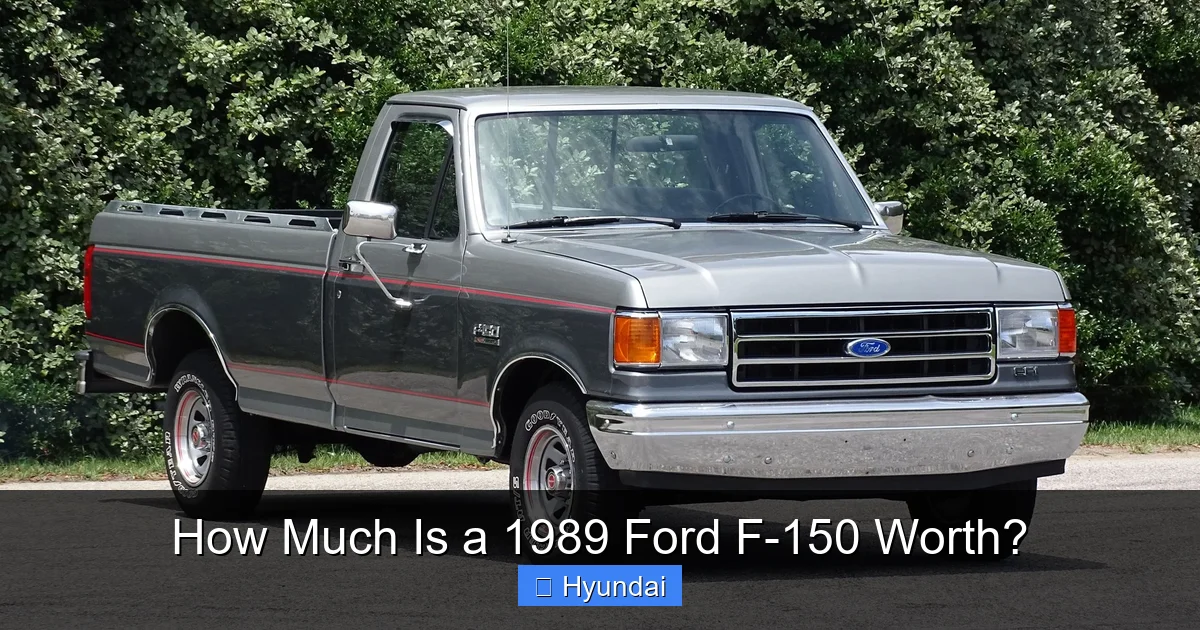
Visual guide about How Much Is a 1989 Ford F-150 Worth?
Image source: cdn.dealeraccelerate.com
Engine & Drivetrain: The Heart of the Matter
This is the single most important technical factor. 1989 was the final year for the old “pushrod” V8s before the switch to the modular engine in 1991. You’ll primarily find two:
- 5.0L (302 CID) V8: This is the golden child. It was fuel-injected (CFI), which was modern for its time. It’s reliable, parts are plentiful and cheap, and it’s the engine everyone wants. A 1989 F-150 with a 5.0L and an automatic transmission is the baseline for a desirable driver truck.
- 5.8L (351 CID) V8: The bigger brother. It has more torque but slightly worse fuel economy. It has a cult following, especially for heavy-duty towing, but it’s generally less sought after by the mainstream classic truck crowd, slightly lowering value.
- 4.9L (300 CID) I6: The legendary workhorse. Incredibly durable, but its value is niche. It’s great for a no-fuss utility truck but won’t fetch a premium.
- Transmission: The 4-speed automatic (E4OD) is the gold standard for ease of use and drivability. A 3-speed automatic is acceptable. A manual transmission (NP435 or T-18) is a major plus for enthusiasts seeking a pure driving experience and can add value. A broken or sloppy transmission is a major value detractor.
The Rust Monster: Your Truck’s Worst Enemy
I cannot stress this enough. Rust is the #1 value killer for these vintage trucks. The 1989 F-150 is a victim of 35 years of road salt, moisture, and time. Inspect these critical areas with a magnet and a flashlight:
- Frame: Any significant rust-through, especially on the rear kick-up or around the rear axle mounts, is a structural red flag. A rusty frame can halve a truck’s value.
- Cab Corners & Rocker Panels: These are thin, unibody welds that love to rot. Bubbling paint or soft metal here means major, expensive repairs.
- Wheel Wells & Bed: Surface rust is one thing; holes are another. A bed with rust-through is a functional and cosmetic nightmare.
A truck with pristine metal will always demand a massive premium. For a reality check on how rust affects other vehicles, you can see similar patterns in how much a 2007 Ford F-150 is worth, where rust in newer models also plays a critical role in valuation.
Trim Level & Options: The Luxury Tax (or Bonus)
Not all 1989 F-150s were created equal. Ford offered several trims:
- Custom: The base work truck. Basic interior, vinyl floor, minimal options. Lowest starting value, but a clean one is still a solid truck.
- XLT: The popular mid-level trim. Carpet, upgraded cloth seats, more sound deadening, and often A/C and alloy wheels. This is the sweet spot for most buyers.
- Eddie Bauer: The top-of-the-line. Two-tone paint, special badging, leather/vinyl seats, and almost every option available. In excellent condition, these are the most valuable production models.
Key options that add value: Air Conditioning (a huge plus in summer), Automatic Transmission, Tilt Steering Wheel, Cruise Control, and the 4×4 system. A 4×4 truck, especially in a desirable trim, will always be worth more than a 2WD equivalent.
Modifications: The Love-Hate Relationship
Here’s where personal taste clashes with market value. A truck with a 4-inch lift, big tires, and a chrome grille might be your dream, but for a classic truck purist, it’s a modification that hurts value. The classic truck market, for the most part, values originality. A completely stock, unmodified truck will sell faster and for more money than one with extensive aftermarket changes. However, tasteful, period-correct upgrades (like a factory-style topper or a vintage camper shell) can be acceptable. Wild engine swaps, massive lifts, and poorly done paint jobs are almost always value reducers.
Condition Categories: How to Honestly Rate Your Truck
Professionals and auction houses use standardized condition categories. Knowing which one your truck fits into is the first step to pricing it correctly. Be brutally honest with yourself.
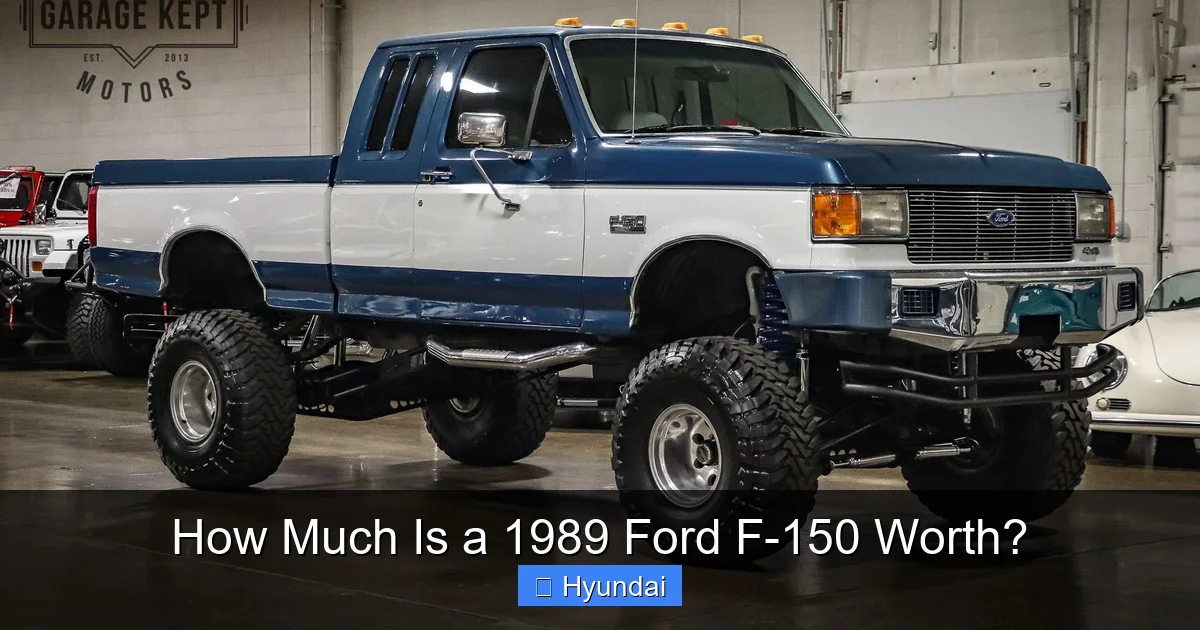
Visual guide about How Much Is a 1989 Ford F-150 Worth?
Image source: garagekeptmotors.com
#1 Condition: Concours / Show Quality
This is the cream of the crop. Think museum piece. The truck has:
- 100% original or NOS (New Old Stock) parts.
- Factory-matching paint with no chips or fading.
- A flawless, rust-free body and frame.
- Less than 50,000 original miles (often much less).
- Comprehensive documentation and history.
Value Range: $20,000 – $35,000+. These are rare. They appear at high-end auctions like Mecum or Barrett-Jackson. A perfect Eddie Bauer 4×4 with the 5.0L can break $30,000.
#2 Condition: Excellent / Driver Quality
This is the dream for most enthusiasts. The truck is beautiful, runs perfectly, and can be driven anywhere with confidence. Features include:
- Original or exceptionally well-done repaint in factory color.
- No structural rust; only minor surface rust in hidden areas.
- Interior is clean, with no major tears (seat covers are okay). All gauges and accessories work.
- Mechanically sound with no known issues. Maintenance is up to date.
- Mileage is typically under 150,000.
Value Range: $10,000 – $20,000. This is where the majority of “nice” trucks sell. A well-presented XLT 4×4 with the 5.0L and A/C will sit at the top of this range.
#3 Condition: Good / Daily Driver
This is the workhorse. It has flaws but is mechanically reliable and structurally sound. Characteristics:
- Paint is faded, has touch-ups, or is a non-factory color. Some minor dents and dings.
- Some surface rust, but no holes in the body or frame. Rocker panels might have minor bubbling.
- Interior is worn but functional. Tears in seats, cracked dash are common. Some accessories may not work.
- Runs and drives well but may need minor repairs (brakes, tune-up, shocks).
- Mileage is typically 150,000 – 250,000+.
Value Range: $5,000 – $9,000. This is the most common segment for private-party sales. It’s a solid, usable truck for someone who doesn’t need a showpiece.
#4 Condition: Project / Salvage
This is the fixer-upper. The truck is either non-running or has major issues. It is sold “as-is.”
- Severe rust, often with holes in the bed, cab corners, or frame.
- Significant mechanical problems (engine knock, transmission slip).
- Major interior damage (missing seats, destroyed headliner).
- May have a salvage title or major accident history.
Value Range: $500 – $3,000. At this point, the truck’s value is mostly in its VIN number (for a title) and parts. The cost of restoration often exceeds the final value of a #2 condition truck. For extreme cases, the scrap value might be the only realistic figure, similar to assessing how much a Subaru catalytic converter is worth for scrap—it’s about parting out.
1989 F-150 Pricing Breakdown: By Model and Trim
Now, let’s get specific. Using data from recent auction results (Bring a Trailer, Mecum), private sales, and classic truck valuation guides like NADA and Hagerty, here is a realistic 2024 price breakdown for a *running, driving, titled* 1989 Ford F-150. Remember, these are averages. A pristine truck in California will sell for more than an identical one in Maine with road salt damage.
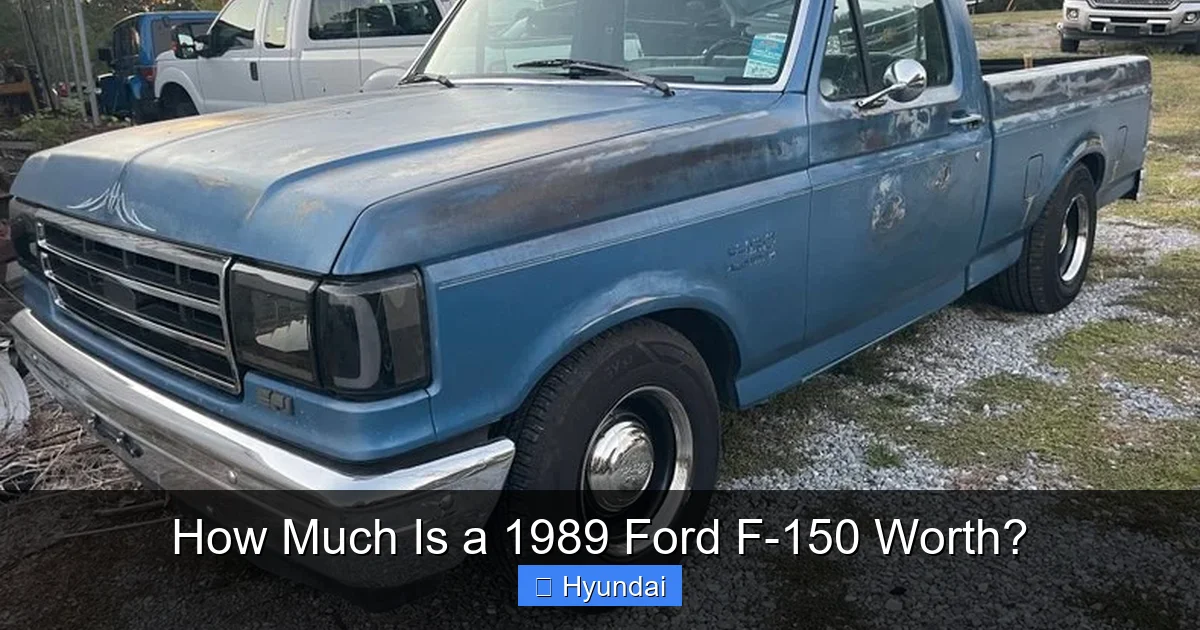
Visual guide about How Much Is a 1989 Ford F-150 Worth?
Image source: cdn.dealeraccelerate.com
Base Model: Ford F-150 Custom
The no-frills work truck. Value is entirely about mechanical health and rust.
- 2WD, 5.0L, Standard Cab, Long Bed: Good Condition: $6,500 – $8,500. Excellent Condition: $9,000 – $12,000.
- 4×4, 5.0L, Standard Cab, Long Bed: Good Condition: $8,000 – $10,500. Excellent Condition: $12,000 – $16,000.
The Sweet Spot: Ford F-150 XLT
The most popular and desirable classic configuration. This is where you’ll find the best balance of comfort and value.
- 2WD, 5.0L, XLT Cab (SuperCab), Short Bed: Good Condition: $8,000 – $11,000. Excellent Condition: $13,000 – $17,000.
- 4×4, 5.0L, XLT Cab, Short Bed: Good Condition: $10,000 – $14,000. Excellent Condition: $15,000 – $22,000.
- 4×4, 5.0L, XLT, Flareside Bed: These are slightly more niche but valued. Excellent Condition: $16,000 – $24,000.
The Top Dog: Ford F-150 Eddie Bauer Edition
For the luxury classic truck buyer. These are rare and sought-after.
- 4×4, 5.0L, Eddie Bauer, Short Bed: Good Condition: $12,000 – $16,000. Excellent Condition: $18,000 – $28,000+.
Special Note on the 1989 F-150 Lightning: This was the first year of the high-performance F-150 Lightning, but only 2,250 were made. They had a tuned 5.8L engine, special suspension, and badging. A true, numbers-matching Lightning in excellent condition is a $30,000+ truck. A clone or poorly restored one is worth much less. Verify VIN and documentation carefully.
Buying and Selling Strategies: Get the Best Deal
Knowing the value is one thing. Getting that value in a real-world transaction is another. Here’s how to navigate the market.
For Buyers: How to Find Value and Avoid Lemons
1. Look in the Right Places: Check classic truck forums (e.g., Ford-Trucks.com), Bring a Trailer, Facebook Marketplace, and local craigslist. Avoid auction sites if you’re not experienced; “buyer’s premium” fees add 10-15% to the final price.
2. Inspect Ruthlessly: Use the rust checklist from earlier. Bring a magnet to find bondo. Check for oil leaks, transmission fluid condition, and smoke from the exhaust. Ask for a cold start.
3. VIN is Your Best Friend: Decode the VIN to verify the engine, trim, and plant. A VIN that shows a 5.0L but the truck has a 5.8L is a red flag. A clean, non-salvage title is non-negotiable for a fair price.
4. Compare, Compare, Compare: Look at sold listings on Bring a Trailer for the exact same trim, engine, and condition. This is your most accurate pricing data. Don’t just look at asking prices.
5. Budget for the “Honeymoon” Costs: Even a great truck will need new tires, a full tune-up, fluids, and likely a brake job. Factor $1,500-$3,000 into your purchase budget for immediate safety and reliability work.
For Sellers: How to Maximize Your Sale Price
1. Clean Like It’s Going to a Show: A thorough wash, clay bar, and wax. Clean the engine bay (but don’t overdo it with shiny spray). Steam clean the undercarriage. A clean truck looks well-cared-for.
2. Fix the “Low-Hanging Fruit”: Replace cracked hoses, fix any check engine lights, change the oil, top off all fluids. Make sure all lights work. These small fixes build buyer confidence.
3. Take Incredible Photos: Use good lighting. Shoot 360-degree exterior shots, close-ups of the engine, VIN tag, interior, and **especially the frame and undercarriage**. Show the good and the bad. Transparency prevents wasted time with non-serious buyers.
4. Write an Honest, Detailed Ad: List the VIN, engine size, transmission, mileage, and all known flaws. Mention if it’s a single-owner truck with records. This builds trust. Use keywords like “rust-free,” “5.0L,” “XLT,” “4×4” to attract the right searches.
5. Price It Right from the Start: Price it 5-10% above your “need to sell” price to leave room for negotiation. An overpriced truck sits and gets stale. Check comparable sold listings, not just current ads.
The 1989 F-150 as an Investment: Will It Go Up?
Let’s be clear: you should not buy a 1989 F-150 *primarily* as a financial investment. You buy it because you love it. However, understanding the market trend is smart.
Market Trends and Future Value
The classic truck market has been hot for a decade. Values for clean, desirable examples (4×4, 5.0L, XLT/Eddie Bauer) have steadily climbed 3-7% annually. The drivers are:
- Nostalgia: Gen X and older millennials who grew up with these trucks now have disposable income.
- Simplicity: In an age of complex, computer-heavy vehicles, the mechanical simplicity of a 1989 F-150 is a huge selling point. You can fix almost anything with basic tools.
- Utility: It’s still a useful hauler and tow vehicle for weekend projects.
However, the market is not infinite. The ceiling for a #2 condition truck is likely in the $25,000-$30,000 range long-term. The truly exceptional #1 trucks will continue to appreciate but are a very small subset. The biggest threat to future values? Widespread deterioration. As the remaining good trucks are bought up and the pool shrinks to mostly rusty project trucks, the value of the good ones could spike. But that’s a 10-15 year horizon.
The “Parts Truck” Reality
For every restored truck, there are dozens being parted out. The parts market is robust. A running 5.0L engine with accessories might sell for $1,200-$2,000. A good 4×4 transfer case, $300-$600. A rust-free bed can go for $800-$1,500. This sets a floor for what a whole truck is worth. If the sum of its valuable parts is more than the truck as a whole, it will be parted out. This is the brutal economics of the classic truck world. For comparison, the parts value of a heavily damaged modern luxury car can sometimes exceed its totaled value, a concept explored in articles like how much a scrap BMW is worth.
Conclusion: Your 1989 Ford F-150’s True Worth
So, how much is a 1989 Ford F-150 worth? The final number lives in a spectrum. At the bottom, around $1,500, you find the rusted, non-running project that is a source of parts. At the top, past $25,000, you find the flawless, documented survivor that turns heads at every cruise night. For the vast majority of trucks out there—the solid, running, decently clean drivers—the sweet spot is between $8,000 and $18,000.
Your job is to honestly place your truck (or the one you’re buying) on that spectrum. Be the rust detective. Be the VIN decoder. Be the condition realist. The market for these tough, simple trucks is strong because they represent something we all crave: honest, uncomplicated reliability. When you find a good one at a fair price, you’re not just buying a piece of metal. You’re buying a ticket to a community, a tangible piece of the late-80s, and a truck that will, with proper care, likely still be running to see the 2040s. That has a value all its own.
Frequently Asked Questions
What is a typical price for a running 1989 Ford F-150 in good condition?
For a mechanically sound, driver-quality truck with minimal rust (likely an XLT or Custom 4×4 with the 5.0L engine), expect to pay between $10,000 and $15,000. A pristine, low-mileage example can easily exceed $20,000, while a truck needing work will be $5,000-$8,000.
Which engine is most valuable in a 1989 F-150?
The fuel-injected 5.0L (302) V8 is the most desirable and valuable. It’s the standard for reliability and parts availability. The 5.8L (351) has a following but is less popular, and the 4.9L inline-six is valued mainly by utilitarian buyers and is typically worth less.
How much does rust really affect the value?
Profoundly. Surface rust might cost you $1,000-$2,000. But significant rust in the frame, cab corners, or rocker panels can cut a truck’s value in half or more. A rust-free truck is the single biggest factor in achieving top dollar. A structurally rusty truck is often only worth its parts value.
Is a 1989 Ford F-150 a good investment?
As a pure financial investment, probably not. Values are stable with slow growth for excellent examples. You buy it because you enjoy it. However, clean, desirable trucks (4×4, 5.0L, XLT) have consistently appreciated over the last decade and are expected to hold their value well, possibly increasing as the pool of good trucks shrinks.
What are the insurance costs like for a classic 1989 F-150?
If you insure it through a standard auto policy for its actual cash value, costs are similar to any other 35-year-old vehicle (often low, maybe $300-$600/year). For agreed-value classic car insurance (recommended for nicer trucks), you’ll pay a premium based on the insured value, but often get better coverage and lower rates because the car is not your daily driver. Always get quotes.
Should I buy a 1989 F-150 for parts or as a whole truck?
Do the math. If the truck is a project with a straight frame and good bed/doors, buying it whole is usually cheaper than sourcing parts individually. If the frame is gone or the cab is rotten, it’s often only worth its salvageable parts (engine, transmission, axles, body panels). Parting out a whole truck is a significant time investment. For a complete project, buying a whole, running truck is almost always more economical than building from parts.