
How Long Does It Take a Car Battery to Die

Car batteries don’t last forever—most last 3–5 years under normal conditions. However, extreme temperatures, short trips, and electrical drains can shorten that lifespan significantly. Understanding what drains your battery and how to maintain it can save you from unexpected breakdowns.
Key Takeaways
- Average lifespan: Most car batteries last between 3 and 5 years, depending on usage and climate.
- Extreme temperatures matter: Hot summers and cold winters can accelerate battery degradation.
- Parasitic drain shortens life: Leaving lights on or using electronics when the engine is off drains the battery faster.
- Short trips are harmful: Frequent short drives don’t give the alternator enough time to recharge the battery fully.
- Regular maintenance helps: Cleaning terminals, checking voltage, and testing the charging system can extend battery life.
- Battery age is critical: Even if a battery seems fine, it should be tested annually after 3 years.
- Signs of failure: Slow engine cranking, dim headlights, and warning lights indicate a dying battery.
📑 Table of Contents
- How Long Does It Take a Car Battery to Die?
- What Is a Car Battery and How Does It Work?
- How Long Do Car Batteries Typically Last?
- What Causes a Car Battery to Die Prematurely?
- How Long Does It Take for a Battery to Die in Different Scenarios?
- Signs Your Car Battery Is Dying
- How to Extend the Life of Your Car Battery
- When to Replace Your Car Battery
- Conclusion
How Long Does It Take a Car Battery to Die?
Imagine this: You’re running late for work, you hop into your car, turn the key—and nothing happens. The engine doesn’t crank. The dashboard lights flicker weakly. You’re stuck. Sound familiar? If so, you’ve probably experienced the sinking feeling of a dead car battery.
But how long does it actually take for a car battery to die? The answer isn’t as simple as a single number. It depends on a mix of factors—your driving habits, the climate you live in, the age of the battery, and even what’s left on inside the car. While most car batteries are designed to last between three and five years, many die much sooner due to preventable issues. In extreme cases, a battery can go from fully charged to completely dead in just a few hours. Understanding the timeline—and the warning signs—can help you avoid being stranded and extend the life of your battery.
What Is a Car Battery and How Does It Work?
Before diving into how long a battery lasts, it helps to understand what it actually does. A car battery is a rechargeable power source that provides the electrical energy needed to start your engine and power accessories when the engine is off. Most modern vehicles use a 12-volt lead-acid battery, which consists of six cells connected in series. Each cell produces about 2 volts, adding up to the standard 12 volts required to run your car’s electrical system.
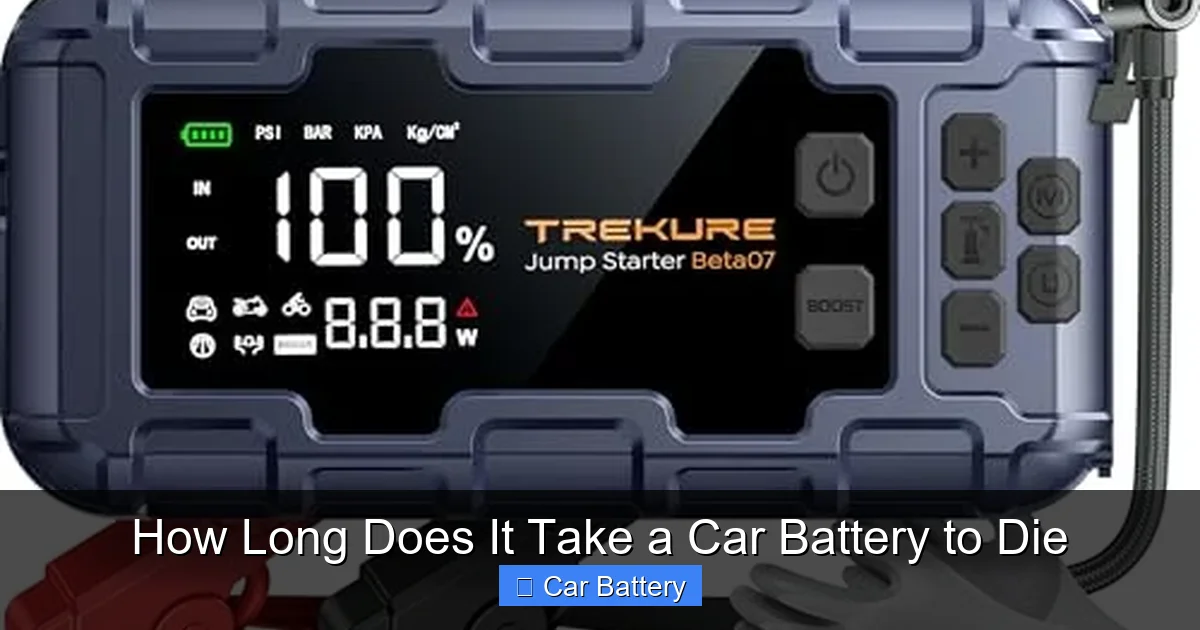
Visual guide about How Long Does It Take a Car Battery to Die
Image source: compressorlab.com
Starting the Engine
When you turn the key or press the start button, the battery sends a burst of electricity to the starter motor. This motor spins the engine’s crankshaft, initiating the combustion process. This momentary surge of power is one of the most demanding tasks a battery performs. It requires a high current draw in a very short time—often several hundred amps.
Powering Accessories
Once the engine is running, the alternator takes over as the primary power source. It generates electricity to recharge the battery and power lights, radio, air conditioning, and other electronics. However, when the engine is off, the battery is the only source of power. This is why leaving your headlights on or playing music with the engine off can drain the battery over time.
Recharging Cycle
A healthy battery goes through a constant cycle of discharging and recharging. During driving, the alternator replenishes the energy used to start the car. But if you only take short trips—say, five to ten minutes—the alternator doesn’t have enough time to fully recharge the battery. Over time, this leads to a gradual loss of charge, weakening the battery and shortening its lifespan.
How Long Do Car Batteries Typically Last?
The average car battery lasts between three and five years. But this is just a general guideline. Some batteries die in as little as two years, while others can last six or even seven years with proper care. Several factors influence how long your battery will last.
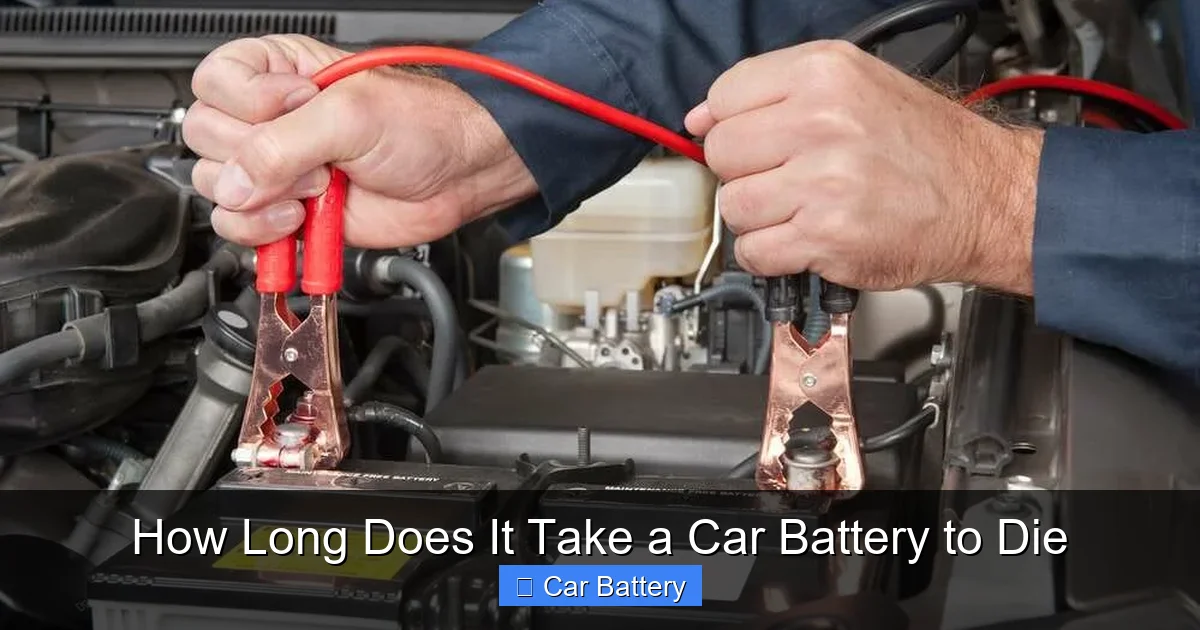
Visual guide about How Long Does It Take a Car Battery to Die
Image source: vehiclefreak.com
Battery Age and Warranty
Most car batteries come with a warranty of three to five years. This doesn’t mean the battery will definitely last that long—it just means the manufacturer guarantees it for that period. In fact, many batteries begin to lose capacity after just two years, even if they still function. That’s why it’s wise to have your battery tested annually once it reaches the three-year mark.
Climate Impact
Temperature plays a huge role in battery life. In hot climates, like Arizona or Texas, batteries tend to degrade faster due to increased internal corrosion. Heat accelerates chemical reactions inside the battery, causing plates to warp and electrolytes to evaporate. On the other hand, cold climates—like Minnesota or Maine—reduce a battery’s ability to deliver power. In freezing temperatures, a battery’s cranking power can drop by 30% to 50%. This is why many people experience battery failure in winter, even if the battery was fine in summer.
Driving Habits
How you drive affects your battery’s health. Frequent short trips are one of the biggest culprits. If you only drive a few miles at a time, the alternator doesn’t get enough time to recharge the battery fully. Over time, this leads to a condition called “surface charge,” where the battery appears charged but lacks deep-cycle capacity. Long highway drives, on the other hand, give the alternator plenty of time to recharge the battery, helping maintain its health.
Electrical Load
The more electronics your car uses, the harder your battery has to work. Modern vehicles come loaded with features like infotainment systems, heated seats, backup cameras, and advanced safety sensors—all of which draw power. If you frequently use these features with the engine off, you’re putting extra strain on the battery. Even small drains, like a trunk light that won’t turn off, can kill a battery overnight.
What Causes a Car Battery to Die Prematurely?
A car battery doesn’t just “die” out of nowhere. It usually gives warning signs long before it fails completely. But if those signs are ignored, the battery can go from weak to dead in a matter of hours or days. Here are the most common causes of premature battery death.
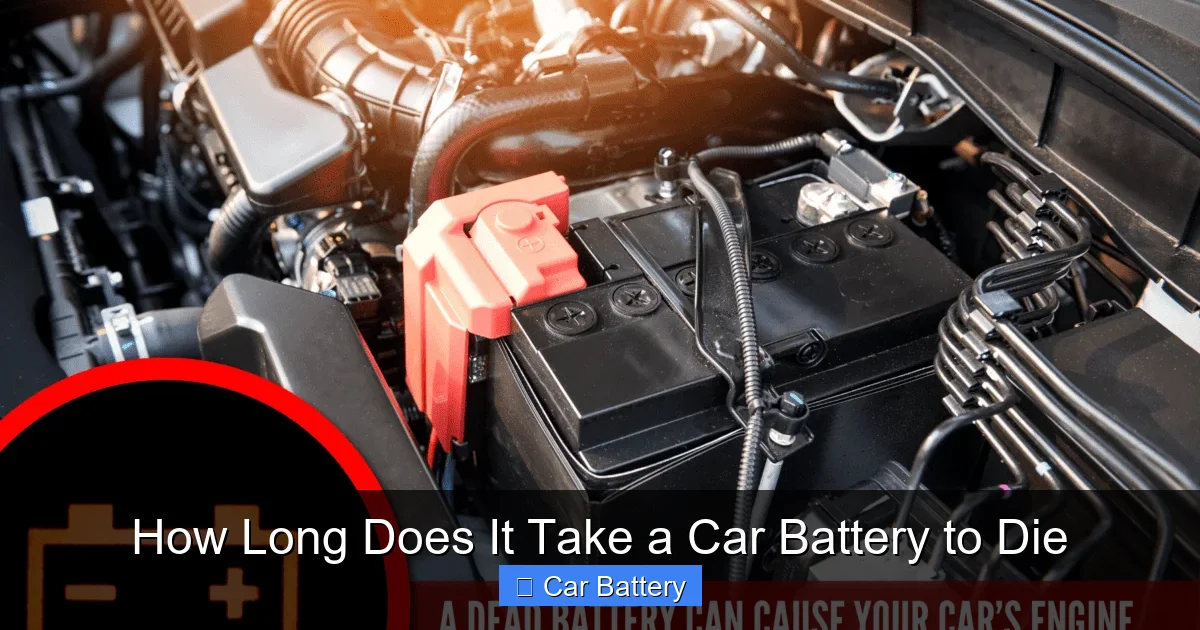
Visual guide about How Long Does It Take a Car Battery to Die
Image source: vehq.com
Parasitic Drain
Parasitic drain refers to small amounts of power being drawn from the battery when the car is off. This is normal to some extent—your car’s computer, alarm system, and clock all need a tiny bit of power. But if something is drawing too much, it can drain the battery overnight. Common culprits include faulty relays, aftermarket electronics (like dash cams or GPS units), or interior lights that don’t turn off.
For example, imagine you install a dash cam that’s supposed to turn off when the car is parked. If it malfunctions and stays on, it could draw 0.5 amps continuously. Over 24 hours, that’s 12 amp-hours of power—enough to drain a weak battery completely. A healthy battery might survive, but an older one could be dead by morning.
Leaving Lights or Accessories On
We’ve all done it—forgotten to turn off the headlights or left the interior light on. A single headlight can draw about 5 amps. If left on for eight hours, that’s 40 amp-hours. Most car batteries have a capacity of 40 to 60 amp-hours, so one mistake can drain it completely. Modern cars often have automatic shut-off features, but older models don’t. Always double-check before walking away from your car.
Corroded or Loose Battery Terminals
Battery terminals connect the battery to the car’s electrical system. If they become corroded—covered in a white, powdery substance—or loose, the connection weakens. This prevents the battery from charging properly and can cause intermittent power loss. Corrosion is often caused by battery acid leaking or exposure to moisture. Cleaning the terminals with a wire brush and baking soda solution can restore the connection and improve performance.
Faulty Alternator
The alternator is responsible for recharging the battery while the engine runs. If it’s not working correctly, the battery won’t get the charge it needs. A failing alternator might still produce some power, but not enough to keep the battery topped off. This leads to a slow drain over time. Signs of a bad alternator include dimming lights, a battery warning light on the dashboard, or difficulty starting the car—even with a new battery.
Extreme Temperatures
As mentioned earlier, both heat and cold are hard on batteries. In hot weather, the internal components break down faster. In cold weather, the chemical reactions slow down, reducing power output. A battery that works fine in summer might struggle to start your car in winter. If you live in an extreme climate, consider using a battery with a higher cold cranking amp (CCA) rating or investing in a battery blanket for winter.
How Long Does It Take for a Battery to Die in Different Scenarios?
Now for the real question: How quickly can a car battery die? The answer varies widely depending on the situation. Here’s a breakdown of common scenarios and how fast they can drain a battery.
Leaving Headlights On Overnight
If you leave your headlights on with the engine off, a standard 12-volt battery can die in as little as 8 to 12 hours. Headlights typically draw 5 to 10 amps. A fully charged battery has about 40 to 60 amp-hours of capacity. So, at 5 amps, it would take roughly 8 to 12 hours to drain completely. If the battery is already weak or old, it could die even faster—sometimes in just 4 to 6 hours.
Using Electronics with Engine Off
Playing music, using the radio, or charging your phone with the engine off also drains the battery. A car stereo might draw 1 to 3 amps, while a phone charger uses about 2 amps. If you sit in your car for an hour listening to music, you could use 2 to 3 amp-hours. That might not seem like much, but if you do it regularly, it adds up. Over several days, this can weaken the battery and lead to failure.
Parasitic Drain from a Faulty Component
A small parasitic drain—say, 0.5 amps—might not seem dangerous. But over time, it can kill a battery. At 0.5 amps, a 40 amp-hour battery would take about 80 hours (over three days) to drain completely. However, if the drain is higher—1 amp or more—the battery could die in less than two days. This is why it’s important to have your car checked if you notice the battery dying frequently, even when the car hasn’t been used.
Short Trips Without Recharging
If you only take short trips—less than 10 minutes—the alternator doesn’t have enough time to recharge the battery. Each time you start the car, you use about 25 to 50 amp-hours of power. If the alternator only replaces 10 amp-hours during a short drive, you’re losing charge every trip. After 10 to 15 short trips, the battery could be significantly depleted. In extreme cases, this can lead to a dead battery in just a few days.
Extreme Cold Weather
In freezing temperatures, a battery’s performance drops dramatically. A battery that’s already weak might not have enough power to start the engine at all. If the temperature drops below 20°F (-7°C), a 12-volt battery can lose up to 60% of its cranking power. This means a battery that could start your car in summer might fail completely in winter—even if it was fully charged the day before.
Signs Your Car Battery Is Dying
Most battery failures don’t happen suddenly. There are usually warning signs that give you time to act. Here’s what to watch for.
Slow Engine Crank
When you turn the key, does the engine crank slowly or hesitate before starting? This is one of the most common signs of a weak battery. The starter motor isn’t getting enough power to spin the engine quickly. If you notice this, especially in cold weather, have your battery tested as soon as possible.
Dim Headlights and Electrical Issues
If your headlights seem dimmer than usual, especially when the engine is off, it could mean the battery isn’t holding a charge. You might also notice that power windows move slowly, the radio resets, or the dashboard lights flicker. These are all signs of low voltage.
Battery Warning Light
Most cars have a battery or charging system warning light on the dashboard. If it comes on while driving, it usually means the alternator isn’t charging the battery properly. This could be due to a faulty alternator, loose belt, or bad connection. Don’t ignore this light—it could lead to a dead battery and a stranded car.
Swollen or Bloated Battery Case
Heat can cause the battery case to swell or bulge. This is a sign of internal damage and means the battery is likely failing. A swollen battery should be replaced immediately, as it can leak acid or even explode in extreme cases.
Old Age
Even if your battery seems fine, age is a major factor. After three years, have it tested annually. After five years, consider replacing it proactively. A battery that’s more than five years old is living on borrowed time.
How to Extend the Life of Your Car Battery
The good news? You can take steps to make your battery last longer. With a little care and attention, you can avoid unexpected breakdowns and save money on replacements.
Drive Regularly and Take Longer Trips
Try to drive your car for at least 20 to 30 minutes several times a week. This gives the alternator enough time to recharge the battery fully. If you only use your car for short errands, consider taking a longer drive once a week to help maintain the battery’s charge.
Turn Off Accessories When the Engine Is Off
Make it a habit to turn off lights, the radio, and other electronics before turning off the engine. Even small drains can add up over time. If you’re waiting in the car, consider turning off the engine instead of idling—especially if you’re parked for more than 10 minutes.
Keep the Battery Clean
Check the battery terminals regularly for corrosion. If you see a white or greenish powder, clean it with a mixture of baking soda and water. Use a wire brush to scrub the terminals, then rinse with clean water and dry thoroughly. Apply a thin layer of petroleum jelly to prevent future corrosion.
Test the Battery and Charging System
Most auto parts stores offer free battery and alternator testing. Have your battery checked once a year, especially if it’s more than three years old. A simple voltage test can tell you if the battery is holding a charge. A load test can reveal if it’s still strong enough to start your car.
Use a Battery Maintainer
If you don’t drive your car often—like for classic cars or seasonal vehicles—consider using a battery maintainer or trickle charger. These devices keep the battery charged without overcharging it. They’re especially useful during winter months when batteries are more likely to die.
Park in a Garage or Shaded Area
Extreme temperatures are hard on batteries. If possible, park your car in a garage or shaded area to reduce exposure to heat and cold. In winter, a garage can keep the battery warmer and improve starting performance.
When to Replace Your Car Battery
Eventually, every battery reaches the end of its life. Knowing when to replace it can save you from being stranded. Here are some guidelines.
After 3–5 Years
Even if your battery seems fine, consider replacing it after five years. Batteries degrade over time, and the risk of failure increases significantly after this point. Some experts recommend replacing it at four years if you live in a hot or cold climate.
After Repeated Failures
If your battery dies frequently—even after being recharged—it’s a sign it’s no longer reliable. This could be due to sulfation, a process where lead sulfate crystals build up on the plates, reducing capacity. Once this happens, the battery can’t be revived.
When You Notice Warning Signs
If you experience slow cranking, dim lights, or a battery warning light, don’t wait. Have the battery tested and replaced if necessary. It’s better to be proactive than to risk getting stuck somewhere.
Conclusion
So, how long does it take a car battery to die? The answer depends on many factors—age, climate, driving habits, and electrical usage. While most batteries last three to five years, they can die in just hours if drained by lights or accessories. By understanding the causes of battery failure and taking simple preventive steps, you can extend its life and avoid unexpected breakdowns.
Remember: A little maintenance goes a long way. Clean the terminals, drive regularly, and test the battery annually. If you notice any warning signs, don’t ignore them. Replacing a battery is far easier—and cheaper—than dealing with a dead car on the side of the road. Stay informed, stay prepared, and keep your car running smoothly.
Frequently Asked Questions
How long can a car battery last without driving?
A fully charged car battery can typically last 2 to 4 weeks without driving, depending on its age and condition. However, parasitic drains and extreme temperatures can shorten this time significantly.
Can a car battery die in one day?
Yes, a car battery can die in one day if headlights or accessories are left on, or if there’s a significant parasitic drain. A weak or old battery may die even faster.
What drains a car battery when the car is off?
Common causes include interior lights, faulty relays, aftermarket electronics, and the car’s computer system. Even small drains can add up over time.
How do I know if my battery is bad or just needs a charge?
Test the battery voltage with a multimeter. A reading below 12.4 volts when the car is off suggests it needs charging. If it drops quickly under load, the battery may be bad.
Can cold weather kill a car battery?
Yes, cold weather reduces a battery’s power output and can cause failure, especially if the battery is already weak. Batteries lose up to 60% of their cranking power in freezing temperatures.
Should I replace my car battery before it dies?
Yes, it’s wise to replace a battery proactively after 4–5 years, especially if you live in an extreme climate or notice warning signs like slow cranking or dim lights.