How Do You Reset the Tire Pressure Light on a 2015 Toyota Corolla?

Contents
- 1 Key Takeaways
- 2 📑 Table of Contents
- 3 Understanding Your 2015 Toyota Corolla’s Tire Pressure Light
- 4 When and Why You Should Reset the Tire Pressure Light
- 5 Step-by-Step: How to Reset the Tire Pressure Light on a 2015 Toyota Corolla
- 6 What To Do If the Light Won’t Reset
- 7 Essential Tire Maintenance Tips for Your Corolla
- 8 Frequently Asked Questions (FAQs)
- 9 Frequently Asked Questions

Car Fog Light Bulb

Car MP3 Player

Pressure Washer for Car

Octane Booster
Resetting the tire pressure light on a 2015 Toyota Corolla is a simple DIY task once you’ve addressed the actual tire pressure issue. First, ensure all tires are properly inflated to the PSI listed on your driver’s door jamb sticker. Then, locate the TPMS reset button under the dash, turn the ignition on, and press and hold the button until the TPMS light blinks three times. The system will re-calibrate after you drive for 20-30 minutes. If the light persists, you may have a faulty sensor or a spare tire issue.
Key Takeaways
- The light is a warning, not the problem: The tire pressure monitoring system (TPMS) light illuminates because a sensor detects low pressure. You must fix the pressure first before the reset will work.
- Correct inflation is critical: Always use the PSI rating on your driver’s door jamb sticker, not the number on the tire sidewall. Over or under-inflating can cause poor handling and wear.
- The reset button location is specific: On a 2015 Corolla, the TPMS reset button is almost always located to the left of the steering column, under the dashboard. It’s small and may require a flashlight.
- A drive cycle is required: After resetting, you must drive at speeds above 25 mph for about 20-30 minutes so the system can verify all sensors are reporting correct pressures.
- Persistent lights need professional help: If the light won’t reset after proper inflation and a drive cycle, a sensor may be dead, damaged, or the system may need a specialized scan tool.
- Spare tires matter: If your spare is a full-size tire and is mounted on the car, it must also be inflated to the correct pressure. A low-pressure spare will trigger the light.
- Temperature affects readings: Cold weather can cause a temporary drop in pressure, illuminating the light. The light may turn off on its own after driving and warming the tires.
📑 Table of Contents
- Understanding Your 2015 Toyota Corolla’s Tire Pressure Light
- When and Why You Should Reset the Tire Pressure Light
- Step-by-Step: How to Reset the Tire Pressure Light on a 2015 Toyota Corolla
- What To Do If the Light Won’t Reset
- Essential Tire Maintenance Tips for Your Corolla
- Frequently Asked Questions (FAQs)
Understanding Your 2015 Toyota Corolla’s Tire Pressure Light
That small, yellow symbol that looks like a cross-section of a tire with an exclamation point in the middle isn’t just being annoying. It’s your car’s Tire Pressure Monitoring System (TPMS) talking to you. In your 2015 Toyota Corolla, this safety feature is mandated by law and is designed to warn you when the air pressure in one or more tires falls significantly below the recommended level. Ignoring it isn’t an option—driving on under-inflated tires is dangerous. It leads to poor handling, increased stopping distances, uneven and premature tire wear, and even a higher risk of a blowout. Plus, it hurts your fuel economy. So, the first rule is: never, ever just reset the light without first checking and adjusting your tire pressures. The reset is the final step in confirming the problem is solved, not a workaround.
How the TPMS in Your Corolla Works
Your 2015 Corolla uses a direct TPMS. This means each wheel has a small electronic sensor mounted inside the valve stem. These battery-powered sensors constantly monitor the air pressure and temperature, transmitting that data wirelessly to the car’s computer. When a sensor reports a pressure 25% or more below the vehicle’s recommended cold inflation pressure, the system triggers the warning light on your dashboard. It’s a fantastic system, but it has its quirks. Sometimes, a sensor battery can die (they last about 7-10 years), or a sensor can be damaged during a tire service. Also, if you rotate your tires and the sensors aren’t reprogrammed to their new positions, the system might get confused and light up. Understanding this helps you troubleshoot when a simple reset doesn’t work.
When and Why You Should Reset the Tire Pressure Light
You should only attempt a reset after you’ve completed the fundamental troubleshooting steps. Here’s the proper sequence: First, physically check the air pressure in all four tires (and the spare, if it’s a full-size and on the car) when the tires are cold—meaning the car hasn’t been driven for at least three hours or has been driven less than a mile. Use a reliable handheld tire pressure gauge. Inflate or deflate each tire to match the exact PSI number found on the sticker on your driver’s side door jamb or in your owner’s manual. This number is the *cold inflation pressure* and is optimized for your Corolla’s weight and handling. Once all tires are at the correct pressure, the TPMS light should turn off on its own after a few minutes of driving. If it doesn’t, that’s when you perform the manual reset procedure to tell the car’s computer, “Hey, all sensors are now reporting good numbers—please clear the warning.”

Visual guide about How Do You Reset the Tire Pressure Light on a 2015 Toyota Corolla?
Image source: seventrumpet.com
Common Scenarios That Trigger the Light
Several everyday situations will cause your TPMS light to illuminate, most of which are easily fixable. A slow leak from a nail or puncture will obviously cause a loss of pressure. Seasonal temperature changes are a huge culprit; a 10-degree Fahrenheit drop can lower tire pressure by about 1 PSI. So, that light coming on in the morning after a cold night is common and often resolves itself as you drive and the tires warm up. Impacting a pothole or curb can sometimes damage a sensor or cause a sudden loss of pressure. Finally, routine tire rotation or a flat repair where the tire is broken down on the rim can sometimes damage a sensor or require a reset if the system doesn’t automatically recognize the sensor in its new position. For other Toyota-specific maintenance lights, you might need to consult guides like how to reset the maintenance light on a Toyota Yaris, which follows a similar principle of addressing the underlying need first.
Step-by-Step: How to Reset the Tire Pressure Light on a 2015 Toyota Corolla
Alright, you’ve checked all four tires with your gauge. They are all perfectly inflated to the spec on your door jamb sticker (for a typical 2015 Corolla, this is often 32 PSI for all four, but always verify your own sticker). The light is still on. Now it’s time for the reset. The process for a 2015 Corolla is straightforward and requires no special tools, just your finger and a few seconds. Make sure the ignition is in the “ON” position (all dash lights on, engine off) or the engine is running. Some models require the engine to be running. If in doubt, your owner’s manual is the ultimate authority.
Visual guide about How Do You Reset the Tire Pressure Light on a 2015 Toyota Corolla?
Image source: seventrumpet.com
Locating the TPMS Reset Button
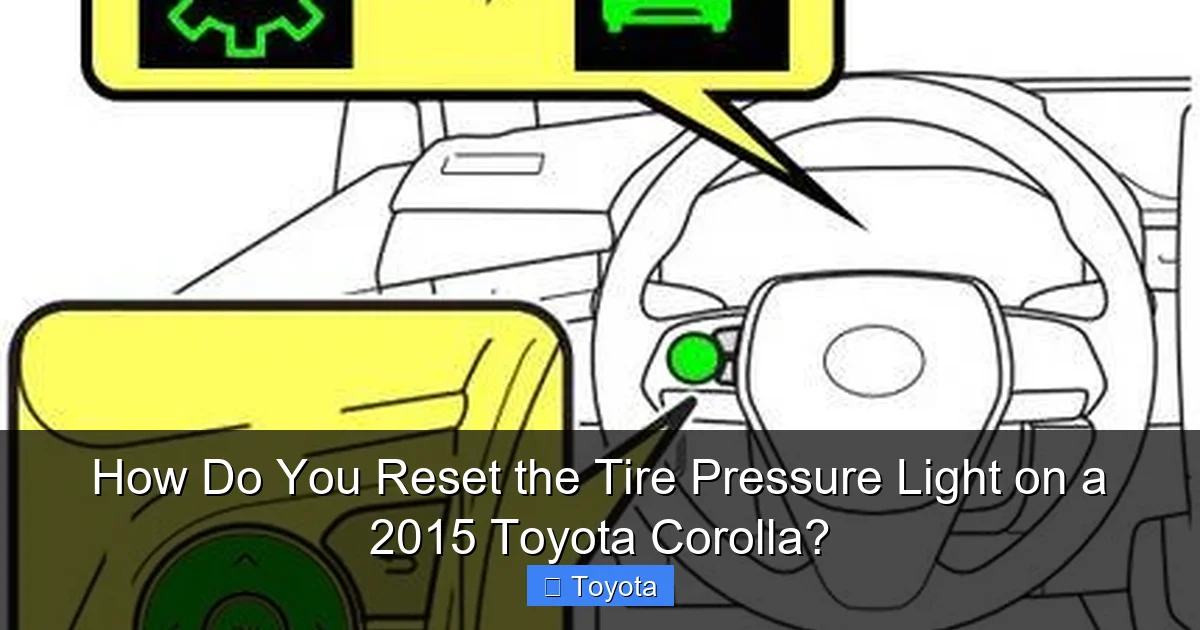
This is the trickiest part because the button is small and tucked away. In your 2015 Corolla, you’ll find the dedicated TPMS reset button on the lower dash area, to the left of the steering wheel. It’s usually behind a small rectangular or oval plastic cover, or sometimes just recessed. You may need to kneel in the driver’s seat and look up under the dash with a flashlight. It’s often labeled with the letters “TPMS” or a symbol that matches your dash warning light. If you have trouble finding it, your owner’s manual will have a diagram. Don’t confuse it with the “OBD-II” port, which is under the dash on the right side and used for diagnostic scanners, not resetting the TPMS.
The Reset Procedure: A Detailed Walkthrough
- Prepare the Vehicle: Ensure all four tires are inflated to the correct cold pressure. The ignition should be in the “ON” position (turn the key to the position just before starting the engine, or press the start button twice without touching the brake pedal on a push-start model). All other electrical accessories (radio, AC) can be off.
- Find and Press the Button: Locate the TPMS reset button. Using a firm, steady pressure, press and hold the button. You don’t need to press hard, but you need to hold it down continuously.
- Watch the Dashboard Light: After holding the button for about 2-3 seconds, you should see the tire pressure warning light on your dash blink slowly three times. Once it blinks the third time, you can release the button.
- Start the Engine (If Required): Some model years require you to then start the engine. If the light comes back on solid immediately after releasing the button, try starting the engine and see if the light then begins to blink.
- The Drive Cycle: This is the most critical step. Once you’ve completed the button press and the light has blinked, you must now drive the car. The TPMS needs to communicate with each sensor and verify the pressure data. Drive at speeds above 25 mph for approximately 20 to 30 minutes. Avoid heavy traffic or stops during this initial period if possible. The system needs a consistent signal.
- Confirmation: After the drive cycle, the tire pressure light should turn off and stay off. If it comes back on, the system has detected a new problem, meaning one of the sensors is likely not communicating or is still reporting low pressure.
What To Do If the Light Won’t Reset
So you followed every step perfectly. The tires are at 32 PSI (or your specified pressure). You held the button until the light blinked three times. You drove for 30 minutes on the highway. And yet… that stubborn little exclamation point in the tire is still glaring at you from your dashboard. Don’t panic, but don’t keep resetting it either. A persistent light after a correct reset procedure means the TPMS is detecting a fault it cannot clear. This is your cue to move from DIY to professional diagnosis.

Visual guide about How Do You Reset the Tire Pressure Light on a 2015 Toyota Corolla?
Image source: i.ytimg.com
Diagnosing a Persistent TPMS Warning
The most common culprit is a dead or failing sensor. TPMS sensors are powered by internal batteries that last roughly 7-10 years. In a 2015 Corolla, some original sensors may be reaching the end of their lifespan. A dead sensor will stop transmitting, and the system interprets that as a fault. Other possibilities include physical damage to the sensor (from a curb or pothole), a broken sensor stem, or corrosion at the valve stem. Sometimes, the sensor’s unique ID code gets corrupted or lost from the car’s memory. A tire shop or mechanic with a TPMS scan tool can instantly diagnose which sensor is the problem. They can also test the battery life of each sensor. If a sensor is bad, it needs to be replaced. Replacing a sensor on a Corolla typically involves removing the tire, replacing the sensor in the valve stem hole, and then re-mounting and balancing the tire. The new sensor then needs to be programmed or relearned to the vehicle’s computer, which is another step beyond a simple button reset.
Other Potential Issues to Consider
Before you spend money on a new sensor, consider these less common issues. Did you recently have a tire changed or rotated? If the shop didn’t perform a TPMS relearn procedure (which varies by model year), the car might not recognize the sensors in their new positions. A generic tire shop might not have the proprietary Toyota software to do this, but many have aftermarket tools that can. Also, check your spare tire! If you have a full-size spare that is currently mounted on the car (because you had a flat), it has its own sensor. If that spare is under-inflated, it will trigger the light. Even if the spare is in the trunk, some systems monitor it. Finally, there could be an issue with the TPMS control module itself, though this is rare. If you’re comfortable with automotive electronics, you might look into guides for other models, like how to reset the tire pressure sensor on a Nissan Murano, to see if similar electronic faults are discussed, but for a Corolla, sensor failure is the prime suspect.
Essential Tire Maintenance Tips for Your Corolla
Resetting the light is a treatment, but prevention is the best cure. Good tire maintenance will minimize the chances of your TPMS light ever coming on (except for normal seasonal changes) and will save you money on tires and gas in the long run.
Regular Pressure Checks: The Golden Rule
Don’t wait for a light to check your tires. Make it a habit to check the pressure in all four tires (and the spare) at least once a month and before any long road trip. Always check when the tires are cold. Use a high-quality digital or dial gauge—the cheap pencil-style ones can be inaccurate. The correct pressure is on that door jamb sticker, not the max pressure on the tire sidewall. Properly inflated tires wear evenly, provide optimal grip and handling, improve fuel efficiency by reducing rolling resistance, and prevent dangerous overheating. For a fuel-efficient car like the Corolla, this is especially important. You might also want to periodically check your other dashboard indicators, such as learning how many miles you can drive after the gas light comes on, to avoid being stranded.
Understanding Tire Wear and Rotation
Tire rotation is not just about making your tires last longer; it’s also integral to TPMS health. Front tires on a front-wheel-drive Corolla wear faster on the outside edges due to turning. Rear tires wear more evenly. Rotating them (typically every 5,000 to 8,000 miles) promotes even wear. When you rotate tires, the sensors move with them to new wheels. In many cars, the TPMS will automatically learn the new positions after a short drive. However, on some models, a manual relearn or reset procedure is needed. If your light comes on after a rotation and you’ve confirmed pressures are perfect, this could be the reason. Consult your owner’s manual. If a relearn is needed, a tire shop can do it quickly with the right tool. Consistent, even wear also means the sensors themselves are less likely to be damaged from a severely worn tire sidewall.
Frequently Asked Questions (FAQs)
Can I just disconnect the battery to reset the TPMS light?
Disconnecting the battery will reset the car’s entire computer system, but it is not the recommended method for resetting the TPMS light on a 2015 Corolla. It may clear the light temporarily, but the system will likely just turn it back on if the underlying pressure issue isn’t fixed or if a sensor fault exists. The dedicated reset button is the proper procedure. Using the button is faster, easier, and doesn’t reset your radio presets or clock.
My tire pressure is fine, but the light keeps flashing. What does that mean?
A flashing TPMS light (as opposed to a solid one) usually indicates a system malfunction, most commonly a sensor failure or a loss of communication with one of the sensors. It’s telling you the system itself is broken, not that a tire is low. You need to have the system scanned with a TPMS diagnostic tool to identify which sensor or part of the system is faulty.
Do I need to reset the TPMS after adding air to my tires?
Not always. If you add air to bring a low tire up to the correct pressure, the TPMS often automatically detects the correct pressure within a minute or two of driving, and the light will turn off by itself. You only need to perform the manual reset procedure if the light remains solidly on after you’ve driven for several minutes with all tires at the correct pressure.
Will resetting the TPMS light affect my other dashboard warnings?
No. The TPMS reset button only communicates with the tire pressure monitoring system. It will not reset other warning lights like the check engine light, oil light, or battery light. Those systems are separate and have their own diagnostic and reset procedures. For example, resetting a check engine light on a Toyota Corolla is a completely different process that often requires clearing a diagnostic trouble code.
My spare tire is a “donut” temporary spare. Does it have a sensor?
Most temporary “donut” spare tires do not have a TPMS sensor. The system in your Corolla is designed to monitor the four primary tires. If you have a temporary spare mounted on the car because of a flat, the TPMS light will often stay on because the system detects the different tire size and rotation pattern, or because the sensor on the flat tire is now on the ground in the trunk. The light will usually go off once you remount the original, sensor-equipped wheel. However, if your spare is a full-size, identical wheel and tire, it will have a sensor and must be inflated to spec.
Is it safe to drive with the tire pressure light on?
It depends on *why* it’s on. If it came on suddenly and you suspect a major loss of pressure (like a blowout), pull over safely immediately and inspect the tires. Driving on a severely under-inflated tire is dangerous. If the light came on gradually and you’ve confirmed all tires are at the correct pressure, it might be a faulty sensor. While not immediately dangerous like a total loss of pressure, a faulty sensor means you’ve lost an important safety system. You should have it diagnosed and repaired soon. For peace of mind, if other critical lights are on, like the battery light on a Toyota Corolla, you should address those first as they can indicate more urgent issues.
Frequently Asked Questions
What is How Do You Reset the Tire Pressure Light on a 2015 Toyota Corolla??
How Do You Reset the Tire Pressure Light on a 2015 Toyota Corolla? is an important topic with many practical applications.