Does the Tesla Model Y Need Snow Chains?

Contents
- 1 Key Takeaways
- 2 📑 Table of Contents
- 3 Understanding the Tesla Model Y’s Winter Capabilities
- 4 The Critical Role of Tire Selection
- 5 Snow Chain Requirements and Legal Considerations
- 6 Tesla’s Official Recommendations and Warranty Considerations
- 7 Installation, Practical Use, and Common Pitfalls
- 8 Practical Alternatives to Snow Chains for the Model Y
- 9 Making the Decision: A Practical Checklist
- 10 Frequently Asked Questions


The Tesla Model Y, with its standard all-wheel drive, often doesn’t need snow chains if equipped with proper winter tires. However, chain requirements are dictated by local laws and specific severe weather conditions, not just your vehicle’s drivetrain. Always prioritize high-quality winter tires first, and treat chains as a last-resort emergency tool for extreme ice or steep, unplowed roads where they are legally mandated.
Key Takeaways
- All-Wheel Drive is Not a Substitute for Winter Tires: The Model Y’s AWD system helps with acceleration and stability but does not improve braking or cornering on ice. Dedicated winter tires are the single most important safety upgrade for snow and ice.
- Chains are for Extreme Conditions & Legal Compliance: Snow chains (or cables/socks) are primarily required by law during major storms on mountain passes or specific routes. They are for use on packed snow and ice when winter tires alone are insufficient, not for routine dry or wet pavement.
- Tesla’s Official Stance is Cautious: Tesla’s owner’s manual advises against using traditional link-type chains on the Model Y due to potential clearance issues with the wheel wells and suspension components, recommending alternative traction devices instead.
- Clearance is the Biggest Hurdle: The Model Y’s tight wheel well clearance and large wheel sizes can make fitting any chain difficult. You must verify fitment for your specific tire size before purchasing anything.
- Consider Alternatives First: Modern snow socks (fabric covers) and cable-style chains often have better clearance and are easier to install. For most drivers, a set of high-performance winter tires is a more effective and convenient solution than chains.
- Practice Installation Before You Need Them: If you must carry chains, install them in a dry garage beforehand. Fumbling with chains in a snowstorm on a dark road is dangerous and frustrating.
- Storage and Speed Limits are Critical: Chains must be removed immediately upon returning to clear roads. Driving on dry pavement with chains damages them and your vehicle. Never exceed the speed rating of your chains (typically 30-50 mph).
📑 Table of Contents
- Understanding the Tesla Model Y’s Winter Capabilities
- The Critical Role of Tire Selection
- Snow Chain Requirements and Legal Considerations
- Tesla’s Official Recommendations and Warranty Considerations
- Installation, Practical Use, and Common Pitfalls
- Practical Alternatives to Snow Chains for the Model Y
- Making the Decision: A Practical Checklist
Understanding the Tesla Model Y’s Winter Capabilities
Let’s be honest: when the first snow flies, a little voice in the back of your head asks, “Is my car ready for this?” For Tesla Model Y owners, that question often comes with a specific follow-up: “Do I need to buy snow chains?” The answer isn’t a simple yes or no. It’s a “maybe, but probably not, and here’s why.” The Tesla Model Y is a marvel of modern engineering, especially for its standard all-wheel drive (AWD) system. This isn’t your grandpa’s part-time 4×4. Tesla’s AWD uses two independent electric motors, one for the front and one for the rear axle, controlled by sophisticated software that constantly monitors wheel slip and torque. This gives the Model Y exceptional traction off the line and on slippery inclines compared to many front-wheel-drive cars.
All-Wheel Drive: A Powerful Tool, But Not Magic
The AWD system is fantastic for managing power delivery. It can send instant torque to the wheel with the most grip. However, it’s crucial to understand what AWD does and, more importantly, what it does NOT do. AWD helps you go. It does very little to help you stop or turn on ice and packed snow. Braking distances and cornering limits are almost entirely determined by your tires’ contact patch with the road. A Model Y on all-season tires will still slide and skid just as badly as any other car on the same surface. This is the fundamental reason why the conversation about chains always circles back to tires.
The Weight Advantage: Battery as Ballast
The Model Y has a hidden winter advantage: its heavy battery pack mounted low in the chassis. This gives it a very low center of gravity, which significantly reduces body roll and improves stability during cornering on slippery surfaces. The weight also increases downward pressure on the tires, which can marginally improve traction. But again, this weight is only as effective as the rubber it’s pressing down. On a sheet of ice, even a ton of weight per tire won’t create meaningful friction. So, while the Model Y’s design gives it a naturally stable platform, it doesn’t change the physics of tire grip.
The Critical Role of Tire Selection
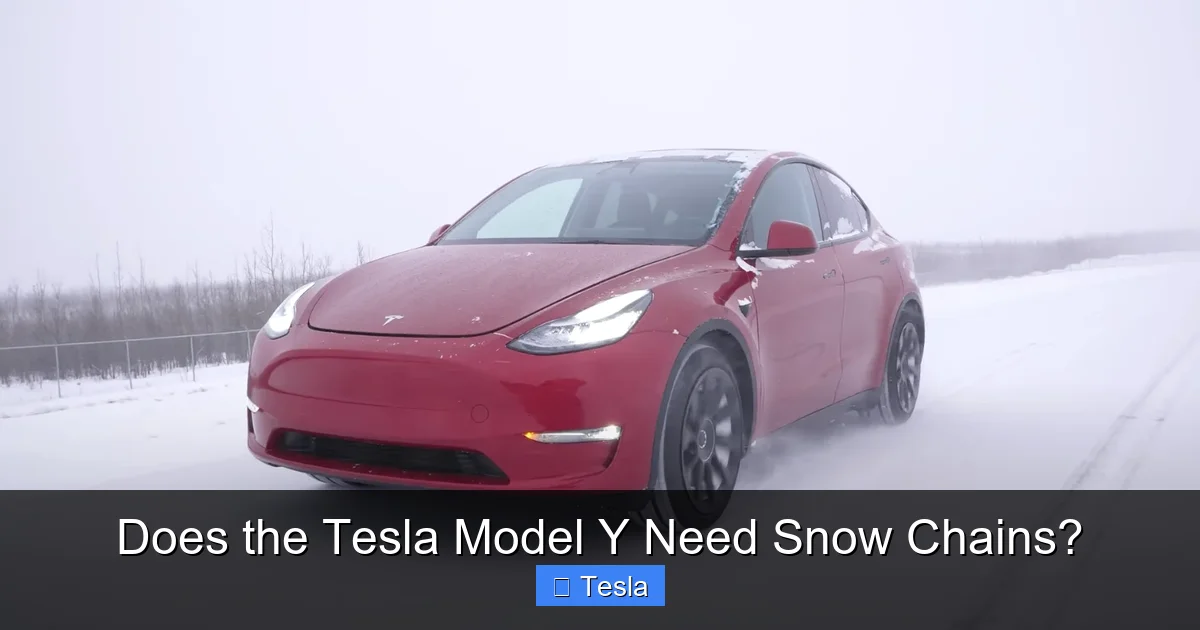
Here’s the most important section of this entire guide. If you take nothing else away, remember this: proper winter tires are 100 times more important for snowy and icy driving than snow chains. Snow chains are a traction aid for the most extreme, low-traction scenarios. Winter tires are the foundation of winter safety. A set of high-quality winter tires on a Model Y will outperform a set of all-season tires with chains in almost every real-world winter driving situation, except for steep, unplowed, packed-ice mountain roads.
Visual guide about Does the Tesla Model Y Need Snow Chains?
Image source: i0.wp.com
Why Winter Tires Trump Chains for Daily Driving
Modern winter tires use specialized rubber compounds that remain flexible in cold temperatures (below 45°F/7°C). They also feature aggressive tread patterns with deep sipes and grooves designed to bite into snow, slush, and ice, and to channel away water. On a typical city street or plowed highway with snow cover, a good winter tire provides predictable, reliable grip for accelerating, braking, and cornering. Chains, on the other hand, are noisy, create a harsh ride, damage pavement (and themselves) on clear roads, and require stopping to install. They are a hassle for daily use. For the vast majority of Model Y owners in regions with regular winter weather, investing in a set of dedicated winter tires on a separate set of wheels is the single best safety and performance decision you can make. You can explore cost-effective options for winter tires and wheels by checking guides on Tesla Model Y maintenance and upgrades, as proper tire storage is part of the seasonal routine.
Recommended Winter Tire Setups for the Model Y
The Model Y typically comes with 19″, 20″, or 21″ wheels. For winter, many experts recommend downsizing to a smaller wheel (like 18″ or 19″) if possible. Why? Smaller wheels can accommodate taller, narrower winter tires with more aggressive tread patterns and often provide a better ride on rough, potholed winter roads. They can also be less expensive. Popular winter tire choices for the Model Y include the Bridgestone Blizzak LM-005, Michelin X-Ice Snow, and the Continental VikingContact 7. These are true Studless Ice & Snow tires, rated for the severe service requirements of modern AWD vehicles. Ensure any tire you choose is rated for the Model Y’s weight and speed capabilities.
Snow Chain Requirements and Legal Considerations
So, if winter tires are so great, when would you ever need chains? The primary reason is law. Many states, particularly in the western U.S., have “chain laws” that mandate the use of traction devices on certain roads during declared winter storm conditions. These are often major mountain passes like Donner Pass (I-80) or Sierra Nevada routes (US-50). Signs will clearly state “CHAINS REQUIRED” or “TIRE CHAINS OR SNOW TIRES REQUIRED.” In these zones, it doesn’t matter if you have AWD, winter tires, or both. If the sign says chains, you must have them installed on your drive wheels (for AWD, typically the front or all four, depending on the specific regulation). Fines for non-compliance can be steep, and you may be turned around at a checkpoint.
Visual guide about Does the Tesla Model Y Need Snow Chains?
Image source: tesery.com
Types of Traction Devices: Chains, Cables, and Socks
When you hear “chains,” it’s actually an umbrella term for several types of traction devices. Understanding the differences is key for a Model Y owner.
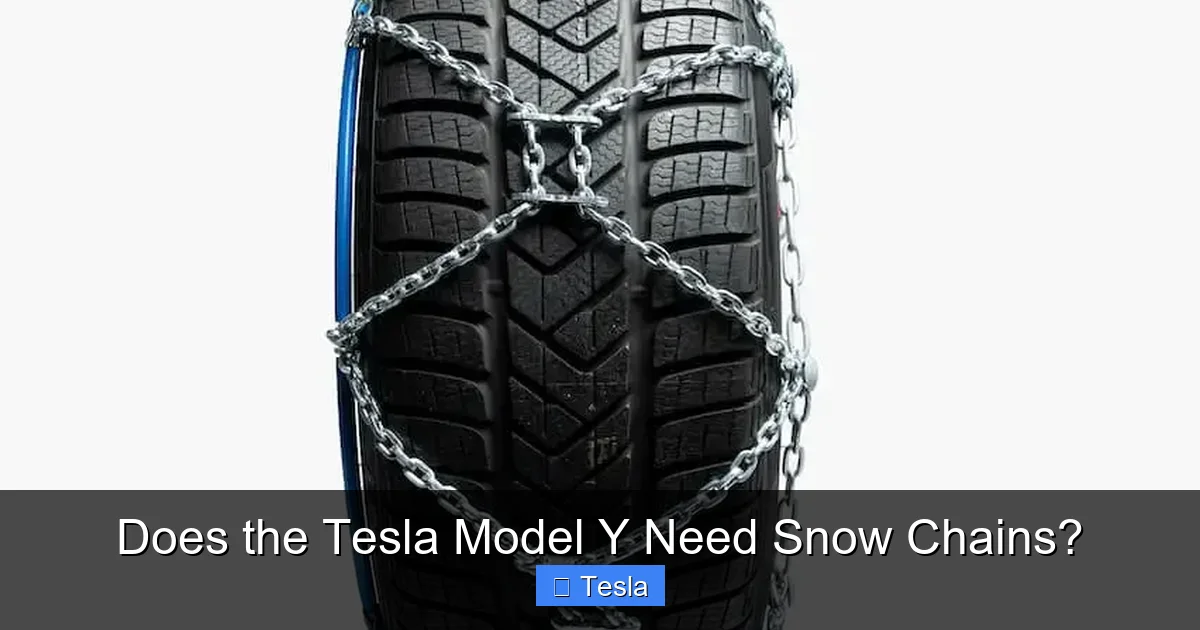
- Traditional Link Chains: These are the heavy-duty, metal-linked chains you might picture. They offer the highest level of traction on hard ice and deep snow but are the hardest to install, the loudest, and the most likely to cause damage if they break or flail. They also pose the greatest risk to wheel well components due to their bulk.
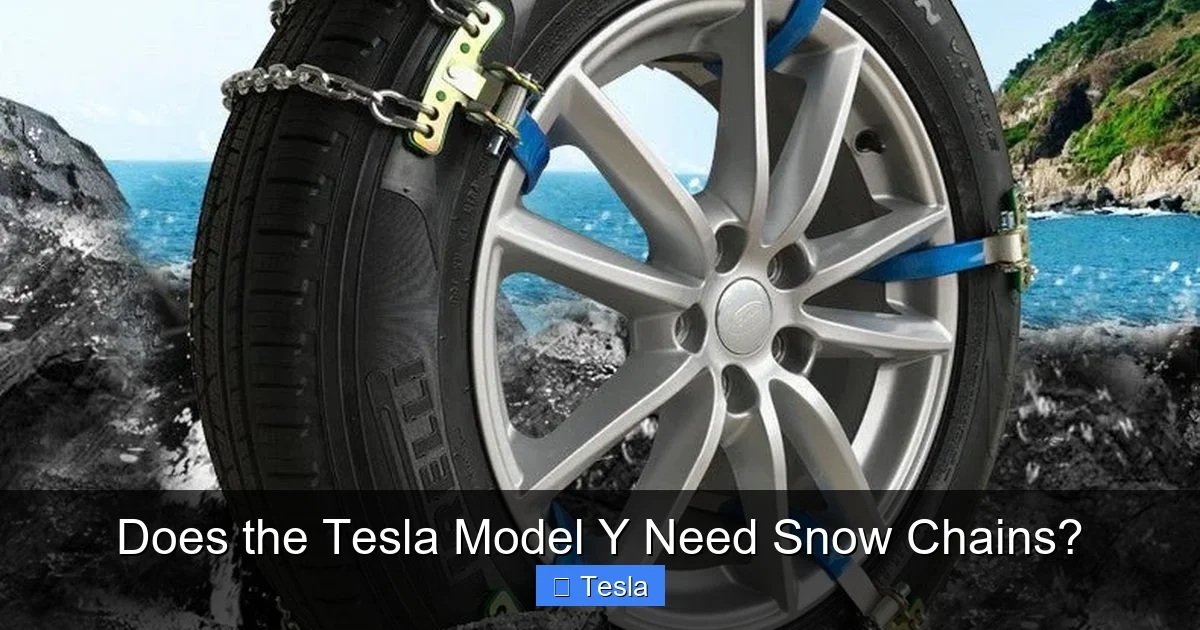
- Cable Chains: These use steel cables instead of links. They are lighter, easier to install, and generally less expensive. They provide good traction on snow and moderate ice but can be less effective than link chains on sheer ice. They are often a better fit for vehicles with tight wheel well clearance like the Model Y.
- Snow Socks (Fabric Covers): Brands like AutoSock or Michelin Easy Grip are textile covers that slip over the tire. They are incredibly easy to install (often in minutes), very lightweight, and cause minimal vibration. They are remarkably effective on packed snow and ice but can wear quickly on abrasive grit and are not suitable for bare pavement. They are also sometimes not legally accepted as “chains” in strict enforcement areas, so you must verify local laws.
Chain Laws: Know Before You Go
Chain laws are not static. They are activated by Caltrans (California), state DOTs, or local authorities during and after storms. They apply to specific highway segments, not entire states. Always check road conditions and chain requirements before you depart on a winter mountain trip. Websites like Caltrans’ QuickMap or state DOT apps are essential tools. The requirement is usually for “traction devices,” so a set of certified winter tires with the Three-Peak Mountain Snowflake (3PMSF) symbol may suffice in “TIRES REQUIRED” zones, but you will still need chains for “CHAINS REQUIRED” zones. This is a critical distinction.
Tesla’s Official Recommendations and Warranty Considerations
You should always check your Tesla Model Y Owner’s Manual for the definitive word on traction devices. Tesla’s guidance is generally conservative due to the unique design of the wheel wells and suspension on an electric vehicle. The manual typically states that the use of conventional link-type chains is not recommended because of limited clearance. It suggests using “cable-type” chains or other devices that meet the “S” class clearance standard (a standard for smaller, lower-profile devices). Using improper chains that rub against the wheel well liner, brake lines, or suspension can cause costly damage, and such damage would not be covered under warranty.

Visual guide about Does the Tesla Model Y Need Snow Chains?
Image source: images-na.ssl-images-amazon.com
Finding Tesla-Approved or Compatible Devices
So, what can you use? The safest path is to purchase chains or cables from a reputable manufacturer (like Thule, Security Chain Company, or Autosock) that provides a specific fitment guide for your exact Model Y year, trim, and wheel/tire size. You cannot buy a “one-size-fits-most” and hope for the best. Go to the manufacturer’s website, enter your vehicle details, and it will list the exact model number that is approved. This is non-negotiable. A poorly fitting chain can destroy a fender liner in under a mile. Some owners of larger-wheel Model Ys (21″) report that even the smallest cable chains can be a tight fit, making snow socks or a change to smaller winter wheels a more practical solution.
Warranty and Damage: A Serious Concern
If a chain breaks and whips around, it can easily rip off the plastic wheel well liner, cut ABS wiring harnesses, or dent the inner fender. Repairing this on a Tesla can be expensive and time-consuming, as parts may need to be ordered from the service center. Tesla will almost certainly deny a warranty claim for this type of damage, as it results from the use of an unapproved or improperly installed accessory. This is why following the fitment guide and practicing installation is so important. It’s also wise to carry a basic emergency kit with zip ties and a multi-tool, as a broken chain needs to be removed immediately to prevent further damage.
Installation, Practical Use, and Common Pitfalls
Let’s assume you’ve determined you need chains for an upcoming trip and have purchased the correct, approved set for your specific tire size. Now what? The golden rule: Practice installing them at home in your driveway on a dry, sunny day. Do not wait until you are on the side of a snowy, windy mountain pass at 10 PM. The instructions can be confusing, and tensioning systems vary by brand. You need to know exactly how they go on, where the tensioners attach, and how to ensure they are snug but not overtightened.
Step-by-Step Installation Mindset
1. Find a Safe Spot: Pull completely off the roadway onto a level, stable surface. Use hazard lights.
2. Position the Chain: For AWD, you typically install chains on the front tires (check your local law—some require all four). Unroll the chain and lay it behind the tire, ensuring it’s not twisted.
3. Drape and Connect: Drape the chain over the tire tread and connect the ends on the inner and outer sidewalls. The chain should lie evenly across the tread.
4. Tension is Everything: Use the provided tensioners or cam levers to tighten the chain. It should be snug against the tire with minimal slack. A loose chain will flap, damage your vehicle, and be ineffective. A chain that’s too tight can bind and break.
5. Drive a Few Feet and Re-check: After driving 50-100 feet, stop and re-tension the chains. They will settle into position.
6. Remove Immediately on Clear Roads: As soon as you exit the chain requirement zone and hit dry pavement, pull over and remove the chains. Driving on dry asphalt with chains is dangerous, destructive, and illegal once you’re out of the mandated zone.
Common Pitfalls for Model Y Owners
The most common mistake is assuming any “small” chain will fit. The Model Y’s 20″ or 21″ performance wheels have very little space between the tire and the front fender liner. Even approved cables can rub if not perfectly seated. Always check for rub by turning the steering wheel fully left and right after installation. Listen for scraping. Another pitfall is not accounting for the Model Y’s weight. Cheap, universal chains designed for small sedans may not be robust enough for a 4,500 lb crossover. Buy for your vehicle class. Finally, remember that chains affect your Tesla’s range and performance. The added rolling resistance will reduce your efficiency, and the vehicle’s speed is limited by the chain’s rating. The car’s regenerative braking may also feel different or be limited while chains are installed.
Practical Alternatives to Snow Chains for the Model Y
Given the clearance challenges and the hassle factor, many Model Y owners wisely explore alternatives. The best alternative is, again, a set of proper winter tires. But for those who want an emergency traction device for rare, extreme conditions without committing to full chains, there are excellent options.
Snow Socks: The User-Friendly Contender
Snow socks, like the AutoSock, are arguably the most practical solution for many Model Y drivers. They are made of a strong, woven polymer material with embedded traction fibers. Installation is often as simple as pulling a sleeve over the tire and securing a strap. They take up minimal storage space (about the size of a bag of groceries) and are quiet. They work exceptionally well on packed snow and ice. Their limitations are that they are single-season or limited-use items (they wear out), they can be less effective on deep, unpacked snow, and they are not recommended for dry pavement at all. Most importantly, you must verify that they are legally accepted in the jurisdictions you’ll be traveling through. Many states that require “traction devices” accept socks, but not all. Check the state DOT website.
Traction Mats and Sand/KIT Litter
For getting started from a complete stop on ice (like an unplowed driveway), nothing beats a pair of traction mats (like MaxTrax) or a bag of non-clumping kitty litter or sand. You place these mats in front of the drive wheels to give the tires something to grip. This is a fantastic, reusable, and inexpensive tool to keep in your frunk for emergency extrication. It doesn’t help with sustained driving on snowy roads, but it can get you moving when you’re stuck. This is a perfect complement to winter tires.
The “Snow Mode” Button: Software, Not Magic
Your Model Y has a “Snow & Ice” mode in the driving settings. This softens the accelerator pedal response and reduces torque to minimize wheel spin. It’s a useful tool for making the car’s power delivery more manageable on slick surfaces, but it does not add traction. Think of it as making the car less likely to break loose, not more likely to grip. It’s a software aid, not a physical one like tires or chains. For comparison, some other vehicles have a dedicated “snow button” that changes AWD bias or throttle mapping; you can read more about how such systems work in other brands, like the Snow Mode in a Toyota Highlander, to understand the different approaches to winter driving dynamics.
Making the Decision: A Practical Checklist
So, after all this, do you need snow chains for your Tesla Model Y? Run through this checklist.
- Where do you drive in winter? If your commute is on plowed city streets and highways in a region with moderate snow, no, you do not need chains. Get great winter tires.
- Do you travel over mountain passes? If you regularly drive through areas with active chain laws (e.g., Sierra Nevada, Rockies, Blue Mountains), yes, you likely need to carry a compatible set of chains or socks. Check the specific legal requirements for your route.
- What size wheels do you have? If you have 21″ wheels, finding any chain that fits without rubbing is very difficult. You may need to downsize to 19″ or 20″ winter wheels to even have the option, or rely solely on socks if legally permissible.
- Are you prepared to practice and install them? If the thought of kneeling in the snow to tighten cables in the dark terrifies you, chains might be a psychological burden you don’t need. Winter tires reduce this need entirely.
- What’s your risk tolerance? Are you a cautious driver who plans routes around known bad weather? Or do you need to get through regardless of conditions? The latter may necessitate chains for legal and practical safety reasons.
For most Model Y owners, the answer converges on this: Equip your car with a full set of premium winter tires and wheels. This handles 95% of winter scenarios brilliantly. Then, research the chain laws for any specific mountain routes you might occasionally travel. If those routes enforce chain requirements, purchase a single, verified-compatible set of cable chains or snow socks, practice installing them once at home, and store them in the frunk. Never use them as a substitute for winter tires on your daily drive. This balanced approach maximizes safety, convenience, and compliance without compromising your Tesla’s daily usability. You can also consider aesthetic and protective upgrades for winter, like a protective wrap to guard against road salt, but that’s a separate consideration from traction.
Frequently Asked Questions
Are snow chains required on a Tesla Model Y with all-wheel drive?
No. All-wheel drive does not exempt you from chain laws. In areas with “CHAINS REQUIRED” signs, all vehicles must have chains installed, regardless of drivetrain or tire type. However, in “TIRES REQUIRED” zones, a Model Y with proper winter tires (marked with the 3PMSF symbol) is typically compliant without chains.
What type of snow chains are best for a Tesla Model Y?
Cable-style chains or fabric snow socks are generally the best fit due to the Model Y’s tight wheel well clearance. You must purchase a model specifically sized for your exact wheel/tire combination from a reputable brand like Thule or Security Chain Company. Traditional link chains are often not recommended by Tesla due to clearance risks.
Can I install snow chains on only two tires of my Model Y?
For AWD vehicles, chain laws typically require chains on the front tires (the drive wheels for most AWD systems in normal conditions), but this can vary by state. Some jurisdictions require chains on all four tires for AWD/4WD vehicles on severe routes. Always follow the posted signage. Never install chains on only one axle.
Will using snow chains damage my Tesla Model Y or void the warranty?
Using the wrong type or size of chain, or installing them improperly, can cause physical damage to wheel well liners, suspension, or brake components. This damage would not be covered under warranty. Using Tesla-approved, correctly fitted devices and following installation instructions minimizes this risk significantly.
Where can I find the official Tesla recommendation on chains for my Model Y?
The definitive source is your Tesla Model Y Owner’s Manual. Look in the “Tire and Loading Information” or “Driving” sections. It will provide specific warnings about limited clearance and recommendations for using cable-type or S-class traction devices. You can also find this information in the Tesla app or website support sections.
At what speed can I drive with snow chains on my Model Y?
You should never exceed the maximum speed rating for your specific chains, which is typically 30-50 mph (50-80 km/h). More importantly, you should remove chains immediately when you return to clear, dry pavement. Driving on dry roads with chains is dangerous, causes severe wear, and is illegal outside of chain zones.