Does Tesla Insurance Cover Rental Cars?

Contents
- 1 Key Takeaways
- 2 📑 Table of Contents
- 3 The Short Answer: It Depends on What You Mean by “Cover”
- 4 How to Find Out If You Have Rental Reimbursement on Your Tesla Policy
- 5 The Credit Card Safety Net: How Credit Cards Fill the Gap
- 6 Practical Scenarios: How Coverage Plays Out
- 7 Actionable Tips for Every Tesla Owner
- 8 The Bottom Line: Protect Yourself on Two Fronts
- 9 Frequently Asked Questions




Tesla Insurance does not automatically provide rental reimbursement coverage. This coverage, which pays for a rental car while your Tesla is being repaired after a covered loss, is typically an optional add-on you must purchase separately. Your standard Tesla policy covers damage to a rental car you drive, but not the cost of renting it. Always check your declarations page and speak directly with Tesla Insurance to confirm your specific policy details and state-specific availability.
So, your Tesla is in the shop after an accident or a major repair, and you need a way to get around. The big question pops into your head: “Does my Tesla Insurance cover a rental car?” It’s a logical question. You pay for insurance, and when your primary vehicle is unavailable, you need a temporary solution. The answer, however, isn’t a simple yes or no. It splits into two critical, and very different, questions: Does your policy cover the cost of renting a car? And does your policy cover damage to a rental car you’re driving? Let’s break down exactly how Tesla Insurance handles rental cars, what you need to know, and where to look for backup coverage.
Key Takeaways
- Rental Reimbursement is Separate: Coverage for the *cost* of a rental car is an optional “rental reimbursement” or “loss of use” endorsement you must add to your Tesla policy; it is not included by default.
- Liability & Physical Damage Coverage Applies: Your Tesla Insurance policy’s liability, collision, and comprehensive coverages will extend to a rental car you drive, just as they do for your insured Tesla.
- State Availability Varies: Tesla Insurance is only available in certain states, and the availability of optional coverages like rental reimbursement can differ even within those states.
- Credit Cards Can Provide Secondary Coverage: Many credit cards offer rental car insurance as a benefit, which can act as secondary coverage to your Tesla policy, potentially covering deductibles or providing primary coverage in some cases.
- Always Verify Your Policy: Insurance policies are highly individualized. The only way to know for sure what your Tesla Insurance covers is to review your policy documents or speak with a Tesla Insurance agent.
📑 Table of Contents
- The Short Answer: It Depends on What You Mean by “Cover”
- How to Find Out If You Have Rental Reimbursement on Your Tesla Policy
- The Credit Card Safety Net: How Credit Cards Fill the Gap
- Practical Scenarios: How Coverage Plays Out
- Actionable Tips for Every Tesla Owner
- The Bottom Line: Protect Yourself on Two Fronts
The Short Answer: It Depends on What You Mean by “Cover”
When we talk about insurance and rental cars, there are two distinct concepts that get mixed together.
- Coverage for the Rental Car’s Damage: If you get into an accident while driving a rental car, does your Tesla Insurance policy help pay for the repairs to that rental car? The answer here is generally yes, with caveats.
- Coverage for the Cost of Renting: If your Tesla is in the repair shop for a week due to a covered loss (like a collision or comprehensive claim), does your insurance pay for your rental car bill? The answer here is only if you purchased that specific coverage.
Most people are asking about the second point—the daily rental fee. That’s called Rental Reimbursement or Loss of Use coverage. Tesla Insurance, like many direct-to-consumer insurers, often treats this as an optional add-on rather than a standard part of your policy. Let’s explore both scenarios in detail.
What Tesla Insurance Covers: The Rental Car You’re Driving
If you’re behind the wheel of a rental car, your Tesla Insurance policy is designed to act as your primary auto insurance. This means the core coverages you have on your Tesla policy—Bodily Injury Liability, Property Damage Liability, Collision, and Comprehensive—will typically extend to the rental vehicle you’re operating.
For example, if you rear-end another car while driving a rental from Enterprise, your Tesla policy’s liability limits would respond to cover the other driver’s damages and injuries, just as if you were driving your Model 3. If a hailstorm dents the rental car’s roof, your comprehensive deductible and limits would apply. This is standard practice for most personal auto insurance policies. You are essentially using your insurance to cover the “non-owned vehicle” you’re temporarily driving.
Important Caveat: You must have the appropriate coverages on your Tesla policy. If you only carry the state minimum liability and have no collision/comprehensive, then your policy will not cover physical damage to the rental car itself. You would be solely responsible for that damage, which is where rental company insurance or a credit card benefit becomes crucial. For a deeper dive into how standard auto policies interact with rentals, you can read our general guide on does my car insurance cover rental cars.
What Tesla Insurance Does NOT Cover By Default: The Rental Bill
Here is the most common point of confusion. Your Tesla Insurance policy, in its standard form, does not write a check to Enterprise, Hertz, or National for your daily rental fees while your car is in the shop. That coverage is an optional endorsement you select when you purchase or amend your policy.
This coverage, often called Rental Reimbursement or Extended Coverage for Rental Vehicles, has specific limits and terms. It’s not “free” rental cars. It typically pays a set daily amount (e.g., $30/day) up to a maximum total (e.g., $900 total) for a rental needed due to a covered peril under your policy—like an accident, theft, or comprehensive event (fire, vandalism, weather). It will not pay for a rental if your Tesla is in the shop for routine maintenance, mechanical breakdowns, or wear-and-tear repairs, as those are not covered insurance losses.
If you did not actively choose to add this optional coverage to your Tesla Insurance policy, you are on the hook for all rental car expenses out-of-pocket during a covered repair period. This is a critical budgeting oversight many consumers make.
How to Find Out If You Have Rental Reimbursement on Your Tesla Policy
Don’t guess. You must verify your specific coverage. Here is your step-by-step action plan:
Visual guide about Does Tesla Insurance Cover Rental Cars?
Image source: watcher.guru
Step 1: Locate Your Declarations Page (Dec Page)
This is the most important document in your insurance portfolio. It’s a one-page summary of your policy. Log into your Tesla Insurance account via the app or website. Look for a link to “View Policy Documents,” “Declarations,” or “Insurance ID Card.” Download the PDF.
Step 2: Scan for the Rental Reimbursement Line
On your dec page, look for a section titled “Coverages” or “Optional Coverages.” Scroll through the listed coverages and their limits/deductibles. You are looking for a line item that says something like:
- Rental Reimbursement
- Loss of Use
- Extended Coverage for Rental Vehicles
- Rental Car Coverage
If you see it, note the Daily Limit (e.g., $25, $40, $50) and the Maximum Limit (e.g., $750, $1,500). This is the total amount your insurer will pay for a rental during a single claim.
Step 3: Call Tesla Insurance Directly
If the declarations page is confusing or you can’t find the line item, pick up the phone. The Tesla Insurance customer service number is on your insurance ID card and in the app. A simple question—”Can you confirm if my policy includes rental reimbursement coverage, and what are my daily and maximum limits?”—will give you a definitive, binding answer. This is the safest method.
The Credit Card Safety Net: How Credit Cards Fill the Gap
Since rental reimbursement is often optional, many Tesla owners rely on a secondary layer of protection: their credit card. Most major credit cards (Visa, Mastercard, American Express, Discover) offer some form of rental car insurance as a cardholder perk. It’s crucial to understand what this covers, as it’s often confused with paying for the rental itself.
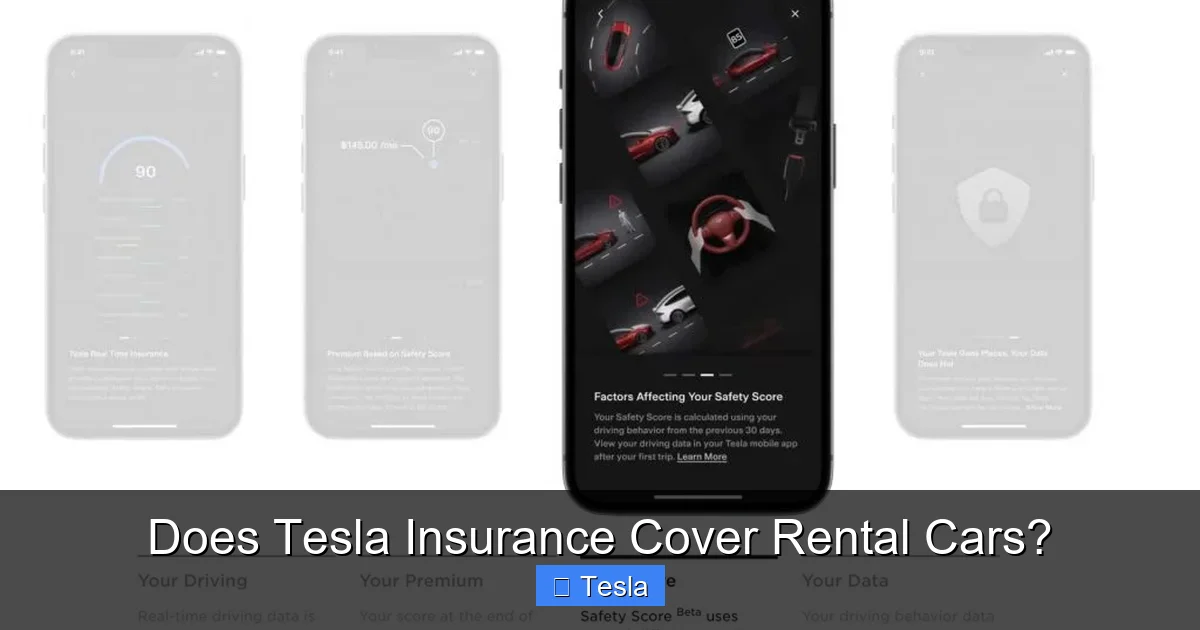
Visual guide about Does Tesla Insurance Cover Rental Cars?
Image source: watcher.guru
Credit card rental insurance primarily covers damage to the rental car (collision and comprehensive) and sometimes tows. It is typically a secondary coverage, meaning it kicks in after your primary auto insurance (your Tesla policy) has paid its portion, up to your policy’s limits. Its most valuable function in this context is that it can often cover your primary insurance deductible.
For example: You have a $1,000 deductible on your Tesla collision coverage. You damage a rental car, and the repair bill is $5,000. Your Tesla insurance pays $4,000 (the loss minus your deductible). Your credit card’s rental damage coverage could then step in to pay your $1,000 deductible, effectively making your Tesla coverage “deductible-free” for that rental incident.
It does NOT typically cover the daily rental fee. That’s a separate expense. However, some premium cards (like certain Chase Sapphire or Amex Platinum variants) offer a “rental car *trip* cancellation/interruption” or a separate “rental reimbursement” benefit, but these are rare and have strict terms. You must read your card’s Guide to Benefits. For specifics on popular cards, see our detailed look at Chase Sapphire’s rental coverage or American Express Platinum’s benefits.
Practical Scenarios: How Coverage Plays Out
Let’s walk through a few real-world situations to make this concrete.
Visual guide about Does Tesla Insurance Cover Rental Cars?
Image source: watcher.guru
Scenario 1: The Accident in the Rental
You’re traveling and rented a car. You back into a pole, denting the trunk. Your Tesla Insurance policy has collision with a $500 deductible. The rental company charges $2,000 for repairs.
- Without Credit Card Coverage: Tesla Insurance pays $1,500 ($2,000 – $500 deductible). You pay the $500 deductible. The rental company may also charge you for “loss of use” (their lost rental income while the car is repaired), which your Tesla policy’s rental reimbursement (if you have it) might cover, subject to your daily/max limits.
- With a Qualifying Credit Card: Tesla Insurance pays $1,500. Your credit card’s rental damage waiver pays your $500 deductible. Your out-of-pocket cost for the damage is $0. You might still be on the hook for the rental company’s “loss of use” fees unless your Tesla rental reimbursement covers it.
Scenario 2: Your Tesla is in the Shop for a Week
A tree branch falls on your parked Tesla during a storm. Comprehensive claim. Repairs take 7 days. You rent a car for $45/day.
- If you have Tesla Rental Reimbursement (e.g., $30/day, $900 max): Tesla Insurance pays up to $30 per day. For 7 days, that’s $210. You pay the difference: ($45 – $30) x 7 = $105 out-of-pocket.
- If you do NOT have Tesla Rental Reimbursement: You pay the full $315 rental bill. Your credit card’s rental insurance is irrelevant here, as it doesn’t cover the rental fee. You must pay this cost unless another policy (like a separate umbrella policy with rental coverage) applies.
Scenario 3: The Minor Scratch (You Decline Rental Company Insurance)
You rent a car, decline the rental company’s Damage Waiver (CDW/LDW), relying on your Tesla policy and credit card. You return the car with a small, deep scratch on the door.
- The rental company inspects and finds the damage, charging you $800.
- You file a claim with Tesla Insurance (collision). They pay the loss minus your deductible. If your deductible is $500, they pay $300.
- You then file with your credit card for the $500 deductible. They pay it. Total to you: $0 for the repair.
- But: The rental company may also charge you for “administrative fees” or “loss of use” for the day it’s being repaired. These “incidental” charges are often not covered by either your auto policy or credit card. This is a frequent point of dispute.
Actionable Tips for Every Tesla Owner
Don’t wait until you’re at the rental counter to figure this out. Be proactive.
- Read Your Dec Page Annually: When your Tesla Insurance policy renews, open that declarations page PDF. Find the rental reimbursement line. If it’s not there and you want it, call and add it. It’s usually a relatively small premium increase (often $2-$8 per month) for significant peace of mind.
- Know Your Credit Card Benefits: Find your card’s “Guide to Benefits” PDF (online or mailed). Search for “rental car,” “auto rental,” or “collision damage waiver.” Understand if it’s primary or secondary, what types of vehicles it excludes (e.g., exotic cars, trucks, some SUVs), and the exact claim process.
- At the Rental Counter, Ask the Right Questions: If you decline the rental company’s CDW/LDW, be prepared to show both your Tesla Insurance ID card and your credit card that provides the benefit. The rental agent may still insist on selling you their insurance. Know your rights. In most U.S. states, they cannot require you to buy their insurance if you have your own valid coverage.
- Document Everything: Before driving off, thoroughly inspect the rental car with the agent and note every existing scratch, dent, or chip on the rental agreement. Take timestamped photos and video with your phone. This protects you from being charged for pre-existing damage.
- Understand “Loss of Use” Fees: This is a rental company’s charge for lost rental income while the damaged car is repaired. These fees are often not covered by standard auto insurance or credit cards and can be hefty ($300-$1,000). Your Tesla rental reimbursement coverage is your primary defense against this charge. Without it, you may be billed directly by the rental company.
The Bottom Line: Protect Yourself on Two Fronts
For Tesla owners, the answer to “Does Tesla Insurance cover rental cars?” is a nuanced yes, but…
- YES, your Tesla policy’s liability, collision, and comprehensive coverages will protect you if you damage a rental car you’re driving, subject to your deductibles and limits.
- YES, if you purchased the optional Rental Reimbursement endorsement, it will help pay for the cost of renting a replacement vehicle while your Tesla is in the shop for a covered repair.
- NO, you cannot assume the rental fee is covered. It is a separate, optional purchase.
Your smartest strategy is a three-legged stool:
- A robust Tesla Insurance policy with adequate liability limits and collision/comprehensive deductibles you’re comfortable with.
- The optional Rental Reimbursement endorsement if you rely on your Tesla as your daily driver and would need a rental during repairs.
- A premium credit card with a strong rental car damage waiver to help cover your primary insurance deductible and provide an extra layer of protection for damage to the rental itself.
By understanding these layers, reviewing your documents, and using your credit card benefits wisely, you can drive a rental car with confidence, knowing you’re covered from multiple angles. The key is proactive verification—know what your Tesla policy says before you need it.
Frequently Asked Questions
Does Tesla Insurance automatically include rental car coverage?
No. Tesla Insurance does not automatically include rental reimbursement coverage (which pays for your rental car bill). This is an optional endorsement you must select and pay for separately. Your policy’s liability and physical damage coverages will extend to a rental car you drive, but not the cost of renting it.
Will my Tesla Insurance pay if I damage a rental car?
Yes, generally. Your Tesla policy’s collision and comprehensive coverages will typically apply to physical damage to a rental car you are driving, subject to your policy’s deductibles and limits. You must have purchased these coverages for your Tesla policy.
How much does it cost to add rental reimbursement to Tesla Insurance?
The cost varies by state, your driving record, and the limits you choose (daily and maximum). It is generally an inexpensive add-on, often ranging from $2 to $8 per month. You must request this endorsement from Tesla Insurance, as it is not standard.
Can I use a credit card instead of Tesla’s rental reimbursement?
No, not for the same purpose. Credit card rental insurance primarily covers damage to the rental car (and may cover your auto insurance deductible). It does not cover the daily rental fee you incur while your own car is being repaired. That is what Tesla’s optional Rental Reimbursement is for.
What should I do if my Tesla is in the shop and I don’t have rental reimbursement?
If you lack the optional rental reimbursement coverage on your Tesla policy, you will be responsible for all out-of-pocket costs for a rental car. Check if your credit card offers any “rental trip interruption” benefit (rare). Otherwise, you may need to rely on alternative transportation, a loaner from the repair shop (if offered), or pay for the rental yourself.
Is the rental car insurance from the rental company necessary if I have Tesla Insurance?
It’s often not necessary if your Tesla policy includes collision/comprehensive and you have a credit card with a rental damage waiver. Declining the rental company’s Damage Waiver (CDW/LDW) can save significant money. However, you must understand your Tesla policy’s deductible and your credit card’s coverage limits and exclusions. If you are uncomfortable with potential deductibles or complex claims, purchasing the rental company’s CDW provides the simplest, most direct coverage.