
Car Cover Cable Lock Issues: Causes, Fixes, and Prevention

Quick Answer
Car cover cable lock issues usually come from a cable that is too short, excessive tension, damaged grommets, a sticking padlock, poor routing under the vehicle, or a loose cover that keeps pulling on the lock system. Start by removing tension, checking the cable coating and grommets, and confirming that the cover itself fits correctly; broader car cover storage issues can make cable-lock problems worse.
Common Problems to Check
- Cable too tight: Excess tension can pull on the cover’s reinforced grommets and distort the lower edge.
- Lock will not close: Dirt, corrosion, misalignment, or a cable loop that is too thick can stop the padlock from engaging.
- Damaged coating: Exposed metal can create rough contact points and may corrode outdoors.
- Torn grommet: Wind movement or overtightening can concentrate force around the reinforced hole.
- Cable dragging: Poor routing can leave the cable touching pavement, wheels, exhaust parts, or painted surfaces.
- False security: A cover cable lock is a deterrent, not a substitute for locking the vehicle itself.
Best First Move
- Unlock the cable, inspect the entire securing system, and reinstall it with enough slack to secure the cover without pulling hard on either grommet.
A car cover cable lock looks simple until it starts jamming, rattling, pulling through a grommet, or refusing to reach the other side. I’ve found that the lock itself is often only one part of the problem.
The fit of the cover, wind exposure, cable routing, and condition of the lower hem all matter. This guide walks through the practical checks I use before replacing anything.
In This Guide
- What Are Car Cover Cable Lock Issues?
- Why Does the Cable Lock Keep Coming Loose or Rattling?
- Why Won’t the Cable Pass Through the Grommets or Lock?
- Can a Cable Lock Damage the Cover or Paint?
- How Do You Fix Common Car Cover Cable Lock Problems?
- When Should You Replace the Cable, Lock, or Cover?
- Frequently Asked Questions
What Are Car Cover Cable Lock Issues?
Car cover cable lock issues are problems involving the cable, padlock, cover grommets, or the way those parts secure the cover underneath a parked vehicle. Problems range from a minor rattle to a torn cover edge or unusable lock.
A car cover cable lock is a simple anti-removal system. A coated cable normally passes through reinforced holes, called grommets, on opposite sides of the cover and connects underneath the vehicle.
What the cable lock is supposed to do
The cable’s main job is to make the cover harder to remove without permission. It can also provide some additional restraint, although it should not replace the cover’s normal straps, buckles, or fitted hem.
- Cable: Connects the two lower sides of the cover.
- Protective coating: Helps isolate the metal cable from nearby surfaces.
- Grommets: Reinforce the holes where the cable passes through the cover.
- Padlock: Joins the cable loops or locking ends.
- Cover straps: Usually handle wind control separately from the security cable.
I don’t like using a security cable as a tensioning strap. Pulling it tight enough to reshape the cover puts force exactly where the grommets are stitched into the fabric.
Quick symptom-to-cause comparison
| What You Notice | Likely Cause | First Check | Replace Parts? |
|---|---|---|---|
| Cable hangs very low | Cable too long or poor routing | Route and length | Usually no |
| Grommet pulls sideways | Excess tension or poor fit | Cover position | Only if damaged |
| Padlock will not latch | Dirt, corrosion, or misalignment | Lock and cable loops | Maybe |
| Cable scratches or rubs | Damaged coating or bad routing | Entire cable surface | Often safest |
| Cover still moves badly | Cable being used instead of straps | Fit, hem, and straps | Depends on cover |
Weak materials can make all of these symptoms appear sooner. My guide to cheap car cover problems explains why weak straps, poor fit, and thin construction deserve attention too.
Why Does the Cable Lock Keep Coming Loose or Rattling?
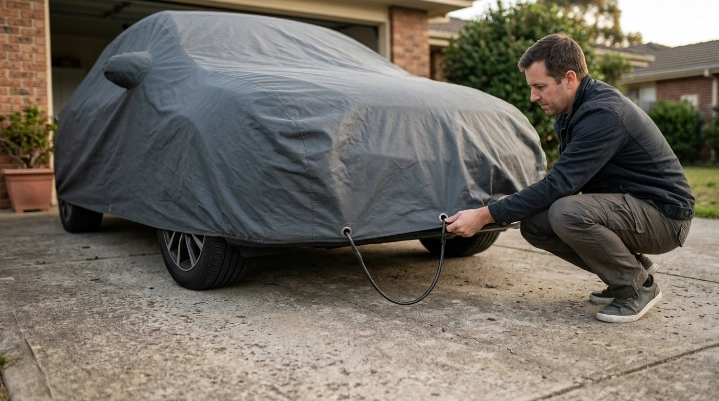
A loose or rattling car cover cable usually has too much slack, poor positioning, or constant movement from the cover above it. Wind can make the problem much more noticeable.
The cable may simply be too long
A universal cable must work across several vehicle widths. That can leave a large loop hanging below a narrow sedan or coupe.
Do not solve that problem by pulling the cable guitar-string tight. You only need enough tension to keep the locking ends controlled.
- Center the cover before routing the cable.
- Make sure both grommets sit at similar heights.
- Keep unnecessary cable off the ground.
- Avoid wrapping the cable around suspension, brake, or exhaust parts.
- Confirm that neither wheel can contact the cable.
A loose cover can keep yanking the cable
The lock may look like the problem when the cover itself is moving several inches in each gust. That repeated movement pulls sideways on the grommets and makes the cable jump underneath the car.
Inspect the elastic hem, fit, and normal fastening straps first. An old car cover may have stretched enough that its security hardware can no longer stay positioned correctly.
Wind movement also matters for the paint. Loose fabric can move contamination across the finish, which is why fit matters beyond keeping the cable quiet.
Section Takeaway: A cable should secure the cover without becoming its primary wind strap. Fix excessive cover movement before increasing cable tension.
Why Won’t the Cable Pass Through the Grommets or Lock?
If the cable will not pass through a grommet or close inside the lock, check compatibility before forcing it. A mismatched cable end can damage both the hardware and fabric.
Check the grommet opening first
The reinforced opening must be large enough for the cable connector or loop. Fabric bunching around the grommet can also make a correctly sized cable feel too large.
- Flatten the cover around the grommet.
- Inspect the metal ring for bending.
- Remove dirt from the opening.
- Check whether the cable coating has swollen or split.
- Never enlarge the grommet with pliers unless the cover maker specifically permits it.
Inspect a padlock that feels stuck
A lock used under an outdoor vehicle gets exposed to dust, moisture, road grit, and temperature changes. Those conditions can make a small lock stiff even when nothing is visibly broken.
Use the lock maker’s recommended maintenance method. Don’t force a key or shackle that refuses to move.
Make sure you are using the correct cable
Replacement cables are not automatically interchangeable. Cable thickness, loop shape, lock opening, and grommet size can differ between kits.
I would compare the replacement against the original before feeding it through the cover. A slightly oversized connector can deform a grommet long before it becomes obvious.
Can a Cable Lock Damage the Cover or Paint?
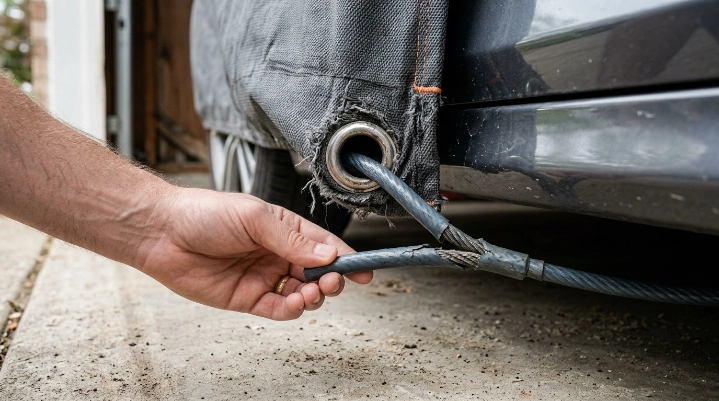
Yes, a poorly installed or damaged cable lock can damage the cover and may contact painted surfaces. The biggest risks are excessive tension, exposed metal, rough hardware, and uncontrolled movement.
Grommet damage usually begins with concentrated force
The grommet area is stronger than bare fabric, but it is not indestructible. Pulling a cable sideways can stress the stitching and material surrounding that reinforcement.
- Elongated hole: The grommet begins pulling through the fabric.
- Fraying: Threads appear around the reinforced area.
- Wrinkling: The lower cover edge gathers toward the cable.
- Cracking coating: Weathered fabric starts splitting near the hardware.
Once an aging cover develops structural damage, tightening the cable is likely to make it worse. Check the other warning signs in my guide on when to replace a car cover.
Do not let bare cable metal touch the vehicle
A vinyl or plastic cable coating is there for a reason. Stop using the cable if the coating splits enough to expose sharp wire or rough metal.
Also watch painted rocker panels, wheels, side skirts, exhaust tips, and lower trim during installation. The cable should pass underneath without sawing across any vehicle surface.
Dirt can turn movement into abrasion
The cable is not the only part worth watching. If a loose cover moves around while the lock holds one section tightly, fabric can repeatedly rub the same body panels.
This becomes more important on carefully maintained finishes. See my guide to car cover scratching on ceramic coating for a closer look at contamination and cover movement.
For general vehicle-care guidance, Consumer Reports’ maintenance and repair resources are also useful when deciding how to protect a stored vehicle.
Section Takeaway: Stop using a cable when its coating, lock, or grommet can no longer keep hard metal safely separated from the vehicle and cover fabric.
How Do You Fix Common Car Cover Cable Lock Problems?
Most cable-lock problems can be diagnosed without special tools. Work from the cover outward instead of assuming the padlock has failed.
1. Remove the cable and inspect everything
Take all tension off the system before checking it. Lay the cable where you can inspect its full length.
- Look for cuts or missing coating.
- Check for kinks and crushed sections.
- Inspect both cable ends.
- Test the lock away from the vehicle.
- Check both grommets for distortion.
2. Re-center the car cover
The left and right sides should hang naturally before the cable goes in. A crooked cover can make a correct-length cable appear too short.
Check mirrors, bumpers, spoilers, and the elastic hem too. The cover should not require the cable to pull everything into position.
3. Route the cable underneath safely
Pass the cable directly from one grommet toward the other whenever the kit design allows it. Keep it away from hot, moving, sharp, or dirty vehicle components.
I also keep the lock accessible enough that removal does not become a wrestling match. Crawling far under the car every time usually encourages bad routing later.
4. Leave controlled slack
The finished cable should deter easy cover removal without loading the grommets like tie-down anchors. A small amount of movement is preferable to tearing the cover.
If the cover still balloons badly, deal with its fit or designated wind straps. Don’t keep tightening the security cable.
5. Recheck after windy weather
Outdoor conditions can reveal problems that are invisible during installation. Look for a shifted cover, stretched grommets, cable contact, or a lock that has started hitting the pavement.
For broader routine vehicle care, both Kelley Blue Book’s car-maintenance resources and Edmunds’ maintenance guidance provide useful owner-level references.
Section Takeaway: Diagnose the system in order: cover fit, grommets, cable condition, routing, tension, and finally the lock itself.
When Should You Replace the Cable, Lock, or Cover?
Replace a component when damage makes it unreliable or creates a risk of abrasion, tearing, or unexpected release. Do not keep compensating for worn parts by tightening everything harder.
Replace the cable when:
- The protective coating has split widely.
- Metal strands are visible or fraying.
- The cable has severe permanent kinks.
- The ends no longer fit the lock correctly.
- Corrosion has affected exposed metal.
Replace the padlock when:
- The key regularly sticks despite approved maintenance.
- The shackle does not close positively.
- The body is badly corroded or damaged.
- The locking mechanism releases unexpectedly.
- You can no longer operate it without excessive force.
Repair or replace the cover when:
- A grommet has separated from the fabric.
- The surrounding material is torn or badly frayed.
- The hem no longer keeps the cover positioned.
- Straps or buckles have failed.
- The overall cover is brittle, stretched, or badly worn.
Cover age is only one clue. Storage conditions, ultraviolet exposure, wind, moisture, and handling can make two identical covers age very differently.
My car cover lifespan guide explains the wider wear patterns worth checking when security hardware begins failing too.
Remember what a cable lock cannot do
A cover cable lock adds inconvenience for someone trying to remove the cover. It does not make the vehicle theft-proof or replace the vehicle’s doors, factory immobilizer, alarm, or other anti-theft systems.
The National Highway Traffic Safety Administration’s vehicle theft prevention guidance covers broader precautions for protecting the vehicle itself.
I treat a cover lock as one layer, not the whole security plan. That keeps expectations realistic and prevents over-tightening a lightweight cover in an attempt to make it act like heavy security equipment.
Section Takeaway: Replace damaged hardware instead of forcing it to keep working. A cable lock should add convenient deterrence without creating a new source of cover or vehicle damage.
Frequently Asked Questions
Should a car cover cable lock be tight?
No. It should be secure enough to prevent easy removal, but it should not pull hard on the grommets or distort the lower cover edge.
If tightening the cable is the only way to stop the cover moving in wind, inspect the fit and normal securing straps instead.
Why does my car cover grommet keep tearing?
A grommet can tear when the cable pulls sideways, wind repeatedly loads the cover, the cable is overtightened, or the surrounding fabric has weakened. Remove the cable and inspect the whole lower edge before using that grommet again.
Can I use any padlock with a car cover cable?
Not always. The padlock opening must accept the cable’s loops or locking ends without forcing them together.
Using hardware that is too large, too small, or poorly matched can make installation difficult and place unnecessary tension on the cover.
Can the cable scratch the underside or paint?
It can if damaged coating exposes rough metal or if the cable is routed against painted rocker panels, wheels, trim, or other surfaces. Inspect the cable and keep it clear of vehicle surfaces whenever possible.
Does a cable lock stop a car cover from blowing off?
It may provide some extra restraint, but that is not its main purpose. A properly fitted cover, elastic hem, and designated straps should control wind movement.
Is a car cover cable lock enough to prevent vehicle theft?
No. The cable mainly discourages quick removal of the cover and may deter casual interference.
Always lock the vehicle itself and use appropriate vehicle anti-theft measures for your parking situation.
What should I do if my car cover lock is frozen or badly stuck?
Do not twist the key hard enough to break it. Follow the lock manufacturer’s instructions for cleaning, lubrication, freezing conditions, or replacement.
If the mechanism remains unreliable, replacing a small padlock is usually safer than trusting a lock that may leave the cover inaccessible.
Final Takeaway: Most car cover cable lock issues start with fit, tension, routing, or worn hardware rather than a complicated mechanical failure. Keep the cable coated, the grommets unstressed, and the cover properly secured before relying on the lock.
I use one simple test: the cable should make unauthorized cover removal harder without making normal installation harder on the car or cover. If it starts pulling, rubbing, tearing, or jamming, something needs correcting before the next use.
“`
