
Car Battery Voltage Drop Overnight

A car battery voltage drop overnight is a common but often misunderstood issue that can leave you stranded. While a small drop is normal, significant voltage loss may signal parasitic drain, aging batteries, or electrical problems.
Key Takeaways
- Normal voltage drop: A healthy battery should maintain 12.6V when fully charged and drop no more than 0.1–0.2V overnight.
- Parasitic drain is a common cause: Small electrical loads like clocks, alarms, or faulty modules can slowly drain your battery when the car is off.
- Battery age matters: Batteries over 3–5 years old are more prone to voltage drops due to internal degradation.
- Temperature affects performance: Cold weather slows chemical reactions in the battery, increasing the chance of voltage drop.
- Corroded terminals hinder performance: Dirty or loose connections can create resistance, leading to inaccurate voltage readings and poor charging.
- Regular testing prevents surprises: Use a multimeter or visit a mechanic to check voltage and charging system health every few months.
- Prevention beats repair: Minimize unnecessary electrical use, use a battery maintainer, and replace old batteries proactively.
📑 Table of Contents
Understanding Car Battery Voltage Drop Overnight
You wake up on a crisp Monday morning, ready to start your week. You walk out to your car, press the key fob, and… nothing. The dashboard lights flicker weakly, and the engine won’t turn over. You check the battery voltage with a multimeter and find it’s dropped from 12.6 volts to 11.8 volts overnight. What happened?
A car battery voltage drop overnight is more common than you might think. While a small decrease in voltage is normal, a significant drop can signal underlying issues that need attention. Understanding why this happens is the first step toward preventing future breakdowns and extending the life of your battery.
Your car battery doesn’t just start the engine—it powers essential systems when the engine is off. From the clock and radio presets to security alarms and onboard computers, your vehicle constantly draws small amounts of power. This is known as parasitic drain. In most cases, this drain is minimal and doesn’t cause problems. But when the draw is too high, or the battery is weak, you end up with a dead battery by morning.
This article will walk you through the causes, symptoms, and solutions for overnight voltage drops. Whether you’re a seasoned DIY mechanic or a first-time car owner, you’ll learn how to diagnose the problem, prevent it from happening again, and keep your car starting reliably—no matter the weather or time of day.
What Is Normal Battery Voltage and Why It Matters
Visual guide about Car Battery Voltage Drop Overnight
Image source: i.ytimg.com
Before diving into the causes of voltage drop, it’s important to understand what “normal” battery voltage looks like. A fully charged 12-volt car battery should read around 12.6 to 12.7 volts when the engine is off and the car has been sitting for at least an hour. This is known as the resting voltage.
When you start the car, the voltage briefly drops as the starter motor draws a large amount of current. Once the engine is running, the alternator takes over, recharging the battery and maintaining a voltage between 13.7 and 14.7 volts. This is the charging voltage, and it ensures the battery stays topped up during driving.
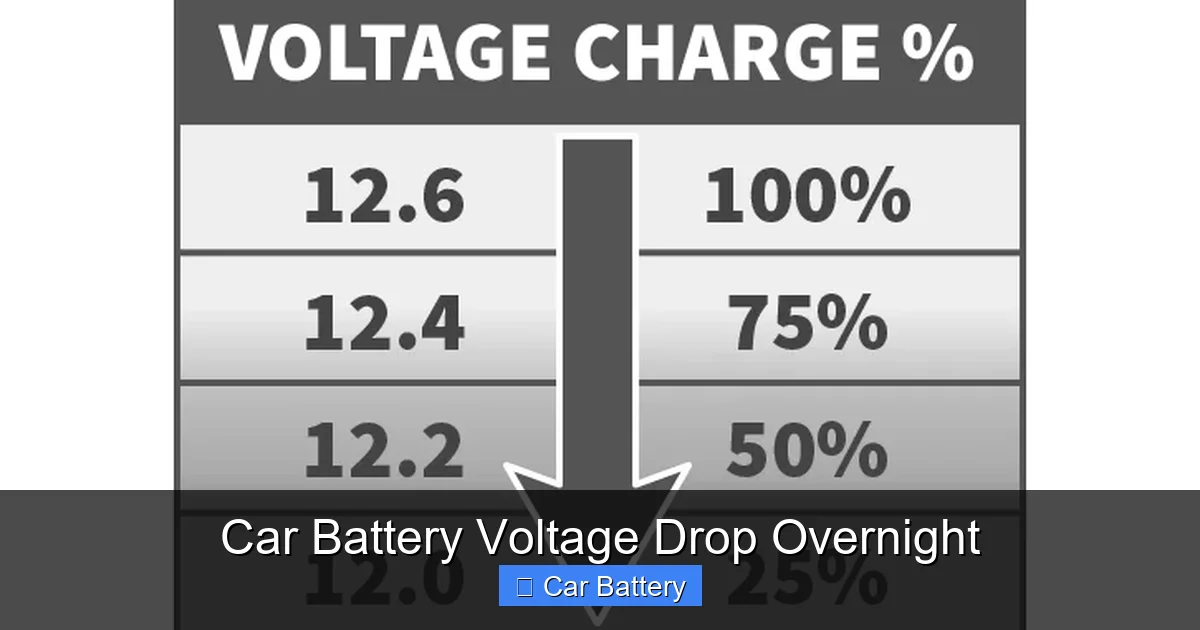
Now, what about overnight? If you measure your battery voltage in the evening and again the next morning, a drop of 0.1 to 0.2 volts is considered normal. For example, going from 12.6V to 12.4V is typical and nothing to worry about. However, if the voltage drops below 12.0 volts—especially below 11.8 volts—your battery may not have enough power to start the engine.
Why does this matter? Because voltage is directly related to the battery’s state of charge. A reading below 12.4 volts means the battery is less than 75% charged. At 12.0 volts, it’s around 50% charged. And at 11.8 volts or lower, it’s essentially discharged and may not crank the engine.
How to Measure Battery Voltage Accurately
To get an accurate reading, follow these steps:
1. Turn off the engine and all electrical accessories (lights, radio, A/C, etc.).
2. Wait at least one hour to allow the battery to stabilize—this is called the “resting period.”
3. Use a digital multimeter set to DC voltage (20V range).
4. Connect the red probe to the positive terminal and the black probe to the negative terminal.
5. Read the voltage on the display.
Avoid testing immediately after driving, as surface charge can give a falsely high reading. Also, make sure the terminals are clean and tight—corrosion or loose connections can interfere with accurate measurements.
Common Causes of Overnight Battery Voltage Drop

Visual guide about Car Battery Voltage Drop Overnight
Image source: m.media-amazon.com
Now that you know what normal voltage looks like, let’s explore why your battery might be dropping more than expected overnight. Several factors can contribute to this issue, and identifying the root cause is key to fixing it.
Parasitic Drain
Parasitic drain is the most common cause of overnight voltage drop. It refers to the small electrical loads that continue to draw power from the battery even when the car is off. These include:
– Clock and radio memory
– Security system and alarm
– Onboard computers (ECU, infotainment, etc.)
– Interior lights that stay on due to a faulty switch
– Aftermarket accessories (dash cams, GPS trackers, phone chargers)
In a healthy vehicle, parasitic drain should be minimal—typically less than 50 milliamps (0.05 amps). But if a component is malfunctioning or stuck in the “on” position, the drain can increase significantly. For example, a glove box light that won’t turn off might draw 0.5 amps. Over 8 hours, that’s 4 amp-hours of power—enough to drop a weak battery below starting voltage.
To check for parasitic drain, you’ll need a multimeter capable of measuring current (amps). Disconnect the negative battery cable and place the multimeter in series between the cable and the terminal. A reading above 50 mA suggests an abnormal drain. You can then pull fuses one by one to isolate the circuit causing the issue.
Aging or Weak Battery
Car batteries don’t last forever. Most lead-acid batteries have a lifespan of 3 to 5 years, depending on climate, driving habits, and maintenance. As a battery ages, its internal plates degrade, reducing its ability to hold a charge. This leads to faster voltage drops, especially in cold weather.
Signs of a weak battery include:
– Slow engine crank
– Dim headlights when idling
– Frequent need for jump-starts
– Swollen or bloated battery case
Even if your battery tests okay during the day, it may struggle overnight due to reduced capacity. A load test performed by a mechanic or auto parts store can reveal if the battery is nearing the end of its life.
Temperature Effects
Cold weather is a major enemy of car batteries. At temperatures below freezing, the chemical reactions inside the battery slow down, reducing its ability to deliver power. This is why many people experience starting issues in winter.
But temperature also affects voltage readings. A battery that reads 12.4 volts at 70°F might read 12.2 volts at 32°F—not because it’s weaker, but because cold reduces voltage output. However, if the battery is already weak, cold weather can push it below the threshold needed to start the engine.
Conversely, extreme heat can accelerate battery degradation. High temperatures increase evaporation of the electrolyte and corrosion of internal components, shortening the battery’s lifespan.
Faulty Alternator or Charging System
If your alternator isn’t charging the battery properly while driving, the battery won’t reach full voltage by the time you park. This leaves it vulnerable to overnight drain.
Symptoms of a failing alternator include:
– Battery warning light on the dashboard
– Flickering headlights
– Electrical components acting erratically
– A burning smell (from overheating alternator)
A healthy alternator should maintain voltage between 13.7 and 14.7 volts while the engine is running. If it’s undercharging (below 13.5V) or overcharging (above 15V), it can damage the battery and cause voltage drops.
Corroded or Loose Battery Terminals
Dirty, corroded, or loose battery terminals can create resistance in the electrical circuit. This prevents the battery from delivering full power and can lead to inaccurate voltage readings.
Corrosion appears as a white, green, or blue powdery substance around the terminals. It’s caused by hydrogen gas escaping from the battery and reacting with metal. Loose connections can result from vibration or improper installation.
To fix this:
1. Disconnect the battery (negative first, then positive).
2. Clean the terminals and cable ends with a wire brush or baking soda solution.
3. Rinse with water and dry thoroughly.
4. Reconnect the cables (positive first, then negative) and tighten securely.
5. Apply a thin layer of dielectric grease to prevent future corrosion.
How to Diagnose a Voltage Drop Problem
Visual guide about Car Battery Voltage Drop Overnight
Image source: d3qyiwn9eml53p.cloudfront.net
If your battery voltage drops overnight, don’t panic. With a few simple tools and steps, you can diagnose the issue and take action.
Step 1: Check the Battery Voltage
Start by measuring the battery voltage in the evening and again the next morning. If the drop is more than 0.3 volts, there’s likely an issue.
Step 2: Inspect the Battery and Terminals
Look for signs of damage, swelling, or corrosion. Check that the terminals are tight and clean. A visual inspection can often reveal obvious problems.
Step 3: Test for Parasitic Drain
Use a multimeter to measure the current draw with the car off and all accessories turned off. A reading above 50 mA indicates excessive drain. Pull fuses one by one to identify the faulty circuit.
Step 4: Load Test the Battery
A load test applies a heavy electrical load to the battery to see how it performs under stress. Many auto parts stores offer free load testing. If the battery fails, it’s time for a replacement.
Step 5: Check the Alternator Output
With the engine running, measure the voltage at the battery terminals. It should be between 13.7 and 14.7 volts. If it’s lower, the alternator may not be charging properly.
Step 6: Scan for Error Codes
Modern vehicles have onboard diagnostics that can detect electrical issues. Use an OBD2 scanner to check for codes related to the charging system or battery.
Preventing Overnight Battery Voltage Drop
The best way to deal with a voltage drop is to prevent it from happening in the first place. Here are some practical tips to keep your battery healthy and your car starting reliably.
Minimize Electrical Load When Parked
Turn off all lights, the radio, and any accessories before leaving the car. Check that interior lights (like trunk or glove box lights) aren’t staying on. Unplug phone chargers and dash cams unless they have a low-power mode.
Use a Battery Maintainer or Trickle Charger
If you don’t drive your car often—especially in winter—a battery maintainer can keep the battery topped up. These devices deliver a small, steady charge to prevent discharge without overcharging.
Park in a Garage or Sheltered Area
Cold temperatures reduce battery performance. Parking in a garage or under cover can help maintain a warmer battery temperature, especially in winter.
Replace Old Batteries Proactively
Don’t wait for a dead battery to replace it. If your battery is over 4 years old, consider replacing it before winter. Many mechanics recommend replacement at 5 years, regardless of condition.
Regular Maintenance Checks
Inspect the battery, terminals, and charging system every 6 months. Clean terminals, check cable connections, and test voltage and alternator output.
Avoid Short Trips
Short trips don’t give the alternator enough time to fully recharge the battery. If possible, take longer drives occasionally to keep the battery charged.
When to Replace Your Car Battery
Even with the best care, car batteries eventually wear out. Here are signs it’s time for a replacement:
– Battery is over 5 years old
– Frequent jump-starts needed
– Slow engine crank, especially in cold weather
– Swollen or leaking battery case
– Failed load test
When replacing your battery, choose one with the correct group size, cold cranking amps (CCA), and reserve capacity (RC) for your vehicle. Higher CCA is better for cold climates.
Conclusion
A car battery voltage drop overnight can be frustrating, but it’s usually preventable with the right knowledge and maintenance. While a small drop is normal, significant voltage loss often points to parasitic drain, a weak battery, or charging system issues.
By understanding how your battery works, regularly checking its health, and taking proactive steps to reduce electrical load, you can avoid the headache of a dead battery. Whether you’re dealing with cold weather, an aging battery, or a mysterious drain, the solutions are within reach.
Don’t wait until you’re stranded. Test your battery voltage, inspect the terminals, and address any issues early. A little attention now can save you time, money, and stress down the road. Your car—and your morning routine—will thank you.
Frequently Asked Questions
Is it normal for a car battery to lose voltage overnight?
A small voltage drop of 0.1 to 0.2 volts overnight is normal due to parasitic drain from clocks, alarms, and computers. However, a drop below 12.0 volts may indicate a problem like a weak battery or excessive electrical draw.
How much voltage drop is too much for a car battery?
A drop of more than 0.3 volts overnight is considered excessive. If your battery goes from 12.6V to below 12.2V, it may not have enough power to start the engine, especially in cold weather.
Can a bad alternator cause battery voltage drop overnight?
Yes, a faulty alternator may not fully charge the battery while driving, leaving it undercharged when parked. This makes it more likely to drop below starting voltage overnight, even without parasitic drain.
How do I check for parasitic drain on my car battery?
Use a multimeter to measure current draw with the car off. Disconnect the negative battery cable and place the meter in series. A reading above 50 mA suggests excessive drain. Pull fuses to isolate the faulty circuit.
Does cold weather cause car battery voltage drop?
Yes, cold temperatures slow chemical reactions in the battery, reducing its voltage output and cranking power. A weak battery may fail to start the engine in winter, even if it worked fine in warmer months.
Can I prevent battery voltage drop if I don’t drive often?
Yes, use a battery maintainer or trickle charger to keep the battery charged. These devices provide a low, steady charge without overcharging, ideal for vehicles that sit for long periods.
