
Best Way to Store a Car Cover: Keep It Clean, Dry, and Ready

Quick Answer
The best way to store a car cover is to remove loose dirt, let the fabric dry completely, fold or loosely roll it with the clean vehicle-facing surface protected, and place it in a clean storage bag. Keep the bag in a cool, dry, ventilated location away from direct sunlight, standing moisture, and sharp objects. For additional care advice, follow your cover manufacturer’s instructions and review this guide to storing a car cover properly.
Essential storage steps
- Remove debris: Shake away leaves, dust, and grit before folding.
- Dry thoroughly: Check seams, straps, mirror pockets, and elastic hems for hidden moisture.
- Fold carefully: Bring the sides inward and fold or roll the cover without forcing sharp creases.
- Choose a clean bag: Use the original storage bag or another suitable clean container.
- Pick a dry location: Use an indoor shelf or cabinet away from heat, sunlight, and damp floors.
- Avoid compression: Keep heavy tools and boxes off the stored cover.
One rule to remember
- Never seal a wet or damp cover in its storage bag, even if the outside feels almost dry.
Storing a car cover properly is just as important as choosing one that fits your vehicle. A little care after each use helps prevent musty odors, trapped dirt, damaged fabric, and unnecessary wear.
I’ve found that the most useful routine is also the simplest: keep the cover clean, let it dry completely, fold it without dragging its inner surface across the ground, and put it somewhere protected. In this guide, I’ll explain how to handle everyday storage, humid weather, long periods between uses, and the mistakes worth avoiding.
In This Guide
Why Does Proper Car Cover Storage Matter?
Proper car cover storage protects the fabric, keeps the vehicle-facing surface clean, and reduces the chance of moisture damage. It also makes the cover easier to unfold and install the next time you need it.
A car cover is a protective fabric layer designed to shield a parked vehicle from selected environmental conditions, such as dust, pollen, sunlight, or precipitation, depending on its construction. Storage means keeping that cover clean, dry, and protected when it isn’t on the vehicle.
How poor storage can damage a car cover
- Trapped moisture: Damp folds can develop unpleasant odors and encourage mildew growth.
- Embedded grit: Dirt trapped against the inner surface can rub against the paint when you reinstall the cover.
- Fabric stress: Tight compression and repeated sharp folds can strain certain materials and coatings.
- Sun exposure: Prolonged direct sunlight may contribute to fading or material deterioration.
- Accidental damage: Sharp tools, rough edges, and heavy objects can snag, puncture, or crush the fabric.
The paint-contact surface deserves particular attention. Even a soft cover can become abrasive when sand or other hard particles get caught between its fabric and your vehicle’s finish.
That is why I treat storage as part of routine car care rather than simply putting the cover away when I’m finished. General vehicle maintenance resources from Consumer Reports can also help you build a broader maintenance routine around protecting your vehicle.
Section Takeaway: Keep the cover clean and dry, and protect its inner surface from contamination. These habits help reduce avoidable wear on both the cover and your vehicle’s finish.
How Should You Prepare a Car Cover for Storage?
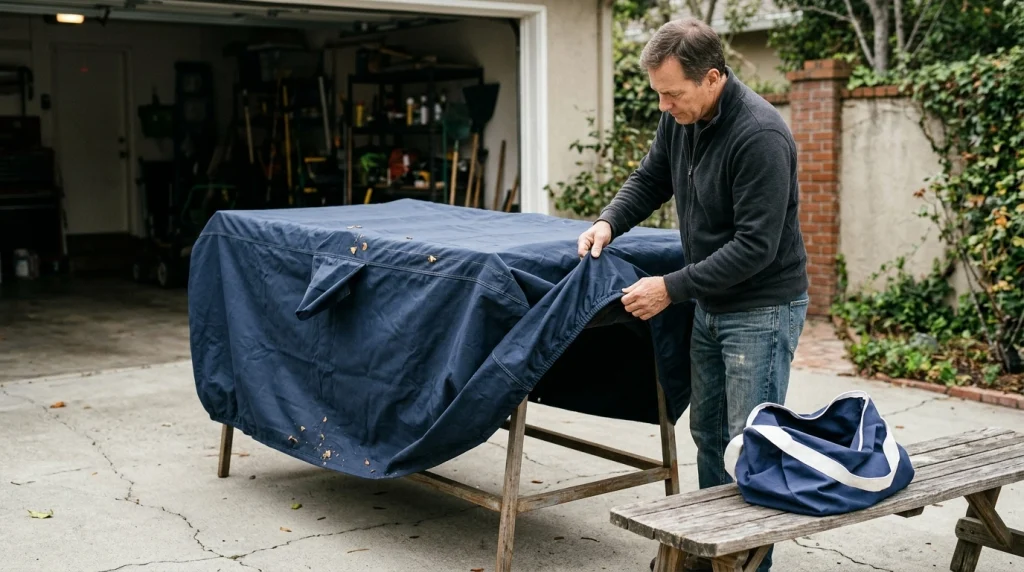
Before folding a car cover, remove loose debris and make sure the fabric is completely dry. If it needs cleaning, use the method approved for that particular cover rather than assuming every material can be machine-washed.
1. Remove dust, leaves, and loose dirt
Take a moment to shake the cover gently before folding it. This removes loose leaves, pollen, and dust that might otherwise become trapped between layers.
If the cover has accumulated road grime, bird droppings, or stubborn marks, clean it according to its care label. Some materials tolerate gentle washing, while others have special coatings or construction that require different treatment.
2. Check whether the cover needs washing
A dusty cover may only need gentle shaking or brushing, but a visibly dirty cover deserves more attention before long-term storage. Avoid harsh chemicals, bleach, or aggressive scrubbing unless the manufacturer specifically permits them.
For a more detailed cleaning routine, consult this guide to cleaning a car cover safely. Always let the cover’s own care instructions take priority over general advice.
3. Let every section dry completely
Never judge dryness by touching only the large, flat panels. Water can linger around seams, elastic hems, straps, reinforced sections, and shaped mirror pockets.
- Feel the thicker stitched areas for dampness.
- Check both sides of the fabric.
- Open any sections that remain folded or bunched together.
- Air-dry the cover in a shaded, well-ventilated place.
Drying time depends on fabric thickness, airflow, and humidity. A lightweight indoor cover may dry faster than a multilayer outdoor cover, so use the fabric’s condition rather than a fixed number of hours to decide when it is ready.
If the cover becomes wet in the rain, leave it open until it dries fully. This guide to handling a wet car cover before storage explains why folding damp fabric can cause problems.
Section Takeaway: A cover should be clean enough for its next use and completely dry before you pack it away. Pay special attention to the seams and other areas where moisture can hide.
What Is the Best Way to Fold or Roll a Car Cover?
The best folding method is to bring the sides inward, protect the clean vehicle-facing surface, and fold or roll the resulting strip into a manageable bundle. The exact fold pattern matters less than avoiding dirt, trapped moisture, and excessive compression.
Follow this simple folding process
- Choose a clean area. Use a clean, dry surface or fold the cover carefully while it rests on the vehicle, if practical.
- Release the fasteners. Undo the cover’s straps, buckles, or other attachments according to the manufacturer’s instructions.
- Bring the sides inward. Fold each side toward the center so the cover becomes a long strip.
- Protect the inner surface. Keep the paint-contact side away from the driveway, garage floor, and other dirty surfaces.
- Fold or roll the strip. Work from one end toward the other, keeping the bundle loose enough to avoid excessive compression.
- Check the finished bundle. Tuck away loose straps and make sure buckles or other hardware aren’t pressing against delicate fabric.
- Place it in the storage bag. Use a clean, dry bag that accommodates the bundle without forcing it inside.
Should you fold or roll the cover?
Either method works for many car covers. A fold creates a flat bundle that may fit neatly on a shelf, while a loose roll can be convenient for covers you remove and reinstall frequently.
For thicker outdoor covers, don’t force the fabric into a tiny package. A slightly larger bundle is preferable to compressing the cover aggressively or forcing it into an undersized bag.
My practical preference is to use a repeatable folding pattern. When the cover comes off the vehicle, I can bring the sides inward, roll the strip, and store it without repeatedly dragging the material across the ground.
If you’re still learning the removal and folding process, follow this illustrated guide to folding a car cover correctly.
Section Takeaway: Fold or roll the cover in a clean area, protect the inner surface, and avoid forcing the bundle into a tight space. Consistency makes the process easier without requiring a perfect factory-style fold.
Where Should You Store a Car Cover?
Store a clean, dry car cover indoors whenever possible, preferably on a shelf or in a cabinet away from direct sunlight and moisture. Choose a location with stable, dry conditions rather than leaving the bundle on a damp garage floor or in a hot, exposed area.
Good places to keep a car cover
- Garage shelf: Convenient for regular use, provided the area stays dry and the cover is protected from dust and tools.
- Storage cabinet: Helps protect the bundle from accidental spills, sharp objects, and workshop debris.
- Indoor closet: A useful option for seasonal covers that won’t be needed for several weeks or months.
- Clean storage compartment: Handy for short trips or temporary storage when the compartment is dry and doesn’t expose the cover to excessive heat.
Should you keep a car cover in the trunk?
You can keep a fully dry, neatly packed cover in your trunk for convenience, especially if you use it regularly. However, a trunk can become hot, and a damp cover can remain trapped without enough airflow.
For long-term storage, an indoor shelf or cabinet is generally easier to manage. If the trunk is your only practical option, inspect the cover periodically and avoid packing it away immediately after rain or washing.
How should you store a cover in humid weather?
In humid conditions, moisture control matters even more. Choose the driest ventilated indoor location available, keep the cover elevated from the floor, and check it periodically for dampness or musty odors.
A breathable storage bag can help limit dust while allowing better air exchange than an airtight bag. However, breathability doesn’t compensate for packing a wet cover, so complete drying remains essential.
For additional guidance when humidity creates storage challenges, see this article about keeping a car cover protected between uses. As of 2026, the safest general approach remains to follow the cover manufacturer’s material-specific care instructions.
Section Takeaway: A dry indoor shelf or cabinet is usually the simplest choice. In humid climates, prioritize airflow, keep the cover off damp floors, and inspect it during extended storage.
Which Car Cover Storage Method Works Best?
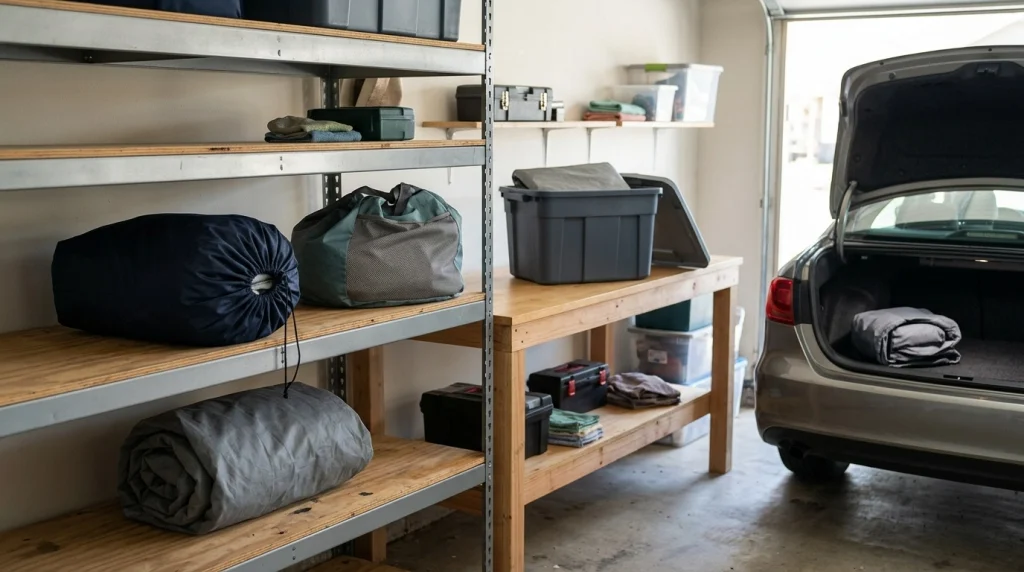
The best storage method depends on how often you use the cover, its thickness, and the conditions where you keep it. For most everyday drivers, a clean storage bag on a dry indoor shelf offers a good balance of convenience and protection.
| Storage method | Best use | Main advantage | Watch out for |
|---|---|---|---|
| Original storage bag | Routine storage | Designed to accommodate the cover | Dampness or excessive compression |
| Breathable fabric bag | Closets and dry garage shelves | Helps limit dust while allowing airflow | Dust and moisture in the surrounding area |
| Clean storage tote | Protection from workshop debris | Keeps the bundle contained | Poor ventilation if tightly sealed |
| Trunk storage | Frequent use and travel | Easy access when needed | Heat and trapped moisture |
| Loose roll on a shelf | Bulky covers and frequent reuse | Simple to pack and unfold | Dust exposure without a protective bag |
These methods aren’t equally suitable for every material. Check the manufacturer’s instructions before using a sealed container, hanging a heavy cover, or storing a cover with special coatings.
What about long-term seasonal storage?
If you won’t use the cover for months, clean it as needed, dry it thoroughly, and inspect the seams and fasteners before packing it away. Keep it away from chemicals, sharp edges, and objects that could crush or snag the fabric.
It also helps to label the bag if you own separate indoor and outdoor covers. That small step makes it easier to choose the appropriate cover when the season changes.
Section Takeaway: Use the supplied bag when it fits comfortably, or choose a clean alternative that suits the fabric. For long-term storage, a dry indoor location is usually more dependable than an exposed garage corner or vehicle trunk.
What Car Cover Storage Mistakes Should You Avoid?
The most common storage mistakes are packing away damp fabric, exposing the clean inner surface to grit, and compressing the cover too tightly. Avoiding these habits is more important than achieving an exact fold pattern.
- Storing it while damp: Moisture trapped inside folds can lead to musty smells and mildew.
- Folding it on dirty concrete: Sand, dust, and other debris can contaminate the paint-contact surface.
- Using an unsuitable dryer: Heat may damage some fabrics, coatings, or waterproof layers.
- Sealing it immediately after rain: A closed container restricts airflow around remaining moisture.
- Leaving it in direct sunlight: Prolonged exposure may accelerate deterioration in susceptible materials.
- Stacking heavy items on top: Weight can compress the cover and place unnecessary stress on delicate sections.
- Ignoring a damaged cover: Torn seams, failing elastic, or loose fasteners may worsen if left unchecked.
What if the cover already smells musty?
Remove the cover from its bag and inspect it for visible mildew, stains, and persistent dampness. Follow the manufacturer’s approved cleaning procedure and allow the material to dry completely before storing it again.
If the odor persists or the fabric shows substantial deterioration, contact the manufacturer for advice rather than using stronger chemicals that could damage its protective layers.
How often should you inspect a stored cover?
Check the cover whenever you take it out and before you pack it away. During extended storage in a humid garage or other moisture-prone location, occasional additional checks can help you catch problems early.
Before reinstalling it, make sure the cover is clean and dry and that the vehicle’s surface is free of loose grit. A properly stored cover still needs careful handling when it goes back onto the car.
Section Takeaway: Don’t rush drying, don’t allow the inner surface to collect grit, and don’t ignore damage. A brief inspection before and after storage helps keep the cover ready for its next use.
Frequently Asked Questions About Storing a Car Cover
Should I fold or roll my car cover for storage?
Either method is suitable for many covers. Folding creates a flatter bundle, while rolling can make a bulky cover easier to handle. Follow the manufacturer’s instructions and avoid excessive compression, sharp creases, or dragging the vehicle-facing surface across dirty ground.
Can I store a car cover in a plastic bag?
A plastic bag can restrict airflow, especially if moisture remains inside. For routine storage, a clean, breathable bag is often a better choice. If you use a plastic container, make sure the cover is completely dry and follow the manufacturer’s storage recommendations.
Can I put a car cover away when it’s slightly damp?
No. Leave it open in a ventilated area until the fabric, seams, hems, and straps are completely dry. Even when the main panels feel dry, thicker sections can retain moisture. Packing the cover too soon can cause unpleasant odors and encourage mildew.
Is it okay to keep a car cover in the trunk?
Yes, for convenient short-term storage, provided the cover is clean and completely dry. However, trunk temperatures can rise, and enclosed spaces limit airflow. For long-term storage, a dry indoor shelf or cabinet is generally easier to manage.
How do I store a car cover during winter?
Clean the cover if needed, let it dry fully, and fold or roll it into a suitable storage bag. Keep it indoors in a dry location away from moisture and sharp objects. Before using it again, inspect the fabric, seams, straps, and vehicle-facing surface for damage or contamination.
Can a stored car cover develop mold or mildew?
Yes. Damp fabric kept in a closed bag or container can develop musty odors and may support mildew growth. Complete drying, suitable ventilation, and periodic inspections reduce this risk. If mildew appears, use only a cleaning method approved for the cover’s material.
Should I wash my car cover before storing it?
Wash it when dirt or contamination warrants cleaning, but don’t assume every cover needs washing after every use. Follow the care label, use an approved cleaning method, and dry the cover completely before packing it away. Removing loose debris after ordinary use may be sufficient.
Final Takeaway: Store Your Car Cover the Right Way
The best way to store a car cover is to keep it clean, completely dry, loosely folded or rolled, and protected in a suitable bag. Choose a dry indoor location and keep the bundle away from direct sunlight, excessive heat, moisture, and heavy objects.
For everyday drivers, the routine doesn’t need to be complicated. Remove loose debris, check the seams for moisture, protect the inner surface, and store the cover where it stays clean between uses.
Make those steps part of your regular vehicle-care routine, and your cover will be ready when you need it again. Always follow the manufacturer’s instructions if they differ from these general recommendations.