
10 Best Leather Car Seat Care: Expert Tips for Cleaning, Conditioning, and Protection

Leather car seats add comfort and style to a vehicle, but they also need regular care to stay soft and crack-free. Leather is natural and reacts to heat, sunlight, and spills, so using the right cleaners, conditioners, and protection matters. We focus on products made for automotive leather rather than household leather to avoid damage and preserve factory finishes.
When choosing leather seat care, the most important things are compatibility with your leather type, gentle cleaning power, and a conditioner that restores oils without leaving a greasy film. Pick products labeled for automotive leather and free of harsh solvents or silicone to avoid fading, staining, or long-term drying. We tested and compared cleaners, conditioners, and protectants to find the ones that clean well, condition evenly, and offer lasting protection.
Best Leather Car Seat Care
Below is our full list of the best leather car seat care products. We tested cleaners, conditioners, and protectants to find items that clean gently, restore suppleness, and resist cracking. Use our picks to keep leather seats looking and feeling their best.
Chemical Guys Leather Kit

We recommend this kit if you want a simple two-step system that cleans and softens leather without harsh chemicals.
Pros
- Cleans well and lifts dirt without scrubbing hard.
- Conditioner leaves leather soft and not greasy.
- Works on car seats and leather items around the house.
Cons
- Scent may be strong for some users.
- Takes time to work into very dry or cracked leather.
- Not a one-step fix for badly worn seats.
We used the cleaner first and saw grime come off without damaging the finish. It foamed lightly and rinsed clean, which made the seats look brighter right away.
Applying the conditioner felt easy and fast. The leather soaked it in and the surface regained some suppleness instead of feeling stiff.
For routine upkeep this kit fits the bill. It won’t magically restore badly cracked leather, but it will keep seats soft and help prevent further drying.
Leather Honey Conditioner
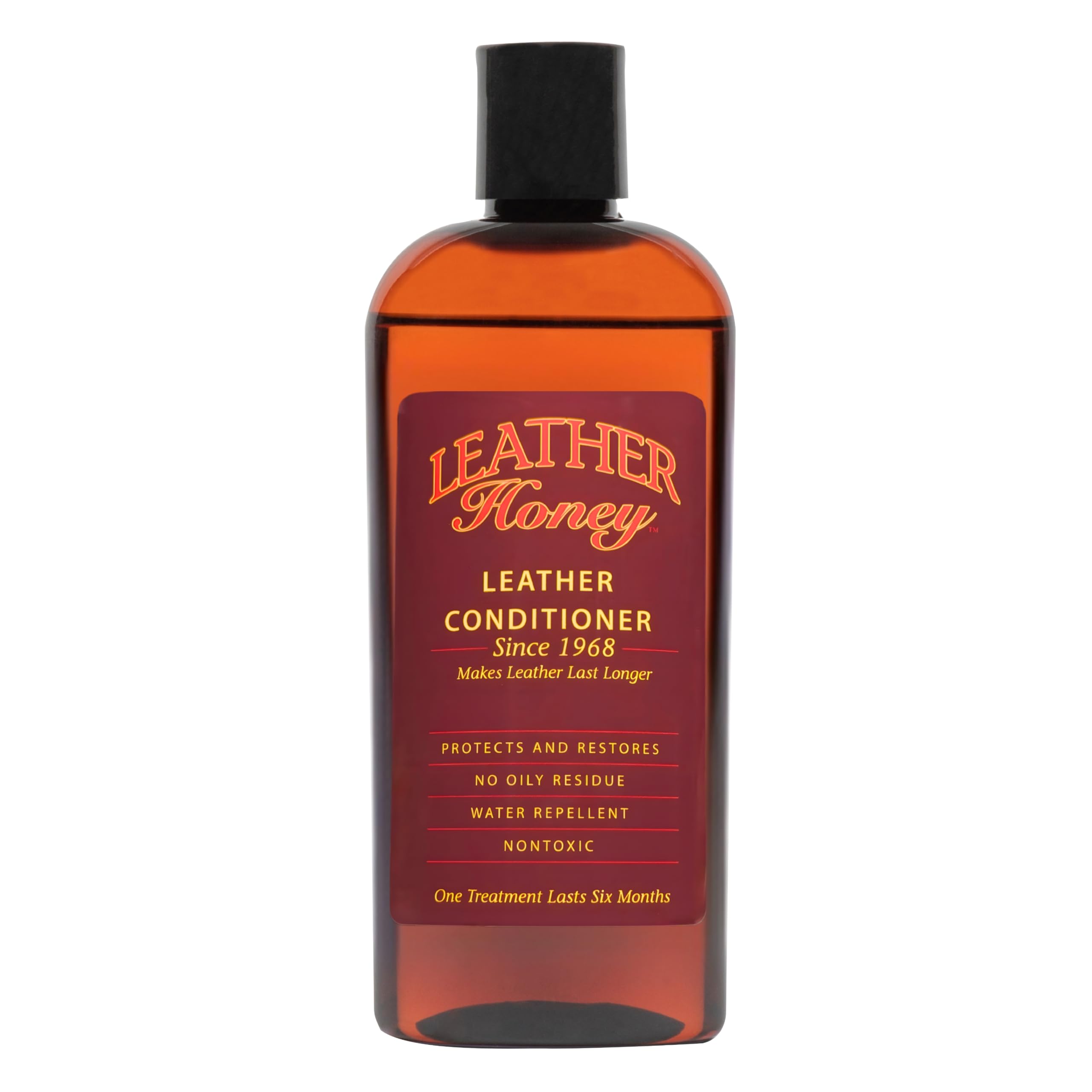
We recommend this if you want a long-lasting, no-fuss leather conditioner that really soaks into seats and keeps them supple for months.
Pros
- Deeply penetrates and softens old, dry leather.
- Lasts a long time — one application can protect for months.
- Odorless, non-sticky, and water-repellent formula.
Cons
- Takes time to fully absorb on very dry leather.
- Not for suede, faux leather, or vinyl.
- Bottleneck and pour control could be better.
We used this on several sets of car seats and noticed it sinks in instead of sitting on top. The seats lost that tight, cracked feel after one treatment, and the finish felt natural, not shiny.
Application took a few passes with a soft cloth, and we had to wait a couple hours before using the car. Leather Honey didn’t leave a greasy film, and small water beads rolled off during a light rain test.
It held up well over months; spots that usually dry first stayed flexible. We liked that it smells neutral and felt safe around kids and pets in the car. Overall, it’s a solid, simple choice for real leather seats that need real conditioning.
Armor All Beeswax Leather Spray
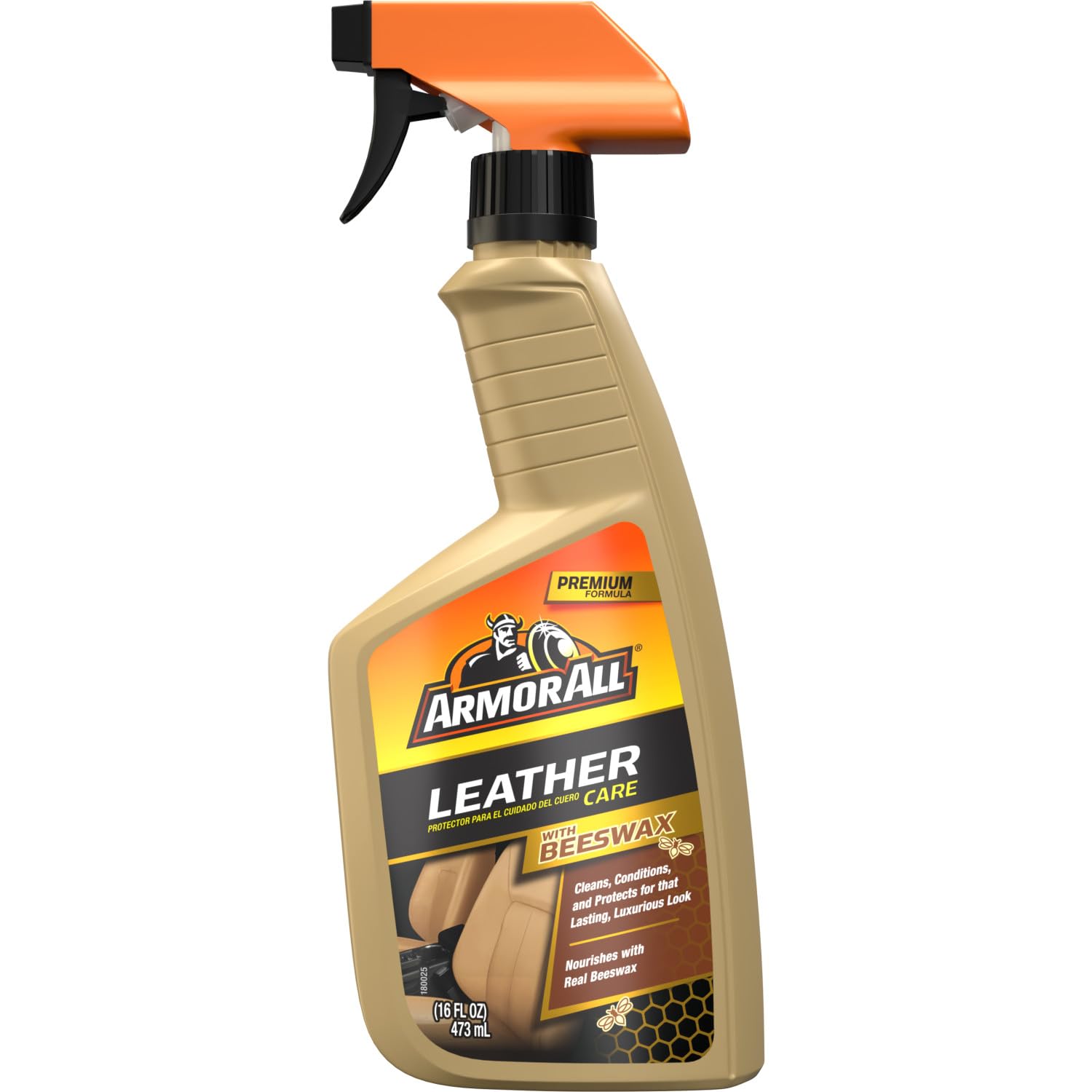
We recommend this if you want a quick, one-step cleaner and conditioner that leaves leather soft and lightly protected.
Pros
- Cleans and conditions in one spray
- Leaves leather feeling soft and natural
- Easy to use and quick to apply
Cons
- Leaves a light scent that some may notice
- Not a heavy-duty restorer for badly cracked leather
- Spray can overshoot on tight seams
We used this on our daily driver and liked how fast it worked. The spray lifts dirt from the grain and the wipe-off was easy. Seats felt supple after one treatment instead of tight or sticky.
Application stayed simple: spray, rub gently with a microfiber, and buff. Beeswax gave a soft finish without a heavy shine, so the leather looked natural. That finish held up for weeks under normal use.
We did spot-test on a darker seat and saw no color change. For very old or heavily cracked leather, expect limited repair—this product maintains, not resurrects. Small creases and edges needed extra care to avoid overspray buildup.
Overall, we found it a handy product for routine leather care and upkeep. If you want a fast, low-effort treatment that keeps seats soft and protected, this is worth trying: Armor All Beeswax Leather Spray.
Weiman Leather Cleaner & Conditioner
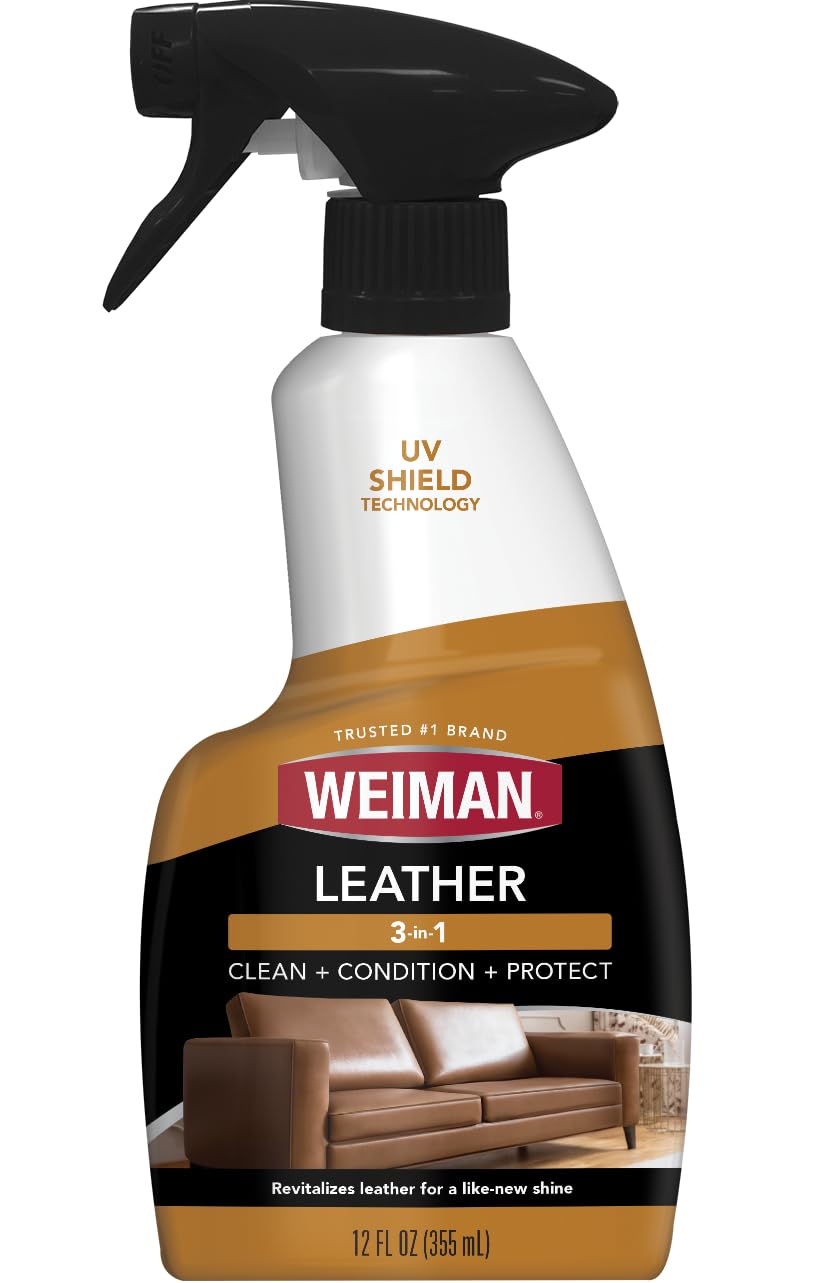
We recommend this if you want an easy spray that cleans, conditions, and adds UV protection in one step.
Pros
- Cleans and softens leather quickly.
- Leaves no greasy residue.
- Helps protect against sun damage.
Cons
- Spray can overshoot on tight seams.
- Strong citrus scent at first.
- Not for unfinished or antique leather.
We used this on our car seats and a leather jacket, and it felt like a fast, no-fuss fix. The trigger spray made coverage quick, and the leather looked smoother after wiping.
When cleaning, it removed light dirt and body oils without leaving a film. Conditioning felt noticeable — the seats lost that stiff, dry feel and looked less dull.
Sun protection seems helpful after a few weeks in the sun; the leather showed less fading where we applied it. Be careful to test a hidden spot first and avoid over-saturating stitches or perforations.
Chemical Guys Sprayable Leather
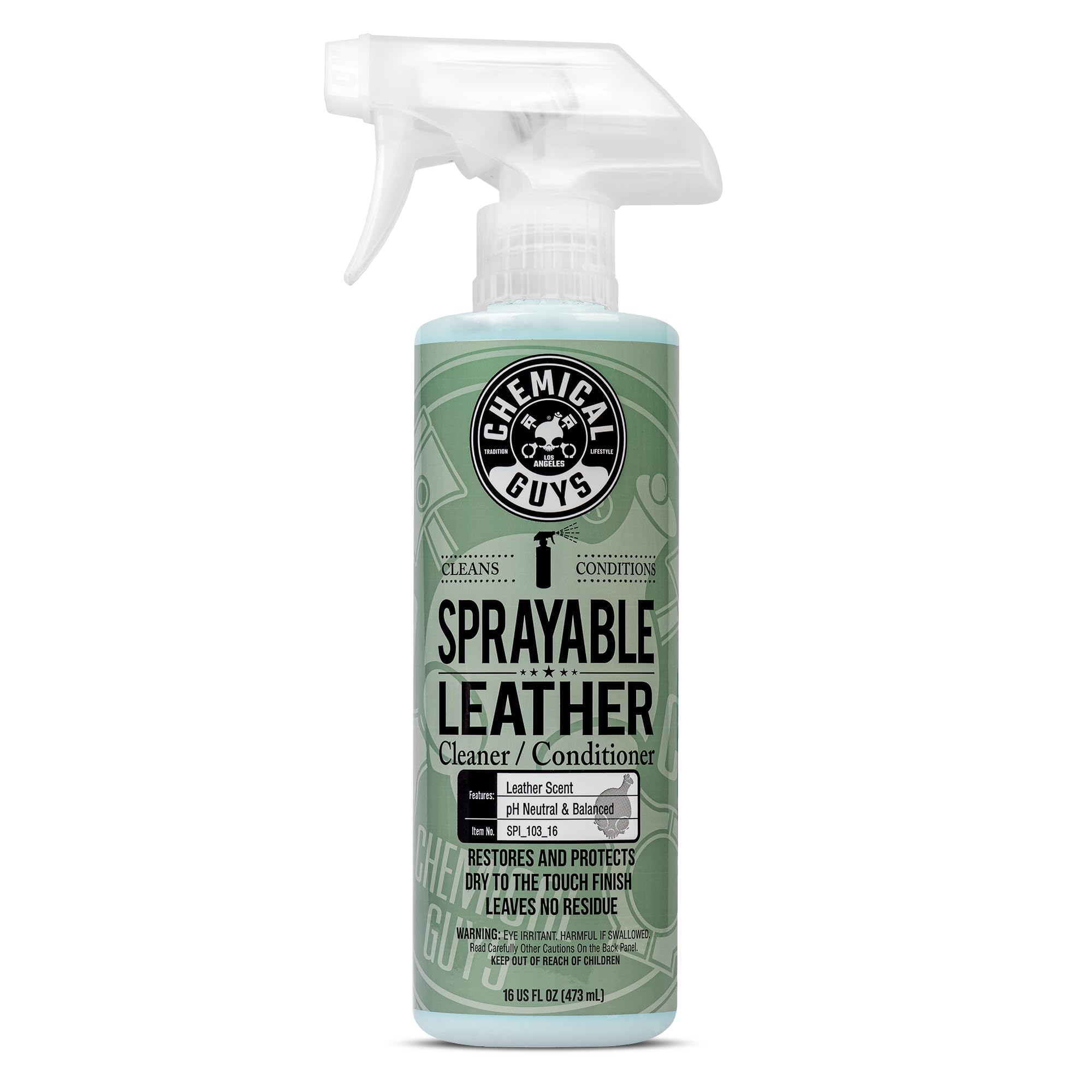
We recommend this for quick, one-step leather care because it cleans, conditions, and adds light protection in a single spray.
Pros
- Cleans and softens leather in one pass
- Works on natural and synthetic leather without stripping
- Sprayer makes fast spot work and light maintenance easy
Cons
- Not a deep-restoration product for badly cracked leather
- Leaves a mild scent that some may notice
- Can build up if over-applied without buffing
We used this spray across seat creases and on a few older panels. It lifted oils and light grime without rubbing hard, and the leather felt noticeably softer after wiping. The spray format let us target seams and bolsters without saturating the foam beneath.
Application felt quick and tidy. Spraying onto a towel then wiping kept overspray off plastic trim. After buffing, surfaces had a natural luster rather than a greasy shine, which worked well for daily drivers and rental cars.
For heavily dried or damaged leather, we still reach for a cream or restorer, but this product shines for routine upkeep. It saved us time on short detail sessions and kept interiors comfortable between deeper treatments.
Leather Honey Complete Kit
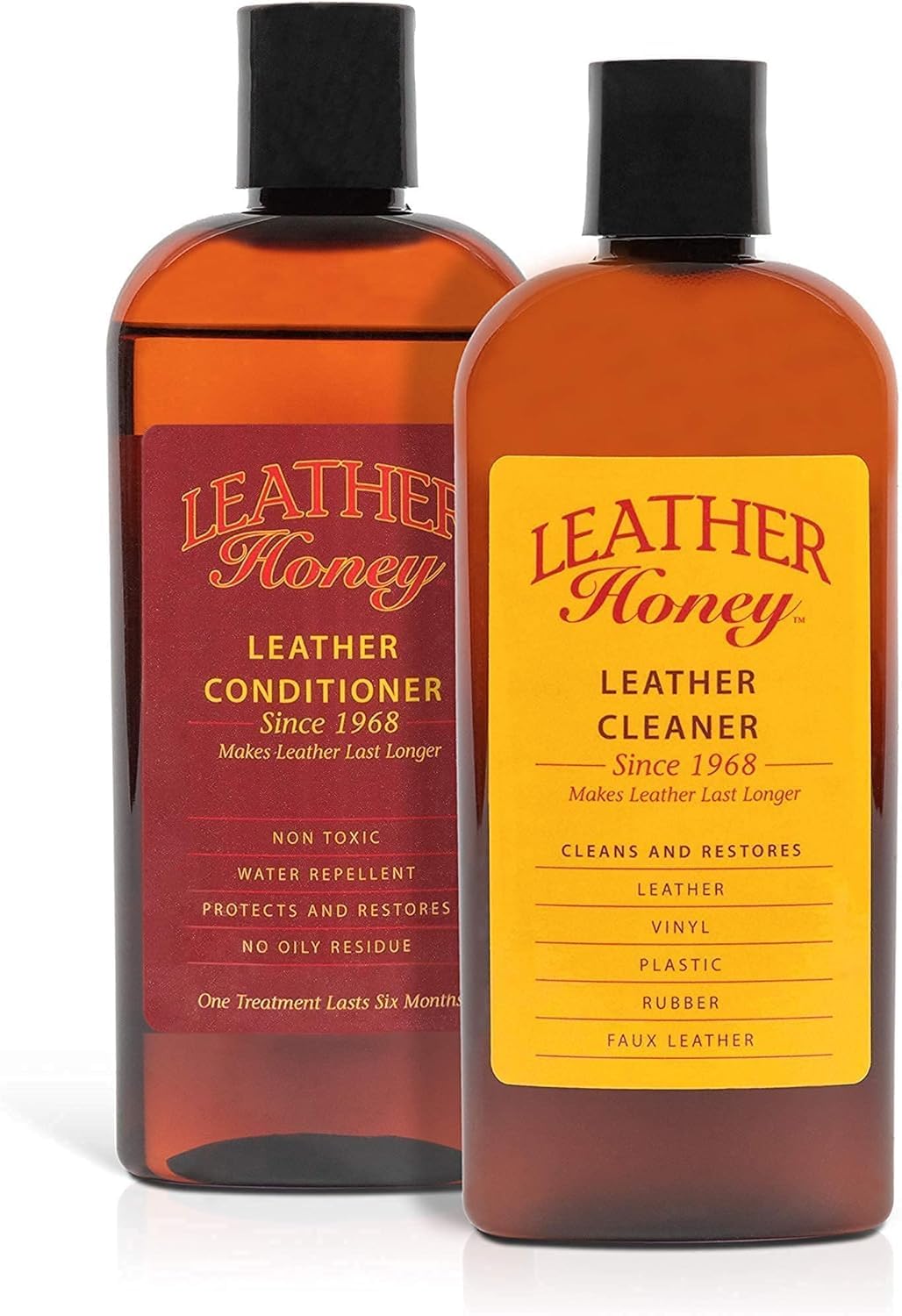
We recommend this kit if you want a simple, strong leather cleaner and conditioner that really soaks into seats and lasts.
Pros
- Deep-conditioning formula restores dry leather without leaving a sticky film.
- Concentrated cleaner stretches the value — a little goes a long way.
- Odorless and non-toxic, safe for many leather types.
Cons
- Requires time to work in properly; not a quick wipe-and-go fix.
- Conditioner is thick — you’ll need to buff excess off carefully.
- Not ideal for suede or nubuck.
We used the cleaner and conditioner on both older and newer car seats. The cleaner diluted easily and lifted grime without harsh smells. It felt safe to use around trims and didn’t fade the color.
Applying the conditioner took more effort than a spray-on product. It soaked deep and the seats looked less cracked after a few applications. We had to buff thoroughly to avoid a slightly shiny finish in bright light.
The kit feels like a long-term fix rather than a one-time touch-up. If you want to preserve leather and prevent drying, this set delivers solid results and good value for the price.
Leather CPR 18oz Cleaner & Conditioner

We recommend this if you want a simple, one-step cleaner that really softens and revives finished leather without a greasy feel.
Pros
- Cleans and conditions in one go.
- Dries matte, not shiny or sticky.
- Safe on most finished leather items.
Cons
- Not for suede or nubuck.
- Scent-free formula may feel plain to some.
- Works best with a cloth and a little elbow grease.
We used this on car seats and a leather jacket. It lifted surface dirt and body oils faster than other products we tried. The leather felt softer right after it dried and the color looked deeper without dark spots.
Application was easy. We sprayed onto a cloth and rubbed in small sections. No rinsing or buffing saved time, and one bottle covered several seats with room to spare.
A few notes from real use: avoid heavy saturation on very old or cracked leather. For delicate antiques, test an invisible spot first. Overall, it made routine care quick and left the leather comfortable to the touch.
Buy it here: Leather CPR 18oz Cleaner & Conditioner
Leather Honey Cleaner Spray

We recommend this spray if you want an easy, non-toxic cleaner that also adds UV protection to leather car seats.
Pros
- Cleans grease and grime without strong fumes.
- Adds UV protection to slow fading and cracking.
- Safe on many materials like faux leather and vinyl.
Cons
- Spray nozzle can be a bit weak on the first use.
- Not suitable for suede or nubuck.
- You may need a follow-up conditioner for very dry leather.
We used this cleaner on light-colored car seats and liked how it lifted oil stains without leaving a sticky film. The spray felt gentle and did not leave a strong scent, which made the car comfortable right away.
Application was simple: a quick mist, a soft wipe, and older dirt came off with minimal scrubbing. The UV protectant gave us peace of mind for summer sun exposure, and seats looked more even in tone after a few uses.
A small downside: the bottle’s spray pattern needed extra passes on textured seams. For very dry or cracked leather, we followed with a separate conditioner to restore suppleness. Overall, this felt like a practical, safe clean-and-protect option for daily car care.
Chemical Guys Leather Kit
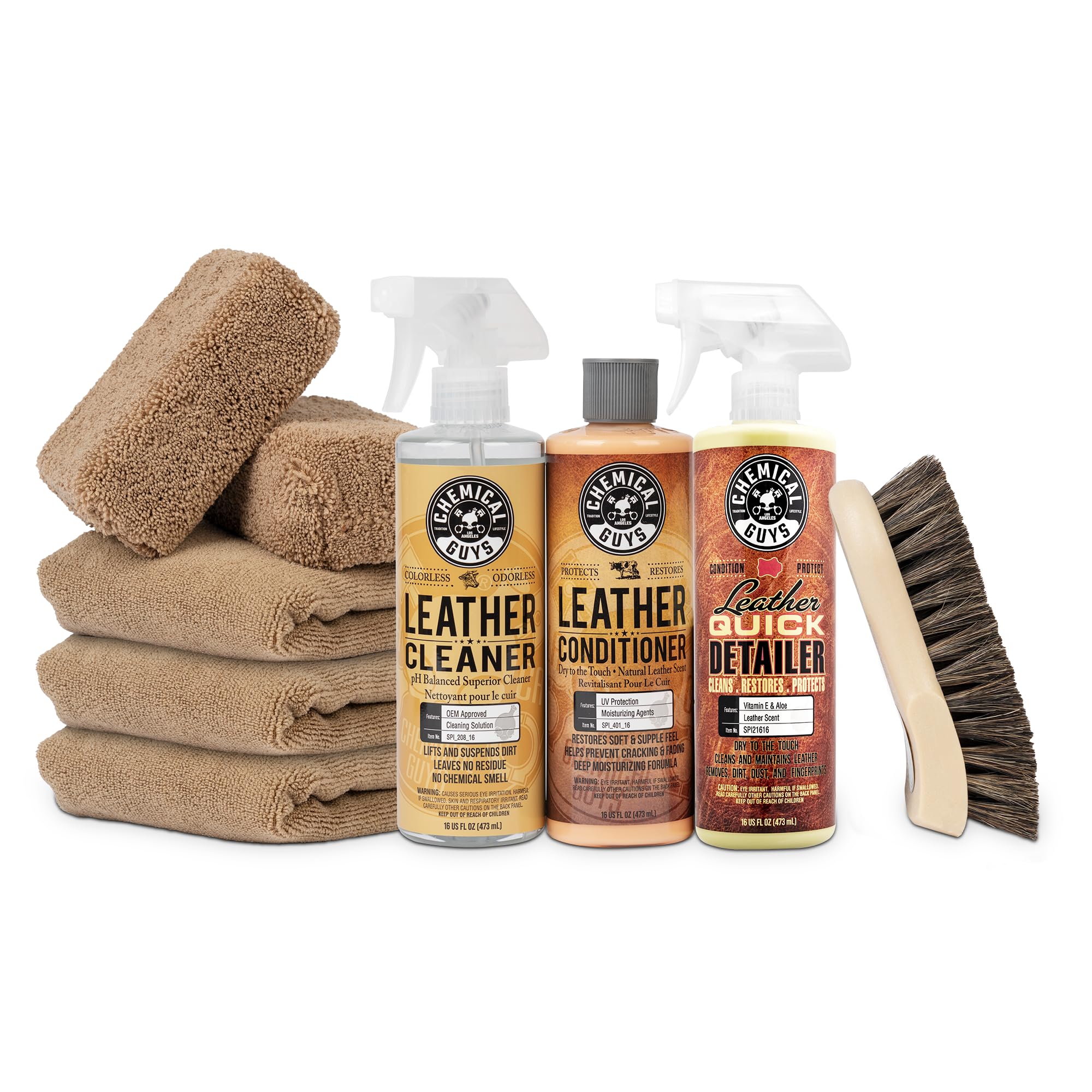
We recommend this kit if you want an easy, all-in-one system that cleans and conditions most leather types without harsh chemicals.
Pros
- Cleans deeply and preps leather so conditioner works well.
- Conditioner leaves a natural, non-greasy feel and restores softness.
- Comes with brushes, applicators, and towels so you can start right away.
Cons
- Takes time to do a full seat well — multi-step process.
- Not a single-spray quick fix for heavy stains.
- You need to test on old or dyed leather first to be safe.
We used this kit on two car seats and a leather jacket. The cleaner cut through body oils and light grime without leaving a film. The brush helped lift dirt out of stitch lines, and the towels did a good job wiping residue away.
After cleaning, the conditioner soaked in nicely and smoothed dry spots. Leather felt softer and looked richer, but it did take a few minutes per panel to work it in properly. It did not leave any greasy shine, which we liked.
For routine care the kit is handy and complete. Deep-set stains or damaged leather may need professional repair, but for regular maintenance this set gives predictable, safe results and the tools make the job easier.
Chemical Guys Leather Quick Detailer

We recommend this spray if you want a fast, easy way to clean and condition leather seats without sticky residue.
Pros
- Cleans and softens in one quick step.
- Safe on natural and synthetic leathers.
- Light scent and non-greasy finish.
Cons
- Not for heavy grime or deep stains.
- Bottle spray can oversaturate if you’re not careful.
- Protection layer is light compared with heavy conditioners.
We used this on several car seats and a leather jacket. It wiped away light dust and body oils fast and left the leather feeling supple right after application. The scent is mild and fades quickly.
Application felt simple: spray a bit on a microfiber, work it in, then buff. We liked that it did not leave a shiny, greasy film. The seats looked refreshed and stayed comfortable to sit on.
For tougher soiling or cracked leather, this won’t replace a deep cleaner or repair treatment. It works best as a regular maintenance step to keep leather soft and delay wear.
Buy it on Amazon: Chemical Guys Leather Quick Detailer
Buying Guide
We look for products that match our leather type. Check the label or test a hidden spot before use. Different leathers need different cleaners and conditioners.
We prefer pH-balanced cleaners. They clean without stripping oils. Avoid harsh solvents and bleach.
We want conditioners that restore suppleness. Look for formulas that absorb well and leave no sticky residue. A conditioning schedule depends on climate and use.
Consider safety and certifications. Non-toxic, low-VOC formulas reduce odors and irritation. Cruelty-free or vegan labels matter if leather is synthetic.
We weigh ease of use. Pump bottles, spray nozzles, and clear instructions save time. Tools like soft brushes and microfiber cloths should be gentle.
We compare concentration and value. Concentrated products often cost more upfront but last longer. Check dilution instructions and estimated uses per bottle.
We inspect packaging and storage needs. Airtight containers keep products stable. Avoid packaging that degrades in heat or sunlight.
We value tested cleaning tools. Soft, nonabrasive brushes and plush microfiber cloths protect surfaces. Avoid stiff bristles or abrasive pads.
We look for clear application steps on the label. Directions that list prep, application, and drying times reduce mistakes. Patch-test guidance is especially useful.
We use a simple checklist when choosing:
| Feature | Why it matters |
|---|---|
| pH-balanced formula | Protects leather oils |
| Conditioner absorption | Prevents residue |
| Non-toxic/low-VOC | Safer for users and pets |
| Ease of application | Saves time, reduces errors |
| Concentration/value | Longer-lasting supply |
Editor’s Choice
We pick products and methods that protect leather and save time. Our top pick cleans, conditions, and leaves leather soft without a greasy film. It works on all common automotive leathers and dries fast.
We like a simple three-step routine: vacuum, clean, condition. Each step uses a mild product designed for car leather to avoid damage. We avoid household cleaners and strong solvents.
Key reasons we chose this approach:
- Gentle pH-balanced cleaner to lift dirt.
- Leather conditioner with UV protection to prevent cracking.
- Microfiber towels and soft brushes for safe use.
Product features we prioritize:
- Non-toxic formula
- No heavy perfumes
- Easy application (spray or pump)
- Clear instructions on the label
We recommend routine care every 3 months for regular use, more often if the car sits in sun. Spot-treat spills immediately with a damp cloth. For stubborn stains, test any product on a hidden area first.
Conclusion
We have covered the key steps to keep leather car seats clean, soft, and protected. Regular wiping, gentle cleaners, and conditioning prevent drying and cracking.
We recommend a simple routine: vacuum first, use a pH-balanced cleaner, condition every 3–6 months, and protect from sun with shades or parking choices. Small tasks done often save time and money later.
We should avoid harsh soaps, household cleaners, and rough brushes that can damage leather. Spot-test any new product on a hidden area to check colorfastness.
We can keep supplies on hand in a small kit: a soft brush, microfiber cloths, leather cleaner, and conditioner. Label the kit and store it in the trunk so we can tackle spills quickly.
If seats are heavily stained or torn, we should consult a pro for repair or re-dyeing. Professional care can extend the life of expensive leather and maintain resale value.
Our consistent care will keep leather seats comfortable and looking good for years. Small, careful steps make a big difference.
FAQS
Q: How often should we clean leather seats?
We clean leather seats every 1–3 months for regular use. We spot-clean spills right away to prevent stains.
Q: Can we use household cleaners?
No. Many household cleaners dry or damage leather. We use cleaners made for leather or a mild soap diluted with water.
Q: How do we condition leather?
We apply a leather conditioner every 3–6 months. We use a soft cloth and rub gently in small circular motions.
Q: Will conditioner darken leather?
Some conditioners can slightly darken leather. We test on a hidden spot first to check color change.
Q: Can we clean perforated leather the same way?
Perforated leather needs less liquid. We use a lightly damp cloth and a soft brush to avoid pushing dirt into holes.
Q: How do we remove stains like ink or grease?
Ink and grease need special products or professional care. We avoid using alcohol or harsh solvents, since they can strip dye and finish.
Q: Is heat or sunlight bad for leather?
Yes. Heat and sun fade and dry leather. We park in shade or use sunshades and apply conditioner more often in hot climates.
Q: When should we seek professional help?
We seek a pro for tears, deep cracks, or major color loss. Professionals can repair and restore without making damage worse.
