
How Long Can a 5 Month Old Be in a Car Seat? A Complete Safety Guide

Planning a family road trip or running a long list of errands with an infant requires careful preparation. As a parent or caregiver, one of the most common questions you will face is figuring out exactly how long can a 5 month old be in car seat safely. While modern car seats are incredible feats of engineering designed to save lives during collisions, they are not designed for prolonged lounging or sleeping.
Understanding the limits of car seat time is critical for your baby’s developing spine, airway, and overall health. Whether you are driving across the state or simply stuck in heavy traffic, knowing the industry standards for infant car seat usage will help you avoid dangerous health risks. This guide will break down the crucial time limits, the warning signs of improper seating, and practical tips to keep your baby safe and comfortable on the road.
Quick Answer
If you are wondering how long can a 5 month old be in car seat, safety experts strictly recommend a maximum of two hours at a time. This is known as the “2-hour rule.” During long trips, you must pull over every two hours to take your baby out of the seat, allowing them to stretch and breathe freely.
Understanding the 2-Hour Rule
When discussing infant travel safety, the “2-hour rule” is the gold standard supported by pediatricians and automotive safety experts. But what exactly does this rule mean, and why is it so strictly enforced?
A 5-month-old baby is still developing core muscle strength and neck control. While they are stronger than a newborn, they cannot easily shift their own weight or correct their posture if they slump forward. The two-hour limit exists to prevent them from sitting in a semi-upright, restrictive position for too long.
According to NHTSA’s child passenger safety recommendations, keeping a baby in a rear-facing safety seat is the best way to protect them in a crash. However, the exact angle that protects them during a collision can cause physical strain during everyday resting. Taking your baby out of the seat every two hours allows their spine to decompress and ensures their airway remains wide open.
Why the Time Limit Matters
Car seats are shaped like a “C” to cradle the baby’s body and distribute crash forces evenly. While this shape is incredibly safe during an accident, it restricts natural movement.
When a baby is strapped into a 5-point harness for more than two hours, their oxygen saturation levels can begin to drop slightly. Even healthy 5-month-olds can experience a dip in oxygen if they fall asleep and their chin drops down to their chest.
The Hidden Dangers of Prolonged Car Seat Use
Leaving a baby in a car seat for extended periods—whether in a moving vehicle or carrying the seat into a house or restaurant—carries specific health risks that every car owner should understand.
Positional Asphyxiation
This is the most severe risk associated with ignoring car seat time limits. Positional asphyxiation happens when a baby’s breathing is compromised by their own body position. If a 5-month-old falls asleep and their heavy head slumps forward, it can compress their soft windpipe.
Unlike adults, babies will not always wake up or gasp if their airway is partially blocked. Keeping trips under two hours, and having a passenger monitor the baby in the back seat, drastically reduces this risk.
Spine and Hip Development
A baby’s spine is still forming its natural curves. Spending excess time in the “C-shaped” curve of a car seat puts unnecessary pressure on their developing vertebrae. Furthermore, keeping their hips locked in a rigid position for hours can contribute to hip dysplasia.
Frequent breaks allow the baby to lay flat on their back, stretch their legs, and move their hips naturally.
Temperature Regulation and Overheating
Vehicles can have unpredictable airflow, especially in the back seat where rear-facing car seats are installed. The deep padding and protective foam of a car seat trap body heat. A 5-month-old cannot easily regulate their body temperature or sweat efficiently, making them prone to overheating on long drives.
How to Manage Long Road Trips with a 5-Month-Old
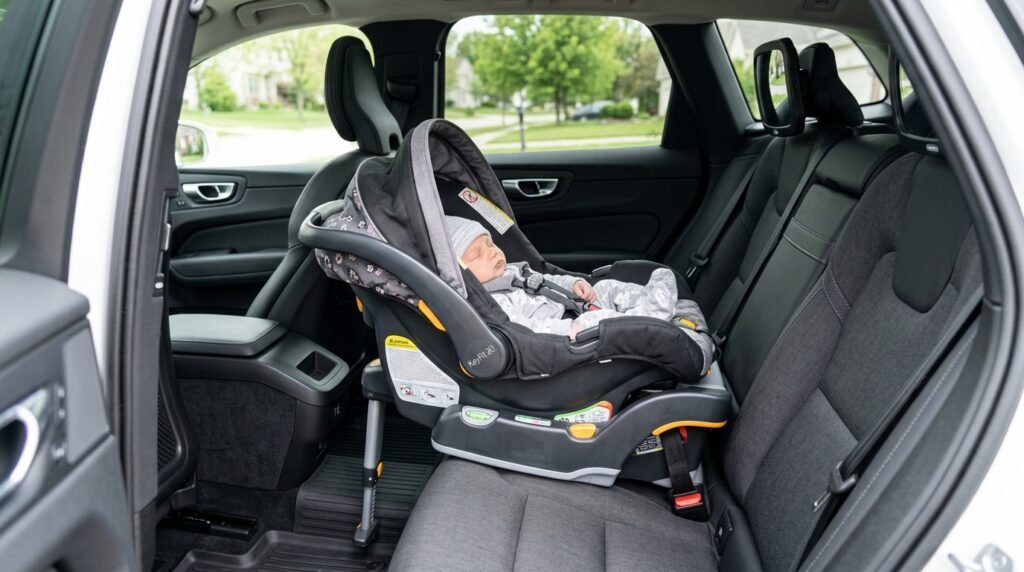
Traveling long distances with an infant requires strategic planning. You cannot treat a road trip with a baby the same way you did before becoming a parent. Here is how to keep your 5-month-old safe on an extended drive.
Plan Frequent Stops
Map out your route before leaving home and identify rest stops, parks, or safe parking lots every 1.5 to 2 hours. Use these stops to feed, change, and let your baby stretch on a blanket.
Have an Adult Ride in the Back
Whenever possible, have one adult sit in the back seat next to the baby. This allows you to monitor their breathing, head position, and temperature. You can easily adjust the vehicle’s AC vents or use a sunshade if the baby gets too warm.
Use a Car Seat Mirror Carefully
If you are driving alone, a shatterproof car seat mirror attached to the back headrest can help you keep an eye on your baby. Ensure it is securely fastened so it does not become a dangerous projectile during a sudden stop.
Never Feed in a Moving Car
It can be tempting to give a 5-month-old a bottle while driving to keep them quiet, but this poses a severe choking hazard. Always pull over to a safe location before feeding.
Essential Safety Table: Safe vs. Unsafe Car Seat Practices
To help you make the best automotive decisions for your family, refer to this quick comparison of car seat habits.
| Practice | Safe Action | Unsafe Action |
| Trip Duration | Stopping every 2 hours to remove the baby. | Driving 4+ hours straight without removing the baby. |
| Sleeping | Letting baby sleep while driving, with adult supervision. | Letting baby sleep in the car seat inside the house. |
| Harness Fit | Snug fit; you cannot pinch the webbing at the collarbone. | Loose straps; bulky winter coats worn under the harness. |
| Seat Recline | Adjusted to the manufacturer’s exact level indicator. | Installed too upright, causing the baby’s head to flop. |
| Accessories | Using only accessories approved by the seat manufacturer. | Using aftermarket head positioners or harness pads. |
Checking Your Vehicle’s Safety Equipment
Your car seat is only as safe as the vehicle it is installed in. While the car seat itself has a rigid safety framework, it relies entirely on your car’s LATCH (Lower Anchors and Tethers for CHildren) system or locking seat belts to function properly.
Before placing your 5-month-old in the car for a long trip, inspect your vehicle’s rear seat belts. Pull the belt all the way out to ensure the locking retractor engages. When you let it spool back in, it should click and lock tightly. If you are using the LATCH lower anchors, run your hand between the seat cushions to ensure the metal bars are free of rust, debris, and structural damage.
Organizations like Safe Kids Worldwide highly recommend getting your car seat installation checked by a certified technician, especially if you suspect your vehicle’s seat belts or anchors are older or compromised.
When to Call a Professional Mechanic
Most car seat installations are a DIY job, provided you carefully read both the car seat manual and your vehicle owner’s manual. However, there are specific scenarios regarding your vehicle’s restraint systems where DIY is not safe.
You need to call a professional mechanic or visit an auto body shop if you notice any of the following:
- Frayed or Torn Seat Belts: If the webbing of your vehicle’s seat belt is fraying, it may snap under the intense force of a collision. A mechanic must replace the entire seat belt assembly.
- Broken Locking Retractors: If your seat belt does not lock firmly when pulled sharply, the internal mechanism is broken. It will not hold a car seat tightly.
- Damaged LATCH Anchors: If your car was in a previous fender bender, the metal LATCH anchors welded to the vehicle chassis might be bent or compromised.
- Malfunctioning Door Locks or Windows: A mechanic should inspect faulty rear door child locks or power windows to prevent accidental openings while driving.
Never attempt to repair a broken seat belt or LATCH anchor with tape, glue, or aftermarket hardware. These are structural automotive components that require professional replacement.
Expert Tip:
Always park your car on flat, level ground when installing an infant car seat or checking the recline angle indicator. If your car is parked on a slanted driveway, the car seat’s built-in level bubble will give you a false reading, resulting in an unsafe seating angle for your 5-month-old.
Common Mistakes Car Owners Should Avoid
Even well-meaning parents can make errors when managing a baby in a vehicle. Avoid these frequent missteps to ensure a smooth, safe ride:
- Using the Car Seat as a Stroller Substitute: Unless using a travel system for short grocery runs, avoid leaving the baby in the car seat once you reach your destination. Transfer them to a flat bassinet or a baby carrier.
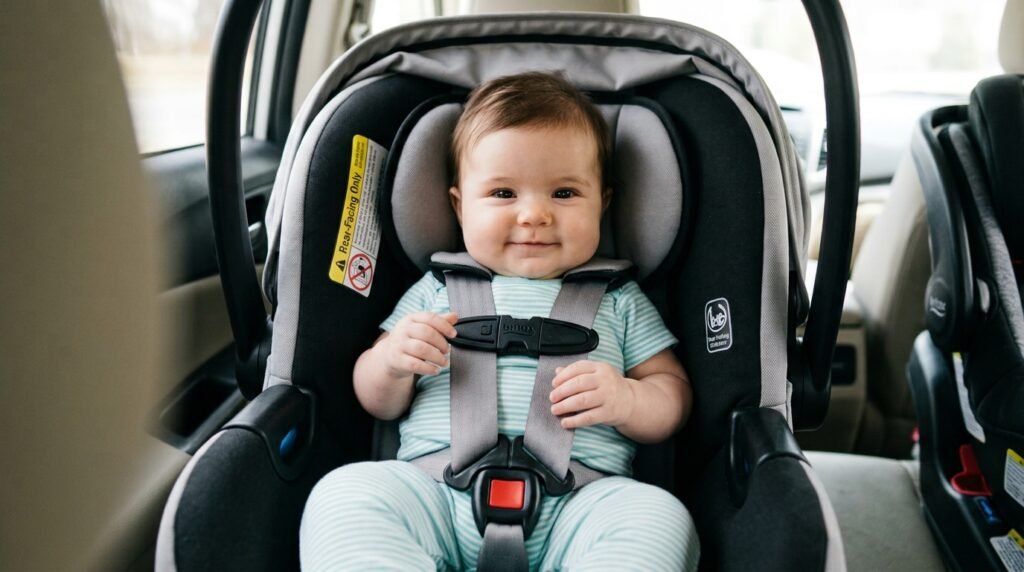
- Ignoring the Pinch Test: A loose harness is incredibly dangerous. Once buckled, try to pinch the strap webbing vertically at your baby’s collarbone. If you can pinch the fabric, the harness is too loose.
- Adding Winter Coats: Puffy winter coats compress during a car crash, leaving the harness dangerously loose. Dress your 5-month-old in thin, warm layers and place a blanket over them after they are buckled.
- Misunderstanding the Chest Clip: The plastic chest clip must sit exactly at armpit level. Placing it too low over the soft stomach can cause severe internal injuries during a sudden brake.
FAQs
How long can a 5 month old be in a car seat on a road trip?
A 5-month-old should not be in a car seat for more than two hours at a time. On a road trip, you must plan to pull over every two hours to remove the baby, allowing them to stretch their spine and breathe comfortably before continuing the drive.
Can my baby sleep in the car seat once we get home?
No. While it is completely normal for a baby to fall asleep during a drive, you should immediately remove them from the car seat once you arrive home. Car seats are not designed for safe sleep outside of the vehicle. Place them in a crib or bassinet instead.
What should I do if I cannot pull over right at the two-hour mark?
If you are driving on a highway without an immediate exit or safe shoulder, do not panic. Proceed safely to the very next exit or rest area. It is better to go slightly over the two-hour mark than to park dangerously on the side of a busy interstate.
Why is my baby’s head slumping forward in the car seat?
If your 5-month-old’s head is slumping forward to their chest, the car seat may not be reclined properly. Check the level indicator on the side of the seat. If the recline is correct, ensure the shoulder straps are originating from at or just below the baby’s shoulders.
Do I need a professional mechanic to install my car seat?
No, a mechanic does not install car seats. You can install it yourself using the manuals. However, if your car’s seat belts are jammed, frayed, or the LATCH anchors are bent, you must hire a professional mechanic to repair the vehicle’s safety restraints first.
Does the two-hour rule change as my baby gets older?
The two-hour rule is strictest for newborns and infants up to 6 months old. However, even for older babies and toddlers, stopping every two hours is highly recommended to prevent restlessness, muscle stiffness, and to allow for diaper changes and feeding.
Conclusion
Navigating automotive safety with a young infant requires diligence, patience, and a thorough understanding of vehicle dynamics. When answering the critical question of how long can a 5 month old be in car seat, the strict two-hour limit is your most important guideline. By respecting this rule, you protect your baby from the hidden risks of positional asphyxiation and spine compression.
Always ensure your vehicle is in top condition before a road trip, pay close attention to your LATCH anchors and seat belts, and never hesitate to consult a professional mechanic if your car’s internal restraint systems are compromised. By planning your routes with frequent stops, properly adjusting the harness, and keeping a watchful eye on your child, you can ensure that every drive is a safe and enjoyable journey for the whole family.
