
10 Best Airplane Car Seat: Top Picks and Buying Guide for Safe Travel

Airplane car seats let parents secure young children on flights while meeting airline rules and keeping kids safer than holding them on a lap. These seats range from full FAA-approved harness seats to convertible models that also work in cars and strollers. We focus on seats designed specifically for use on planes, which are typically lightweight, compact, and easy to buckle into an airplane seat.
Choosing the right airplane car seat means balancing safety, size, and ease of use. Look for FAA approval, a compact profile that fits most airline seats, and clear installation steps—those three factors matter most for a smooth trip. We tested and compared several seats so we can recommend the options that make flying with young children safer and less stressful.
Best Airplane Car Seats
Below is our full list of the best airplane car seats we recommend for travel. We tested options for safety, comfort, and ease of use to help you pick the right seat for your child.
Graco Contender Slim

We recommend this seat if you need a lightweight, space-saving convertible car seat that works for both car and plane travel.
Pros
- Slim profile fits three across and moves easily between vehicles.
- FAA-certified for aircraft use, so it’s travel-ready.
- One-motion headrest and harness adjustment saves time as kids grow.
Cons
- Padding feels thinner than some bulkier models.
- Installation can be fiddly in tight seats despite the level indicator.
- Only two recline positions limit fine-tuning for naps on long flights.
We used it on a week of travel and liked how light it is to carry through airports. Folding it into a taxi or lifting it into a rental car was simple compared to heavier seats we’ve used.
In the car, the slim design let us fit another booster beside it. The harness adjustment was fast; moving the headrest up with one hand made transitions quick as our child grew.
On a plane, having an FAA-approved seat gave us peace of mind. The cup holder came off easily for boarding, and the machine-washable pad handled a spill without stress.
If you want very plush padding or many recline options, look elsewhere. For parents who need a travel-friendly, space-saving convertible that still meets safety standards, this is a solid choice.
WAYB Pico Travel Car Seat

We recommend this if you want a very light, compact car seat that fits overhead bins and is easy to carry for short trips.
Pros
- Extremely light and folds small for travel
- Feels well-made with a sturdy aluminum frame
- Comes with a quality carry bag for easy transport
Cons
- Only forward-facing and has limited weight/height range
- Returned/open-box seats must be destroyed per policy
- Not ideal for long drives where extra padding might matter
We used the Pico hopping between flights and taxis and appreciated how little space it took. Carrying it through the airport felt almost effortless at 8 pounds. The folding action is quick and the carry bag keeps the seat tidy.
Installing it in a ride-share was straightforward and the seat felt solid under the child. The harness tightened securely, and the mesh fabric kept things cool on warm days. We did notice the padding is minimal compared with full-size seats.
Keep in mind this seat works best for kids in the stated range and for travel use. If you need a seat for daily long drives or rear-facing infants, choose a different model. For travel days when light weight and easy stowage matter most, this one shines.
Buy the WAYB Pico Travel Car Seat on Amazon
Diono Radian 3R (Jet Black)

We recommend this seat when you want one long-lasting, slim convertible that travels and fits three across most cars.
Pros
- Slim design fits three across without squeezing kids.
- Strong steel frame gives a solid, secure feel.
- Folds for travel and is FAA-approved.
Cons
- Heavier and bulky to carry despite folding.
- Tight harness can be tricky to adjust quickly.
- Covers take effort to remove and wash.
We tested the Radian 3R on a family trip and liked how confidently it held a rear-facing toddler. The steel frame felt very sturdy when we buckled in, and the slim shell let us pack three seats across the back row with room for passengers. Installation with SuperLATCH was straightforward and stayed tight during driving.
Rear-facing for longer stood out on long drives. Our child was comfortable in the memory foam padding, and we liked keeping them rear-facing up to higher weight. Moving to forward-facing and later booster stages felt smooth because the seat grows with the kid, so we avoided swapping to a new seat for years.
Air travel with the Radian worked better than expected. Folding it for the gate and using it on the plane made travel easier, though carrying the 23-pound unit through an airport was tiring. We found cover removal possible but a bit fiddly, so plan time for washing.
Overall, the Radian 3R gave us peace of mind with its build and fit for three-across setups, but be ready for the weight and some extra effort with harness and cover handling.
Pico Travel Car Seat
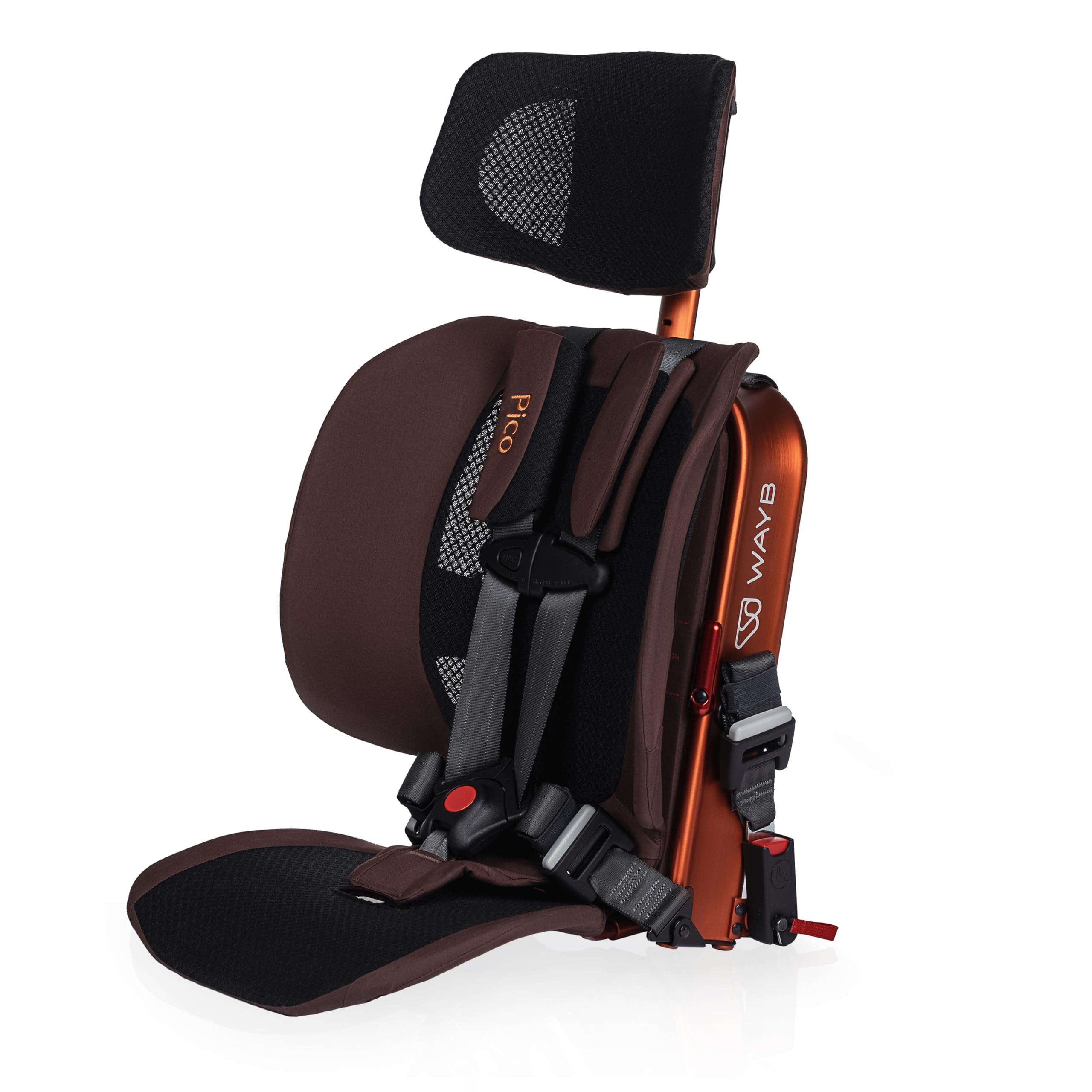
We recommend the Pico when you want a very light, foldable car seat that fits in airplane overhead bins and keeps travel simple.
Pros
- Extremely light and easy to carry on trips.
- Folds small enough for overhead bin storage.
- Feels sturdy despite the low weight.
Cons
- Forward-facing only, so younger toddlers may outgrow it sooner.
- Some users may find the harness adjustments fiddly.
- Open-box returns must be destroyed, so check before unboxing.
We used the Pico on a short flight and a few rideshares. Carrying it through the airport felt easy; at about 8 pounds it hardly added extra weight to our bags. Folding and unfolding took a minute the first time and was smoother after that.
Installing the seat in the car or airplane felt secure. The latch system and the five-point harness gave us confidence, and the aluminum frame seemed solid. The mesh cover keeps the child cool on warm travel days.
This seat works best for families who travel a lot and need a compact, FAA-ready option. Expect to replace it sooner than a full-size convertible seat because it’s forward-facing only, but for flight and quick trips it saved us time and hassle.
mifold Comfort Grab-and-go Booster

We recommend this when you need a truly compact booster for travel and carpooling because it makes the seat belt fit smaller kids without bulky lifting.
Pros
- Super compact and easy to carry.
- Helps the adult belt sit correctly on smaller kids.
- Extra padded cushion makes longer rides bearable.
Cons
- Not a high-back seat, so less neck support.
- Small kids may still need extra recline comfort on long flights.
- Some parents prefer a full-size booster for daily car use.
We used this on a week of road trips and in a taxi with zero fuss. It fits in our backpack and pops out when a ride needs a quick booster. The grab-and-go idea really works — instead of hauling a big seat, we just clip the belt and pull it down to the right spot.
The padded cushion actually made a difference on longer drives. Kids stayed more comfortable than we expected for a backless booster. We noticed the anti-slip pads helped keep the seat from sliding when the child shifted.
This seat is best for families who need portability more than full support. We wouldn’t pick it as our only daily car seat if our child naps with head flopped forward. For travel, carpooling, and quick rides, it saves space and gets the belt where it should be.
Buy the mifold Comfort Grab-and-go Booster on Amazon
zhtangrui Car Seat Dolly
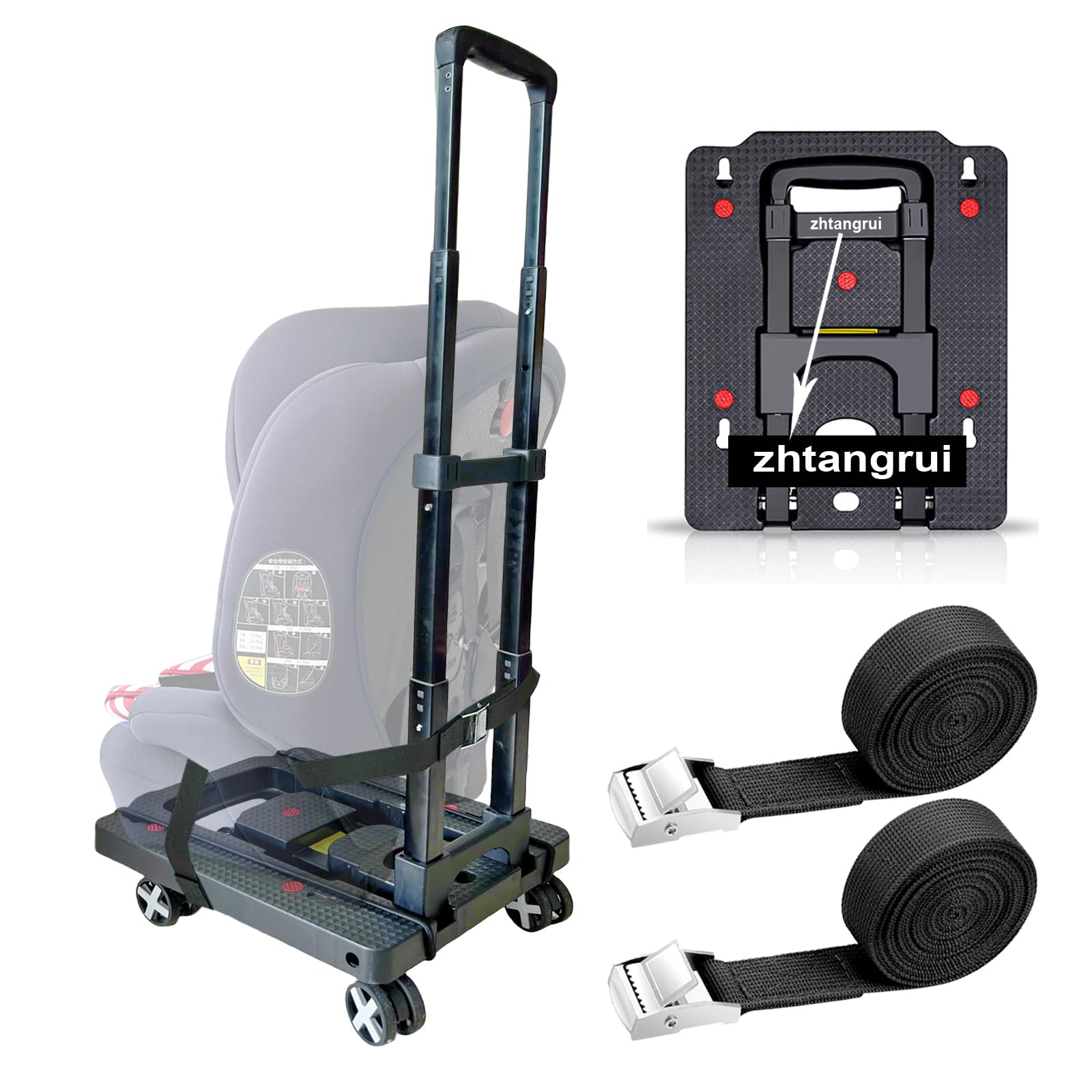
We recommend this dolly if you need to roll a bulky car seat through airports and want a light, foldable option that holds up to everyday chores.
Pros
- Very lightweight and easy to fold.
- Uses ratchet straps to keep the seat secure.
- Doubles as a small hand truck for shopping or gear.
Cons
- Only fits car seats with flat bottoms and specific dimensions.
- Requires careful strapping to avoid shifting on uneven ground.
- Wheels are solid—less smooth on rough surfaces.
We used this cart on a long airport walk and it made moving a heavy car seat much easier. The frame is light, and folding it into our carry stash felt quick and tidy.
Strapping the seat took two minutes once we practiced. The ratchet straps really lock the seat in place, but you must measure your seat and follow the instructions or it won’t sit correctly.
We also tried it for grocery runs and moving boxes from the car. It handled small loads well, but on bumpy pavement the ride felt stiff because the wheels are solid.
Overall, this cart works best for parents who travel often and have a compatible car seat. Measure the base first and use both ratchet straps every time to keep things steady.
Ellaris 3-in-1 Convertible Car Seat

We recommend this seat if you want a slim, travel-friendly convertible car seat that grows with your child.
Pros
- Slim profile fits well on planes and in tight car rows.
- Easy LATCH install and adjustable headrest for quick changes.
- Washable seat pad and removable cup holders make cleanup simple.
Cons
- Heavier than infant-only seats to carry through the airport.
- Padding is firm at first and may need time to break in.
- No built-in base for quick click-in use like some travel infant seats.
We used this seat on a recent trip and found it saves space; it fit in the airplane aisle row without crowding the neighbor. The harness adjustments were straightforward, and the 5-position headrest made getting the belt height right fast.
Car installation using the hook-style LATCH felt secure and repeated installs did not wear on the anchors. The shell felt solid and met safety expectations, though the unit’s weight made hauling it through the terminal a bit tiring.
Cleaning was easy after a snack spill—seat pad popped out and handled the washer and dryer fine. For everyday travel families who need a single seat from rear-facing infant to forward-facing toddler, this model proved practical and reliable.
Guiseapue Car Seat Travel Bag
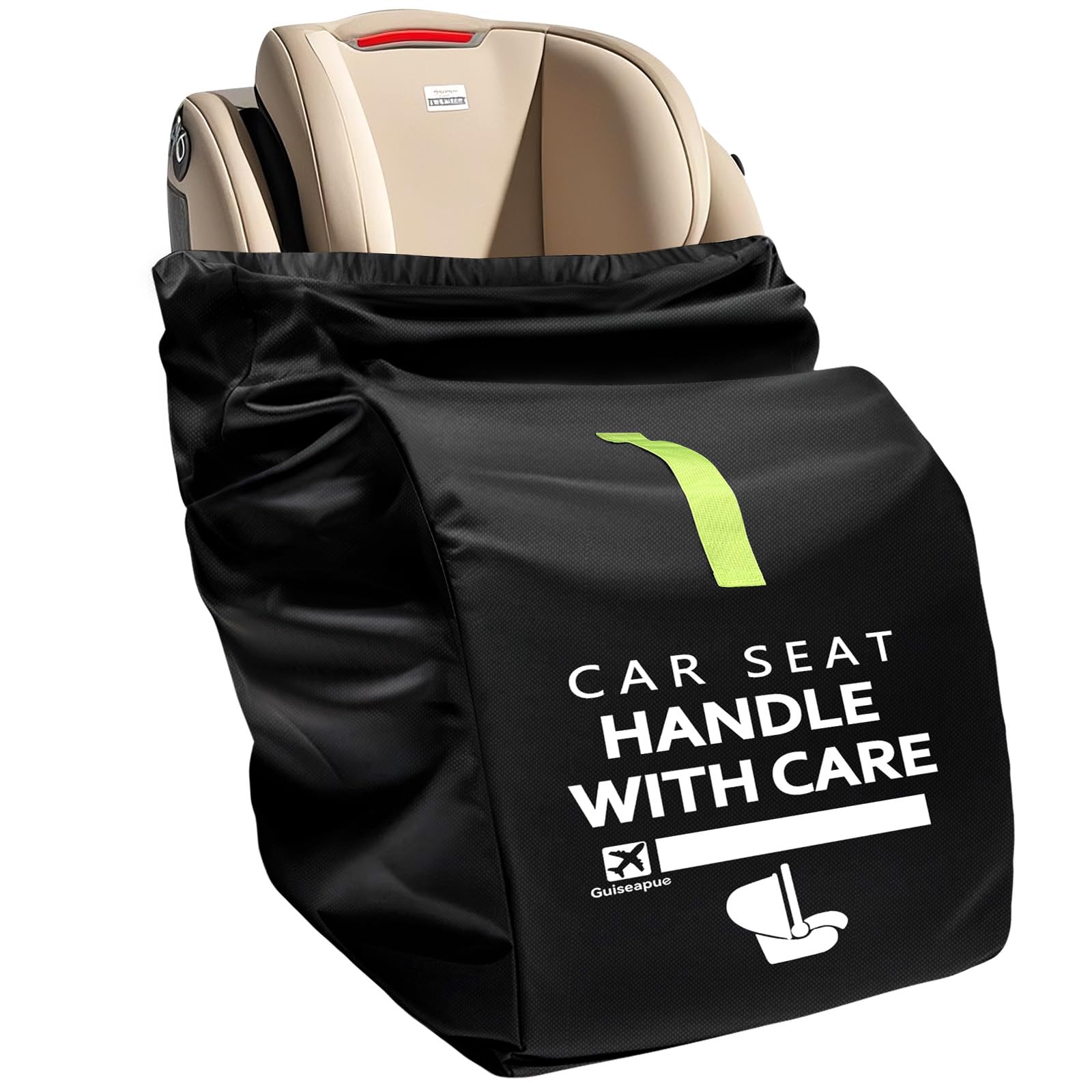
We recommend this bag if you want a simple, lightweight cover that keeps a car seat clean and easy to carry through airports.
Pros
- Fits most infant, convertible, and booster seats we tried.
- Very light and packs into its own pouch for easy storage.
- Sturdy stitching and nylon held up to rough handling.
Cons
- Thin material gives minimal padding against heavy impacts.
- Drawstring closure can be fiddly when wrapping a bulky seat.
- No wheels or rigid frame, so hauling a heavy seat still tires us.
We used this on a recent trip and liked how quickly it slipped over a bulky infant carrier. The ID pocket saved time at check-in, and the hand straps made short hauls through terminals easier than juggling a carrier and bags.
The fabric is thin but tough. It kept scuffs and dirt off our seat, though it didn’t add much shock protection. For airline gate check and storage in a car, it felt very practical.
Packing it down took seconds and it fit in our diaper bag pouch. If you want more padding or a rolling option, look elsewhere, but for light, compact protection this bag worked well for our flights.
YOREPEK Car Seat Travel Backpack

We recommend this if you want a lightweight, hands-free way to protect and carry a standard-size car seat through airports.
Pros
- Easy to carry with padded backpack straps and a waist belt.
- Water-resistant fabric keeps the seat cleaner during travel.
- Folds flat for simple storage between trips.
Cons
- Not padded in front, so it offers limited crash protection.
- Won’t fit some larger or specialty seats like UPPABABY Knox.
- No wheels, so long hauls can feel tiring.
We used this on a recent family trip and liked how it freed our hands at busy gates. The backpack straps felt comfortable with a light infant seat inside, and the waist strap helped steady the load when we jostled luggage.
The fabric handled rainy curbside drop-offs without soaking through. Side pockets held a few diapers and wipes for quick access, which saved us time at security and at the gate.
Loading and securing the seat was straightforward thanks to the internal strap and wings. Still, the lack of front padding worried us during rough handling by airlines, so we treated it as protection from dirt and scrapes rather than hard impacts.
Hiccapop UberBoost
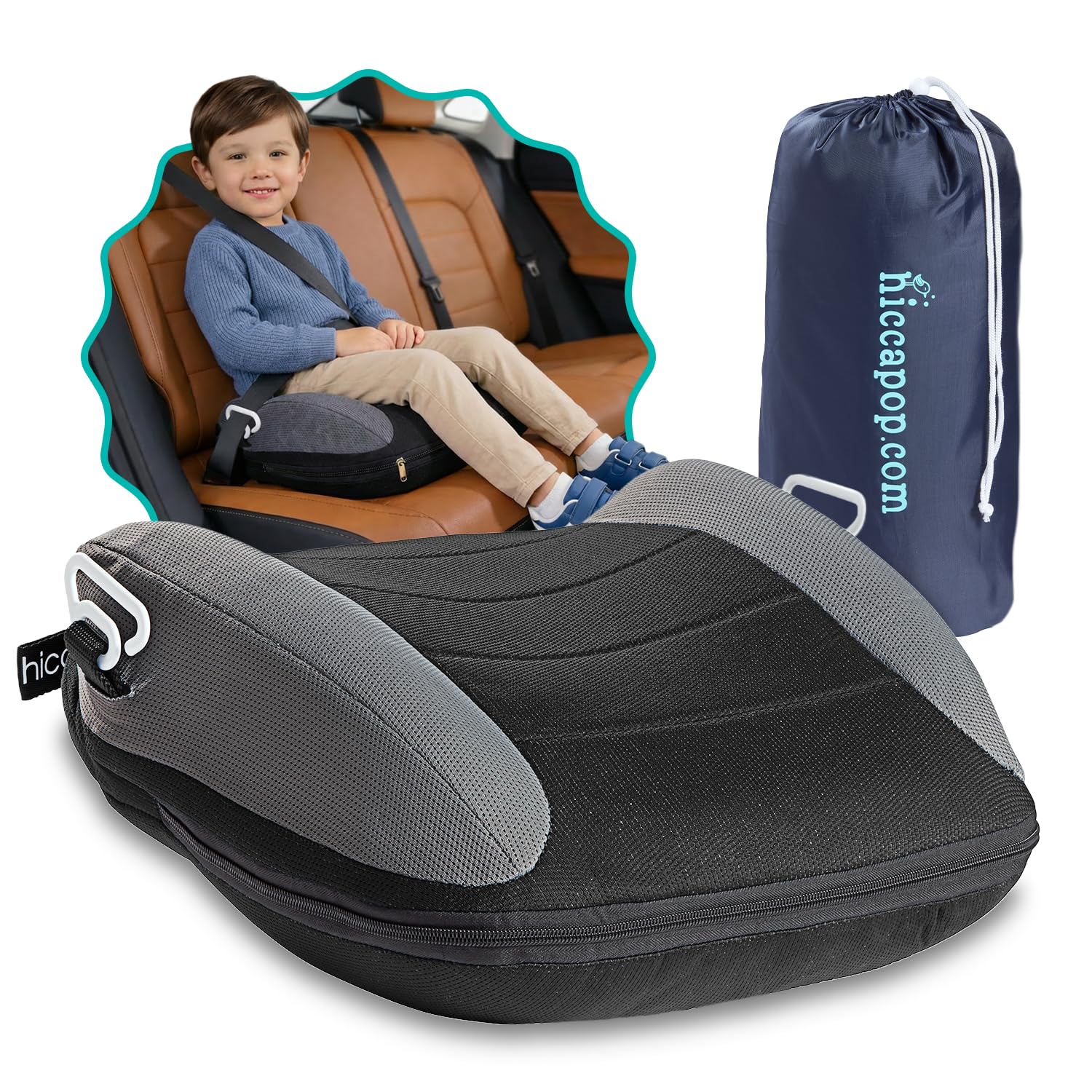
We recommend this if you need a very light, packable booster for travel and short rides where a full car seat is impractical.
Pros
- Packs tiny and inflates fast
- Fits three across narrow back seats
- Feels cushioned and stays put on different upholstery
Cons
- Not a full high-back seat for naps or tall kids
- Inflatable bladder can feel different from molded foam
- Requires a seat belt configured correctly every time
We used the UberBoost on a week of trips and liked how little space it took in our carry-on. It blew up in seconds with a few breaths and slipped into its bag when we were done. That ease made airport transfers and rental car rides much less stressful.
On the road the booster felt surprisingly comfy for short drives. The non-skid bottom kept it from sliding on leather and cloth, and the clips helped the lap belt sit where it should. Still, it won’t give head support, so we didn’t trust it for long naps or for kids who need a high-back booster.
Packing and portability are the standout features. For quick taxi, rideshare, or car-pool use this is handy. For long trips or younger kids who need extra protection, we would pick a more structured seat.
Buying Guide
We look for safety first. Check for FAA approval and sturdy harness attachments. A solid frame and crash-tested labels give us confidence.
We check fit and size next. Measure the airplane seat and the car seat dimensions. Ensure the seat fits both spaces without blocking armrests or tray tables.
We weigh comfort and convenience. Padding, breathable fabric, and adjustable head support matter on long flights. Removable, washable covers save time and hassle.
We inspect installation methods. Look for clear belt paths and easy-to-follow straps. Simpler installation reduces the chance of errors.
We compare weight and portability. Lightweight seats are easier to carry through airports. Built-in carry handles or compact folding help us move quickly.
We value harness type and adjustability. Five-point harnesses offer secure restraint. Easy height adjustments grow with the child and reduce re-threading.
We consider extras that matter to us. Tether anchors, storage pockets, and cup holders add usefulness. But avoid paying for features that add weight without real benefit.
We check materials and maintenance. Durable fabrics and corrosion-resistant buckles last longer. Removable covers and machine-wash labels make cleaning simple.
We look at warranty and customer support. A clear warranty and accessible support protect our purchase. Documentation and clear installation guides reduce frustration.
Editor’s Choice
We picked the Doona Car Seat & Stroller as our Editor’s Choice for travel with infants. It converts from car seat to stroller in one motion, which makes airport transfers faster and less stressful.
We liked its built-in wheels and compact fold. Those features save space in overhead bins and speed up boarding.
Safety scored highly in our tests. The seat meets major crash-test standards and includes a five-point harness and side impact protection.
We also considered weight and ease of use. The Doona is heavier than some infant-only carriers, but its integrated stroller parts remove the need to carry a separate travel stroller.
Key pros and cons:
- Pros: Integrated stroller, easy transitions, strong safety features.
- Cons: Heavier than typical car seats; higher price point.
We recommend this option for parents who value quick transitions and minimal gear. It works best for infants within the manufacturer’s weight and height limits.
Conclusion
We chose seats that balance safety, comfort, and ease of use for flying with children. Our picks work for different budgets and travel styles, so you can find one that fits your needs.
We tested harness setup, FAA approval, and how the seat fits in narrow airplane rows. We prioritized models that install quickly and keep children secure during takeoff and landing.
We recommend checking your airline’s rules before travel. Some carriers limit seat types or require advance notice. Measuring your airplane seat space beforehand helps avoid surprises.
We kept our list practical and simple. If you need the lightest option, look for a compact, foldable model. For longer flights, choose one with better padding and recline.
We stand by safety as the top factor. Use FAA-approved seats and follow manufacturer instructions every time. Regularly inspect straps and buckles to make sure everything functions.
FAQS
What types of car seats work on airplanes?
We recommend FAA-approved convertible, harness, and toddler seats that are labeled for aircraft use. Booster seats without a harness usually do not attach to airplane seats.
Can we use a car seat for a lap-held child?
No. Car seats are for children who have their own airplane seat. Lap-held children must sit on an adult’s lap and use a lap belt if required.
How do we install a car seat on a plane?
Most car seats install using the airplane seat belt. Some models also use a top tether or LATCH-style strap if the airline allows it. Follow the seat’s manual and airline policies.
Will a car seat fit in every airplane seat?
Not always. Narrow economy seats, bulkhead rows, and some exit rows may not fit wider seats. We suggest measuring the seat or checking the airline’s seat width before travel.
Do we need to buy a separate airplane ticket for a child in a car seat?
Yes. Airlines require a purchased seat for any child in a car seat. Check the carrier’s child fare rules for any discounts.
How do we clean and transport a car seat during travel?
Use removable, washable covers when possible. We pack the seat in a lightweight travel bag or use a wheeled carrier to ease moving through airports.
Can we use the car seat during takeoff and landing?
Yes. The FAA and most airlines allow car seats during taxi, takeoff, and landing when properly installed. Follow crew instructions.
