
How to Get Cat Urine Smell Out of a Car Seat

Few things are as frustrating as opening your car door only to be hit by the overwhelming, ammonia-like stench of cat pee. Whether you were taking your pet to the vet or a stray cat found its way into your open window, dealing with this problem quickly is crucial. A car cabin is a small, enclosed space that heats up in the sun, which can make even a tiny accident smell unbearable.
If you are searching for how to get cat urine smell out of car seat upholstery, you are not alone, and regular soap and water simply will not work. Cat urine contains specific chemical compounds that crystalize when they dry. To save your car’s interior, you need the right tools and a specific cleaning method.
In this comprehensive guide for AAutomotives, we will walk you through the exact steps to eliminate the odor permanently, protect your car’s upholstery, and know when it is time to call in a professional.
Quick Answer
To permanently remove cat urine from a car seat, immediately blot up any wet spots with paper towels. Do not rub the stain. Next, saturate the area with a high-quality enzymatic pet odor cleaner to break down the uric acid crystals. Allow it to air dry completely, then vacuum the seat. Knowing exactly how to get cat urine smell out of car seat fabrics prevents the odor from permanently settling into the interior foam.
Why Cat Urine Smells So Bad (and Lingers)
To properly clean your car seat, it helps to understand what you are fighting. Cat urine is highly concentrated and contains three main components: urea, urochrome, and uric acid.
While standard car interior cleaners can wash away the sticky residue (urea) and the yellow stain (urochrome), they cannot dissolve uric acid. When uric acid dries, it forms microscopic crystals inside your car seat cushion.
If you only use soap and water, those hidden crystals will reactivate the next time your car gets hot or humid. This is why a car might smell clean for a few days, only for the terrible odor to return in full force during a sunny afternoon. The only way to truly eliminate the smell is by using enzymes that literally “eat” and break down the uric acid.
Supplies You Will Need
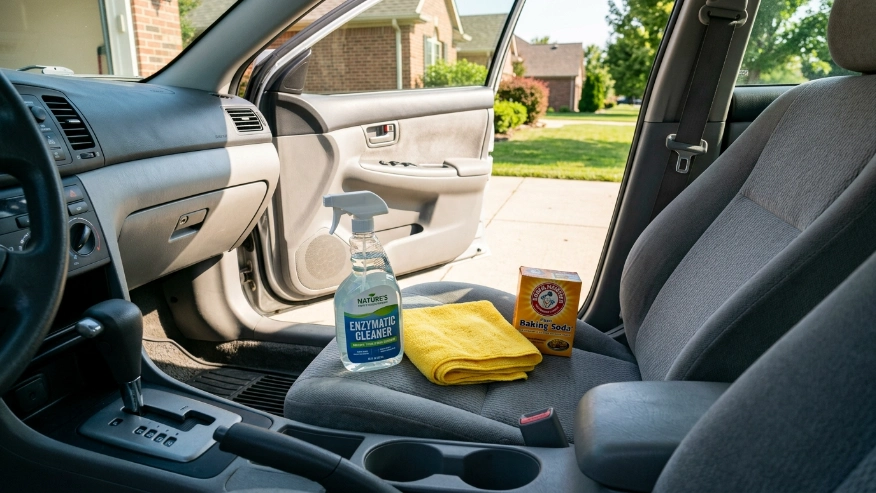
Before you begin scrubbing, gather the right materials. Having everything on hand prevents the urine from soaking deeper into your car seat while you run to the store.
- Paper towels or microfiber cloths: For blotting up excess liquid.
- White vinegar and water: Mixed in a spray bottle (1:1 ratio) to neutralize the initial ammonia smell.
- Enzymatic cleaner: This is the most important item. Look for products specifically labeled for pet urine. When selecting an enzymatic cleaner, look for products certified by the EPA Safer Choice program to ensure they are safe to breathe in enclosed spaces like your car cabin.
- Baking soda: To help draw out lingering moisture and absorb surface odors.
- A wet/dry shop vacuum: Optional, but highly recommended for pulling liquid out of deep seat foam.
- Rubber gloves: To protect your hands from bacteria and strong cleaning agents.
Step-by-Step Guide: How to Get Cat Urine Smell Out of Car Seat Upholstery
Follow these steps carefully. Rushing the process or skipping steps is the most common reason why pet odors return to a vehicle.
Step 1: Blot the Stain Immediately
If the urine is still wet, your first goal is to stop it from sinking into the dense foam core of the car seat.
- Put on your rubber gloves.
- Place a stack of thick paper towels directly over the wet spot.
- Press down firmly with your hands or carefully put your body weight on it.
- Do not rub or scrub the area, as this pushes the liquid deeper into the fabric fibers.
- Repeat with dry paper towels until no more liquid transfers.
Step 2: Apply a Vinegar and Water Solution
Mix equal parts white vinegar and cold water in a spray bottle. Vinegar is a natural acid that helps neutralize the alkaline ammonia present in fresh cat urine.
- Spray the mixture lightly over the affected area.
- Let it sit for about 5 to 10 minutes.
- Blot the area dry again using clean paper towels or a wet/dry vacuum.
According to guidance from The Humane Society of the United States, avoiding heat is crucial during this stage, because warm water will permanently set the odor and stain into the fabric. Always use cold water.
Step 3: Saturate with Enzymatic Cleaner
This is the step that actually cures the problem.
- Spray your chosen enzymatic cleaner generously over the stain.
- You must spray enough liquid so that the cleaner reaches just as deep into the seat foam as the urine did.
- Let the cleaner sit for at least 15 to 30 minutes. The enzymes need time to physically break down the uric acid crystals.
Step 4: Extract the Liquid
Once the enzymatic cleaner has done its job, you need to remove the liquid from the seat.
- The best method is using a wet/dry shop vacuum or a dedicated automotive carpet extractor. Press the nozzle firmly into the seat and slowly pull it across the damp area.
- If you do not have a wet vacuum, use clean, dry towels and press your heavy body weight into the seat to absorb as much moisture as possible.
Step 5: Apply Baking Soda
While the seat is still slightly damp, sprinkle a generous layer of baking soda completely covering the area.
- Baking soda is highly porous and will absorb the last remnants of moisture and lingering odor.
- Leave the baking soda on the seat overnight, or for at least 8 hours.
Step 6: Vacuum and Ventilate
The next day, use a standard car vacuum to suck up all the dried baking soda.
- Leave your car windows rolled down slightly if parked in a safe, covered area, or leave the doors open while parked in your driveway.
- Fresh air circulation is critical for drying the deep foam inside the seat and clearing out any leftover vinegar or cleaner scents.
Cleaning Cloth vs. Leather Car Seats
The material of your car seat dictates how aggressive you can be with cleaning solutions.
Cloth Seats
Cloth seats are highly absorbent. The urine almost certainly soaked past the top layer of fabric and into the foam padding underneath. You will likely need to use a heavy amount of enzymatic cleaner and rely on a wet vacuum to pull the liquid out of the deep cushion layers.
Leather Seats
Leather is less absorbent than cloth, meaning the urine may have pooled on the surface. However, if the liquid seeped into the perforated holes (common in ventilated seats) or down into the stitching seams, you still have a deep odor problem.
- Do not soak leather in vinegar or heavy water mixtures, as this can dry out and crack the hide.
- Use an enzymatic cleaner specifically formulated for natural leather.
- After the odor is completely gone, you must apply a high-quality leather conditioner to restore the moisture and natural oils stripped away during the cleaning process.
Expert Tip:
Never use a steam cleaner to remove cat urine from your car. The extreme heat will permanently bond the stinky uric acid proteins to the fabric fibers and seat foam, making it nearly impossible to remove the smell afterward.
DIY Cleaning vs. Professional Detailing
If you are debating whether to clean the seat yourself or hire an automotive detailer, use this table to weigh your options.
| Factor | DIY Odor Removal | Professional Interior Detailing |
|---|---|---|
| Average Cost | $15 – $40 (cost of supplies) | $150 – $300+ |
| Time Required | 2–3 hours of active work, plus overnight drying | 1–2 days (often requires dropping the car off) |
| Equipment Used | Spray bottles, towels, household wet vacuums | Commercial hot water extractors, commercial-grade enzymes, ozone generators |
| Best For | Fresh stains, surface-level accidents, budget-conscious owners | Old/dried stains, heavy saturation, lingering smells in the AC vents |
Common Mistakes Car Owners Should Avoid
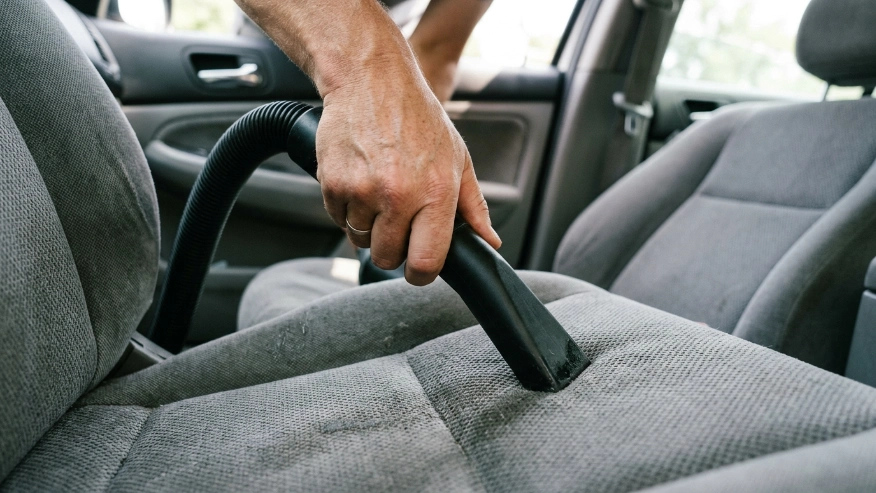
When trying to quickly get rid of a terrible smell, car owners often panic and make the problem worse. Avoid these common pitfalls:
- Using Bleach or Ammonia: Never use bleach on car upholstery; it will ruin the color instantly. Furthermore, cat urine contains ammonia. Cleaning it with ammonia-based glass cleaners will actually make the smell stronger and encourage the cat to pee there again.
- Scrubbing the Stain: Scrubbing with a stiff brush pushes the urine deeper into the seat foam and can fray the fibers of your car upholstery.
- Using Air Fresheners as a Fix: Hanging a pine tree air freshener from your rearview mirror will not eliminate the smell. It will just create a sickening mix of cheap perfume and cat pee. You must neutralize the source.
- Skipping the Drying Phase: If you leave the seat foam soaking wet with cleaning products, you run a very high risk of growing mold and mildew inside your car seat, creating a brand-new odor problem.
When to Call a Professional Mechanic or Detailer
While most cat urine stains can be handled in your driveway, there are times when DIY methods are not enough. You should consider hiring a professional if:
1. The urine soaked into the seat electronics.
Modern car seats are packed with sensitive electronics, including seat heaters, power adjustment motors, and airbag weight sensors. If a large amount of liquid soaked deeply into the seat, it could interfere with occupant classification systems; the National Highway Traffic Safety Administration (NHTSA) notes these sensors are critical for proper airbag deployment. If your airbag warning light comes on after a spill, take the car to a mechanic immediately.
2. The smell returns when the heater is turned on.
If the cat urinated near the floorboards, the odor might have been sucked into the cabin air filter and HVAC system. A professional detailer can run an Ozone Generator inside the closed car for a few hours. Ozone gas destroys odor-causing molecules everywhere they hide, including deep inside the air conditioning vents.
3. The seat foam is fully saturated.
If the urine sat for days before you noticed it, the uric acid may have reached the very bottom of the seat cushion. In severe cases, a mechanic or auto upholstery shop may actually have to remove the car seat, unbolt the tracks, strip off the fabric cover, and replace the interior foam block completely.
FAQs
How long does cat urine smell last in a car?
If left untreated, the smell of cat urine can last for years in a car. Because cars experience extreme temperature changes, the heat will constantly reactivate the dormant uric acid crystals in the seat foam, causing the smell to return every summer.
Does baking soda permanently remove cat pee smell?
No, baking soda alone will not permanently remove the smell. Baking soda is excellent at absorbing surface moisture and temporary odors, but it cannot chemically break down uric acid crystals. You must use an enzymatic cleaner first.
Can I use a carpet cleaner machine on my car seat?
Yes, a portable carpet cleaner with an upholstery attachment is excellent for extracting liquid from car seats. Just be sure to fill it with cold water and an enzymatic pet cleaner, rather than standard carpet shampoo.
Will an ozone generator remove the cat pee smell?
An ozone generator is highly effective at neutralizing airborne odors and smells trapped in the car’s AC vents. However, you still have to physically clean the urine out of the seat first. Ozone will not clean a wet, soiled cushion.
Does car insurance cover interior damage from animals?
It depends on your policy. Comprehensive coverage sometimes covers interior damage caused by wild animals (like rodents chewing wires). However, damage caused by a domestic pet inside the cabin is usually considered a maintenance issue and is rarely covered by standard auto insurance.
Conclusion
Dealing with pet accidents in your vehicle is a stressful experience, but knowing exactly how to get cat urine smell out of car seat upholstery can save you hundreds of dollars in professional detailing fees. The secret to success is acting quickly, avoiding heat, and relying on high-quality enzymatic cleaners rather than standard household soaps.
Always take your time extracting the moisture, and ensure your car’s interior is fully ventilated until the seat is completely dry. If you tackle the problem methodically, your car will smell fresh and clean once again.
For more practical DIY guides, interior care tips, and professional maintenance advice, keep exploring our resources here at AAutomotives. Stay safe, and happy driving!
