
Is Tesla Road Closed?

Wondering “is Tesla Road closed?” is a common question for Tesla owners planning a trip. Road closures happen due to construction, weather, or events, and Tesla’s navigation system is designed to help you avoid them. This guide covers how to check for closures, use your Tesla’s tools effectively, and plan alternative routes to stay on schedule.
So, you’re planning a nice drive in your Tesla, maybe a weekend getaway or an important commute. You fire up the touchscreen, enter your destination, and… wait. A little voice in your head asks: Is Tesla Road closed? It’s a simple question, but the answer isn’t always straightforward. Road closures—whether from construction, a fender bender, a parade, or a sudden snowstorm—are a reality of driving anywhere. For Tesla owners, the seamless integration of technology offers powerful tools to handle this, but it’s not foolproof. Let’s break down everything you need to know about dealing with closed roads in your electric vehicle, from using the built-in navigation to planning like a pro.
Key Takeaways
- Tesla’s navigation uses live traffic data to alert you to closures: The system automatically reroutes around blockages, but you should still verify with local sources for major planned events.
- Check multiple sources before a long trip: Use your Tesla’s map, state DOT websites, and apps like Google Maps or Waze for the most current road status.
- Construction zones can impact Supercharger access: A closed road might mean a detour that adds significant time or miles to your charging stop, affecting your overall trip timing.
- Tesla’s “Navigate on Autopilot” works best with clear road data: If a closure isn’t in the system, the feature may not function correctly until you manually update your route.
- Always have a backup plan: Download offline maps, note alternative highways, and keep your phone handy for last-minute changes during your journey.
- Software updates can improve closure detection: Keeping your Tesla’s software current ensures you have the latest mapping and traffic intelligence features.
📑 Table of Contents
- What Does “Tesla Road Closed” Actually Mean?
- How Tesla’s Navigation Handles Road Closures
- How to Check if a Road is Closed Before You Go
- What to Do When You Encounter an Unexpected Closure
- Planning Tesla Trips Around Known Closures
- When Technology Fails: The Human Element
- Conclusion: Drive Smart, Stay Flexible
What Does “Tesla Road Closed” Actually Mean?
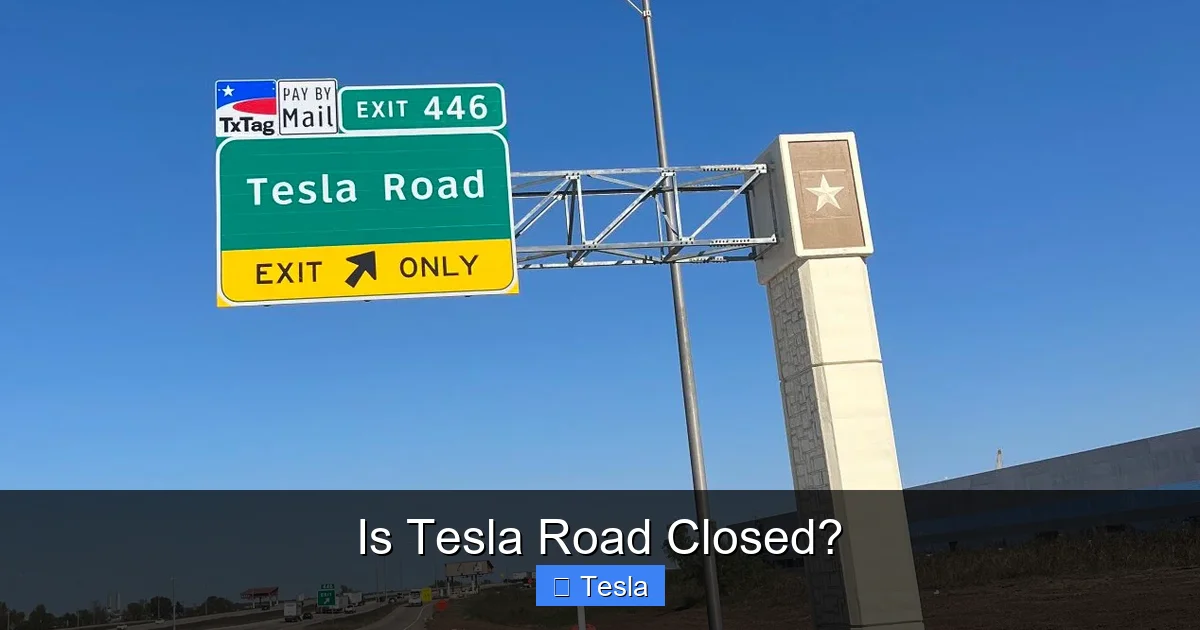
First, let’s clarify the phrase. “Is Tesla Road closed?” isn’t about a specific street named “Tesla Road” (though that could be a thing in your town!). It’s a shorthand Tesla owners use: “Is the route my Tesla is suggesting actually open and drivable?” It’s about the reliability of the path your car’s brain is telling you to take. A “closed road” means you physically cannot drive through due to barriers, construction equipment, police direction, or unsafe conditions. Your Tesla’s navigation should ideally know this and avoid it, but gaps in real-time data can happen.
The Two Types of Closures You’ll Face
Understanding the closure type helps you respond correctly.
- Planned Closures: These are scheduled construction projects, road work, or community events (like a farmers market taking over a street). Authorities usually announce these weeks or months in advance. Your Tesla’s map data, which updates periodically, should have these baked in. However, if the schedule changes, there might be a lag.
- Unplanned Closures: These are the surprises. An accident, a fallen tree, a sudden sinkhole, or flash flooding. These rely entirely on real-time traffic data feeds. Tesla sources this from various providers, and sometimes the information can be a few minutes old or incomplete, especially in rural areas.
Your Tesla isn’t just a fancy GPS; it’s a connected computer with a constant data feed (when you have service). Here’s how it tackles the problem of a closed road.
Visual guide about Is Tesla Road Closed?
Image source: driveteslacanada.ca
Live Traffic & Real-Time Rerouting
When you set a destination, the car calculates the fastest route based on current traffic speeds and known incidents. If you’re already driving and a closure pops up ahead, the system will typically alert you with a chime and a new route suggestion on the touchscreen. It’s analyzing the speed of traffic on parallel roads. If traffic on your intended path comes to a complete stop (a strong indicator of a closure or major jam), it will seek alternatives. This is incredibly useful for sudden accidents.
Limitations of the System
It’s not magic. There are times when the system might not know a road is closed immediately.
- Data Lag: The traffic data provider might not have reported the incident yet.
- Poor Connectivity: If you’re in a remote area with weak or no cellular signal (Tesla uses AT&T in the US), the car can’t fetch live updates. It will rely on the last-known map data.
- Complex Detours: Sometimes, a closure requires a very specific detour that isn’t simply “faster.” The algorithm might suggest a route that is technically open but impractical for your vehicle (e.g., a narrow, winding farm road unsuitable for a large SUV).
This is why the question “is Tesla Road closed?” requires a human touch sometimes. The car might say “all clear,” but a local police barricade tells a different story.
How to Check if a Road is Closed Before You Go
Proactive checking is your best defense against a major detour. Don’t just rely on the car’s pre-departure calculation.
Visual guide about Is Tesla Road Closed?
Image source: electrek.co
Use Your Tesla’s Map Preview
Before you leave, plug in your destination. Look at the route preview on the touchscreen. Does it show any red or dark red segments? That indicates heavy congestion or stop-and-go traffic, which could be due to a closure. Tap on the segment to see if it lists an “accident” or “construction” reason. This is your first, most convenient check.
Cross-Reference with External Sources
For critical trips (like catching a flight or attending an event), use your phone as a secondary source. Open Google Maps or Waze. These apps often have more user-reported incident data and may show closures your Tesla’s feed missed. Additionally, for major highways, check your state’s Department of Transportation (DOT) website. They have official, authoritative information on long-term construction projects and emergency closures. Searching “[Your State] DOT road conditions” is a quick, reliable step.
Consider the Time of Day and Season
Some closures are predictable. Rush hour in a big city often means planned roadwork happens at night. Winter storms in mountainous regions frequently lead to seasonal highway closures. If you’re driving through a known canyon pass in January, check the Caltrans (or equivalent) website for chain requirements or full closures. Your Tesla’s navigation might not have this seasonal info until the morning of.
What to Do When You Encounter an Unexpected Closure
You’re driving, the Tesla navigation hasn’t warned you, and suddenly—barricades. Now what?
Visual guide about Is Tesla Road Closed?
Image source: cdn.teslanorth.com
Stay Calm and Assess
Don’t panic or make a sudden U-turn in an unsafe spot. Signal and pull over safely if possible. Look for official detour signs. These are your primary guide. The Tesla system will eventually recalculate, but the posted detour is the legally mandated and usually safest path.
Manually Update Your Route
Once you’ve followed the initial detour sign for a few miles, pull over safely and manually enter your destination again, or select “Reroute” on the touchscreen. This forces the car to recalculate from your new position, incorporating the closed section as a no-go zone. If you have Navigate on Autopilot enabled, it will then guide you along the new path.
The Importance of Offline Maps
Here’s a crucial pro-tip: if you’re heading into an area known for spotty service (like national parks or remote highways), use your phone’s mapping app to download an offline map of the region before you lose signal. You can then use that app for basic turn-by-turn, even without data. Your Tesla’s built-in maps require a data connection for live rerouting around closures.
Planning Tesla Trips Around Known Closures
For long-distance travel, especially using the Supercharger network, a closure on a major highway can throw a huge wrench in your plans. It can add 30 minutes or even hours to your journey and impact your charging schedule.
Factor in Extra Time and Buffer
When planning a long trip with tight connections (like a hotel check-in or a meeting), never book your arrival time down to the minute. Assume at least a 15-20% time buffer for unexpected delays, which include road closures. A planned 4-hour drive might become 4 hours and 45 minutes due to a detour around I-5 construction.
Check Supercharger Access Routes
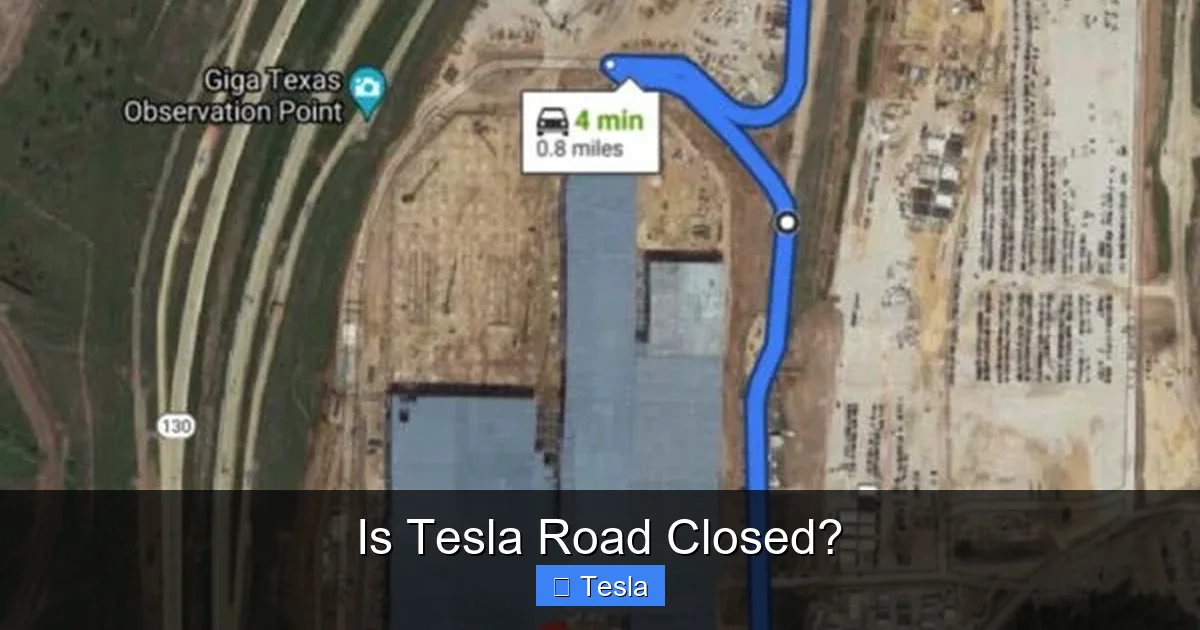
A closure might not be on your main highway but on the access road to a Supercharger station. If a Supercharger is located just off a major exit, and that exit is closed for construction, you’ll have to use the next exit, which could mean driving several extra miles out of your way. When planning charging stops, quickly glance at the street view of the approach to the charger. Does it look like a simple off-ramp, or is it a complex route through city streets that might be prone to local roadwork? You can also search online for “[City] Supercharger construction” to see if there are any reported issues.
Leverage the Tesla App for Last-Minute Changes
If you’re already on the road and get a notification about a major closure ahead, you can use the Tesla app on your phone to remotely adjust your destination or charging stops. This is safer than fiddling with the touchscreen while moving. You can also pre-warm or pre-cool your battery at a new charging stop you’ve added, optimizing charging efficiency.
When Technology Fails: The Human Element
Despite all the tech, the most reliable source for a closure is often the most analog: a police officer, a detour sign, or a call to a local non-emergency number. If your Tesla’s navigation is confidently telling you to proceed down a road that is clearly blocked, trust the physical evidence over the screen. Pull over safely and verify. It’s better to be five minutes late than to be stuck at a barricade with no way forward.
Furthermore, remember that your Tesla’s navigation is a tool, not an oracle. It’s designed to get you from A to B efficiently under normal conditions. Extraordinary circumstances—like a major natural disaster or a city-wide protest—might overwhelm the system’s ability to provide accurate, timely detours. In these extreme cases, local news radio or official emergency alerts on your phone are more authoritative.
Conclusion: Drive Smart, Stay Flexible
So, is Tesla Road closed? The answer changes by the minute. The beauty of owning a Tesla is having a sophisticated, connected navigation system that works tirelessly to keep you moving. It’s usually excellent at handling both planned and unplanned closures, automatically finding faster routes. However, your best strategy is a layered one: use the Tesla’s live traffic as your primary tool, but back it up with a quick check on your phone for user-reported incidents and an awareness of major construction projects along your route. For long trips, build in buffer time and think ahead about potential detours to Superchargers. Ultimately, the most important navigation tool is still your own judgment. When in doubt, trust the detour signs and don’t be afraid to pull over and re-assess. A flexible plan and a calm approach will get you to your destination, closed road or not.
Frequently Asked Questions
How does Tesla know about road closures?
Tesla uses live traffic data from third-party providers, which aggregates information from GPS users, road sensors, and transportation authorities. This data feeds into the navigation system to suggest reroutes around congestion and incidents.
What should I do if my Tesla navigation doesn’t show a road is closed?
Always trust physical barricades and detour signs over the car’s screen. Safely pull over, manually reroute using the touchscreen or Tesla app, and consider checking a secondary source like Google Maps or a state DOT website for confirmation.
Can a road closure affect my Supercharger stop?
Yes. A closure on the highway exit or local roads leading to a Supercharger station can force a significant detour. This adds both time and miles to your trip, potentially impacting your charging schedule and overall travel time. Always consider the access route to your planned charger.
Does “Navigate on Autopilot” work during a detour?
Yes, but only after the navigation system has successfully recalculated a new, open route. If you manually follow detour signs, you may need to re-enter your destination or select “Reroute” for Autopilot to resume guidance on the new path.
How can I prepare for potential closures on a long trip?
Check your route on both the Tesla touchscreen and a phone app like Waze the night before. Look for known construction projects on state DOT websites. Build extra time into your schedule and have one or two alternative charging stops in mind in case your primary Supercharger becomes inaccessible.
Will a software update fix navigation issues with closures?
Yes, keeping your Tesla’s software up-to-date is important. Updates often include improved mapping data, better traffic algorithms, and enhanced integration with real-time information sources, which can lead to more accurate and timely closure detection.
