
Why Do Tesla Windows Roll Down?

Tesla windows roll down automatically primarily for safety, ventilation, and advanced technology integration. This feature ensures easy emergency egress, helps pre-cool the cabin, and works seamlessly with sensors and the Tesla app. Unlike traditional cars, Tesla’s system is software-driven, offering both convenience and enhanced user experience. Understanding this functionality helps owners maximize their vehicle’s capabilities while troubleshooting any issues that may arise.
Key Takeaways
- Automatic Lowering for Door Handles: Tesla windows roll down slightly when you pull the exterior door handle to reduce drag and allow smooth opening, a feature tied to the flush door design.
- Ventilation and Climate Control: The windows can roll down via the Tesla app to ventilate the cabin before you enter, helping cool the interior on hot days using smart pre-conditioning.
- Safety and Emergency Egress: In certain models, windows automatically lower during emergencies or when sensors detect obstacles to facilitate exit or prevent pinching.
- Sensor-Driven Responsiveness: Advanced sensors detect obstructions, causing windows to reverse if something is in the way, integrating with Tesla’s overall safety ecosystem.
- Software-Controlled Convenience: Unlike manual cranks, Tesla’s window operations are managed by software, allowing remote control and customization through the vehicle’s touchscreen or mobile app.
- Design and Aerodynamics: The flush window design reduces wind noise and improves efficiency, but requires automatic lowering to enable practical door operation.
- Comparison to Traditional Vehicles: While many cars use manual or basic power windows, Tesla’s system is deeply integrated with the vehicle’s computer, offering unique automated functions not found in conventional models.
📑 Table of Contents
- Introduction: The Magic of Touchless Entry and Beyond
- The Mechanics: How Tesla’s Window System Actually Works
- Safety and Convenience: Why Automatic Lowering is Essential
- Ventilation and Climate Control: Beyond Just Opening Doors
- Design, Aerodynamics, and the Flush Door Challenge
- Troubleshooting: When Tesla Windows Won’t Roll Down Properly
- The Future: What’s Next for Tesla Window Technology?
- Conclusion: More Than Just a Rolling Window
Introduction: The Magic of Touchless Entry and Beyond
If you’ve ever approached a Tesla and watched in fascination as the window silently rolls down just a fraction when you touch the door handle, you’re witnessing one of the many subtle innovations that set electric vehicles apart. But why do Tesla windows roll down? It’s not just a party trick—it’s a carefully engineered solution addressing aerodynamics, safety, and the seamless user experience Tesla is known for. This automatic behavior is part of a broader system where software meets hardware to solve everyday problems, like opening a door on a car with no traditional handle.
For new Tesla owners, this feature can be surprising. Unlike conventional cars where you simply pull a handle to open the door, Tesla’s flush-fit design requires the window to lower slightly to clear the door frame. This is just the tip of the iceberg. The windows also play a role in climate management, safety protocols, and even remote accessibility. In this comprehensive guide, we’ll dive deep into the mechanics, purposes, and nuances of Tesla’s automatic window function, covering all models from the Model S to the Model Y. Whether you’re troubleshooting an issue or simply curious, understanding this system enhances your ownership experience.
The Mechanics: How Tesla’s Window System Actually Works
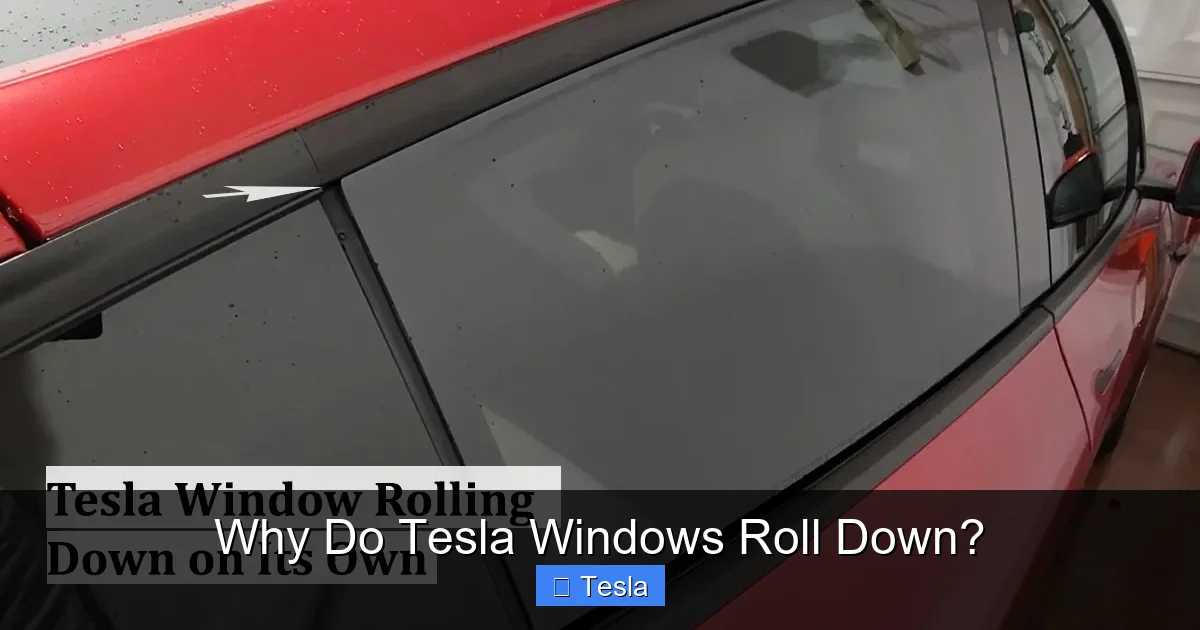
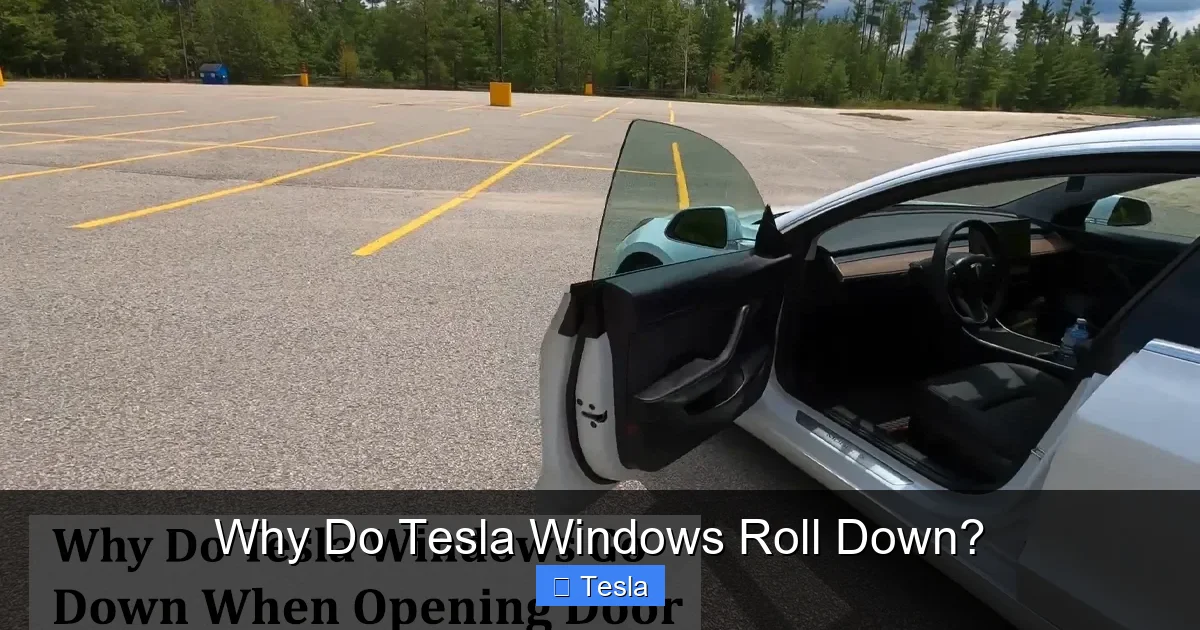
At the heart of Tesla’s window operation is a combination of hardware and sophisticated software. Each door contains a power window motor, regulator, and control module, much like traditional cars. However, Tesla integrates these components with the vehicle’s central computer and various sensors. When you approach the car with your key fob or phone key, the vehicle wakes up. Upon touching the capacitive door handle, a signal is sent to the Body Control Module (BCM), which commands the window motor to lower the glass by about half an inch to an inch.
Visual guide about Why Do Tesla Windows Roll Down?
Image source: evseekers.com
The Role of Sensors and Software
This process isn’t arbitrary. It’s triggered by the handle’s touch sensor, which detects pressure or capacitance change. The BCM cross-references this with door lock status and vehicle speed. For instance, if the car is moving faster than a set threshold (usually around 5-10 mph), the window won’t lower to prevent accidental opening. This software logic ensures the feature only activates when safe and appropriate. The system also includes anti-pinch technology—if an obstacle is detected while the window is moving, it immediately reverses direction, a standard in modern power windows but enhanced by Tesla’s precise software control.
Differences Across Models
While the core principle is consistent, implementation varies slightly. Model S and X with falcon wing doors have unique sequences where windows may lower before the doors articulate. Model 3 and Y use a simpler handle design but still rely on the same automatic lowering. Older Teslas might have slightly different sensitivity settings, but the fundamental “roll down on handle touch” remains. This uniformity across the lineup speaks to Tesla’s focus on a cohesive user experience, unlike some brands where features differ widely between models.
Safety and Convenience: Why Automatic Lowering is Essential
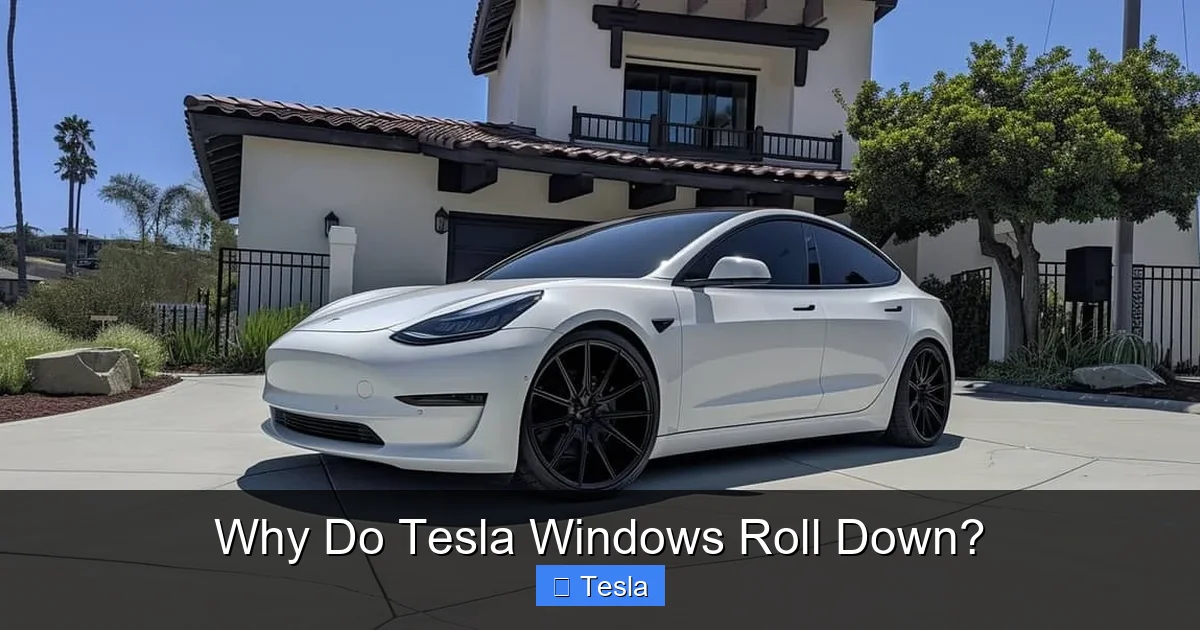
The primary reason Tesla windows roll down is practical: to open the door. With flush-mounted handles that don’t protrude, there’s no room for the door to swing outward without the window clearing the roofline. This design choice improves aerodynamics and gives Tesla its sleek, minimalist look. But without the window drop, you’d struggle to open the door, especially in tight parking spots. The automatic lowering eliminates that hassle, making entry intuitive.
Visual guide about Why Do Tesla Windows Roll Down?
Image source: ecarcraze.com
Emergency Egress Considerations
Safety regulations require that doors be openable from the inside without tools. Tesla’s system ensures that even if the battery is dead or the electronics fail, there are manual release mechanisms (often hidden behind panels). However, the automatic window roll-down is part of the primary entry sequence. In rare cases, like a submerged vehicle, Tesla windows can be programmed to automatically lower to aid escape, though this is more of a theoretical safeguard tied to the vehicle’s emergency protocols. More commonly, the anti-pinch feature protects children and pets from injury, aligning with modern safety standards.
Integration with Tesla’s Security Features
When you lock the vehicle, the windows automatically rise to seal the cabin. This is part of Tesla’s “car as a smartphone” philosophy—everything is interconnected. For example, if you use the Tesla app to lock the car, it will also check window status. This integration means that understanding one system helps you grasp the whole. If you’re having issues with windows not rolling down, it might relate to the Tesla locking system or door sensor calibration. These systems share data pathways, so a fault in one can affect the other.
Ventilation and Climate Control: Beyond Just Opening Doors
While the handle-triggered roll-down is the most visible, Tesla windows also roll down for climate management. Through the Tesla app, you can command “Ventilate” or “Pre-cool” the cabin. This activates the windows to lower slightly (usually about 4-6 inches) while the HVAC system runs, allowing hot air to escape and fresh air to circulate. It’s a smart way to reduce cabin temperature before you get in, especially in sunny climates.
Visual guide about Why Do Tesla Windows Roll Down?
Image source: evseekers.com
How the Ventilation Feature Works
This function uses the same window motors but is triggered remotely via cellular or Wi-Fi connection. The vehicle must be within range and have sufficient battery charge. You’ll see the windows lower incrementally, not fully, to balance airflow with security (you wouldn’t want them fully open unattended). The system is smart enough to cancel if it detects rain or if the battery gets too low. This showcases how Tesla leverages software to create features that feel futuristic but solve real problems—like getting into a scorching hot car.
Seasonal and Regional Benefits
In colder climates, the opposite is true: you can “Pre-heat” the cabin, and the windows will stay up to retain warmth. But in summer, that automatic ventilation is a game-changer. It’s more effective than just running the AC because it actively removes trapped hot air. For daily commuters, this means stepping into a comfortably cool car instead of a sauna. It’s these small, thoughtful integrations that highlight why Tesla’s approach to windows is about more than just opening and closing.
Design, Aerodynamics, and the Flush Door Challenge
Tesla’s design language favors clean lines and minimalism. Flush door handles and windows that sit perfectly flush with the body reduce drag, improving range. But this design introduces a mechanical challenge: how do you open the door if there’s no gap? The solution is the automatic window drop. It’s a perfect example of form following function, but here, the function (easy entry) is achieved through a hidden, automated motion that preserves the sleek form.
Aerodynamic Efficiency Gains
When the window is fully up and sealed, it contributes to the car’s low drag coefficient. The Model 3, for instance, has a Cd of 0.23, partly due to such details. If the window were always slightly ajar for handle clearance, it would ruin that efficiency. By only lowering momentarily during entry, Tesla strikes a balance. This is engineering elegance: solving a problem without compromising the primary goal.
User Experience and Perceived Quality
From a user experience perspective, this feature feels premium and high-tech. It’s one of those “wow” moments that reinforces Tesla’s innovative image. However, it also sets expectations. Owners come to expect everything to be automated and smooth. If the window fails to lower, it’s not just an inconvenience—it feels like a broken promise of the Tesla experience. That’s why troubleshooting is important, and why service centers often get calls about this specific function.
Troubleshooting: When Tesla Windows Won’t Roll Down Properly
Despite the sophistication, Tesla windows can occasionally misbehave. Common issues include the window not lowering when touching the handle, rolling down too slowly, or getting stuck. Most problems stem from software glitches, sensor misalignment, or mechanical wear.
Software Resets and Calibration
Often, a simple soft reset (holding both scroll wheels on the steering wheel until the screen reboots) can fix temporary bugs. If that doesn’t work, the window may need recalibration. This is done via the service menu or by a technician, where the window’s limits are relearned. It’s similar to resetting the window tinting sensors if aftermarket film interferes with the automatic lowering sequence. Aftermarket modifications, especially thick tints or added seals, can obstruct the window’s path or confuse the anti-pinch sensors.
Mechanical Failures and Service
If the window doesn’t move at all, the motor or regulator might be faulty. These are wear items; over time, the regulator cables can fray, or the motor brushes wear out. Unlike older cars where you might replace a fuse, Tesla’s system often requires diagnostic software to pinpoint the issue. A visit to a Tesla Service Center is usually necessary for mechanical repairs. They’ll check for error codes in the door module and replace components as needed. It’s more complex than a traditional power window, but the integrated design means fewer separate parts to fail.
The Future: What’s Next for Tesla Window Technology?
Tesla continually updates its vehicles via over-the-air software. This means window behavior could evolve. Already, some owners have reported tweaks to the sensitivity or speed of the automatic drop. Future updates might allow customization—like adjusting how much the window lowers or disabling it entirely (though Tesla may restrict this for safety).
Integration with Autonomous Driving
As Tesla moves toward full self-driving, vehicle systems become even more interconnected. Imagine a scenario where the car knows you’re approaching and not only unlocks but also adjusts windows based on weather data. Or, in a robotaxi future, windows might automatically lower for passenger ingress/egress without any handle touch at all. The current system is a stepping stone to that fully automated experience.
Lessons for the Industry
Tesla’s approach is influencing other automakers. We’re seeing more flush handles with automatic window drops in luxury cars. The idea that software can manage such a basic function in a smarter way is spreading. It proves that even century-old mechanisms like windows can be rethought in the electric era. For Tesla owners, this means their cars will likely gain new window-related features over time, keeping the driving experience fresh.
Conclusion: More Than Just a Rolling Window
So, why do Tesla windows roll down? It’s a multi-faceted answer: to enable the flush door design, enhance safety with anti-pinch features, provide climate control convenience, and showcase software-driven innovation. This seemingly small detail encapsulates Tesla’s philosophy—challenging conventions to create a cohesive, intelligent, and user-friendly vehicle. While it can occasionally cause confusion or require service, the benefits in daily usability and design purity are clear. As Tesla continues to iterate, we can expect even smarter window behaviors, all aimed at making the car feel less like a machine and more like a helpful companion. Understanding this system empowers you as an owner, helping you appreciate the engineering and troubleshoot any hiccups. Next time you see that window glide down, you’ll know there’s a world of thought behind that simple motion.
Frequently Asked Questions
Do all Tesla models automatically roll down the windows when you open the door?
Yes, all current Tesla models (Model S, 3, X, Y) automatically lower the window slightly when you touch the exterior door handle to open it. This is a standard feature enabled by the flush door handle design.
Can I disable the automatic window roll-down feature on my Tesla?
Currently, Tesla does not offer a user setting to completely disable this function. It’s considered a core safety and design feature. However, you can adjust the sensitivity or speed via service menus, but this typically requires a technician’s assistance.
Why do my Tesla windows roll down when I park and lock the car?
This is likely the “Ventilate” feature activated via the Tesla app. It’s intended to cool the cabin by lowering windows slightly while the HVAC runs. Ensure the app setting isn’t accidentally triggered, and check that your vehicle’s battery has enough charge for this operation.
What should I do if my Tesla window doesn’t roll down when I touch the handle?
First, try a soft reset by holding both steering wheel scroll buttons until the screen reboots. If that fails, check for any door ajar warnings on the screen. If issues persist, it may require a service visit for sensor recalibration or motor repair, as it could be a software glitch or mechanical failure.
Are Tesla windows more prone to problems than traditional car windows?
They have different failure modes. While traditional windows often suffer from broken regulators or worn cranks, Tesla’s system is more software-dependent. Issues like sensor errors or calibration needs are unique to its automated design. However, the core mechanical parts (motors, regulators) are similar and can wear out over time.
How does the automatic window roll-down affect my Tesla’s battery life?
The energy used by the window motors during the brief lowering sequence is negligible—less than 0.1% of battery capacity. It won’t meaningfully impact range. The bigger energy draws come from HVAC use during pre-conditioning, not the window movement itself.
