
Is Volta Charging Free for Tesla

Yes, Volta Charging is completely free for Tesla vehicles. Unlike Tesla’s Supercharger network, Volta provides free DC fast charging to all electric vehicle brands at its dedicated stations. The service is funded by advertisements displayed on large screens at each charger. However, free charging sessions are typically limited to 30-45 minutes to ensure station turnover. There is no membership fee or payment required—just plug in and charge. It’s an excellent, cost-effective supplement to Tesla’s own network, especially for urban errands and road trips where Volta stations are located.
Key Takeaways
- Volta Charging is free for all EVs, including Teslas. The network does not discriminate by brand; any compatible electric vehicle can use its DC fast chargers at no cost.
- Charging sessions are time-limited. Free sessions usually last 30-45 minutes, after which the charger will stop. This encourages turnover and is designed for top-up charging, not full charges from empty.
- The service is ad-supported. Large digital screens at each station display advertisements, which fund the electricity. Users are not required to watch ads; the charging starts automatically.
- No membership or payment app is needed. You simply plug in your Tesla using a CCS1 adapter (included with new Teslas or available separately) and charging begins instantly.
- Network density is lower than Tesla Superchargers. Volta stations are primarily in urban and suburban areas, making them ideal for local charging but less reliable for long-distance highway travel.
- It’s a perfect complement to home charging. For Tesla owners without home charging, Volta provides a free public option. Even with home charging, it’s great for unexpected needs or when away from home.
- Reliability can vary. As with any public network, occasional charger outages occur. It’s wise to have a backup plan, like the Tesla app’s Supercharger finder or a 220V outlet at home.
📑 Table of Contents
- Introduction: The Burning Question for Tesla Owners
- How Volta Charging Works: The Ad-Supported Model
- The Crucial Detail: Free, But With a Time Limit
- Hardware Compatibility: Teslas Need an Adapter
- Volta vs. Tesla Supercharger: A Detailed Comparison
- Practical Tips for Maximizing Free Volta Charging with Your Tesla
- The Future of Volta and Its Impact on Tesla Owners
- Conclusion: A Fantastic Free Resource, Used Wisely
Introduction: The Burning Question for Tesla Owners
If you’re a Tesla owner or considering buying one, one of the first questions about charging logistics is inevitably about cost. The famous Tesla Supercharger network is convenient but comes with a per-kWh or per-minute fee. So, when you hear about another public charging network called Volta that claims to be “free,” your ears naturally perk up. The question “Is Volta Charging free for Tesla?” is not just a casual query—it’s a potential game-changer for your ownership experience and monthly budget.
The short, wonderful answer is yes. Volta Charging is, and has always been, completely free for Tesla drivers. But the complete answer has some important nuances around how it works, where you’ll find it, and how to make the most of it. This article will dive deep into every aspect of Volta’s free charging for Teslas, from the technical details of the plug adapter to smart strategies for using the network effectively. We’ll separate the marketing hype from the practical reality, so you know exactly what to expect when you pull up to a Volta station with your Model 3, Model Y, Model S, or Model X.
How Volta Charging Works: The Ad-Supported Model
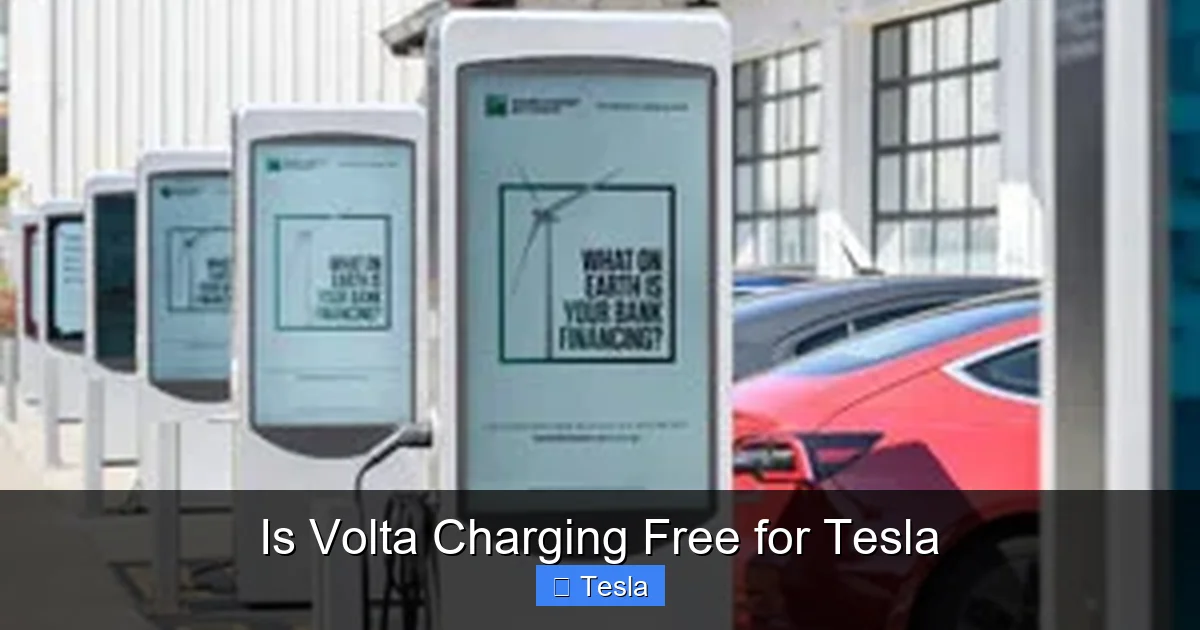
To understand why Volta can offer free electricity, you need to understand its business model. Volta is not in the business of selling electricity; it’s in the business of selling attention. The company installs and operates charging stations that feature large, high-definition digital screens. These screens display a loop of advertisements from partner brands.

Visual guide about Is Volta Charging Free for Tesla
Image source: thevoltacharging.com
The Revenue Stream: Your Eyes, Not Your Wallet
The core concept is simple: companies pay Volta to advertise on these screens. That advertising revenue covers the entire cost of the electricity dispensed. For the driver, this means no transaction, no credit card swipe, no app authorization, and no subscription. It’s a true “plug and charge” experience. You pull up, plug in your Tesla (using the appropriate adapter), and charging begins automatically within seconds. There is no need to create a Volta account or enter any payment information.
This model is brilliant in its simplicity. It removes the biggest friction point for public charging—payment and network authentication. For a Tesla driver used to the seamless “plug in and walk away” experience at a Supercharger, Volta feels very similar, just without the cost appearing on your Tesla account later. The trade-off is that you’re charging in a space with prominent advertising. The screens are designed to be visible from the charging vehicle and often from the parking space next to it.
The Crucial Detail: Free, But With a Time Limit
Here is the single most important practical detail about Volta charging: it is not an “unlimited” free charge. Volta stations are designed for “top-up” charging, not for someone to camp in a spot for hours to get a full 0-100% charge. The standard free session length is 30 to 45 minutes, depending on the specific station and local regulations.
Visual guide about Is Volta Charging Free for Tesla
Image source: thevoltacharging.com
Why the Time Cap? Turnover and Fairness
The time limit serves two purposes. First, it ensures high turnover at valuable retail and commercial locations where Volta stations are typically installed (think grocery stores, shopping malls, and movie theaters). Volta’s business model depends on a steady stream of cars and, therefore, a steady stream of eyes on the ads. A single car occupying a spot for three hours would kill that model.
Second, it promotes fairness. Without a limit, one driver could theoretically monopolize a charger all day, preventing others from accessing the free service. The 30-45 minute window is generally enough to add a significant amount of range—often 100-150 miles of range for a Tesla—which is perfect for someone running errands or needing a boost before a longer drive. The charger will automatically stop delivering power when the time limit is reached, even if your battery is not full.
Pro Tip: When you plug in, the screen will clearly display your remaining free time. It’s a good habit to check it. If you need more than the free window, you would theoretically have to unplug and plug back in to start a new session, but this is generally frowned upon and may be prevented by the station’s software to prevent abuse. The system is designed for one free session per vehicle per day at that specific station, though policies can vary.
Hardware Compatibility: Teslas Need an Adapter
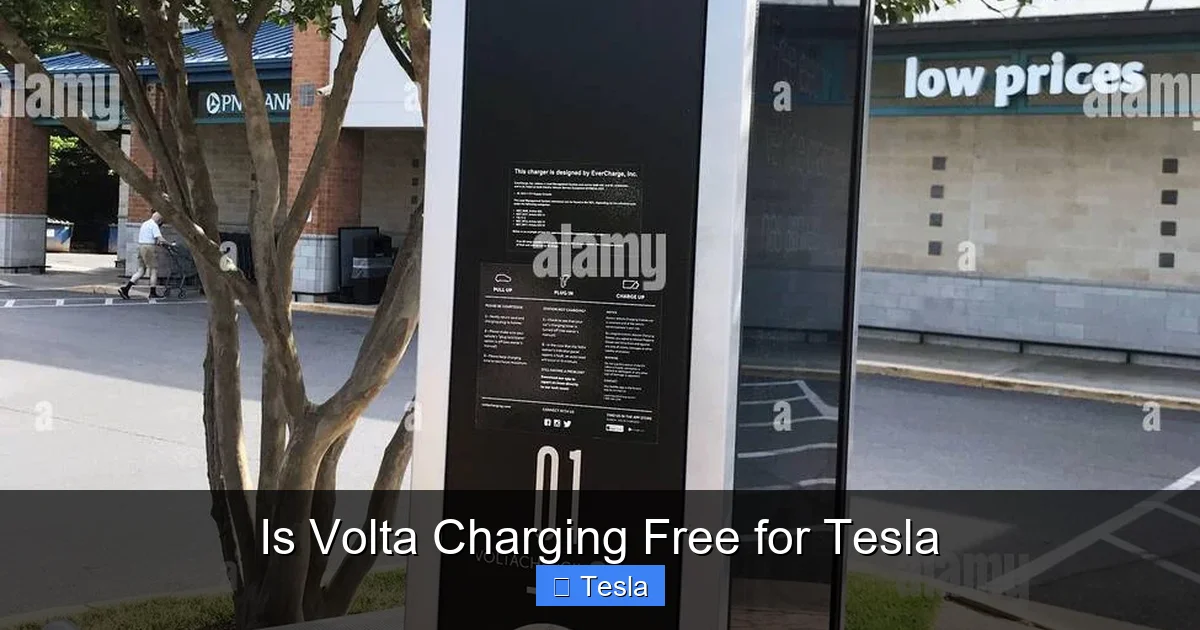
This is the other critical piece of the puzzle. Volta’s free DC fast chargers use the CCS1 (Combined Charging System Type 1) connector standard. This is the same connector used by most non-Tesla EVs in North America, like the Ford Mustang Mach-E, Chevrolet Bolt, and Hyundai Ioniq 5.
Visual guide about Is Volta Charging Free for Tesla
Image source: c8.alamy.com
Tesla vehicles, however, have historically used their proprietary Tesla connector. This means you cannot directly plug your Tesla into a Volta charger. You need an adapter.
The Official Tesla CCS1 Adapter
The solution is the official Tesla CCS1 Adapter. Here’s what you need to know:
- Included with new Teslas: As of early 2021, Tesla includes a CCS1 Adapter in the trunk of all new vehicles sold in North America.
- Purchasable separately: If you have an older Tesla, you can buy the adapter directly from Tesla for around $250-$300. It’s a simple, passive adapter with no electronics—it simply changes the physical plug shape.
- Functionality: Once you have the adapter, the process is seamless. You plug the adapter into the Volta CCS1 connector first, then plug your Tesla connector into the adapter. The car recognizes the charger and begins charging automatically.
- No setup required: There is no pairing or communication with the Volta network needed through the Tesla app. The adapter is purely physical.
Important Note: Always ensure your adapter is the official Tesla part. Third-party adapters can be unreliable and potentially dangerous. Using the official adapter is safe and fully supported by your vehicle’s software.
Volta vs. Tesla Supercharger: A Detailed Comparison
Now that we’ve established Volta is free for Teslas (with an adapter), how does it stack up against Tesla’s own Supercharger network? Let’s break it down.
Cost: The Obvious Winner
This is no contest. Volta’s cost is $0.00. Supercharger rates vary by location but typically range from $0.25 to $0.50 per kWh. For a 60 kWh charge to add about 200 miles, you’re looking at $15-$30 at a Supercharger. Over a year, for a driver who relies heavily on public charging, Volta can save thousands of dollars.
Convenience & Network Access
Volta: The plug-and-charge experience is identical to Supercharging in terms of ease—no app interaction needed. However, finding a station requires a third-party app like PlugShare or the Volta app itself to locate stations and check real-time availability. The network is smaller and concentrated in commercial corridors.
Supercharger: Integrated directly into the Tesla’s navigation and touchscreen. The car will precondition the battery for optimal charging, navigate you to an available stall, and seamlessly bill your Tesla account. The network is vast, especially along highways, making long-distance road trips effortless.
Charging Speed
Both networks offer DC fast charging, but speeds vary. Many Volta stations are 50-150 kW. Tesla V2 Superchargers are 150 kW, and V3 Superchargers can peak at 250 kW. In practice, for a Tesla, the difference in real-world charging time (e.g., 20-80%) between a 150 kW Volta station and a 250 kW V3 Supercharger might be 10-15 minutes. For a 30-45 minute free session, the speed is often sufficient for a meaningful top-up.
Location Strategy
This is the key differentiator. Volta stations are placed at destinations. You’ll find them at places where you plan to spend 30-60 minutes anyway: Whole Foods, Target, malls, gyms, and downtown entertainment districts. The idea is you charge while you shop or dine.
Superchargers are placed along routes. They are on interstate corridors, near hotels, and in rest areas—places specifically for travelers to stop and charge before continuing their journey. You don’t typically go to a Supercharger location for any other reason.
Strategic Takeaway: Use Volta for “destination charging” during your regular routines. Use Superchargers for “en-route charging” during road trips. They are complementary, not direct replacements.
Practical Tips for Maximizing Free Volta Charging with Your Tesla
Armed with the knowledge that Volta is free and compatible, here’s how to use it like a pro.
1. Always Have Your CCS1 Adapter
This seems obvious, but it’s the single point of failure. Keep the adapter in your trunk at all times. A forgotten adapter at home means a missed free charging opportunity. Consider keeping a small bag or case for it so it doesn’t get buried under other items.
2. Use PlugShare or the Volta App to Find and Vette Stations
Before you head out, check PlugShare.com or the Volta app. These platforms show real-time station status (available, in-use, out-of-order), exact locations, photos, and user reviews. Pay attention to recent check-ins that report broken stations. Also, note the number of stalls. A location with only two stalls can have a long wait during peak hours.
3. Combine Charging with Your Errands
This is the genius of Volta’s model. Plan your grocery trip, pharmacy pick-up, or coffee run around a Volta station. Park at the charger, plug in, and go do your 30-minute errand. You return to a car with more range and zero charging cost. It turns a necessary chore into a double-win.
4. Respect the Time Limit and Be Ready to Move
Set a timer on your phone for 25 minutes. When it goes off, check the charger screen. If your session is ending, be prepared to unplug and move your car promptly. Occupying a spot after your free session ends prevents another EV driver from using the service and is poor etiquette. If your errand will take longer, you may need to find alternative parking after your charge is complete.
5. Have a Backup Plan
Never rely on a single Volta station as your only charging option for a critical trip. Stations can be offline, occupied, or have a long queue. Always know the location of the nearest Tesla Supercharger or other paid charging network (like Electrify America) as a fallback. The Tesla’s built-in navigation is perfect for this.
6. Consider Home Charging for Ultimate Convenience
While free public charging is fantastic, nothing beats the convenience of waking up to a full battery every morning. If you have a garage or driveway, installing a 220V outlet or a dedicated home charger is the gold standard. It costs a few hundred dollars for the installation and electricity, but it saves countless hours and provides ultimate reliability. Volta is a phenomenal supplement, but home charging is the foundation of stress-free EV ownership.
The Future of Volta and Its Impact on Tesla Owners
Volta has been expanding its network steadily, and its business model has proven resilient. As EV adoption grows, the value of free, ad-supported charging becomes even more attractive to consumers. For Tesla owners, the proliferation of Volta stations means more free fueling options in daily life, reducing the total cost of ownership and range anxiety in urban settings.
However, it’s unlikely Volta will ever replace the long-distance travel capability of the Supercharger network. The business model doesn’t support high-power, highway-adjacent locations as effectively. Instead, expect Volta to continue filling the “destination” niche perfectly. For Tesla, the continued existence and expansion of third-party free networks like Volta is a net positive. It enhances the overall EV ecosystem and provides valuable alternatives that keep the competitive pressure on all charging providers, including Tesla itself, to maintain reliable and affordable service.
In a broader sense, the availability of free charging can also influence decisions about vehicle care. Owners who frequently use public chargers might be more interested in protecting their car’s paint from potential scratches in crowded parking lots. This is where solutions like a vinyl wrap for your Tesla Model 3 or paint protection film (PPF) become a smart investment to keep your vehicle looking pristine, regardless of where you park to charge.
Conclusion: A Fantastic Free Resource, Used Wisely
So, is Volta Charging free for Tesla? The definitive answer is yes, it absolutely is. For the Tesla driver, Volta represents one of the best-kept secrets in EV ownership: a widespread network of fast chargers that costs nothing to use. The requirement for a CCS1 adapter is a minor, one-time hurdle that most modern Teslas have already overcome.
The key to success with Volta is managing expectations. It is not a Supercharger replacement for cross-country trips. It is, instead, a brilliant tool for urban and suburban life. It turns parking at the grocery store, the mall, or your favorite coffee shop into an opportunity to gain 100+ miles of range for free. By understanding the time limits, using apps to find working stations, and integrating charging into your existing errands, you can significantly reduce your reliance on paid charging and maximize the financial benefits of your Tesla.
Think of Volta as the perfect public companion to your private home charger. Together, they create a charging ecosystem where you might rarely, if ever, need to pay for electricity on the go. For any Tesla owner looking to squeeze every last bit of value and convenience from their electric vehicle, learning to use the Volta network effectively is a skill worth mastering. So, find that adapter, download PlugShare, and start enjoying the freedom of free charging.
Frequently Asked Questions
Is Volta Charging really free for all Tesla models?
Yes, Volta Charging is free for all Tesla models (Model S, 3, X, Y) that use the official Tesla CCS1 adapter. The adapter is included with new Teslas and can be purchased separately for older models. There are no brand restrictions.
What happens if I exceed the 30-45 minute free charging limit?
The charger will automatically stop delivering power when your free session time expires, even if your battery is not full. You will need to unplug and move your vehicle. You cannot start a second free session at the same station on the same day to continue charging.
Do I need to watch the advertisements to get the free charge?
No. The charging session begins automatically as soon as you plug in. The advertisements on the large screens are for other people—primarily pedestrians and customers of the host business. You are free to walk away and shop while your car charges.
How reliable are Volta charging stations?
Reliability is generally good, but as with any public network, occasional outages occur. It’s always recommended to check the real-time status on apps like PlugShare before you go. Volta maintains its stations, but high usage and occasional technical issues can take a stall offline.
Can I use Volta if I don’t have the Tesla CCS1 adapter?
No, you cannot physically connect your Tesla to a Volta CCS1 charger without the official adapter. The adapter is mandatory. If you have a new Tesla, check your trunk. For older vehicles, you must purchase the adapter from Tesla.
Is Volta better than using Tesla Superchargers?
It’s not a matter of “better,” but of “different.” Volta is free and great for destination charging during errands. Superchargers cost money but are far more numerous, faster (especially V3), and integrated for seamless long-distance travel. Most Tesla owners use both: Superchargers for road trips and Volta for free local top-ups.
