
Why Is My Jeep Leaking Water Underneath?

Seeing water under your Jeep isn’t always an emergency. Often, it’s just normal condensation from the air conditioning system, which is harmless. However, it could also signal a serious coolant leak from the radiator, hoses, or water pump. The key is to identify the fluid type and location. Coolant is sweet-smelling and colorful, while AC water is plain and drips centrally. Ignoring a coolant leak can lead to engine overheating and severe damage. Always check the source and get professional help for cooling system issues.
Key Takeaways
- Condensation is normal: Water dripping from the center/rear of your Jeep after AC use is usually just condensation, not a problem.
- Coolant is a serious leak: Sweet-smelling, green/orange/pink fluid indicates a cooling system leak that needs immediate attention.
- Check the AC drain tube: A clogged AC drain is a common, fixable cause of water inside the cabin or pooling under the Jeep.
- Exhaust condensation is also normal: Water dripping from the tailpipe, especially in cold weather, is just combustion byproduct.
- Location matters: Fluid from the front corners points to coolant; center/rear points to AC; under the tailpipe is exhaust.
- Don’t ignore puddles: Any consistent leak should be inspected to prevent damage, especially if the fluid is coolant or oil.
- Diagnosis is simple: Identify fluid by color and smell, check for wet components, and monitor coolant levels to pinpoint the source.
📑 Table of Contents
- Introduction: That Puddle Under Your Pride
- Chapter 1: Water vs. Coolant – The Critical First Test
- Chapter 2: The Most Common Culprit – Air Conditioning Condensation
- Chapter 3: The Serious Suspect – Cooling System Leaks
- Chapter 4: Other Potential (and Less Common) Water Sources
- Chapter 5: A Step-by-Step Diagnostic Guide for Your Jeep
- Chapter 6: DIY Fixes vs. When to Call a Professional
- Conclusion: Knowledge is Power (and a Dry Garage)
Introduction: That Puddle Under Your Pride
You back your Jeep out of the parking spot or the driveway, and there it is: a small puddle of liquid on the ground. Your heart sinks for a second. Is it oil? Is it coolant? Is it something terrible? Before you panic, take a breath. The good news is that in the vast majority of cases, a Jeep leaking water underneath is perfectly normal and not a cause for alarm. The bad news? Sometimes it is a sign of a problem that needs fixing.
Jeeps are rugged, go-anywhere vehicles, but they have complex systems under the hood and inside the cabin. Water appearing where it shouldn’t can come from several sources, each with a different level of urgency. This guide will walk you through every possibility, from the mundane AC drip to a critical coolant leak. We’ll help you become a detective, teaching you how to identify the fluid, locate the source, and decide if it’s a DIY fix or time to call a professional. Let’s solve the mystery of your Jeep’s leak together.
Chapter 1: Water vs. Coolant – The Critical First Test
Not all liquids are created equal. The absolute first step in diagnosing a leak is to identify what is actually dripping. Is it plain water, or is it engine coolant? This distinction is everything.

Visual guide about Why Is My Jeep Leaking Water Underneath?
Image source: whatincar.com
How to Identify the Fluid
Grab a paper towel or a clean white cloth and carefully dab some of the liquid from the puddle or the dripping point. Look at the color and smell it.
- Plain Water: Clear, odorless. This is almost always condensation from the air conditioning system. It’s harmless.
- Engine Coolant: Comes in various colors—traditional green, orange, pink, yellow, or blue. It has a distinctively sweet, almost syrupy smell. This is a serious leak. Coolant (antifreeze) is vital for regulating engine temperature. A leak means your cooling system is losing pressure and fluid, risking catastrophic engine overheating.
- Windshield Washer Fluid: Usually blue, green, or orange, but it has a strong alcohol or chemical smell, not sweet like coolant. Leaks are common from cracked reservoirs or hoses.
- Oil: Amber to brown, slick to the touch, and has a distinctive petroleum smell. An oil leak is also serious but a separate issue. If you suspect oil, you can read more in our comprehensive guide to why cars leak oil or water.
- Water from Exhaust: Drips directly from the tailpipe. It’s plain water and is normal, especially when the engine is warming up in cold weather.
Pro Tip: If you’re ever unsure, assume it’s coolant until proven otherwise. A small coolant leak can become a big, expensive problem fast.
Chapter 2: The Most Common Culprit – Air Conditioning Condensation
If your fluid test confirmed plain, odorless water, you can relax 90% of the way. Your Jeep’s air conditioning system is likely the source, and this is completely normal operation.

Visual guide about Why Is My Jeep Leaking Water Underneath?
Image source: evseekers.com
How Your Jeep’s AC System Creates Water
Here’s a simple science lesson. Your AC system works by evaporating refrigerant inside the cabin’s evaporator (usually located behind the glovebox). This process cools the air, but it also causes moisture in the warm cabin air to condense on the cold evaporator coils, just like water beads on a cold glass of iced tea on a humid day.
This condensed water needs to go somewhere. It drips into a drain pan and flows through a rubber drain tube, which exits the vehicle—usually on the passenger side firewall (the wall between the engine bay and cabin) or under the car near the center. You’ll see a steady drip of water when the AC is running, especially on humid days. This is perfectly normal and means your system is working correctly.
When AC Drip Becomes a Problem
The AC condensation system is designed to channel water outside. Problems arise when:
- The drain tube is clogged. This is the #1 AC-related water issue in Jeeps. Leaves, dirt, and debris can block the drain hose. Instead of dripping outside, the water backs up and can flood into the passenger compartment. You’ll notice wet carpet on the front passenger floor, often with a musty smell.
- The drain tube is disconnected or damaged. A loose hose will dump water directly onto the floor or a component instead of the ground.
- The evaporator case is leaking. Rare, but a cracked case can leak both water and refrigerant.
How to Fix a Clogged AC Drain: Locate the drain tube exit (usually under the car on the passenger side, near the firewall, a small rubber nipple). Gently insert a flexible plastic wire or use low-pressure compressed air to clear the clog. Never use a rigid metal tool, as you can puncture the tube. If you’re uncomfortable, a mechanic can clear it in minutes.
Chapter 3: The Serious Suspect – Cooling System Leaks
Now we’re talking about the red alert. If your fluid is coolant, you have a leak in the sealed pressurized system that keeps your engine from melting. Do not drive the Jeep with a known coolant leak. You risk severe engine damage from overheating.
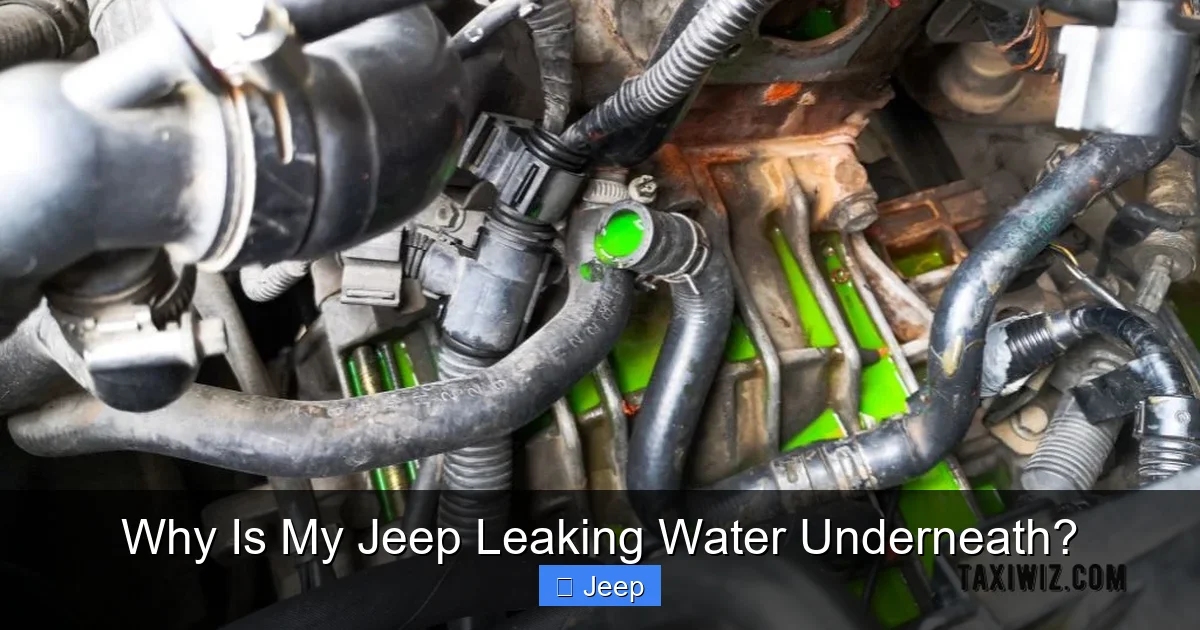
Visual guide about Why Is My Jeep Leaking Water Underneath?
Image source: motoraudit.com
Common Sources of Coolant Leaks in Jeeps
Coolant can escape from multiple points. Here are the most frequent offenders:
- Radiator: The main heat exchanger. Look for leaks at the seams, corners, or from stone damage on the front. A puddle directly under the front of the engine bay is a classic sign.
- Coolant Hoses: The upper and lower radiator hoses, as well as smaller heater hoses, can crack, loosen, or have a bad clamp. Check for spray patterns or steady drips from connection points.
- Water Pump: Often driven by the serpentine belt. The pump’s seal can fail, causing a leak from the bottom front of the engine. Look for a damp spot or drip around the pump housing.
- Thermostat Housing: The thermostat sits in a housing connected to the engine. The gasket can fail, leaking from the top/front of the engine.
- Heater Core: This is inside the cabin, behind the dashboard. A leak here will drip onto the passenger floor inside the car, not underneath. You’ll also notice sweet-smelling steam from the vents and fogged windows. This is a major, invasive repair.
- Intake Manifold Gasket: On some Jeep engines (like certain 4-cylinders), the intake manifold gasket can leak coolant externally, often dripping down the side of the engine block.
- Freeze Plugs: These are small cylindrical plugs in the engine block. If one corrodes or gets pushed out, you’ll get a steady leak from the side of the engine.
Diagnosing a Coolant Leak
1. Visual Inspection: With the engine cold, open the hood and look for obvious wetness, crusty residue (old coolant), or stains on components. Follow any wet path upward to its source.
2. Pressure Test: This is the definitive test. A mechanic uses a special tool to pressurize the cooling system with the engine off. It forces coolant out of the weakest point, making the leak obvious.
3. Check Coolant Level: Monitor the overflow reservoir and radiator (when cold) over several days. A dropping level confirms a leak.
Important: If your Jeep is also overheating, the connection is direct. A major coolant loss leads to overheating. You can learn more about the symptoms and dangers in our detailed article on why cars overheat.
Chapter 4: Other Potential (and Less Common) Water Sources
Not all water leaks are from the AC or coolant. Here are a few other possibilities, especially on older or off-road-driven Jeeps.
1. Sunroof/Moonroof Drainage
Jeeps with sunroofs have drain channels that channel water from the glass frame to the outside. If these drains clog (with leaves, dirt), water can back up and leak into the headliner, A-pillars, or even the rear cargo area. You’ll see water stains on interior trim, not a puddle under the car directly.
2. Door Seals
A torn or misaligned door seal can allow rainwater to enter the cabin during a wash or storm. This water will drain to the lowest point (floor pans) and might eventually drip out onto the ground. Check the door jambs for wetness or water trails after a car wash.
3. Aftermarket Accessories
Did you install a roof rack, winch, or auxiliary light? Improperly drilled holes or gaskets can create a path for water into the cabin or along a pillar, eventually dripping down.
4. Exhaust System Condensation
This is perfectly normal. As hot exhaust gases exit the engine and meet cooler tailpipe sections, water vapor condenses into liquid. You’ll see a steady drip from the tailpipe, especially during the first few minutes of a cold start. This water is harmless. However, if the drip is excessive and constant, even when the engine is hot, it could indicate a more serious issue like a failed head gasket (where coolant is entering the combustion chamber and exiting as steam/water). This is a worst-case scenario.
Chapter 5: A Step-by-Step Diagnostic Guide for Your Jeep
Let’s put it all together. Here is your systematic approach to finding the leak.
- Identify the Fluid: As in Chapter 1, get a sample. Is it water, coolant, or something else?
- Note the Location: Where is the puddle or drip? Front center/right/left? Under the passenger side? Under the tailpipe? Under the center of the cabin?
- Note the Conditions: Does it leak only when the AC is on? Only after rain? Only when the engine is hot? Only when parked on a hill? Only in cold weather?
- Perform a Visual Check:
- With the engine off and cold, open the hood. Look for wetness, stains, or crusty deposits on the radiator, hoses, water pump, thermostat housing, and engine block.
- Check the AC drain tube exit (passenger side, under car). Is it dripping? Is it clogged?
- Check the overflow reservoir level.
- Look under the car with a flashlight. Can you see the exact point where the drop is forming?
- Simple Tests:
- Run the engine with the AC on off. Does the leak stop? If yes, it’s likely the AC system.
- Run the engine with the AC on on. Does the drip start or increase? Confirms AC source.
- Check the tailpipe. Is water dripping only at startup? That’s normal exhaust condensation.
Chapter 6: DIY Fixes vs. When to Call a Professional
Based on your diagnosis, here’s your action plan.
Safe DIY Repairs
- Clogged AC Drain: As described, carefully clear the drain tube. This is a common and easy fix for a Jeep leaking water underneath from the AC.
- Loose Hose Clamp: If you find a coolant hose clamp that is merely loose (not corroded), you can carefully tighten it. Only do this with the engine cold and depressurized.
- Replacing a Radiator Cap: A bad cap can cause minor weeping. Replacing it is cheap and easy.
- Replacing a Hose: If a radiator or heater hose is visibly cracked, replacing it is a moderate DIY job if you have the tools.
Time to Call a Mechanic (or Jeep Specialist)
- Any Coolant Leak: Unless it’s a trivial clamp, coolant leaks often require system depressurization, diagnosis (pressure test), and component replacement (water pump, thermostat, radiator).
- Heater Core Leak: This requires full dashboard removal. Definitely a pro job.
- Intake Manifold Gasket or Freeze Plug: Major engine work.
- Sunroof/Door Drain Issues: Can require disassembly of trim to access and clear.
- If you cannot find the source: A professional has smoke machines for HVAC systems and UV dye kits for cooling systems to pinpoint elusive leaks.
Remember, for cooling system issues, time is not on your side. Driving with low coolant is a direct path to a blown head gasket or a warped engine block—repairs that can exceed the value of the vehicle.
Conclusion: Knowledge is Power (and a Dry Garage)
Finding water under your Jeep can be a moment of anxiety, but it’s usually the start of a simple diagnostic process. The vast majority of the time, that puddle is just your hard-working air conditioning system doing its job and expelling condensation. It’s a sign of a functional system, not a broken one.
However, you now know how to spot the red flags: the sweet smell of coolant, the location of the drip (front corners), and the correlation with engine temperature. By identifying the fluid and its source, you can make an informed decision. You can confidently clear a clogged AC drain yourself, saving time and money. And you know exactly when to stop and seek expert help for a cooling system leak, potentially saving your engine from destruction.
Your Jeep is an investment in adventure. Keeping a vigilant eye on what’s under it is a simple, smart part of ownership. So next time you see that drip, don’t just wipe it away and forget it. Take a moment, be a detective, and solve the case. Your wallet and your engine will thank you.
Frequently Asked Questions
Is it normal for my Jeep to leak water underneath?
Yes, it is very normal if the liquid is plain water and it drips from the center or passenger side of the vehicle when the air conditioning is running. This is just condensation from the AC system. However, if the fluid is colored or sweet-smelling (coolant), it is not normal and requires immediate attention.
How can I tell if the leak is from the AC or from the coolant system?
The easiest way is to check the fluid. Coolant is brightly colored (green, orange, pink) and smells sweet. AC condensation is clear, odorless water. The location also helps: AC water typically drips under the passenger side, while coolant leaks are usually under the front of the engine (radiator area) or from a specific engine component.
Where is the AC drain tube located on my Jeep?
On most Jeeps (Wrangler, Cherokee, Grand Cherokee), the AC drain tube is a small rubber hose that exits the firewall (the metal wall between the engine bay and cabin) on the passenger side, just below the windshield wiper cowl. You’ll see it dangling under the car near the center of the firewall. This is the exit point for condensation.
Can I drive my Jeep if it’s leaking coolant?
You should not drive a Jeep that is actively leaking coolant. The engine relies on coolant to regulate temperature. Driving with low coolant will cause the engine to overheat rapidly, leading to severe and expensive damage like a blown head gasket or a cracked engine block. Have it towed to a repair shop.
Why does my Jeep only leak water sometimes, not all the time?
If the leak is from the AC, it will only occur when the AC is running and producing condensation. The amount of water also depends on humidity. If the leak is from a cooling system component, it might only leak when the system is pressurized (engine hot) or when a specific seal is engaged (like when the heater is on, for a heater core leak).
What happens if I ignore a coolant leak?
Ignoring a coolant leak is one of the fastest ways to destroy an engine. As coolant levels drop, the engine’s ability to cool diminishes. It will eventually overheat, causing the metal parts to expand and warp. This can lead to a blown head gasket, a cracked cylinder head, or a ruined engine block—repairs that often cost more than the vehicle’s value. Addressing a small leak early is always the cheaper, safer option.
