
Can You Use the Tesla App with a Rental?

Yes, you can typically use the Tesla app with a rental Tesla, but it depends entirely on the rental company’s policy and how they’ve configured the vehicle. Most rental agencies disable the app’s full functionality for security and liability reasons. You’ll almost always be able to use basic features like climate control and honk/flash, but remote start, location tracking, and driver profiles are usually locked. Always confirm the rental company’s specific policy before you book.
Key Takeaways
- Rental Company Policy is King: Whether you can use the Tesla app is 100% determined by the rental agency’s settings, not Tesla’s technology.
- Expect Limited Features: Be prepared for a stripped-down app experience, often missing remote driving, location services, and saved profiles.
- Always Confirm Before Renting: Never assume. Call or email the rental location directly to ask about their Tesla app policy.
- Primary Driver Account is Crucial: The renter’s Tesla account must be the primary driver on the rental agreement for most companies to allow app connection.
- It’s a Security and Liability Measure: Rental companies restrict the app to prevent unauthorized use, track mileage/charging precisely, and avoid customer disputes.
- Setup Takes Minutes: If allowed, connecting your phone is a simple process of logging into your Tesla account and adding the rental vehicle.
- Have a Backup Plan: Don’t rely solely on the app. Know how to use the physical key card and in-car controls for everything.
[FEATURED_IMAGE_PLACEHOLDER]
📑 Table of Contents
- Introduction: The Allure and the Question
- How the Tesla App Works: The Technical Foundation
- The Rental Car Reality: Why It’s Different
- What Features Can You Usually Use? (The “Maybe” List)
- How to Find Out: The Pre-Rental Checklist
- The Setup Process: If They Say Yes
- Alternatives and Workarounds (When the App is a No-Go)
- The Bottom Line: Is It Worth the Hassle?
Introduction: The Allure and the Question
So, you’ve decided to rent a Tesla. Maybe it’s for a special weekend getaway, a business trip, or just to finally experience that instant electric torque everyone raves about. You picture yourself pulling out your phone, tapping the sleek Tesla app, and pre-cooling the cabin on a hot day before you even walk to the car. It’s part of the modern, tech-forward ownership dream. But then a practical question pops up: Can you use the Tesla app with a rental car?
The short answer is: it’s complicated. The technology absolutely allows it. Your personal Tesla account and the car’s connectivity are designed to pair seamlessly. However, the entity standing between you and that seamless experience is the rental car company. Their policies, software configurations, and liability concerns create a variable landscape where the answer can be “yes, mostly,” “yes, but only a few features,” or a flat “no.” This guide will navigate that landscape, breaking down exactly what to expect, how to prepare, and why rental companies handle it this way.
How the Tesla App Works: The Technical Foundation
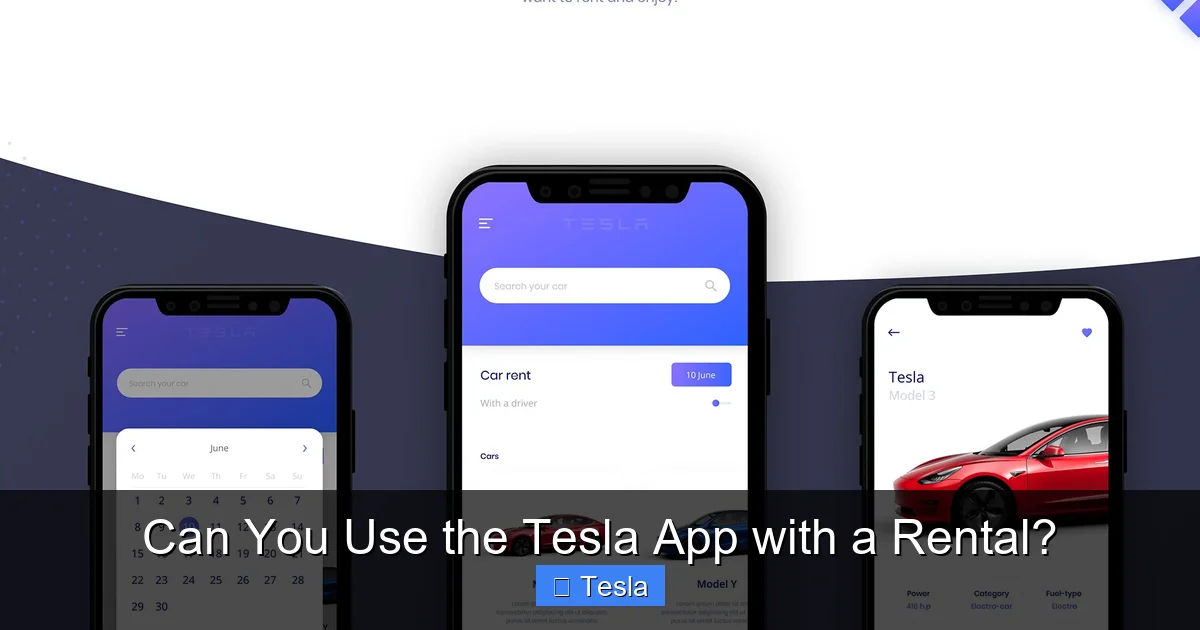
To understand the rental car dilemma, you first need to grasp how the Tesla app functions normally for an owner. It’s not just a remote control; it’s a deep, secure link to your specific vehicle.
Visual guide about Can You Use the Tesla App with a Rental?
Image source: mir-s3-cdn-cf.behance.net
The Personal Vehicle Bond
When you buy a Tesla, you create a Tesla account. During the delivery and setup process, you “claim” your unique Vehicle Identification Number (VIN) in your account. This creates an immutable digital bond. The car’s onboard computer and Tesla’s cloud servers recognize that VIN as belonging to your account. This bond enables:
- Full Remote Access: Start the car, honk the horn, flash lights, see real-time location, and even drive it remotely (Summon) in some cases.
- Personalized Profiles: Your seat, mirror, steering wheel, and climate preferences are saved and automatically applied when the car detects your phone’s Bluetooth or when you select your profile.
- Charging & Service Management: You can monitor charging sessions, set charging limits, schedule service appointments, and receive software updates directly.
- Vehicle Data: You see tire pressures, battery health, mileage, and energy usage graphs specific to your driving.
This system relies on a principle of authorized, singular ownership of the vehicle’s digital identity within the Tesla ecosystem.
The Rental Car Reality: Why It’s Different
Now, introduce a rental agency. They own hundreds, sometimes thousands, of vehicles. Their business model is based on short-term, high-turnover access. The personal, permanent bond Tesla’s system is built for directly conflicts with the rental company’s operational needs.
Visual guide about Can You Use the Tesla App with a Rental?
Image source: mir-s3-cdn-cf.behance.net
Security and Unauthorized Access
This is the biggest concern. Imagine a renter connects their Tesla app to a rental Model 3. They return the car. But what if they forget to log out? Or, worse, what if a malicious actor finds a way to retain access? They could:
- Locate and steal the high-value vehicle.
- Drain the battery by running climate controls remotely.
- Access the owner’s (the rental company’s) account details stored in the car’s system.
- Disrupt the next renter’s experience by changing settings.
To prevent this, rental companies implement a “factory reset” or “fleet mode” procedure when a car is returned. This wipes all personal Bluetooth pairings, user profiles, and—critically—any linked Tesla accounts from the vehicle’s system. The car is returned to a blank, neutral state for the next customer.
Liability and Tracking
Rental companies must track mileage, charging costs (for EVs), and potential damage with absolute precision. If a renter could use the app to remotely start a drive and then disconnect the odometer or manipulate charging logs, it creates a massive liability and accounting nightmare. By limiting app access, they ensure all data is captured directly from the vehicle’s internal systems, which they control, not from a customer’s personal app that might have syncing errors or gaps.
Fleet Management Software Override
Many rental agencies use third-party fleet management software that integrates with vehicles. For Teslas, this often means they use a different, business-oriented portal (like a commercial version of Tesla’s API) to monitor their fleet. They may disable the consumer-facing Tesla app functionality on their vehicles to force all data and control through their own centralized, secure systems. This gives them one dashboard to see all their cars, regardless of make.
What Features Can You Usually Use? (The “Maybe” List)
Even with restrictions, some basic, non-sensitive features often remain accessible. Think of features that are convenient but don’t compromise security or tracking. However, there is no universal standard. One Hertz location might allow more than an Enterprise location. You must ask.
Visual guide about Can You Use the Tesla App with a Rental?
Image source: mir-s3-cdn-cf.behance.net
Commonly Available Features
- Climate Control (Preconditioning): This is the most frequently allowed feature. You can often heat or cool the cabin via the app before you get to the car. The rental company generally doesn’t mind this, as it improves customer satisfaction and doesn’t affect their tracking.
- Horn Honk & Lights Flash: Useful for finding the car in a crowded parking lot. This is a low-risk, high-convenience feature that is rarely blocked.
- Charge Port Status: Seeing if the car is plugged in and its current charging state might be available, as it’s useful information for the renter and aligns with the company’s need to know charging status.
Almost Always Restricted Features
- Remote Start / Drive: This is a major security risk. Allowing anyone with a temporarily linked app to remotely drive a $50,000+ vehicle is a liability no rental company will accept.
- Location Tracking & Geofencing: The rental company needs to know the vehicle’s location for their own tracking and recovery systems. They won’t share this live feed with a temporary renter via the consumer app.
- Driver Profiles & Seat Memory: Personalization features are wiped during the reset. You’ll need to manually adjust seats and mirrors each time.
- Media & Navigation Sync: Streaming from your phone via Bluetooth or sending a destination from the app (Nav to Send) is often blocked, as it requires deeper system integration.
- Software Update Notifications: The rental company controls the update schedule for their fleet. You won’t see update prompts or be able to initiate them.
- Valet Mode: This feature, which restricts the car’s performance and locks the trunk, is typically unavailable as it’s managed by the rental staff.
How to Find Out: The Pre-Rental Checklist
Assuming is the enemy here. A smooth Tesla rental experience starts with a few minutes of research and a quick phone call.
Step 1: Check the Rental Company’s Website & FAQ
Start with the official website of the rental agency (e.g., Hertz, Enterprise, Avis). Search their site for “Tesla,” “EV rental,” or “app connectivity.” Some forward-thinking companies have begun to publish their policies. Look for language like “limited Tesla app functionality” or “rental-specific app features.”
Step 2: Call the Specific Location (Not the 800 Number)
This is the most critical step. Call the exact branch where you plan to pick up the car. The central call center agents often have generic, inaccurate information. Ask the branch manager or a knowledgeable agent these specific questions:
- “I’m renting a Tesla from your location. Can I log into my personal Tesla account and use the app with the rental vehicle?”
- “If yes, what specific features will work? Can I pre-condition the cabin? Can I honk the horn from the app?”
- “Will my personal account be removed from the car after I return it, or do I need to log out?”
- “Do you provide a physical key card, or is phone-based key access the primary method?”
Getting a clear “yes” or “no” on the phone, and ideally the employee’s name, gives you a record. If they say “yes,” ask them to confirm the features when you pick up the car.
Step 3: Have a Backup Plan
Even if they say “yes,” be prepared for it not to work. The car may have been returned and not properly reset, or there could be a temporary glitch. Your backup plan is simple: know how to use the physical key card and the car’s touchscreen for all functions. Practice locking/unlocking with the card (tap it on the B-pillar driver’s side). Know that you can control climate, media, and all driving settings from the 15-inch screen. Don’t let your entire rental plan hinge on app connectivity.
The Setup Process: If They Say Yes
If you get the green light from the rental agent, connecting is straightforward—but you must do it correctly.
Step-by-Step Connection
- Ensure Your Tesla Account is Active: You must have a Tesla account (from owning a Tesla or creating one just for this purpose). Have your login ready.
- Connect to the Car’s Wi-Fi (Optional but Recommended): Before adding the car, go to the car’s touchscreen > Wi-Fi. Connect your phone to the car’s Wi-Fi hotspot if available. This can speed up initial data sync.
- Open the Tesla App: On your phone, open the Tesla app while you are near the rental car (inside or right next to it).
- Add a Vehicle: Tap the ‘+’ icon or “Add Vehicle” in the app. The app should detect the rental car’s VIN if it’s in a “addable” state (which the rental company must have configured).
- Follow On-Screen Prompts: You’ll likely need to confirm within the car itself. A prompt may appear on the touchscreen asking if you want to allow your phone’s key and app access. Accept it.
- Test Immediately: Once connected, immediately test the features you care about most—try honking the horn or turning on the AC. Don’t wait until you’re miles away.
Important: The “Log Out” Ritual
Before you return the car, you must remove your account from the vehicle. Here’s how:
- Go to the car’s touchscreen: Controls > Safety & Security > Remove Key.
- Select your phone/account from the list of keys and confirm removal.
- This severs the digital link. It’s a critical security step to protect your account. Doing this also resets the car’s Bluetooth for the next renter. Confirm with the rental agent that this is the correct procedure for their fleet.
Alternatives and Workarounds (When the App is a No-Go)
If the rental company says “no” to the app, all is not lost. You still have a fantastic, high-tech car at your disposal. Here’s how to adapt.
Master the Physical Key Card
The key card is your primary, guaranteed method of entry and drive. It never fails, doesn’t need charging, and works regardless of any app policy. Get familiar with it:
- Unlock: Tap the card on the B-pillar (the pillar between the front and rear doors) on the driver’s side. The handles will pop out. Tap again to lock.
- Start: Place the card on the center console, in the designated card reader area. The car will start. You can then put the card away in your pocket or wallet.
- Backup: If you lose the card, the car has a hidden physical key inside it for emergencies. Locate this in the manual or ask the rental agent where it is.
Use the Touchscreen for Everything
The 15-inch screen is incredibly powerful. While you can’t pre-cool from your office, you can:
- Set climate controls instantly upon entry. The car will cool or heat very quickly.
- Adjust all vehicle settings, from driving mode (Chill, Standard, Sport) to sterring wheel feel.
- Use the built-in navigation (Google Maps) by typing on the screen or using voice commands.
- Play media via Bluetooth pairing (pair your phone to the car’s Bluetooth system) or the car’s native apps (Spotify, TuneIn, etc., if you have a subscription).
Third-Party Apps (Use with Extreme Caution)
There are unofficial third-party apps and websites that can interact with a Tesla via its API. Do not use these with a rental car. Connecting a third-party app to a rental vehicle is a massive violation of the rental agreement and a huge security risk for you and the rental company. It could lead to immediate termination of your rental, hefty fines, or being held liable for any issues. Stick to the official Tesla app or nothing.
The Bottom Line: Is It Worth the Hassle?
Renting a Tesla is an exhilarating experience regardless of app access. The instant acceleration, the silent ride, and the futuristic interior are the main events. The app is a luxury convenience layer. For many, the trade-off of losing remote start and location tracking for a few days is a small price to pay for driving one of the best EVs on the market.
However, if that convenience layer is a major part of your desired experience—like needing to pre-cool the car on a scorching day for your kids or pets—then you must do your due diligence. The policy varies wildly. A premium rental company like Turo (where individuals rent their personal cars) will almost always allow full app access, as the owner is directly involved and can manage their own car’s settings. Traditional brick-and-mortar agencies like Hertz or Avis are more likely to have restrictions, though their policies are evolving as EVs become more common.
Ultimately, your power lies in asking questions. A simple, “Can I use the Tesla app with this rental?” before you hand over your credit card can save a lot of disappointment. It transforms an uncertain “maybe” into a known quantity, allowing you to adjust your expectations and enjoy the drive.
Frequently Asked Questions
Can I use my personal Tesla account on a rental Tesla?
Sometimes, but it’s entirely up to the rental company. They must enable the “add driver” or “guest access” feature on that specific vehicle. You must always ask before assuming you can connect.
What Tesla app features are most likely to work on a rental?
The most commonly permitted features are climate control (preconditioning) and the horn/lights flash. These are considered low-risk, high-convenience functions that don’t interfere with rental company tracking or security.
What should I do if the Tesla app won’t connect to the rental car?
First, double-check with the rental agent that the car is configured for app access. If it is, try removing the car from your app’s account list and re-adding it. If it still fails, rely on the physical key card and the in-car touchscreen. Do not spend your rental time troubleshooting.
Is it safe to use my Tesla account on a rental car?
It is generally safe if the rental company has a proper reset procedure. However, you should always remove your account from the car via the touchscreen before returning it. This severs the link and protects your personal account data from the next renter.
Do rental companies charge extra for Tesla app connectivity?
No, they do not charge an extra fee for app access. It’s either a policy they allow or they don’t. The rental rate is the same regardless of app functionality. However, some premium rental services might bundle “full connectivity” as a feature of their higher-tier rental packages.
Can I use Summon or Smart Summon on a rental Tesla?
Almost certainly not. These features represent the highest security and liability risk for a rental company. They involve remotely controlling the vehicle, which is a capability no rental agency will extend to a temporary customer.
