
Rv Hot Water Not Working

If your RV hot water isn’t working, don’t panic—common issues like gas supply, electrical connections, or thermostat problems are often easy to fix. This guide walks you through step-by-step troubleshooting, maintenance tips, and safety checks to restore hot water quickly and safely.
Key Takeaways
- Check the basics first: Ensure your propane tank is full, the water heater switch is on, and the water tank has sufficient water.
- Inspect the thermostat and heating elements: Faulty thermostats or blown heating elements are common culprits in electric water heaters.
- Look for blown fuses or tripped breakers: Electrical issues can prevent the water heater from receiving power, especially in electric or dual-mode models.
- Clear airlocks and check for blockages: Air trapped in the lines or mineral buildup can restrict water flow and heating.
- Test the anode rod and flush the tank: A corroded anode rod or sediment buildup reduces efficiency and can cause failure.
- Know when to call a professional: If troubleshooting doesn’t work, electrical or gas line issues may require expert help.
- Prevent future problems with regular maintenance: Annual flushing and inspections keep your RV water heater running smoothly.
📑 Table of Contents
- Why Is Your RV Hot Water Not Working? Common Causes and Quick Fixes
- Understanding Your RV Water Heater: Types and How They Work
- Step-by-Step Troubleshooting: Diagnosing the Problem
- Common Problems and How to Fix Them
- Safety Tips and When to Call a Professional
- Preventative Maintenance: Keeping Your Water Heater in Top Shape
- Conclusion: Get Your Hot Water Flowing Again
Why Is Your RV Hot Water Not Working? Common Causes and Quick Fixes
Imagine this: You’ve just arrived at a beautiful campsite after a long drive. The sun is setting, the air is crisp, and all you want is a warm shower to unwind. You turn on the hot water tap… and nothing but cold water comes out. Frustrating, right? If your RV hot water isn’t working, you’re not alone. This is one of the most common issues RV owners face—and the good news is, it’s usually fixable with a little know-how.
RV water heaters are compact, efficient systems designed to provide hot water on the go. But like any appliance, they can run into problems. Whether you’re boondocking in the desert or parked at a full-hookup campground, a malfunctioning water heater can throw a wrench in your plans. The key is understanding how your system works and knowing where to look when things go wrong.
In this guide, we’ll walk you through the most common reasons your RV hot water isn’t working, how to diagnose the issue, and what you can do to fix it—often without calling a technician. From simple switches and fuses to more complex thermostat or heating element problems, we’ve got you covered. We’ll also share maintenance tips to keep your water heater running smoothly for years to come.
Understanding Your RV Water Heater: Types and How They Work
Visual guide about Rv Hot Water Not Working
Image source: gocarlife.com
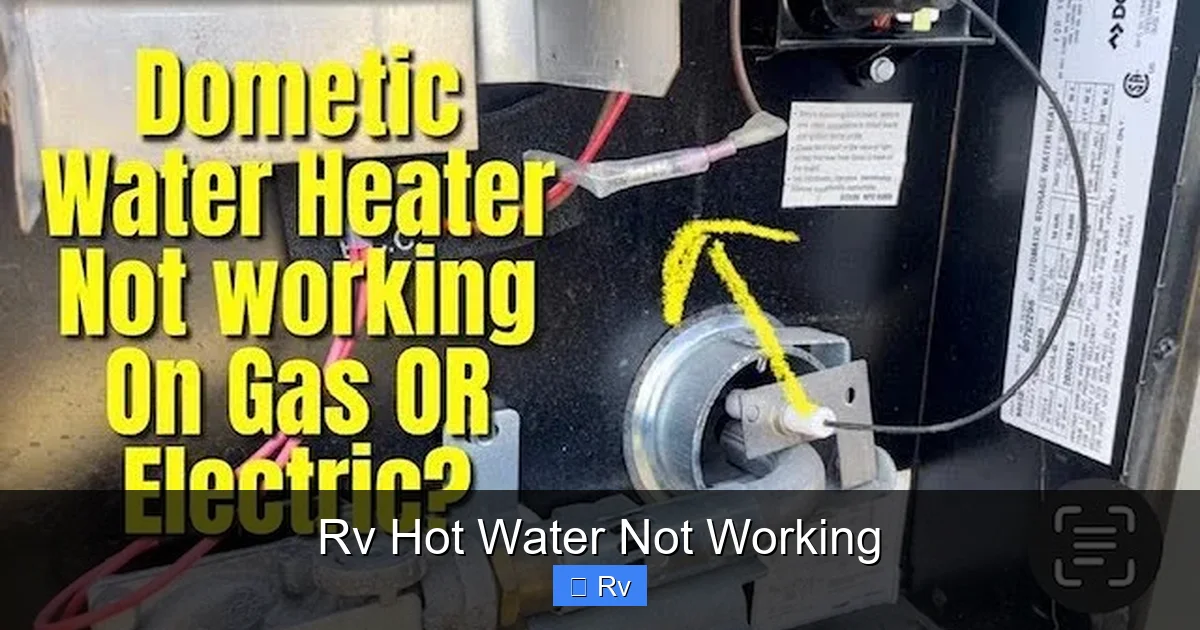
Before diving into troubleshooting, it’s important to understand the different types of RV water heaters and how they operate. Most RVs use one of three types: gas-only, electric-only, or dual-mode (gas and electric) water heaters. Each has its own components and potential failure points.
Gas-Only Water Heaters
These units run solely on propane and are common in older RVs or models designed for off-grid use. They use a burner assembly under the tank to heat water. When you turn on the hot water tap, the thermostat senses the drop in temperature and ignites the burner via a pilot light or electronic ignition. Gas-only heaters are great for boondocking since they don’t rely on shore power.
Electric-Only Water Heaters
Electric models use a heating element inside the tank, similar to a home water heater. They require a 120-volt power source, so they only work when plugged into shore power or running a generator. These are less common in RVs but can be found in some smaller trailers or fifth wheels.
Dual-Mode Water Heaters
The most popular type, dual-mode heaters can operate on either propane or electricity. This gives you flexibility—use gas when off-grid and switch to electric when connected to power. They have both a burner and a heating element, along with separate thermostats and controls for each mode.
How the System Works
Regardless of type, all RV water heaters follow the same basic process:
– Cold water enters the tank through an inlet.
– A thermostat monitors the water temperature.
– When the temperature drops below the set point (usually around 120°F), the heater activates—either the burner (gas) or heating element (electric).
– Hot water is delivered to your faucets and shower when you open the hot water tap.
Understanding this flow helps you pinpoint where the problem might be. For example, if you have water but it’s not hot, the issue is likely with the heating mechanism. If no water comes out at all, the problem could be with the water supply or valves.
Step-by-Step Troubleshooting: Diagnosing the Problem
Visual guide about Rv Hot Water Not Working
Image source: rvingknowhow.com
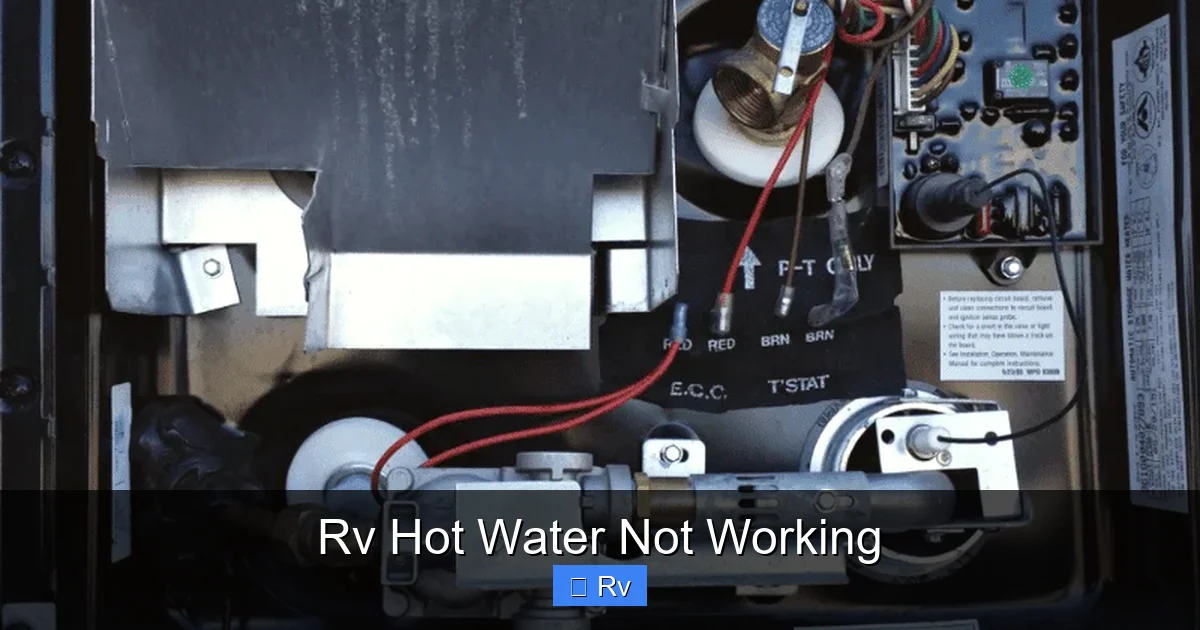
When your RV hot water isn’t working, start with the simplest checks before moving to more complex diagnostics. Many issues can be resolved in minutes with basic tools and a little patience.
Check the Power and Fuel Sources
First, confirm that your RV has the necessary power and fuel:
– For gas heaters: Make sure your propane tank is not empty and the valve is open. Listen for the click of the igniter when you turn on the water heater switch.
– For electric heaters: Ensure your RV is plugged into shore power or the generator is running. Check the circuit breaker panel—look for a tripped breaker labeled “Water Heater” or “WH.”
– For dual-mode heaters: Verify that the correct mode (gas or electric) is selected on the control panel.
Tip: If you’re using electric mode and the breaker keeps tripping, there may be a short in the heating element or a ground fault.
Inspect the Water Heater Switch and Control Panel
Most RVs have a dedicated switch for the water heater, often located on the wall near the kitchen or bathroom. Make sure it’s turned on. Some models have a digital control panel where you can select gas, electric, or both.
If the switch feels loose or unresponsive, it may be faulty. Try toggling it a few times. If the water heater still doesn’t activate, the switch or control board could need replacement.
Check the Fuses and Circuit Breakers
Even if the breaker hasn’t visibly tripped, it may have partially failed. Turn the breaker off, wait 10 seconds, then turn it back on. If it trips again immediately, there’s likely an electrical issue.
Also, check the fuse box. Some water heaters have an inline fuse near the heater or in the fuse panel. A blown fuse will appear black or have a broken filament. Replace it with one of the same amperage.
Verify Water Supply and Tank Level
Your water heater won’t work if there’s no water in the tank. Open a hot water faucet and listen for water flow. If nothing comes out, check:
– The freshwater tank level (if using tank water).
– The city water connection (if hooked up).
– The water pump (if not on city water)—is it running when you open a faucet?
Also, ensure the water heater bypass valve is in the correct position. This valve redirects water around the heater during winterization. If it’s closed, water won’t enter the tank.
Listen for Ignition or Heating Sounds
Turn on the hot water tap and listen near the water heater (usually behind an exterior access panel). For gas heaters, you should hear a click followed by a brief flame ignition. For electric heaters, you might hear a faint hum as the element heats up.
If you don’t hear anything, the thermostat, igniter, or heating element may be faulty.
Common Problems and How to Fix Them
Visual guide about Rv Hot Water Not Working
Image source: i.ytimg.com
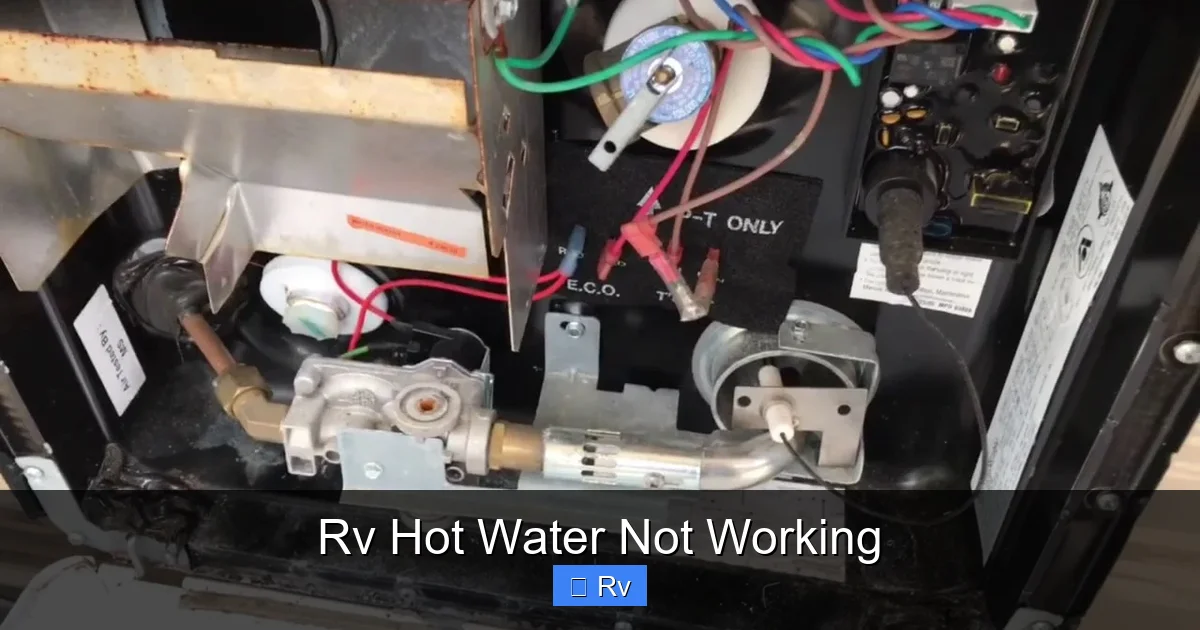
Now that you’ve done the basic checks, let’s dive into the most frequent causes of RV hot water not working—and how to fix them.
Faulty Thermostat
The thermostat controls when the heater turns on and off based on water temperature. If it’s broken, the heater won’t activate even if everything else is working.
Symptoms:
– Water never gets hot.
– Water overheats and triggers the pressure relief valve.
– Heater turns on but shuts off immediately.
Fix: Use a multimeter to test the thermostat for continuity. If it’s not responding, replace it. Most thermostats are inexpensive and easy to swap out.
Blown Heating Element (Electric Models)
Electric water heaters use a heating element submerged in the tank. Over time, these elements can burn out due to mineral buildup or electrical surges.
Symptoms:
– No heat in electric mode (gas mode may still work).
– Breaker trips repeatedly.
Fix: Turn off power, drain the tank, and remove the access panel. Use a multimeter to test the element for continuity. If it’s open (no continuity), replace it. Always install a new gasket to prevent leaks.
Pilot Light or Ignition Issues (Gas Models)
Gas heaters use either a standing pilot light or an electronic igniter. If the pilot won’t stay lit or the igniter fails to spark, the burner won’t fire.
Symptoms:
– You hear a clicking sound but no flame.
– The pilot lights but goes out after a few seconds.
Fix: For pilot lights, relight it according to the manufacturer’s instructions. If it won’t stay lit, the thermocouple may be faulty and needs replacement. For electronic ignition, check the igniter module and wiring.
Airlocks in the Water Lines
Air trapped in the water lines can prevent hot water from reaching the faucets. This often happens after draining the system or running the pump dry.
Symptoms:
– Water sputters or comes out in bursts.
– Hot water tap runs cold, then warm, then cold again.
Fix: Open all hot water faucets in the RV, including the shower and outdoor kitchen (if equipped). Let them run for 2–3 minutes to purge air. Start with the faucet farthest from the heater.
Mineral Buildup and Sediment
Hard water leaves behind minerals like calcium and magnesium, which accumulate in the tank and on heating elements. This reduces efficiency and can block water flow.
Symptoms:
– Longer heating times.
– Reduced hot water output.
– Rumbling or popping sounds from the tank.
Fix: Flush the tank annually using a descaling solution or white vinegar. Follow the manufacturer’s instructions for draining and cleaning.
Failed Anode Rod
The anode rod protects the tank from corrosion by sacrificing itself. When it’s worn out, the tank can rust and leak.
Symptoms:
– Rusty or discolored water.
– Reduced hot water pressure.
– Visible corrosion around the tank.
Fix: Inspect the anode rod annually. If it’s less than ½ inch thick or covered in calcium, replace it. Use a magnesium or aluminum rod depending on your water type.
Safety Tips and When to Call a Professional
While many RV water heater issues are DIY-friendly, safety should always come first—especially when dealing with gas and electricity.
Gas Safety
– Never attempt to repair gas lines or regulators yourself.
– If you smell gas, turn off the propane valve immediately, ventilate the area, and leave the RV.
– Have gas appliances inspected annually by a certified technician.
Electrical Safety
– Always turn off power at the breaker before working on electrical components.
– Use a multimeter to confirm power is off.
– Avoid working on wiring in wet conditions.
When to Call a Pro
Consider professional help if:
– You’re unsure about gas or electrical work.
– The water heater is leaking or shows signs of corrosion.
– Repairs require removing the entire unit.
– You’ve tried troubleshooting but the problem persists.
A qualified RV technician can diagnose complex issues like control board failures, gas valve problems, or internal tank damage.
Preventative Maintenance: Keeping Your Water Heater in Top Shape
The best way to avoid RV hot water not working is through regular maintenance. A little effort now can save you from cold showers and costly repairs later.
Annual Flushing
Drain and flush your water heater at least once a year. This removes sediment and extends the life of the tank and heating elements. Use a descaling solution for hard water areas.
Inspect the Anode Rod
Check the anode rod every 6–12 months. Replace it when it’s worn down to prevent tank corrosion.
Test the Pressure Relief Valve
Lift the lever on the pressure relief valve to ensure it opens and closes properly. This prevents dangerous pressure buildup.
Winterize Properly
In cold climates, always winterize your water heater by draining the tank and using non-toxic antifreeze. Never run the heater with an empty tank—it can cause severe damage.
Keep the Exterior Vent Clear
For gas heaters, make sure the exterior vent is free of debris, snow, or insect nests. Blocked vents can cause carbon monoxide buildup or prevent proper combustion.
Use a Water Softener (If Needed)
If you frequently camp in areas with hard water, consider installing a water softener or using a filter to reduce mineral buildup.
Conclusion: Get Your Hot Water Flowing Again
Dealing with RV hot water not working can be a real headache—but it doesn’t have to ruin your trip. By understanding how your system works and following a systematic troubleshooting approach, you can often resolve the issue yourself in under an hour.
Start with the basics: check your power, fuel, and water supply. Then move on to testing components like the thermostat, heating element, and igniter. Don’t forget about simple fixes like clearing airlocks or replacing a blown fuse. And always prioritize safety, especially when working with gas or electricity.
Regular maintenance is your best defense against future problems. A yearly flush, anode rod inspection, and pressure valve test can keep your water heater running efficiently for years.
Remember, most RV water heater issues are common and fixable. With the right knowledge and a few tools, you’ll be back to enjoying hot showers under the stars in no time.
Frequently Asked Questions
Why is my RV water heater not heating at all?
This is often due to a lack of power or fuel. Check that your propane tank is full and the valve is open, or that you’re connected to shore power. Also, verify the water heater switch is on and the breaker hasn’t tripped.
Can I run my RV water heater without water in the tank?
No. Running the heater with an empty tank can cause the heating element or burner to overheat and fail. Always ensure the tank has water before turning on the heater.
How often should I flush my RV water heater?
It’s recommended to flush your water heater at least once a year, or more often if you use hard water. This removes sediment and improves efficiency.
Why does my RV water heater make a popping or rumbling noise?
These sounds are usually caused by mineral buildup in the tank. Flushing the system with a descaling solution can help reduce or eliminate the noise.
How do I know if my anode rod needs replacing?
Inspect the anode rod annually. If it’s less than ½ inch thick, covered in calcium, or shows signs of heavy corrosion, it’s time to replace it.
Can I use my RV water heater in winter?
Yes, but only if the tank is filled and the heater is protected from freezing. Never run the heater in freezing temperatures without proper insulation or antifreeze.