
Solar Vs Generator for Rv

Choosing between solar and a generator for your RV depends on your travel style, power needs, and lifestyle preferences. Solar offers quiet, eco-friendly energy with minimal maintenance, while generators provide instant, high-output power but require fuel and produce noise. Understanding the differences helps you make the smartest choice for off-grid freedom.
Key Takeaways
- Solar power is silent and eco-friendly: Ideal for boondocking and nature lovers who value peace and sustainability.
- Generators deliver high, immediate power: Perfect for running heavy appliances like air conditioners or microwaves without delay.
- Solar requires upfront investment but low long-term costs: Panels and batteries have high initial prices but save money over time.
- Generators need ongoing fuel and maintenance: You’ll spend more on gas, oil changes, and repairs the longer you use them.
- Solar works best in sunny climates: Cloudy or shaded areas reduce efficiency, requiring larger systems or backup plans.
- Generators offer reliability in all weather: They function regardless of sunlight, making them dependable in any condition.
- Hybrid setups combine the best of both: Many RVers use solar for daily needs and a generator as a backup for high-demand situations.
📑 Table of Contents
- Introduction: Powering Your RV Adventures
- Understanding RV Power Needs
- Solar Power for RVs: Clean, Quiet, and Sustainable
- Generators for RVs: Reliable, Powerful, and Instant
- Solar vs Generator: Side-by-Side Comparison
- Hybrid Systems: The Best of Both Worlds
- Which Is Right for You? A Decision Guide
- Installation and Maintenance Tips
- Conclusion: Making the Smart Choice
Introduction: Powering Your RV Adventures
So, you’ve got your RV, the open road is calling, and you’re ready to explore national parks, deserts, mountain trails, and quiet lakeside campsites. But before you hit the gas, there’s one big question every RVer faces: how will you power your home on wheels?
Electricity is essential—whether it’s for charging your phone, running the fridge, lighting up your camper at night, or keeping cool with an air conditioner. But unlike a house tied to the grid, your RV needs a self-contained power solution. That’s where the great debate begins: solar vs generator for RV.
Both options have loyal fans and strong arguments. Some swear by the quiet hum of solar panels soaking up the sun, while others rely on the steady roar of a generator to keep everything running. The truth is, neither is perfect for every situation. Your choice depends on where you camp, how you travel, and what kind of power you really need.
In this guide, we’ll break down everything you need to know about solar and generators for RVs. We’ll compare costs, performance, maintenance, noise levels, and real-world usability. By the end, you’ll have a clear idea of which system—or combination—fits your lifestyle best.
Understanding RV Power Needs
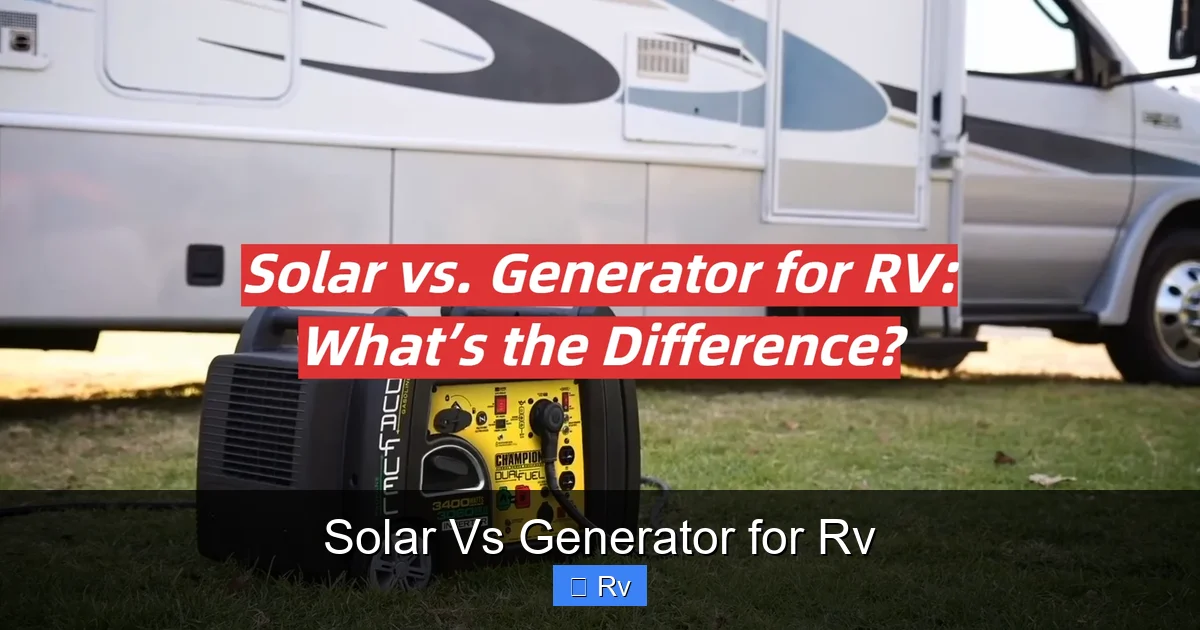
Visual guide about Solar Vs Generator for Rv
Image source: rvprofy.com
Before diving into solar vs generator, it’s important to understand what your RV actually uses electricity for. Not all appliances draw the same amount of power, and knowing your consumption helps you size your system correctly.
Most RVs run on 12-volt DC power for basic functions like lights, water pumps, and refrigerators (when in gas/electric mode). But when you plug into shore power or use a generator, you get 120-volt AC power—this is what runs larger appliances like microwaves, air conditioners, TVs, and coffee makers.
Let’s look at some common RV appliances and their power usage:
– LED lights: 5–10 watts each
– Water pump: 50–100 watts
– Refrigerator (electric mode): 100–300 watts
– Laptop or phone charger: 20–60 watts
– Microwave: 1,000–1,500 watts
– Air conditioner: 1,200–3,500 watts (depending on size)
– Coffee maker: 800–1,200 watts
As you can see, small devices use very little power, but big appliances like the AC or microwave can spike your demand dramatically. This is why many RVers can’t run everything at once—especially when off-grid.
Calculating Your Daily Power Consumption
To choose between solar and a generator, start by estimating your daily energy use. Add up the wattage of everything you plan to use and multiply by the number of hours you’ll use it.
For example:
– 4 LED lights × 8 watts × 5 hours = 160 watt-hours
– Water pump × 75 watts × 0.5 hours = 37.5 watt-hours
– Laptop × 50 watts × 3 hours = 150 watt-hours
– Microwave × 1,200 watts × 0.25 hours = 300 watt-hours
Total: ~650 watt-hours per day
Most RVers use between 1,000 and 3,000 watt-hours daily, depending on habits and appliances. If you’re a minimalist who only uses lights and a phone, you’ll need far less than someone who runs the AC all day.
This calculation is crucial because it tells you how big your solar system needs to be or how often you’ll need to run your generator.
Solar Power for RVs: Clean, Quiet, and Sustainable
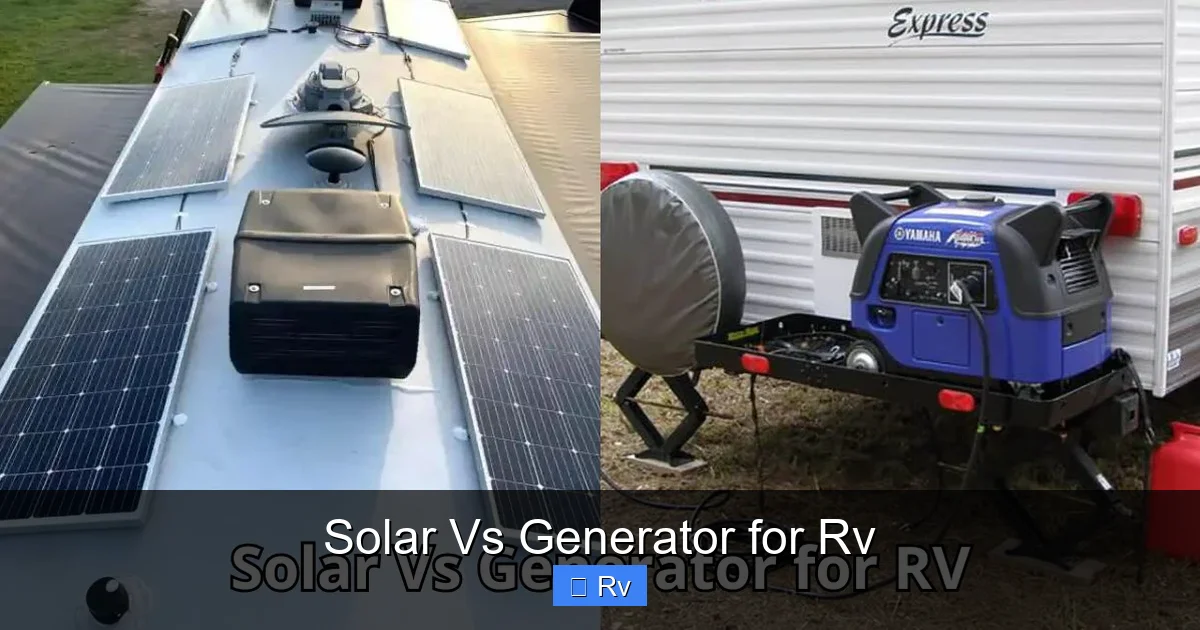
Visual guide about Solar Vs Generator for Rv
Image source: batterygeneratorhub.com
Solar power has become increasingly popular among RVers, especially those who love boondocking—camping without hookups in remote locations. It’s clean, quiet, and once installed, nearly free to operate.
How Solar Works in an RV
A typical RV solar setup includes three main components:
1. **Solar panels** – Mounted on the roof, they capture sunlight and convert it into DC electricity.
2. **Charge controller** – Regulates the voltage and current going to the batteries to prevent overcharging.
3. **Batteries** – Store the solar energy for use at night or on cloudy days.
4. **Inverter (optional)** – Converts stored DC power into 120-volt AC power for household appliances.
Panels come in different wattages—common sizes are 100W, 200W, and 400W. A typical setup might include 400W to 800W of panels, depending on needs.
Pros of Solar Power
– **Silent operation:** No noise pollution—perfect for peaceful campsites.
– **Eco-friendly:** Zero emissions and renewable energy.
– **Low maintenance:** Once installed, solar systems require little upkeep.
– **Unlimited fuel (sunlight):** As long as the sun shines, you can recharge.
– **Great for daily use:** Ideal for lighting, charging devices, and running small appliances.
Many solar users report that after the initial setup, they rarely think about power—they just use it.
Cons of Solar Power
– **High upfront cost:** A full system (panels, batteries, inverter) can cost $2,000–$5,000 or more.
– **Weather dependent:** Cloudy days, shade, or winter sun reduce output.
– **Limited power for high-demand appliances:** Most solar setups can’t run an air conditioner alone.
– **Battery limitations:** You’re limited by battery capacity—once they’re drained, you’re out of power until sunrise.
– **Roof space constraints:** Larger systems need more panels, which may not fit on smaller RVs.
Real-World Solar Example
Meet Sarah, a full-time RVer who lives in her 25-foot travel trailer. She installed a 600W solar system with two 100Ah lithium batteries and a 2,000W inverter. On sunny days, she can run her fridge, lights, laptop, and even a small fan without issue. She charges her phone and camera daily and uses a propane heater instead of electric.
But when she visited the Pacific Northwest in winter, overcast skies meant her batteries drained faster than they recharged. She had to limit her power use and occasionally plug into shore power at RV parks.
Her takeaway? Solar works great—but you need a backup plan for low-sun conditions.
Generators for RVs: Reliable, Powerful, and Instant
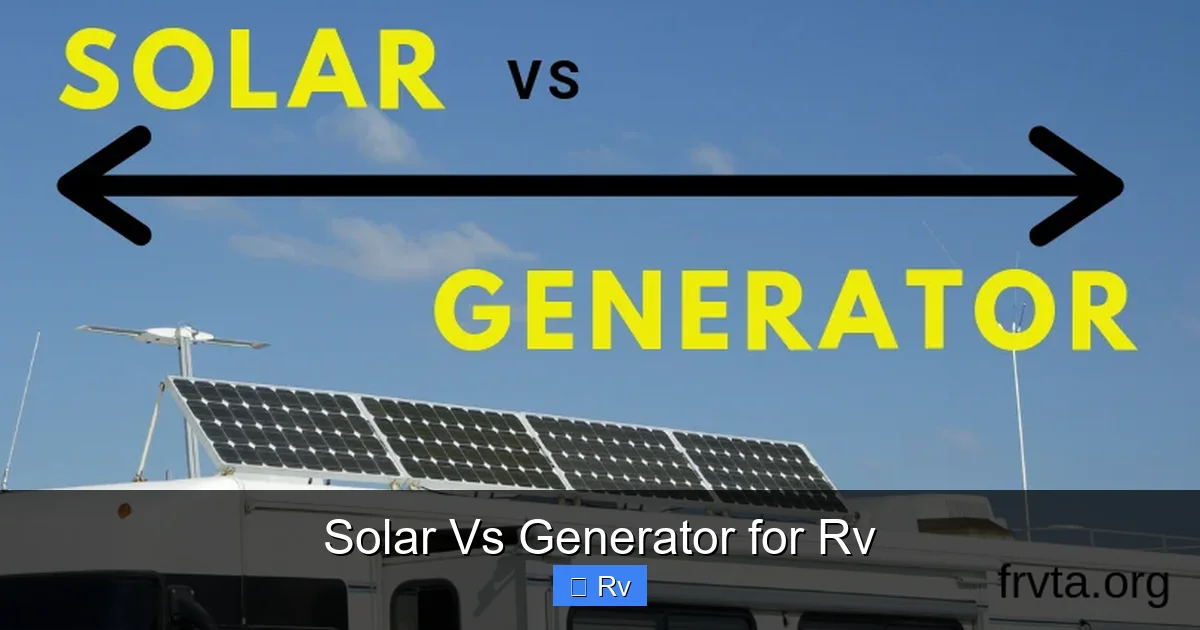
Visual guide about Solar Vs Generator for Rv
Image source: frvta.org
Generators have been the go-to power source for RVers for decades. They’re simple, powerful, and can run almost anything in your RV—no sunlight required.
How Generators Work
An RV generator burns fuel (gasoline, propane, or diesel) to produce electricity. It plugs into your RV’s electrical system or runs appliances directly via outlets. Most modern RVs come with a built-in generator, or you can buy a portable one.
Portable generators are popular because they’re flexible—you can use them for camping, emergencies, or even at home.
Pros of Generators
– **High power output:** Can run air conditioners, microwaves, and multiple appliances at once.
– **Instant power:** Flip a switch and you’re running—no waiting for the sun.
– **Works in any weather:** Rain, snow, or clouds don’t affect performance.
– **Reliable backup:** Great for emergencies or when solar isn’t enough.
– **Widely available fuel:** Gas stations and propane refills are easy to find.
Cons of Generators
– **Noise:** Most generators produce 50–70 decibels—like a loud conversation or vacuum cleaner. This can disturb you and your neighbors.
– **Fuel costs:** Gas and propane aren’t free. Running a generator for 8 hours can cost $10–$20 in fuel.
– **Maintenance required:** Oil changes, spark plugs, and air filters need regular attention.
– **Emissions:** Produces carbon monoxide and other pollutants—never run indoors or in enclosed spaces.
– **Limited runtime:** You’re only powered as long as you have fuel.
Real-World Generator Example
Tom and Linda are retired RVers who love visiting national parks. They have a 5th wheel with a built-in 4,000W propane generator. On hot summer days, they run the air conditioner for hours while enjoying lunch inside.
But they’ve learned to be mindful of noise. At quiet campgrounds, they only run the generator during the day and turn it off by 8 PM. They also carry extra propane tanks for longer trips.
They appreciate the power but admit it’s not ideal for stealth camping or peaceful mornings. “We love the AC,” Tom says, “but we also love the silence of nature. It’s a trade-off.”
Solar vs Generator: Side-by-Side Comparison
Let’s put solar and generators head-to-head across key factors to help you decide.
Cost
– **Solar:** High initial cost ($2,000–$6,000 for a full system), but very low operating costs. No fuel, minimal maintenance.
– **Generator:** Lower upfront cost ($500–$2,000 for portable models), but ongoing fuel and maintenance expenses add up.
Over 5 years, a solar system may cost less than a generator when you factor in fuel and repairs.
Noise Level
– **Solar:** Completely silent. You won’t even know it’s working.
– **Generator:** Noticeable noise—especially at night or in quiet areas. Some newer models are quieter, but none are silent.
If peace and quiet matter to you, solar wins every time.
Power Output
– **Solar:** Best for low to moderate power needs. Can handle lights, fridge, and small devices. Struggles with high-wattage appliances.
– **Generator:** Can power everything in your RV, including air conditioners and microwaves. Ideal for heavy users.
If you need to run the AC regularly, a generator (or hybrid system) is likely necessary.
Reliability
– **Solar:** Depends on sunlight. Less reliable in winter, cloudy regions, or shaded campsites.
– **Generator:** Works anytime, anywhere—as long as you have fuel.
Generators win for reliability in all conditions.
Environmental Impact
– **Solar:** Zero emissions, renewable, sustainable.
– **Generator:** Burns fossil fuels, emits CO2 and noise pollution.
Solar is the clear winner for eco-conscious travelers.
Maintenance
– **Solar:** Almost none. Occasional cleaning of panels and battery checks.
– **Generator:** Regular oil changes, fuel stabilizer, spark plug replacements, and winterization.
Generators require more hands-on care.
Portability and Space
– **Solar:** Panels are fixed to the roof. Batteries and inverters take up storage space.
– **Generator:** Portable models can be stored and moved. Built-in units are permanent.
If you want flexibility, a portable generator might be better.
Hybrid Systems: The Best of Both Worlds
Many experienced RVers don’t choose just one—they use both solar and a generator in a hybrid setup. This gives them the quiet, clean energy of solar for daily use, with the power and reliability of a generator when needed.
How Hybrid Systems Work
A hybrid system uses solar as the primary power source. The panels charge the batteries during the day, and you run appliances from stored energy at night. When the batteries get low—or when you need to run high-power devices—you fire up the generator to recharge or supplement power.
Some advanced setups even have automatic transfer switches that start the generator when battery levels drop below a certain point.
Benefits of a Hybrid Setup
– **Energy independence:** You’re not reliant on shore power or fuel stations.
– **Flexibility:** Use solar when possible, generator when necessary.
– **Reduced generator runtime:** You only use the generator when absolutely needed, saving fuel and reducing noise.
– **Backup security:** If solar fails (e.g., damaged panels), the generator keeps you powered.
Example of a Hybrid User
Jake, a digital nomad, lives full-time in his Class C motorhome. He has a 800W solar system with lithium batteries and a 3,000W portable inverter generator.
On sunny days, he works from his laptop, runs the fridge, and charges his devices using solar. But when he needs to run the microwave or air conditioner, he starts the generator for 30 minutes to an hour.
“I get the best of both worlds,” he says. “Quiet mornings, powerful afternoons, and no stress about running out of juice.”
Which Is Right for You? A Decision Guide
So, how do you decide between solar vs generator for RV? Here’s a quick guide based on your lifestyle.
Choose Solar If You:
– Love boondocking or dry camping in remote areas.
– Prefer quiet, peaceful campsites.
– Travel in sunny climates (Southwest, deserts, etc.).
– Use low to moderate power (lights, fridge, phone, laptop).
– Want to reduce your environmental footprint.
– Are willing to invest upfront for long-term savings.
Choose a Generator If You:
– Frequently run high-power appliances (AC, microwave, coffee maker).
– Camp in cloudy, rainy, or northern regions.
– Need instant, reliable power without waiting for the sun.
– Don’t mind noise and fuel costs.
– Want a simple, plug-and-play solution.
Choose a Hybrid System If You:
– Want flexibility and backup options.
– Live full-time in your RV.
– Travel in varied climates and conditions.
– Value both quiet operation and high power availability.
– Can afford a higher initial investment.
Installation and Maintenance Tips
No matter which system you choose, proper installation and maintenance are key to performance and safety.
Solar Installation Tips
– Mount panels securely to avoid wind damage.
– Angle panels for maximum sun exposure (south-facing in the Northern Hemisphere).
– Use a charge controller compatible with your battery type (PWM or MPPT).
– Choose lithium batteries for longer life and deeper discharge (vs. lead-acid).
– Install an inverter large enough for your peak loads.
Generator Maintenance Tips
– Change oil every 50–100 hours of use.
– Use fuel stabilizer if storing for more than a month.
– Run the generator monthly to keep it in good condition.
– Keep spare spark plugs and air filters on hand.
– Never operate in enclosed spaces—carbon monoxide is deadly.
Safety First
– Always follow manufacturer instructions.
– Use proper wiring and fuses to prevent fires.
– Install carbon monoxide detectors if using a generator.
– Keep batteries ventilated and away from sparks.
Conclusion: Making the Smart Choice
The debate between solar vs generator for RV isn’t about which is “better”—it’s about which is better *for you*. Both have strengths and weaknesses, and the right choice depends on your travel style, power needs, and personal values.
Solar offers a quiet, clean, and sustainable way to power your adventures—ideal for those who love off-grid freedom and peaceful mornings. Generators provide reliable, high-output power for heavy users and all-weather reliability, though at the cost of noise and fuel.
But here’s the good news: you don’t have to pick just one. Many RVers find that a hybrid system gives them the flexibility to enjoy the best of both worlds. Use solar for daily needs and the generator as a backup for high-demand situations.
Ultimately, the goal is energy independence—so you can go where you want, when you want, without worrying about power. Whether you choose solar, a generator, or both, you’re taking a big step toward true RV freedom.
So assess your needs, do your research, and invest in the system that matches your lifestyle. The open road is waiting—and now, you’ll be ready to power it.
Frequently Asked Questions
Can I run my RV air conditioner with solar power?
Most solar systems can’t run an air conditioner alone due to high power demands. However, a large solar setup (1,500W+ panels, high-capacity batteries, and a strong inverter) combined with a generator or hybrid system can make it possible.
How long does a generator last on a full tank?
It depends on the generator size and load. A 2,000W portable generator running at half load may last 6–8 hours on a gallon of gas. Larger units consume more fuel, so plan accordingly.
Do I need a permit to install solar panels on my RV?
No, you don’t need a permit for solar installations on RVs. However, always follow manufacturer guidelines and ensure your roof can support the weight and mounting hardware.
Can I use both solar and a generator at the same time?
Yes, many RVers use hybrid systems where solar charges the batteries during the day, and the generator kicks in at night or during high-demand periods. Some systems even automate this process.
Are lithium batteries worth the cost for solar?
Yes. Lithium batteries last longer, charge faster, and allow deeper discharge than lead-acid batteries. Though more expensive upfront, they save money and hassle over time.
What’s the quietest generator for RV use?
Inverter generators are the quietest, often running at 50–60 decibels. Brands like Honda, Yamaha, and Champion make models specifically designed for quiet RV use.