
Does Car Charger Drain Battery

Using a car charger does not drain your car battery when the engine is running, but it can cause a slow drain if used while the engine is off. Understanding how car chargers interact with your vehicle’s electrical system helps you charge devices safely without risking a dead battery.
Key Takeaways
- Car chargers only drain the battery when the engine is off: When your car is running, the alternator powers the charger, not the battery.
- Leaving devices plugged in overnight can kill your battery: Even low-power devices like phones can slowly drain a 12V battery over time.
- Quality chargers have built-in protection: Look for chargers with auto-shutoff or low-voltage disconnect features to prevent over-drain.
- Parasitic drain is normal but should be minimal: Modern cars have small background power draws, but a faulty charger can worsen it.
- Use a battery maintainer for long-term parking: If you won’t drive for weeks, a trickle charger keeps the battery healthy without over-draining.
- Check your battery health regularly: Weak or old batteries are more vulnerable to drain from accessories like chargers.
- Avoid cheap, uncertified chargers: They may lack safety features and increase the risk of battery drain or damage.
📑 Table of Contents
Does Car Charger Drain Battery? The Truth You Need to Know
You’re on a road trip, your phone is at 15%, and you plug it into the car charger. It starts charging—great! But then a thought pops up: “Wait… is this draining my car battery?” It’s a common concern, especially for people who rely heavily on their phones, GPS, or tablets while driving. The short answer? It depends. A car charger only drains your car battery when the engine is off. When your car is running, the alternator powers the electrical system, including the charger, so your battery stays safe. But if you leave your phone—or worse, a dash cam or tablet—plugged in overnight, you could wake up to a dead battery.
This article will break down exactly how car chargers work, when they can drain your battery, and how to use them safely. We’ll cover everything from the science behind your car’s electrical system to practical tips for avoiding a no-start situation. Whether you’re a daily commuter, weekend adventurer, or just someone who likes to keep their gadgets powered, this guide will help you make smart choices.
How Car Chargers Work: A Simple Explanation
Visual guide about Does Car Charger Drain Battery
Image source: thedailyautomotive.com
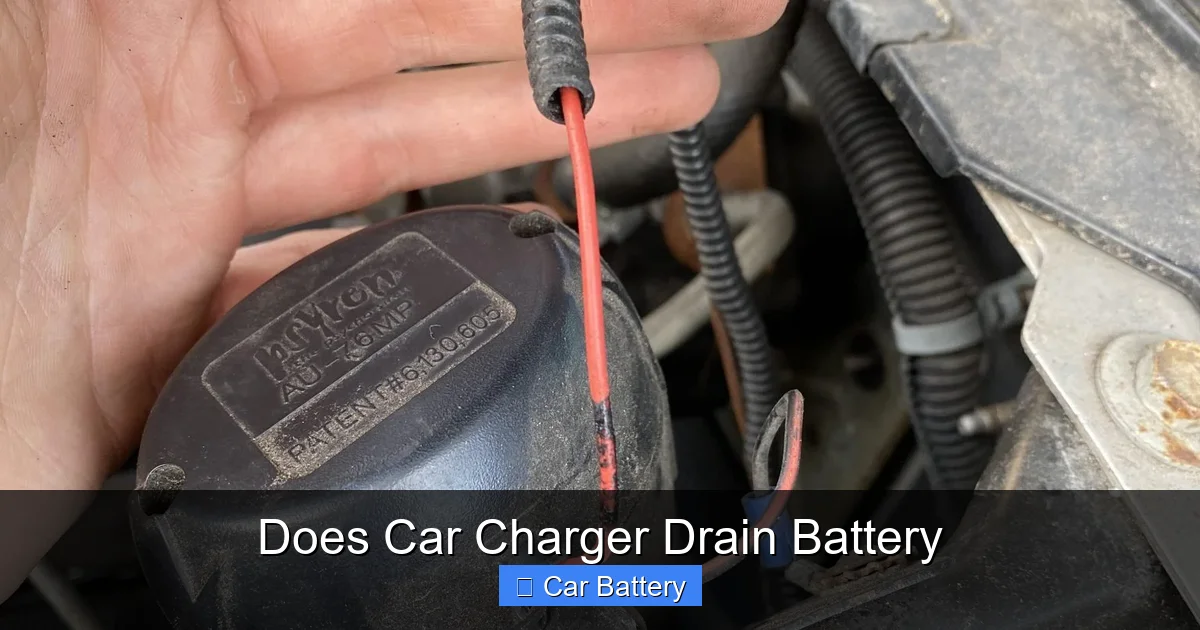
To understand whether a car charger drains your battery, you first need to know how it connects to your car’s power system. Most car chargers plug into the 12-volt cigarette lighter socket—also called the auxiliary power outlet. This socket is directly connected to your car’s battery and electrical system. When you plug in a charger, it draws power from the same source that runs your lights, radio, and dashboard.
But here’s the key: your car’s battery isn’t the only power source. When the engine is running, the alternator takes over. The alternator is a small generator driven by the engine’s belts. It produces electricity to power all the car’s systems and recharge the battery. So, when you’re driving, the alternator powers the charger, not the battery. That means your phone charges using “free” energy from the engine—no drain on the battery at all.
However, when the engine is off, the alternator stops working. Now, any device plugged into the charger draws power directly from the battery. This is where the risk of battery drain begins. Even a small device like a smartphone uses about 5 watts of power. Over time, that adds up. If you leave your phone charging overnight, it could pull enough power to weaken or fully drain a standard 12-volt car battery.
Understanding Parasitic Drain
You might have heard the term “parasitic drain” before. It refers to the small amount of power your car uses even when it’s off. Modern vehicles have computers, alarms, key fobs, and other electronics that stay active. This normal drain is usually less than 50 milliamps (mA)—about the same as a small LED light. It’s designed to keep essential systems running without killing the battery.
But when you add a car charger into the mix, especially one powering a device like a dash cam, tablet, or portable cooler, the parasitic drain increases. A dash cam, for example, can draw 200–500 mA when recording. If left on overnight, that’s enough to drain a healthy battery in 24–48 hours. Older or weaker batteries may fail even faster.
The good news? Most modern cars have safeguards. Some vehicles automatically cut power to the cigarette lighter socket after a few minutes when the engine is off. Others only provide power when the key is in the “accessory” or “on” position. But not all cars are the same. Older models or certain European vehicles may keep the socket live all the time. That’s why it’s important to know your car’s behavior.
Types of Car Chargers and Their Power Draw
Not all car chargers are created equal. The type of charger you use affects how much power it draws and how likely it is to drain your battery. Here are the most common types:
– **Basic USB Car Chargers:** These plug into the 12V socket and offer one or two USB ports. They typically deliver 5V at 2.4A (12 watts), enough to charge a phone or small tablet. Power draw is low, but still present when the engine is off.
– **Fast Chargers (USB-C PD or Qualcomm Quick Charge):** These support higher voltages and currents, delivering up to 18–30 watts. They charge devices faster but draw more power. If used with the engine off, they can drain the battery quicker.
– **Multi-Port Chargers:** Some chargers have three or four USB ports, allowing you to charge multiple devices at once. While convenient, they can draw 30–50 watts or more when fully loaded. That’s a significant load on a parked car’s battery.
– **Inverters:** These convert 12V DC power to 110V AC, letting you plug in laptops, cameras, or small appliances. Inverters can draw 100–300 watts, making them the biggest risk for battery drain. Never leave an inverter running with the engine off unless you have a secondary battery or deep-cycle system.
Choosing the right charger depends on your needs. If you only charge your phone occasionally, a basic USB charger is fine. But if you’re using high-power devices or leaving things plugged in, invest in a smart charger with safety features.
When Does a Car Charger Actually Drain the Battery?
Visual guide about Does Car Charger Drain Battery
Image source: thedailyautomotive.com
Now let’s get specific: when exactly does a car charger drain your battery? The answer hinges on one critical factor—whether your engine is running.
Engine Running: Safe Charging
When your car is on and the engine is running, the alternator generates electricity. This powers all electrical components, including the car charger. Your battery acts as a stabilizer, smoothing out voltage fluctuations, but it’s not the primary power source. In this state, charging your phone, tablet, or GPS is completely safe. You can drive for hours with multiple devices plugged in without worrying about battery drain.
For example, imagine you’re on a long drive, using Google Maps on your phone and playing music through Bluetooth. Your phone is plugged into a dual-port charger, and your passenger is charging their tablet. The alternator easily handles this load. In fact, it’s designed to power far more—headlights, AC, radio, sensors, and more—so a few USB devices are no problem.
Engine Off: The Risk Begins
The danger starts when you turn off the engine. Now, the alternator stops producing power, and the battery becomes the sole source of electricity. Any device connected to the charger will draw power directly from the battery. Even if it’s just a phone, the cumulative effect can be harmful over time.
Let’s do the math. A typical car battery has a capacity of 40–70 amp-hours (Ah). A smartphone charger draws about 2.4 amps at 5 volts, which equals roughly 12 watts. At 12 volts (the car’s system voltage), that’s about 1 amp of current. So, charging your phone for 10 hours with the engine off uses about 10 amp-hours. That might not sound like much, but it’s 15–25% of a smaller battery’s capacity. If your battery was already weak or old, that could be enough to prevent your car from starting.
Now consider a dash cam. Many models record continuously when the car is parked, drawing 300–500 mA. Over 24 hours, that’s 7.2–12 amp-hours. Combined with normal parasitic drain, you could easily exceed 15 amp-hours—enough to kill a borderline battery.
Real-Life Scenarios
Here are a few common situations where car chargers can drain your battery:
– **Overnight Phone Charging:** You plug in your phone before bed, thinking it’s fine since it’s “just a phone.” But if your car’s 12V socket stays live, your phone could drain 10–15% of your battery overnight.
– **Dash Cam in Parking Mode:** Many dash cams switch to low-power “parking mode” when the engine is off. While they use less power, they still draw enough to weaken a battery over days.
– **Weekend Camping Trip:** You leave your car parked for three days with a portable cooler plugged into an inverter. The cooler cycles on and off, drawing 5–10 amps each time. Even with short run times, the total drain can be 50+ amp-hours—more than your battery can handle.
– **Older Car with No Auto-Cutoff:** Some older vehicles keep the 12V socket powered at all times. If you forget to unplug your charger, even a small device can cause a slow drain.
The takeaway? Always unplug chargers when the engine is off, especially if you won’t be driving for a while.
How to Prevent Car Charger Battery Drain
Visual guide about Does Car Charger Drain Battery
Image source: ourhometools.com
The good news is that battery drain from car chargers is preventable. With a few smart habits and the right equipment, you can keep your devices charged without risking a dead battery.
Unplug When Not in Use
The simplest and most effective tip: unplug your charger when you’re not using it. This is especially important when parking for long periods. Make it a habit to remove the charger when you exit the car. If you use a dash cam, check if it has a built-in battery or capacitor that allows it to shut down safely after parking.
Use Smart Chargers with Auto-Shutoff
Invest in a high-quality car charger with safety features. Look for models with:
– **Low-Voltage Protection:** Automatically cuts power if the battery drops below a safe level (usually 11.6–12 volts).
– **Auto-Shutoff:** Turns off after a set time or when the engine is off for too long.
– **LED Indicators:** Show when the charger is active or when the battery is low.
Brands like Anker, Belkin, and Aukey offer reliable chargers with these features. While they cost more than cheap $5 chargers, they’re worth it for the peace of mind.
Check Your Car’s Power Settings
Some cars allow you to control when the 12V socket is powered. For example:
– **Accessory Mode Only:** The socket only works when the key is in the “accessory” or “on” position.
– **Timed Cutoff:** Power shuts off after 10–30 minutes when the engine is off.
– **Always On:** The socket stays live until the battery is drained (common in older cars).
Check your owner’s manual to see how your car behaves. If your socket is always on, consider using a charger with low-voltage protection or installing a switch to manually cut power.
Use a Battery Maintainer for Long-Term Parking
If you won’t drive your car for a week or more—like during a vacation or winter storage—use a battery maintainer (also called a trickle charger). These devices plug into a wall outlet and deliver a small, steady charge to keep the battery at full capacity. They’re safe to leave connected for weeks and prevent drain from both parasitic loads and accessories.
Popular options include the NOCO Genius series and Battery Tender models. They’re affordable (around $30–$60) and can extend your battery’s life by years.
Monitor Battery Health
A weak or old battery is more vulnerable to drain. Most car batteries last 3–5 years. If your car is slow to start, the lights dim when you turn on the radio, or you’ve had jump-starts recently, it’s time for a checkup.
Visit an auto parts store for a free battery test. They’ll measure voltage, cold cranking amps (CCA), and overall health. Replacing a failing battery before it dies can save you from being stranded.
Myths and Misconceptions About Car Chargers
There’s a lot of misinformation out there about car chargers and battery drain. Let’s clear up some common myths.
Myth 1: “Car chargers always drain the battery.”
False. Car chargers only drain the battery when the engine is off. When driving, the alternator powers everything. The real risk comes from leaving devices plugged in when the car is parked.
Myth 2: “Only big devices like inverters drain the battery.”
Not true. Even small devices add up. A phone charger drawing 1 amp can drain 10% of a 50Ah battery in 5 hours. Overnight, that’s enough to cause problems, especially in cold weather when batteries are less efficient.
Myth 3: “My car turns off the socket automatically, so I’m safe.”
Maybe. Some cars do, but not all. Don’t assume yours does. Test it: plug in a phone, turn off the engine, and see if it keeps charging. If it does, your socket stays live.
Myth 4: “Using a car charger damages the battery.”
Not if used correctly. Modern chargers regulate voltage and current to protect both the device and the car’s electrical system. The real damage comes from deep discharging—letting the battery drop too low too often. That’s why prevention is key.
Best Practices for Safe Car Charging
To wrap things up, here’s a quick checklist for safe, worry-free charging:
– Always unplug chargers when the engine is off.
– Use smart chargers with low-voltage protection.
– Avoid inverters unless you have a secondary battery.
– Test your car’s 12V socket behavior.
– Use a battery maintainer for long-term parking.
– Replace old or weak batteries promptly.
– Keep your phone charged before long trips to reduce charging time.
By following these tips, you can enjoy the convenience of car charging without the fear of a dead battery.
Conclusion
So, does a car charger drain battery? Yes—but only when the engine is off. When you’re driving, the alternator powers your devices, so there’s no risk. The real danger comes from leaving chargers plugged in overnight or for extended periods. Even small devices can slowly drain your battery, especially if it’s old or weak.
The key to safe charging is awareness and prevention. Unplug when not in use, invest in quality chargers with safety features, and monitor your battery’s health. With these habits, you can keep your gadgets powered and your car ready to start—every time.
Frequently Asked Questions
Can a car charger drain the battery when the engine is running?
No, a car charger does not drain the battery when the engine is running. The alternator powers the electrical system, including the charger, so the battery remains unaffected during driving.
How long can I leave my phone charging in a parked car?
It’s best not to leave your phone charging for more than a few hours with the engine off. Overnight charging can drain 10–20% of your battery, especially if the 12V socket stays live.
Do all cars cut power to the cigarette lighter when off?
No, not all cars do. Some keep the socket powered at all times. Check your owner’s manual or test it by seeing if your phone continues charging after turning off the engine.
Is it safe to use a car charger with a weak battery?
It’s risky. Weak batteries can’t handle additional loads well. Charging devices with the engine off may push a weak battery below the starting threshold, leaving you stranded.
Can a dash cam drain my car battery?
Yes, especially in parking mode. Many dash cams draw 300–500 mA when recording, which can drain a battery in 1–2 days if left on without the engine running.
What’s the best way to charge devices in a parked car?
Use a smart charger with low-voltage protection, or better yet, charge devices before parking. For long-term storage, use a battery maintainer to keep the battery healthy.
