
How to Clean a Car Cover: Step-by-Step Washing and Care Guide
Quick Answer
To clean a car cover, shake off loose debris, check its fabric care label, and wash it gently using a manufacturer-approved cleaner. Rinse thoroughly and dry completely before storage. Hand washing is a sensible choice for covers with uncertain care instructions, while machine washing is suitable only when the manufacturer permits it. Follow the manufacturer’s cleaning guidance for fabric-specific requirements.
Six quick cleaning steps
- Check the label: Identify whether the cover allows hand washing, machine washing, or tumble drying.
- Remove loose dirt: Shake away leaves, grit, dust, and other debris.
- Choose a cleaner: Use the mild detergent or cleaning product approved for the material.
- Wash gently: Clean with a soft sponge or use an approved gentle machine cycle.
- Rinse thoroughly: Remove cleaner residue, including from seams and folds.
- Dry completely: Air dry unless the fabric instructions explicitly allow machine drying.
Important: Avoid bleach, fabric softener, harsh scrubbing, and unapproved heat. Never store a damp cover.
A dirty car cover can transfer dust and grit back onto the paint you’re trying to protect. Once it collects pollen, bird droppings, road dust, or mildew, cleaning becomes part of basic vehicle maintenance.
The tricky part is that car covers aren’t all made alike. I’ll walk through practical washing methods, fabric-specific precautions, stain removal, and the best ways to dry and store a cover.
In This Guide
- Why Should You Clean a Car Cover?
- What Should You Do Before Cleaning?
- How Do You Wash a Car Cover by Hand?
- Can You Wash a Car Cover in a Washing Machine?
- How Do Cleaning Methods Differ by Material?
- How Do You Remove Stains and Mildew?
- How Should You Dry, Store, and Maintain a Car Cover?
- Frequently Asked Questions
Why Should You Clean a Car Cover?
A car cover needs cleaning because dirt collects on both its exterior and vehicle-facing surface. Accumulated debris can reduce cleanliness, interfere with moisture protection, and create abrasion risks.
A car cover is a removable protective fabric or layered barrier placed over a parked vehicle. Its purpose is to reduce exposure to dust, sunlight, weather, and other environmental contaminants.
Dirty Covers Can Scratch Paint
Imagine pulling a cover across a glossy hood while sand sits inside its lining. That grit can rub against the paint, particularly if wind moves the material.
Cleaning the outer surface isn’t enough. Check the inner lining before every installation because that’s the side touching the vehicle.
Contamination Can Affect Water Resistance
Outdoor covers often rely on breathable, water-resistant fabrics. Dirt embedded in the material may interfere with their intended moisture-management performance.
Water resistance and waterproofing aren’t identical. A water-resistant cover can repel some moisture without creating a completely watertight barrier.
Organic Debris Can Encourage Odors and Mildew
Wet leaves, pollen, and bird droppings leave organic contamination behind. If the cover remains damp, unpleasant odors and mildew may develop.
Cleaning removes contamination, while complete drying reduces the conditions that favor renewed growth.
Cleaning Helps You Spot Damage
A washing session also gives you an opportunity to inspect the cover. Look for worn seams, torn fabric, deteriorated elastic, and damaged inner lining.
Pay particular attention to contact areas around mirrors, antennas, and sharp body edges.
Section Takeaway: A clean cover helps protect the vehicle, but its inner surface must also remain free of grit and moisture.
What Should You Do Before Cleaning a Car Cover?
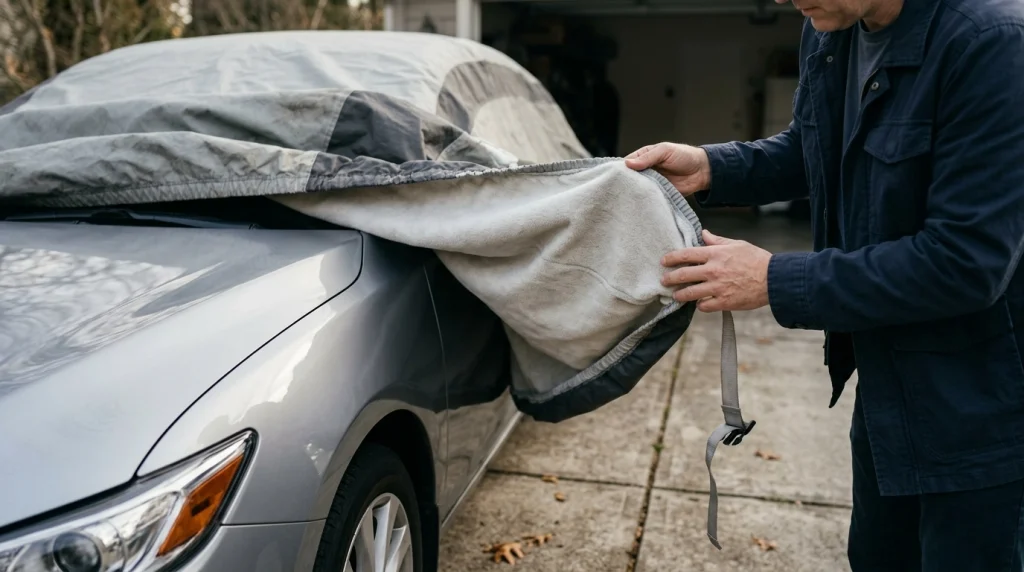
Before washing, identify the material, read the care label, and remove loose debris. These steps help prevent unnecessary fabric damage.
Identify the Material and Care Instructions
Check the sewn-in tag, original packaging, or manufacturer’s product page. Look for approved water temperature, detergent type, washer requirements, and drying method.
Don’t assume that all polyester, cotton, or multilayer covers share identical instructions. Fabric coatings and backing layers can change the recommended care.
Gather Basic Cleaning Supplies
For a typical hand-washing job, you’ll need a few inexpensive household supplies.
- Soft sponge or microfiber cloth
- Clean bucket
- Manufacturer-approved mild cleaning solution
- Garden hose with gentle spray setting
- Clean washing area or suitable drying line
- Soft brush for loose, dry debris
Skip stiff brushes and abrasive pads. Aggressive scrubbing may wear delicate coatings and damage soft inner surfaces.
Remove Loose Dust and Leaves
Remove the cover from the vehicle and shake it gently in a clear outdoor area. Keep the dirty side away from painted surfaces.
For stubborn dry dust, use a soft brush with light strokes. Avoid grinding trapped particles into the material.
Inspect Before Washing
Lay the cover out and examine seams, elastic hems, and fastening straps. Look for tears or areas where the inner lining has become rough.
Repairable damage should be addressed before heavy washing. A cover with badly compromised fabric may need replacement rather than cleaning.
How Do You Wash a Car Cover by Hand?
Hand washing gives you control over the cleaning pressure and heavily soiled areas. It’s particularly useful for bulky covers when machine washing isn’t approved or practical.
Choose a clean surface that won’t snag the fabric. You can use a suitable outdoor washing area or a large clean tub.
Step 1: Lay Out the Cover
Spread the cover across a clean area with the dirty exterior facing upward. Keep it away from gravel, sharp edges, and abrasive concrete.
If you need to clean it while fitted to the vehicle, use that method only when the manufacturer permits it. Otherwise, remove the cover first.
Step 2: Rinse Away Surface Dirt
Use a gentle stream of cool water to loosen dust and dirt. Work from one end toward the other.
Don’t blast the cover with a pressure washer. Concentrated pressure may stress seams or damage specialty coatings.
Step 3: Prepare a Mild Cleaning Solution
Mix the approved cleaner with water according to its instructions. Use the product concentration recommended for that particular fabric.
Don’t assume dish soap, household degreasers, or automotive shampoo are universally safe. Some formulas may leave residues or affect water-repellent finishes.
Step 4: Clean Using Light Pressure
Dip a soft sponge into the cleaning solution. Wipe the material in small sections using gentle motions.
Focus on dirty edges, seams, and obvious contamination. Avoid repeatedly scrubbing one spot with force.
Step 5: Rinse Thoroughly
Rinse until the water runs clear and no visible cleaner residue remains. Give folded areas and seams extra attention.
Some manufacturers, including Covercraft, recommend two rinse cycles for washable fabrics. That helps remove remaining cleaning solution.
Step 6: Clean the Inner Surface
Once the outside is clean, inspect the inside for accumulated dirt. Use the same manufacturer-approved cleaning approach if washing that surface is necessary.
Be particularly gentle with fleece-like, flannel, or padded backing. Excessive rubbing can damage the finish intended to contact vehicle paint.
Step 7: Dry the Entire Cover
Hang the cover over a clean, suitable support where air can circulate. Avoid dragging wet fabric across dirty ground.
Wait until every section is dry, including hems and multilayer seams. Then inspect the inner surface before reinstalling it.
Section Takeaway: Gentle cleaning, complete rinsing, and thorough drying matter more than aggressive scrubbing.
Can You Wash a Car Cover in a Washing Machine?
Yes, some car covers are machine-washable. However, washing-machine compatibility depends on the fabric, coatings, size, and manufacturer instructions.
Many Covercraft fabrics permit machine washing in a sufficiently large washer without a central agitator. Other products require different care.
Check Whether Machine Washing Is Permitted
Read the exact care label before selecting a cycle. A fabric that looks sturdy may still have a coating or backing vulnerable to agitation.
Do not machine wash a cover marked hand-wash-only. If the instructions are missing, contact the manufacturer before attempting it.
Choose the Right Washing Machine
The cover needs room to move without being tightly packed. Large SUV and pickup covers may require commercial front-loading machines.
A central agitator can twist and stress bulky fabric. Use an approved machine design rather than forcing the cover into a small household washer.
Select the Proper Washing Cycle
Where permitted, a gentle cycle is generally appropriate. Choose the precise water temperature and cleaning product specified on the label.
For many specialty fabrics, the manufacturer recommends cold water. Other fabrics may permit warm water, so there isn’t one universal setting.
Avoid Harmful Laundry Additives
- Bleach: Avoid unless the manufacturer explicitly permits it.
- Fabric softener: Avoid because it can interfere with fabric performance.
- Harsh stain removers: Do not use without confirming compatibility.
- Excess detergent: Use the recommended amount to limit residue.
- Unapproved dryer heat: Follow the exact fabric drying instructions.
Rinse and Dry Correctly
Run extra rinses if required by the manufacturer. Covercraft’s care guidance calls for two water-only rinses after washing.
Dry according to the specific fabric chart. Some products permit controlled machine drying, while others require air drying.
For further guidance on washer compatibility and cleaning methods, see AutoZone’s car cover cleaning guide.
Section Takeaway: Machine washing saves effort only when the label permits it and the washer has adequate capacity.
How Do Cleaning Methods Differ by Car Cover Material?
The safest cleaning method depends on the exact material and fabric treatment. Outdoor water-resistant covers, breathable indoor fabrics, and padded multilayer covers may require different care.
As of 2026, Covercraft’s published care instructions illustrate why checking the fabric name matters. Some fabrics allow machine drying, while others specify air drying.
Fabric Cleaning Comparison Table
The following examples summarize selected Covercraft fabric instructions. They are not universal instructions for every car cover made from similar materials.
| Covercraft Fabric | Wash Water | Drying Method |
|---|---|---|
| Gray Polycotton | Warm | Machine dry, low |
| Tan Flannel | Warm | Machine dry, low |
| Form-Fit | Cold | Air dry |
| 5-Layer All Climate Softback | Cold | Air dry |
| WeatherShield HP | Cold | Machine dry, medium |
| Sunbrella | Cold | Air dry |
These settings come from Covercraft’s published fabric care chart. Always prioritize the instructions included with your specific product if they differ.
What About Waterproof and Coated Covers?
Waterproof and coated materials require particular care because their barrier layers may react poorly to unsuitable cleaners or aggressive washing.
Avoid scrubbing coatings with abrasive brushes. If machine washing isn’t clearly permitted, ask the manufacturer which method preserves the finish.
How Should You Clean Soft Indoor Covers?
Soft indoor covers often prioritize a gentle vehicle-facing surface. Start by shaking out dust and inspecting the lining.
Use a permitted gentle washing method when needed. Thorough drying is especially important before placing the fabric back against the vehicle.
Are Multilayer Covers Harder to Wash?
Multilayer covers can be bulky and hold water within seams or fabric layers. Their weight also makes a correctly sized washing machine important.
Some multilayer covers are machine-washable, while others have restrictions. Never generalize from the number of layers alone.
For additional fabric and protection information, visit Covercraft’s car cover resource.
How Do You Remove Bird Droppings, Tree Sap, and Mildew?
Stain removal works best when you act promptly and avoid damaging the cover’s finish. Soften stuck-on contamination before attempting removal.
Bird Droppings
Bird droppings can dry into a stubborn deposit. Pulling them away aggressively may damage the fabric beneath.
- Moisten the affected spot with cool water.
- Allow the deposit to soften naturally.
- Lift away loosened material with a soft cloth.
- Apply a little approved cleaner if needed.
- Rinse thoroughly and allow the area to dry.
Don’t scrape dried deposits using a blade or hard plastic edge. That can create permanent fabric damage.
Tree Sap
Tree sap requires extra caution because sticky residue doesn’t always respond to water alone. Strong solvents may damage coatings, dyes, or waterproof membranes.
First try the manufacturer’s approved cleaning product and gentle spot treatment. If the sap remains, consult the cover maker before using a specialized remover.
Road Grime and Mud
Let heavy mud loosen with water before wiping it away. Rubbing dry mud into the fabric increases abrasion.
Clean the affected section with a soft sponge and approved solution. Rinse until the runoff is clear.
Mildew and Musty Odors
If the cover smells musty, move it outdoors and inspect both sides. Visible growth can indicate the fabric remained wet for an extended period.
Wear gloves and avoid shaking a visibly moldy cover indoors. People sensitive to mold should avoid handling heavily contaminated material.
Clean only with a treatment approved for that cover. Bleach and improvised chemical mixtures can damage fabric and create additional hazards.
Allow the cover to dry fully after treatment. If widespread growth, persistent odors, or deteriorated lining remain, replacement may be the more practical choice.
What If the Cover Still Looks Stained?
A remaining discoloration doesn’t always mean contamination remains. Some marks reflect fading or permanent material staining.
Avoid repeated aggressive cleaning to chase cosmetic marks. Protecting fabric integrity matters more than restoring a perfectly uniform appearance.
Section Takeaway: Soften stains, use compatible products, and avoid harsh chemicals. Replace covers that remain contaminated or structurally damaged.
How Should You Dry, Store, and Maintain a Car Cover?
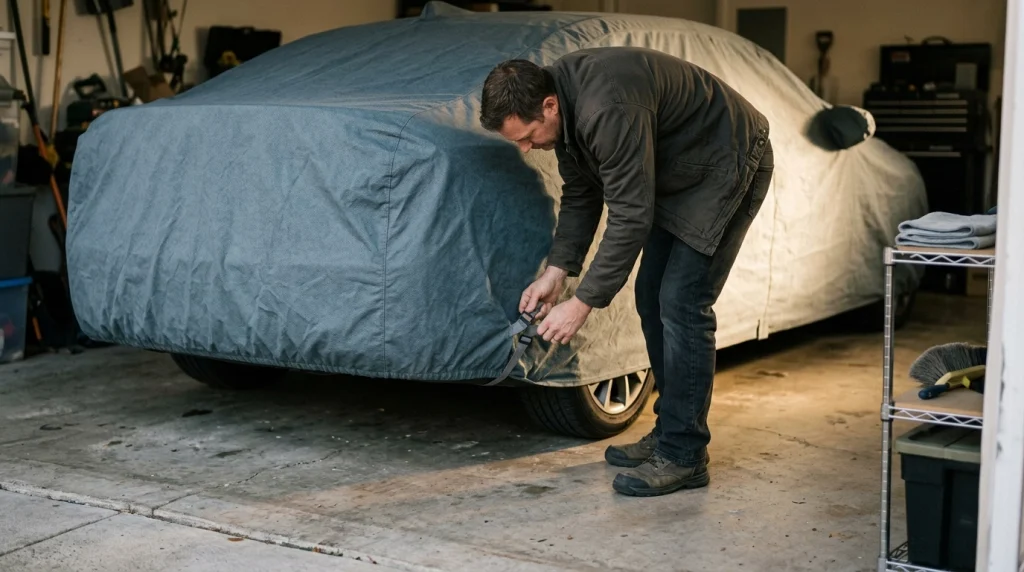
Dry the cover using the method approved for its fabric, then store it only when completely dry. Proper storage helps prevent odors, mildew, and additional contamination.
How to Air Dry a Car Cover
Choose a clean, ventilated location with enough room to spread the fabric. A suitable line or smooth support can help expose both sides to airflow.
Keep it away from dirty ground and sharp objects. Avoid intense heat unless the manufacturer specifically permits that drying condition.
Turn or reposition the material if folded areas remain damp. Check seams, hems, and thick sections before storage.
Can You Use a Clothes Dryer?
Only if the care instructions explicitly allow it. Some fabrics permit low or medium machine drying, but many specialty fabrics require air drying.
Excess heat may affect elastic, coatings, or fabric shape. Don’t choose a dryer setting based solely on the cover’s appearance.
How to Fold and Store a Clean Cover
- Confirm the exterior and inner lining are completely dry.
- Inspect for remaining grit or debris.
- Fold the cover gently without dragging it across the ground.
- Place it in a clean storage bag or container.
- Store it somewhere dry, away from chemicals and sharp objects.
Keeping the dirty outer surface contained during folding helps prevent contamination from reaching the soft inner lining.
How Often Should You Wash a Car Cover?
There isn’t one correct washing interval for every vehicle. Cleaning frequency depends on outdoor exposure, weather, contamination, and how often you use the cover.
Use visible dirt and changes in fabric condition as your primary signals.
- After bird droppings: Spot clean promptly.
- After muddy conditions: Remove loose deposits before reusing.
- During pollen season: Inspect frequently for accumulation.
- After prolonged wet weather: Check for trapped moisture and odors.
- Before long-term storage: Clean when needed and dry thoroughly.
Five Common Car Cover Cleaning Mistakes
- Ignoring the label: Using unsuitable water temperatures or washing cycles.
- Scrubbing aggressively: Damaging fabric surfaces and protective coatings.
- Using excess cleaner: Leaving residue trapped within the material.
- Storing while damp: Encouraging musty odors and mildew.
- Skipping lining inspections: Putting gritty material against painted surfaces.
When Should You Replace the Cover?
Cleaning cannot restore every damaged car cover. Persistent moisture penetration, significant tears, rough lining, and deteriorated seams can reduce its protective usefulness.
Replacement may be appropriate when the material no longer performs its intended purpose. Inspect the cover’s condition rather than relying on age alone.
CarCovers.org also provides cover care and storage guidance covering fabric-specific maintenance.
Section Takeaway: Clean when needed, follow approved drying instructions, and inspect the inner lining before every use.
Frequently Asked Questions
Can I wash a car cover with regular laundry detergent?
Only if the cover manufacturer approves that detergent type. Some fabrics require a particular mild cleaner, while others specify mild powdered detergent. Avoid fabric softener, bleach, and unapproved laundry additives. Check the care label before washing because coatings and specialized fabrics can have different requirements.
Can I wash a car cover while it’s on my car?
Some manufacturers describe methods for cleaning a cover while fitted to a vehicle, but this isn’t universally suitable. Follow the instructions for your exact cover and avoid trapping water or cleaning chemicals against the paint. Removing the cover is often easier for inspecting and cleaning its inner surface.
Can I put my car cover in the dryer?
Some car covers permit machine drying on specific settings, but many require air drying. For example, selected Covercraft fabrics allow low or medium drying temperatures. Others specifically call for air drying. Never use a clothes dryer without confirming the instructions for your exact fabric.
How do I clean a waterproof car cover without damaging it?
Start by checking the fabric care label and removing loose dirt. Use only approved cleaners and washing methods. Avoid aggressive scrubbing, harsh solvents, and unapproved machine cycles. A waterproof coating or membrane may require special care, so don’t assume ordinary household laundry methods are suitable.
How do I remove a bad smell from a car cover?
Inspect the cover for trapped moisture, mildew, and organic debris. Clean it using a manufacturer-approved method, rinse thoroughly, and dry completely. If an odor persists after proper cleaning or the material shows widespread mold growth, consider contacting the manufacturer or replacing the cover.
How long does a washed car cover take to dry?
Drying time depends on fabric thickness, weather, humidity, airflow, and cover size. A lightweight cover may dry considerably faster than a thick multilayer design. There is no dependable universal drying time. Check the seams and inner layers carefully before folding or reinstalling the cover.
Can washing restore a car cover’s water resistance?
Cleaning can remove dirt that interferes with fabric performance, but it cannot guarantee restoration of worn waterproof coatings or membranes. If water resistance remains poor after proper washing and drying, consult the manufacturer about approved treatments or replacement rather than applying an unverified waterproofing spray.
Final Takeaway: Keep Your Car Cover Clean Without Damaging It
Learning how to clean a car cover isn’t difficult once you know the correct method for its material. Start with the care label, remove grit, wash gently, rinse thoroughly, and dry the fabric completely.
For most drivers, preventing unnecessary fabric damage is more important than cleaning aggressively. A properly maintained cover is better equipped to keep dust and debris away from your vehicle.
Before putting your cover back on, inspect its inner lining and make sure the vehicle itself is clean and dry. Those two checks are an easy way to support safer everyday car cover use.
