
Tropical Climate Car Cover Issues: Problems, Risks, and Fixes

Quick Answer
The biggest tropical climate car cover issues are trapped humidity, condensation, intense sun exposure, repeated rain saturation, mildew, wind movement, and slow drying. I prefer a breathable, weather-resistant cover that fits closely, goes onto a completely dry car, and gets removed periodically for inspection. For general vehicle-safety information, I also keep the National Highway Traffic Safety Administration among my reference resources.
Problems to watch for
- Trapped humidity: Moist tropical air can remain beneath a cover and condense as temperatures change.
- Slow drying: Frequent rain may leave the fabric wet longer than it would in a dry climate.
- Sun exposure: Strong sunlight and heat can gradually age exposed cover material.
- Mildew risk: Folding or reinstalling a damp cover can create musty odors and staining.
- Wind rubbing: Loose material can move against dusty paint during tropical storms and windy weather.
- Coastal exposure: Salt-laden moisture makes regular cleaning and inspection more important near the ocean.
My first move
- Remove a damp cover, dry both the car and cover completely, and identify whether the moisture came from rain, condensation, wet ground, or the cover itself.
Using a car cover in a tropical climate sounds simple until heat, humidity, heavy rain, and wind start working together. I’ve found that moisture management matters just as much as keeping rain off the paint.
This guide explains the tropical climate car cover issues I would watch for in 2026. I’ll also show you how to prevent the most common problems without turning basic vehicle storage into a complicated routine.
In This Guide
- What Problems Do Car Covers Have in Tropical Climates?
- Why Does Humidity Build Up Under a Car Cover?
- Can Tropical Rain Cause Mildew or Moisture Damage?
- How Do Tropical Sun and Heat Affect a Car Cover?
- What About Tropical Wind and Coastal Salt Air?
- What Type of Car Cover Works Best in a Tropical Climate?
- Frequently Asked Questions
What Problems Do Car Covers Have in Tropical Climates?
Tropical climates make car-cover use difficult because several stresses happen at once. High humidity, frequent rain, strong sunlight, warm temperatures, and wind can all affect how the cover performs.
A tropical climate car cover issue is a storage or protection problem caused or worsened by hot, humid, wet conditions. The cover may not be defective even when the vehicle underneath becomes damp.
The environment matters as much as the cover
I don’t judge a cover only by whether its outer surface stops rain. I also look at how quickly moisture underneath can escape.
A cover that stays soaked for long periods creates a different challenge from one used in a dry garage. Tropical weather rarely gives you ideal drying conditions every day.
- High humidity: Slows evaporation and increases the amount of moisture in surrounding air.
- Frequent rainfall: Repeatedly wets the cover before it has fully dried.
- Warm temperatures: Increase heat buildup around a parked vehicle.
- Strong sunlight: Exposes the cover material to continuous outdoor weathering.
- Wind: Can move loose fabric across the vehicle.
- Vegetation: Trees may add pollen, sap, leaves, insects, and bird droppings.
- Coastal air: Can carry salt contamination onto exposed surfaces.
Tropical car cover problem comparison
| What You Notice | Likely Issue | First Action |
|---|---|---|
| Fine droplets under the cover | Condensation or trapped humidity | Remove cover and dry both surfaces |
| Wet patch after rain | Water penetration or saturated seam | Inspect seams and fabric condition |
| Musty smell | Cover stored or used while damp | Wash as directed and dry completely |
| Marks on dusty paint | Cover movement or trapped grit | Clean surfaces and check fit |
| Faded or brittle fabric | Outdoor weathering and sun exposure | Inspect strength and consider replacement |
| Cover lifts during storms | Poor fit or inadequate fastening | Secure correctly or remove before severe weather |
Section Takeaway: Tropical weather tests moisture control, fit, drying speed, and material durability at the same time. Diagnosing the exact symptom is more useful than simply buying a thicker cover.
Why Does Humidity Build Up Under a Car Cover?
Humidity builds under a car cover when moist air or liquid water enters the covered space faster than it can escape. Temperature changes can then turn some of that water vapor into condensation.
This catches many owners by surprise. The cover can be waterproof on top while droplets still develop underneath.
Condensation does not require a leaking cover
Condensation happens when moist air contacts a surface cool enough for water vapor to become liquid. Vehicle glass and body panels can provide those cooler surfaces after temperatures change.
A typical tropical cycle may look like this:
- Warm, humid air surrounds the parked vehicle.
- Moist air also remains underneath the installed cover.
- The vehicle cools after sunset or rain.
- Some surfaces reach conditions where condensation can form.
- Limited airflow slows evaporation beneath the cover.
That final step is important. A cover doesn’t have to create the moisture to make the drying process slower.
A wet vehicle makes the problem worse
I never cover a vehicle immediately after washing it. Paint can look dry while water remains hidden in small gaps.
- Mirror housings
- Door handles
- Badges and emblems
- Window seals
- Fuel doors
- Trunk or hatch openings
- Wheel arches
- Exterior trim joints
I run a clean microfiber towel around these areas before installing a cover. If the towel comes away wet, the vehicle needs more drying time.
Wet ground can also feed the problem
A car parked above damp soil or grass sits over a continuing moisture source. The lower part of the vehicle may stay in a more humid pocket of air.
A paved, well-drained surface usually makes moisture easier to manage. Standing water around the parking area deserves attention first.
For broader ownership and vehicle-care research, Kelley Blue Book is another general automotive resource I use when checking maintenance topics.
Section Takeaway: Water underneath a cover does not automatically mean rain leaked through. Condensation, a wet vehicle, damp ground, and poor evaporation can produce the same symptom.
Can Tropical Rain Cause Mildew or Moisture Damage?
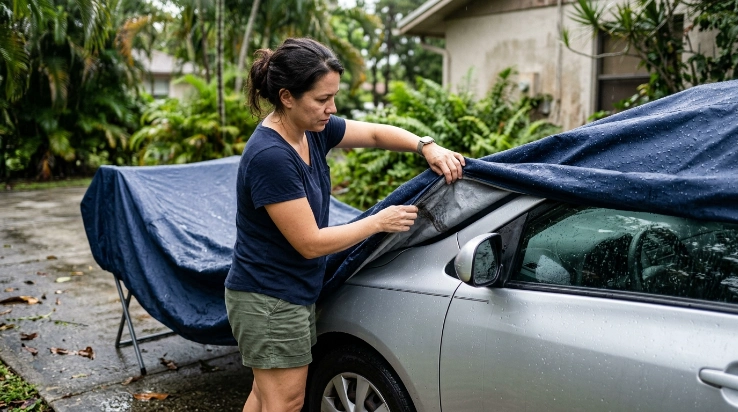
Yes. Repeated tropical rain can keep a cover damp long enough for musty odors, mildew, staining, and persistent moisture problems to develop.
The biggest warning sign is not one rainstorm. It is a cover that never seems to dry before the next wet period arrives.
Never fold a wet cover into storage
A damp cover rolled tightly into a bag holds moisture inside layers of fabric. That can create odor and mildew problems during storage.
I treat a wet car cover like a large wet towel. It needs open airflow before I fold it.
- Remove loose debris first.
- Follow the manufacturer’s cleaning instructions.
- Air-dry the cover completely.
- Check the inner surface before folding.
- Store it only when both sides feel dry.
Watch seams and low points after heavy rain
Water may collect where loose material forms pockets. Seams can also become obvious inspection points after long periods of rain.
Remove the cover carefully and look at the moisture pattern. A localized wet area beneath one seam suggests something different from fine droplets across the entire roof.
| Moisture Pattern | What I Would Check |
|---|---|
| Fine droplets over several panels | Condensation and airflow |
| Wetness beneath one seam | Seam condition or localized water penetration |
| Wet paint soon after installation | Vehicle covered before fully dry |
| Damp inner lining before use | Cover previously stored wet |
Persistent moisture can affect exposed metal
Repeated dampness is especially undesirable around exposed or already damaged metal. Contamination left on the vehicle can make long-term storage conditions worse.
I would clean and dry a vehicle before covering it for extended periods. I also inspect paint chips, hardware, wheel areas, and other vulnerable surfaces.
Mechanic Alert: If you find significant corrosion around brake lines, suspension mounting areas, structural parts, or other safety-critical components, have a qualified mechanic inspect the vehicle.
Section Takeaway: The safest tropical storage routine is simple: never trap existing water. Dry the vehicle and the cover fully before putting them back together.
How Do Tropical Sun and Heat Affect a Car Cover?
Strong tropical sunlight and heat can gradually age outdoor cover material. A cover that lives outside year-round needs regular inspection instead of being treated as permanent equipment.
Sun protection is still valuable. The cover simply becomes the sacrificial outer layer taking the weather instead of the vehicle.
Check for material deterioration
I inspect exposed areas that receive the most sun first. The roof, hood, trunk, and upper edges often tell you how the material is aging.
- Fading: Color changes can indicate prolonged outdoor exposure.
- Stiffness: Material that once folded easily may become less flexible.
- Cracking: Coated surfaces may show visible deterioration.
- Weak seams: Stitching can become an early failure point.
- Tearing: Small damaged spots may grow once wind starts pulling them.
- Worn elastic: A loose hem can reduce fit and increase movement.
Do not assume a thicker cover is always cooler
More material doesn’t automatically solve tropical heat. Construction, airflow, fit, color, and intended use all affect how a cover behaves outdoors.
I focus first on whether the manufacturer designed the cover for outdoor use. A soft indoor dust cover may be excellent in a garage but poorly suited to tropical rain and sun.
Shade can reduce the weather load
A roofed carport gives a cover an easier job than full-time open parking. It reduces direct rain and sunlight while still allowing access to airflow.
Trees provide shade too, but they add other problems. Sap, pollen, branches, leaves, insects, and bird droppings can land directly on the cover.
For general comparisons and vehicle ownership research, Edmunds provides a broad automotive reference library covering vehicles and ownership topics.
Section Takeaway: In tropical sun, inspect the cover itself as a maintenance item. Replace it when weakening fabric, damaged seams, or poor fit prevents it from protecting the vehicle properly.
What About Tropical Wind and Coastal Salt Air?
Wind can turn a loose car cover into a moving abrasive surface when dust or grit sits between the material and paint. Coastal environments add another concern because salt contamination can reach both the cover and vehicle.
This is where fit becomes just as important as fabric quality.
A loose cover can move across paint
I avoid oversized universal covers when a vehicle spends long periods outside. Excess fabric gives wind more material to grab.
Check these areas after installing the cover:
- Front and rear bumper corners
- Mirror pockets
- Roof edges
- Wheel arches
- Side skirts
- Spoilers
- Antenna areas
- Front and rear hems
The cover should sit securely without being stretched aggressively over protruding parts. Too tight can be a problem too.
Clean paint before covering it
Even a soft cover can rub contamination against the finish if wind keeps moving it. Dust and grit are what I worry about first.
I don’t install a cover over visibly dirty paint unless protection from an immediate weather event outweighs the rubbing concern. For routine use, clean and dry wins.
Coastal areas need more frequent inspection
Salt particles can settle on exposed surfaces in coastal environments. Moist conditions can keep those contaminants wet longer.
That means I would shorten the inspection interval near the coast. Check the cover, body, wheel areas, exposed hardware, and lower surfaces regularly.
If a tropical storm or cyclone is approaching, I would follow official emergency guidance rather than relying on a fabric cover to protect a vehicle from severe debris or flooding. NHTSA provides broad vehicle-safety information, while local emergency authorities should guide storm preparation.
Section Takeaway: A close fit reduces wind movement, but cleanliness still matters. In coastal tropical areas, combine good fit with more frequent washing and inspection.
What Type of Car Cover Works Best in a Tropical Climate?
A breathable, weather-resistant outdoor cover with a close vehicle-specific fit is usually the most practical choice for tropical conditions. It needs to manage rain without trapping every bit of moisture underneath.
No cover eliminates condensation or maintenance. The goal is to choose a cover that makes moisture easier to manage.
Features I would prioritize
- Outdoor rating: The cover should be intended for outdoor weather exposure.
- Breathability: Moisture vapor needs a way to escape.
- Water resistance: The outer material should manage normal rain for its intended application.
- Secure fit: Excess movement should be kept to a minimum.
- Paint-friendly interior: The inner surface should suit contact with automotive finishes.
- Strong seams: Stitching and construction need to tolerate repeated use.
- Reliable fastening: Hems or approved straps should keep the cover correctly positioned.
- Washability: Tropical outdoor use can make regular cleaning necessary.
Breathable vs. sealed material
| Cover Approach | Potential Advantage | Tropical Concern |
|---|---|---|
| Breathable outdoor cover | Helps moisture vapor escape | Still requires drying and inspection |
| Indoor dust cover | Soft protection in sheltered storage | May lack outdoor weather protection |
| Loose universal cover | Fits several vehicle sizes | Extra fabric can move in wind |
| Plastic tarp or sealed sheet | Blocks direct water contact from above | Poor fit and limited vapor escape make it unsuitable for routine paint protection |
My tropical car-cover routine
I get better results by treating the cover as part of a routine rather than permanent storage. The steps are simple.
- Start with a reasonably clean vehicle.
- Dry the paint, trim, mirrors, seals, and wheels.
- Confirm the inner surface of the cover is clean and dry.
- Install the cover without dragging it across the ground.
- Secure it using the manufacturer’s intended fastening system.
- Inspect underneath after heavy rain or major temperature changes.
- Remove the cover if moisture remains trapped.
- Dry both surfaces before reinstalling it.
- Clean the cover according to its care instructions.
- Inspect fabric, seams, hems, and straps for deterioration.
I also check manufacturer instructions before cleaning or applying any treatment to the material. Coatings and layered fabrics can have specific care requirements.
For broader consumer automotive research, Consumer Reports is another established resource worth checking alongside manufacturer instructions.
Section Takeaway: The best tropical cover is not simply the most waterproof one. Prioritize breathability, weather suitability, secure fit, cleanliness, and a routine that lets trapped moisture escape.
Frequently Asked Questions
Can I use a car cover every day in a tropical climate?
Yes, but daily use requires more attention to cleanliness and moisture. Make sure the car and inner cover surface are dry before installation, and check underneath regularly after rain or humid nights.
Should a tropical car cover be waterproof or breathable?
I would prioritize a weather-resistant outdoor cover that also allows moisture vapor to escape. A cover that blocks rain but holds condensation underneath can create another moisture problem.
Why is my car wet underneath the cover when it did not rain?
Condensation is a likely explanation. Humid air trapped beneath the cover can contact cooler body panels and glass, allowing water droplets to form even when rain never penetrates the fabric.
Can I put a car cover on after washing my car?
Only after the vehicle dries completely. Check mirrors, badges, door handles, weatherstripping, trim gaps, wheels, and hatch or trunk openings because these areas can hold water after the visible paint appears dry.
Can a car cover cause mold in humid weather?
A persistently damp cover can develop mildew or musty odors, especially when stored wet. Remove the cover, clean it according to the manufacturer’s instructions, and dry it completely before reuse.
Is it safe to leave a covered car outside during a tropical storm?
A normal fabric cover is not protection against severe wind, flying debris, flooding, or falling branches. Follow local emergency guidance and move the vehicle to safer shelter when authorities recommend doing so.
How often should I remove a car cover in humid weather?
There is no universal interval because conditions vary. I inspect after heavy rain, unusual wind, temperature changes, or whenever the vehicle has been covered for an extended period in persistently humid conditions.
Final Takeaway: Protect the Car Without Trapping the Climate Underneath
Tropical climate car cover issues usually come down to moisture, sunlight, contamination, and movement. The cover must handle the weather while still letting the vehicle dry.
Start with a clean, completely dry car and cover. Then use a breathable outdoor design that fits securely and inspect it after difficult weather.
If you uncover the car and find condensation, a musty smell, wet seams, or rubbing marks, don’t keep reinstalling the cover. Find the cause first, correct it, and let everything dry before covering the vehicle again.
