
Why Does Your Car Cover Smell Bad? Causes, Fixes, and Prevention

Quick Answer
A smelly car cover is almost always caused by trapped moisture, mildew growth, chemical breakdown, or environmental debris decomposing in storage. To fix it immediately, wash the fabric with mild automotive detergent and white vinegar, then let it dry completely in direct sunlight. Always store your cover in a breathable bag to prevent future odors. Check out our guide on choosing breathable car covers for long-term protection.
Top Causes of Foul Odors
- Trapped moisture: Covers put on damp cars breed mildew rapidly.
- Decomposing organic matter: Leaves, pollen, and tree sap rot inside the folds.
- Chemical off-gassing: Cheap PVC materials degrade and smell like plastic or gas.
- Animal nesting: Rodents leave urine or droppings inside stored covers.
Immediate Action Steps
- Spread the cover flat on a clean driveway or patio on a sunny day.
- Scrub gently using a soft brush, warm water, and specialized fabric cleaner.
- Air dry both sides fully before folding or putting it back on your vehicle.
You pull your protective cover off your daily driver on a warm morning, only to be hit by a wave of musty, sour air. It smells like damp basement floors or stagnant pond water. That unpleasant odor clings to your clothes and transfers straight to your car’s exterior paint.
Everyday drivers invest in protection to shield their paint from UV rays, bird droppings, and tree sap. When that shield turns into a breeding ground for foul odors, it defeats the entire purpose of vehicle upkeep. Let’s look at why this happens and how you can fix it for good.
In This Guide
Why Does a Car Cover Smell Bad?
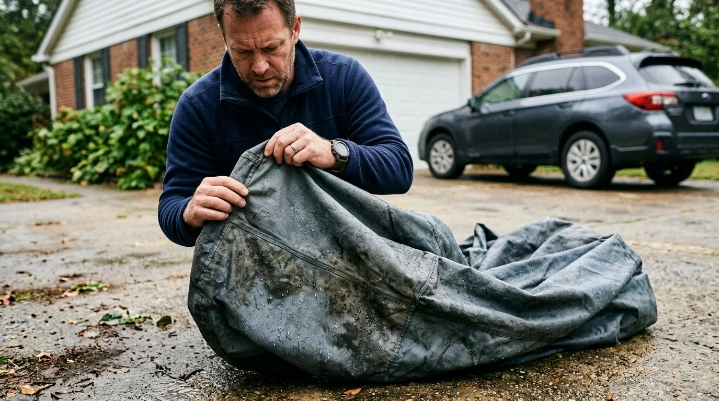
A car cover smells bad because organic material, moisture, and bacteria are trapped within its woven fibers. When you wrap a vehicle in an airtight barrier, any existing dampness has nowhere to escape.
Over time, lack of airflow transforms standard atmospheric condensation into stagnant breeding grounds for mold. According to guidelines from consumer automotive authorities like Consumer Reports, proper vehicle storage requires active ventilation to avoid long-term material degradation. Without it, your cover retains every drop of morning dew.
Mildew and Moisture: The Silent Culprits
Mildew thrives in dark, humid environments with zero air circulation. If you install your cover while the car’s paint is even slightly damp from rain, humidity, or an overnight wash, you lock that water in place.
The trapped water warms up under direct sunlight, creating an ideal incubator for fungal spores. This microscopic growth generates a distinct musty odor that only gets worse every time you fold and store the damp fabric.
Section Takeaway: Trapped moisture and subsequent mildew growth are the primary drivers of foul car cover odors, requiring complete drying cycles after every rainstorm.
Decomposing Organic Matter and Sap
Leaves, pollen, bird droppings, and tree sap fall onto your car cover daily. When these organic elements settle into the weave of the fabric and mix with dew or rain, they begin to rot.
As organic matter breaks down chemically, it releases pungent gases that stick firmly to synthetic fibers. If you roll up the cover while it holds wet autumn leaves or pine needles, that decaying mess marinates inside your storage bag for weeks.
Section Takeaway: Decomposing leaves, pollen, and tree sap trapped inside folded covers create pungent chemical breakdowns that require physical scrubbing to eliminate.
Step-by-Step Guide to Deodorizing Your Cover
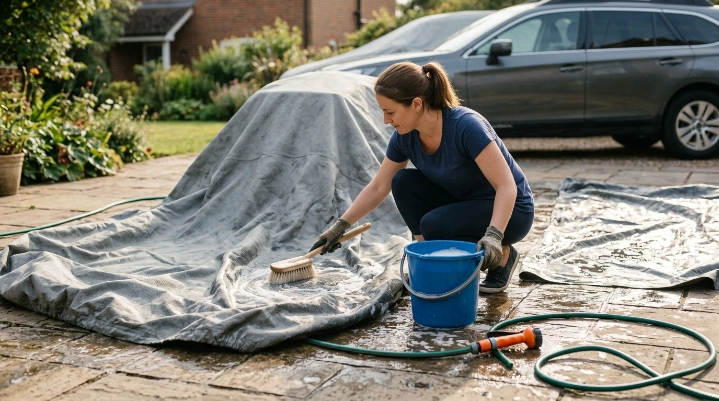
Cleaning a smelly car cover takes patience and the right technique. Do not throw standard multi-ply covers into a traditional top-load agitator washing machine, because the aggressive spinning can tear the waterproof membrane.
Follow this safe cleaning method to eliminate odors without ruining your investment:
- Step 1: Spread the cover out fully on a clean driveway, large patio, or hang it securely over a smooth fence.
- Step 2: Sweep away loose surface debris, dust, and dried leaves using a soft-bristled brush or low-pressure garden hose.
- Step 3: Mix warm water with a mild, non-detergent automotive soap or specialized convertible top cleaner in a large bucket.
- Step 4: Scrub the fabric gently in circular motions, paying close attention to heavily soiled or musty interior sections.
- Step 5: Rinse thoroughly with clean water until all soap residue vanishes.
- Step 6: Hang the cover or leave it spread flat in direct sunlight until both sides are 100% bone dry before storing.
Section Takeaway: Hand washing with mild automotive soap and complete sun-drying is the safest method to strip out stubborn mildew odors without destroying fabric integrity.
Material Comparison: Breathable vs. Waterproof
The type of material your cover is made from plays a massive role in how easily it traps odors. Multi-layer woven fabrics allow microscopic water vapor to escape, while heavy vinyl options seal everything inside.
| Cover Material Type | Breathability Level | Odor Risk | Best Use Case |
|---|---|---|---|
| Single-Layer Poly | High | Low | Indoor dust protection |
| Multi-Layer Woven (e.g., Evolution) | Very High | Very Low | All-weather outdoor daily driving |
| Heavy PVC / Vinyl | None (Waterproof) | High | Short-term heavy storm shielding |
As tested by reviewers at Car and Driver, breathable multi-layer fabrics prevent moisture buildup far better than non-porous vinyl sheets. If you live in a rainy climate, choosing a breathable material is your best defense against sour smells.
Section Takeaway: Selecting a breathable multi-layer fabric drastically reduces trapped condensation and minimizes long-term mildew smells compared to solid plastic or vinyl covers.
How to Prevent Future Odors
Stopping odors before they start saves you hours of grueling hand-scrubbing. Make it a habit to shake out your cover every time you remove it from your daily driver.
Never fold and store your cover while it feels damp to the touch. If you are caught in a rainstorm, take the cover off as soon as the weather clears and drape it over a porch railing to dry out. Keep your storage bag in a well-ventilated garage corner rather than a damp basement.
Section Takeaway: Routine air-drying after rainstorms and proper dry storage practices completely eliminate future mildew outbreaks and foul cover smells.
Frequently Asked Questions
Can I put my car cover in the washing machine?
Most standard household washing machines feature agitators that will tear, stretch, or ruin waterproof membranes. Always hand-wash your car cover in your driveway using mild soap and a soft brush.
Does vinegar kill car cover mildew odors?
Yes, mixing equal parts white water and white vinegar in a spray bottle helps neutralize mildew spores safely. Spray the affected area, let it sit for ten minutes, and rinse thoroughly with clean water.
Why does my new car cover smell like chemicals?
Brand-new synthetic covers often emit an off-gassing smell from manufacturing treatments and waterproofing polymers. This chemical odor typically fades within a few days of outdoor airing.
How often should I clean my car cover?
You should deep-clean your car cover every three to six months depending on your local climate. If you live in an area with heavy tree sap or high humidity, wash it more frequently.
Will a smelly car cover damage my car’s paint?
A moldy cover transfers bacterial spores and dampness directly onto clear coats. Over time, this trapped moisture can cause water spotting or dull your vehicle’s paint finish.
Closing Takeaway
A foul-smelling car cover is an annoying problem, but it is completely fixable with a thorough wash and proper sun-drying. By prioritizing breathable fabrics and keeping your cover dry during storage, you keep your vehicle clean, fresh, and protected year-round.