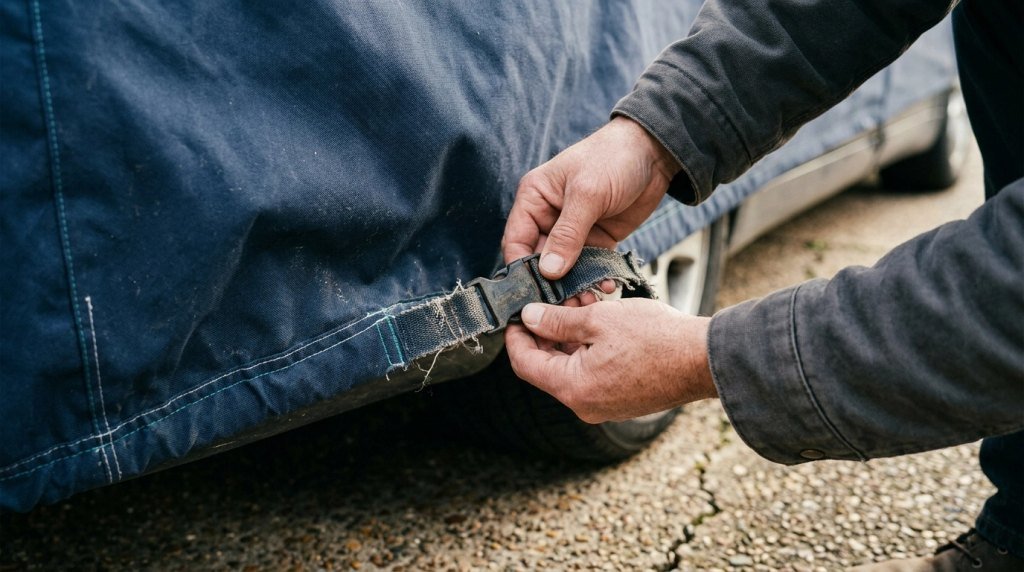
How to Keep a Car Cover Secure: Stop Wind, Slipping, and Theft
Quick Answer
To keep a car cover secure, start with a properly sized cover and fit its elastic hems around the front and rear bumpers. Fasten the built-in straps, add underbody wind straps in exposed parking areas, and use a compatible cable lock for added theft deterrence. Check that nothing can flap against the paint. For general vehicle care advice, see Edmunds automotive resources.
Six Quick Steps to Secure Your Cover
- Check the fit: Use a cover made for your vehicle’s body style and dimensions.
- Center the fabric: Position it evenly over the roof, mirrors, and bumpers.
- Seat the hems: Pull the elastic edges down around both bumpers.
- Fasten the straps: Secure the built-in buckles and check their tension.
- Add wind straps: Use compatible cross-body straps when ordinary fasteners are insufficient.
- Check the lock: Fit a compatible cable lock through reinforced grommets for theft deterrence.
A loose car cover can quickly turn into a problem when the wind picks up. It may slide off the bumper, flap against the paint, or blow away completely.
When I think about securing a car cover, I focus on three things: fit, fastening, and regular checks. This guide explains how to handle each one without special tools or complicated modifications.
In This Guide
Why Do Car Covers Become Loose?
Car covers usually become loose because they fit poorly, lack secure fasteners, or face repeated wind pressure. Even a durable cover can shift when air gets underneath its edges.
A car cover is a protective fabric shell designed to shield a parked vehicle from dust, sunlight, and weather exposure. It works best when its size, material, and securing system match the parking conditions.
1. The Cover Is Too Large
An oversized cover leaves extra fabric around the roof, bumpers, and lower body. That loose material can catch the wind like a sail.
Universal-fit covers may work for several vehicle sizes, but some leave more excess fabric than others. A properly sized cover follows the vehicle’s shape without stretching tightly across sharp edges.
Look for these signs of an oversized cover:
- Large folds of material around the doors.
- Fabric hanging well below the bumpers.
- Loose areas that inflate when wind passes.
- Mirror pockets that don’t align with the mirrors.
- Elastic edges that cannot grip the lower body.
If the size is wrong, additional straps may not solve the underlying problem. A better-fitting cover is often the more reliable solution.
2. The Elastic Hem Has Worn Out
Many covers use an elastic hem around the bottom edge. This helps the fabric grip the vehicle’s front and rear bumpers.
Over time, sunlight, age, and repeated stretching can weaken elastic. The edge may no longer return to its original shape.
Check whether the hem still grips the bumpers without large gaps. If it hangs loosely, inspect the manufacturer’s repair or replacement options.
3. Wind Gets Under the Cover
Wind entering beneath the fabric creates upward pressure. This can lift one edge and gradually pull the rest of the cover loose.
The problem often begins near the front bumper, rear bumper, or a poorly secured side. Those areas deserve extra attention.
4. The Cover Has Too Few Fastening Points
An elastic hem alone may be enough for sheltered parking. Exposed outdoor areas often need stronger retention.
Built-in buckle straps and compatible wind straps help control movement. A cable lock adds a separate layer of security.
Section Takeaway: Start by correcting the fit and checking the elastic hem. Extra fasteners work best on a cover that already fits correctly.
How Do You Secure a Car Cover Properly?
The safest approach is to fit the cover first, secure its existing fasteners, and then add wind protection as needed. Avoid tightening a poorly positioned cover.
For everyday driveway parking, this process usually requires no special equipment.
Step 1: Prepare the Parked Vehicle
Park on a level surface and switch off the engine. Allow the exhaust, tailpipe, and other hot components to cool before installation.
Clean and dry the exterior as required by the cover manufacturer. Dirt trapped beneath moving fabric can scratch the clear coat.
Before fitting the cover:
- Make sure the vehicle is parked securely.
- Close all doors, windows, and the trunk.
- Fold mirrors only if the vehicle and cover instructions allow it.
- Check that antennas and roof accessories will not snag.
- Inspect the cover’s inner surface for grit or sharp debris.
A clean surface matters as much as a secure fastening system.
Step 2: Position the Cover Correctly
Find the cover’s front identification tag, if one is provided. Position the fabric according to its installation instructions.
Spread the material over the roof and work toward both ends. Keep the clean inner lining off the pavement.
Check that the cover follows the hood, roof, trunk, and bumpers. Align any mirror pockets with the mirrors.
Step 3: Secure the Elastic Hems
Pull the front elastic hem down around the front bumper. Repeat at the rear until the cover sits evenly.
Do not force the elastic over sharp trim or protruding accessories. A cover that requires excessive stretching may be the wrong size.
Walk around the vehicle and look for lifted corners. Adjust them before attaching any straps.
Step 4: Attach the Built-In Buckle Straps
Many outdoor covers include straps that connect beneath the vehicle. These help resist the upward movement caused by wind.
Follow the manufacturer’s routing instructions because fastening systems vary.
- Locate the factory strap and its matching buckle.
- Pass the strap beneath the vehicle using an approved route.
- Keep it clear of exhaust parts, sharp edges, and moving components.
- Connect the buckle in its intended position.
- Pull the strap until snug without stretching the cover’s seams.
- Secure any loose webbing so it cannot flap.
Never attach a cover strap to brake lines, suspension links, exhaust pipes, or other underbody components. Do not crawl beneath the vehicle to install it.
Step 5: Add Compatible Wind Straps
Wind straps are adjustable webbing bands that help hold a cover against the vehicle. They are particularly useful in exposed parking locations.
Depending on the product, they may run across the cover and connect underneath the car.
For an independent two-strap system, the usual process is:
- Fit and secure the cover normally.
- Place one strap across the front third of the covered vehicle.
- Route the strap underneath through a clear, safe path.
- Connect its buckle on top of the fabric, away from exposed paint.
- Adjust the strap until the cover sits snugly.
- Repeat around the rear third if the product uses two straps.
The exact strap locations depend on the manufacturer’s instructions. Never stretch the material drum-tight.
Step 6: Perform a Final Security Check
Once secured, walk around the vehicle again. Look for fabric that could catch wind or rub against the paint.
Check the following:
- Both elastic hems remain seated.
- All buckles are fully connected.
- Straps are snug but not overtightened.
- No loose strap tails hang against the vehicle.
- Hard buckles do not touch painted surfaces.
- The cover does not pull sharply across mirrors or accessories.
- All underbody routing stays clear of heat and moving parts.
If possible, inspect the cover again after the first breezy period. Small adjustments can prevent repeated movement.
Section Takeaway: A secure installation combines proper positioning, seated elastic hems, and correctly fitted straps. The goal is to limit movement without damaging the fabric or vehicle.
Which Car Cover Fasteners Work Best?
Adjustable wind straps are generally the most useful addition for a loose cover in everyday windy conditions. Cable locks serve a different purpose by helping deter theft.
Several fastening systems are available, and each solves a different problem.
Car Cover Fastener Comparison
| Fastener | Best Use | Main Limitation |
|---|---|---|
| Elastic hem | Everyday basic fit | May loosen in strong wind |
| Built-in buckle straps | Routine outdoor parking | Only secure their designed locations |
| Extra wind straps | Exposed and gusty parking | Require correct routing and tension |
| Cable and lock | Theft deterrence and added retention | Does not prevent all fabric movement |
| Reinforced grommets | Attachment points for approved accessories | Can tear if pulled too hard |
Are Elastic Hems Enough?
Elastic hems help a correctly sized cover grip the vehicle. In a sheltered garage or calm driveway, they may provide sufficient retention.
Outdoor wind changes the situation. If your cover already has factory straps, use them as directed instead of relying only on elastic.
Do Wind Straps Work Better Than Bungee Cords?
Purpose-built wind straps are generally a safer choice because they offer adjustable tension and controlled fastening. Their broad webbing also spreads pressure over a larger area.
Ordinary bungee cords may recoil if released and can place concentrated stress on attachment points.
I would avoid improvised hooks near painted panels, plastic trim, or delicate underbody parts. Choose accessories approved for car-cover use.
What Is a Car Cover Cable Lock?
A car cover cable lock is a flexible cable that passes through reinforced openings in the cover and locks beneath the vehicle. It makes casual removal more difficult.
Some locks also help hold the lower cover edges together. However, their main purpose is theft deterrence rather than controlling every loose section.
Install a compatible cable lock by following these steps:
- Locate the cover’s designated reinforced grommets.
- Pass the cable through one approved opening.
- Route the cable safely under the parked vehicle.
- Feed it through the matching opening.
- Connect the lock without overtightening the material.
- Keep a spare key in a secure location.
Avoid routing cables near hot exhaust components, brake lines, or moving parts. A cable lock is not a guarantee against determined theft.
Should You Add Extra Grommets?
Adding grommets can weaken waterproof layers or cause tearing if the material is not designed for modification. It may also affect the product warranty.
Use the existing reinforced attachment points whenever possible. If your cover lacks them, ask its manufacturer about compatible fastening accessories.
Section Takeaway: Use elastic hems and factory straps as the foundation. Add wind straps for movement control and a cable lock when theft deterrence matters.
How Do You Keep a Car Cover Secure in Wind?
To secure a car cover in windy weather, reduce loose fabric, close gaps around the lower edges, and use compatible wind straps. Wind resistance depends on the entire installation, not one fastener.
There is no universal wind-speed rating for all covers. Always follow the limitations stated by the manufacturer.
Choose a Cover Designed for Outdoor Exposure
Indoor dust covers and outdoor weather covers serve different purposes. Lightweight indoor fabric may offer little resistance to repeated gusts.
When choosing an outdoor cover, inspect these features:
- Correct vehicle-specific dimensions.
- Elasticized front and rear hems.
- Integrated buckle straps.
- Reinforced seams and attachment points.
- Material suitable for the local weather.
- A paint-safe inner surface.
- Breathability appropriate for outdoor storage.
Vehicle shape also matters. Tall SUVs, trucks, and vehicles with roof racks can create different fitting challenges than low sedans.
Reduce Fabric Flapping
Flapping happens when wind repeatedly lifts and releases loose material. It can stress seams and create friction against the vehicle’s finish.
Focus on exposed areas near the hood, doors, bumpers, and mirrors.
To limit movement:
- Smooth large folds before fastening.
- Keep the cover centered.
- Fasten all designated buckle points.
- Add approved cross-body straps when needed.
- Secure excess strap tails.
- Replace stretched or damaged retention parts.
Do not pull straps tighter simply because the cover still balloons. Persistent ballooning may signal a poor fit or unsuitable cover design.
Does Parking Position Matter?
Yes. Open lots, exposed hilltops, and coastal areas can subject a parked vehicle to strong gusts.
A sheltered parking location may reduce wind exposure, although wind can still swirl around buildings and fences.
Whenever possible, choose a legal, sheltered parking spot away from falling branches and loose outdoor objects. Avoid parking where floodwater or debris may collect.
What About Storms and Extreme Winds?
Car-cover straps are not storm-rated vehicle restraints. They cannot guarantee that a cover will remain secure during severe weather.
If strong storms or damaging winds are forecast, consider removing and storing the cover before conditions worsen. A secure garage or suitable covered parking is preferable when available.
For public weather alerts, consult the National Weather Service. Follow any local warnings and avoid going outside to adjust a cover during dangerous conditions.
Never put yourself at risk trying to save a loose cover. Reinstall it only when conditions are safe.
How Often Should You Check the Straps?
Check the fastening system after initial installation and after significant weather changes. Outdoor covers deserve more frequent attention than indoor covers.
A practical inspection routine includes:
- After installation: Confirm all hems and straps are seated.
- After the first windy period: Check for slack or shifting.
- After heavy rain: Check for sagging or trapped moisture.
- Before forecast storms: Evaluate whether the cover should be removed.
- During routine cleaning: Inspect buckles, seams, elastic, and grommets.
Section Takeaway: Wind control starts with good fit and complete fastening. During severe weather, removing the cover may be safer than adding more tension.
How Can You Prevent Paint Damage and Theft?
A secure cover should protect the vehicle without rubbing against paint or catching on trim. Good installation and cleaning practices help reduce damage.
Theft prevention requires a separate approach because a cover’s elastic hem does little to stop someone from removing it.
Keep the Vehicle and Cover Clean
Small grit particles can become abrasive when trapped between the fabric and paint. Repeated movement may leave fine scratches or swirl marks.
I consider cleaning a basic step, not an optional extra. Securing dirty fabric more tightly can make friction-related problems worse.
Before installation:
- Remove loose dust and dirt from painted panels.
- Clean the cover according to its care label.
- Inspect the inner lining for trapped debris.
- Allow surfaces to dry as directed.
- Avoid dragging the cover across the ground.
For general information on automotive finishes and care, visit Car and Driver.
Keep Hard Fasteners Away From Paint
Plastic buckles, metal hooks, and cable hardware may scratch a panel if they move against it. Position these parts on protected fabric where the manufacturer permits.
Do not let metal cable ends swing against doors or bumpers.
Choose fastening products with smooth edges and secure loose tails. Replace cracked buckles or rough hardware before reinstalling the cover.
Prevent Moisture From Becoming Trapped
Even a well-secured cover can develop moisture underneath. Condensation, trapped wash water, and poor ventilation may leave the vehicle damp.
Choose a cover appropriate for your climate and follow its care instructions. Do not assume that waterproof and breathable mean the same thing.
When moisture appears:
- Remove the cover when conditions are safe.
- Inspect the vehicle and inner lining.
- Allow trapped water to dry.
- Identify possible leaks or condensation.
- Reinstall only when conditions match the cover’s instructions.
Use a Cable Lock for Theft Deterrence
A properly installed cable lock can discourage casual theft. It also makes removing the cover less convenient for someone without the key.
However, most cover locks can be defeated with sufficient tools or force. Treat them as deterrents rather than complete security systems.
Consider these extra precautions:
- Park in a visible, well-lit location where possible.
- Use the cover’s approved locking points.
- Avoid displaying valuables inside the car.
- Keep the lock clean and functional.
- Remove the key after securing the lock.
For general vehicle safety information, visit the National Highway Traffic Safety Administration.
Avoid Unsafe Installation Shortcuts
Do not run the engine while the car remains covered. Exhaust heat and fumes create serious hazards.
Avoid tying the cover to wheels, brakes, suspension components, or exhaust parts. Never use a car-cover strap as a towing or transport tie-down.
Mechanic Alert: If a strap becomes tangled around an inaccessible underbody component, do not crawl under an unsupported vehicle. Ask a qualified mechanic to remove it safely.
Section Takeaway: Preventing damage requires clean surfaces, controlled tension, and proper hardware placement. A cable lock offers theft deterrence but cannot replace secure parking.
How Do You Fix Common Car Cover Problems?
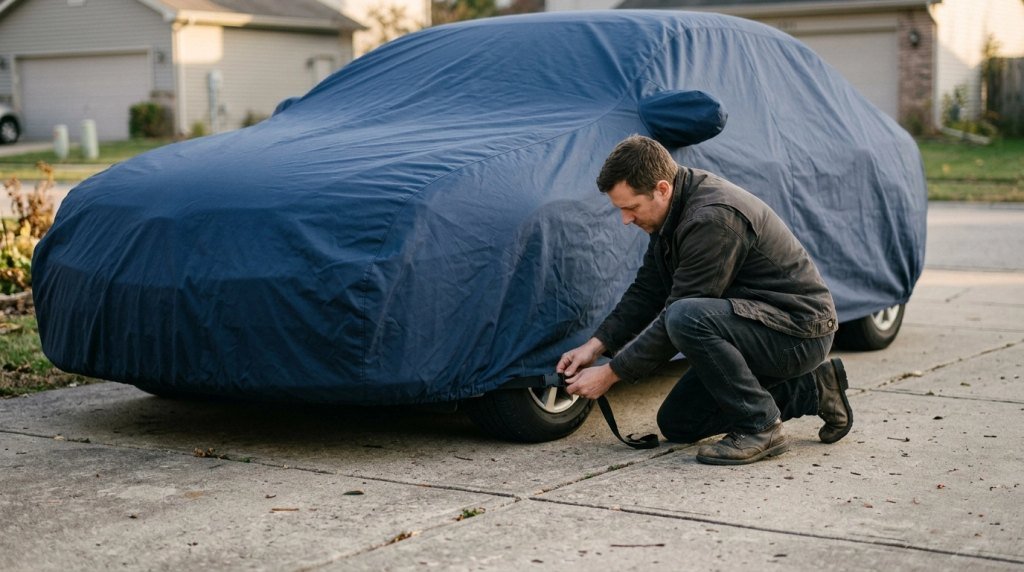
Most car-cover fastening problems have simple causes. Start by identifying where movement or damage begins.
Use the comparison below to narrow down the likely issue.
Common Problems and Practical Fixes
| Problem | Likely Cause | Recommended Fix |
|---|---|---|
| Cover blows off | Loose fit or missing fasteners | Correct fit and add approved wind straps |
| Front edge lifts | Hem not seated | Reseat hem and check front retention |
| Cover balloons | Excess fabric or air entering underneath | Check sizing and secure designated points |
| Strap keeps loosening | Worn buckle or incorrect threading | Re-thread or replace compatible hardware |
| Grommet tears | Excessive tension or damaged reinforcement | Stop using that attachment and seek repair |
| Fine paint scratches | Trapped grit or fabric movement | Clean surfaces and correct movement |
| Water collects on cover | Sagging fabric or poor drainage | Correct fit and follow drainage guidance |
What If the Car Cover Keeps Sliding Off?
First, remove the cover and check its dimensions against the vehicle. Confirm that the front and rear ends are correctly positioned.
Inspect the elastic hem for wear. Then check that each factory buckle can hold tension without slipping.
If everything appears sound but the cover still moves, consider compatible wind straps or a better-fitting replacement.
Can You Repair a Broken Strap?
Many detachable straps can be replaced with manufacturer-approved parts. Check the buckle size, webbing width, and attachment design before ordering replacements.
A damaged sewn-in strap may need professional repair or full cover replacement. Avoid knots, metal hooks, or improvised fasteners that could damage the car.
What If the Car Cover Is Too Tight?
A tight cover can stress seams, mirrors, spoilers, and trim. Forcing it over the vehicle may cause tearing.
Confirm that the cover matches the exact body style and any exterior accessories. If the fit is wrong, exchange it for the correct size rather than forcing the material.
When Should You Replace the Cover?
A cover that repeatedly fails to stay secured may have worn elastic, damaged seams, or weakened fabric. Excessive fading and brittleness can also suggest deterioration.
Inspect these areas before each extended storage period:
- Front and rear elastic hems.
- All sewn strap attachment points.
- Plastic buckles and adjustment hardware.
- Grommets and their reinforcing fabric.
- Roof and mirror sections exposed to tension.
- Inner lining and protective seams.
Replace the cover if structural damage prevents safe installation. Continued use of broken fastening points can make the problem worse.
Section Takeaway: Diagnose the fit, hem, and fasteners before buying accessories. If the cover itself is damaged or unsuitable, replacement may be the safest choice.
Frequently Asked Questions
How do I keep my car cover from blowing away?
Use a correctly sized cover with seated elastic hems and secure the factory buckle straps. In exposed parking areas, add compatible wind straps beneath the vehicle. Inspect the cover after windy conditions and remove it before severe weather if the manufacturer’s guidance calls for that.
Can I use bungee cords to secure a car cover?
Purpose-built cover straps are preferable to ordinary bungee cords. Bungee hooks may scratch paint, stress grommets, or recoil during removal. If the cover manufacturer approves a particular elastic tie-down system, follow its instructions and keep all hardware away from painted surfaces.
How do you secure a car cover without straps?
Begin by checking the cover’s fit and elastic hems. If it has reinforced grommets, a manufacturer-approved cable or accessory may help. Otherwise, choose compatible replacement straps or a cover with integrated fasteners. Avoid improvised attachment points that could tear the fabric.
Will a cable lock stop a car cover from blowing off?
A cable lock can help retain the lower part of a compatible cover, but it cannot control all wind movement. It mainly deters casual theft. For windy conditions, use properly fitted straps and ensure the cover itself is the correct size.
Can a tightly secured car cover scratch paint?
Yes. Dirt trapped beneath the fabric, moving buckles, and excessive tension can contribute to damage. Clean the vehicle and cover before installation. Position hardware away from paint and tighten straps only enough to limit unwanted movement without straining the seams.
Should I remove my car cover during a storm?
Consider removing it before severe winds or storms arrive, especially if the manufacturer does not rate it for those conditions. A cover can tear or become airborne despite straps. Never attempt removal during dangerous weather; wait until conditions are safe.
Are car cover straps safe for SUVs and trucks?
Yes, when the straps are compatible with the cover and vehicle dimensions. Taller vehicles may need longer webbing and careful routing. Keep every strap clear of exhaust parts, suspension components, brake lines, and sharp edges, and never work underneath an unsupported vehicle.
Final Takeaway: Secure the Fit Before Adding More Straps
Learning how to keep a car cover secure starts with a simple rule: fit matters more than force. A correctly sized cover with properly seated hems and attached factory straps offers the best starting point.
For exposed outdoor parking, compatible wind straps can add useful retention. A cable lock provides extra theft deterrence, but neither accessory makes a cover stormproof.
Before leaving your vehicle covered, inspect the fit, straps, buckles, and fabric. A short check can help prevent loose material, scratches, and avoidable damage.